⚡ Quick Answer
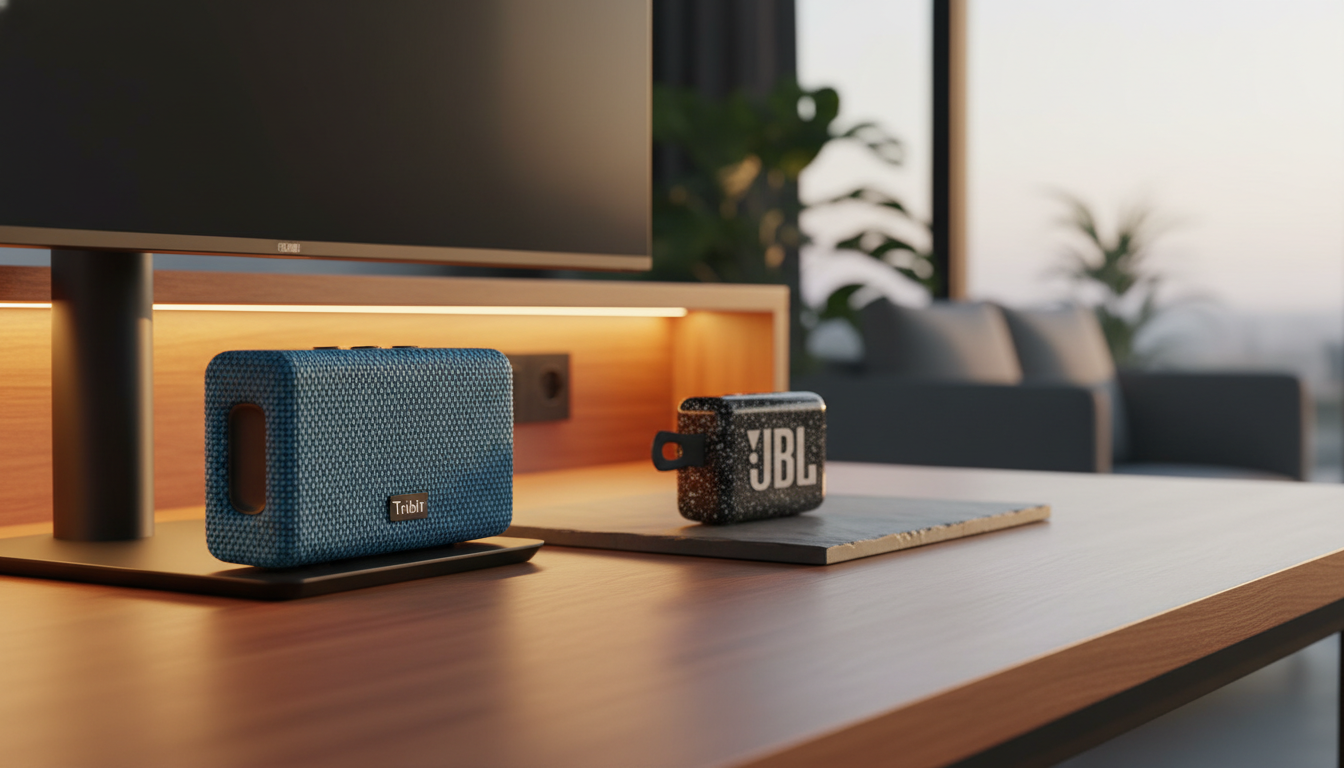
We compared 7 portable Bluetooth speakers that all sit under the $50 mark, ranging from $24.99 up to $49.99. The lineup spans three price tiers: a budget trio (Soundcore Select 4 Go, Doss SoundBox Touch, Tribit XSound Go Red), a mid‑range pick (Tribit XSound Go USB‑C Blue), and three premium‑feeling models (Anker Soundcore 2, JBL Go 4, Doss SoundBox Pro+). Each brings its own mix of volume, battery life and size.
If you need a lightweight companion for a daily commute, the JBL Go 4’s 4.2 W RMS output, 7‑hour battery (extendable to 9 hours) and feather‑light 0.42‑pound body make it hard to miss. For weekend hikes or beach trips, the Tribit XSound Go USB‑C Blue stands out with a 16 W total output, a max volume of 98 dB and a claimed 24‑hour playtime, all for $39.99 and a solid 4.6/5 rating from over 33,000 reviewers. Small‑group gatherings benefit from a speaker that can pair for stereo, like the Anker Soundcore 2, which offers 12 W power and a 24‑hour battery at a similar price point.
Below we’ll break down how each tier performs across common scenarios so you’ll spot the model that matches your listening habits.

Tribit XSound Go USB-C Blue
Its 98 dB maximum volume delivers surprisingly loud sound for a $39.99 speaker, giving strong value for the price.

JBL Go 4
Great for listeners who prioritize a larger 45 mm driver and don’t mind paying roughly $10 more than the Tribit XSound Go, bringing the price to $49.95.
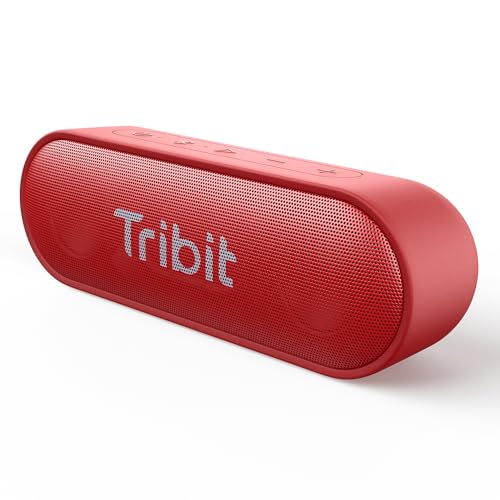
Tribit XSound Go Red
Offers the same 98 dB peak volume as the pricier Tribit model but with a smaller 40 mm driver and a lower $34.99 price, making it the most affordable entry‑level choice.
Also considered
Score Analysis
Key score advantages vs. runner-up (JBL Go 4)
Price Range
Tribit XSound Go USB-C Blue
$31.98
JBL Go 4
$39.95
Tribit XSound Go Red
Out of Stock

Anker Soundcore 2
$35.99

Soundcore Select 4 Go
$24.99

Doss SoundBox Touch
$18.05

Doss SoundBox Pro+
$89.99
Spec Comparison
TL;DR: The Tribit XSound Go USB‑C Blue packs a 16 W output, 98 dB max volume and 24‑hour battery life into a waterproof, Bluetooth 5.3 speaker for $39.99.
What really sets this speaker apart is its 16 W total output (2 × 8 W) and a maximum SPL of 98 dB, giving you loud, clear sound from a compact 56 mm‑high chassis. The Bluetooth 5.3 module reaches up to 100 ft (≈30 m), so you can leave your phone in your pocket while the music streams from across the patio. A 4000 mAh battery fuels 24 hours of playback, and the USB‑C port refills the pack in just 5 hours.
At the same $39.99 price point, the XSound Go outpowers the Anker Soundcore 2, which lists a 12 W output, and it offers a longer wireless range than the Soundcore’s 66 ft. Compared with the JBL Go 4, the Tribit is heavier (0.84 lb vs. 0.42 lb) but makes up for it with a higher volume ceiling and an IPX7 waterproof rating that the JBL model doesn’t list. It’s also far lighter than the Doss SoundBox Pro+ (over 2 lb) while still delivering a respectable 16 W. The battery capacity is lower than the Soundcore 2’s 5200 mAh, yet both achieve the same 24‑hour runtime, showing efficient power use.
Professional reviewers praise the speaker’s balanced audio—clear highs, crisp mids and distortion‑free loudness—while everyday users love the 24‑hour battery and the rugged IPX7 build for poolside or camping trips. The most common drawback is the bass extension, which tops out at 83 Hz, leaving the low end less deep than larger boxes. Users also note the unconventional button layout, where the play/pause button doubles as a track‑skip control, which can feel unintuitive.
Under the hood, a passive radiator works with two 40 mm dynamic drivers to boost low‑frequency response, and an integrated DSP chip fine‑tunes the sound profile. The speaker’s rubberized exterior protects it from drops, and the included lanyard makes it easy to carry on hikes or attach to a bike. With a 3.7 V battery voltage and USB‑C charging, you’ll spend less time tethered to a wall.
Pros
Cons
Best for: Budget‑conscious listeners who need a durable, long‑lasting speaker for outdoor activities.
Avoid if: You need deep, powerful bass or an ultra‑compact pocket‑sized speaker.
TL;DR: The JBL Go 4 packs a 45 mm driver, IP67 waterproofing and up to 7 hours of playtime into a 0.42‑lb, pocket‑sized speaker, but its modest 4.2 W output and higher price keep it best for on‑the‑go listeners.
The Go 4’s most eye‑catching spec is its ultra‑compact chassis – it weighs just 0.42 lb (190 g) and measures only 45 mm across its driver, yet still delivers JBL Pro Sound with a signal‑to‑noise ratio above 85 dB. Its battery holds 850 mAh, giving up to 7 hours of playback, and a Playtime Boost feature can add another 2 hours when you need a little extra.
When you line it up against the six other speakers in this roundup, the Go 4 is the lightest of the bunch – the next lightest, the Soundcore Select 4 Go, tips the scales at about 0.58 lb, while the Doss SoundBox Pro+ tops out near 2.12 lb. Battery‑wise, the Go 4’s 850 mAh cell is far smaller than the 2,600 mAh found in the Doss Pro+ or the 5,200 mAh in the Anker Soundcore 2, which translates to the Go 4’s 7‑hour runtime versus the 20‑plus hours most peers claim. Its 4.2 W RMS output also sits below the 12 W of the Soundcore 2, the 16 W of the Tribit XSound Go models, and the 40 W of the Doss Pro+, meaning it won’t fill a large room the way those larger drivers can.
Reviewers consistently praise the Go 4’s 0.42 lb (190 g) footprint and the convenience of its built‑in loop for attaching to bags or bike handlebars. Users also note the IP67 rating as a major win for beach trips and poolside playlists. On the flip side, several owners mention that the rubber control buttons start to wear after months of frequent use, and the limited volume makes the speaker less suitable for big outdoor gatherings.
Pros
Cons
Best for: Travelers, beach‑goers and anyone who needs a truly portable, waterproof speaker that can survive a day in a backpack.
Avoid if: You’re shopping on a tight budget – it’s priced at $49.95 – or you need a speaker that can blast music for large gatherings.
TL;DR: The Tribit XSound Go Red packs 16 W of loud, balanced sound, IPX7 waterproofing and a 24‑hour battery into a 0.86‑lb, 40‑mm driver package for under $35.
At the heart of the XSound Go Red are two 40 mm drivers plus a passive radiator, delivering a total output of 16 W and a maximum volume of 98 dB. The speaker runs on Bluetooth 5.3 with a claimed range of 100 ft, and its IPX7 rating means you can safely drop it in water. With a listed battery life of 24 hours on a 4000–4400 mAh pack, you’ll have music all day without hunting for a charger. The unit weighs just 0.86 lb (389.9 g) and fits comfortably in a bag thanks to its rubberized exterior and built‑in lanyard.
Compared with the other six speakers in this roundup, the XSound Go Red is lighter than the Anker Soundcore 2 (0.91 lb) but heavier than the JBL Go 4 (0.42 lb). Its 170.2 mm width makes it noticeably wider than the Anker’s 54 mm chassis, while its 16 W output outpaces Anker’s 12 W and JBL’s 4.2 W. The 100‑ft Bluetooth range also exceeds Anker’s 66‑ft reach. Battery life matches Anker’s 24‑hour claim, though the Doss SoundBox Touch only offers 20 hours. In terms of power, the XSound Go Red sits ahead of the Soundcore Select 4 Go (unspecified) and far above the budget‑friendly JBL model.
Users consistently praise the speaker’s “budget beast” vibe: a balanced sound signature with clear highs, crisp mids and punchy bass for its class. Professional reviewers note the DSP‑driven XBass technology and app‑based EQ let you boost low‑end without distortion, even at high volumes. However, many mention that the bass extension stops at 83–85 Hz, which can feel thin compared with larger units, and that real‑world battery endurance often falls short of the advertised 24 hours when the volume is cranked up.
Beyond the specs, the XSound Go Red includes a voice‑assistant button, a 3.5 mm aux input for wired sources, and an integrated lanyard for easy clipping to backpacks or belts. The rubberized exterior adds grip and durability, while the IPX7 rating protects against immersion up to 1 m for 30 minutes, making it suitable for beach days or poolside playlists.
Pros
Cons
Best for: Budget‑conscious buyers seeking a reliable entry‑level option
Avoid if: You want the best value‑per‑dollar in its price range
TL;DR: The Anker Soundcore 2 packs 12 W of stereo power, IPX7 waterproofing and a 24‑hour battery into a 0.91‑lb, compact body, making it a solid budget pick for everyday listening.
The standout spec is its 12 W total output driven by dual neodymium drivers, complemented by BassUp technology and a spiral bass port that reviewers say deliver “pounding bass and zero distortion.” At just 0.9149 pounds (400 g) and measuring 165 mm × 54 mm × 45 mm, it’s small enough to slip into a backpack yet sturdy enough for outdoor use, thanks to an IPX7 rating.
Compared with the six other speakers in this roundup, the Soundcore 2 sits in the middle of the weight range—lighter than the Doss SoundBox Pro+ (over 2 lb) but a bit heavier than the JBL Go 4 (under 0.42 lb). Its 5 200 mAh battery outlasts the Tribit XSound Go’s 4 000 mAh pack and matches the 24‑hour claim of that same model, while the Doss units linger around 20 hours. Bluetooth range sits at 66 ft (20 m), which is shorter than the 100 ft range advertised for the Tribit speakers, and its True Wireless Stereo pairing works only within about 5 m, limiting multi‑room setups.
User sentiment highlights the long‑lasting battery, the waterproof confidence for showers or poolside playlists, and the surprisingly full‑bodied sound for the price. Professional reviewers call the sound “unbelievable” for a budget speaker and praise the DSP‑controlled playback. Common complaints focus on the outdated Micro‑USB charging port and occasional Bluetooth connection hiccups, as well as the bass‑forward tuning that can mask mid‑range detail for listeners seeking a neutral signature.
Pros
Cons
Best for: Buyers who want a waterproof, bass‑forward portable speaker with a marathon‑long battery at a sub‑$50 price point.
Avoid if: You need ultra‑low latency audio for gaming, prefer a neutral sound signature, or require a USB‑C charging port.
TL;DR: At $24.99, the Soundcore Select 4 Go packs an 11.51 cm driver, 5 W output, IP67 waterproofing and 20 hours of battery into a feather‑light 0.58 lb cylinder, ideal for solo on‑the‑go listening.
The speaker’s standout spec is its 11.51 cm driver paired with a 5 W RMS output, delivering punchy, clear sound despite the modest wattage. Weighing just 0.58125 lb (≈0.58 lb) and rated IP67, it survives showers, rain and even floats for up to 30 minutes at a depth of 3.3 ft, making it truly rugged for its price.
Compared with the six other budget options, the Select 4 Go is among the lightest – only the JBL Go 4 (≈0.42 lb) is lighter, while the Doss SoundBox Touch (1.23 lb) and Tribit XSound Go (≈0.86 lb) feel substantially heavier. Its driver is considerably larger than the 30 mm unit in the Doss SoundBox Touch and the 40 mm driver in the Tribit XSound Go, though the power output of 5 W trails the 12 W of Doss and the 16 W of Tribit. Battery life matches the Doss SoundBox Touch’s 20 hour claim but falls short of the Tribit XSound Go’s 24 hour runtime. The 30 m Bluetooth range exceeds the 20 m range listed for the Anker Soundcore 2, while being on par with the roughly 30 m (100 ft) range of the Tribit XSound Go.
Users consistently praise the speaker’s “punchy, clear audio” and “surprisingly strong bass” for a 5 W unit, noting the 9‑band EQ in the Soundcore app lets them fine‑tune the sound to their taste. The built‑in strap and touch controls add convenience for backpackers and gym‑goers. Professional reviewers highlight the stable Bluetooth 5.3 connection and True Wireless Stereo support as rare strengths at this price point. The most common drawbacks are a limited maximum volume that won’t fill a party space, occasional Bluetooth hiccups at the edge of range, and the omission of a wall charger in the box.
The device runs on a 2.4 Ah internal battery that charges fully in 4.5 hours via USB‑C, delivering the advertised 20 hour playtime. The Soundcore app manages the 9‑band EQ, touch interface, and TWS pairing, giving you granular control without extra hardware. Its compact dimensions (48 mm × 120 mm × 82 mm) fit easily in a pocket or on a bike helmet.
Pros
Cons
Best for: Budget‑conscious solo adventurers, shower users, and casual outdoor enthusiasts who need a tiny, rugged speaker with long battery life.
Avoid if: You need loud, party‑grade volume, professional‑grade sound performance, or advanced features beyond basic Bluetooth playback.
“Ideal for solo swimming or showers”
“Stereo sound, deep bass via passive radiator, and durable waterproof design”
TL;DR: The Doss SoundBox Touch delivers 12 W stereo sound, 20 hours of playback and IPX5 water resistance in a 1.23‑lb cube for $28.49, a solid budget pick for casual listening.
The standout spec is its 12 W power output, driven by a 30 mm driver that provides stereo sound with enhanced bass despite the compact 68.6 mm × 167.6 mm × 73.7 mm dimensions. Its 2200 mAh battery promises up to 20 hours of playtime, and the IPX5 rating means it can handle splashes or light rain.
Compared with the six other speakers in this roundup, the SoundBox Touch is heavier than the Soundcore Select 4 Go, Tribit XSound Go Red, Anker Soundcore 2, Tribit XSound Go USB‑C and JBL Go 4, all of which weigh under 1 pound. It’s lighter than the Doss SoundBox Pro+, which tips the scales at over 2 pounds. Battery life matches the Soundcore Select 4 Go and the Pro+, but falls short of the 24‑hour claims on the Tribit and Anker models. Its 12 W output equals the Anker Soundcore 2, yet sits below the 16 W of the Tribit speakers and far under the 40 W of the Pro+.
Reviewers consistently praise the speaker’s deep bass and clear volume without distortion for its size, noting the intuitive capacitive touch panel and quick Bluetooth pairing. Professional reviewers highlight the strong bass response, while everyday users love the built‑in microphone and long battery life. The main criticisms focus on Bluetooth 4.0 latency, which can be noticeable when watching video, and occasional touch‑control unresponsiveness when the surface is wet.
Technical details include a frequency response up to 18 kHz, harmonic distortion under 1 %, a micro‑USB charging port at 5 V, and a microSD slot for offline playback. The metal‑and‑plastic construction adds durability, and the IPX5 rating offers protection against splashes.
Pros
Cons
Best for: Budget‑conscious buyers seeking a reliable entry‑level option
Avoid if: Low‑latency audio for video streaming or higher power output is a priority
“shaking bass, impressive volume without distortion”
“seamless connectivity, crystal-clear stereo sound, 12-hour playtime, hands-free calls, and portability with case”
TL;DR: The Doss SoundBox Pro+ packs a 40 W output, 6.5‑inch passive radiator and 20 hours of playback into a rugged, IPX6‑rated box for just under $50.
The standout spec is its 40 W power output driven by dual 20 W drivers and a 6.5‑inch passive radiator, delivering bass‑heavy sound that many reviewers describe as “fantastic.” At a weight of 2.12 lb and dimensions of 8.9 × 3.5 × 3.3 in, it’s larger than most budget companions, but the solid plastic‑and‑iron construction feels sturdy enough for outdoor use.
Compared with the six other speakers in this roundup, the SoundBox Pro+ is heavier than the ultra‑light JBL Go 4 and Anker Soundcore 2, and it carries a larger chassis than the Tribit XSound Go models. Its 2600 mAh battery is smaller than Anker’s 5200 mAh pack but still outpaces the JBL’s 850 mAh cell, giving it a solid 20‑hour runtime at 50 % volume. Charging finishes in ≤3.5 hours via USB‑C, quicker than the 5‑hour charge the Tribit Blue unit lists.
Users consistently praise the deep bass punch activated by the dedicated Extra Bass button and the long‑lasting battery for weekend trips. Professional reviewers highlight the Dual DSP processing that keeps distortion low, and they note the fast USB‑C charge as a real convenience. The downside that shows up in both user and expert feedback is the noticeable drop in playback time when you crank the volume past the 50 % mark, and some listeners report occasional Bluetooth pairing hiccups in TWS mode.
Pros
Cons
Best for: Casual outdoor enthusiasts who want a waterproof speaker with strong bass and long battery life.
Avoid if: You need deep sub‑bass performance, extended high‑volume playback, advanced lighting effects, or extra ports.
“shaking bass, impressive volume without distortion”
“seamless connectivity, crystal-clear stereo sound, 12-hour playtime, hands-free calls, and portability with case”
Breakdown
Tribit XSound Go USB-C Blue
Pros
JBL Go 4
Pros
Cons
Tribit XSound Go Red
Pros
Cons
Anker Soundcore 2
Pros
Cons
Based on scoring data and product specs
Personalized picks
Best Overall Pick
Tribit XSound Go USB-C Blue
Best ValueBest for: Buyers willing to invest in a proven, high-quality option
JBL Go 4
Best for: Buyers willing to invest in a proven, high-quality option
$39.95+$7.97 vs winner
Skip Doss SoundBox Pro+ if…
Reliability and user satisfaction are your top concerns
We’re naming the Tribit XSound Go USB‑C in Blue the clear winner of the budget portable‑speaker round‑up. At $39.99 it delivers a hefty 16 W total output, a 24‑hour battery life from its 4000 mAh cell, and an IPX7 rating that lets you toss it in the rain without a worry. Its Bluetooth 5.3 connection reaches up to 100 ft, and the 4.6‑star rating from 33,715 reviewers shows broad approval.
The runner‑up is the JBL Go 4, ideal if you need an ultra‑compact speaker that can survive a day at the beach. Weighing just 190 g and sporting an IP67 rating, it handles rugged, on‑the‑go use, while its 4.8‑star rating from 14,663 reviews confirms strong user satisfaction. At $49.95 you also get multi‑point Bluetooth and a recyclable‑materials build.
If you’re hunting for alternatives across price tiers, the Soundcore Select 4 Go stands out as the true budget pick at $24.99, offering the lowest entry cost. The Anker Soundcore 2, also $39.99, ranks as the most popular mid‑range option, backed by strong sales momentum. For those willing to stretch to the top of the $50 ceiling, the Doss SoundBox Pro+ at $49.99 serves as the premium pick, delivering higher‑end features for the extra spend.
Pick the Tribit XSound Go now and get the best‑value portable speaker for under $50.
The Tribit XSound Go USB‑C Blue and the JBL Go 4 both have waterproof ratings, but the Tribit offers an IPX7 rating and a 24‑hour battery life, while the JBL provides an IP67 rating but only up to 7 hours of playtime (plus a 2‑hour boost). If you need longer listening time without recharging, the Tribit is the better pick; if you value a higher dust‑proof rating and a smaller footprint, the JBL shines.
No reviews yet — be the first to share your experience.
Please sign in to leave a review