⚡ Quick Answer
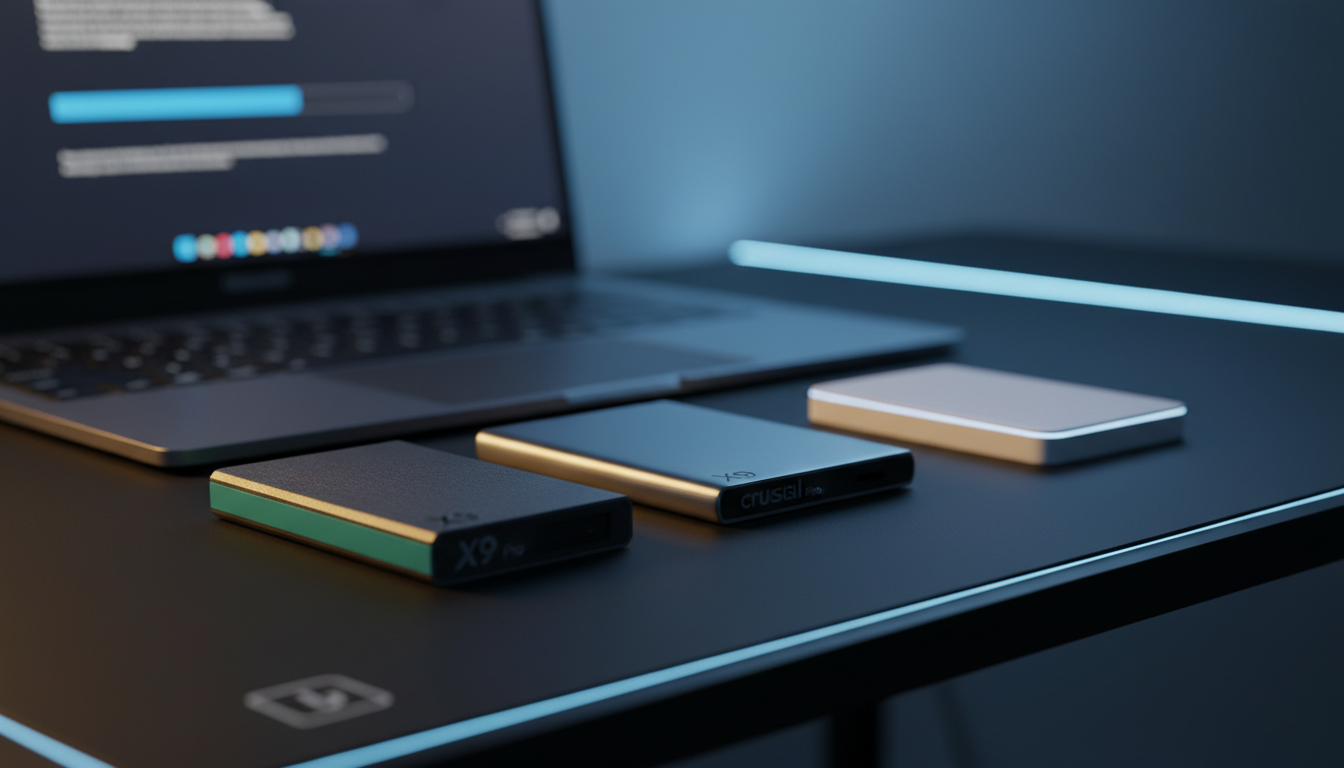
When you’re hunting for a portable SSD that won’t break the bank, the market still offers seven solid choices under $200. The cheapest option in our set is the Crucial X9 Pro 1TB at $103.00, while the most expensive sits at $189.99. All seven drives deliver sequential read speeds of up to 1050 MB/s, so you won’t be sacrificing performance for price.
We’ve grouped the picks into three price tiers. The budget tier includes the Crucial X9 Pro, the Orico 1TB Portable SSD, and the Crucial X9, each costs between $103.00 and $125.47 and have earned 4.5‑star ratings from thousands of reviewers. The mid‑range slot features the SSK Portable SSD at $149.99, and holds a 4.5‑star score. Premium offerings—Samsung T7, SanDisk Portable SSD, and WD My Passport SSD—range from $162.00 to $189.99 and carry ratings from 4.5 to 4.7 stars.
Below you’ll see how each model stacks up on weight, durability, and included accessories, helping you pinpoint the drive that fits your workflow and wallet.

Crucial X9
Its 7.5 ft (2.3 m) drop protection keeps data safe even if the drive hits the floor, making it a solid all‑rounder for budget shoppers.

Crucial X9 Pro 1TB
Ideal for users needing extra capacity without breaking the bank, the X9 Pro 1TB is $22.47 cheaper than the X9, offering the same rugged drop protection in a deeper 65 mm chassis.
Samsung T7 1TB
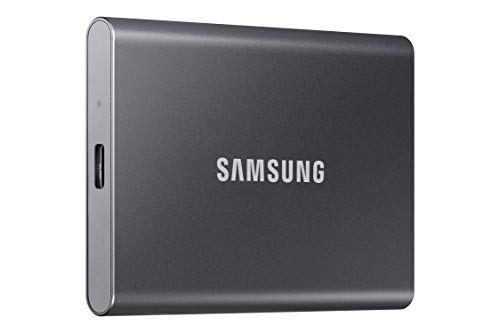
Featuring an ultra‑thin 8 mm height and compact 85 mm length, it delivers a slimmer, more portable drive for travelers who value size over the drop‑proof design of the Crucial models.
Also considered
Score Analysis
Key score advantages vs. runner-up (Crucial X9 Pro)
Price Range
Crucial X9
$142.14
Crucial X9 Pro 1TB
$103.00
Samsung T7 1TB
$274.99

SSK Portable SSD
$149.99

SanDisk Portable SSD
$154.99
WD My Passport SSD 1TB
$189.99

Orico 1TB Portable SSD
$139.99
Spec Comparison
TL;DR: The Crucial X9 1 TB portable SSD packs 1050 MB/s read/write speeds into a 65 × 50 × 10 mm, 32 g shell that survives drops from 7.5 ft, making it a fast, ultra‑compact choice for travelers on a modest budget.
The standout spec is the advertised 1050 MB/s sequential read **and** write speed, delivered over a USB 3.2 Gen 2 (10 Gb/s) interface. Coupled with a 7.5 ft (2.3 m) drop‑protection rating, the drive delivers both speed and durability in a pocket‑sized 65 mm × 50 mm × 10 mm form factor that weighs only about 32 g.
Compared with the six other SSDs in this roundup, the X9 is lighter than the Orico (60 g) and the Samsung T7 (58 g) but a touch heavier than the SSK’s 30 g and far heavier than WD’s ultra‑light 7.09 g model. Its 1050 MB/s read speed beats the Orico’s 1000 MB/s and SanDisk’s 800 MB/s, while the write speed matches Samsung’s 1000 MB/s and exceeds the Orico’s 800 MB/s. The SSK lists a write ceiling of 1000 MB/s, so the X9’s 1050 MB/s is a modest edge. Price‑wise, the X9 sits above the Orico’s $114.69 list price, but remains below the premium tier of the Samsung and WD offerings.
User feedback repeatedly praises the drive’s “pocket‑size convenience” and “plug‑and‑play” experience across Windows, macOS, Android, iOS, Linux, Xbox and PlayStation. Professional reviewers note the sequential performance staying close to the advertised 1050 MB/s and commend the lanyard hole for on‑the‑go use. The main criticisms focus on the lack of an IP55 rating—unlike the X9 Pro variant—and that sustained write speeds can lag slightly behind the very fastest rivals when moving large video files.
Pros
Cons
Best for: Budget‑conscious buyers seeking a reliable entry‑level option
Avoid if: Reliability and user satisfaction are your top concerns
TL;DR: The Crucial X9 Pro 1TB packs 1050 MB/s read speeds, IP55 dust‑water protection and a 2 m drop rating into a 65 × 50 × 10 mm, 0.08‑lb case for under $110.
What really sets the X9 Pro apart is its ultra‑compact chassis – just 65 mm wide, 50 mm deep and 10 mm thick – while weighing only about 0.08 lb. It delivers up to 1050 MB/s sequential reads and a sustained 975 MB/s write rate through a USB 3.2 Gen 2 (10 Gbps) Type‑C interface, and the anodized aluminum body has an IP55 rating for dust and splash resistance.
Compared with the other six SSDs in this roundup, the X9 Pro is lighter than the Orico model (0.08 lb vs 0.13 lb) and the Samsung T7 (0.08 lb vs 0.13 lb), but a touch heavier than the SSK drive (0.08 lb vs 0.07 lb). Its 1050 MB/s read speed matches the top‑tier reads of the Crucial X9, SSK, Samsung T7 and WD My Passport SSD, while the Orico tops out at 1000 MB/s and the SanDisk at 800 MB/s. Write performance sits between the faster 1000 MB/s of Samsung and WD and the slower 800 MB/s ceiling of Orico. Drop protection of 2 m aligns with Samsung and SanDisk, outpacing SSK’s 4‑ft rating.
Users consistently praise the drive’s “keychain‑friendly” size and the peace of mind from its 256‑bit AES hardware encryption with password protection. Professional reviewers highlight the same ultra‑small footprint and the convenience of plug‑and‑play operation. A few owners note occasional heat during long transfers and the fact that weight and dimension listings vary across retailers, but the consensus is that it’s a solid, budget‑friendly option for creators on the move.
Under the hood, the X9 Pro runs a Silicon Motion SM2320 ASIC controller and Micron TLC NAND, drawing power solely from the USB port (5 V). The package includes a USB‑C cable plus three months of Mylio Photos Plus and Acronis True Image software, adding extra value for photo‑ and video‑heavy users.
Pros
Cons
Best for: Budget-conscious buyers seeking a reliable entry-level option
Avoid if: Reliability and user satisfaction are your top concerns
TL;DR: The Samsung T7 1TB delivers 1,050 MB/s reads, 1,000 MB/s writes, 256‑bit AES encryption, and a rugged 2‑meter drop rating in a compact aluminum shell for $185.00.
The standout spec is its sequential performance: Samsung lists a read speed of 1,050 MB/s and a write speed of 1,000 MB/s over a USB 3.2 Gen 2 (10 Gbps) interface. The drive also packs AES 256‑bit hardware encryption and a 2‑meter drop resistance, all inside an 85 mm × 57 mm × 8 mm aluminum body that weighs 0.13 pounds (58 g).
Compared with the other six SSDs in this roundup, the T7 is markedly thinner than the WD My Passport SSD’s 31.75 mm height, yet it is heavier than WD’s 0.015625‑pound unit and heavier than the SanDisk (0.09 pounds) and SSK (0.066 pounds) models. It sits just under the Orico’s 0.132 pound weight, making it a middle‑weight option. Speed‑wise, it matches the WD and SSK’s advertised 1,050 MB/s reads and 1,000 MB/s writes, while offering a similar drop protection distance of 2 meters found on SanDisk and Crucial X9 Pro.
Professional reviewers praise the full‑metal chassis for its durability and the Dynamic Thermal Guard system that curbs throttling during intensive transfers. Everyday users echo this, noting how quickly 4K video files move and how the drive fits easily into a pocket. Users often report occasional warmth during long, high‑speed transfers, and some point out inconsistent weight listings across sources. Some note the lack of fingerprint authentication as a missing security feature compared with the T7 Touch variant.
Beyond raw speed, the T7’s ePCM technology manages power efficiently, and its compatibility spans Windows 7+, macOS 10.10+, and Android 5.1+. The included USB‑C to‑C and USB‑C to‑A cables let you plug into modern laptops or older machines without needing an adapter.
Pros
Cons
Best for: Buyers willing to invest in a proven, high-quality option
Avoid if: You're shopping on a tight budget — it's priced at $185.00
TL;DR: The SSK Portable SSD offers 1 TB of storage, up to 1050 MB/s read, 4 ft drop resistance and a feather‑light 30 g aluminum body for under $200.
The drive’s standout feature is its aluminum alloy shell paired with a 4 ft (1.2 m) drop‑resistance rating, giving it a rugged feel without adding bulk. It pushes sequential reads up to 1050 MB/s and writes up to 1000 MB/s when connected to a USB 3.2 Gen 2x2 port, matching the top speeds of its peers.
Compared with the six other SSDs in this roundup, the SSK is lighter than the SanDisk (41 g) and Crucial X9 (32 g) but heavier than the ultra‑light WD model (7.09 g). Its 4 ft drop resistance falls short of SanDisk’s 2 m and Crucial X9’s 7.5 ft protection, yet its read speed ties with the Samsung T7, Orico, and WD drives. All competitors use a 10 Gbps USB‑C interface, while the SSK also supports a 20 Gbps Gen 2x2 link for extra headroom.
User feedback praises the plug‑and‑play simplicity, the included protective pouch and the blue LED that signals activity. Reviewers note the premium feel of the aluminum case and the fast burst performance thanks to an approximately 24 GB pSLC cache. However, several users mention a noticeable speed dip after the cache is exhausted and a warm surface during prolonged transfers; professional reviewers echoed the same sustained‑write slowdown.
Pros
Cons
Best for: Mobile professionals, content creators, and travelers who need a fast, compact SSD with solid drop protection.
Avoid if: You require consistently high write speeds for massive, uninterrupted workloads or are highly sensitive to device heating.
“Plug-and-play ease across devices (PC/Mac/Android/iOS)”
“High‑res photos and videos transfer in seconds, feels premium in hand”
TL;DR: The SanDisk Portable SSD packs 1 TB of rugged storage into a 10 mm, 41 g case, offering up to 800 MB/s reads, 2 m drop protection and IP55 resistance for under $170.
The standout feature is its ruggedness: an IP55 rating and 2 meter drop protection let you toss it into a bag, onto a bike rack, or even a rain‑soaked shoot without worry. Under the hood, a USB‑C NVMe interface pushes a theoretical 10 Gbps transfer rate, and benchmark‑derived read speeds reach 560 MB/s (CrystalDiskMark) with a peak of 800 MB/s, while writes sit around 501 MB/s (CrystalDiskMark) and 526 MB/s (Atto).
Compared with the six other SSDs in this roundup, the SanDisk sits in the middle of the weight band – a bit heavier than the SSK Portable SSD and Crucial X9, yet lighter than the Samsung T7 and Orico models. Its 10 mm height’s shorter than the SSK’s 12 mm and the Samsung’s 8 mm profile, giving it a compact footprint. Speed‑wise, its top read of 800 MB/s trails the 1,050 MB/s advertised by several peers, but it still outpaces many budget‑oriented drives that cap around 1,000 MB/s.
Users consistently praise the drive’s pocket‑sized form factor and the confidence it’s shock‑proof construction gives them. Professional reviewers highlight the water‑ and dust‑resistant shell as ideal for on‑location photography and videography. Heat builds up during prolonged high‑speed transfers, the most common complaint, and a few note that the included USB‑C cable feels short compared with the longer cables bundled with rivals. Some experts also point out that the price sits above several similarly specced options.
Pros
Cons
Best for: Buyers willing to invest in a proven, high-quality option
Avoid if: You need advanced features or professional‑grade performance
“Plug-and-play ease across devices (PC/Mac/Android/iOS)”
“High‑res photos and videos transfer in seconds, feels premium in hand”
TL;DR: The WD My Passport SSD 1TB delivers up to 1050 MB/s reads and 1000 MB/s writes in a metal‑cased, 0.0156‑lb package with 256‑bit AES encryption, but its $189.99 price is higher than many rivals.
Speed is the headline feature: the drive advertises sequential read performance of up to 1050 MB/s and sequential write performance of up to 1000 MB/s, matching the fastest SSDs in this group. Random 4K reads reach 410.68 MB/s while 4K writes sit at 136.29 MB/s, and a 5 GB pSLC cache helps sustain those peaks. The metal enclosure also houses 256‑bit AES hardware encryption, which reviewers appreciate for protecting sensitive media on the go.
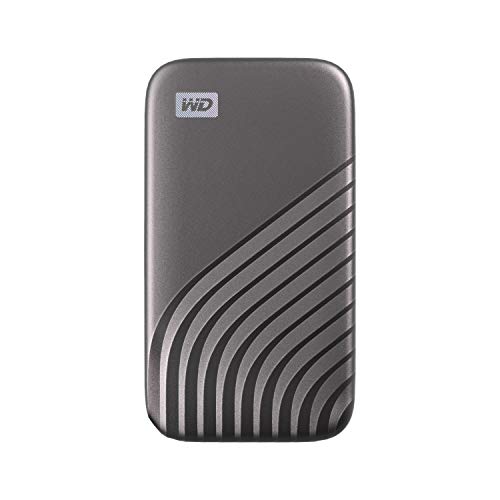
In a side‑by‑side look, the My Passport is dramatically lighter at just 0.015625 pounds (about 7.09 g), far below the Samsung T7’s 0.13 pounds, the SanDisk’s 0.09 pounds, and the other six contenders. Its height of 31.75 mm and length of 127 mm make it taller and longer than the ultra‑thin Samsung T7 (8 mm × 85 mm) but still compact enough for a pocket. Drop protection is rated at 6.5 ft (2 m), which aligns with Samsung and SanDisk and exceeds the 4‑ft rating of the SSK model, though it falls short of the Crucial X9’s 7.5‑ft claim.
Consumers repeatedly praise the drive’s “pocket‑size portability” and the “lightning‑fast transfers” for large photo and video libraries. Professional reviewers note the sleek metal shell and the ability to handle 4K video editing straight from the SSD. On the downside, users report that sustained writes can dip to around 574 MB/s after long sessions, a slowdown tied to the modest 5 GB cache. A few owners mention occasional warmth during intensive transfers, which isn’t a failure point but it’s worth knowing.
Pros
Cons
Best for: Buyers willing to invest in a proven, high‑quality option
Avoid if: You're on a tight budget or only need basic functionality
TL;DR: The Orico 1TB Portable SSD delivers up to 1000 MB/s read speeds, a feather‑light 60 g aluminum body with a handy hanging hole, and a budget‑friendly $114.69 price tag.
Orico’s C10 model packs a 1 TB solid‑state drive into a 131.8 × 33.8 × 18.8 mm aluminum‑alloy shell that weighs just 60 g (0.1322773572 lb). The drive advertises up to 1000 MB/s sequential reads (rated at 992 MB/s) and up to 800 MB/s writes (rated at 974 MB/s) over a USB‑C 10 Gbps interface, and it comes with a 0.3 m USB‑C to USB‑C cable. A built‑in hanging hole and dust‑proof, drop‑proof construction add practical durability for on‑the‑go use.
Compared with the six other SSDs in this roundup, the Orico is heavier than the 32 g Crucial X9 but matches the Samsung T7’s 58 g weight. Its write speed of 800 MB/s falls short of the 1050 MB/s that both the Crucial X9 and X9 Pro list, as well as the 1000 MB/s listed for the SSK, Samsung T7, and WD My Passport SSD. While the Orico’s dust‑proof claim is solid, peers such as the Crucial X9 and X9 Pro specify drop‑protection distances of 2.3 m and 2 m respectively, giving a clearer picture of impact resistance. The included 0.3 m cable is a concrete length, whereas the other models simply note that a cable is included without stating its size.
User feedback repeatedly praises the drive’s lightweight feel and the convenience of the hanging hole for attaching to backpacks or keychains. Reviewers also note that the 1000 MB/s read speed comfortably handles 4K video storage and fast backups. On the downside, several users mention the 132 mm length can feel bulky in small pockets, and the write speed, while respectable, doesn’t keep pace with the faster 1050 MB/s rivals, which some power users find limiting.
Beyond speed, the C10’s aluminum‑alloy plus ABS plastic chassis offers a sturdy, dust‑resistant exterior without moving parts, enhancing reliability. Compatibility spans Windows, macOS, Linux, and Android, so you can plug it into virtually any modern device that supports USB‑C.
Pros
Cons
Best for: Budget-conscious buyers seeking a reliable entry-level option
Avoid if: You need top‑tier performance, ultra‑compact pocket size, or clearly quantified rugged durability
“Plug-and-play ease across devices (PC/Mac/Android/iOS)”
“High‑res photos and videos transfer in seconds, feels premium in hand”
Breakdown
Crucial X9
Pros
Cons
Crucial X9 Pro 1TB
Pros
Cons
Samsung T7 1TB
Pros
Cons
SSK Portable SSD
Pros
Cons
Based on scoring data and product specs
Personalized picks
Best Overall Pick
Crucial X9
Best OverallBest for: Budget-conscious buyers seeking a reliable entry-level option
Crucial X9 Pro 1TB
Best for: Budget-conscious buyers seeking a reliable entry-level option
$103.00-$39.14 vs winner
Skip Orico 1TB Portable SSD if…
Reliability and user satisfaction are your top concerns
The Crucial X9 wins our budget‑under‑$200 SSD roundup. It ships for $125.47, pulls a solid 4.5‑star rating from 6,951 reviews, and delivers 1,050 MB/s read and write speeds. At just 32 g and with an IP55 rating plus 7.5 ft (2.3 m) drop protection, it’s both fast and rugged enough for everyday travel.
The runner‑up is the Crucial X9 Pro 1TB, ideal if you need extra security and a longer warranty. Priced at $103.00, it adds 256‑bit AES hardware encryption, a 5‑year limited warranty, and an activity light for easy status checks, while still matching the X9’s 1,050 MB/s peak speeds.
For other buyer personas, the best budget option remains the Crucial X9 Pro 1TB at $103.00, giving you top‑tier performance at the lowest price. The mid‑range pick is the SSK Portable SSD at $149.99, offering a solid middle‑ground price point for those who want a balance of cost and capacity. The premium choice is the WD My Passport SSD 1TB at $189.99, catering to users willing to stretch the budget for a well‑known brand and premium feel.
Pick the Crucial X9 today and get the fastest, most reliable portable SSD under $200.
The Crucial X9, priced at $125.47, delivers 1050 MB/s read and write speeds, an IP55 rating, and 7.5 ft drop protection, all backed by a 3‑year warranty. Its combination of performance, durability, and price makes it the strongest value proposition in the sub‑$200 segment.
No reviews yet — be the first to share your experience.
Please sign in to leave a review