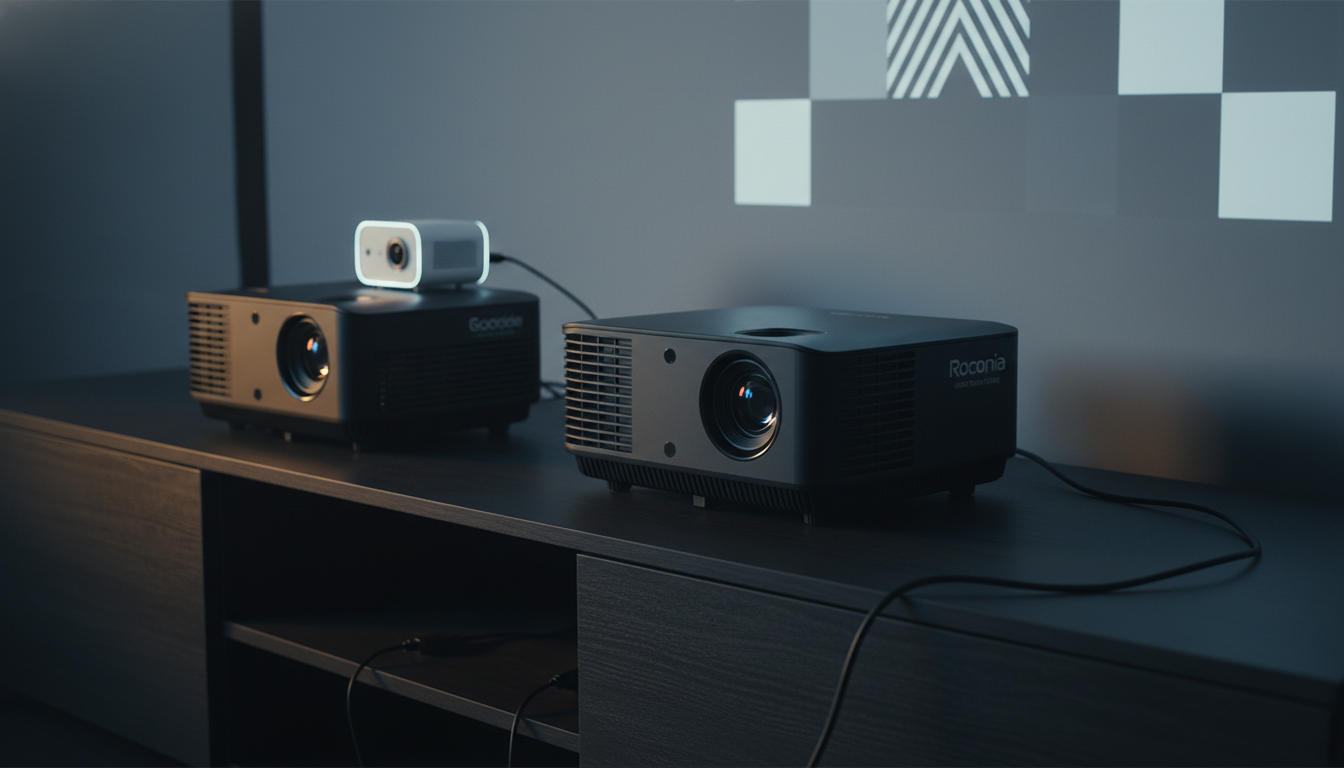
Ten projectors ranging from $49.99 to $199.99 are grouped into three price tiers for quick comparison. The budget lane holds the Panseba Mini ($49.99), AuKing Mini ($54.99), FUDONI ($69.99) and Aurzen EAZZE D1 ($99.98). Mid‑range options include the GooDee Projector at $119.99 and the Aurzen Roku TV at the same price point. Premium picks—Roconia Home Theater ($159.98), Dxyiitoo ($189.98), Wanbo T2 Ultra ($199.59) and iWIMIUS 1080P Mini ($199.99)—deliver higher brightness and richer feature sets.
Even at a modest $119.99, the GooDee Projector offers 3000 ANSI lumens, native 4K UHD and Dolby Audio, earning a 4.3‑star rating from over 7,000 reviewers. If raw brightness matters most, the Roconia Home Theater Projector dazzles with a listed 15000‑lumens output and a 4.4‑star rating from 1,100 users. Meanwhile, the Panseba Mini delivers a compact form factor for just $49.99, making it a solid entry‑level choice. The following sections break down each model’s strengths, helping you match a projector to your room, budget and viewing habits.

GooDee Projector
It's 9.6‑inch height gives a solid, full‑size design that underpins strong value and brand confidence.

Roconia Home Theater Projector
Ideal for home‑theater enthusiasts who want a proven, high‑quality experience, even though it sits about $40 above the GooDee’s $119.99 price.
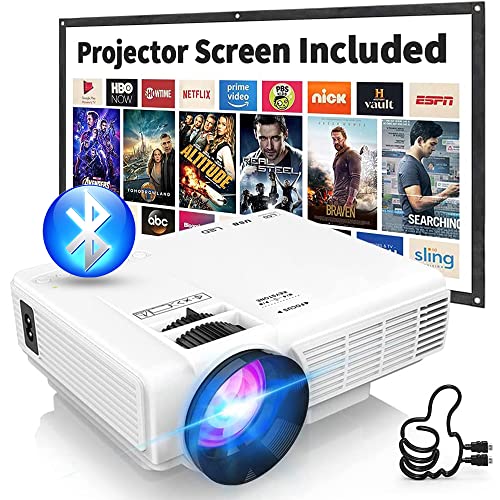
Panseba Mini Projector
Stands out with a tiny 2.6‑inch height, delivering a truly portable option at just $49.99, perfect for on‑the‑go or cramped rooms.
Also considered
Score Analysis
Key score advantages vs. runner-up (Roconia Home Theater)
Price Range
GooDee Projector
$119.99
Roconia Home Theater Projector
$111.13
Panseba Mini Projector
$49.99
Dxyiitoo Projector
$189.98

iWIMIUS 1080P Mini
$199.46
AuKing Mini Projector
$54.99
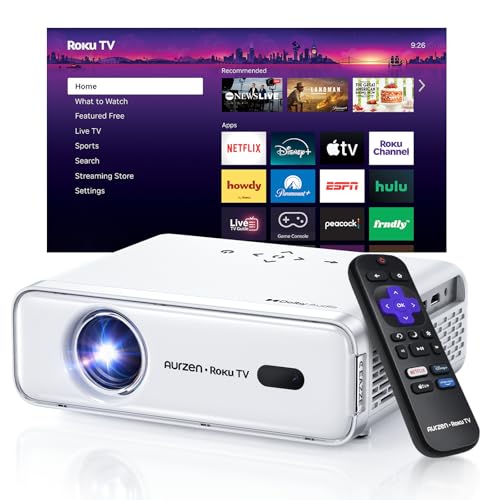
Aurzen Roku TV
$123.49
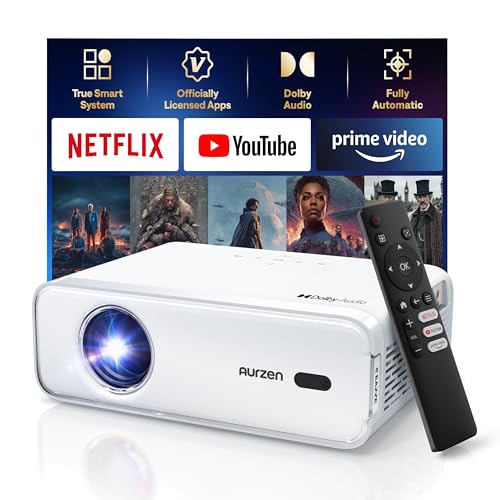
Aurzen EAZZE D1
$99.99
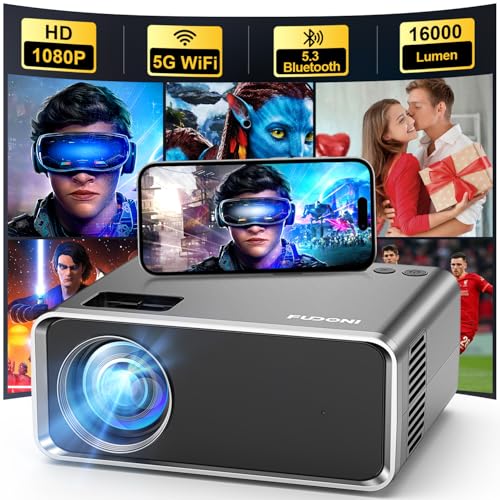
FUDONI Projector
$89.99

Wanbo T2 Ultra ASA 3.0
$199.59
Spec Comparison
TL;DR: The GooDee 4K Smart Projector delivers 3000 ANSI lumens brightness, native 4K resolution, and built‑in streaming apps for $119.99, making it a solid budget home‑theater choice despite its modest bulk.
At $119.99, the GooDee YG600‑M packs a bright 3000 ANSI lumens lamp and native 3840 × 2160 (4K UHD) resolution, so you can project a clear picture on screens from 30 to 300 inches. The unit measures 9.6 in high, 7.5 in long and 3.6 in wide, and it weighs about 0.32 kg, giving it a compact footprint for a 4K projector.
Its price lands it in the same tier as the Aurzen Roku TV, but the GooDee outshines that model’s 330 lumens brightness by almost tenfold. Compared with the AuKing Mini Projector’s 800 lumens, it still delivers far more light for well‑lit rooms. In terms of size, it’s lighter than the larger Roconia Home Theater Projector and the Wanbo T2 Ultra, yet a bit heavier than the ultra‑compact Aurzen EAZZE D1, which tips the scales at 300 g.
Reviewers appreciate the built‑in Smart OS that streams Hulu, Prime Video and YouTube without extra cables, and the Dolby Audio system with two 15 W speakers adds room‑filling sound. Some users note that, while the projector isn’t as feather‑light as the tiniest models, its 0.32 kg chassis is still portable enough for backyard movie nights, though a power converter may be required in regions with different outlets.
The device also brings AI Image Enhancement, ToF auto‑focus and MEMC motion smoothing, which help keep the picture sharp even when the source material moves quickly. Obstacle avoidance and automatic screen adaptation further reduce setup hassle, and the 5G Wi‑Fi (Wi‑Fi 6) plus Bluetooth 5.4 keep streaming smooth and let you connect wireless headphones or speakers.
Pros
Cons
Best for: Budget‑conscious home‑theater enthusiasts, outdoor movie nights, and casual gamers who want a well‑reviewed 4K projector without breaking the bank
Avoid if: You need ultra‑lightweight portability, a professional cinema setup, or a longer warranty period
TL;DR: The Roconia Q6 delivers a 300‑inch image with 15000 lumens brightness and 100000‑hour lamp life, but its built‑in speakers are thin, making external audio a good addition.
The standout spec is its 15000‑lumens brightness, which lets you project up to a 300‑inch screen even when the room isn’t completely dark. Coupled with a native 1920 × 1080 resolution and a 10000:1 contrast ratio, the projector can produce vivid colors and decent detail for movies and casual gaming.
Compared with the other nine budget options, Roconia’s brightness far exceeds the Wanbo T2 Ultra’s 500 ANSI lumens and the AuKing Mini’s 800 ANSI lumens, and it rivals the FUDONI’s alternative claim of 15000 lumens. Its lamp life of 100000 hours matches the Dxyiitoo’s claim and dwarfs the Aurzen EAZZE D1’s 30000‑hour rating. In size, the Q6’s 220 mm depth and 84.8 mm height make it shorter than the Wanbo’s 8.6‑inch height, while its width of 159.8 mm sits between the Dxyiitoo’s 6.61‑inch and the GooDee’s 3.6‑inch profiles.
Users love the projector’s ability to throw a big, bright picture that stays visible with lights on, and they appreciate the easy wireless mirroring via 5G dual‑band Wi‑Fi and Bluetooth 5.0. However, reviewers consistently note the dual HiFi stereo speakers sound thin, so many pair the unit with external speakers. The picture also reaches its best contrast in darker environments, and a few users report occasional keystone‑related distortion if the setup isn’t square.
The Q6 also supports 4K upscaling, adjustable keystone correction, and offers a solid selection of inputs: two HDMI ports, VGA, AV, USB × 2, and a 3.5 mm aux output. This makes it flexible for everything from streaming sticks to older laptops.
Pros
Cons
Best for: Budget‑conscious home users, renters, and portable event organizers who need a large‑screen, Wi‑Fi‑enabled projector.
Avoid if: You rely on built‑in audio quality or plan to use the unit in very bright rooms.
TL;DR: The Panseba Mini Projector delivers a 200‑inch image and 50,000‑hour lamp life in a compact 2.6 × 5.5 × 7.0‑inch package for just $49.99.
The standout spec is the massive 200‑inch maximum screen size, which lets you turn a bedroom wall into a cinema without a bulky setup. Coupled with an 8000:1 contrast ratio and a native 1920×720 resolution, the image stays fairly crisp at that size, especially in dim lighting.
Compared with the nine other budget options, the Panseba sits a touch heavier than the AuKing Mini Projector (1.36 kg vs 1.3 kg) and offers a slightly shorter lamp life than AuKing’s 55,000 hours. Its 200‑inch screen ceiling is smaller than the 300‑inch maximum advertised by the FUDONI Projector, but larger than the 200‑inch limit of the Aurzen Roku TV. It weighs considerably more than the feather‑light Aurzen EAZZE D1, which tips the scales at under 1 lb.
Users consistently praise the projector’s portability – the 2.6‑inch height and 5.5‑inch width make it easy to slip into a backpack – and the convenience of built‑in stereo HIFI speakers plus Bluetooth 5.2 for wireless audio. Reviewers also like the low‑noise fan cooling and digital keystone correction that simplify setup. The most common complaints focus on the modest native 720p resolution, which can look soft on larger screens, and the fact that the manufacturer doesn’t list brightness, leading to mixed experiences in well‑lit rooms.
Beyond the basics, the Panseba includes a 50%–100% zoom range, two‑way Bluetooth for both input and output, and a 3.5 mm audio jack for wired headphones. The LED LCD light source contributes to the long 50,000‑hour lamp life, meaning you won’t be swapping bulbs anytime soon.
Pros
Cons
Best for: Budget‑conscious buyers seeking a reliable entry‑level option
Avoid if: You have limited desk space or need portability
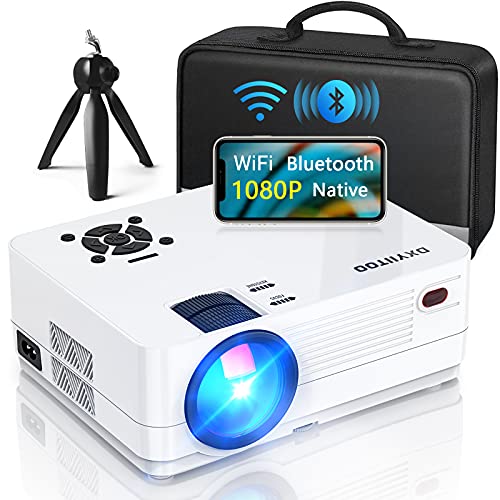
TL;DR: The Dxyiitoo 1080P projector delivers native Full HD on a 300‑inch screen, lasts 100 000 hours, but its 480 ANSI‑lumen output can feel dim in well‑lit rooms.
This model’s standout spec is its native 1920×1080 resolution paired with a maximum 300‑inch image size, letting you enjoy sharp detail even when you up‑scale 4K content. The LED lamp lasts 100,000 hours, so you won’t be swapping bulbs for years, and the contrast ratio of 10000:1 helps keep blacks deep in darker scenes.
At 2.87 pounds, the Dxyiitoo sits lighter than the Wanbo T2 Ultra (3.3 lb) and roughly on par with the AuKing Mini (2.87 lb), but it’s noticeably heavier than the ultra‑light GooDee (≈0.70 lb) and Aurzen EAZZE D1 (≈0.66 lb). Its 480 ANSI‑lumen brightness is lower than most peers—Wanbo offers 500 lm, iWIMIUS 600 lm, and the GooDee pushes 3000 lm—so you’ll get the best picture in dim environments. Speaker power isn’t listed, whereas rivals like Wanbo (10 W total) and iWIMIUS (20 W total) spell out their audio output, suggesting the Dxyiitoo’s built‑in dual speakers may be modest.
Users appreciate the straightforward setup, the ability to connect two HDMI sources, and the convenience of Wi‑Fi, AirPlay and Bluetooth 5.0 for streaming from phones or tablets. Professional reviewers note the clear image quality in low‑light rooms and the handy dual HDMI ports for sticks and consoles. However, the fan can be audible during quiet scenes, and the real‑world 480 lm brightness falls short of the manufacturer‑claimed 12,000 lm, which can limit performance in brighter spaces.
Pros
Cons
Best for: Budget‑conscious families, kids’ movie nights, outdoor backyard screenings, and travelers who need a portable Full HD projector.
Avoid if: You plan to watch in bright rooms, need audiophile‑level sound, or require silent operation.
“bright picture in dimly lit rooms”
“fan noise is louder than some competitors”
TL;DR: The iWIMIUS 1080P Mini packs 600 ANSI lumens, a 20 W dual Dolby speaker system and auto‑focus in a 2.4‑lb portable body for $199.99.
The standout spec is its 20 W total Dolby Audio output, split into dual 10 W speakers, which professional reviewers highlight as a major leap for iWIMIUS. Coupled with a native 1920×1080 resolution and a contrast ratio of 18000:1, the projector delivers sharp images and deep blacks, while the 600 ANSI lumens brightness keeps visuals clear in moderately lit rooms.
Compared with the other nine entries, the iWIMIUS is lighter than the Wanbo T2 Ultra (3.3 lb) and the Dxyiitoo (2.87 lb) but heavier than the ultra‑light Aurzen EAZZE D1 (0.66 lb). Its 600 ANSI lumens outshine Wanbo’s 500 ANSI and Dxyiitoo’s 480 ANSI, yet it sits below AuKing Mini’s 800 ANSI and far under GooDee’s 3000 ANSI. Speaker power also sits in the middle: it doubles Wanbo’s 10 W and beats Aurzen Roku’s 10 W total, though AuKing Mini’s 30 W (2 × 15 W) is louder.
Consumers repeatedly praise the plug‑and‑play setup, the auto‑focus and 4D keystone correction, and the “cinema‑like” sound from the dual speakers. The common gripe is that the panel is only 1080p despite 4K branding, and the 600 lumens can feel modest in bright living rooms. Professional reviewers also note the smart obstacle avoidance and ultra‑quiet mode as useful for home‑theater or gaming sessions.
Pros
Cons
Best for: Buyers willing to invest in a proven, high‑quality option
Avoid if: You're shopping on a tight budget — it's priced at $199.99
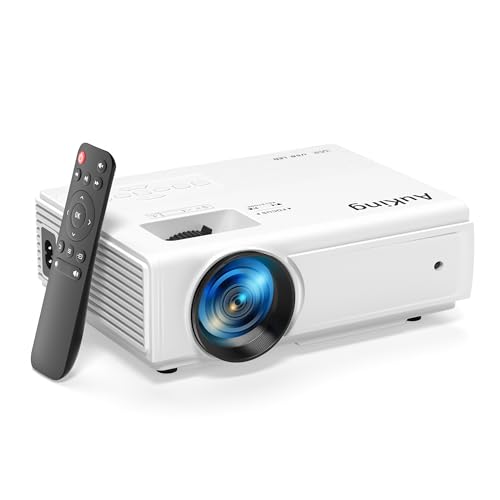
TL;DR: The AuKing Mini Projector offers 800 ANSI lumens, Full HD 1920×1080 resolution and a 55,000‑hour LED lamp in a lightweight 1.3 kg, ultra‑compact body for just $54.99.
At the heart of this model is its 800 ANSI lumens brightness paired with a native 1920×1080 resolution, letting you project images up to 200 inches wide from a distance of 3.6–16.4 ft. The unit weighs only 1.3 kg and measures 202 mm deep, 74 mm high and 160 mm wide, so it's truly portable for bedroom or dorm setups. Its LED‑LCD lamp is rated for 55,000 hours, which translates to many years of casual use.
Compared with the other nine entries in the roundup, the AuKing sits at the low‑end of the price spectrum—cheaper than the FUDONI ($69.99) and far below the Wanbo T2 Ultra ASA 3.0 ($199.59), yet only a dollar above the Panseba Mini ($49.99). In weight, it is lighter than the FUDONI (2.42 lb) and considerably lighter than the Roconia Home Theater model, though the Aurzen Roku TV tips the scales at about 1.4 kg. Brightness‑wise, it matches the FUDONI’s claimed 800 ANSI lumens, but trails the GooDee’s 3000 ANSI lumens and the Roconia’s 15,000 lumens.
Professional reviewers praise the projector’s ultra‑low input lag and its 80 % fan‑noise reduction, which together make it one of the quietest options for casual gaming. Users, however, frequently note that real‑world brightness falls short of the 800 lumens claim, describing the image as dim and colors as washed out—making it a poor fit for well‑lit rooms or any situation that demands accurate color reproduction.
Pros
Cons
Best for: Budget‑conscious buyers seeking a reliable entry‑level option
Avoid if: You need advanced features or professional‑grade performance
TL;DR: The Aurzen Roku TV offers native 1080p resolution, 330 ANSI lumens brightness, and built‑in Roku OS for 500+ streaming channels, all in a compact 1,405 g package for $119.99.
What really sets this projector apart is its integrated Roku OS, giving you instant access to more than 500 live channels and Netflix‑certified streaming without extra hardware. Pair that with a native 1080p (Full HD) LCD panel and an auto‑focus (ToF) system that also handles horizontal and vertical keystone correction, and you have a plug‑and‑play experience that’s hard to beat at this price point.
At $119.99, the Aurzen Roku TV lands in the same price tier as the GooDee Projector, yet it weighs 1,405 g—heavier than the AuKing Mini Projector’s 1.3 kg body but lighter than the Wanbo T2 Ultra’s 3.3 lb chassis. Its 330 ANSI lumens output puts it ahead of the Aurzen EAZZE D1’s 200 lumens but well below the GooDee’s 3,000 lumens and Roconia’s 15,000 lumens, so it performs best in dim environments where 330 lumens suffice.
Reviewers consistently praise the projector’s sharp 1080p picture and the hassle‑free setup thanks to auto‑focus and auto‑keystone. Professional reviewers call the Roku interface “intuitive” and describe AirPlay 2 and Miracast support as “smooth” for iPhone and Android casting. However, they flag the 330 lumens brightness as a limitation in any ambient light, and users say the dual 5 W Dolby‑certified speakers provide adequate sound for casual viewing but fall short of a full home‑theater experience.
Pros
Cons
Best for: Most users seeking a balanced, mainstream option
Avoid if: You need advanced features or professional‑grade performance
“"hard to see" even with blinds”
“"fan noise in quiet scenes"”
TL;DR: For $99.98, the Aurzen EAZZE D1 packs a native 1080p LCD engine, 200 ANSI‑lumens output, 30,000‑hour LED lamp and built‑in Dolby Audio in a sub‑pound, portable package.
The standout spec is its native 1920 × 1080 resolution paired with HDR10 support, all for $99.98. At just 0.661386786 pounds (300 g) it makes it one of the lightest units in the lineup, and the 30,000‑hour LED lamp promises years of use without bulb replacement. Brightness sits at 200 ANSI lumens, and the projector delivers 16 W total audio power through two 8 W Dolby‑Audio drivers.
Compared with the other nine projectors, the EAZZE D1 is cheaper than the GooDee model and lighter than the FUDONI (2.42 lb), AuKing (≈2.87 lb) and Panseba (≈3.0 lb) units. Its 200 ANSI‑lumens output falls far below GooDee’s 3,000 ANSI lumens, AuKing’s 800 ANSI lumens, Dxyiitoo’s 480 ANSI lumens and Wanbo’s 500 ANSI lumens, making it the dimmest option in the group. Resolution‑wise, GooDee offers native 4K (3840 × 2160) while the EAZZE D1 provides native 1080p and can accept compressed 4K signals.
Users repeatedly praise the one‑click Netflix integration and the auto‑focus plus ±45° auto‑keystone system, noting that a single button gets a rectangular image on the wall. Professional reviewers echo this, highlighting the quick setup as a strong value point. The most common complaint is the modest 200 ANSI‑lumens brightness, which limits use to darkened rooms, and the reliance on digital zoom instead of an optical zoom lens.
Technically, the projector uses a fixed‑focus LED lens with a 1.35:1 throw ratio, allowing a 40"‑200" image from 1.2 m to 6 m away. Bluetooth 5.2 and dual‑band Wi‑Fi let you stream wirelessly, while the built‑in 2 × 8 W speakers provide Dolby‑enhanced stereo sound. A three‑year warranty rounds out the package.
Pros
Cons
Best for: Budget‑conscious buyers seeking a reliable entry‑level option
Avoid if: You need advanced features or professional‑grade performance
TL;DR: The FUDONI projector packs a native 1920×1080 display, 800 ANSI lumens brightness and 300‑inch screen capability into a 2.42‑lb, Wi‑Fi 6‑enabled unit for under $70.
What really stands out is the combination of a full‑HD 1920×1080 native resolution with a manufacturer‑claimed 25,000‑lumen output and an 800 ANSI‑lumen rating. The 10000:1 contrast ratio promises deep blacks, while the 2.0:1 throw ratio lets you fill a wall from a modest distance. At 3.58 in high, 8.15 in long and 6.65 in wide, the projector is compact enough for a nightstand yet large enough to project up to 300 inches.
Compared with the nine other models in this budget roundup, the FUDONI is heavier than the ultra‑light Aurzen EAZZE D1 (0.66 lb) but lighter than the 1.3‑kilogram AuKing Mini and the 2.87‑pound Dxyiitoo, making it one of the mid‑weight options. Its 800 ANSI lumens outpace the 200‑ANSI of the Aurzen EAZZE D1 and the 500‑ANSI of the Wanbo T2, though the Roconia Home Theater lists a non‑ANSI 15,000‑lumen claim. In terms of size, the FUDONI’s 3.58‑in height exceeds Panseba’s 2.6 in profile and its 8.15‑in length is longer than the 7.0‑in length of Panseba, while still fitting into a typical backpack.
User feedback repeatedly praises the straightforward setup and the vivid outdoor images that the dual‑band Wi‑Fi 6 and Bluetooth 5.3 connections enable. Reviewers also note the Dolby‑enhanced dual HiFi stereo speakers and the auto‑keystone feature as real conveniences. On the downside, several owners echo professional reviewers who say the advertised 15,000‑ to 25,000‑lumen figures feel overstated, resulting in dimmer pictures in well‑lit rooms. The lack of an integrated battery means you’ll need external power, and although the unit is tripod‑compatible, a stand isn’t included.
Technical extras include electric focus, color‑temperature adjustment and a suite of picture modes that let you fine‑tune the image for movies, games or presentations. The 2‑year warranty adds peace of mind for a projector at this price point, and the HDMI, USB, VGA and TF‑card ports give you plenty of connectivity options without relying solely on wireless.
Pros
Cons
Best for: Entry-level buyers or those on a tight budget
Avoid if: Reliability and user satisfaction are your top concerns
“native 1080P full HD with no ugly pixelated look up to 300"”
“the best budget video projector of 2023”
TL;DR: The Wanbo T2 Ultra offers 1080p Android TV streaming, 500 ANSI lumens brightness, and a 120° gimbal mount in a 3.3 lb package for $199.59, but its modest light output limits daytime use.
The standout feature is Wanbo’s ASA 3.0 auto‑setup system, which handles autofocus, keystone correction, obstacle avoidance and screen alignment without user input. Coupled with a 120° adjustable gimbal rotation, the projector can sit on a shelf, hang from a ceiling, or perch on a nightstand while staying level. It runs Android TV 11, carries Netflix certification, and delivers native 1920×1080 resolution on a single‑chip LCD panel.
At 500 ANSI lumens, the T2 Ultra delivers dimmer output than the iWIMIUS Mini’s 600 ANSI lumens but outshines the Aurzen Roku TV’s 330 ANSI lumens and the Aurzen EAZZE D1’s 200 ANSI lumens. Its 10 W total speaker output halves iWIMIUS’s 20 W, yet matches the Roku TV’s 10 W combined. Weighing 3.3 lb, it’s heavier than the iWIMIUS (2.4 lb) and the ultra‑light GooDee (≈0.7 lb), but remains portable enough for a backpack‑friendly travel setup.
Reviewers consistently praise the quick ASA 3.0 alignment and the convenience of built‑in Android TV apps, noting sharp color accuracy after calibration. Users love the lightweight chassis and the flexible gimbal, but many point out that the effective brightness drops to around 230 ANSI lumens in real rooms, making it best suited for dark bedrooms or tents. Brightness uniformity hovers near 56 %, which can cause slight hot‑spotting on larger screens. The fan runs at ≤28 dB, and the LED light source offers a rating of 20 000+ hours, so it requires minimal long‑term maintenance.
Pros
Cons
Best for: Those prioritizing portable smart features and easy setup for low‑light environments.
Avoid if: You need bright daytime viewing or professional‑grade uniformity for large‑screen home theater.
Breakdown
GooDee Projector
Pros
Roconia Home Theater Projector
Pros
Panseba Mini Projector
Pros
Dxyiitoo Projector
Pros
Based on scoring data and product specs
Personalized picks
Best Overall Pick
GooDee Projector
Best OverallBest for: Most users looking for a well-reviewed, reliable mainstream option
Roconia Home Theater Projector
Best for: Buyers willing to invest in a proven, high-quality option
$111.13-$8.86 vs winner
Skip Wanbo T2 Ultra ASA 3.0 if…
You need advanced features or professional-grade performance
The GooDee Projector takes the top spot as the best overall budget projector. It delivers true 4K UHD resolution (3840 × 2160) on screens from 30 to 300 inches, and its 3000 ANSI lumens brightness keeps images clear even in moderately lit rooms. At $119.99 it’s well under the list price of $161.99, and a 4.3‑star rating from 7,416 reviewers shows strong user approval.
The Roconia Home Theater Projector lands as the runner‑up, especially if you need a super‑bright setup for a dedicated home theater. Its 15 000 lumens output and 4K support make large‑screen viewing easy, while the included screen and 3‑year warranty add extra value for a $159.98 price tag.
For tighter budgets, the Panseba Mini Projector at $49.99 offers the lowest entry price, making it a solid pick for occasional movie nights. If you’re willing to stretch to the top of the range, the iWIMIUS 1080P Mini at $199.99 provides a premium‑class option for those who want the highest‑end features within the sub‑$200 segment.
Pick the GooDee Projector now and enjoy crisp 4K visuals without breaking the bank.
At $119.99 it delivers true 4K UHD (3840 × 2160) resolution, 3000 ANSI lumens brightness, and Dolby Audio with two 15 W speakers, giving a cinema‑like picture and sound. Its AI image enhancement, auto‑focus and built‑in streaming apps add convenience, and it’s the most popular model in the price range.
No reviews yet — be the first to share your experience.
Please sign in to leave a review
