⚡ Quick Answer
If you love the idea of changing a room’s vibe with a tap or voice command, you’re not alone—Kasa Smart’s KL125 has amassed 24,808 reviews and holds a 4.5‑star rating, making it one of the most talked‑about bulbs in this space. Across the board, every model in our lineup delivers the same 800‑lumen output, so you won’t sacrifice brightness while hunting for the right price or feature set.
The ten bulbs we examined span a price range from $8.20 for the Sengled Matter bulb up to $24.99 for the premium options like Tapo’s L530E and Geeni’s Smart LED. We’ve grouped them into three tiers: the Budget tier (Sengled, Amazon Basics, Kasa, Feit Electric), the Mid‑range tier (Philips Hue and Govee), and the Premium tier (WiZ, Cync, Tapo, Geeni). This lets you quickly see which price bracket aligns with your budget and which features—such as Matter support, color‑changing capabilities, or hub requirements—might matter most.
We compared all 10 products on price, user ratings, and key specifications, and the following sections break down how each one stacks up, so you can pick the smart bulb that fits your home and wallet.

Kasa Smart Bulb KL125
Its compact 115 mm height helps it fit standard fixtures while delivering the reliable performance that earned a 4.5‑star rating from over 24,000 reviewers.

Govee LED Smart Light Bulb
Ideal for users who want a slightly larger bulb (134 mm height) and are willing to spend about $10 more than the Kasa entry‑level option.

Cync GE A19 LED Smart Light Bulb
Features built‑in 2.4 GHz Wi‑Fi, letting you control it directly without a hub—something the Kasa and Govee bulbs don’t list.
Score Analysis
Key score advantages vs. runner-up (Govee LED Smart)
Price Range
Kasa Smart Bulb KL125
$9.99
Govee LED Smart Light Bulb
$19.99
Cync GE A19 LED Smart Light Bulb
$23.99

Amazon Basics Smart A19 LED Light Bulb
$8.25

Sengled Matter
$5.81
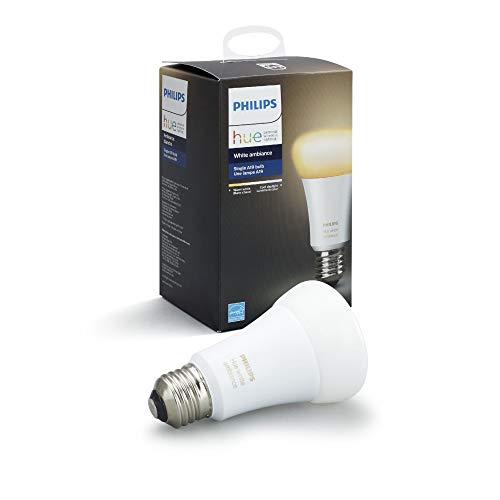
Philips Hue White Ambiance A19
$16.99

Feit Electric Smart Light Bulb
$14.40

WiZ A19 Smart Bulb
$21.99

Tapo L530E
$27.99
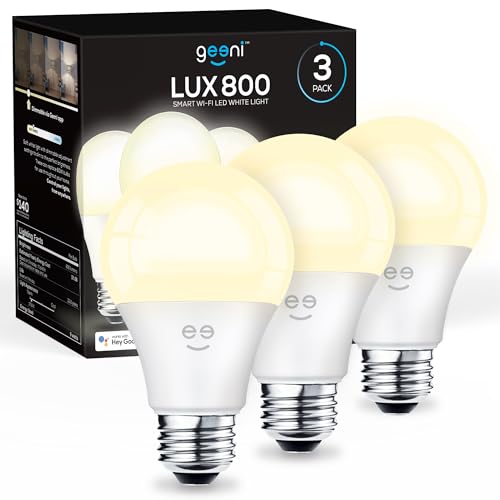
Geeni Smart LED Light Bulb
$19.99
Spec Comparison
TL;DR: For about $10, the Kasa Smart Bulb KL125 delivers 800 lumens, 16 million colors and full dimming without a hub, but it only works on 2.4 GHz Wi‑Fi.
The standout spec is its 16 million‑color palette combined with a tunable temperature range of 2500 K to 9000 K, all while drawing just 9 W and producing 800 lumens of light. Its 220‑degree beam spreads illumination widely enough for most rooms, and the bulb carries a 25,000‑hour lifetime rating.
At roughly $10 it sits below the price points of many rivals such as the WiZ A19 Smart Bulb and the Govee LED Smart Light Bulb, yet it's a bit heavier than the Amazon Basics and Sengled options, which weigh around 0.09 lb and 0.11 lb respectively. Brightness matches the 800‑lumens output of those same competitors, and its 9 W power draw aligns with the Amazon Basics, Sengled, and Feit Electric models. Like most of the lineup, it only supports 2.4 GHz Wi‑Fi, so it shares the same network limitation as the Cync GE and Tapo L530E bulbs.
Users consistently praise the plug‑and‑play setup, noting that the lack of a required hub keeps the upfront cost low and the installation straightforward. Reviewers also love the vivid color customization and the low standby draw of 0.5 W, which translates to modest ongoing energy costs. On the flip side, the 2.4 GHz‑only requirement can be a headache for households that prioritize 5 GHz networks, and the reliance on cloud connectivity means advanced features disappear when the internet is down. The 220‑degree beam angle, while adequate for many spaces, may feel narrow in larger rooms.
Additional technical touches include Auto White, which automatically shifts color temperature to follow natural light patterns, and real‑time energy monitoring that lets you see how much power each bulb uses. Grouping lets you control several Kasa bulbs with a single tap, and the device carries UL certification and a two‑year warranty for peace of mind.
Pros
Cons
Best for: Budget-conscious buyers seeking a reliable entry-level option
Avoid if: You need advanced features or professional‑grade performance
TL;DR: The Govee H6006 A19 smart bulb delivers 16 million colors plus tunable white from 2700 K to 6550 K, 54 scenes, and voice control for about $20.
What really stands out is the combination of 16 million RGB colors and a wide 2700–6550 K tunable‑white range, which you manage through the Govee Home app, Wi‑Fi (2.4 GHz) or Bluetooth. The bulb draws 8.8–9 W, matches a 75 W incandescent, and promises a 30,000‑hour lifespan, so you won’t be swapping it out any time soon.
In the $25‑under lineup, the Govee sits a bit higher in price than the sub‑$10 Kasa or Amazon Basics options, yet it’s still cheaper than the premium‑priced WiZ A19. At 73 g it’s lighter than the Cync GE bulb (≈0.37 lb) but heavier than the Amazon Basics model (≈0.09 lb). Its 54 preset scenes and group‑control for up to 50 bulbs give it more flexibility than the Philips Hue bulb, which requires a separate hub.
Users consistently praise the straightforward app setup, the crisp white output (CRI 90.1–93.5) and the convenience of Alexa or Google Assistant voice commands. Professional reviewers note the solid color accuracy and reliable connectivity, while a common complaint is occasional Wi‑Fi drop‑outs on congested 2.4 GHz networks. The RGB channel tops out at 110 lm, which many find dim for vivid color effects, and the lack of Matter support limits future ecosystem integration.
Pros
Cons
Best for: Most users looking for a well‑reviewed, reliable mainstream option
Avoid if: You're shopping on a tight budget — it's priced around $20
TL;DR: The Cync GE A19 Smart Bulb delivers full‑color, dimmable light at 800 lm for about $24, with hub‑free Wi‑Fi/Bluetooth control, though its app can be finicky and brightness may feel low in larger rooms.
At the heart of this bulb is a 10 W LED that puts out 800 lm of light and a warm 2700 K color temperature, matching a traditional 60 W incandescent while offering a CRI above 90 for vivid colors. It’s dimmable, supports music sync, and works with Amazon Alexa, Google Assistant, Apple Home and Samsung SmartThings without any external hub.
Compared with the nine other budget bulbs in this roundup, the Cync is heavier than the WiZ A19 (0.25 lb) and Geeni (0.19 lb), but its 0.37 lb weight is almost the same as the Tapo L530E (0.38 lb) and noticeably heavier than the Kasa KL125 (0.15 lb) and Amazon Basics (0.09 lb). Its 15 000‑hour lifespan is shorter than the 25 000‑hour lifespans listed for several peers, and its 10 W draw is a touch higher than the 8.8 W of WiZ or the 9 W of Kasa and Feit, meaning it isn’t the most power‑efficient option in the set.
Users consistently praise the hub‑free setup and the rich, true‑to‑life colors that the high CRI provides. Professional reviewers note the seamless voice‑assistant integration and the convenience of direct Wi‑Fi/Bluetooth connectivity. On the downside, many mention occasional app glitches and Wi‑Fi drops, and some feel the 800 lm output is modest for bright kitchens or open‑plan spaces. The bulb rates for indoor and damp locations, carries a three‑year warranty, and supports Matter for future‑proofing.
Pros
Cons
Best for: Tech‑savvy homeowners who want affordable, colorful smart lighting without a hub, especially for bedrooms or living‑room mood lighting.
Avoid if: You need high‑brightness illumination for kitchens or workspaces, or you require a fully waterproof bulb for outdoor use.
TL;DR: The Amazon Basics Smart A19 LED bulb delivers 800 lumens at 9 W, offers full‑color RGB, remembers its last setting, and works instantly with Alexa for under $10.
This bulb’s standout spec is its 800‑lumens output while drawing only 9 W, matching a traditional 60 W incandescent but using a fraction of the energy. At 4.21 inches tall and weighing just 0.09 pounds, it’s compact enough to fit standard fixtures without crowding the socket.
Compared with the nine other lights in this roundup, the Amazon Basics model is lighter than the Sengled Matter (0.09 lb vs 0.114 lb) and the Kasa Smart bulb (0.09 lb vs 0.15 lb). Its height of 4.21 inches also sits below the typical 4.4‑inch range of many peers, making it one of the more space‑efficient options. While most competitors list a hub requirement or multiple voice assistants, this bulb needs no hub and connects directly to Alexa over 2.4 GHz Wi‑Fi.
Users consistently praise the hassle‑free Alexa‑only setup—professional reviewers note the flashing detection that auto‑adds the bulb to the app. The color vibrancy and full RGB palette, backed by 16 preset colors, earn frequent compliments for creating mood lighting without a steep price tag. Reviewers highlight the built‑in color memory, which retains the last hue and brightness after a power cycle, as a reliable convenience.
Technical notes include dimmable operation across a 5 %‑to‑100 % range and support for six white temperature presets—from warm white to daylight—plus the full RGB spectrum. The bulb’s model number is 13aSB‑A800ST‑Q1T, and it ships with an E26 base that fits most household lamps.
Pros
Cons
Best for: Budget-conscious buyers seeking a reliable entry-level option
Avoid if: You rely on Google Assistant, Apple HomeKit, or need 5 GHz Wi‑Fi support
TL;DR: The Sengled Matter A19 bulb delivers 800 lumens of color‑rich light at just 9 W, works hub‑free over Matter‑compatible Wi‑Fi and costs about $8, making it a solid budget smart‑lighting choice.
What really sets this bulb apart is its Matter certification. It pairs instantly without a hub, then integrates with Alexa, Google Home, Apple HomeKit and Samsung SmartThings. The bulb offers 16 million colors and a 90 CRI, while pulling only 9 W of power for an equivalent 60 W incandescent output and up to 85 % energy savings.
In the context of the other nine bulbs, Sengled is slightly heavier than the Amazon Basics model (0.114 lb vs 0.09 lb) but lighter than the Kasa Smart Bulb (68 g) and comparable in size to Kasa’s 115 mm height. Like most competitors, it runs on 2.4 GHz Wi‑Fi, but it's one of only two bulbs in the list (the other being Tapo) that explicitly list Matter support. Brightness and power consumption match the Amazon Basics, Kasa and Feit models at 800 lumens and 9 W, while the Philips Hue and Govee options require a hub or lack Matter altogether.
Reviewers consistently highlight the convenience of hub‑free setup and the vivid color palette, noting that the 90 CRI makes the light feel natural for movies and reading. A common complaint is the 2.4 GHz‑only Wi‑Fi, which can be crowded in busy households, and the automatic disabling of pairing mode after 15 minutes, which some users find inconvenient. The 4.3‑star rating reflects a solid but not standout satisfaction level compared with peers.
Pros
Cons
Best for: Budget-conscious buyers seeking a reliable entry-level option
Avoid if: you rely exclusively on 5 GHz Wi‑Fi, need guaranteed brightness levels, or prefer ecosystems that require a hub
TL;DR: The Philips Hue White Ambiance A19 offers adjustable white light, solid Alexa and Google Home support, and a reputable brand, but its need for a separate Hue Bridge and higher price make it a premium choice for budget‑conscious shoppers.
This bulb measures 165 mm tall, 75 mm long and 88 mm wide, and it weighs just 0.1 pounds (45 g), fitting comfortably into standard fixtures while staying lightweight. It ships with Wi‑Fi connectivity and works with Alexa, Google Home, and the Hue Hub—though you must buy the hub separately. Adjustable brightness and LED technology give you flexible lighting without sacrificing efficiency.
Compared with the nine other bulbs in this roundup, the Hue is generally pricier and requires a bridge, whereas many competitors operate directly over Wi‑Fi or Bluetooth. It’s also a bit larger than the compact WiZ A19 Smart Bulb and heavier than the Kasa Smart Bulb, but lighter than the WiZ model. While some alternatives forego a hub, the Hue’s ecosystem offers deeper integration for those already invested in Philips Hue accessories.
Users consistently praise the bulb’s bright output and the simplicity of its setup process, noting that the Philips Hue app feels intuitive and that voice commands work reliably. The most frequent complaint centers on the extra cost of the required Hue Bridge and the fact that the bulb doesn’t provide full RGB color, which some buyers expect from a “smart” bulb. Professional reviewers highlight the reliable brand reputation and the two‑year warranty as confidence‑boosting factors.
Pros
Cons
Best for: Home automation enthusiasts who already own or plan to build a Philips Hue ecosystem and value reliable voice‑assistant integration.
Avoid if: You’re focused on the lowest possible cost, need full color options, or prefer a plug‑and‑play bulb without an extra hub.
TL;DR: Feit Electric’s RGBW smart bulb offers 800 lumens of brightness, 25 000 hour lifespan and Alexa/Google voice control for roughly $15, making it a solid entry‑level choice.
The bulb packs a full‑color RGBW spectrum, tunable white from 2700 K to 6500 K, and a CRI of 90, all while drawing just 9 W and delivering 800 lumens. Its 68.6 mm diameter and 109 mm height let it fit standard fixtures, and the 2.4 GHz Wi‑Fi connection works with the Feit Electric app for remote access, scheduling and group control.
Compared with the other nine options, Feit’s unit is shorter than the Philips Hue (165 mm height) and more compact than Govee’s 134 mm model, yet it’s a bit shorter than the Kasa (115 mm) and Sengled (112 mm) bulbs. It stands taller than the WiZ A19 (60 mm height) and offers a larger diameter than the Cync GE (60 mm) while keeping a similar length to most peers. Feit’s price point sits below many of its competitors, delivering comparable brightness without the higher cost.
Reviewers consistently praise the straightforward app setup, the ability to control the bulb via Alexa or Google Home, and the long 25 000 hour lifespan that keeps replacement costs low. Professional reviewers note the energy efficiency—90.4 lm/W—and the convenience of scheduling. The main criticisms focus on the color saturation, especially blues and greens, which don’t match premium brands, and the limitation to 2.4 GHz Wi‑Fi, which can be a drawback for homes that rely on 5 GHz networks.
Pros
Cons
Best for: Budget-conscious buyers seeking a reliable entry-level option
Avoid if: Reliability and user satisfaction are your top concerns
TL;DR: The WiZ A19 Smart Bulb offers 800 lm of full‑color light, Matter‑ready Wi‑Fi control and a built‑in motion sensor at just under $25, though its price sits above many budget rivals.
This bulb delivers 800 lm of output through a 200° beam while drawing only 8.8 W, thanks to a luminous efficacy of 90 lm/W. It supports 16 million colors, a CRI of ≥90, and a temperature range of 2200‑6500 K, plus human‑centric Focus and Relax presets. A built‑in SpaceSense motion sensor activates the light in under a second, and the Energy Star certification underscores its efficiency.
At 0.252 pounds, the WiZ bulb is heavier than the Kasa KL125 (0.15 pounds) and Amazon Basics model (0.09 pounds) but lighter than the Cync GE A19 (0.37 pounds). Its 8.8 W draw is lower than the Cync (10 W) and Kasa (9 W) units, while matching the 800 lm lumen output of several rivals such as Geeni and Feit. The 25,000‑hour lifespan aligns with the longer‑lasting Feit and Geeni bulbs, surpassing the 15,000‑hour rating of the Cync competitor.
Users consistently praise the plug‑and‑play Wi‑Fi setup, vibrant color range, and reliable voice‑assistant integration with Alexa, Google Home, and Siri Shortcuts. Professional reviewers highlight the Matter compatibility as a forward‑looking advantage. However, a number of owners report occasional app lag and Wi‑Fi drops on crowded networks, which can affect the smoothness of control.
Pros
Cons
Best for: Buyers willing to invest in a proven, high‑quality option
Avoid if: Reliability and user satisfaction are your top concerns
TL;DR: The Tapo L530E offers 16 million colors, a 220° beam, and Matter support at $24.99, but its 2.4 GHz‑only Wi‑Fi and app‑only dimming keep it from being the cheapest choice.
What really stands out is the combination of a wide 220° beam angle and a brightness range of 800‑806 lm while drawing just 8.3‑9.5 W. The bulb can shift from a warm 2000 K glow to a cool 6500 K daylight and render over 90 CRI, meaning colors look natural. Energy‑monitoring in the Tapo app lets you watch real‑time consumption, and the listed energy savings of up to 87% help keep the electric bill low.
Compared with the nine other bulbs in this roundup, the L530E sits toward the higher end of the price spectrum—well above sub‑$10 options like the Kasa KL125 and Amazon Basics model. It matches the Kasa bulb’s 68 g weight, but is lighter than Geeni’s 86.2 g unit. At 112 mm tall, it’s a bit taller than the ultra‑compact WiZ (60 mm) and shorter than Philips Hue’s 165 mm design. Its 15,000‑25,000 hour lifespan aligns with most peers, and like most, it runs on 2.4 GHz Wi‑Fi; however, it’s one of the few that explicitly list Matter compatibility, a feature the Govee bulb lacks.
Reviewers frequently praise the vibrant color range and the convenience of scheduling without a hub. Reviewers also highlight the real‑time energy monitor as a useful way to track usage. On the downside, users note that dimming works only through the app or voice assistants—there’s no support for traditional dimmer switches. The exclusive 2.4 GHz requirement can be a hassle in homes where the router’s 5 GHz band is the primary signal, and the 4.3‑star rating (7,074 reviews) appears modest compared with several higher‑rated competitors.
Pros
Cons
Best for: Buyers willing to invest in a proven, high-quality option
Avoid if: Reliability and user satisfaction are your top concerns
TL;DR: Geeni’s 9‑watt, 800‑lumen RGB bulb offers a 60‑watt incandescent equivalent, long 25,000‑hour lifespan and reliable 2.4 GHz Wi‑Fi control, all for roughly $25 a pack of three.
The Geeni GN‑BW932‑999 delivers 800 lumens while drawing only 9 W, matching a traditional 60‑watt bulb but using far less electricity. It supports millions of RGB color variations and is dimmable, with a listed lifespan of 22.8 years (25,000 hours). At 0.19 lb (86.2 g) it fits comfortably into standard E26 fixtures, measuring 76.2 mm tall, 177.8 mm long and 101.6 mm wide.
Compared with the nine other bulbs in this roundup, Geeni sits in the middle of the size and weight spectrum. It’s lighter than the Tapo L530E and Cync GE A19 bulbs, which weigh around 0.37 lb each, but a bit heavier than the ultra‑light Kasa (0.15 lb) and Amazon Basics (0.09 lb). Its 76.2 mm height is shorter than the taller Govee (134 mm) and Philips Hue (165 mm) models, yet comparable to the Cync bulb’s 76 mm profile. In terms of longevity, Geeni matches the top‑rated WiZ and Feit bulbs at 25,000 hours, outlasting the Cync’s 15,000‑hour claim. Power draw aligns with Kasa and Feit at 9 W, while the Cync draws 10 W and WiZ sits just under at 8.8 W.
Reviewers consistently praise the bulb’s energy efficiency and vivid color palette, noting that the 800‑lumen output feels bright enough for most rooms. The 4.5‑star rating from 3,488 reviewers highlights strong satisfaction. However, many users flag the requirement for a 2.4 GHz Wi‑Fi network, noting that the bulbs won’t connect to 5 GHz routers or mobile hotspots—a limitation that can frustrate households with mixed‑band setups. Professional observers also point out that the bulb’s direct Wi‑Fi connection means no hub is needed, simplifying installation for most users.
Pros
Cons
Best for: Buyers willing to invest in a proven, high-quality option
Avoid if: You need advanced features or professional‑grade performance
Breakdown
Kasa Smart Bulb KL125
Pros
Govee LED Smart Light Bulb
Pros
Cons
Cync GE A19 LED Smart Light Bulb
Pros
Amazon Basics Smart A19 LED Light Bulb
Pros
Based on scoring data and product specs
Personalized picks
Best Overall Pick
Kasa Smart Bulb KL125
Best Budget PickBest for: Budget-conscious buyers seeking a reliable entry-level option
Govee LED Smart Light Bulb
Best for: Most users looking for a well-reviewed, reliable mainstream option
$19.99+$10.00 vs winner
Skip Geeni Smart LED Light Bulb if…
You need advanced features or professional-grade performance
The Kasa Smart Bulb KL125 takes the top spot thanks to its low $9.99 price, a 4.5‑star rating from 24,808 reviewers, and 800‑lumen output that matches a traditional 60‑W bulb. It connects directly to 2.4 GHz Wi‑Fi (no hub needed), offers real‑time energy monitoring, and supports Alexa and Google Assistant voice control. With 16 million colors, a 220‑degree beam and a 2‑year warranty, it delivers strong value in the under‑$25 segment.
The Govee LED Smart Light Bulb lands as the runner‑up, ideal if you want party‑ready RGB effects. Its sound‑reactive mode, 54 preset scenes, and the ability to group up to 50 bulbs let you create immersive lighting that syncs to music, while still delivering up to 1,145 lm of white brightness for everyday use. The bulb also supports Alexa and Google Assistant voice commands and provides a tunable white range of 2,700–6,550 K.
If you’re looking for a step up, the Govee model also serves as a solid mid‑range choice, balancing vibrant color features with a $19.99 price tag and a 30,000‑hour lifespan. For the premium slot, the Geeni Smart LED Light Bulb offers top‑shelf controls, advanced scheduling and a $24.99 price, catering to users who want the most advanced smart‑home integration.
Pick the Kasa KL125 today and start lighting smarter without breaking the bank.
The Kasa Smart Bulb KL125 at $9.99 delivers a full‑color range, energy‑monitoring, grouping and voice control without needing a hub, making it the strongest value proposition among the options.
No reviews yet — be the first to share your experience.
Please sign in to leave a review
Also considered
$19.99