⚡ Quick Answer
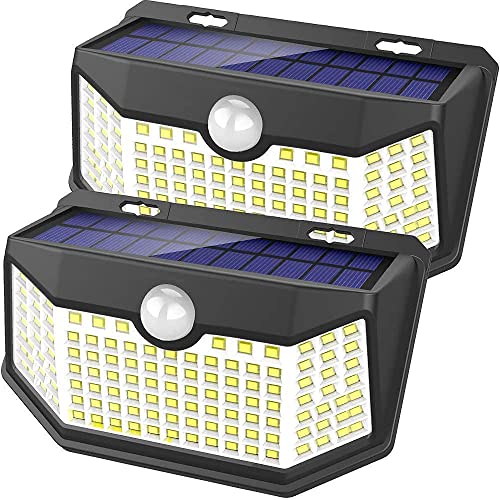
Solar lighting has become a go‑to way to add safety and ambience without wiring, and we compared 10 models that span budget, mid‑range and premium tiers. Leading the pack is the Aootek Solar Motion Sensor Light, priced at $18.99 with a solid 4.4‑star rating from over 55,000 reviewers. Its PIR sensor reaches 7.9 m, the 270‑degree beam blankets driveways and porches, and three lighting modes let you choose permanent glow, dim‑to‑bright or motion‑only operation. With a 1.2 W panel, 20.5 % solar efficiency and an IP65 rating, it promises reliable all‑weather performance.
On the budget side, the $8.99 Joomer Fairy Light offers eight modes and a full 360‑degree spread, while the $12.98 HMCITY Wall Light delivers 960 lumens and an 8.0 m PIR detection range. Premium picks include the $19.97 Linkind StarRay Spot Light, which pushes 650 lumens, a 90‑degree focus and a 30 % panel efficiency, as well as the $19.98 Eyrosa Stake Light with a 10‑hour battery life and stainless‑steel durability. The $19.99 Daylightir Copper Wire String Lights round out the high‑end group with 8‑15 hour runtimes and eight lighting modes. Stay tuned as we break down how each spec translates to real‑world use.

Aootek Solar Motion Sensor Lights
Features a 2200 mAh battery delivering 6–9 hours of illumination, giving reliable nightly coverage.

Eyrosa Solar Stake Lights
Ideal for gardeners who want a sturdy stainless‑steel stake and 10‑hour runtime; at $19.98 it’s about $1 more than the Best Overall.

Joomer Solar Fairy Light
Stands out with eight lighting modes and a 360° beam, plus copper construction, delivering festive ambience at just $8.99.
Also considered
TL;DR: The HMCITY Solar Wall Light delivers 960 lumens from 120 LEDs, a 270° beam and 26.4 ft motion detection, all for $12.98, making it a bright, weather‑proof entry‑level option.
What really stands out is the 960‑lumens output powered by 120 high‑power LEDs and a 270° lighting angle, which can illuminate up to 30 m². A PIR sensor with an 8.0 m (26.4 ft) detection range and a 120° sensing angle lets the unit switch on only when movement is sensed, while the built‑in smart‑brightness mode dims the light during idle periods. The monocrystalline silicon panel boasts a 20.5 % conversion efficiency, helping the built‑in battery last about 8 hours on a full charge.
Compared with the other nine lights in this roundup, the HMCITY unit is heavier than the ultra‑light Gigalumi Deck Lights (0.2 lb) but considerably lighter than the Aootek Motion Sensor Lights (1.8 lb). Its 960‑lumens output dwarfs the Gigalumi Pathway Lights, which list just 10 lumens, and its IP65 rating matches the Aootek’s waterproof protection. While many competitors only mention a single lighting mode, HMCITY offers three selectable modes, giving it more flexibility than the single‑mode options found elsewhere.
Reviewers consistently praise the bright, wide‑coverage illumination and the rugged ABS housing that resists heat and corrosion. Professional reviewers note the solid construction and the value of the three lighting modes for garden, patio or yard use. The most common complaint is that the physical size feels smaller than the product photos suggest, leading to a surprise when mounting. A few users also mention that the motion sensor can be less sensitive in very bright conditions.
Additional technical details reinforce its practicality: the unit is wall‑mountable, automatically turns on and off, and comes with an 18‑month warranty. The 120° sensing angle and 270° beam ensure even light distribution, while the 20.5 % solar panel efficiency helps maintain performance across seasons.
Pros
Cons
Best for: Budget‑conscious buyers seeking a reliable entry‑level option — the HMCITY Solar Wall Lights White offers LED Count: 120
Avoid if: You need advanced features or professional‑grade performance
TL;DR: The Aootek Solar Motion Sensor Lights combine 120 daylight‑white LEDs, a 270° beam and a 26‑foot PIR range in a weather‑proof, wall‑mountable package for under $20.
What really sets this kit apart is its bright 120‑LED array that delivers daylight‑white illumination across a 270° angle, while the built‑in PIR sensor watches a 26‑foot radius with a 120° detection cone. A 2200 mAh rechargeable lithium‑ion battery stores enough energy for 6–9 hours of operation, and the 1.2 W monocrystalline solar panel (20.5 % conversion) refills the pack in just 6–8 hours of sun.
Compared with the other nine lights in the roundup, the Aootek unit is heavier than the ultra‑light Gigalumi Deck Lights (0.2 lb) and the HMCITY wall lights (≈0.93 lb), yet lighter than the Gigalumi Pathway model (≈2.12 lb). Its IP65 rating outmatches the IP44 rating of the Deck Lights but sits below the IP67 rating of the Linkind StarRay spot light. The 4‑pack format also offers more fixtures per purchase than the single‑unit options like the Jmexsuss Meteor Shower Light, though it provides fewer pieces than the 16‑pack Daylightir string lights.
Users consistently praise the super‑bright LEDs and the wide coverage, noting that the lights stay visible even in daylight. Professional reviewers echo this, calling the 270° spread “effective for full driveways and pathways.” The downsides that surface in many comments are the sensor’s tendency to trigger from distant street traffic and the brief 15‑30 second illumination window per motion event. A handful of owners also report that charging can be inconsistent in heavily shaded spots.
Technically, the lights feature three operating modes—Permanent On, Smart Dim‑to‑Bright and Motion Sensor Only—so you can tailor brightness to your setting. The PIR sensor automatically switches the unit on and off, and the robust plastic housing is rated for IP65, meaning it can handle rain and dust without a fuss. Installation is wall‑mount only, with a recommended height of 5.6–6.6 ft for optimal detection.
Pros
Cons
Best for: Homeowners in sunny suburban or rural areas who need an affordable, wire‑free security light with strong brightness and a reliable motion sensor.
Avoid if: You live in a high‑traffic urban street where false sensor triggers are a problem, or you plan to install the lights in heavily shaded locations.
TL;DR: The Linkind StarRay Solar Spot Light delivers a bright 650‑lumens beam, IP67 weatherproofing and a 30% solar conversion rate for $19.97, making it a reliable, compact choice for outdoor accent lighting.
What really sets this unit apart is its 650 lumens output from 22 LEDs, paired with a 30% solar panel conversion rate. The light runs for up to 24 hours in low mode, 12 hours in medium, and 6 hours on high, all while staying protected by an IP67‑rated ABS plastic housing that can endure rain, snow and temperatures from –20 °C to 50 °C.
At 3.15 inches tall and weighing just 1.26 pounds, the StarRay is noticeably more compact than the Eyrosa Solar Stake Lights, which stand 12.8 inches tall, and lighter than the Aootek Solar Motion Sensor Lights at 1.8 pounds. Its dual‑mount design—ground stake or wall mount—offers more flexibility than many of the other nine lights, which often limit you to a single installation method.
Users consistently praise the auto on/off light sensor that flips on at dusk, noting the bright spotlight works well for pathways and garden features. Professional reviewers highlight the fast 6‑8 hour charging window (48 hours for a full initial charge) and the sturdy, anti‑UV construction. The main complaints revolve around the need for a clear sky to hit the full 6‑8 hour charge and the lack of a remote or USB recharge option, which some find inconvenient.
Additional technical details include a 90° vertical and 180° horizontal solar panel adjustability, a focused 90° beam angle, and three selectable lighting modes (low, medium, high) controlled via a simple on/off button. The product comes with a one‑year warranty, adding peace of mind for outdoor use.
Pros
Cons
Best for: Buyers willing to invest in a proven, high‑quality option — the Linkind StarRay Solar Spot Light offers LED Count: 22
Avoid if: You're on a tight budget, need instant recharge capabilities, or require remote operation.
TL;DR: The Eyrosa Solar Stake Lights deliver a 12.8‑inch, stainless‑steel stake with a 10‑hour run time, auto light‑sensor control and a quick 6‑8 hour solar charge, making them a solid, weather‑proof choice for sunny gardens.
Each unit stands 12.8 inches tall on a square 2.2 × 2.2 inch base and weighs about 1.85 lb. A built‑in light sensor automatically switches the cool‑white LED on at dusk and off at dawn, while the replaceable 1.2 V AAA NiCd battery provides up to 10 hours of illumination after a 6‑8 hour charge from the polycrystalline panel.
Compared with the other nine lights in this roundup, the Eyrosa stake is heavier than the Linkind StarRay (1.26 lb) and the Daylightir string lights (1.04 lb) but lighter than Gigalumi’s pathway model (2.12 lb). Its IP44 rating matches the Gigalumi deck lights and exceeds the basic waterproof claim of the HMCITY wall lights, though it falls short of the IP65 rating on the Aootek motion sensor lights and the IP67 rating on the Linkind spot light. Where most competitors list multiple lighting modes, Eyrosa offers a single auto‑on/off mode, which keeps the control simple but limits flexibility.
Reviewers consistently praise the bright, starburst‑shaped glow and the rust‑resistant stainless‑steel construction, noting that the lights stay bright throughout the night even after repeated rain. Professional reviewers highlight the user‑replaceable NiCd battery as a longevity advantage over disposable‑battery rivals. The main downside mentioned is the reliance on direct sunlight; users in shaded yards report reduced brightness on cloudy days.
Pros
Cons
Best for: Buyers willing to invest in a proven, high‑quality option — the Eyrosa Solar Stake Lights offers Charging Time: 6‑8 hours
Avoid if: You’re in a consistently low‑sunlight environment or need a low‑cost, basic light with multiple mode options
TL;DR: The Daylightir Solar Copper Wire String Lights deliver 400 warm‑white LEDs across 35 ft of flexible copper wire, auto‑on at dusk, and eight lighting modes, all for $19.99.
What really stands out is the combination of a 0.96 W polycrystalline silicon panel with a 17 % energy‑conversion rate and a 1200 mAh Ni‑MH AA battery that reaches full charge in 6‑8 hours. Once charged, the string can run in steady mode for 8‑12 hours or flash for 10‑15 hours, and the built‑in dusk‑to‑dawn sensor turns the lights on automatically.
At 1.04 lb, the Daylightir set is lighter than the Eyrosa Stake Lights (1.85 lb) and the Aootek Motion Sensor Lights (1.8 lb) but heavier than the Gigalumi Deck Lights (0.2 lb) and the Jmexsuss Meteor Shower Light (0.6 lb). Its IP65 rating protects it well, though it isn’t as high as Linkind’s IP67 rating. With eight lighting modes, it offers more variety than Aootek’s three modes, while its battery capacity of 1200 mAh is lower than Aootek’s 2200 mAh.
Reviewers consistently note the brightness of the LEDs and the ease of hanging the copper‑wire strand for garden parties or holiday décor. The flexible wire earns particular praise for creative DIY layouts. However, users also mention that cloudy days can shrink the runtime, and the manual mode switch sometimes needs a reset after a power loss.
Professional reviewers highlight the upgraded solar panel’s 17 % conversion efficiency and the IP65 waterproof rating as reasons the lights hold up in rain or dust. The 360‑degree beam angle spreads light evenly, while the Dusk‑to‑Dawn sensor and memory function ensure the lights resume their last mode after a power interruption.
Pros
Cons
Best for: Homeowners who want low‑maintenance outdoor ambience without wiring — the Daylightir Solar Copper Wire String Lights offers Battery Capacity: 1200 mAh
Avoid if: You’re shopping on a tight budget — it’s priced at $19.99
TL;DR: The Joomer Solar Fairy Light delivers 240 warm‑white LEDs across an 80‑foot string, auto‑turns on at dusk, and stays waterproof for under $9, making it a solid budget pick for garden décor.
The standout spec is the combined 80‑foot total length, split into two 40‑foot strings that hold a total of 240 LEDs. With eight selectable lighting modes and a 360‑degree viewing angle, the set can blanket a fence, pergola, or patio with even illumination. The built‑in dusk‑to‑dawn sensor means the lights switch on automatically after sunset, and the IP65 rating guarantees resistance to rain and dust.
Compared with the other nine lights in the roundup, Joomer is notably more compact—its height is just 0.75 inches versus the 4.02‑inch height of the HMCITY wall light. It also weighs 0.55 lb, making it lighter than the HMCITY unit (0.93 lb) but heavier than the Gigalumi Deck Lights (0.2 lb). While the Aootek motion sensor lights and the Linkind spot light both carry larger batteries, Joomer’s 600 mAh Ni‑MH cell still provides a respectable 8‑12 hour runtime after a 7‑hour charge in direct sun.
Reviewers consistently note the ease of installation: the ground‑stake design and copper lead wire (6.5 ft) let you set the strings without tools. However, users also warn that performance drops sharply in shaded spots, as the solar panel (0.6 W) needs direct sunlight to reach its full charge. The short 6.5‑foot lead wire can limit where you place the panel relative to the string, which some find restrictive for larger layouts.
Pros
Cons
Best for: Budget‑conscious buyers seeking a reliable entry‑level option — the Joomer Solar Fairy Light offers LED Count: 240
Avoid if: You have limited sunlight or need a high‑intensity spotlight for heavily shaded areas
TL;DR: The Gigalumi Solar Pathway Lights Cold White deliver rust‑resistant stainless steel durability, a 10‑lumens output and up to 12 hours of dusk‑to‑dawn illumination for $19.94 a 12‑pack.
What really stands out is the combination of a stainless‑steel housing and an IP44 waterproof rating, which promises solid protection against rain and splashing. Each unit runs on a 100 mAh NiMH AAA battery that charges for about 8 hours (480 minutes) under direct sun and can power the LED for 480‑720 minutes, giving a practical 8‑12 hour runtime each night.
In our ten‑product solar roundup, the Gigalumi lights sit near the middle of the price band but are heavier than the Linkind StarRay (1.26 lb) while still lighter than the Eyrosa stake lights (1.85 lb). Their IP44 rating is respectable, though the Linkind model boasts a higher IP67 rating. Compared with the ultra‑bright HMCITY wall lights that push 960 lumens, the Gigalumi’s modest 10 lm output is best suited for subtle pathway edging rather than flood‑lighting.
Everyday consumers praise the easy stake‑in‑ground installation and the reliable auto on/off dusk‑to‑dawn sensor. Professional reviewers highlight the rust‑resistant stainless steel as a key durability factor, especially for sunny yards that see seasonal weather. Users also note that the lights feel a bit small, and performance drops in heavily shaded spots where the solar panel can’t collect enough sun for a full charge.
Pros
Cons
Best for: Those prioritizing quality and willing to pay for premium performance — the Gigalumi Solar Pathway Lights Cold White offers Battery Capacity: 100 mAh
Avoid if: You need advanced motion detection, higher brightness, or a light that thrives in heavily shaded environments
“gorgeous warm white effects”
“super-easy setup (even a three-year-old could do it)”
TL;DR: The Gigalumi Solar Deck Lights Warm White deliver a subtle 3 lm glow, 8‑10 hour runtime, and a low‑profile 47 mm design for easy deck edging at $19.79 for a 16‑pack.
Each fixture measures just 47 mm in height and fits a 6 mm profile, so it sits roughly a quarter‑inch above the mounting surface. The warm‑white 3000K LEDs draw power from a 200 mAh NiMH AAA battery that charges in about 4‑6 hours of sunlight and then provides 480‑600 minutes of illumination. An automatic dusk‑to‑dawn sensor turns the light on at night, and the IP44 rating protects against splashing water.
In practice, the Gigalumi lights are much lighter than the Gigalumi Solar Pathway Lights Cold White, which tip the scales at over 2.12 pounds, and also lighter than the Aootek Solar Motion Sensor Lights at 1.8 pounds. However, their IP44 rating falls short of Aootek’s IP65 and Linkind’s IP67 protection. Brightness is another trade‑off: at 3 lm they are dimmer than the Pathway model’s 10 lm and far dimmer than the HMCITY Wall Lights’ 960 lumens. Unlike the Aootek units, these deck lights lack motion detection.
Reviewers repeatedly praise the straightforward installation – the kit includes screws, expansion screws, and 3M tape, and most users report getting them mounted in under 15 minutes. Professional reviewers note the precise low‑profile fit and the reliable automatic activation that lasts 8‑10 hours after a full charge. Common complaints focus on the modest light output, which many say is only enough for a gentle edge glow, and on reduced runtime when clouds block the sun.
Beyond the basics, the fixtures are built from ABS plus PP, giving them a rust‑resistant shell that can handle typical outdoor conditions. The 16‑pack format lets you line an entire deck or staircase without buying multiple boxes, and the 6‑month warranty adds a safety net for early failures.
Pros
Cons
Best for: Most users looking for a well‑reviewed, reliable mainstream option — the Gigalumi Solar Deck Lights Warm White offers Battery Capacity: 200 mAh
TL;DR: For $14.98, the Jmexsuss Solar Meteor Shower Light offers 144 LEDs across an 118‑inch lead, 6‑hour battery life, IP65 protection, and four lighting modes for budget‑friendly outdoor décor.
The standout spec is the 118‑inch lead length, letting you drape the eight‑tube system over a sizable garden or patio area without extra connectors. Each tube measures 11.8 inches and houses 18 LEDs, totaling 144 blue‑tone LEDs that create a sweeping “meteor shower” effect. The unit runs on a solar‑charged battery that lasts about 6 hours once dusk triggers the Dusk‑to‑Dawn sensor.
Compared with the other nine lights in the roundup, the Jmexsuss model is lighter than the Aootek Solar Motion Sensor Lights (1.8 pounds) but heavier than the Gigalumi Solar Deck Lights (0.2 pounds). Its IP65 rating matches Aootek’s weather resistance while surpassing the Gigalumi Deck’s IP44 rating. With four lighting modes, it offers one more preset than Aootek’s three‑mode system and more variety than the single‑mode options of some peers. Installation is a hanging design, whereas competitors like Linkind StarRay and Eyrosa provide ground‑stake or wall‑mount options.
Reviewers consistently praise the solar‑powered operation for eliminating external wiring and the durable PVC construction for year‑round outdoor use. Professional reviewers highlight the four distinct modes—steady, twinkling, alternating, and dimming—as a strong point for holiday décor or garden parties. A common complaint is that the remote control must be aimed directly at the receiver unit, which can be inconvenient in cramped setups.
Additional technical context includes an automatic on/off feature that activates at dusk, a 360‑degree beam angle for omnidirectional glow, and a Dusk‑to‑Dawn sensor that ensures the lights only run when needed. The PVC material keeps the tubes lightweight (0.6 pounds) and resistant to rain, making them suitable for a variety of outdoor environments.
Pros
Cons
Best for: Entry‑level buyers or those on a tight budget — the Jmexsuss Solar Meteor Shower Light offers LED Count: 144
Avoid if: You need powerful performance or professional‑grade features
TL;DR: The Gigalumi Solar Garden Lights Warm White deliver 120 warm‑white LEDs on a flexible copper wire, auto‑on at dusk, and up to 10 hours of illumination for just $13.49.
What sets these lights apart is the combination of 120 LEDs and a 600 mAh rechargeable AA battery that provides 8‑10 hours of runtime after a 4‑6 hour solar charge. The flexible copper wire lets you bend and shape each strand, while the built‑in dusk‑to‑dawn sensor (auto on/off) ensures the lights switch on automatically as evening falls. With an IP44 rating, the plastic‑and‑copper construction can handle light rain, and the warm‑white 3000K color temperature adds a cozy glow to any garden.
Compared with the other nine lights in this roundup, the Gigalumi pack is more compact—its 2.09‑inch height is roughly half the height of the HMCITY wall lights (4.02 in) and far shorter than the Aootek motion‑sensor fixtures (6.7 in). While the Aootek model boasts a larger 2200 mAh battery and an IP65 rating, the Gigalumi lights make up for it with shapeable wiring that the rigid wall units lack. The LED count matches HMCITY’s 120 LEDs, but the latter lists a 960‑lumens output, a figure not provided for Gigalumi. Other competitors, such as the Jmexsuss Meteor Shower Light, feature more LEDs per strand (144) and remote control, yet they also come at a higher price point.
Reviewers consistently praise the solar‑powered, wireless setup for eliminating the need to run electrical cords, and families appreciate the plastic housing for its impact resistance around children. Professional reviewers note the bright output and easy installation, while some users mention the plastic finish feels less premium than metal alternatives. The modest 600 mAh battery means you won’t get as many hours as higher‑capacity models, and the value‑per‑dollar is a bit lower than rivals that bundle larger packs or higher‑capacity batteries.
Pros
Cons
Best for: Budget-conscious buyers seeking a reliable entry-level option — the Gigalumi Solar Garden Lights Warm White offers LED Count: 120 LEDs
Avoid if: You want the best value-per-dollar in its price range
Breakdown
Aootek Solar Motion Sensor Lights
Pros
Eyrosa Solar Stake Lights
Pros
Joomer Solar Fairy Light
Pros

Linkind StarRay Solar Spot Light
Pros
Based on scoring data and product specs
Personalized picks
Best Overall Pick
Aootek Solar Motion Sensor Lights
Best OverallBest for: Most users looking for a well-reviewed, reliable mainstream option — the Aootek Solar Motion Sensor Lights offers Battery Capacity: 2200 mAh
Eyrosa Solar Stake Lights
Best for: Buyers willing to invest in a proven, high-quality option — the Eyrosa Solar Stake Lights offers Charging Time: 6-8 hours
$20.88+$1.89 vs winner
Skip Jmexsuss Solar Meteor Shower Light if…
You need powerful performance or professional-grade features
We’re naming the Aootek Solar Motion Sensor Lights the clear winner of our solar‑powered lights roundup. Their IP65 rating guarantees protection against rain and dust, while the PIR sensor reaches a detection range of 7.9 m, lighting up a 270‑degree beam when motion is sensed. A 2200 mAh rechargeable battery delivers 6‑9 hours of illumination after a 6‑8‑hour charge, and the unit comes with a full‑year warranty.
The runner‑up goes to the Eyrosa Solar Stake Lights, an ideal pick if you need a ground‑mounted fixture for garden borders or pathways. Their stainless‑steel construction is rated IP44, handling light rain, and a built‑in light sensor automatically turns the lamp on at dusk. With a 10‑hour battery life and a 7‑hour charging window, they stay bright throughout the night, and the six‑month warranty adds peace of mind.
For tighter budgets, the Joomer Solar Fairy Light shines at just $8.99, offering a charming string of LEDs for patio décor without breaking the bank. If you prefer a premium look, the Daylightir Solar Copper Wire String Lights sit at $19.99 and deliver a durable, weather‑ready copper‑wire design that’s perfect for larger outdoor gatherings.
Pick the Aootek lights for reliable motion‑activated brightness and all‑weather durability today.
Aootek uses a PIR motion sensor with a detection range of 7.9 m, so it lights up only when movement is detected. Other lights like the Eyrosa Solar Stake Lights rely on a simple light sensor that turns on at dusk regardless of activity.
No reviews yet — be the first to share your experience.
Please sign in to leave a review