⚡ Quick Answer
It might raise an eyebrow that the $38.95 BYL Sound Bar, the cheapest model in our lineup, still carries a solid 4.2‑out‑of‑5 rating from over 4,900 reviewers. Its 2.3‑inch drivers and 30 W RMS output punch above their weight, proving that a low price tag doesn’t always mean a compromise on basic sound quality.
Seven soundbars sit under the $200 ceiling, spanning three price tiers. The budget bucket features the BYL, the Saiyin 2.1 $53.99 model (4.4 rating, 4‑inch subwoofer) and the Vizio SV200M‑08 at $99.00 (150 W output). Samsung’s HW‑B400F lands in the mid‑range at $137.99 with a 4.4 rating and a built‑in woofer, while the premium tier houses Roku’s Streambar Pro ($167.57, 4.4 rating, four 2.5‑inch drivers), Hisense’s HS5100 ($179.99, 3.9 rating) and LG’s S60T ($196.96, 4.2 rating, 3.1‑channel layout).
The following breakdown covers each model’s strengths, connectivity options, and how they fit different living spaces, helping you pinpoint the soundbar that matches your budget and audio needs.

Roku Streambar Pro
Its 36 watts total power output delivers room‑filling sound, justifying its top‑overall status.

Saiyin 2.1 17-inch Sound Bar
Ideal for budget‑conscious renters setting up a first TV, it comes in at $53.99—about $113 cheaper than the Roku Streambar Pro.
BYL Sound Bar
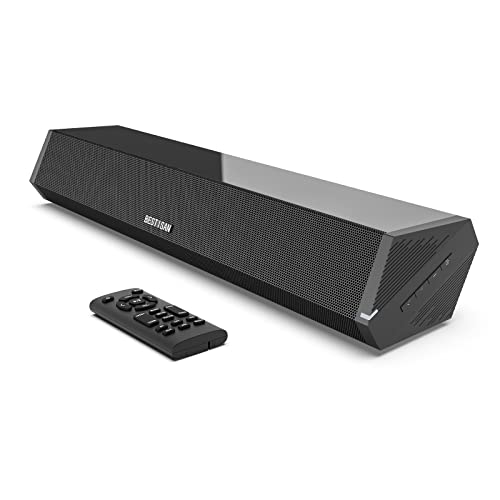
Featuring 2.3‑inch drivers and 15 W per driver, the bar stays ultra‑compact, fitting tight spaces the larger units can’t.
Also considered
Score Analysis
Key score advantages vs. runner-up (Saiyin 2.1 17-inch)
Price Range
Roku Streambar Pro
$167.57
Saiyin 2.1 17-inch Sound Bar
$47.97
BYL Sound Bar
$38.95

Samsung HW-B400F
$99.99

LG S60T
$196.96

Vizio SV200M-08
$89.97

Hisense HS5100
$169.99
Spec Comparison
TL;DR: The Roku Streambar Pro packs 4K HDR streaming, a 36 W soundbar with four 2.5‑inch drivers, and a voice‑remote for $167.57, making it a solid under‑$200 upgrade for small‑room TV setups.
What really sets the Streambar Pro apart is its all‑in‑one design: a 4K HDR10 streaming unit and a soundbar share a single chassis that measures 32.2 inches wide, 2.8 inches high and 3.9 inches deep. Inside, four 2.5‑inch full‑range drivers deliver a combined 36 watts of power, while virtual surround and clear‑dialogue enhancement improve TV audio without a separate receiver.
Weighing 5.5 lbs, the Streambar Pro outweighs the Hisense HS5100 (about 3.5 lbs) but is lighter than the LG S60T (around 18.2 lbs) and the Saiyin 2.1 system (8.75 lbs). Its 32.2‑inch width exceeds the Vizio SV200M‑08’s 30 inches and the Samsung HW‑B400F’s roughly 25 inches, yet it sits just shy of the LG’s 33.5‑inch footprint. Power‑wise, the 36 W output is modest compared with Vizio’s 150 W and Saiyin’s 100 W total, but it matches the BYL’s 30 W RMS and outpaces Samsung’s 20 W consumption.
Reviewers consistently praise the ease of turning an older TV into a 4K streaming hub while enjoying noticeably clearer dialogue. Professional reviewers note the compact HDMI‑ARC/eARC and optical inputs keep cabling tidy, and the voice remote (compatible with Alexa, Siri and Google Assistant) adds hands‑free control. The main complaints revolve around thin bass that benefits from the optional wireless subwoofer, and the need for an extra optical cable if the TV lacks HDMI‑ARC.
Pros
Cons
Best for: Buyers willing to invest in a proven, high-quality option
Avoid if: You're on a tight budget or only need basic functionality
“Excellent value with combined streaming and sound upgrade.”
“Heavy and good looking.”
TL;DR: At $53.99, the Saiyin 2.1 17‑inch Sound Bar delivers 100 W of power, a 4‑inch subwoofer, Bluetooth and optical inputs, and a compact 17.55‑inch chassis, making it a strong budget pick for small‑room TV setups.
The system packs a 2.1‑channel layout with a 40 W soundbar and a 30 W RMS subwoofer, totaling 100 W of output. Its dedicated 4‑inch subwoofer adds low‑end punch, while the soundbar itself measures 17.55 inches long, 5.71 inches high and 12.52 inches wide. Weighing 8.75 pounds overall (the soundbar alone is 761 grams), it stays portable enough for bedroom or office placement. Connectivity includes Bluetooth, a 3.5 mm AUX jack and an optical Toslink input, and the remote lets you switch among three EQ presets (News, Movie, Music) with LED mode indicators for each source.
Compared with the six other soundbars in this roundup, Saiyin’s power is a clear advantage: its 100 W total output exceeds the Roku Streambar Pro’s 36 W and BYL Sound Bar’s 30 W RMS driver power, though Vizio’s SV200M‑08 pushes 150 W. In weight, Saiyin is heavier than Samsung’s HW‑B400F at 4.6 pounds and Roku’s 5.5 pounds, but far lighter than LG’s S60T at 18.2 pounds. Its 4‑inch subwoofer driver is larger than BYL’s 2.3‑inch drivers, while its overall length (17.55 inches) is comparable to the longer Vizio bar (30 inches wide) and shorter than Roku’s 32.2‑inch width. The inclusion of a wall‑mountable design also gives it more placement flexibility than many of its peers.
Users highlight the bar’s ability to revive flat TV speakers, with many noting the “punchy” bass that a small 4‑inch subwoofer can produce. Professional reviewers note the “powerful 100 W combined output” and the convenience of three EQ presets without needing a smartphone app. However, several reviewers mention that the bass can feel less refined and dialogue may get muddled at higher volumes, especially since the system lacks Dolby Atmos or other object‑based audio formats. The plastic chassis with a metal mesh front grille functions but feels inexpensive to some owners.
Pros
Cons
Best for: Budget-conscious buyers seeking a reliable entry-level option
Avoid if: You need a large‑room immersive experience, prioritize Dolby Atmos or premium build quality, or require a highly detailed audiophile setup
“Transforms flat TV sound for movies/games without much space”
“Bass punch is surprising for such a small room”
TL;DR: The BYL 16‑inch Sound Bar delivers 30 W RMS from two 2.3‑inch drivers, packs HDMI ARC and Bluetooth 5.0 into a compact chassis, and does it for under $40.
What really stands out is the 30 W RMS output driven by two 2.3‑inch full‑range speakers, each rated at 15 W. Combined with a 50 W peak rating, the bar can fill a bedroom or home‑gym with clear dialogue and balanced music, all while staying under a 4.3‑inch depth (4.29 in) and 2.8‑inch height. The 16.5‑inch width lets it slip neatly beneath most 32‑inch TVs, and the wall‑mount or tabletop feet give flexible placement.
Compared with the other six entries, the BYL is longer than the Saiyin 2.1’s 12.52‑inch panel but noticeably shorter than the Vizio’s 30‑inch and Roku’s 32.2‑inch widths. Its 4.29‑inch depth is a touch deeper than Vizio’s 3.33 in and Roku’s 3.9 in, yet still slimmer than many larger‑room models. In power terms, its 30 W RMS sits between Roku’s 36‑W total output and Saiyin’s 40‑W sound‑bar rating, while the Vizio pushes a hefty 150 W. Unlike some rivals, BYL includes HDMI ARC, optical, coaxial, USB, and a 3.5 mm AUX jack, giving it more connection options than the Samsung or Hisense units that list fewer inputs.
Users consistently applaud the bar’s compact silhouette and the ease of pairing via Bluetooth 5.0. Reviewers also note the helpful remote and the included mounting kit as pluses for a hassle‑free setup. However, a recurring complaint is that certain shipments arrive without HDMI ARC, which prevents volume control from the TV remote. The wired subwoofer output and modest bass response also limit its impact in larger living rooms; professional reviewers echo the point, calling it “excellent value for small‑room home‑theater setups” but caution that it’s “slightly bulky for its compact length.”
Pros
Cons
Best for: Shoppers on a tight budget who want a compact sound solution for small TVs or bedrooms.
Avoid if: You need deep bass, large‑room coverage, or guaranteed HDMI ARC on every unit.
“Transforms flat TV sound for movies/games without much space”
“Bass punch is surprising for such a small room”
TL;DR: The Samsung HW‑B400F is a $137.99, 2.0‑channel soundbar with a built‑in woofer, Bluetooth 4.2 and a compact 107 mm depth, making it a solid budget pick for small‑room TV audio.
What really sets the HW‑B400F apart is its all‑in‑one design: four speakers, a built‑in woofer and Dolby 2ch support pack into a bar that measures just 107 mm deep, 66.5 mm high and 641 mm wide. At 4.6 pounds (2100 g) it stays light enough to sit on a TV stand without crowding the space, and its operating power draw is only 20 W with a standby draw of 0.5 W.
Compared with the other six entries, the Samsung is lighter than the Roku Streambar Pro (5.5 lb) but a touch heavier than the Vizio SV200M‑08 (3.99 lb). Its depth of 107 mm is marginally deeper than Roku’s 99 mm and noticeably deeper than Vizio’s 3.33 in, yet still slimmer than the LG S60T’s 88.9 mm. The bar’s width of 641 mm is narrower than Roku’s 818 mm and LG’s 850.9 mm, which helps it blend into tighter setups. While the LG includes a wireless subwoofer and a 3.1‑channel layout, the HW‑B400F sticks to a 2.0‑channel format and offers no wireless rear speakers, placing it in a more basic tier of immersion.
Reviewers consistently praise the built‑in woofer for delivering “deep bass without a separate subwoofer,” and they like the convenience of Bluetooth 4.2 for wireless TV connections. The same feedback points out that the lack of a dedicated subwoofer or rear speakers limits a true surround experience, and the absence of Wi‑Fi means the bar can’t join a smart‑home ecosystem. Features like Night Mode, Voice Enhance and a seven‑band adjustable EQ add useful tuning options for different listening environments.
Pros
Cons
Best for: Most users looking for a well‑reviewed, reliable mainstream option
Avoid if: You have limited desk space or need portability
TL;DR: The LG S60T is a 3.1‑channel soundbar with a dedicated center speaker and wireless subwoofer, offering AI‑driven sound tuning for under $200, though its premium price and size may not suit every budget.
The standout spec is the 3.1‑channel layout that includes a dedicated center channel for dialogue clarity, paired with a wireless subwoofer for deep bass. The unit measures 88.9 mm deep, 63.5 mm high and stretches 850.9 mm wide, and weighs 18.2 lb, which gives it a solid, premium feel on any TV stand.
Compared with the six other entries, the S60T is noticeably heavier than the Roku Streambar Pro (5.5 lb) and Samsung HW‑B400F (4.6 lb), and also broader than Roku’s 818 mm width. Its price of $196.96 places it above the budget‑focused Vizio SV200M‑08 and BYL Sound Bar, which sit well under $100, but it still fits within the sub‑$200 ceiling that defines this roundup.
Reviewers consistently highlight the crystal‑clear dialogue the dedicated center channel delivers and the immersive bass the wireless subwoofer produces. Professional reviewers point out that AI Sound Pro automatically balances dialogue and effects, creating a cinematic feel. However, several users report occasional wireless hiccups, such as rear speakers reverting to wired connections and brief audio stutters, plus a remote that sometimes jumps volume in large steps.
Beyond the core audio, the S60T supports Dolby Audio, Bluetooth streaming, and HDMI ARC for a single‑cable TV hookup. Features like Auto Volume Leveler, Customizable EQ, Night Mode, and the WOW Interface add flexibility for movies, sports, and late‑night listening, while the metal grill and crest design give it a sleek, modern look.
Pros
Cons
Best for: TV and movie enthusiasts who prioritize dialogue clarity and cinematic sound; sports fans who want punchy bass without extra wiring.
Avoid if: You're shopping on a tight budget — it's priced at $196.96.
TL;DR: For $99.00, the Vizio SV200M-08 delivers virtual Dolby Atmos and ClearDialog dialogue enhancement in a slim 30‑inch, 3.99‑lb package, but its 70 Hz bass and 2.0‑channel layout limit deep sound.
The standout feature is its virtual height processing: Dolby Atmos and DTS:X create overhead effects despite the soundbar’s 2.0‑channel design. ClearDialog technology further boosts speech clarity, and the unit pushes up to 150 watts of power while handling a frequency range from 70 Hz to 16 kHz.
Compared with the six other entries, the Vizio weighs less than the Samsung (4.6 lb), Roku (5.5 lb) and Saiyin (8.75 lb) models, yet it’s only a touch heavier than the Hisense at roughly 3.5 lb. Its 30‑inch width sits below the Roku’s 32.2‑inch span, fitting tighter TV setups. Unlike several rivals that ship with a remote, this bar relies on a mobile app for adjustments, which some users find less convenient.
User feedback praises the easy Bluetooth 5.2 streaming, the premium fabric finish, and the app‑based EQ controls. Professional reviewers note the full soundstage and effective virtual height, but they’ve also pointed out the limited bass depth at 70 Hz and the absence of a dedicated subwoofer. Connectivity includes HDMI eARC (output only), optical audio and a USB port, while QuickFit compatibility and wall‑mountability add installation flexibility.
Pros
Cons
Best for: Entry-level buyers or those on a tight budget
Avoid if: You need powerful performance or professional‑grade features
TL;DR: The Hisense HS5100 costs $179.99, holds a 3.9‑star rating from nearly 3,800 reviewers, and offers a full‑surround sound experience with mixed reports on subwoofer reliability.
Hisense’s HS5100 lands at the bottom of our seven‑product budget soundbar roundup, priced under the $200 threshold and earning a 3.9‑star average from a sizable community of reviewers. Within the group it ranks seventh, indicating it trails the other options in overall score.
Buyers consistently praise the immersive surround feel, noting the dedicated rear speakers and wireless subwoofer create a cinematic vibe for movies and games. Users also like the variety of preset sound modes that let them quickly tailor audio for different content, as well as the broad connectivity mix that includes Bluetooth, HDMI ARC, optical and USB inputs. On the downside, several owners report that the subwoofer can lose its signal intermittently, and wiring the rear speakers to the subwoofer detracts from the advertised wireless convenience.
Given its price point and the volume of feedback, the HS5100's a reasonable choice for shoppers who want a full‑surround setup without breaking the bank, but they should be prepared for occasional connectivity quirks.
Pros
Cons
Best for: Budget‑focused home‑theater fans who want a full surround experience and can tolerate occasional subwoofer hiccups.
“this will be the last purchase with this company”
Breakdown
Roku Streambar Pro
Pros
Saiyin 2.1 17-inch Sound Bar
Pros
BYL Sound Bar
Pros
Samsung HW-B400F
Pros
Based on scoring data and product specs
Personalized picks
Best Overall Pick
Roku Streambar Pro
Best OverallBest for: Buyers willing to invest in a proven, high-quality option
Saiyin 2.1 17-inch Sound Bar
Best for: Budget-conscious buyers seeking a reliable entry-level option
$47.97-$119.60 vs winner
Skip Hisense HS5100 if…
Reliability and user satisfaction are your top concerns
The Roku Streambar Pro takes the top spot with a solid blend of features and performance. It delivers 36 watts total from four 2.5‑inch drivers, supports HDMI 2.0 ARC/eARC for easy TV hookup, and adds Wi‑Fi 802.11a/b/g/n/ac plus Bluetooth for wireless streaming. At $167.57 it carries a 4.4/5 rating from 3,190 reviews and includes a voice remote that works with Alexa, Siri and Google Assistant, making it the most versatile choice under $200.
The Saiyin 2.1 17‑inch Sound Bar lands as the runner‑up, especially if you need a dedicated subwoofer and extra punch for a compact living space. It packs a total system power output of 100 W, a 4‑inch subwoofer driver, and comes with Bluetooth, optical and 3.5 mm inputs—all for $53.99. Its 4.4/5 rating from 3,778 reviews and included remote make it a solid, budget‑friendly option for gaming or small‑room movies.
For those targeting specific price tiers, the lineup still offers good fits:
Pick the Roku Streambar Pro today and you'll enjoy a full‑featured sound experience without breaking the bank.
The Roku Streambar Pro costs $167.57 versus $53.99 for the Saiyin, a difference of roughly $113. It adds virtual surround, a voice‑controlled remote, Wi‑Fi connectivity and optional wireless subwoofer, which can justify the higher price for users who want smart features and expandability.
No reviews yet — be the first to share your experience.
Please sign in to leave a review