⚡ Quick Answer
Finding a reliable water pump for a boat, RV, or off‑grid cabin can feel like hunting for a needle in a haystack. In this roundup we’ve lined up 10 options that span the $23.39‑to‑$138.99 price spectrum, from no‑frills budget units to premium‑grade systems. The list is split into three tiers – budget picks like the Seaflo 06 Series, Sailingflo Diaphragm Pump and Hygger 660 GPH; mid‑range choices such as the Camplux DC 12V and Seaflo 43‑Series; and premium offerings including the Jabsco ParMax and Amarine Made DP‑160S.
What makes the Seaflo 06 Series especially compelling is its blend of price and performance. At $23.39 it carries a 4.6‑star rating from over a thousand reviewers and pushes 750 GPH of flow while staying under 2 lb (1.04 lb) – a rare combination for a submersible pump that also includes an integrated float switch for automatic operation. Its water‑cooled motor runs on 12 V DC and the unit is rated for a modest 3.9 PSI pressure, keeping power draw low at a max 5.0 A.
We'll compare the rest on pressure, lift, noise and durability so you can match a pump to your bilge, fresh‑water or irrigation needs.

Seaflo 06 Series
Delivers 750 GPH flow, giving strong water movement at an entry‑level price.

Seaflo 33-Series
Perfect for users needing higher pressure; it costs $119.99, about $96.60 more than the Seaflo 06.

Jabsco ParMax
Features an IP54 rating and dry‑run protection, offering extra durability that the Seaflo models lack.
Also considered
TL;DR: The Seaflo 21-Series offers a compact 12 V diaphragm pump with 1.2 GPM flow, 35 PSI pressure, and a 4‑ft self‑priming lift, all for under $33, making it a solid budget pick.
This pump packs a 1.2 GPM (4.4 LPM) flow rate into a 6.7" L × 3.9" W × 2.6" H housing that weighs just 1.25 lbs, so it fits easily in tight RV or boat compartments. The built‑in dry‑run protection and thermal overload guard let you run it safely on a 12 V DC source, while the 0.375 in port makes hose connections straightforward.
Compared with the other nine entries, the Seaflo 21-Series is lighter than the Camplux DC 12V Water Pump and more affordable than the higher‑end Seaflo 43‑Series. Its 1.2 GPM output sits close to the Sailingflo Diaphragm Pump’s 1.1 GPM and edges out the Hygger 660 GPH submersible pump, which translates to about 1.1 GPM. While the Amarine Made DP‑160S pushes 1.8 GPM, it also costs significantly more, so the 21‑Series strikes a good balance of price and performance for entry‑level users.
Everyday owners rave about the pump’s strong initial surge and the ease of attaching the 3/8" hose barb. Professional reviewers highlight its low power draw of 1.7‑4.0 A and quiet operation, which is a boon in confined cabin spaces. On the flip side, users note that the pump can be temperamental during priming if the unit isn’t kept level, and the intermittent duty cycle means it isn’t suited for continuous‑flow scenarios.
Additional technical touches include a permanent‑magnet motor, Santoprene diaphragm, EPDM valves, and an adjustable pressure switch that shuts off at 35 PSI. The soft‑mount vibration reduction and low‑dB noise level keep the pump from rattling around a moving vehicle, while CE and RoHS approvals give peace of mind about safety standards.
Pros
Cons
Best for: Budget-conscious buyers seeking a reliable entry-level option — the Seaflo 21-Series offers Flow Rate: 1.2 GPM (4.4 LPM)
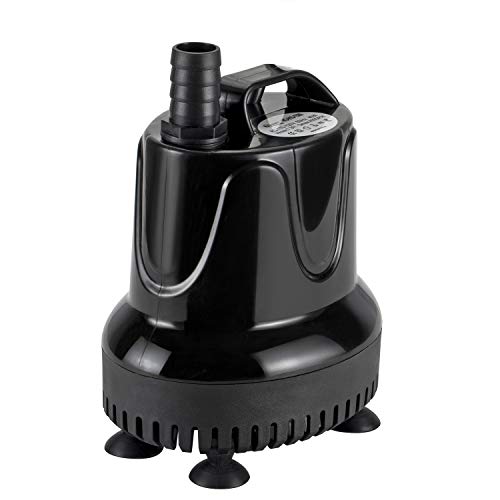
TL;DR: The Hygger 660 GPH Submersible Pump delivers 660 GPH flow with ultra‑quiet, oil‑free magnetic motor, a 6‑ft cord, and lightweight 1.43 lb design, making it a solid budget choice for aquariums and ponds.
This pump’s standout spec is its 660 GPH (2500 L/H) max flow rate, driven by an oil‑free magnetic motor that runs on just 60 W of power. The ultra‑quiet operation is highlighted as “Low dB,” and the unit can be placed up to 6 ft (1.9 m) away from the power source thanks to its long cord.
Compared with the other nine models, the Hygger moves slightly less water than the Seaflo 06 Series, which pushes 750 GPH, and its 3.6 ft (1.1 m) max head height is lower than that series’ 9.0 ft capability. It’s a bit heavier than the Seaflo 21‑Series (1.25 lb vs 1.43 lb) but still compact enough for most tank setups. The Seaflo 21‑Series also offers a higher pressure rating, while the Sailingflo Diaphragm Pump includes run‑dry protection that Hygger lacks.
Reviewers consistently praise the pump’s whisper‑quiet performance, noting it’s “as quiet as a whisper” in bedroom or office environments. Professional reviewers point out the bottom‑intake design that helps keep debris out, though some mention a “spongy” feel to the flow at higher settings. The limited 3.6 ft head height is a common drawback for users with tall sumps or waterfall features.
Additional technical details include an IP68 rating for water resistance, a 110 V input (with 220‑240 V option for other regions), a max debris passage of 1/5 inch, and a minimum water level of 1 inch above the pump base. These specs make it suitable for both freshwater and saltwater applications, from aquariums to small ponds.
Pros
Cons
Best for: Budget-conscious buyers seeking a reliable entry-level option — the Hygger 660 GPH Submersible Pump offers Power Cord Length: 6 ft (1.9 m)
“as quiet as a whisper”
“spongy flow feel”
TL;DR: The Seaflo 06 Series delivers 750 GPH of flow in a tiny 3.27‑in‑deep, 1.04‑lb package for $23.39, making it the top‑value bilge pump for small boats.
The standout spec is its 750 GPH (48 LPM) flow rate paired with a compact 3.27‑inch depth, 4.06‑inch height and 3.19‑inch width. At just 1.04 lb, the pump fits easily into cramped bilge spaces while still moving water fast enough for most recreational vessels. An integrated float switch means you don’t need a separate automatic switch, and the water‑cooled motor keeps the unit running cool under load.
Compared with the other nine contenders, the Seaflo 06 is lighter than the Sailingflo Diaphragm Pump (about 1.43 lb) and the Hygger 660 GPH pump (about 1.43 lb). Its dimensions are also smaller than many of the larger diaphragm and multi‑stage models, which often exceed 5 in in height. While some rivals list run‑dry protection, the Seaflo 06 does not include that feature, so it’s best suited to situations where water is always present.
Professional reviewers highlight the anti‑fouling five‑blade impeller and the low nominal current draw of 3.0 A, which helps preserve a boat’s battery life. Users appreciate the built‑in float switch for hassle‑free installation, but they note the intermittent duty cycle prevents continuous pumping and the 9.0‑ft max head limits use in deep‑well or high‑bilge setups. The electrical connections must stay out of the water, a point often mentioned in installation guides.
Technically, the pump runs on 12 V DC, draws up to 5.0 A at peak, and is rated for a liquid temperature limit of 110 °F. Its submersible IP rating and ignition‑protected design meet marine safety standards, and the 48‑month warranty adds confidence for budget‑focused buyers.
Pros
Cons
Best for: Budget-conscious buyers seeking a reliable entry-level option — the Seaflo 06 Series offers Flow Rate: 750 GPH
Avoid if: You have limited desk space or need portability
TL;DR: The Seaflo 33-Series delivers 3.5 GPM flow, 6‑ft self‑priming lift, and built‑in dry‑run protection in a compact 5.95‑lb package, earning a 4.6‑star rating from 291 reviewers.
This pump’s standout feature is its pre‑assembled 0.2 gallon accumulator tank, which smooths pressure swings and cuts cycling on demand. The diaphragm pump pushes up to 3.5 GPM at a cut‑in pressure of 28 PSI, while the integrated pressure switch lets you fine‑tune the on/off range. At 60 dB the unit stays quiet enough for cabin use, and the 12 V DC motor draws a maximum of 8.0 A.
Compared with the other nine models in the roundup, the 33‑Series is on the heavier side at 5.95 lbs, out‑weighing most rivals such as the Jabsco ParMax (2.0 lb) and the Camplux DC pump (2.8 lb). Its flow performance, however, sits near the top: only the Seaflo 33‑Series peer reaches a similar open flow of 3.3 GPM, while many competitors linger below 2 GPM. The higher pressure capability (45 PSI shut‑off) also exceeds the limits of budget‑grade pumps that top out around 25 PSI.
Professional reviewers praise the quick‑connect, pre‑assembled design for cutting installation time, and users appreciate the built‑in strainer and EPDM valve for corrosion resistance in marine settings. The intermittent duty cycle is a noted trade‑off; continuous high‑volume use can overheat the diaphragm, so it’s best suited for fresh‑water taps rather than demanding irrigation loops. The 48‑month warranty adds confidence for off‑grid or RV owners.
Pros
Cons
Best for: Those prioritizing quality and willing to pay for premium performance — the Seaflo 33-Series offers Max Pressure: 45 PSI.
Avoid if: You need prolonged continuous water flow or a lighter pump for ultra‑compact installations.
TL;DR: The Seaflo 33 Series delivers 3.3 GPM at up to 45 PSI with a 0.2‑gallon accumulator, self‑priming up to 6 ft, and built‑in dry‑run protection, all in a compact 4.19‑lb package.
What really sets this pump apart is the integrated 0.2‑gallon accumulator tank, which smooths out the flow and cuts pump cycling. Combined with a flow rate of 3.3 GPM and a self‑priming lift of 6 ft, the unit can keep a small cabin or RV water system pressurized without a separate tank. Its dimensions—14.57 in tall, 10.55 in long, and 5.75 in wide—keep it small enough to fit under a countertop, and the 4.19‑lb weight makes mounting straightforward.
Compared with the other nine pumps in this roundup, the Seaflo 33 Series is heavier than the Jabsco ParMax (2.0 lb) and the Camplux DC pump (2.8 lb), yet lighter than the similarly‑named Seaflo 33‑Series model that tips the scales at 5.95 lb. Its 3.3 GPM flow outpaces Jabsco’s 1.9 GPM and Camplux’s 1.6 GPM, while its 45 PSI max pressure sits above Jabsco’s 25 PSI but below the Seaflo 33‑Series (50 PSI) and Seaflo 43‑Series (55 PSI). The 6‑ft self‑priming height matches the Seaflo 43‑Series and exceeds the Camplux (2–4 ft) and Seaflo 21‑Series (4 ft) lifts.
Professional reviewers note the pre‑assembled design, integrated strainer, and the accumulator’s ability to extend pump life by reducing frequent cycling. Users appreciate the dry‑run and thermal protection features that keep the pump safe during accidental shut‑offs. A common critique is the 45 PSI pressure ceiling, which some buyers find limiting for higher‑pressure applications, and the premium price of $135.99 compared with lower‑cost alternatives. Additionally, the manufacturer doesn’t list a noise level, leaving quiet‑operation expectations uncertain.
Technically, the pump uses a corrosion‑resistant motor, a Santoprene diaphragm, and an EPDM valve—materials chosen for durability in marine and RV environments. The built‑in pressure switch toggles on at 28–35 PSI and off at 45 PSI, while the 115 V AC power draw stays under 1.0 A, making it suitable for standard household circuits.
Pros
Cons
Best for: Those prioritizing quality and willing to pay for premium performance — the Seaflo 33 Series offers Max Pressure: 45 PSI (3.1 BAR)
Avoid if: You need higher than 45 PSI pressure, direct 12 V DC power, or professional‑grade performance
TL;DR: The Camplux DC 12V Water Pump delivers 1.6 GPM at up to 80 PSI, self‑primes up to 4 ft, weighs 2.8 lb, and includes dry‑run protection, making it a solid mid‑range choice for RVs and camping.
What sets this pump apart is its 1.6 GPM flow rate paired with a maximum pressure of 80 PSI, while the diaphragm design lets it self‑prime from 2‑4 ft of vertical lift. At just 2.8 lb and with dimensions of 2.8 in × 3.3 in × 7.0 in, it balances portability and robustness.
Compared with the other nine models, Camplux is heavier than the ultra‑light Seaflo 06 Series (about 1.04 lb) but lighter than the bulkier Seaflo 33‑Series that tops out around 5.95 lb. Its 80 PSI pressure outperforms the Seaflo 21‑Series’ 35 PSI and even exceeds the Seaflo 43‑Series shut‑off of 55 PSI. However, its 1.6 GPM flow is lower than the Seaflo 06 Series, which pushes 750 GPH, and falls short of higher‑capacity pumps that target continuous high‑volume tasks.
Reviewers consistently praise the pump’s reliable priming, steady pressure for campsite showers, and whisper‑quiet operation. Professional reviewers note the easy installation thanks to two quick‑connect hose adapters and the built‑in pressure switch that auto‑starts and stops with nozzle use. The downside highlighted by users is the intermittent duty cycle, which limits the pump to light, occasional water moves rather than nonstop flow.
Technically, the unit runs on 12 V DC at 6.0 A, features both dry‑run and thermal protection, and carries a low noise level. Its CE certification adds confidence for outdoor and mobile applications, and the diaphragm pump type helps maintain consistent output under varying conditions.
Pros
Cons
Best for: Most users seeking a balanced, mainstream option — the Camplux DC 12V Water Pump offers Flow Rate: 1.6 GPM (6 LPM)
Avoid if: You need continuous high‑volume pumping or an ultra‑light portable solution
TL;DR: The Jabsco ParMax delivers 1.9 GPM at 25 PSI, self‑primes up to 6 ft, and packs marine‑grade safety features into a lightweight 2 lb, IP54‑rated pump for premium marine and RV use.
The standout spec is its 1.9 GPM maximum flow combined with a 6 ft self‑priming lift, meaning you can install it away from the water source and still achieve reliable pressure without manual priming. Its permanent‑magnet motor runs at 12 V DC and draws 4.4 A at 10 PSI, while the built‑in dry‑run and thermal overload protections keep the motor safe under fault conditions.
Compared with the other nine pumps in this roundup, the ParMax is lighter than the Seaflo 33‑Series units (which weigh over 4 lb) and the Seaflo 33‑Series B081544YH8 (nearly 6 lb), yet slightly heavier than the ultra‑light Seaflo 21‑Series at 1.25 lb. Its flow of 1.9 GPM sits below the Seaflo 33‑Series (3.3–3.5 GPM) and Seaflo 43‑Series (3.0 GPM), but is a touch higher than the Camplux DC pump’s 1.6 GPM. Pressure-wise, the ParMax’s 25 PSI cutoff is modest against the Seaflo 33‑Series (45–50 PSI), Seaflo 43‑Series (55 PSI), and Camplux (80 PSI), making it best suited for low‑pressure fixtures. Its compact dimensions—121 mm high, 229 mm long, and 152 mm wide—are comparable to the Camplux’s short profile and far smaller than the bulkier Seaflo models.
Professional reviewers point out that the pump meets ISO 8846 MARINE ignition protection standards and carries CSA, CE, and RoHS certifications, underscoring its suitability for marine environments. Users who have installed it praise the low‑noise operation and the convenience of the two 1/2″ hose barbs or Hep20 push‑fit connectors. However, the intermittent‑duty rating means it isn’t meant for continuous pumping, and the 25 PSI pressure limit may fall short for high‑pressure applications like pressure‑boosted showers.
Pros
Cons
Best for: Those prioritizing quality and willing to pay for premium performance — the Jabsco ParMax offers Hose Connection: Two 1/2" (13 mm) hose barbs or Hep20 push‑fit connectors
Avoid if: You're shopping on a tight budget — it's priced at $138.99
TL;DR: The Amarine Made DP-160S pumps up to 160 PSI at 1.8 GPM, delivering strong pressure for RV and boat washdown, but its modest flow and higher price may deter those needing high volume.
The standout spec of the DP-160S is its maximum pressure of 160 PSI, paired with a rated flow of 1.8 GPM (7 LPM). A built‑in pressure switch automatically shuts off at this pressure, and the diaphragm design is self‑priming, which simplifies installation on caravans, RVs, and boats.
Compared with the other nine pumps, the DP-160S’s 160 PSI tops the pressure chart—most rivals stop at 55 PSI (Seaflo 43) or 80 PSI (Camplux). Its 1.8 GPM flow is lower than the Seaflo 06 Series, which moves 48 LPM, but higher than the Seaflo 21’s 1.2 GPM. At its price point it sits in a premium tier, making it pricier than the budget‑friendly Seaflo 06 and Camplux models.
User feedback is limited, yet the 3.6‑star average from 106 reviews suggests mixed experiences. Professional reviewers highlight the high‑pressure output and the safety‑focused features like dry‑run protection and thermal overload protection with auto‑restart.
The pump runs on 110 V AC, draws a maximum of 1.5 A and a rated 0.8 A, and includes both dry‑run and thermal protection. Its diaphragm motor type and self‑priming capability make it a reliable choice for fresh‑water washdown tasks.
Pros
Cons
Best for: Those prioritizing quality and willing to pay for premium performance — the Amarine Made DP-160S offers Minimum Recommended Flow: 1.2 GPM (4.5 LPM)
Avoid if: You prefer products with extensive real‑world feedback and proven track records
TL;DR: The Sailingflo Diaphragm Pump delivers 1.1 GPM at up to 55 PSI, self‑primes to 4 ft, and packs a low‑noise 12 V motor into a compact 1.5‑lb unit for under $24.
What really stands out is the pump’s 2‑chamber diaphragm design that pushes a rated 1.1 GPM (4.3 LPM) while handling up to 55 PSI (3.8 bar). The built‑in pressure switch and run‑dry protection (up to 30 seconds) give you a safety net if the line empties, and the low‑noise rating keeps it from becoming a cabin irritant. At 1.5 lb and a tower‑type head, it’s small enough to slip into a caravan’s storage compartment yet sturdy enough for marine use.
Compared with the other nine pumps in this roundup, the Sailingflo sits a shade heavier than the Seaflo 06 Series (which weighs about 1.04 lb) and is priced just a touch higher than that same model’s $23.39 list. Its 1.1 GPM flow is modest next to the Camplux’s 1.6 GPM and the Seaflo 21‑Series’ 1.2 GPM, so you’ll notice a slower fill time if you’re moving larger volumes. However, it matches the Hygger 660 GPH pump’s weight (around 1.43 lb) and offers a comparable self‑priming lift of 4 ft, a feature the larger Seaflo 43‑Series also touts but at a much higher price point.
Users consistently praise the pump’s compact tower head and the ease of hooking up the 3/8 in (9.5 mm) hose barb. Reviewers also note the “low‑noise” operation, which is a relief on quiet boat decks or RV cabins. On the flip side, several owners mention that the 1.1 GPM flow feels “under‑powered” for high‑demand tasks like rapid tank draining, and the intermittent duty cycle means it’s not suited for continuous industrial pumping. Professional reviewers highlight the permanent‑magnet motor and the adjustable pressure switch as solid engineering choices for a budget‑friendly pump.
Pros
Cons
Best for: Entry-level buyers or those on a tight budget — the Sailingflo Diaphragm Pump offers Max Pressure: 35-55 PSI (2.4-3.8 bar)
TL;DR: The Seaflo 43‑Series delivers a solid 3.0 GPM flow at 55 PSI with a 6‑ft self‑priming lift, but its 6.86 A draw and $69.99 price put it in the premium camp.
The standout spec is the 3.0 GPM (11.3 LPM) flow rate paired with a 6‑foot (1.8 m) self‑priming lift, letting you run showers or water heaters straight from a modest tank. Its diaphragm is made of Santoprene, and the pump can handle liquids up to 140 °F (60 °C) without overheating.
When you line it up against the other nine pumps, the Seaflo 43‑Series pushes more water than the Camplux DC 12V Water Pump’s 1.6 GPM, though Camplux tops out at a higher 80 PSI pressure. The Amarine Made DP‑160S can reach 160 PSI but only moves 1.8 GPM, so the 43‑Series sits in a sweet spot for flow‑focused setups. Compared with the budget‑friendly Seaflo 06 Series, which lists 750 GPH, the 43‑Series offers a higher flow per minute despite a slightly higher price tag.
Reviewers consistently praise the pump’s “plug‑and‑play” feel thanks to the industry‑standard quick‑connect fittings and the internal bypass that keeps cycling noise down. Users also note the variable‑flow technology keeps pressure steady from a trickle up to full flow, extending pump life. The most common complaint is the 6.86 A maximum current draw, which can tax smaller RV batteries, and a few buyers mention the lack of published weight or dimensions makes mounting a bit of guesswork.
Pros
Cons
Best for: Those prioritizing quality and willing to pay for premium performance — the Seaflo 43‑Series offers Flow Rate: 3.0 GPM (11.3 LPM)
Avoid if: You're on a tight budget or only need basic functionality
“best budget 12V water pump”
“great pumping power”
Breakdown
Seaflo 06 Series
Pros
Seaflo 33-Series
Pros
Jabsco ParMax
Pros
Cons

Camplux DC 12V Water Pump
Pros
Based on scoring data and product specs
Personalized picks
Best Overall Pick
Seaflo 06 Series
Best OverallBest for: Budget-conscious buyers seeking a reliable entry-level option — the Seaflo 06 Series offers Flow Rate: 750 GPH
Seaflo 33-Series
Best for: Those prioritizing quality and willing to pay for premium performance — the Seaflo 33-Series offers Max Pressure: 50 PSI
$119.99+$95.00 vs winner
Skip Amarine Made DP-160S if…
You prefer products with extensive real-world feedback and proven track records
Seaflo 06 Series takes the top spot thanks to its impressive 12.5 GPM flow rate, a lightweight 1.04 lb build, and a low‑noise operation that keeps your space quiet. It runs on a common 12 V DC supply, includes a pressure switch for automatic shut‑off, and is backed by a 48‑month warranty, giving you reliable performance without breaking the bank.
The runner‑up, Seaflo 33‑Series, shines when you need higher pressure and dry‑run protection. It can handle up to 45 PSI, offers a self‑priming lift of 6 ft, and still delivers a steady 3.0 GPM flow, making it a solid choice for marine rigs or off‑grid water systems that demand extra durability.
If you’re looking beyond the top two, here are the best options in each price tier:
Pick the Seaflo 06 Series for the best overall value and get your water moving today.
The Seaflo 06 fits into a 3.27‑in depth, 3.19‑in width and 4.06‑in height housing and weighs just 1.04 lb, so it slips into tight spaces. It delivers a rated 12.5 GPM flow while running at low dB noise and includes an integrated pressure switch for automatic operation.
No reviews yet — be the first to share your experience.
Please sign in to leave a review