⚡ Quick Answer
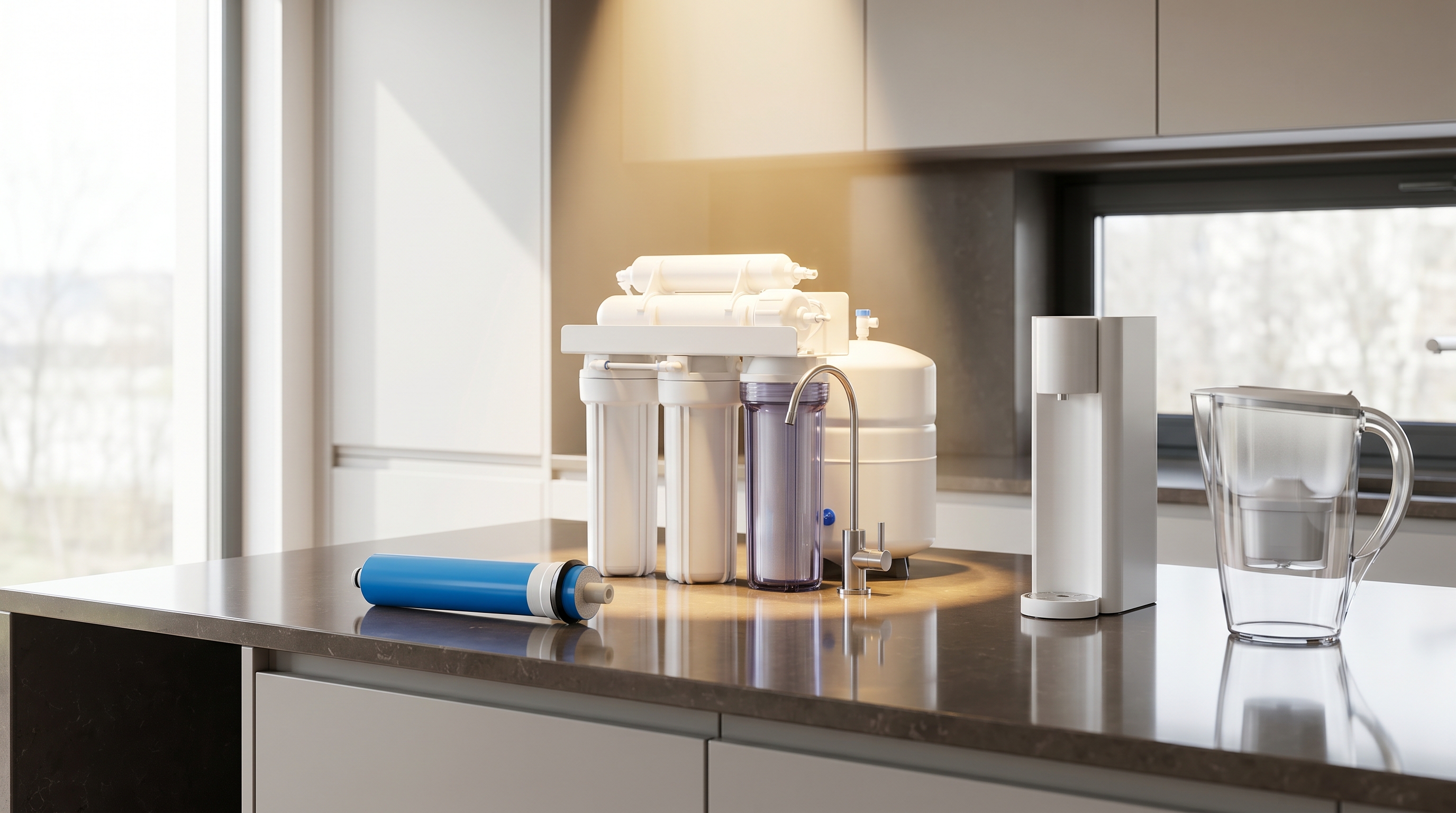
We’ve lined up 10 water purification systems that span everything from ultra‑light personal straws to full‑size under‑sink reverse‑osmosis units. Prices stretch from $15.49 for the LifeStraw Personal up to $198.77 for the iSpring RCC7AK, and the lineup splits cleanly into budget (LifeStraw, Sawyer Mini, PUR Plus Vertical, PUR Plus Horizontal), mid‑range (Brita Complete, Waterdrop 10UA) and premium (iSpring RCC7AK, iSpring CU‑A4, Express Water RO5DX, Brita UltraMax Elite) tiers.
The iSpring RCC7AK draws attention with a six‑stage RO plus alkaline remineralization process that claims up to 99% removal of more than 1,000 contaminants, including lead, arsenic and PFAS. Its NSF/ANSI 58 certification covers the whole system, and it carries a solid 4.6‑star rating from nearly 15 000 reviewers. At $198.77 it sits at the high end of the premium tier, yet its comprehensive contaminant list and alkaline boost make it a compelling option for households that demand both safety and taste.
Below we break down each model’s performance, installation effort and ongoing costs so you can match a system to your kitchen layout, water‑quality concerns and budget. Keep reading to see which filtration approach fits your lifestyle best.

iSpring RCC7AK
Delivers >99.7% asbestos reduction, the highest contaminant removal among the finalists, making it the most thorough whole‑home solution.
LifeStraw Personal
Perfect for hikers or emergency kits, it costs about $183 less than the iSpring RCC7AK, delivering portable protection on a shoestring.

Sawyer Mini
Provides pocket‑sized 0.1‑micron filtration via hollow‑fiber tech, a truly portable option the larger iSpring and LifeStraw don’t match.
Also considered
TL;DR: The Sawyer Mini filters up to 100,000 gallons of water through a 0.1‑micron hollow‑fiber membrane, weighs only 2 oz, and costs $28.99, making it a lightweight, high‑capacity option for hikers and emergency kits.
What really sets the Mini apart is its 100,000‑gallon filtration capacity paired with a 0.1 micron absolute hollow‑fiber membrane. At a compact 7 inches tall and just 2 ounces in weight, the unit packs EPA‑level bacteria removal (99.99999 %) and protozoa removal (99.9999 %) into a palm‑sized package. The manufacturer also claims 100 % microplastic removal and backwash recovery of up to 98.5 % flow rate.
Compared with the other nine entries, the Mini is the lightest portable filter on the list. It weighs only 2 ounces, while the LifeStraw Personal is listed at 0.088 pounds and the PUR Plus Horizontal at 0.7 pounds, and it dwarfs the countertop units like the PUR Plus Vertical (1.2 pounds) and the iSpring CU‑A4 (4.40924524 pounds). Its 7‑inch height is taller than the PUR Plus Vertical’s 5.4 inches but shorter than the iSpring CU‑A4’s 13 inches. Lengthwise, the Mini’s 2.5 inches is shorter than the PUR Plus Horizontal’s 173 mm and the LifeStraw Personal’s 22.9 cm, reinforcing its ultra‑compact design.
Backpackers and emergency‑prep enthusiasts love the Mini’s weight‑to‑capacity ratio; reviewers repeatedly note how a 2‑ounce filter can last for years of daily use. Professional reviewers highlight the near‑perfect bacterial and protozoan removal rates, calling it “effective against EPA‑listed pathogens.” However, users also flag frequent clogging when pulling water from turbid sources and point out that the filter does not treat viruses, which limits its suitability for international travel to regions with viral contamination risks.
Pros
Cons
Best for: Budget-conscious buyers seeking a reliable entry‑level option — the Sawyer Mini offers Height: 7 inches
Avoid if: You need virus removal for international travel or you want the best value‑per‑dollar in its price range
TL;DR: The Brita Complete filters lead at 99% and cuts chlorine taste, fits standard faucets, and replaces up to 750 bottles—all for $33.88, making it a solid mid‑range choice.
The standout feature is its 99% lead reduction, backed by a multi‑stage cartridge that also tackles chlorine, asbestos, copper, mercury and cadmium. The filter handles 100 gallons (360 L) before needing replacement, which translates to about four months of typical use. At roughly 0.65 lb (293 g) and a compact 247.65 mm height by 160.02 mm length, it’s easy to mount without crowding the sink area.
Compared with the other nine systems, the Brita Complete sits near the light end of the scale—lighter than the iSpring CU‑A4 (over 4 lb) and the Express Water RO5DX (31 lb), but a bit heavier than the ultra‑light Sawyer Mini and LifeStraw Personal. Its footprint is smaller than the Waterdrop 10UA, which measures about 12.3 inches tall, and it’s slimmer than the PUR Plus Horizontal’s 73 mm width. While it doesn’t boast the highest star rating in the group, its price point and bottle‑replacement claim keep it competitive.
Reviewers appreciate the peace of mind from the 99% lead cut and the noticeable improvement in chlorine taste. The built‑in filter indicator also helps avoid surprise replacements. On the downside, the system only works with standard faucets—pull‑out or spray‑type spouts are out of scope—and users must run water for five minutes to clear carbon dust before the first use. The 4.2‑star rating reflects a few complaints about fit and activation time, but most owners find the trade‑off acceptable for the cost.
Pros
Cons
Best for: Value-conscious buyers seeking quality at $33.88 — the Brita Complete offers Bottle Replacement: 750 bottles
Avoid if: Reliability and user satisfaction are your top concerns
TL;DR: The PUR Plus Vertical filters 70 contaminants, including lead, with a 100‑gallon capacity and tool‑free faucet‑mount installation for just $26.23, making it a solid budget pick.
The standout spec is its certified lead reduction, backed by NSF and WQA approvals, and a filter that tackles 70 substances such as chlorine, mercury and micro‑plastics. With a 3‑month lifespan and a 100‑gallon capacity, the system promises consistent performance without frequent changes.
Compared with the other nine contenders, the PUR Plus Vertical is heavier than the ultra‑light Sawyer Mini and LifeStraw (both under 0.1 lb) but lighter than the Waterdrop 10UA, iSpring CU‑A4 and Brita UltraMax Elite, which tip the scales at several pounds. Its 5.4‑inch height is shorter than Sawyer’s 7‑inch profile and far more compact than the 12.3‑inch tall Waterdrop unit, while still fitting comfortably on most standard faucets.
Everyday users praise the one‑click, tool‑free installation, noting that renters can set it up without drilling. Reviewers also highlight the filter‑change indicator, which removes guesswork and helps maintain taste quality. Professional reviewers echo these points, calling the Mineral Core Technology a reliable way to cut lead, PFNA and chlorine from tap water. However, users repeatedly mention that the unit won’t address fluoride, arsenic or high uranium levels, and its vertical form factor can look a bit bulky on smaller sinks.
Pros
Cons
Best for: Budget-conscious buyers seeking a reliable entry‑level option — the PUR Plus Vertical offers Height: 5.4 inches
Avoid if: You need advanced contaminant removal such as fluoride or arsenic, or you have a pull‑out faucet that won’t accept the mount
TL;DR: The iSpring RCC7AK delivers up to 99% contaminant removal with a 6‑stage RO + alkaline remineralization system, backed by NSF/ANSI 58 certification, but its $198.77 price and lack of a booster pump make it a premium‑budget choice.
This under‑sink unit’s standout feature is the sixth‑stage alkaline remineralization filter, which restores beneficial minerals while the system removes up to 99% of over 1,000 contaminants. Lead reduction exceeds 98.9% and asbestos reduction tops 99.7%, giving you water that’s both pure and pleasantly mineral‑balanced.
In our ten‑product roundup, the RCC7AK is taller than the Express Water RO5DX at 19.00 inches versus 15.0 inches, yet it weighs less than that model’s 31.0 lb, sitting at 25.00 lb. It’s also noticeably heavier than the compact Waterdrop 10UA, which tips the scales at just under 3 lb. While the iSpring’s production capacity of 75 GPD outpaces the Waterdrop’s 0.75 GPM flow, it shares a similar “under‑sink” installation type with the Express system.
Reviewers repeatedly praise the color‑coded tubing and step‑by‑step guide, saying the roughly one‑hour installation feels manageable for DIY‑savvy homeowners. The most common complaint is the absence of an included booster pump, meaning low‑pressure homes must budget for an extra component. Professional reviewers also note the lack of a UV sterilization stage, which could be a deal‑breaker for those needing pathogen protection.
The membrane’s 0.0001‑micron pore size, combined with a feed‑water pH range of 3.0–11.0 and pressure tolerance of 45–70 psi, ensures robust performance across typical household conditions. Its 75 GPD capacity and six‑stage design make it a solid fit for families that use water frequently throughout the day.
Pros
Cons
Best for: Buyers willing to invest in a proven, high-quality option — the iSpring RCC7AK offers Asbestos Reduction: >99.7%
Avoid if: You're shopping on a tight budget — it's priced at $198.77
“the best RO system out there”
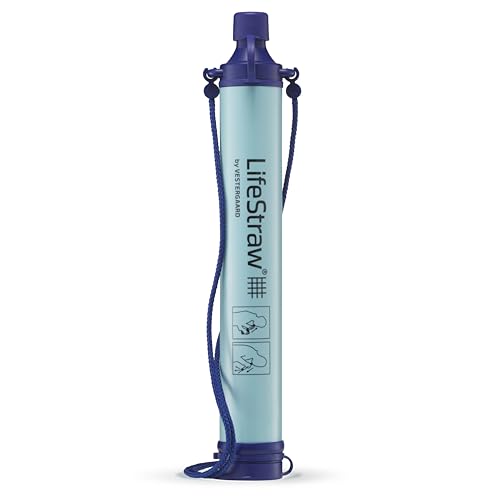
TL;DR: The LifeStraw Personal filters up to 4,000 L of water, removes 99.999999% of bacteria and 99.999% of parasites, and weighs just 46 g, making it the lightest budget straw‑filter on the market.
The standout spec is its 4,000 L filtration capacity combined with a 0.2‑micron pore size that blocks bacteria, parasites and micro‑plastics. Manufacturer‑claimed removal rates are 99.999999% for bacteria, 99.999% for parasites and down to 1 micron for micro‑plastics. At only 46 g (≈0.09 lb) and a compact 2.5 cm height, it’s truly ultralight.
Compared with the other nine entries, the LifeStraw is markedly lighter than the Sawyer Mini (≈0.09 lb vs 0.09038952742 lb) and far slimmer than countertop units like the PUR Plus Vertical, which weighs 1.2 lb. Its length of 22.9 cm is longer than the Sawyer Mini’s 2.5 inches, but its overall footprint stays well under the bulkier horizontal and vertical models. Price‑wise it sits in the budget tier, undercutting larger systems without sacrificing core filtration performance.
Users rave about the “no‑maintenance” design and the ease of slipping the straw onto a bottle or directly into a stream. Professional reviewers note the solid US EPA & NSF P231 certification and the hollow‑fiber membrane microfilter technology as reliable. The main complaints revolve around the physical suction required to draw water and the lack of virus protection, which limits use in regions where viral contamination is a concern. Because the filter holds no water, you’ll need a separate container for storage.
Technically, the filter operates with a flow rate of 0.1 GPM and a filter lifespan of 4,000 months, according to the manufacturer. The single‑stage microfiltration process does not include remineralization, and chlorine reduction is not provided. Still, the combination of high pathogen removal and unlimited shelf life makes it a solid choice for hikers, campers and emergency kits.
Pros
Cons
Best for: Budget-conscious buyers seeking a reliable entry-level option — the LifeStraw Personal offers Height: 2.5 cm
Avoid if: You need virus protection or integrated water storage
TL;DR: The Waterdrop 10UA is a compact under‑sink filter with an 8‑stage, 0.01 μm system that removes chlorine, PFAS and heavy metals, but it won’t lower TDS and costs $37.99.
The standout spec is its 8‑stage filtration that captures particles down to 0.01 μm and reduces contaminants such as chlorine, PFAS, lead and rust, while still delivering a flow rate of 0.75 GPM and a service life of 12 months for up to 8,000 gallons.
At 3.30 lb, the unit is heavier than lightweight pitcher filters like the Brita Complete or PUR Plus Horizontal, yet it’s far lighter than full‑size reverse‑osmosis systems such as the iSpring CU‑A4 or Express Water RO5DX. Its eight‑stage design also outpaces the simpler, single‑stage pitcher models that list far fewer filtration stages.
Reviewers repeatedly praise the “tool‑free” push‑to‑connect fittings that let you finish installation in about 3 minutes and swap the cartridge in just 3 seconds. The compact 12.3‑inch height and 3.6‑inch width let it tuck neatly under most kitchen cabinets, though users note the lack of TDS reduction and the restriction to cold‑water connections as drawbacks.
Technical details include NSF/ANSI 42 and 372 certifications, a filter blend of polyester membrane, activated carbon block and KDF media, and mineral retention for potassium, calcium, sodium and magnesium. Operating costs average $33 per year, making it an economical choice for routine contaminant removal.
Pros
Cons
Best for: Most users looking for a well‑reviewed, reliable mainstream option — the Waterdrop 10UA offers Height: 12.3 inches
Avoid if: You have limited desk space or need portability
TL;DR: The Brita UltraMax Elite drops lead by 99%, holds 27 cups, and replaces up to 1,800 bottled waters a year, making it a solid, mid‑price choice for families needing reliable daily filtration.
What really sets the UltraMax Elite apart is its 99% lead reduction, a figure that professional reviewers highlight as a strong point for household safety. The unit also tackles PFAS chemicals, removing 100% of PFBA and 89% of PFNA, while cutting uranium levels by 30%.
At 3.0 pounds, the UltraMax Elite is slightly heavier than the Waterdrop 10UA (≈2.89 pounds) and considerably heftier than portable options like the Sawyer Mini (≈0.09 pounds). Its 9.67‑inch height and 13.94‑inch width give it a larger footprint than most countertop pitchers, but it remains far lighter than the Express Water RO5DX system, which tops out at 31 pounds.
Everyday users praise the large 27‑cup (over 1 gallon) capacity for cutting down refill trips, especially in busy households. The electronic filter indicator and fridge‑compatible design earn extra kudos for convenience. However, several reviewers note that the unit’s size can dominate limited counter space, and the lack of arsenic and fluoride removal limits its appeal for regions with those specific contaminants.
Technically, the Elite filter lasts for 120 gallons or about six months, aligning with the “up to 1,800 single‑use bottle” replacement claim that many families find financially attractive. The easy‑locking lid and precision‑pour spigot add practical everyday usability, while the black BPA‑free plastic body blends into modern kitchens.
Pros
Cons
Best for: Buyers willing to invest in a proven, high-quality option — the Brita UltraMax Elite offers Arsenic Reduction: 0%
TL;DR: The iSpring CU-A4 is a 4‑stage, NSF/ANSI‑certified ultrafiltration system that removes up to 99% of 700 contaminants, runs tankless, and costs $158.99 for solid home‑water protection.
The standout feature is its 0.01‑micron hollow‑fiber membrane paired with a 5‑micron sediment pre‑filter, delivering a contaminant removal rate of 99% – 99.99% across lead, chlorine, PFAS, arsenic and heavy metals. At 13.00 inches tall and weighing about 4.41 lb, it fits neatly under a standard sink while offering four filtration stages and true mineral retention.
Compared with the other nine entries, the CU‑A4 is heavier than the Waterdrop 10UA (≈2.89 lb) but far lighter than the Express Water RO5DX (31.0 lb). It’s also shorter than the RO5DX’s 15.0‑inch height, yet taller than the compact Brita Complete pitcher (≈9.67 inches). Its price of $158.99 sits above budget pitchers like the Brita UltraMax Elite and Waterdrop, positioning it as a premium under‑sink option.
Customers appreciate the zero‑waste, tankless design and the confidence that comes from NSF/ANSI certification. Reviewers frequently mention the noticeable taste improvement and the ease of twist‑on filter changes. Professional observers note the ultrafiltration membrane’s ability to target emerging contaminants such as PFAS. The main drawbacks highlighted are the lack of TDS reduction and the need to replace filters every 6–12 months, which some users find more frequent than they’d like.
Pros
Cons
Best for: Buyers willing to invest in a proven, high-quality option — the iSpring CU-A4 offers Height: 13.00 inches
Avoid if: You're on a tight budget or only need basic functionality
TL;DR: The Express Water RO5DX is a 5‑stage under‑sink RO system that cuts TDS by up to 99%, removes up to 1,000 contaminants, and delivers 50 GPD, though it carries a premium price.
What really sets this unit apart is its claim to strip up to 1,000 impurities and 158 specific contaminants, while achieving 93–99% total dissolved solids reduction. The system runs on a 4‑gallon tank and can produce 50 gallons per day at a flow rate of 0.8 GPM, fitting comfortably under most kitchen sinks at 15.0 inches tall, 14.0 inches long and 5.0 inches wide.
Compared with the other nine models in the roundup, the RO5DX is noticeably heavier at 31.0 lb, outweighing the iSpring CU‑A4’s 4.41 lb and even the iSpring RCC7AK’s 20.0 lb. Its 15.0‑inch height also exceeds the Waterdrop 10UA’s 12.3‑inch profile, while its flow rate nudges just ahead of Waterdrop’s 0.75 GPM. In contrast, the Brita UltraMax Elite and PUR units sit on the lighter, countertop side of the spectrum, making the Express system a more substantial under‑sink installation.
Users consistently praise the NSF/ANSI 58 certification, noting it adds confidence that the materials are food‑grade and the TDS reduction is verified. The all‑in‑one kit, which arrives pre‑assembled with a chrome faucet and spare pre/post filters, is highlighted for making DIY installation feel manageable. Professional reviewers echo the certification’s importance but point out that it only guarantees TDS reduction, not the full list of 158 contaminants advertised. As with most reverse‑osmosis units, the system does generate wastewater, a point some owners flag as a trade‑off.
Technically, the RO5DX runs five filtration stages (six when the alkaline remineralizer is added) and promises a 12‑month filter lifespan. It operates best when feed water sits between 40 °F and 85 °F, and the manufacturer recommends it for households of four or more people, matching its 50 GPD output to typical family consumption.
Pros
Cons
Best for: Buyers willing to invest in a proven, high-quality option — the Express Water RO5DX offers Height: 15.0 inches
Avoid if: You're on a tight budget, need a lightweight countertop unit, or have water usage that regularly exceeds the 50 GPD capacity.
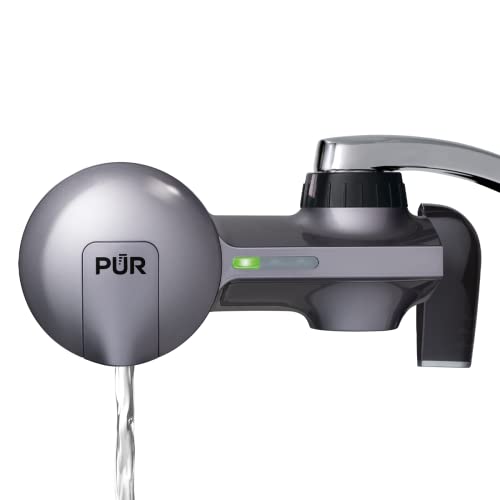
TL;DR: The PUR Plus Horizontal costs $32.99, cuts 70 contaminants, holds 100 gallons of filtered water, and fits standard faucets with a handy LED indicator.
This faucet‑mount filter boasts a certified contaminant reduction count of 70, covering lead, PFAS, chlorine and more, while the Mineral Core Technology adds a crisp, slightly alkaline taste. The filter’s 100‑gallon capacity translates to about three months of use before the LED light shifts from green to yellow, then red.
At 0.7 lb, the unit is lighter than the iSpring CU‑A4 (over 4 lb) but a touch heavier than the Brita Complete (0.65 lb). Its 5.2 in height is a hair shorter than the PUR Plus Vertical’s 5.4 in, and the 6.8 in length exceeds the Waterdrop 10UA’s 3.6 in length, making it a compact choice for most kitchen sinks.
Reviewers consistently praise the tool‑free installation and the “instant on‑demand” flow, noting the water tastes noticeably fresher after the first pour. The LED filter‑change light also earns marks for simplicity. However, many users flag incompatibility with pull‑out or handheld sprayers, and a few report leaks if the unit isn’t seated perfectly.
Pros
Cons
Best for: Budget-conscious buyers seeking a reliable entry-level option — the PUR Plus Horizontal offers Included Filters: Yes
Breakdown
iSpring RCC7AK
Pros
Cons
LifeStraw Personal
Pros
Sawyer Mini
Pros
Cons

Waterdrop 10UA
Pros
Cons
Based on scoring data and product specs
Personalized picks
Best Overall Pick
iSpring RCC7AK
Best OverallBest for: Buyers willing to invest in a proven, high-quality option — the iSpring RCC7AK offers Asbestos Reduction: >99.7%
LifeStraw Personal
Best for: Budget-conscious buyers seeking a reliable entry-level option — the LifeStraw Personal offers Height: 2.5 cm
$15.49-$219.50 vs winner
Skip PUR Plus Vertical if…
You need advanced features or professional-grade performance
We’re naming the iSpring RCC7AK the clear winner. It’s an under‑sink RO system with six filtration stages, up to 99 % contaminant removal, and a 75 GPD production capacity, all backed by NSF/ANSI 58 certification. At $198.77 it delivers high‑grade performance without the premium price tag of many comparable units, and its 4.6‑star rating from 14,695 reviewers shows strong user confidence.
The runner‑up is the LifeStraw Personal, perfect if you need a portable, no‑maintenance solution for hiking or emergency kits. It filters up to 4,000 liters, removes 99.999999 % of bacteria, and its 0.2‑micron hollow‑fiber membrane handles micro‑plastics and parasites, all in a lightweight 0.088‑pound straw you can slip onto a pack.
For tighter budgets, the LifeStraw Personal remains the best value at $15.49. In the mid‑range, the Waterdrop 10UA offers solid performance at $37.99, making it a sensible step up from basic straws. If you’re willing to invest more, the iSpring CU‑A4 stands out as a premium contender at $158.99, delivering advanced RO filtration for serious home users.
Pick the iSpring RCC7AK for comprehensive home water purification and enjoy peace of mind today.
The iSpring RCC7AK combines a six‑stage RO process with an alkaline remineralization filter, delivering up to 99% contaminant removal across a wide range of pollutants. Its 0.0001‑micron membrane and 75 GPD production capacity give it a strong performance edge, and at $198.77 it remains affordable for serious home users.
No reviews yet — be the first to share your experience.
Please sign in to leave a review