⚡ Quick Answer
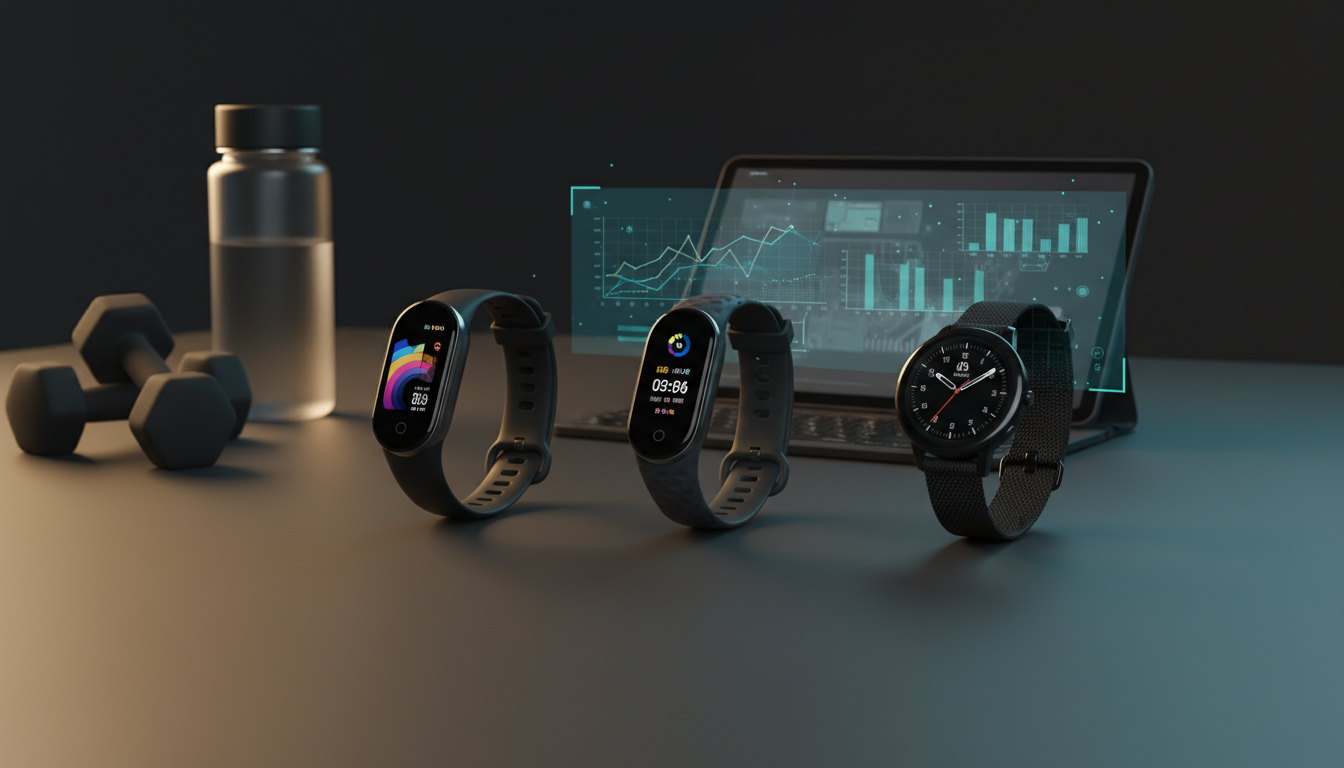
The Xiaomi Mi Smart Band 10 lands at the top of our four‑product roundup. Priced at $49.59 and has a 4.5‑star rating from 6,923 reviewers, it packs a 1.72‑inch AMOLED screen that peaks at 1500 nits, making data readable even in bright sunlight. Its typical battery life stretches to 21 days, so you won’t be tethered to a charger, and the 27 g weight keeps it featherlight on the wrist.
Our other contenders split across the budget and premium tiers. The budget‑friendly Xiaomi Smart Band 9 Active costs $29.99, scores 4.1 stars from 4,593 reviews, and offers an 18‑day battery life on a 1.47‑inch, 450‑nit display. The Samsung Galaxy Fit 3 sits at $43.00 with a 4.5‑star rating from 1,166 reviewers, a 1.6‑inch AMOLED screen and up to 13 days of use. In the premium corner, the Amazfit Band 7 retails for $44.99, has a 3.9‑star rating from 9,344 reviews, and delivers 18 days of typical battery life on a 1.47‑inch AMOLED panel.
Read on to see how each model measures up in battery endurance, display clarity, and day‑long comfort.

Xiaomi Mi Smart Band 10
Its 9‑day AOD battery life keeps you tracking longer without daily charging.
Xiaomi Smart Band 9 Active
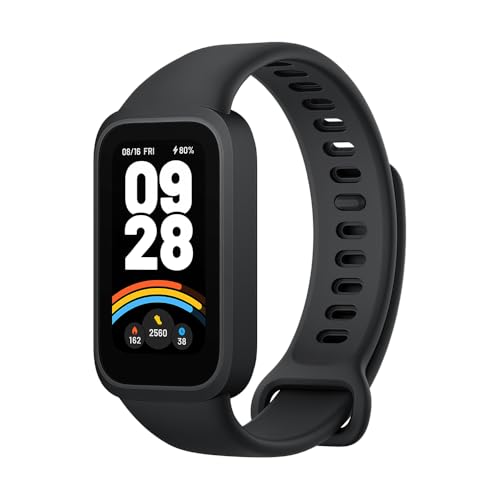
Ideal for tight‑budget shoppers, it offers solid features at $29.99—about $20 less than the Mi Smart Band 10.

Samsung Galaxy Fit 3
Offers an advertised 13‑day battery life with a compact Samsung design, standing out from Xiaomi’s models.
Score Analysis
Key score advantages vs. runner-up (Xiaomi Smart Band)
Price Range
Xiaomi Mi Smart Band 10
$49.59
Xiaomi Smart Band 9 Active
$29.99
Samsung Galaxy Fit 3
$41.99
Amazfit Band 7
$49.99
Spec Comparison
TL;DR: The Xiaomi Mi Smart Band 10 offers a 1.72‑inch AMOLED screen at 1500 nits, up to 21 days of battery life, and a full suite of health sensors for under $50.
What really stands out is the 1.72‑inch AMOLED display framed with a 2.0 mm bezel and capable of 1500 nits peak brightness. That combination gives you crisp visuals and outdoor readability that rivals many pricier wearables.
Compared with the three other budget bands, the Mi Smart Band 10 is lighter at 27 g (about 0.06 lb) versus the Samsung Galaxy Fit 3’s 100 g and the Amazfit Band 7’s 28 g. Its battery lasts up to 21 days in typical use, beating the Amazfit’s 18‑day typical life, the Xiaomi Band 9 Active’s 18‑day claim, and the Samsung’s advertised 13 days. The screen is also larger than the Samsung’s 1.6‑inch panel and the Xiaomi Band 9 Active’s 1.47‑inch display, while offering a brighter 1500‑nit output versus the 450‑nit panel on the older Xiaomi model.
Users consistently praise the band’s long‑lasting charge and the bright screen for outdoor workouts. Professional reviewers highlight the accurate heart‑rate sensor—comparable to chest straps—and the new linear‑motor haptic feedback. Swimmers love the 96 % lap‑count accuracy powered by AI stroke recognition, and the 5ATM rating means it handles pool sessions without worry. However, several owners note the clasp feels flimsy and the auto‑detect workout feature can be hit‑or‑miss.
Pros
Cons
Best for: Budget‑conscious fitness enthusiasts who want a bright, large display and comprehensive health tracking without daily charging.
Avoid if: You need standalone GPS for runs or require medical‑grade sensors like ECG; the band’s clasp durability may also be a concern for heavy activity.
TL;DR: The Xiaomi Smart Band 9 Active offers a feather‑light 30 g body, up to 18‑day battery life and a 1.47‑inch TFT display for under $30, making it a solid entry‑level tracker.
The standout spec is the battery: a 300 mAh cell that delivers up to 18 days of use on a single charge, and it tops up in under 120 minutes. That endurance means you’ll rarely need to remember a charging cable, a point many reviewers praise as “great value for a budget fitness band.”
Against the three other bands in this roundup, the Smart Band 9 Active is markedly lighter than the Samsung Galaxy Fit 3 (0.07 lb vs 0.22 lb) and only a shade heavier than the Amazfit Band 7 (0.07 lb vs 0.06 lb). Its 300 mAh battery outpaces Samsung’s 208 mAh and Amazfit’s 232 mAh, and it matches Amazfit’s 18‑day claim while surpassing Samsung’s advertised 13‑day life. The screen is smaller—1.47 inches versus Samsung’s 1.6 inches and Xiaomi’s own Mi Band 10 at 1.72 inches—so you won’t get as large a viewing area, and its 450‑nit brightness trails the Mi Band 10’s 1500‑nit AMOLED panel.
Everyday users love the band’s “almost weightless” feel and the smooth 60 Hz scrolling on the TFT LCD. They also appreciate the 50 fitness modes, music controls and SpO₂ tracking for daily health checks. Professional reviewers note the manual‑only brightness adjustment as a drawback, especially compared with auto‑bright competitors. The lack of GPS or ECG sensors also means serious athletes may look elsewhere.
Pros
Cons
Best for: Shoppers on a tight budget who want the most for their money
Avoid if: You need advanced health metrics like GPS or ECG, or you prefer a high‑brightness AMOLED display
TL;DR: The Samsung Galaxy Fit 3 offers a 1.6‑inch AMOLED screen, 101+ auto‑detect exercise modes and IP68 water resistance for $43, but its real‑world battery life and weight lag behind some rivals.
The standout feature is the 1.6‑inch AMOLED display with a 256 × 402‑pixel resolution, delivering crisp read‑outs of workouts and notifications. Coupled with 101+ auto‑detect exercise modes and health sensors for sleep coaching, SpO₂, heart rate and snore detection, the band feels more like a mini‑smartwatch than a basic tracker.
Compared with the three other budget bands, the Galaxy Fit 3 weighs about 0.22 lb, while the Amazfit Band 7, Xiaomi Mi Smart Band 10 and Xiaomi Smart Band 9 Active sit around 0.06‑0.07 lb. Its 208 mAh battery promises up to 13 days on paper, yet the Amazfit and Xiaomi models list typical endurance of 18‑21 days, with the Amazfit even reaching 28 days in saver mode. The screen size sits between the Xiaomi Smart Band 9 Active’s 1.47‑inch panel and the Mi Smart Band 10’s 1.72‑inch display, offering a larger view without the bulk.
Professional reviewers highlight the “crisper” AMOLED screen and the comfortable aluminum case, noting that the band feels non‑intrusive during workouts. Everyday users echo the praise for clear visuals and the breadth of exercise tracking, but the most common gripe is that battery life often drops to just 3‑5 days, far short of the advertised 13‑day claim. The proprietary NFC‑enabled charging cradle also charges slowly, which adds to the endurance frustration.
Pros
Cons
Best for: Budget-conscious buyers seeking a reliable entry‑level option
Avoid if: You want the best value‑per‑dollar in its price range
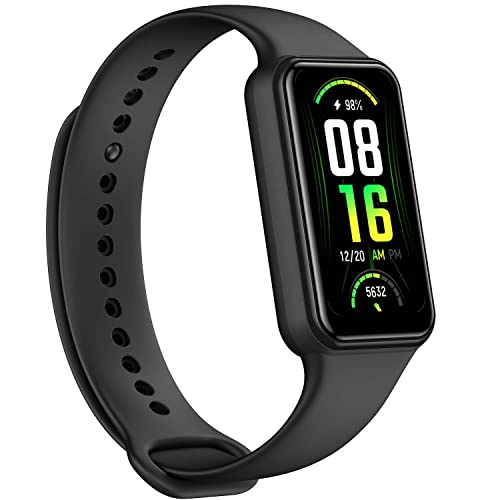
TL;DR: The Amazfit Band 7 delivers a 1.47‑inch AMOLED screen, up to 18 days of typical battery life (28 days in saver mode), and 120 sport modes for $44.99, though it lacks built‑in GPS.
The Band 7 packs a 232 mAh battery that powers up to 18 days of typical use and stretches to 28 days in saver mode, meaning you’ll rarely miss a charge. Charging takes up to 2 hours with the included magnetic cable. Its 1.47‑inch AMOLED panel offers 282 ppi on tempered glass with an anti‑fingerprint coating, all while the strap weighs just 28 g (0.06 pounds).
Compared with the Samsung Galaxy Fit 3, the Amazfit is far lighter (0.06 pounds vs 0.22 pounds) and carries a larger battery (232 mAh vs 208 mAh), translating to a longer typical battery life (18 days vs up to 13 days) despite a slightly smaller 1.47‑inch screen versus 1.6 inches. The Xiaomi Mi Smart Band 10 matches Amazfit’s weight (27 g vs 28 g) but extends typical battery life to 21 days and charges in about 1 hour, while its 1.72‑inch display is larger. The Xiaomi Smart Band 9 Active is a bit heavier (30 g) and boasts a 300 mAh battery, yet its typical battery life caps at 18 days, matching Amazfit, and its screen shares the same size but lags in pixel density (247 ppi vs 282 ppi).
Professional reviewers praise the Band 7’s “surprising” 18‑day endurance and its bright, sharp AMOLED screen with 282 ppi, noting it feels comfortable on the wrist for all‑day wear. Everyday users echo the battery praise and love the 5 ATM water resistance for swimming. Common complaints focus on the missing built‑in GPS, occasional app‑sync hiccups, and the band’s length feeling long on smaller wrists.
Beyond the display, the tracker offers Alexa voice control, dust‑proof construction, 120 sport modes, 50+ customizable watch faces, and health tools like a 45‑second PAI assessment, continuous heart‑rate, SpO₂, stress, and sleep monitoring.
Pros
Cons
Best for: Budget‑conscious beginners, casual fitness enthusiasts, office workers, travelers and swimmers who want a long‑lasting, water‑resistant tracker.
Avoid if: You’re a serious athlete or outdoor runner needing built‑in GPS, advanced health metrics, or a flawlessly smooth app experience.
“Fitbit aesthetics for under $50”
“nice 1.47-inch HD AMOLED”
Breakdown
Xiaomi Mi Smart Band 10
Pros
Xiaomi Smart Band 9 Active
Pros
Samsung Galaxy Fit 3
Pros
Cons
Amazfit Band 7
Pros
Cons
Based on scoring data and product specs
Personalized picks
Best Overall Pick
Xiaomi Mi Smart Band 10
Best OverallBest for: Audiophiles and enthusiasts seeking premium sound quality and advanced features
Xiaomi Smart Band 9 Active
Best for: Shoppers on a tight budget who want the most for their money
$29.99-$19.60 vs winner
Skip Amazfit Band 7 if…
Reliability and user satisfaction are your top concerns
The Xiaomi Mi Smart Band 10 leads with a powerhouse feature set: it sports over 150 sports modes, a crisp 1.72‑in AMOLED display that peaks at 1500 nits, and a typical battery life of 21 days. Its 27 g (≈0.06 lb) lightweight body feels barely there, while users have given it a solid 4.5 / 5 rating from 6,923 reviews, confirming its popularity.
Coming in second, the Xiaomi Smart Band 9 Active is the go‑to choice if you need a capable tracker on a tighter budget. Priced at $29.99, it still offers up to 18 days of battery life, a 1.47‑in TFT LCD screen with 450 nits brightness, and more than 100 customizable watch faces. Its 5 ATM water resistance and 30 g (≈0.07 lb) build let you swim or shower without worry, making it ideal for casual fitness fans who don’t need the extra bells of the Mi Band 10.
Budget pick: Xiaomi Smart Band 9 Active – delivers solid 18‑day battery life, 5 ATM protection, and a full‑color display for under $30. Mid‑range option: the Mi Smart Band 10 itself serves as the premium pick, packing a richer AMOLED screen, longer battery endurance, and a far wider array of health sensors.
Pick the Mi Smart Band 10 today and get the most features for under $50.
Both the Xiaomi Mi Smart Band 10 and the Amazfit Band 7 carry a 5 ATM rating, making them suitable for swimming up to 50 m. The Mi Smart Band 10 adds AI‑driven stroke recognition with a claimed 96 % accuracy, giving it a clear edge for serious swimmers.
No reviews yet — be the first to share your experience.
Please sign in to leave a review