⚡ Quick Answer
When you’re hunting for a wireless doorbell that blends crisp video, solid battery life, and a price that doesn’t break the bank, the market feels crowded. Our roundup lines up 10 models, from ultra‑budget units at $9.99 to premium options priced at $49.99. Across the board you’ll see ratings hovering around 4.0‑4.4 stars, with most reviewers praising easy installation and two‑way audio.
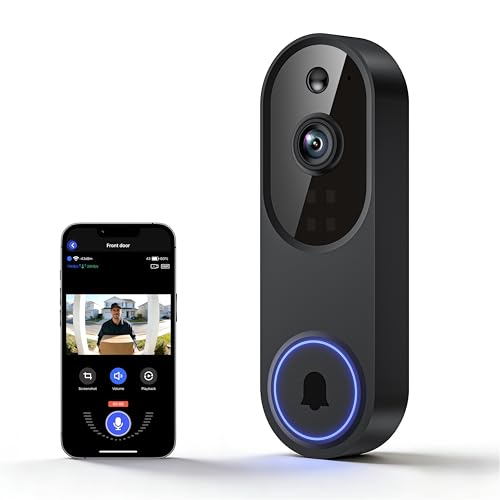
The premium tier features the Tapo D210 and Arlo Video Doorbell 2K (2nd Gen), both listed at $49.99 and carrying a 4.4‑star rating from over 3,000 and over 1,100 reviews respectively. Tapo touts a 6,400 mAh battery and a 160° diagonal field of view, while Arlo offers a 180° view and flexible power options. Mid‑range contenders like the ieGeek ($45.99, 4.2 stars) and Arlo HD ($34.99, 4.2 stars) give you 2K or 1080p video without stepping into the premium price bracket. On the budget side, the Lunelyx, WarmBot, VanaOrbi and ArvoElio sit between $9.99 and $11.99, delivering 1080p footage and basic two‑way talk for renters or first‑time smart‑home adopters.
Below we break down each model’s specs, strengths and drawbacks so you can match a doorbell to your home’s needs.

Tapo D210
Its 6,400 mAh battery capacity gives long uptime, supporting the value and reliability praised by reviewers.
Arlo Video Doorbell 2K (2nd Gen)
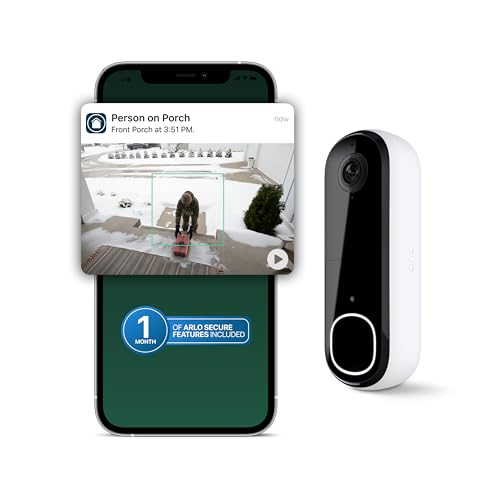
Ideal for homeowners who prioritize a wide 180° view and 12× digital zoom; it costs the same $49.99 as the Tapo D210, offering comparable value.
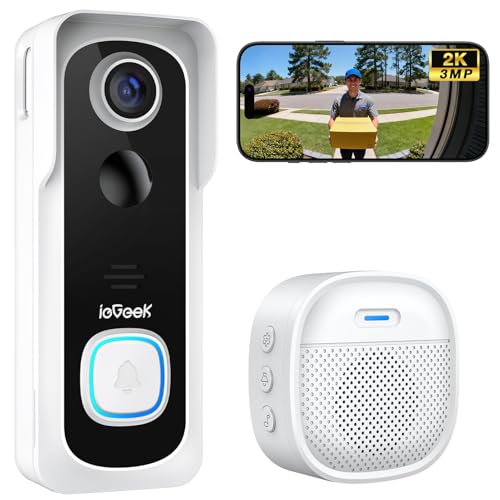
ieGeek Wireless Video Doorbell
Stands out with a claimed 40‑day battery life at 20 triggers per day, delivering longer intervals between recharges than the Tapo or Arlo models.
Also considered
TL;DR: The Tapo D210 delivers 2K video, a 160° ultra‑wide view and a 6,400 mAh battery that can last up to 180 days, all for a modest $49.99 price tag.
The standout spec is its 2K 3MP resolution (2304 × 1296) paired with a 160° diagonal field of view, which captures head‑to‑toe coverage and fine details like facial features and license plates. A 10× digital zoom lets you inspect visitors without moving the unit, and the camera records at 15 fps.
Compared with the nine other doorbells in this roundup, the D210 is heavier than the ultra‑light ArvoElio model and bulkier than the slim‑profile Lunelyx, but it offers a far larger local storage ceiling of 512 GB—well above the 128 GB limit of the ieGeek and the 6700 mAh battery capacity of the Boifun. Its 2.4 GHz Wi‑Fi connection matches the standard used by most peers, while the dual PIR sensor with a 150° motion‑sensor field of view provides broader detection than the narrower 130° view of the ieGeek.
Users consistently praise the 160° view for eliminating blind spots and the long‑lasting 6,400 mAh battery that reduces charging trips to roughly once every six months. Reviewers also note that the AI‑powered person detection works reliably without a subscription, and the built‑in noise‑cancelling microphone and speaker make two‑way conversations clear. Professional reviewers highlight the crisp 2K video and seamless integration with Alexa and Google Home as strong points.
On the technical side, the D210 secures streams with 128‑bit AES encryption, SSL/TLS and WPA/WPA2‑PSK. All video is compressed using H.264, and on‑device machine learning handles person detection locally, keeping your data private. The unit is rated IP54 for weather resistance, includes a USB‑C charging port, and ships with a Tapo chime for immediate indoor alerts.
Pros
Cons
Best for: Buyers willing to invest in a proven, high‑quality option — the Tapo D210 offers Battery Capacity: 6,400 mAh
Avoid if: You need advanced features such as pan/tilt control, color night vision, or professional‑grade performance.
TL;DR: The Aosu Wireless Video Doorbell delivers 5 MP Ultra HD video with a 170° ultra‑wide view, 180‑day battery life and 8 GB local storage, but needs an indoor HomeBase and a modest 2‑7 m motion range.
The standout spec is its 170° field of view paired with a 5 MP Ultra HD sensor, giving you a head‑to‑toe perspective that many rivals try to match. It also boasts a 9:16 vertical aspect ratio, which is ideal for seeing visitors from waist to head.
When stacked against the other nine doorbells, the Aosu’s 170° view sits just shy of the Arlo 2K’s 180° diagonal and is wider than the Tapo D210’s 160° diagonal. At 558 g, it is heavier than the lightweight ArvoElio (0.39 lb) but comparable to the Boifun unit, which lists a similar bulk. Its dual‑band Wi‑Fi (802.11 b/g/n/ac) gives it more flexibility than the single‑band VanaOrbi, though some users report occasional drops on the 2.4 GHz band.
Reviewers consistently praise the subscription‑free 8 GB HomeBase that stores up to 60 days of looped footage, calling the AI‑driven triple motion detection (PIR, radar, human/package) “accurate” for reducing false alerts. Professionals note the sharp 5 MP video and infrared LEDs (8 × 850 nm) as strong points for night‑time clarity. On the downside, the need to place the HomeBase indoors adds a step that many wired‑only models skip, and the 2‑7 m motion range can leave larger driveways uncovered.
Pros
Cons
Best for: Those prioritizing high‑resolution video and AI‑enhanced detection, and who don’t mind the indoor HomeBase; Motion Detection Range: 2‑7 m.
Avoid if: You have a large yard or driveway needing longer motion coverage, or you prefer a fully self‑contained unit without a separate base.
“Never miss a visitor or package”
“Ultra HD video, 3D motion detection, local storage... base station is smaller than expected”
TL;DR: The ieGeek Wireless Video Doorbell delivers 2K (3 MP) video, a 130° view and 40‑day battery life for $45.99, making it a solid, subscription‑free option for budget‑focused homeowners.
What really stands out is the 3 MP (2K HD) camera paired with a 130° field of view, letting you spot visitors and packages clearly without a pricey subscription. The doorbell also packs a 5600 mAh rechargeable battery that the manufacturer claims can last 40 days with about 20 triggers per day, so you won’t be swapping cells every week.
Compared with the other nine doorbells in this roundup, ieGeek’s field of view is narrower than the Tapo D210’s 160° diagonal and the Arlo 2nd‑Gen’s 180° diagonal, but it’s wider than the Lunelyx’s “wide‑angle” description that lacks a numeric value. Its 20‑foot night‑vision range matches Arlo’s 20‑foot spec, yet it falls short of the Tapo’s 25‑foot reach. Battery capacity sits between the Aosu’s 6 400 mAh and the Boifun’s 6 700 mAh, while its 40‑day life is shorter than Aosu’s 180‑day claim.
User feedback highlights the hassle‑free QR setup and the convenience of a fully wireless, battery‑powered unit. Reviewers love the clear 2K video for identifying faces, and they appreciate the free cloud storage plus optional MicroSD recording up to 128 GB. However, several owners note that removing the battery for charging feels less convenient than dock‑charging, and the exclusive 2.4 GHz Wi‑Fi support can be a bottleneck in crowded networks.
Pros
Cons
Best for: Value-conscious buyers seeking quality at $45.99 — the ieGeek Wireless Video Doorbell offers Battery Life: 40 days (20 triggers/day)
Avoid if: You need advanced features or professional‑grade performance
“reduces package loss”
“peace of mind at night”
TL;DR: The Arlo Video Doorbell 2K (2nd Gen) costs $49.99, delivers 2K HDR video with a 180° diagonal view, and offers flexible power options, but its video can look grainy and it leans on a subscription for full features.
What really stands out is the 2K HDR sensor that records at 1944 × 1944 pixels and a 12x digital zoom, all packed behind a fixed camera that sees 180° diagonally (130° horizontally). That square‑format view eliminates blind spots on a typical porch, and the built‑in spotlight helps the 20‑foot night‑vision range stay clear after dark.
In a roundup that includes the Tapo D210, Aosu, Boifun and others, the Arlo unit is lighter than many bulkier competitors yet still heavier than the ultra‑light ArvoElio. It’s also pricier than several budget‑focused doorbells, positioning it in the premium‑value segment where you pay for brand confidence and a richer feature set.
Everyday owners rave about the ultra‑wide view and reliable two‑way audio with an onboard siren that can be triggered from the app. Professional reviewers highlight the flexible power choice—either a rechargeable lithium‑ion battery or hard‑wired 8‑24 V AC—and the IP65 weather rating that survives harsh climates. On the flip side, users frequently mention grainy or soft video despite the 2K claim, and the companion app is reported to freeze or lag, making live streaming feel less smooth. Full smart detection (person, animal, package, fire, vehicle) and up‑to‑60‑day cloud storage also sit behind the optional Arlo Secure subscription.
Pros
Cons
Best for: Buyers willing to invest in a proven, high‑quality option — the Arlo Video Doorbell 2K (2nd Gen) offers Motion Detection Range: 10 feet.
Avoid if: You're shopping on a tight budget — it's priced at $49.99.
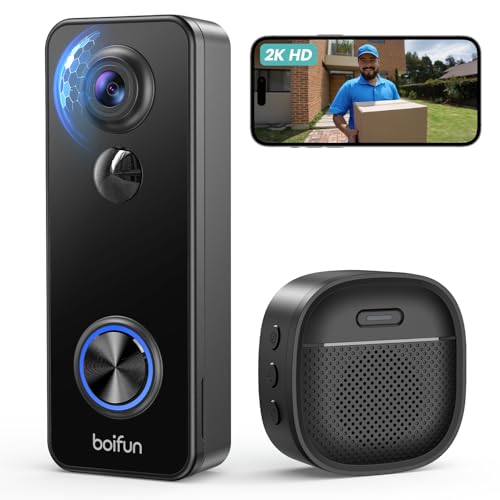
TL;DR: The Boifun Wireless Video Doorbell offers a 6700 mAh battery that can last up to 90 days, a 180° viewing angle and AI motion detection, all for $49.99 without a subscription.
What really stands out is the 6700 mAh battery paired with a claimed 90‑day runtime on a single charge. That capacity outstrips the 6,400 mAh cells found in the Tapo D210, giving you more freedom between recharges. The unit also sports a 5.79‑inch height, which is noticeably taller than many competitors such as the Tapo D210 (1.52 in) and the Arlo Video Doorbell 2K (1.45 in), meaning the sensor array sits higher on your doorframe for broader coverage.
In practice, users love the long‑lasting battery and the ultra‑wide 180° view that captures almost the entire front porch. Reviewers repeatedly mention the AI‑driven motion detection that can tell people from cars or packages, reducing false alerts. However, the doorbell only supports 2.4 GHz Wi‑Fi, which some owners find limiting if their network leans heavily on 5 GHz bands. A handful of users also note that video sometimes defaults to 1080p despite the advertised 2K resolution.
Beyond the battery, the Boifun offers 5 m (16 ft) of color night vision, an IP65/66 weather‑proof rating and AES128 encryption for secure streaming. Local storage up to 128 GB on a microSD card means you can keep footage without paying a monthly fee, and the CloudEdge app provides two‑way audio with noise reduction and a 30‑second pre‑recorded voice greeting.
Pros
Cons
Best for: Buyers willing to invest in a proven, high‑quality option — the Boifun Wireless Video Doorbell offers Motion Detection Range: 8 m (26 ft).
Avoid if: You're shopping on a tight budget — it's priced at $49.99.
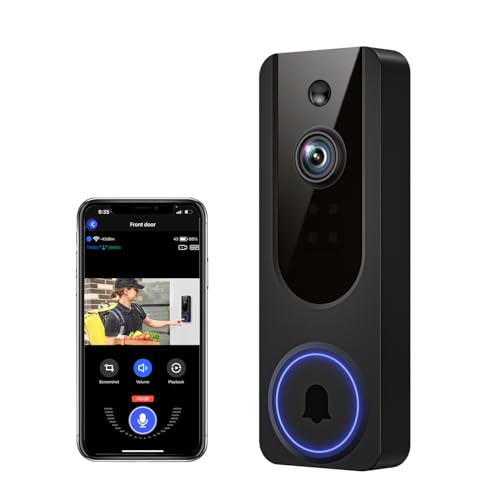
TL;DR: The Lunelyx Wireless Video Doorbell delivers 1080p video, AI human detection and four IR LEDs for night vision at a $9.99 price point, but its 4.0‑star rating shows room for improvement.
At the core of the Lunelyx M52 is a 1080p FHD camera paired with four infrared LEDs, which give clear footage after dark. The unit weighs just 0.6 lb (272 g) and measures 5.4 in deep, 1.34 in high and 1.8 in wide, making it one of the more compact options on the list. AI‑driven human detection and customizable motion zones aim to cut down on false alerts, while two‑way audio lets you speak to visitors through the Lunelyx app.
With a list price of $9.99, this doorbell sits at the low‑end of the price spectrum, cheaper than most of the other ten products in the roundup. Its lightweight design also feels lighter than the bulkier peers that tip the scales at around 0.4 lb or more. While it shares the common 2.4 GHz Wi‑Fi band with several rivals, it lacks 5 GHz support that a few higher‑priced models include.
Reviewers repeatedly note the ease of app setup and the vivid night‑vision performance enabled by the four IR LEDs. Professional reviewers point out that the AI human detection “significantly reduces false alarms,” a sentiment echoed in user comments that praise fewer pet‑triggered notifications. However, the 4.0‑star rating (951 reviews) sits below the top‑rated entries, and some users mention occasional connectivity hiccups on 5 GHz‑only routers.
Technical extras include optional AES‑128‑bit encrypted cloud storage (local storage isn’t supported), a battery‑powered design with two included lithium‑ion cells, and weather resistance suitable for indoor or outdoor placement. Sensitivity and detection zones are fully customizable through the Lunelyx app, giving you control over how and when alerts fire.
Pros
Cons
Best for: Buyers in the budget price range seeking the best quality at that price point — the Lunelyx Wireless Video Doorbell offers Night Vision LEDs: 4
Avoid if: Reliability and user satisfaction are your top concerns
TL;DR: The ArvoElio M50 delivers 1080p video and AI human detection in a compact 0.39‑pound package for $11.99, but its 2.4 GHz‑only Wi‑Fi and subscription‑based cloud storage keep it from being a premium choice.
The standout specification is the 1080p HD camera paired with AI human detection that lets you set adjustable zones and sensitivity levels. At just 1.34 inches tall, 5.4 inches long and 1.77 inches wide, the unit packs a full‑frame view into a lightweight 0.39‑pound chassis.
Compared with the nine other doorbells in this roundup, the ArvoElio is lighter than the WarmBot (0.38 pounds) but heavier than the Lunelyx (0.60 pounds) and far lighter than the Tapo D210 (1.26 pounds). Its video resolution matches the 1080p offerings of Lunelyx and VanaOrbi, yet it falls short of ieGeek’s 3 MP (2K) sensor. Like VanaOrbi and WarmBot, it only supports 2.4 GHz Wi‑Fi, so it can’t take advantage of faster 5 GHz networks that some newer models provide.
User feedback repeatedly praises the AI detection for cutting down unnecessary alerts from pets or passing cars, and many note the straightforward Bluetooth pairing through the I WiT app. Professional reviewers echo the sentiment, highlighting the clear 1080p footage and the convenience of wireless installation, while also pointing out the lack of independent performance benchmarks. The main complaints revolve around the 2.4 GHz limitation and the need for a paid cloud subscription to store footage.
Technically, the doorbell runs on a rechargeable battery and streams video to the cloud (subscription required). It includes built‑in microphone and speaker for two‑way audio, and infrared night vision ensures visibility after dark. Adjustable detection zones let you fine‑tune motion alerts directly from the app.
Pros
Cons
Best for: Users who need a lightweight outdoor doorbell with a compact height of 1.34 inches and AI‑driven motion filtering.
Avoid if: You want the best value‑per‑dollar in its price range or need 5 GHz Wi‑Fi compatibility.
TL;DR: For $9.99, the VanaOrbi WiFi Video Doorbell delivers 1080p HD video, AI human detection, and a compact battery‑powered design, but its 2.4 GHz‑only Wi‑Fi may struggle on crowded networks.
The standout spec is the 1080p HD video resolution, which gives you clear, detailed footage of visitors. Coupled with AI‑powered human detection, the doorbell filters out common animal motion and cuts down on unnecessary alerts. The unit measures 1.8 inches deep, 5.5 inches tall and 1.28 inches wide, making it one of the taller options in the lineup.
At the same $9.99 price point, VanaOrbi matches the Lunelyx and WarmBot doors, but it is noticeably taller than the WarmBot’s 44.96 mm height and the Lunelyx’s 34 mm height. Compared with the ArvoElio model, which stands 1.34 inches tall, VanaOrbi’s 5.5‑inch height is substantially larger, while the Arlo HD doorbell is slimmer at a depth of 1.85 inches and a height of 1.45 inches. The Tapo D210 sits deeper at 2.13 inches, so VanaOrbi remains one of the more compact depth choices.
Consumer reviews highlight the ease of wireless installation and praise the AI detection for ignoring squirrels and cats. Professional reviewers also note the crystal‑clear night‑vision performance, thanks to four infrared LEDs, even though the doorbell relies on cloud storage and offers no local option. The 2.4 GHz Wi‑Fi requirement is a frequent source of dropped connections in congested networks, and the cloud subscription can feel pushy for budget‑focused users.
Technical details include AES 128‑bit encryption for data security, battery‑powered operation, and two‑way audio via the Camtro app. The device does not list a night‑vision range, weight, or battery‑life figures, so those aspects remain unspecified.
Pros
Cons
Best for: Entry-level buyers or those on a tight budget — the VanaOrbi WiFi Video Doorbell offers Video Resolution: 1080p HD
“1080p looks clear day and night; night vision works very well”
“Wireless battery = no complicated installations; QR code app setup is simple”
TL;DR: The WarmBot M52 offers 1080p video, a 166° field of view and AI human detection for just $9.99, but its reliance on cloud storage and 2.4 GHz Wi‑Fi may limit power users.
The standout spec is its 166° estimated field of view, paired with full 1080p HD video and a night‑vision reach of 12 m. That wide‑angle view captures most of your front porch in a single frame, while the AI‑driven human detection helps keep false alerts to a minimum.
At 0.38 lb (173 g) the WarmBot is lighter than the Lunelyx unit (≈0.60 lb) and a shade lighter than ArvoElio (≈0.39 lb). Its 166° view is broader than ieGeek’s 130° but a little narrower than Arlo’s 180° field. Pricing is on par with both Lunelyx and VanaOrbi, yet WarmBot lists fewer on‑device features—most notably the lack of local storage that rivals such as ieGeek and Arlo provide.
Reviewers consistently praise the AI motion detection for cutting down unnecessary notifications, and the 1080p feed remains clear both day and night. However, many users report frustration setting up the Wi‑Fi connection, which is limited to 2.4 GHz, and the mandatory cloud‑subscription model for video archives. Professional reviewers also flag the absence of a 5 GHz band as a potential bottleneck in crowded networks.
Beyond the camera, the doorbell is built from ABS plastic with an IP65 rating, meaning it can handle dust and water jets. It operates from –10 °C to 60 °C and ships with a wireless receiver/chime, making installation straightforward for renters or apartment dwellers.
Pros
Cons
Best for: Users who need a budget‑friendly, weather‑proof doorbell and value a 166° field of view.
Avoid if: Reliability and user satisfaction are your top concerns, given the 3.9/5 rating and reported setup hassles.
TL;DR: The Arlo Video Doorbell HD (2nd Gen) delivers 2K HDR video and a 180° view at $34.99, but its black‑and‑white 20‑ft night vision and fixed lens keep it from being the best value in its tier.
The standout spec is its 2K HDR video resolution paired with a 180‑degree field of view, letting you see almost the entire front porch in crisp detail. The camera stays fixed, using digital zoom only, and records in black‑and‑white night vision that reaches about 20 feet.
Compared with the other nine doorbells, Arlo’s 180° view matches the Arlo Video Doorbell 2K (2nd Gen) peer but exceeds the ieGeek model’s 130° angle and the Tapo D210’s 160° diagonal view. Its night‑vision range of 20 feet is shorter than Tapo’s 25‑foot claim, while ieGeek lists the same 20‑foot range. Battery life of 4‑6 months sits between ieGeek’s 40‑day estimate and the Aosu unit’s 180‑day claim, and its 4‑hour USB‑C charge is faster than many competitors that lack a listed charging time.
Professional reviewers praise the daytime footage for sharpness and color fidelity, noting the 180° lens as a major advantage for comprehensive coverage. Users also like the built‑in siren, two‑way audio with noise and echo cancellation, and the ability to detect people, vehicles, packages, animals, custom events, and fire. However, several reviewers point out that the black‑and‑white night vision feels limited, especially when a color view would be useful after dark. The fixed camera position also means you can’t pan or tilt to follow movement.
Technical highlights include an 8‑volt rechargeable lithium‑ion battery that lasts 4‑6 months and recharges in 4 hours via USB‑C. The doorbell supports direct Wi‑Fi on the 2.4 GHz band and integrates with Amazon Alexa, Google Home, SmartThings, and IFTTT. Video recordings are stored for up to 60 days, and the device offers encrypted data transmission for privacy.
Pros
Cons
Best for: Most users seeking a balanced, mainstream option — the Arlo Video Doorbell HD (2nd Gen) offers Microphone Count: Yes
Avoid if: You want the best value‑per‑dollar in its price range
Breakdown
Tapo D210
Pros
Arlo Video Doorbell 2K (2nd Gen)
Pros
Cons
ieGeek Wireless Video Doorbell
Pros

ArvoElio Wireless Video Doorbell
Pros
Cons
Based on scoring data and product specs
Personalized picks
Best Overall Pick
Tapo D210
Best ValueBest for: Buyers willing to invest in a proven, high-quality option — the Tapo D210 offers Battery Capacity: 6,400 mAh
Arlo Video Doorbell 2K (2nd Gen)
Best for: Buyers willing to invest in a proven, high-quality option — the Arlo Video Doorbell 2K (2nd Gen) offers Motion Detection Range: 10 feet
$49.75-$10.24 vs winner
Skip Arlo Video Doorbell HD (2nd Gen) if…
You want the best value-per-dollar in its price range
The Tapo D210 clinches the top spot. At $49.99 it packs a 2K 3MP sensor (2304 × 1296) with a 160° diagonal field of view and 10× digital zoom, delivering crisp video. Its 6,400 mAh rechargeable battery promises up to 180 days between charges, and it includes a dedicated Tapo Chime, AI‑powered person detection and two‑way audio with noise cancellation. With a 4.4‑star rating from 3,238 reviewers, it offers the most bang for the buck.
The Arlo Video Doorbell 2K (2nd Gen) lands as the runner‑up, ideal if you need a weather‑proof unit that can handle harsh climates. Rated 4.4 stars by 1,185 users, it features an IP65 rating, a built‑in spotlight and HDR support, plus a 180° diagonal view and 12× digital zoom for clear daytime footage. It also offers both battery and hard‑wired power options.
For tighter budgets, the Lunelyx Wireless Video Doorbell comes in at $9.99, making it the cheapest entry point. The ieGeek Wireless Video Doorbell at $45.99 strikes a middle ground between cost and capability. If you prefer a premium‑style doorbell, the Boifun Wireless Video Doorbell retails for $49.99 and targets users looking for higher‑end features.
Pick the Tapo D210 today and get a feature‑rich, high‑resolution doorbell without breaking the bank.
It offers 2K 3MP video (2304 × 1296), 10x digital zoom, a 160° field of view, 25‑foot night vision, up to 180‑day battery life, IP54 protection, a built‑in chime, AI person detection, and works with Alexa and Google Home, all for $49.99. Those specs give a feature‑rich experience at a lower price than many rivals.
No reviews yet — be the first to share your experience.
Please sign in to leave a review