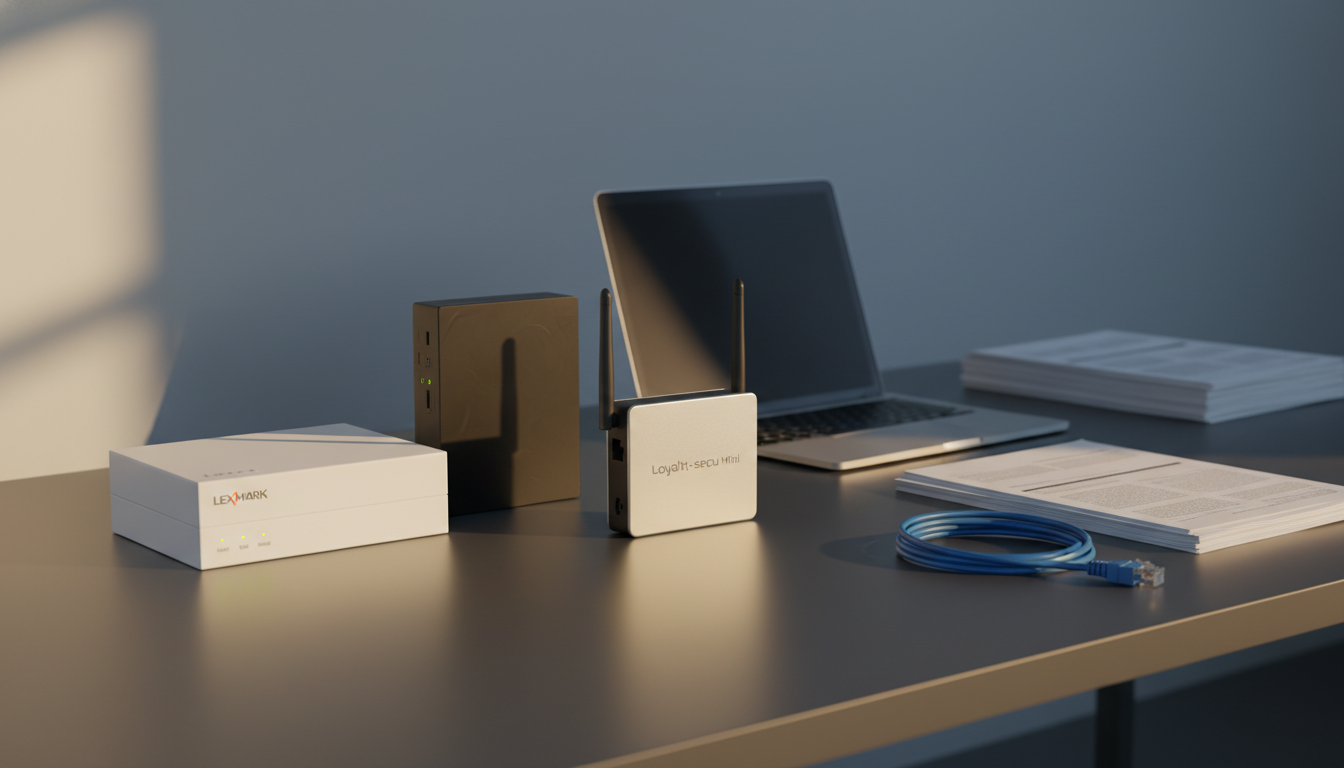
If you’re looking to turn a wired printer into a wireless workhorse without breaking the bank, this guide compares six dedicated print‑server devices. Prices range from the $38.12 Loyalty‑secu Mini in the budget slot up to the $67.24 Ashata model in the premium tier, with mid‑range options like the Lexmark N8352 at $57.80 and the Quxas LP‑N110W at $59.99. Each unit brings its own blend of Wi‑Fi speed, protocol support and form factor, so you can match a server to your office size, printer type and connectivity preferences.
For example, the Lexmark N8352 offers a maximum wireless transmission speed of 72 Mbit/s and NFC tap‑to‑print, while the Xiiaozet server pushes up to 300 Mbps Wi‑Fi and handles RAW and IPP protocols. The Loyalty‑secu Mini stands out with dual‑band 802.11 b/g/n support and a 1.2 GHz ARM A7 processor, all for just $38.12. Below we’ll break down each model’s specs, user feedback and value so you can decide which wireless print server fits your needs.
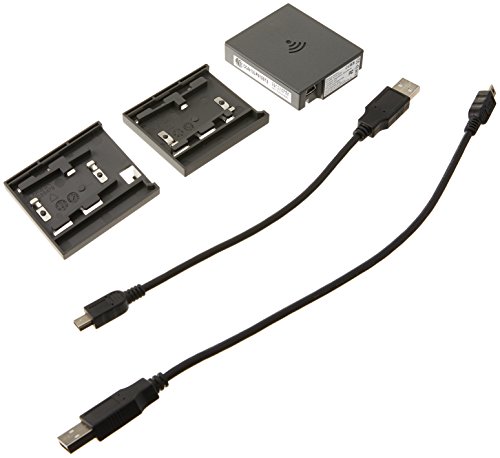
Lexmark N8352
Delivers a reliable 72 Mbit/s maximum wireless transmission speed, giving a solid balance of performance and cost.

Xiiaozet Wireless Print Server
Ideal for users who need higher Wi‑Fi speeds, with 300 Mbps capability, and it sits about $5 more than the Lexmark.
Loyalty-secu Mini
Stands out with a feather‑light 25 g body and an industrial‑grade ARM A7 1.2 GHz processor, suits tight budgets and compact setups.
Also considered
Score Analysis
Key score advantages vs. runner-up (Xiiaozet Wireless Print)
Price Range
Lexmark N8352
$57.80
Xiiaozet Wireless Print Server
$62.89
Loyalty-secu Mini
$101.00

Fauoswuk USB Print Server
$46.39

Quxas LP-N110W
$59.99

Ashata Wireless Print Server
$67.24
Spec Comparison
TL;DR: The Lexmark N8352 adds 802.11b/g/n Wi‑Fi and NFC tap‑to‑print to select Lexmark printers for $57.80, weighing 226.8 g and fitting in a compact 44.45 mm‑high module.
The standout feature is its built‑in NFC tag and 2.40 GHz Wi‑Fi, delivering a maximum wireless transmission speed of 72 Mbit/s. At 44.45 mm tall, 158.75 mm long and 228.6 mm wide, the unit weighs 226.8 g, making it easy to mount inside a printer chassis while still offering a solid, metal‑feel build.
Compared with the five other budget servers, the N8352 is taller than the Quxas LP‑N110W (1.06 in) and the Xiiaozet (30 mm) but shorter than the Loyalty‑secu Mini’s 135 mm height. It’s lighter than the Loyalty‑secu Mini’s 25 g and the Fauoswuk’s 130.41 g, yet a touch lighter than the Xiiaozet’s 240 g. Unlike the Ashata and Fauoswuk units, the Lexmark model does not list Ethernet speed or USB transfer rates, focusing instead on wireless and NFC capabilities.
Reviewers consistently praise the smooth mobile printing experience: the Lexmark Mobile Direct app and NFC tag let Android users tap their phones to print instantly. Professional reviewers also note the embedded web configuration page, which simplifies firmware updates and network tweaks. The primary drawback is the limited printer compatibility list—only a specific set of Lexmark models are supported, so owners of other brands will need a different solution. Additionally, the product ships without a warranty, which some users view as a trade‑off for the low price.
Pros
Cons
Best for: Lexmark printer owners who want to add wireless and NFC printing without replacing their hardware.
Avoid if: You need support for non‑Lexmark printers or require a ultra‑compact, warranty‑backed solution.
TL;DR: The Xiiaozet LK100W offers 300 Mbps Wi‑Fi, 240 g weight, and unlimited printer sharing for $62.89, making it a solid budget choice for home offices that need a single‑printer network solution.
The standout spec is its 300 Mbps maximum Wi‑Fi speed, which comfortably handles multiple print jobs at once. Weighing in at 240 g and measuring just 100 mm × 30 mm × 70 mm, the unit stays compact enough to sit beside a printer without crowding the desk. It also supports unlimited simultaneous users, so a whole household can print without queuing.
Compared with the other five servers, the Xiiaozet’s Wi‑Fi is noticeably faster than the Lexmark N8352’s 72 Mbit/s transmission rate. At 240 g it's heavier than the 25 g Loyalty‑secu Mini and the 130.41 g Fauoswuk model, yet still lighter than a typical full‑size printer. Its price sits above the entry‑level mini option but below the higher‑priced Ashata server, giving it a middle‑ground value in the group.
Reviewers appreciate that the device can bring legacy printers online without new cables, thanks to its dual Ethernet and 2.4 GHz Wi‑Fi options and a web‑based management page. The virtual USB tool helps when a printer isn’t listed in the compatibility database. However, users often mention that the initial network setup can be fiddly, especially after Wi‑Fi changes, and the lack of scanning support or macOS/iOS drivers limits its appeal for more diverse environments. Power consumption stays low at 5 W, drawing 1 A at 5 V, and you can achieve a factory reset by holding the button for 5‑8 seconds.
Pros
Cons
Best for: Home offices or small families that want to share a single USB printer over Wi‑Fi or Ethernet without extra cables.
Avoid if: You need scanner sharing, multiple printers, or macOS/iOS mobile printing.
“Priceless cuz it beats up to have some cabling run... you can put a network device anywhere.”
“Prints beautiful.”
TL;DR: The Loyalty‑secu Mini turns any USB printer into a dual‑band Wi‑Fi, Bluetooth, Ethernet, and cloud‑ready device, weighing just 25 g and fitting in a 135 mm cube for under $40.
This mini print server’s standout spec is its Industrial‑grade ARM A7 1.2 GHz processor, which powers simultaneous Wi‑Fi, Bluetooth, Ethernet, and cloud connections without a hitch. The unit measures 135 mm × 50 mm × 135 mm and tips the scales at only 25 g, making it far lighter than the Fauoswuk model (130.41 g) and the Xiiaozet server (240 g). Its compact footprint also beats the bulkier Lexmark N8352, which lists a height of 44.45 mm but a much longer length of 158.75 mm.
Compared with the other five contenders, the Mini offers more connectivity options: it supports Bluetooth SPP + BLE dual‑mode and dual‑band 2.4 GHz / 5 GHz Wi‑Fi, while the Fauoswuk and Quxas units only note Wi‑Fi support without Bluetooth. Cloud printing and multi‑user sharing are built‑in, a feature that the Ashata server mentions only in passing. In short, the Mini packs a richer feature set than its peers while staying in the budget tier.
Users consistently praise the device for eliminating cable clutter and letting them place printers wherever they like. Professional reviewers highlighted its rock‑solid wireless link with no dropped connections and the ability to let several coworkers share a single printer at once. The main complaints focus on its higher price relative to cheaper alternatives and the fact that only twelve reviews are available, leaving long‑term reliability a bit unclear.
Pros
Cons
Best for: Home offices, small businesses, schools, or any setting where a few users need to share a USB printer wirelessly.
Avoid if: You require an ultra‑low‑cost solution, enterprise‑grade volume printing, or a device with a built‑in battery.
TL;DR: The Fauoswuk USB Print Server costs $46.39, weighs 130.41 g, and lets you share up to four USB printers over Wi‑Fi or a 100 Mbps LAN, but its single‑star rating signals reliability concerns.
What really stands out is the 480 Mbps USB 2.0 transfer speed paired with a 100 Mbps LAN bridge, giving you decent bandwidth for everyday document and image printing. The device also supports up to 256 GB of attached storage, which is useful if you need to queue large print jobs locally. Its compact chassis measures 3.66 × 3.58 × 2.83 inches, making it easy to tuck behind a printer or on a shelf.
Compared with the other five picks, the Fauoswuk is heavier than the 25 g Loyalty‑secu Mini but lighter than the Lexmark N8352’s 226.8 g chassis. Its 100 Mbps LAN speed exceeds the Lexmark's listed 72 Mbit/s wireless transmission, though it trails the Xiiaozet model's advertised 300 Mbps Wi‑Fi speed. Like the Ashata server, it offers a single RJ45 Ethernet port and matches its 480 Mbps USB speed, but it provides multi‑printer support for up to four devices, a feature the peer specs don't highlight.
Customer sentiment is stark: the product carries a 1.0/5‑star rating based on a single review, and users have flagged occasional Wi‑Fi dropouts and instability when relying on external USB hubs. Professional notes describe the server as “efficient for image and text printing in home or small‑office settings,” yet the lack of broader feedback suggests you may encounter the same reliability hiccups that other budget servers sometimes face.
From a technical standpoint, the server runs on Windows or macOS with a minimum OS version of 3.4, draws power via a USB‑C connector, and comes with a 90‑day manufacturer warranty. Its USB 2.0 interface limits peak throughput, so high‑resolution or bulk printing jobs could feel slower than on a USB 3.0‑capable alternative.
Pros
Cons
Best for: Entry-level buyers or those on a tight budget
Avoid if: Reliability and user satisfaction are your top concerns
“Priceless cuz it beats up to have some cabling run... you can put a network device anywhere.”
“Prints beautiful.”
TL;DR: The Quxas LP‑N110W adds dual‑Ethernet and 2.4 GHz Wi‑Fi to most USB printers for under $60, but its limited Wi‑Fi band and sparse documentation may turn off power users.
The standout hardware detail is the pair of Ethernet ports, each supporting 10/100 Mbps links, which lets you isolate a printer on one LAN while managing another on a separate network. Its compact chassis measures just 1.06 in H × 2.99 in L × 3.5 in W, making it easy to tuck behind a desk or on a shelf.
Compared with the other five entries, the Quxas sits near the middle of the price range, costing more than the ultra‑lightweight Loyalty‑secu Mini and the Fauoswuk model, yet cheaper than the Ashata server. It offers two Ethernet ports, a feature most peers either omit or list only a single port. Its Wi‑Fi operates solely on the 2.4 GHz band, matching Lexmark’s frequency but lacking the 5 GHz option some competitors provide. In terms of size, it's slimmer than Fauoswuk’s 3.66‑inch depth, giving it a lower profile on cramped workspaces.
Users repeatedly praise the three‑step hardware setup, noting that you can get a printer online without installing extra software. The dual Ethernet ports also earn kudos for allowing separate network configurations. On the downside, reviewers point out that the 2.4 GHz‑only Wi‑Fi can become congested in busy households, and the product documentation leaves out many hardware details, which can be frustrating for advanced users.
From a technical standpoint, the unit supports cross‑network, multi‑segment, and simultaneous printing, plus SNMP and temporary Wi‑Fi setup. It claims compatibility with over 95 % of USB printers—including laser, inkjet, dot‑matrix, and thermal models—and works with Windows, macOS, and Linux operating systems. Power comes from a 5 V supply drawing 1 A, and the USB interface is 2.0.
Pros
Cons
Best for: Home or small‑office users who need to add reliable network printing to a single USB printer without built‑in Wi‑Fi.
Avoid if: You require 5 GHz Wi‑Fi, extensive technical documentation, or enterprise‑grade security features.
TL;DR: The Ashata Wireless Print Server adds 2.4 GHz Wi‑Fi, 100 Mbps Ethernet and 480 Mbps USB 2.0 to a USB printer for under $70, but its low 2.8‑star rating signals mixed user experiences.
The unit’s standout spec is its 480 Mbps USB 2.0 port paired with a 100 Mbps Ethernet link, giving you both wired and wireless options while keeping the data path fast enough for most office printers. It also runs on a 2.4 GHz Wi‑Fi band and supports up to four printers through a USB hub, you manage them via a web‑based interface.
Compared with the five other models in this roundup, the Ashata matches the Fauoswuk USB Print Server’s 100 Mbps LAN speed and 480 Mbps USB transfer rate, but it sits at a higher price tier than the sub‑$40 Loyalty‑secu Mini and the $46‑range Fauoswuk. The Xiiaozet model lists a maximum Wi‑Fi speed of 300 Mbps, a figure the Ashata does not disclose, so it’s unclear. In terms of printer capacity, both Ashata and Fauoswuk can handle up to four printers, while the other devices either lack that detail or support fewer connections.
User feedback highlights the convenience of automatic print queue handling and the plug‑and‑play setup, which many reviewers praised for getting a shared printer online quickly. However, the 2.8‑star average from only four reviews suggests some buyers have run into reliability or connectivity quirks, a point worth noting before committing.
Technical notes: the device works with Windows 7‑11, macOS, Linux 3.4+, and Android, and it offers LAN bridge, print‑server and wireless modes—you can access it through a browser‑based management page. Its compact, lightweight form factor makes it easy to tuck behind a desk or in a small office nook.
Pros
Cons
Best for: Those prioritizing quality and willing to pay for premium performance
Avoid if: You need advanced features or professional‑grade performance
“Priceless cuz it beats up to have some cabling run... you can put a network device anywhere.”
“Prints beautiful.”
Breakdown
Lexmark N8352
Pros
Xiiaozet Wireless Print Server
Pros
Loyalty-secu Mini
Pros
Fauoswuk USB Print Server
Pros
Cons
Based on scoring data and product specs
Personalized picks
Best Overall Pick
Lexmark N8352
Best Mid-Range PickBest for: Most users seeking a balanced, mainstream option
Xiiaozet Wireless Print Server
Best for: Those prioritizing quality and willing to pay for premium performance
$62.89+$5.09 vs winner
Skip Ashata Wireless Print Server if…
You need advanced features or professional-grade performance
The Lexmark N8352 earned our Best Budget Wireless Print Server award. At $57.80 it sits comfortably under the $75 ceiling, and it carries a solid 4.0 / 5 rating from 91 reviews. Its 2.40 GHz band and 72 Mbit/s maximum wireless transmission speed give a reliable connection, while built‑in NFC lets you tap‑to‑print from Android devices. Plus, it supports a long list of Lexmark printers, so you won’t be hunting for a compatible model.
The Xiiaozet Wireless Print Server places as the runner‑up, especially if you need to share a single printer with many users. It advertises “unlimited simultaneous users” and claims compatibility with 95 % of USB printers, covering inkjets, lasers, label and even barcode machines. A 1‑year warranty and a 300 Mbps Wi‑Fi speed round out the package, making it a dependable choice for small offices or co‑working spaces.
Pick the Lexmark N8352 now and enjoy reliable, budget‑friendly wireless printing right away.
The Lexmark N8352 and the Xiiaozet Wireless Print Server both cover phones, tablets and laptops, but the Lexmark adds NFC tap‑to‑print and a dedicated mobile app, while the Xiiaozet offers a higher Wi‑Fi speed of up to 300 Mbps and unlimited simultaneous users. If you value quick setup and NFC convenience, the Lexmark is a solid pick; for raw network speed and many users, the Xiiaozet shines.
No reviews yet — be the first to share your experience.
Please sign in to leave a review
