⚡ Quick Answer
Finding a reliable Wi‑Fi router under $100 used to feel like a gamble, but the market now offers solid choices across three price tiers. The review covered 7 models ranging from the $27.99 Tenda AC1200 up to the $89.99 Eero 6, covering budget options (Tenda AC1200, TP‑Link Archer A6, Archer A54), a mid‑range pick (Google Nest Wifi) and premium contenders (Netgear R6700AX, TP‑Link Archer BE230, Eero 6). Ratings hover between 4.0 and 4.5 stars, so performance isn’t the only differentiator.
If you live in a studio or a one‑bedroom apartment and just need stable streaming, the Tenda AC1200’s 1,167 Mbps combined speed and 4.0‑star rating at $27.99 make it a compelling budget pick. Gamers or 4K binge‑watchers in a three‑bedroom home might gravitate toward the Archer BE230’s 3.6 Gbps total throughput and 4.4‑star rating for $86.98, while the Netgear R6700AX manufacturer states a 918.42 Mbps download speed for $48.88, bridging the gap between budget and premium. In the sections that follow we’ll break down each router’s strengths, so you can match the right device to your home’s layout and internet needs.

Tenda AC1200
Its compact depth of 141.5 mm lets it fit easily behind TVs or in tight spaces while still delivering solid performance.

TP-Link Archer BE230
Ideal for users who want a proven, high‑quality router and can spend about $59 more than the Tenda AC1200 for added brand confidence and features.

Netgear R6700AX
Stands out with a low profile of just 2.25 inches tall, fitting discreetly in apartments where the bulkier Tenda and TP‑Link units would dominate.
Also considered
Score Analysis
Key score advantages vs. runner-up (TP-Link Archer BE230)
Price Range
Tenda AC1200
$27.99
TP-Link Archer BE230
$87.00
Netgear R6700AX
$30.43

TP-Link Archer A54
$28.97
Eero 6
$89.99

Google Nest Wifi
$46.99

TP-Link Archer A6
$44.99
Spec Comparison
TL;DR: The Tenda AC1200 offers a combined 1,167 Mbps dual‑band speed, four high‑gain antennas, and a 1 GHz processor for under $30, making it a solid budget router for small‑to‑medium homes.
The standout spec is its total data rate of 1,167 Mbps, split into 300 Mbps on 2.4 GHz and 867 Mbps on 5 GHz. Four 5‑6 dBi omni‑directional antennas and MU‑MIMO plus Beamforming+ aim to keep multiple devices connected with low latency.
Compared with the six other routers in this roundup, the AC1200’s 1 GHz CPU is slower than the 1.2 GHz chips in the TP‑Link Archer A6 and Eero 6, and well below the 1.5 GHz quad‑core in the Netgear R6700AX or the 2.0 GHz quad‑core in the TP‑Link Archer BE230. At about 0.75 lb, it's heavier than the 0.66 lb Eero 6 but lighter than the 1.45 lb Archer A54. Its 220 mm height makes it taller than the Archer A6’s 46 mm profile, while its 49 mm width is noticeably narrower than that model’s 125 mm width.
User feedback highlights the MU‑MIMO and Beamforming+ as real benefits for gaming and streaming, and reviewers note the handy Tenda Smart App for easy network tweaks. However, the 4.0‑star rating from 18,423 reviews sits below the average in this group, suggesting some owners have experienced reliability hiccups.
The router also ships with a 3‑year warranty, three Gigabit LAN ports, a WAN Gigabit port, and supports Access Point, Repeater, and Guest Network modes. Features like parental controls, DDNS (DynDNS and 88ip), and a firewall that blocks WAN ping add extra layers of control for home users.
Pros
Cons
Best for: Shoppers on a tight budget who want the most for their money
Avoid if: Reliability and user satisfaction are your top concerns
TL;DR: The TP‑Link Archer BE230 delivers Wi‑Fi 7 speeds up to 2,882 Mbps on 5 GHz, a 2.0 GHz quad‑core CPU, and strong security, all for $86.98.
The Archer BE230 packs a 2.0 GHz quad‑core processor and Wi‑Fi 7 dual‑band performance, delivering up to 2,882 Mbps on the 5 GHz band and 688 Mbps on 2.4 GHz for a combined 3.6 Gbps total throughput.
At 1.21 pounds, it’s heavier than the compact Eero 6 (0.66 lb) and the Archer A6 (0.71 lb) but lighter than the Archer A54 (1.45 lb). It also tips the scale above the Tenda AC1200 (≈0.75 lb) and sits near the Netgear R6700AX (≈1.1 lb) and Google Nest Wifi (1.0 lb). Its two 2.5 Gbps WAN/LAN ports plus three 1 Gbps LAN ports give more high‑speed wired options than the typical single‑gigabit Ethernet found on many budget models.
Users rave about the ability to stream 4K‑plus video and run demanding games when sitting close to the router, noting the 5 GHz band hits gigabit‑level speeds. Reviewers also point out the 2.4 GHz band holds steady for IoT gadgets. TP‑Link notes that the 5 GHz signal can drop below 200 Mbps beyond about 60 ft, and the lack of a 6 GHz band prevents true Wi‑Fi 7 devices from reaching peak speeds.
Features like Multi‑Link Operation let the router use both bands simultaneously, while beamforming directs signal toward devices. EasyMesh compatibility and Alexa/Google Assistant integration add flexibility for expanding coverage or voice‑controlled management. The built‑in WPA3, HomeShield and VPN server/client round out a solid security suite.
Pros
Cons
Best for: Buyers willing to invest in a proven, high-quality option
Avoid if: You're shopping on a tight budget — it's priced at $86.98
TL;DR: The Netgear R6700AX delivers Wi‑Fi 6 performance with a 1.5 GHz quad‑core CPU, 918.42 Mbps tested throughput, and coverage for up to 1,500 sq ft, all for under $48.88.
The standout hardware is its 1.5 GHz quad‑core Broadcom processor paired with 512 MB of RAM, which helps achieve a tested download throughput of 918.42 Mbps. With a listed coverage area of up to 1,500 sq ft for roughly 20 devices, the router targets small‑home or office environments where multiple streams and games run simultaneously.
Compared with the other six routers in this budget roundup, the R6700AX is a bit heavier at 1.1 lb versus the lighter Google Nest Wifi (1.0 lb) and the very light TP‑Link Archer A6 (0.71 lb). Its 1.5 GHz CPU sits between the Archer A6’s 1.2 GHz processor and the Archer BE230’s 2.0 GHz quad‑core, offering a middle‑ground performance level. In terms of size, the 9.27‑inch length and 7.26‑inch width make it longer than the compact Archer A6, while still fitting comfortably on a desk or shelf.
Users consistently praise the easy Nighthawk app setup and the solid close‑range speeds that handle streaming and gaming without hiccups. Professional reviewers note the strong cooling design and the inclusion of NETGEAR Armor security as a real convenience. On the downside, many mention that real‑world speeds don’t quite reach the advertised 1.8 Gbps theoretical maximum, and the fixed, non‑removable antennas can limit fine‑tuning in larger or obstacle‑filled rooms. People also describe the 1.1 lb chassis as a bit bulky for cramped setups.
Beyond the core specs, the router supports dual‑band 2.4 GHz and 5 GHz operation, offers four gigabit LAN ports plus a gigabit WAN port, and includes 256 MB of flash storage for firmware. Security features include 802.11i, 128‑bit AES encryption, and a 30‑day trial of NETGEAR Armor with automatic updates, giving peace of mind for everyday browsing.
Pros
Cons
Best for: Small homes or offices up to 1,500 sq ft with around 20 devices that need reliable Wi‑Fi 6 connectivity.
Avoid if: You have a large‑area or high‑density environment, need true gigabit WAN throughput, or require removable antennas for fine‑tuning.
“outstanding close-range speeds (918 Mbps via built-in Speedtest)”
“decent performance across clients, good cooling”
TL;DR: The TP‑Link Archer A54 delivers AC1200 dual‑band speeds up to 1,167 Mbps with four antennas and mesh‑ready features, all for $41.60, making it a solid budget router for typical 3‑bedroom homes.
The Archer A54’s headline spec is its combined throughput of 1,167 Mbps, split into 300 Mbps on 2.4 GHz and 867 Mbps on 5 GHz. Four fixed omnidirectional antennas, 2×2 MU‑MIMO and beamforming help keep signal focused on devices, which reviewers say improves HD streaming and online gaming stability.
At $41.60 it sits in the same price tier as the Archer A6 and Google Nest Wifi, but it's a bit heavier than the Archer A6’s 0.71 pounds and the Nest Wifi’s 1.0 pound. TP‑Link lists its internal processor as a “single‑core CPU,” whereas the Archer A6 specifies a 1.2 GHz CPU, so the A54 may feel less snappy under heavy traffic compared with those peers. All six routers in this roundup use 10/100 Mbps LAN ports, but the A54’s four ports give you a bit more flexibility for wired devices.
User feedback highlights the router’s easy setup via the TP‑Link app and reliable coverage across a typical three‑bedroom layout. The built‑in EasyMesh compatibility lets you expand the network without replacing the unit, and parental controls with URL filtering earn praise from families. A common complaint is the lack of gigabit Ethernet, which can bottleneck wired gaming consoles or desktop PCs.
Technical extras include a SPI firewall, WPA3 security, separate guest networks on both bands, and device‑based QoS. Power comes from a 9 V adapter drawing 0.85 A, keeping the unit modest on electricity use while still delivering the advertised speeds.
Pros
Cons
Best for: Budget‑conscious buyers seeking a reliable entry‑level option
Avoid if: You want the best value‑per‑dollar in its price range
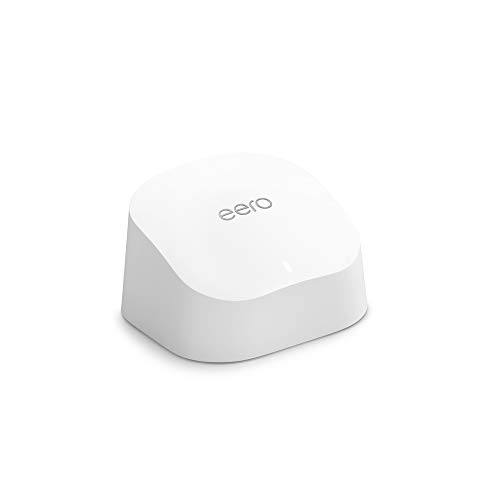
TL;DR: The eero 6 mesh system covers up to 5,000 sq ft with three nodes, runs on a quad‑core 1.2 GHz processor and 512 MB RAM, and packs all that into a 0.66‑lb unit for $89.99.
The 3‑pack’s total coverage of 5,000 sq ft and its 1.8 Gbps aggregate wireless speed stand out, letting a typical household spread a single Wi‑Fi 6 network across a medium‑sized home without dead zones. Under the hood, a quad‑core 1.2 GHz processor and 512 MB of RAM give the system enough headroom to juggle the listed 75+ supported devices.
Compared with the six other routers in this roundup, the eero 6 is the lightest at 0.66 lb, while the TP‑Link Archer BE230, Netgear R6700AX, Google Nest Wifi, TP‑Link Archer A54, TP‑Link Archer A6 and Tenda AC1200 all tip the scales at one pound or more. Its processor sits below the BE230’s 2.0 GHz quad‑core and Netgear’s 1.5 GHz chip, but matches the Archer A6’s 1.2 GHz CPU, giving it solid but not class‑leading raw speed.
Users consistently praise the system’s plug‑and‑play setup, the reliability of whole‑home coverage, and the built‑in Alexa integration that lets you control smart devices without an extra hub. Professional reviewers note that TrueMesh dynamically routes traffic to eliminate dead spots, and the optional Zigbee hub adds a handy smart‑home bridge. The most common complaints focus on the 500 Mbps wireless speed ceiling per node and that each unit only offers two Gigabit Ethernet LAN ports.
Additional technical details include Bluetooth 5.0 for low‑energy device pairing, 2 Gigabit Ethernet ports per node, 4 GB of flash storage for firmware, and a compact design (99.3 mm depth, 61.5 mm height, 97 mm width). The unit operates from 0 °C to 40 °C and tolerates humidity up to 90 % non‑condensing, making it suitable for most indoor environments.
Pros
Cons
Best for: Small to medium homes (up to 5,000 sq ft) with gigabit or lower internet plans, families streaming 4K video, and users who want built‑in Alexa and optional Zigbee integration.
Avoid if: You need tri‑band Wi‑Fi, gigabit‑plus wireless speeds, or are on a very tight budget.
TL;DR: Priced at $46.99, Google Nest Wifi holds a 4.3‑star rating from 14,295 reviewers, landing it near the lower end of our seven‑product budget router roundup.
Google’s Nest Wifi is the brand’s budget‑friendly mesh system, costing $46.99 and earning a solid 4.3‑star rating from a large pool of reviewers. Within the seven contenders, it ranks sixth and offers a recognizable name and a price that undercuts many rivals.
Customers repeatedly praise the system’s plug‑and‑play setup through the Google Home app and the convenience of a built‑in voice assistant in the point units. Reviewers note reliable whole‑home coverage in typical households and appreciate the straightforward management tools. On the downside, users point out that the network lacks the newer Wi‑Fi 6 technology and that Ethernet ports are limited to two on the router and one on each point, which can restrict wired backhaul options. Some also mention speed drops when the mesh is stretched across larger homes.
Given its price and rating, Nest Wifi sits as a decent mainstream choice for shoppers who value ease of use and Google ecosystem integration over cutting‑edge performance. It’s a safe pick if you want a reputable brand without breaking the bank, but you should be aware that it doesn’t offer the latest Wi‑Fi standards.
Pros
Cons
Best for: Most users looking for a well‑reviewed, reliable mainstream option
TL;DR: The TP‑Link Archer A6 delivers up to 867 Mbps on 5 GHz, gigabit wired speeds, and MU‑MIMO for under $40, making it a solid budget router for small‑to‑medium homes.
The Archer A6 packs a 1.2 GHz CPU, five antennas (four external, one internal) and beamforming to push 867 Mbps on the 5 GHz band and 300 Mbps on 2.4 GHz. Its five‑gigabit Ethernet ports—including a WAN port—support wired speeds up to 1000 Mbps, and MU‑MIMO can serve two devices simultaneously.
At 0.71 pounds, the A6 is lighter than the Archer A54, Google Nest Wifi, Netgear R6700AX and Archer BE230, though a touch heavier than the Eero 6. Its 1.2 GHz processor is slower than Netgear’s 1.5 GHz and Archer BE230’s 2.0 GHz CPUs, but comparable to Tenda’s 1 GHz chip. Wireless throughput matches the Archer A54 and Tenda AC1200 (867 Mbps/300 Mbps) while falling short of the BE230’s higher 5 GHz rate.
Professional reviewers praise the “blazing‑fast” AC performance and note that the five‑antenna design provides stable coverage for a three‑bedroom house. Everyday users appreciate the straightforward setup, the stable speeds for HD streaming, and the solid 4.5‑star rating from 4,087 reviewers. The router also supports WPA3 security, guest networks and OneMesh for easy expansion.
While the A6 doesn't have Wi‑Fi 6 features, its 12 V ⎓ 1 A power adapter keeps the unit running efficiently, and the inclusion of beamforming and guest network controls adds flexibility for typical home use.
Pros
Cons
Best for: Budget-conscious buyers seeking a reliable entry-level option
Avoid if: You need advanced features or professional-grade performance
Breakdown
Tenda AC1200
Pros
Cons
TP-Link Archer BE230
Pros
Cons
Netgear R6700AX
Pros
TP-Link Archer A54
Pros
Cons
Based on scoring data and product specs
Personalized picks
Best Overall Pick
Tenda AC1200
Best OverallBest for: Shoppers on a tight budget who want the most for their money
TP-Link Archer BE230
Best for: Buyers willing to invest in a proven, high-quality option
$87.00+$59.01 vs winner
Skip TP-Link Archer A6 if…
You need advanced features or professional-grade performance
The Tenda AC1200 takes the top spot with its rock‑bottom price of $27.99, a combined data rate of 1167 Mbps, and a solid three‑year warranty. Its four 5‑6 dBi high‑gain antennas and three Gigabit LAN ports give you reliable dual‑band coverage without blowing your budget.
The runner‑up, TP‑Link Archer BE230, shines when you need cutting‑edge speed for a busy household—think multiple 4K streams, online gaming, or a smart‑home hub. It delivers a total throughput of 3.6 Gbps on Wi‑Fi 7, packs a 2.0 GHz quad‑core processor, and offers a 2.5 Gbps WAN port plus four wireless streams, plus a dedicated IoT network for your connected gadgets.
If you’re looking for a step up without leaving the sub‑$100 range, Google Nest Wifi provides dependable mesh coverage at $46.99, while Eero 6 offers premium mesh performance for $89.99, giving you smoother roaming and easy expansion.
Pick the Tenda AC1200 now and enjoy fast, reliable Wi‑Fi without overspending.
The Tenda AC1200 is a solid choice for a compact living space; its four high‑gain antennas and dual‑band support comfortably cover a typical apartment, and it comes at a very low price point.
No reviews yet — be the first to share your experience.
Please sign in to leave a review