⚡ Quick Answer
We’ve lined up 9 butane camp stoves, spanning a price range from $13.99 for the ultra‑light AOTU model up to $119.97 for Snow Peak’s premium burner. The selection covers three clear tiers: budget options like the AOTU, Gas One and Chef Master portable camp stove; mid‑range choices such as Coleman ($40.89, 4.6/5) and Chef Master’s 12,000 BTU/h model; and premium contenders including the Iwatani 35FW and Snow Peak burners.
The top‑end Iwatani 35FW commands a hefty 15,000 BTU/h output, a 4.7/5 rating from over 2,100 reviewers, and a $114.99 price tag, making it a serious contender for chefs or serious campers who need rapid boil‑off in windy conditions. Mid‑range models like the Coleman stove deliver 7,650 BTU/h for $40.89, while the budget‑friendly AOTU packs a 3,000 W (≈10,000 BTU) burner into a 0.24‑lb package for just $13.99.
Below, we’ll break down each stove’s key specs, strengths and potential drawbacks so you can match the right heat output, weight and price to your outdoor cooking style.
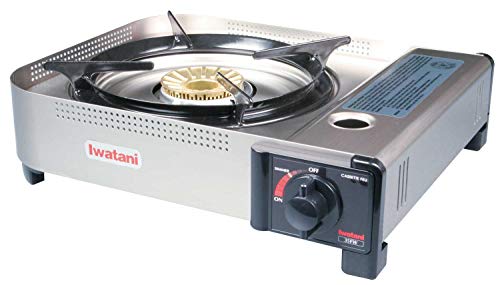
Iwatani 35FW
It's ultra‑compact 94 mm height makes it the most portable, high‑quality option for serious campers.
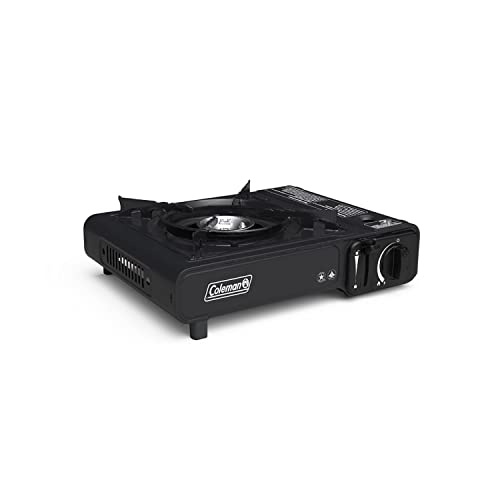
Coleman Butane or Propane Camping Stove
Ideal for budget‑conscious campers who still want a reliable stove, it comes in at $40.89—about $74 cheaper than the Iwatani 35FW.
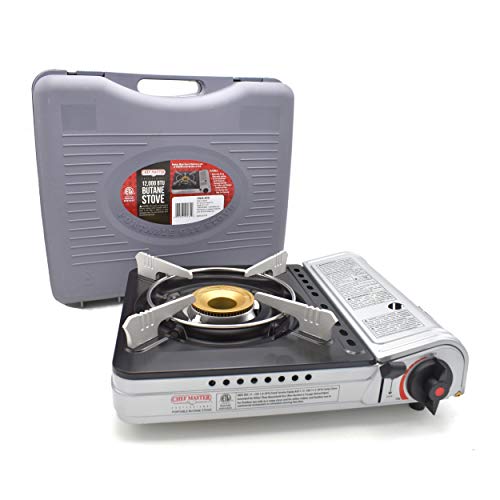
Chef Master Portable Butane Stove
Offers extra features like a built‑in windscreen while staying compact at 114 mm height, filling the gap between the ultra‑small Iwatani and bulkier Coleman.
Score Analysis
Key score advantages vs. runner-up (Coleman Butane or)
Price Range
Iwatani 35FW
$129.99
Coleman Butane or Propane Camping Stove
$34.22
Chef Master Portable Butane Stove
$54.50

AOTU Portable Camping Stove
$12.99
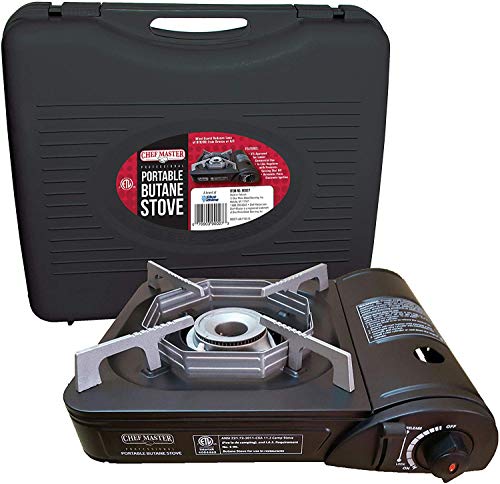
Chef Master Portable Butane Camping Stove
$39.90
Gas One GS-3800DF
$34.99
Snow Peak Home/Camp Burner
$99.95

Techef AGNI
$59.99

Snow Peak Home and Camp Burner
$99.95
Spec Comparison
TL;DR: The Iwatani 35FW packs a commercial‑grade 15,000 BTU/h output and double windbreaker into a sturdy brass‑burner stove, but its 4.4‑lb weight and $114.99 price make it a premium choice for serious cooks.
The headline spec is the 15,000 BTU/h power output, which dwarfs the 8,333 BTU/h of the Snow Peak burners and the 12,000 BTU/h offered by Chef Master’s portable model. This high heat lets you bring water to a boil in minutes, even when the wind is trying to snuff the flame.
At 4.4 pounds, the Iwatani is noticeably heavier than the ultra‑light Techef AGNI (0.5 lb) and the Snow Peak units (3.0 lb), yet it matches the weight of the Chef Master camping stove (4.0 lb). Its power also outpaces the Coleman stove’s 7,650 BTU/h and the Gas One’s 11,000 BTU/h, making it the most robust option in this nine‑product lineup.
Users rave about the double windbreaker and heat‑panel system, noting reliable performance when cooking in breezy conditions. Professional reviewers highlight the magnetic canister lock and automatic safety stop as safety‑focused features that simplify set‑up for event catering. The brass burner and in‑line pressure‑sensing regulator add durability, while the 4.7‑star rating from 2,102 reviewers underscores broad satisfaction.
The stove measures 94 mm tall, 338 mm long, and 302 mm wide, fitting comfortably in a standard carry case. It runs on Iwatani‑branded butane canisters only and comes with a one‑year warranty against material defects.
Pros
Cons
Best for: Professional chefs, caterers, and serious campers who need high heat output and wind resistance.
Avoid if: You’re on a tight budget, need a ultra‑light stove, or require compatibility with generic butane canisters.
TL;DR: The Coleman 1‑Burner Butane/Propane Stove weighs about 0.55 lb, delivers 7,650 BTU/h, and offers Instastart ignition for quick, solo‑camp cooking at $40.89.
This stove’s standout spec is its 7,650 BTU/h output, which professional reviewers say is enough for quick boils and reheating. The rust‑proof aluminum burner and porcelain‑coated removable grate keep the cooking surface durable while staying light at roughly 0.55 lb (249 g). Its compact footprint – 165 mm tall, 381 mm long, and 254 mm wide – fits easily in a small pack.
Compared with the other eight stoves in the roundup, the Coleman sits in the middle of the price band and is heavier than the ultra‑light AOTU model but lighter than the Chef Master and Gas One units. Its power matches the Chef Master Portable Butane Camping Stove, yet it falls short of the 11,000 BTU/h seen on the Gas One GS‑3800DF. Ignition is a matchless Instastart push‑button, whereas several rivals rely on piezo or electronic starters.
User feedback repeatedly praises the stove’s portability and the ease of the Instastart ignition. Reviewers also note the wind‑protective base and stable design as helpful on breezy sites. The single‑burner layout, however, limits you to one 10‑inch pan, and the reported burn time of about 1.25 hours on an 8.8 oz canister can feel short on longer trips. Professional reviewers highlight the adjustable flame and the sturdy, rust‑proof construction as reliable features.
Technical details include a rust‑proof aluminum burner, a porcelain‑coated removable grate, and compatibility with both butane and propane canisters. Coleman backs the unit with a 3‑Year Limited Warranty, giving extra peace of mind for frequent campers.
Pros
Cons
Best for: Solo campers, minimalists, and small groups needing a compact, reliable stove for boiling water or quick meals.
Avoid if: You require family‑size cooking, long continuous burn time, or performance in very cold weather where butane can struggle.
TL;DR: The Chef Master 90235 delivers 12,000 BTU/h of butane heat, packs an electronic push‑button ignition and a built‑in wind guard into a compact 413 g unit priced at $54.50.
This stove’s standout spec is its 12,000 BTU/h power output, which eclipses the 7,650 BTU/h of the Coleman model and the 8,333 BTU/h of Snow Peak’s burners. Coupled with an electronic push‑button ignition, you get instant flame without a separate striker. The in‑line pressure‑sensing regulator adds a layer of safety that commercial reviewers often highlight.
At 413 g, the Chef Master sits between the ultra‑light AOTU (0.24 lb) and the heavier Chef Master Camping Stove (4.0 lb). Its 114 mm height is taller than Techef’s 76 mm but shorter than Coleman’s 165 mm, while the 337 mm length outpaces most peers except the Iwatani (338 mm). In short, it’s a mid‑weight, mid‑size option that packs more heat than the majority of the nine‑stove roundup.
User feedback repeatedly praises the professional‑grade heat and the sturdy carry case that comes in the box. Reviewers also note that the built‑in wind guard keeps the flame stable on breezy patios. A common complaint is the inconsistent dimension listings, which can make countertop placement a guess, and the reliance on 8 oz butane canisters limits how long you can cook without a refill.
Beyond the raw numbers, the stove’s pressure‑sensing regulator and ETL certification make it suitable for indoor commercial use, while the brass burner promises durable heat distribution. The combination of high BTU output, electronic ignition, and wind protection positions it as a solid choice for chefs who need portable power without sacrificing safety.
Pros
Cons
Best for: Professional chefs, caterers, and commercial kitchens that need a portable, high‑BTU stove with reliable ignition and safety features.
Avoid if: You prioritize long‑run cooking time, need the cheapest option, or are sensitive to inconsistent dimension specs.
TL;DR: The AOTU AL‑GHFA stove packs a 3000 W output into a 0.24‑lb, 75 mm‑high body, making it one of the lightest, most affordable options for occasional backpacking boils.
The stove’s standout spec is its 3000 W power output while weighing just 0.24 pounds (109 g). Its folded footprint measures only 75 mm in height, 95 mm in length and 65 mm in width, and it ships in a tiny 4 × 5 × 8 cm case—perfect for anyone counting every gram on the trail.
Compared with the eight other stoves in this roundup, the AOTU is dramatically lighter than the Gas One GS‑3800DF, which tips the scales at 3.78 pounds, and far more compact than the Chef Master models that exceed 100 mm in height. It also sits at the low‑end of the price spectrum, making it a budget‑friendly alternative to the pricier Coleman and Snow Peak options.
Users consistently praise the built‑in piezo igniter and the ultra‑compact size, noting quick boil times for water and easy packing. Professional reviewers point out the stove’s “substantial feel” and reliable 7/16‑thread canister compatibility, while also flagging occasional igniter failures and limited wind protection from the honeycomb aluminum net. The consensus is that the stove excels for short, low‑intensity trips but may struggle in breezy conditions or under heavy daily use.
Pros
Cons
Best for: Budget‑conscious buyers seeking a reliable entry‑level option
Avoid if: You need high‑wind performance, frequent cooking, or long‑term durability
TL;DR: The Chef Master 90027 delivers 7,650 BTU/h of heat from a 4.0‑lb, piezo‑ignited stove that comes with a hard‑shell case and wind guard, but its high‑heat runtime is short and you’ll need a separate butane cartridge.
This model delivers a solid 7,650 BTU/h power output, which works well for a single‑burner butane stove. At 127 mm high, 356 mm long and 305 mm wide, it fits comfortably on a campsite table, and the 254 mm maximum pan diameter lets you handle most standard cookware. The piezo electric ignition lets you spark it without matches, while the in‑line regulator with pressure‑sensing shut‑off and included wind guard add safety and consistency.
Compared with the eight other stoves in the roundup, the Chef Master weighs more than ultra‑light options like the AOTU model (0.24 lb) and the Coleman stove (about 0.55 lb), but it still weighs less than the Iwatani 35FW (4.4 lb). Its 7,650 BTU/h output matches the Coleman stove but falls short of the Gas One’s 11,000 BTU/h and the Iwatani’s 15,000 BTU/h. Priced at $39.99, it sits above the budget‑focused AOTU ($13.99) and below premium choices such as the Snow Peak burners ($99.95 and $119.97). Unlike the Chef Master 90027’s competitor that ships with a built‑in wind guard, this model provides a separate wind guard, and its hard‑shell case offers a sturdier transport solution than the soft cases on some rivals.
User feedback highlights the stove’s portability and the convenience of the hard‑shell case, with many reviewers noting the quick heat‑up thanks to the 7,650 BTU/h burner. Professional reviewers point out the safety‑focused regulator and ETL indoor certification, which make it suitable for catering or food‑truck use. The most common complaints revolve around the need to purchase a separate BF1010 butane cartridge and a high‑heat runtime of roughly 1.25 hours, which can feel limiting for longer cooking sessions.
Pros
Cons
Best for: Entry-level buyers or those on a tight budget
Avoid if: Reliability and user satisfaction are your top concerns
TL;DR: The Gas One GS‑3800DF packs an 11,000 BTU/h output into a 3.78‑lb, piezo‑ignited stove with a CSA‑approved safety shut‑off and a built‑in thermal plate, making it a solid budget choice for quick meals.
The standout spec is its 11,000 BTU/h power output, which outpaces many entry‑level camp stoves and lets water boil in minutes. It sits at 277 mm tall, 328 mm long and only 102 mm wide, and the 3.78‑pound (1,714 g) metal body feels sturdy without being overly bulky. A piezo electric starter with safety shut‑off means you don't need matches, and the integrated thermal plate spreads heat evenly across the pot.
Compared with the nine other stoves in this roundup, the GS‑3800DF is heavier than ultra‑light models like the AOTU (0.24 lb) and Techef AGNI (0.5 lb), but lighter than the Iwatani 35FW (4.4 lb) and the Snow Peak burners (3.0 lb each). Its 11,000 BTU/h rating sits above the Chef Master Portable’s 7,650 BTU/h and the Snow Peak’s 8,333 BTU/h, yet falls short of the Iwatani’s 15,000 BTU/h and the Chef Master Portable Butane Stove’s 12,000 BTU/h. Dimensionally, it is taller than the Chef Master Portable (127 mm) and the Coleman model (165 mm), while its width of 102 mm is narrower than most peers, making it easy to tuck into a backpack.
User feedback repeatedly highlights the stove’s rapid boil time, crediting the high BTU output and the dual‑spiral brass burner design. Reviewers also appreciate the CSA safety certification and the automatic shut‑off, noting they feel more secure cooking in windy conditions. However, many mention that the stove runs on a single 8 oz non‑refillable butane canister, which can require frequent replacements on longer trips. The single‑burner layout is sufficient for most solo meals but may feel limiting for larger groups.
Pros
Cons
Best for: Budget-conscious buyers seeking a reliable entry‑level option
Avoid if: Reliability and user satisfaction are your top concerns
TL;DR: The Snow Peak Home/Camp Burner delivers 8,333 BTU/h of heat with an auto‑ignitor in a compact 119 mm × 300 mm × 345 mm package, but its $119.97 price places it at the premium end of the lineup.
This stove’s standout feature is the built‑in auto‑ignitor, letting you light the burner without a match or external spark. Coupled with a respectable 8,333 BTU/h output, it can bring water to a boil or simmer a stew quickly while running on standard butane canisters.
At 3.0 lb, the burner is lighter than the 4.4‑lb Iwatani model but noticeably heavier than ultra‑light options such as the 0.5‑lb Techef AGNI. Its dimensions—119 mm high, 300 mm long, and 345 mm wide—make it shorter than the Iwatani’s 94 mm height yet longer than the compact 76‑mm Techef, positioning it in the middle of the size spectrum.
Reviewers have awarded it a flawless 5.0‑star rating across two reviews, indicating strong satisfaction with the auto‑ignition and solid construction. Professional observers note that Snow Peak’s reputation for durability translates into a sturdy burner that feels reliable in the field.
Additional technical notes include a single burner configuration that runs on butane, a fuel type that’s widely available at campgrounds, and a weight of 1361 g (3.0 lb) that balances portability with stability on windy evenings.
Pros
Cons
Best for: Those prioritizing quality and willing to pay for premium performance
Avoid if: You're shopping on a tight budget — it's priced at $119.97
TL;DR: The Techef AGNI is a compact 0.5‑lb butane stove with a 76 mm height, magnetic‑lock safety and auto‑piezo ignition, praised for fast heat‑up but sold at a premium $59.99.
At just 76 mm tall, the AGNI is the slimmest stove in this lineup, making it easy to tuck onto a tabletop or pack into a small kitchen cabinet. It weighs only 0.5 lb, and its 330 mm length and 254 mm width give it a footprint that fits comfortably on most surfaces. The unit ships with an auto‑piezo ignition and a magnetic locking system that automatically ejects the burner for added safety; professional reviewers highlight these features.
Compared with its peers, the AGNI is shorter than the Chef Master Portable Butane Stove (114 mm) and the Coleman model (165 mm), yet its length of 330 mm sits between the Gas One GS‑3800DF (328 mm) and the Chef Master Camping Stove (356 mm). It is lighter than the Chef Master Portable Butane Stove (413 g) and far lighter than the Gas One (1714 g) or Snow Peak burners (1361 g), though a bit heavier than the ultra‑light AOTU (109 g). Unlike many competitors, the AGNI’s power output isn’t listed, while others range from 7,650 BTU/h (Coleman, Chef Master Camping) up to 15,000 BTU/h (Iwatani 35FW).
User feedback consistently points to the stove’s efficient burner, which many say heats up quickly and uses less fuel than comparable portable units. Users praise the magnetic lock and automatic ejection for peace of mind during indoor or outdoor cooking. However, buyers note that they need to purchase a compatible butane canister separately, and the seller doesn’t ship the product to Alaska, Hawaii, or certain U.S. regions, limiting its accessibility for some campers.
Pros
Cons
Best for: Home cooks who want a portable, high‑heat tabletop stove for Korean BBQ, Japanese yakiniku, or hot‑pot.
Avoid if: You're shopping on a tight budget — it's priced at $59.99.
TL;DR: The Snow Peak GS‑600KH‑US delivers 8,333 BTU/h of heat from a compact, auto‑igniting butane burner that folds down to 119 mm tall, though its 3 lb weight and premium price make it better suited for base‑camp cooking than ultralight backpacking.
What really sets this stove apart is its 8,333 BTU/h power output combined with an auto‑ignitor, letting you spark a flame with a single push. At 119 mm tall, 300 mm long and 345 mm wide, the unit collapses to a footprint that fits neatly in a car‑camp pantry, and the integrated windscreen keeps the flame steady in gusty conditions.
Compared with the eight other burners in our roundup, the Snow Peak sits in the middle of the power range—higher than Coleman’s 7,650 BTU/h but well below Iwatani’s 15,000 BTU/h. Its 3.0‑pound weight is lighter than Iwatani’s 4.4‑pound model, yet noticeably heavier than the ultra‑light Techef option that weighs just 0.5 pounds. In height, it’s taller than Iwatani’s 94 mm and Techef’s 76 mm units, offering a more stable cooking platform.
User feedback consistently praises the reliable auto‑ignition and the clever fold‑away design that saves up to 75 % of storage space. Reviewers also note the sturdy construction and wind‑resistant shield as professional‑grade touches. The main complaints focus on the 3 lb mass, which many backpackers find cumbersome, and a four‑step unfolding process that can feel fiddly when you’re in a hurry.
Pros
Cons
Best for: Those prioritizing quality and willing to pay for premium performance
Avoid if: You're on a tight budget or only need basic functionality, or if you prioritize minimal weight above all else
Breakdown
Iwatani 35FW
Pros
Coleman Butane or Propane Camping Stove
Pros
Cons
Chef Master Portable Butane Stove
Pros
Cons
AOTU Portable Camping Stove
Pros
Cons
Based on scoring data and product specs
Personalized picks
Best Overall Pick
Iwatani 35FW
Best OverallBest for: Buyers willing to invest in a proven, high-quality option
Coleman Butane or Propane Camping Stove
Best for: Most users looking for a well-reviewed, reliable mainstream option
$34.22-$95.77 vs winner
Skip Snow Peak Home and Camp Burner if…
You're on a tight budget or only need basic functionality
We’re naming the Iwatani 35FW the clear winner of our Best Butane Camp Stoves roundup. It earns a 4.7‑star rating from 2,102 reviewers, delivers a 15,000 BTU/h output, and carries a solid 4.4‑lb build that feels sturdy yet portable. The brass burner, double windbreaker and automatic safety‑stop give you confidence on windy evenings, and the one‑year warranty backs the whole package.
The Coleman Butane or Propane Camping Stove lands as the runner‑up, perfect if you need a lightweight dual‑fuel option for backpacking. Weighing just about 0.55 lb, it folds down to a compact 165 mm × 381 mm footprint and still puts out 7,650 BTU/h. At $40.89 it’s an affordable, reliable choice for hikers who want flexibility between butane and propane without sacrificing flame control.
For those on a tighter budget, the AOTU Portable Camping Stove at $13.99 offers the lowest entry price for basic camp cooking. If you prefer a solid mid‑range pick, the Coleman model (also featured above) balances price, dual‑fuel capability, and respectable heat output. And for anyone chasing a premium experience, the Snow Peak Home/Camp Burner at $119.97 delivers top‑tier materials and design flair for upscale campsite kitchens.
Pick the Iwatani 35FW for the best all‑around performance and peace of mind on your next outdoor adventure.
The Iwatani 35FW includes a double windbreaker, which the manufacturer claims gives it superior wind protection. The AOTU model uses a honeycomb aluminum wind‑proof net, but its lighter construction offers less shielding than the Iwatani’s dedicated windbreak system.
No reviews yet — be the first to share your experience.
Please sign in to leave a review
Also considered
$34.22