⚡ Quick Answer
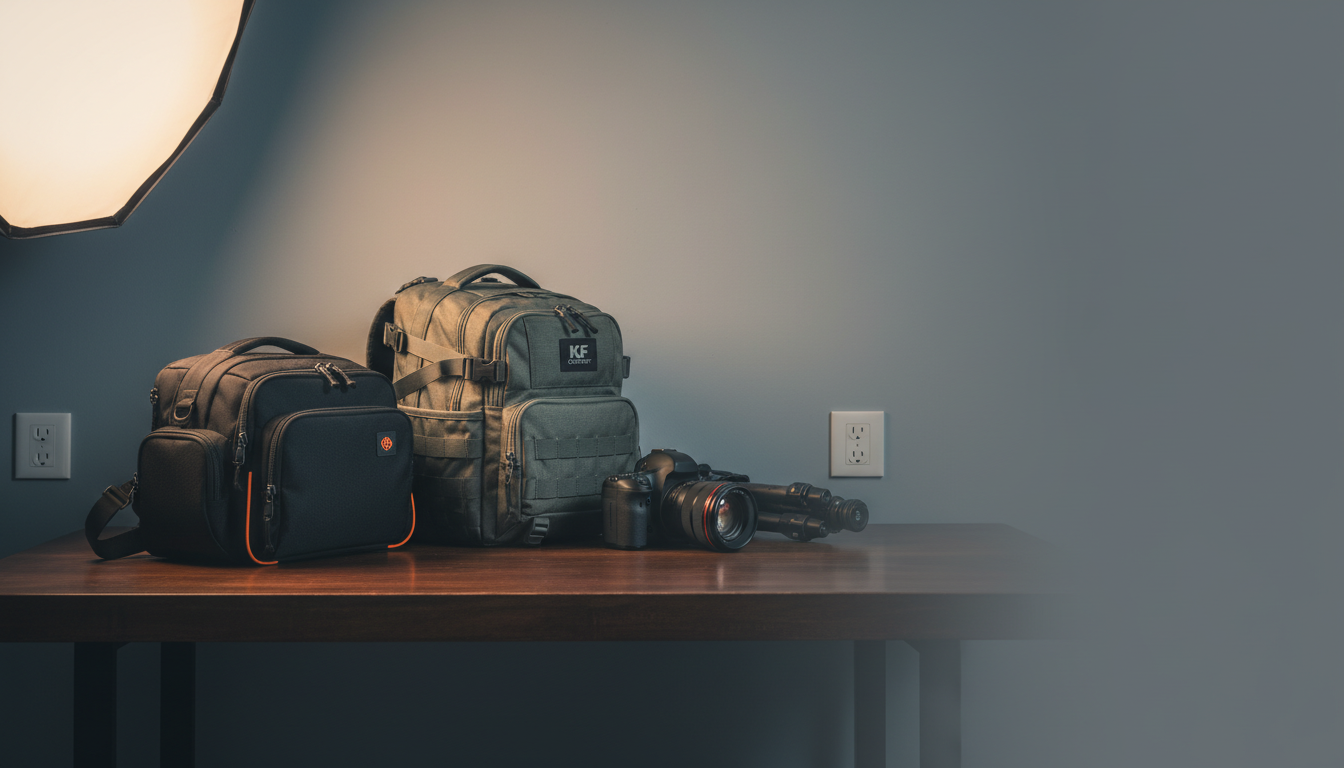
We’ve lined up 10 camera bags that let you shuffle dividers to fit bodies, lenses and laptops just the way you like. Prices stretch from a budget‑friendly $29.79 for the IPEB Backpack up to $299.95 for Peak Design’s 30 L Everyday Backpack, while user ratings hover between 4.4 and 4.7 stars. The lineup spans compact 10 L sling bags, mid‑size 15–27 L packs, and premium 30 L options, giving you a clear picture of what’s available at every price point.
In the budget tier you’ll find the $31.19 K&F Concept 2‑in‑1 Sling (4.6/5) and the $49.99 Tarion 15 L (4.7/5), both lightweight enough for daily commutes. Mid‑range choices like the $74.94 K&F Concept Backpack (4.7/5) and $135.96 Peak Design Sling (4.4/5) add extra capacity and breathable back panels. Premium picks such as the $139.99 Tarion 27 L (27 L capacity, 4.6/5) and the $299.95 Peak Design 30 L deliver weather‑proof shells and dedicated 15.6‑inch laptop sleeves. In the sections that follow, we’ll break down how each bag handles weight, modularity and real‑world use so you can match the right pack to your shooting style.

Tarion 27L
Its 27 L capacity provides ample room for lenses and accessories while staying compact enough for everyday carry.

K&F Concept Camera Backpack
Ideal for hobbyists needing solid protection without breaking the bank, it costs $65.05 less than the top pick model.

Tarion 15L Camera Backpack
At just $49.99 and a compact 165 mm depth, it offers a lightweight entry point for beginners who don’t need the larger 27 L volume.
Also considered
Score Analysis
Key score advantages vs. runner-up (K&F Concept Camera)
Price Range
Tarion 27L
$139.99
K&F Concept Camera Backpack
$74.94
Tarion 15L Camera Backpack
$49.99

K&F Concept 2 in 1 Sling Bag
$31.19

Neewer 2-in-1 Camera Bag Black
$180.03

Peak Design Everyday Backpack 30L
$299.95

Lowepro Tahoe BP 150
$63.90

Peak Design Everyday Sling 10L
$135.96

Nomatic Peter Mckinnon Camera Pack 25L
$265.99

IPEB Camera Backpack
$29.79
Spec Comparison
TL;DR: The Tarion 27L backpack offers a massive 27‑liter, water‑resistant compartment with shock‑proof dividers and a 15.6‑inch laptop sleeve for $5.19 per liter, but its 6.92‑lb weight can feel hefty when fully loaded.
The standout spec is the 27 L main compartment, which can be re‑configured with shock‑proof EPE dividers to snugly protect multiple bodies, lenses and accessories. A dedicated 15.6‑inch laptop sleeve sits on the side, and the bag includes a waterproof rain cover. At 6.92 lb, the bag balances robust protection with a solid build, while the depth of 310 mm, height of 500 mm and width of 190 mm give it a roomy silhouette.
Compared with the other nine options, Tarion’s capacity dwarfs the 8‑10 L range of the Peak Design Everyday Sling 10L, which also weighs just 0.00033 lb. It is heavier than the K&F Concept Camera Backpack’s 3.42 lb, but offers far more interior volume and three separate compartments. While some competitors sit under $100, Tarion’s $139.99 price translates to about $5.19 per liter, positioning it in the premium tier of the roundup.
Reviewers consistently praise the “huge” organizational depth and the rain cover’s reliability, noting that the external water‑bottle pouch and dual tripod buckle straps keep accessories within easy reach. Professional reviewers highlight the ergonomic shoulder and waist straps with ventilated back padding, which stay comfortable even on long hikes. The main trade‑off is the bag’s heft; users report that fully loaded it can exceed 6 kg, making it cumbersome for extended carry, and the side‑access laptop compartment can feel awkward compared with front‑opening sleeves.
Pros
Cons
Best for: Professional photographers, videographers, and content creators who need extensive organization and all‑weather protection.
Avoid if: You prioritize ultra‑lightweight gear, minimalist profiles, or a low‑budget entry‑level bag.
TL;DR: The K&F Concept 20 L Camera Backpack packs a 1‑camera + 4‑lens setup, laptop slot and rain cover into a 3.42‑lb bag that earns a 4.7‑star rating from over a thousand users.
Its standout spec is a 20 L capacity combined with a removable padded insert, letting you protect a DSLR and up to four lenses while still fitting a 396 mm laptop. At 450 mm tall, 200 mm deep and 310 mm wide, the bag offers generous interior space without becoming a bulk‑head.
Compared with the other nine contenders, this pack is larger than the 11 L Lowepro Tahoe BP 150 and the 15 L Tarion model, yet it stays well under the 27 L Tarion’s 6.92‑lb weight. It’s heavier than the ultra‑light Lowepro (≈0.01 lb) but lighter than the heavyweight Tarion 27 L, striking a middle ground between compact daypacks and large expedition bags.
Reviewers consistently praise the ergonomic S‑shaped shoulder straps and breathable back panel, noting that long hikes stay comfortable even in warm weather. Professionals highlight the antitheft zippers and the included rain cover, which provide solid protection for gear in unpredictable conditions. Reviewers note that the tripod straps lack quick‑release buckles and can feel unbalanced with heavier tripods, and that top pockets sometimes stay open during rapid movement.
Pros
Cons
Best for: Traveling photographers and hobbyists who need a well‑reviewed, mid‑size pack that protects a DSLR kit, lenses and a laptop.
Avoid if: You carry ultra‑heavy professional gear, need an ultra‑light minimalist pack, or rely on quick‑release tripod attachments.
“Very well contained... much smaller than my old backpack”
“Solid choice for travel... compact design balanced with ample storage and protection for urban or rugged environments.”
TL;DR: The Tarion 15L Camera Backpack offers 15 L of organized, water‑resistant storage, customizable dividers, and a padded laptop sleeve for $49.99, earning a 4.7‑star rating from over 7 k reviewers.
This bag packs a 15 L capacity inside a compact shell that measures 165 mm exterior depth, 406 mm exterior height and 315 mm exterior width. The interior depth is 140 mm, height 381 mm and width 279 mm, giving enough room for a DSLR, lenses and a 396 mm laptop sleeve, all while weighing just 931 g.
Compared with the other nine options, the Tarion sits in the middle of the capacity range—larger than the Lowepro 11 L and the K&F 2‑in‑1 sling’s 10 L, but smaller than the 27 L Tarion model and the 25 L Nomatic pack. It’s heavier than ultra‑light choices like the Peak Design sling (0.00033 lb) and the Lowepro (0.00625 lb), yet lighter than the larger K&F Concept backpack (3.42 lb) and the IPEB (2.20 lb).
Professional reviewers note the bag’s water‑repellent nylon exterior and the included rain cover keep gear dry in the field, while the ventilated air‑mesh back panel and padded shoulder, chest and waist straps reduce fatigue on long shoots. Users love the customizable dividers for tailored organization, but several mention that the side‑access opening makes rapid lens changes feel awkward and that the laptop compartment can feel tight.
Pros
Cons
Best for: Budget‑conscious photographers who need a reliable, organized bag with laptop protection.
Avoid if: You’ve a large tripod, a maximalist gear setup, or you’re after an ultra‑minimalist, low‑profile bag.
“Very well contained... much smaller than my old backpack”
“Solid choice for travel... compact design balanced with ample storage and protection for urban or rugged environments.”
TL;DR: The K&F Concept 2‑in‑1 Sling Bag offers 10 L of waterproof storage, 10 mm padding, and a 60 kg magnetic buckle for just $31.19, all in a lightweight 600 g package.
With a 10 L internal volume, the bag can hold a single DSLR or mirrorless body plus a couple of lenses, while the 10 mm high‑density EPE padding cushions impacts. The magnetic buckle rates for a 60 kg load, so you won’t worry about the bag opening accidentally. At just 600 g (about 1.32 lb), it stays comfortably light on your shoulder.
Compared with the IPEB Camera Backpack, which tips the scales at roughly 2.20 lb, this sling weighs about half as much, and it’s lighter than the Tarion 15 L pack at around 2.05 lb. Its 10 L capacity sits between Lowepro’s 11 L volume and Peak Design’s 8‑10 L range, while still costing far less than the larger Tarion 15 L model.
Everyday users repeatedly mention the bag’s sleek, waterproof nylon canvas and the quick‑access double‑way YKK zippers as a big plus, and professional reviewers highlight the budget‑friendly price point without sacrificing build quality. The removable flex‑fold divider and multiple internal pockets keep gear organized, though the limited space means you can’t fit a laptop or larger lens collection.
The shoulder strap adjusts from 34.25 in to 55.1 in and includes a sternum strap for added stability on longer walks. It also features a dedicated tripod holder that accepts diameters up to 2.99 in and a camera‑plus‑lens compartment that fits items up to 7 in long, making it versatile for street or travel shoots.
Pros
Cons
Best for: Budget‑conscious hobbyist photographers needing a compact, weather‑proof sling for one camera body
Avoid if: You need to carry a laptop or a larger multi‑camera setup
“Very well contained... much smaller than my old backpack”
“Solid choice for travel... compact design balanced with ample storage and protection for urban or rugged environments.”
TL;DR: The Neewer 2‑in‑1 Camera Bag converts from rolling suitcase to backpack, offers 11 dividers, a 60 kg load limit, and smooth wheels, but its 4.28 kg empty weight can feel hefty on long hikes.
The bag’s most distinctive spec is its convertible chassis: a 21.65 in (550 mm) depth chassis that slides into a backpack frame, letting you switch between trolley and shoulder carry in seconds. It holds a DSLR with multiple lenses, a 15‑in laptop, and includes a rain‑cover, side memory‑card pockets, and side straps for a tripod. With 11 removable dividers and a 60 kg load capacity, it’s designed for full‑kit travel.
Compared with the nine other options, the Neewer sits in the premium tier. At 4.28 kg it is heavier than the 3.42‑lb K&F Concept Camera Backpack but lighter than the 6.92‑lb Tarion 27L. Its 11 dividers outnumber the two FlexFold dividers listed for the Peak Design Everyday Sling, giving you finer organization. No other peer lists a load capacity this high, so the bag can carry more gear than the typical 15‑L or 27‑L backpacks in the roundup.
Reviewers repeatedly praise the rollerblade‑quality wheels for quiet, smooth rolling on airport tiles, and professionals note the durable nylon exterior protects gear in rough transit. The main complaint is the empty weight of 4.28 kg, which can cause fatigue during extended backpack use, and the bag’s bulk may not fit strict carry‑on dimensions. Still, users who need to haul a full DSLR kit appreciate the interior of 45 × 34 × 17 cm and the rain‑cover’s water resistance.
Additional technical touches include a telescoping 50 cm handle, side tripod straps, and a maximum laptop compartment that accepts 15‑in laptops (up to 17 in). The interior dimensions of 45 × 34 × 17 cm provide ample room for batteries, cables, and memory cards, while the exterior measures 50 × 33 × 25 cm, keeping the bag compact enough for most travel scenarios.
Pros
Cons
Best for: Traveling photographers and videographers who need to transport a full DSLR kit—including multiple lenses, a laptop, and accessories—in a single, secure bag.
Avoid if: You’re on a tight budget, prioritize ultralight weight, or only need a basic day‑pack for occasional shoots.
TL;DR: The Peak Design Everyday Backpack 30 L offers weatherproof nylon construction, 30 L capacity, and modular FlexFold dividers for DSLR gear, but its 4.55 lb empty weight and $299.95 price place it in the premium tier.
The standout specification is its 30 L internal volume, which comfortably holds a DSLR body plus four to five lenses while still fitting a 16‑in laptop. At 4.55 lb (2065 g) the bag is built solidly, and the breathable back panel helps mitigate the heft during longer carries.
Compared with the nine other bags in this roundup, the Peak Design pack is larger than the 27 L Tarion model and the 25 L Nomatic Peter Mckinnon pack, while dwarfing the 15 L Tarion and 11 L Lowepro options. It is heavier than the ultra‑light sling choices—such as the Peak Design Everyday Sling 10 L (0.00 lb) and the K&F Concept 2‑in‑1 Sling (1.32 lb)—but lighter than the Tarion 27 L which tips in at 6.92 lb. Its price per liter works out to about $10.00, a premium cost relative to the lower‑priced, smaller‑capacity competitors.
Professional reviewers note the bag’s rigid, weatherproof nylon shell and aluminum hardware as a durability win, while everyday users repeatedly praise the dual side full‑length zippers and MagLatch top for one‑handed access. Owners consistently praise the three FlexFold origami dividers for customizable organization, though several mention that the dividers can fray after heavy use. Reviewers highlight the breathable back panel and integrated luggage pass‑through as comfort‑boosting features for commuters and short trips.
Pros
Cons
Best for: Those prioritizing quality and willing to pay for premium performance
Avoid if: You're shopping on a tight budget — it's priced at $299.95
“Near‑new condition after one year of heavy use, loving the laptop sleeve and sternum strap.”
TL;DR: The Lowepro Tahoe BP 150 packs an 11‑liter, weather‑resistant Cordura shell and adjustable dividers into a feather‑light 800 g bag, ideal for a DSLR kit and daily essentials.
What sets this bag apart is its ultra‑light weight of 800 g (about 0.01 lb) combined with a compact 403 mm external length; it’s easy to sling on a hike or through city streets. The internal dimensions of 255 mm × 128 mm × 360 mm let you snugly fit a full‑size DSLR with a kit lens while the UltraFlex panel adds a bit of extra room when you need it.
Compared with the nine other bags in this roundup, the Tahoe BP 150 is lighter than the K&F Concept Camera Backpack (1.55 kg) and the K&F Concept 2‑in‑1 Sling (1.32 lb), but a touch heavier than the Peak Design Everyday Sling, which lists a weight under 0.01 lb. Its 11 L capacity sits between the 10 L of the K&F Sling and the 15 L of the Tarion 15L backpack, offering more room than the smallest sling yet staying smaller than the larger 27 L Tarion model.
User sentiment repeatedly praises the bag’s comfort: the padded shoulder straps and back panel make the 800 g load feel almost weightless on long walks. Reviewers also note the weather‑resistant Cordura fabric and the expandable UltraFlex panel as reliable safeguards for outdoor shoots. The main criticism focuses on the tight interior space, especially for larger telephoto lenses like a 70‑200 mm, and the need to stash extra batteries in the outer mesh pockets.
Pros
Cons
Best for: Hobbyist or active photographers who want a lightweight, weather‑ready bag for a DSLR kit lens and daily accessories.
Avoid if: You need extensive room for large telephoto lenses, multiple batteries, or a full professional kit.
TL;DR: The Peak Design Everyday Sling 10L offers 8‑10 L of configurable space in a weather‑proof shell that weighs only 680 g empty, but its $135.96 price tag is steep for a sling‑size bag.
The bag’s most distinctive spec is its combination of a compact 140 mm depth, 400 mm height and 230 mm width with a surprisingly generous 8‑10 L capacity, all while weighing just 680 g without dividers. The bag includes two FlexFold dividers, letting you tailor the interior for lenses, a small drone, or a laptop that fits up to 314 mm × 219 mm × 18 mm.
Compared with the nine other bags in this roundup, the Everyday Sling feels noticeably lighter than larger backpacks such as the Tarion 27L and the Nomatic 25L, and its weight matches the K&F Concept 2‑in‑1 Sling. It also carries a higher user rating than many budget‑focused options, and its premium materials—anodized aluminum hardware and UltraZips—set it apart from models that list fewer features.
Reviewers consistently praise the bag’s lightweight feel and the water‑resistant 400D‑500D double‑poly‑coated nylon canvas with DWR coating, noting that the sealed UltraZips keep gear dry. However, users commonly complain that the plain back panel lacks ventilation; it can become sweaty when the bag is fully loaded. Professional reviewers also flag the price as a downside, especially compared with other 10 L‑class slings.
Pros
Cons
Best for: Photographers who want a compact, weather‑proof sling with modular dividers and are willing to pay a premium for premium materials.
Avoid if: You need extensive back ventilation for hot‑day shooting or are on a tight budget.
“Near‑new condition after one year of heavy use, loving the laptop sleeve and sternum strap.”
TL;DR: The Nomatic Peter Mckinnon 25 L Camera Pack offers a modular ladder system, 1.4 kg lightweight build and water‑resistant materials for $10.64 per liter, but its premium price and bulkier profile may not suit every shooter.
The pack’s standout feature is its adjustable ladder system, which lets you add optional camera cubes and hinged dividers (one 3″ divider, two 5″ hinged dividers) to tailor the interior. With an exterior depth of 7.5 in, interior depth of 5.75 in and a 25 L capacity, it balances roomy storage with a compact silhouette.
Compared with the other nine bags, its 25 L sits between the 27 L Tarion and the 30 L Peak Design Everyday Backpack, offering more volume than the 10‑L sling options while staying smaller than the largest competitor. At 1.4 kg it is lighter than the Peak Design 30 L (about 4.55 lb) and far lighter than the Neewer 2‑in‑1 bag (4.28 kg). Its price of $265.99 works out to roughly $10.64 per liter, which is higher than many budget‑friendly packs in the list.
User reviews consistently praise the pack’s customization flexibility and the comfort of its EVA foam back panel, especially on long walks. The magnetic side pockets and four zippered interior pockets provide quick gear access. Professional reviewers note the durable water‑resistant construction and premium lockable Zoom zippers. The most common complaints revolve around the need to purchase the modular cubes separately and the pack’s slightly bulkier profile compared with slimmer everyday backpacks.
The bag’s material blend (80 % nylon, 20 % polyethylene) gives it water‑resistance, while hook‑and‑loop points let you secure dividers exactly where you need them. An RFID pocket, sternum strap, top handle, trolley strap and a dedicated 16‑inch laptop sleeve round out its feature set, making it a true hybrid between a camera bag and an everyday carry backpack.
Pros
Cons
Best for: Hybrid photographers, videographers and adventurers who need a 25 L bag that can switch between full camera gear and everyday tech.
Avoid if: You carry an extensive DSLR kit that exceeds 25 L or you prioritize a wide range of color options and the lowest possible price per liter.
TL;DR: The IPEB Camera Backpack offers waterproof 600D Oxford construction, adjustable dividers and a 13‑inch laptop sleeve at a $29.79 price, but its compact size limits gear capacity.
The standout feature is its modular interior: adjustable dividers let you arrange 1 camera body, 3‑5 lenses, a tripod and a flash speedlite exactly how you need them. The bag’s outer shell uses waterproof 600D Oxford cloth, and the main compartment measures 381 mm in height, 279.4 mm in length and 149.86 mm in width, keeping the overall profile compact.
Compared with the nine other bags in this roundup, the IPEB sits in the middle of the weight range. It's heavier than the K&F Concept 2‑in‑1 Sling (≈1.32 lb) and the Lowepro Tahoe BP 150 (≈0.01 lb), but lighter than the K&F Concept Backpack (≈3.42 lb) and the larger Tarion 27L (≈6.92 lb). Its 2.20 lb weight is close to the Tarion 15L (≈2.05 lb) and far below the Neewer 2‑in‑1 Camera Bag (≈9.44 lb). In terms of capacity, the IPEB’s “medium” size holds a single‑body kit, whereas most peers list larger liter capacities (15 L, 27 L, 10 L, etc.), indicating a more limited gear volume.
User feedback highlights the convenience of the modular layout and the peace of mind from the waterproof fabric. Reviewers appreciate the dedicated 330 mm laptop sleeve that snugly fits a 13‑inch laptop, and the side tripod mount that keeps a tripod within easy reach. However, several comments note that the external dimensions (roughly 11 × 5.9 × 15 inches) feel tight for anyone with more than a few lenses, and the lack of a published warranty leaves durability expectations uncertain.
Additional technical details include breathable padded shoulder straps for airflow during longer shoots and two front zippered pockets for quick‑grab accessories. The bag’s weight specification lists 1000 g, matching the 2.20 lb figure, and the material choice balances lightweight protection with weather resistance.
Pros
Cons
Best for: Entry‑level buyers or those on a tight budget who need a compact, organized bag for a small camera kit.
Avoid if: You need high capacity, professional‑grade durability, or extensive weather‑proofing for large multi‑day shoots.
“Very well contained... much smaller than my old backpack”
“Solid choice for travel... compact design balanced with ample storage and protection for urban or rugged environments.”
Breakdown
Tarion 27L
Pros
K&F Concept Camera Backpack
Pros
Tarion 15L Camera Backpack
Pros
K&F Concept 2 in 1 Sling Bag
Pros
Based on scoring data and product specs
Personalized picks
Best Overall Pick
Tarion 27L
Best OverallBest for: Buyers willing to invest in a proven, high-quality option
K&F Concept Camera Backpack
Best for: Most users looking for a well-reviewed, reliable mainstream option
$74.94-$65.05 vs winner
Skip IPEB Camera Backpack if…
You need powerful performance or professional-grade features
We’re naming the Tarion 27L as the top pick. It offers a roomy 27 L capacity, a 4.6‑star rating from 4,500 reviews, and built‑in waterproof rain cover plus shock‑proof EPE dividers that keep gear safe. The adjustable shoulder and waist straps, plus ventilated back padding, keep the 6.92 lb bag comfortable on longer shoots.
The K&F Concept Camera Backpack lands as the runner‑up, especially if you need a lighter, more compact pack for a single camera and several lenses. At 20 L it’s 3.42 lb, features an adjustable chest belt, removable padded insert, antitheft zippers and a dedicated tripod holder, and its 4.7‑star rating comes from 1,151 reviewers.
For tighter budgets, the IPEB Camera Backpack delivers solid protection at just $29.79, making it the best value for casual shooters. If you prefer a mid‑range option, the K&F Concept (also our runner‑up) balances price and features nicely at $74.94. For those who want premium performance, the Peak Design Everyday Backpack 30L offers premium materials and modular organization, albeit at $299.95.
Pick the Tarion 27L today and give your gear the protection and comfort it deserves.
The Tarion 27L uses shock‑proof EPE dividers and a PVA shell front panel, which the manufacturer claims provide strong impact resistance. Its 27 L capacity also leaves room for extra gear, while the Neewer 2‑in‑1 Camera Bag offers 11 adjustable dividers but is heavier at 4.28 kg. If you prioritize maximum shock protection in a moderately sized pack, the Tarion 27L is the stronger choice.
No reviews yet — be the first to share your experience.
Please sign in to leave a review