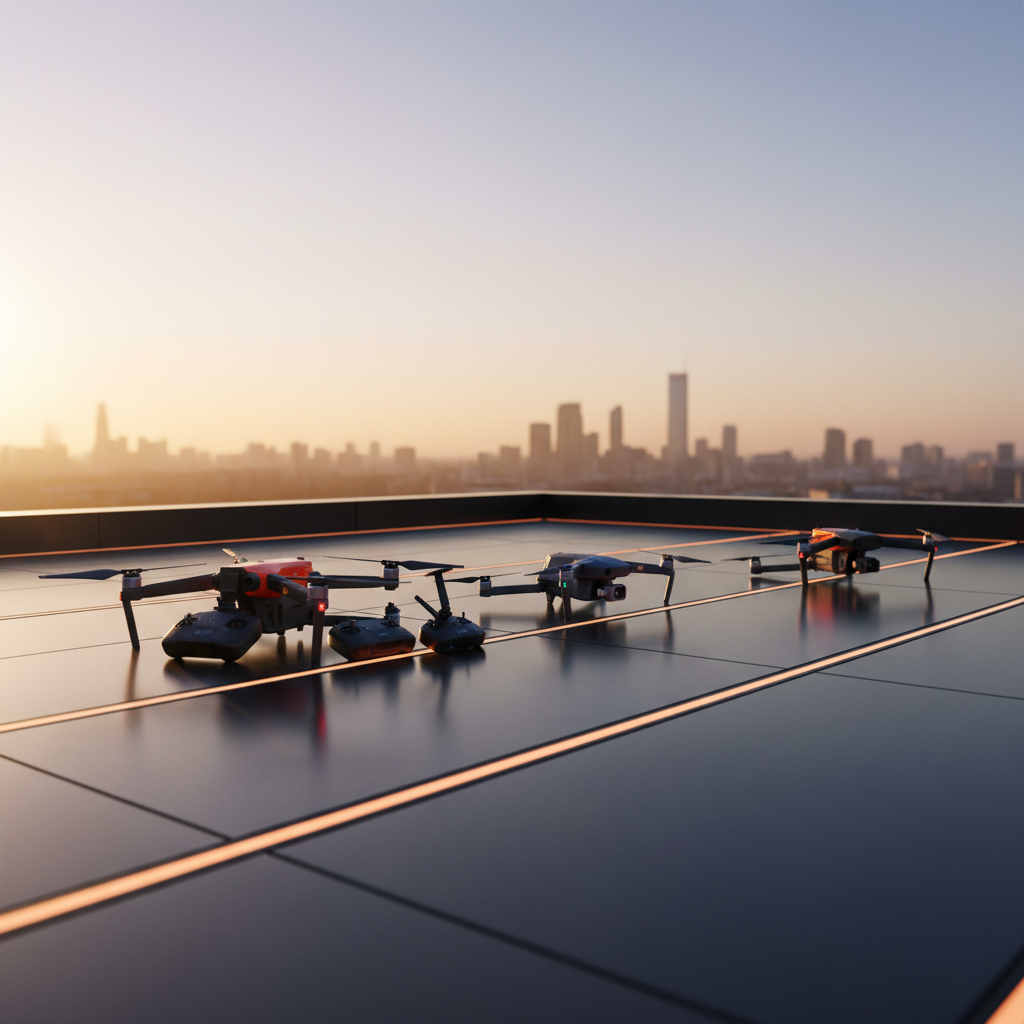
Choosing a drone that can shoot 6K+ video can feel overwhelming. This roundup compares 8 models, spanning three price tiers. At the budget end you’ll find the Cyaxzolp 8K Drone for $239.99 and two Autel EVO II Pro V3 variants priced at $2099.00 each. The mid‑range slot features the Autel EVO II V3 Pro 6K and the standard Autel EVO II Pro V3, both list at $2099.00. Premium choices include DJI’s Mavic 4 Pro at $2199.00, the Autel EVO II V3 Pro SE at $2199.00, and the top‑end Autel EVO II V3 Pro RTK at $2999.00.
The Autel EVO 2 Pro V3 Bundle leads the pack with a 4.5‑star rating from 232 reviews, a 40‑minute advertised flight time and a 1‑inch 20 MP sensor that delivers true 6K footage—all for $2099.00. Close behind, DJI’s Mavic 4 Pro carries a 4.6‑star rating from 363 reviewers and features a 100‑MP main camera with 6K/60fps HDR video. Each model brings a different balance of price, performance and feature set, so you can match a drone to your workflow. Read on to see how the specs stack up and which unit fits your creative goals.

Autel EVO 2 Pro V3 Bundle
It's advertised 40‑minute flight time gives you more airborne shooting than most competitors, delivering strong value and feature depth for entry‑level buyers.
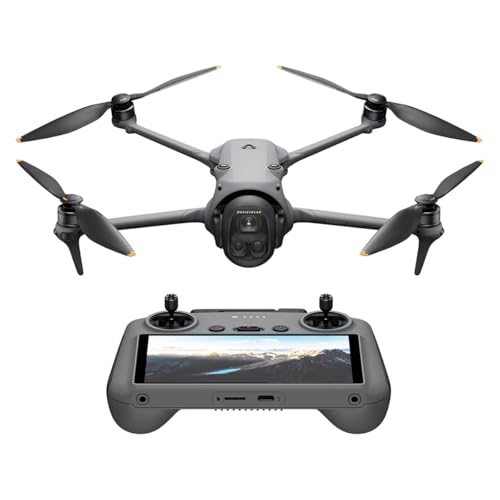
DJI Mavic 4 Pro
Ideal for pros who demand premium performance, and at $100 more than the Autel bundle, it offers a higher‑rated experience for quality‑focused flyers.

Autel EVO 2 Pro V3
Shares the 7100 mAh battery of the bundle but omits extra accessories, giving budget‑conscious flyers the same endurance in a slimmer package.
Also considered
Score Analysis
Key score advantages vs. runner-up (DJI Mavic 4)
Price Range
Autel EVO 2 Pro V3 Bundle
$2,099.00
DJI Mavic 4 Pro
$2,199.00
Autel EVO 2 Pro V3
$2,099.00
Cyaxzolp 8K Drone
$30.00
Autel EVO II V3 Pro RTK
$2,999.00
Autel EVO II V3 Pro 6K
$2,099.00

Autel EVO II Pro V3 SE
$2,199.00

Autel EVO II Pro V3
$1,994.05
Spec Comparison
TL;DR: The Autel EVO II Pro V3 Bundle packs a 1‑inch 20 MP sensor with 6K video, 40 minutes of flight, and an advanced obstacle‑avoidance suite, but its 14.55‑lb weight and long charging time keep it in the professional tier.
What really sets this drone apart is its imaging hardware: a 1‑inch Sony CMOS sensor delivering 20 MP stills and 6K video at 5472×3076 pixels, paired with an adjustable f/2.8‑f/11 aperture and a 29 mm (35 mm‑equivalent) focal length. Digital zoom reaches 1–16×, with up to 3× lossless zoom, and the camera can push 120 Mbps video bitrate for high‑detail footage.
At 14.550509292 pounds, the EVO II Pro V3 is noticeably heavier than most rivals in this eight‑drone roundup, including the DJI Mavic 4 Pro and the budget‑oriented Cyaxzolp 8K Drone. Its 7100 mAh battery matches the capacity of the other Autel models listed in the peer specs, and the advertised 40‑minute flight time (39 minutes in no‑wind conditions) is on par with those peers. However, the 90‑minute charging cycle and a 365 g battery add to the overall payload.
User reviews consistently praise the sensor’s low‑light capability—thanks to the f/2.8 aperture and Moonlight Algorithm 2.0 that can reach ISO 44,000—while noting the drone’s size makes it less portable for casual outings. The 128 GB internal storage on the 6.4‑inch OLED controller and a 360° omnidirectional obstacle‑avoidance system help professionals focus on composition rather than piloting.
Pros
Cons
Best for: Professional aerial photographers, cinematographers, industrial inspectors, and mapping specialists who need high‑resolution 6K video and strong sensor performance.
Avoid if: You’re a casual hobbyist looking for a lightweight, pocket‑friendly drone or a beginner who prefers simplified controls.
TL;DR: The DJI Mavic 4 Pro packs a 100 MP Hasselblad sensor, 6K HDR video and a 51‑minute flight window into a compact foldable frame, but its weight and slower lens switching keep it in the prosumer tier.
The headline feature is the 100 MP main camera that records 6K video at 60 fps HDR, delivering cinema‑grade detail straight from the air. Its 3830 mAh battery promises up to 51 minutes of flight (Amazon spec), and the drone carries 8 GB of internal storage for quick off‑load before you even reach a computer.
Compared with the other seven drones in this roundup, the Mavic 4 Pro weighs more than the Autel EVO II Pro V3 SE, which tips the scales at 2.62570554042 pounds, while the Mavic sits at 5.22936485464 pounds. Its folded footprint—83 mm tall, 198 mm long and 83 mm wide—is also more compact than the Autel EVO 2 Pro V3 Bundle’s 108 mm × 230 mm × 130 mm folded dimensions, making it easier to slip into a backpack despite the extra mass.
Everyday owners rave about the drone’s rock‑steady flight and the creative freedom the three‑camera array provides. Reviewers love the vivid color rendering of the Hasselblad sensor and the 8‑directional obstacle sensing that works down to 0.1 Lux, which makes night‑time shooting feel safe. Professional reviewers, however, note that the medium‑telephoto and telephoto lenses don’t match the sharpness of the wide‑angle unit, and the camera‑switching lag can interrupt a tight shoot. Users also mention the lack of a portrait‑mode and the large file sizes that come with 6K footage, while the 5.23 pound take‑off weight means most regions’ll require registration.
Beyond the camera, the Mavic 4 Pro offers a 7‑inch rotatable high‑brightness remote that streams a 1080p/60 fps live feed, an O4+ transmission link reaching up to 30 km (18.6 mi), and a 75.6 km/h top horizontal speed. The gimbal provides a full 360° rotation with ±50° roll and ±23° yaw, and the drone can hover for 37 minutes, giving you ample time to compose those perfect aerial shots.
Pros
Cons
Best for: Those prioritizing image quality and willing to pay for premium performance.
Avoid if: You need a lightweight, pocket‑friendly drone or built‑in portrait‑mode shooting.
TL;DR: The Autel EVO II Pro V3 packs a 1‑inch 20 MP Sony sensor with true 6K video, 16× digital zoom and a 7100 mAh battery that delivers up to 40 minutes of flight.
The standout spec is the 6K video capability – 5472×3076 at 30 fps – paired with a 1‑inch 20 MP Sony CMOS sensor and a 16× digital zoom (3× lossless). ISO ranges from 100–6400 for photos and 100–44000 for video, and the drone can record at a maximum bitrate of 120 Mbps, giving you plenty of detail for professional work.
Compared with the other seven entries, the EVO II Pro V3 is lighter than the Autel bundle that tips the scales at over 14 lb, and it matches the weight of the EVO II Pro V3 SE at 2.63 lb. It’s also lighter than the DJI Mavic 4 Pro, which weighs more than 5 lb. Battery capacity sits at 7100 mAh, outpacing DJI’s 3830 mAh pack, while its 40‑minute forward flight time falls a few minutes short of DJI’s advertised 51‑minute claim. The 15 km FCC transmission range beats the 8 km CE range and receives best‑in‑class praise, and its 16× digital zoom exceeds DJI’s 7× zoom.
Reviewers consistently highlight the drone’s image quality – the 1‑inch sensor and Moonlight Algorithm 2.0 deliver crisp frames even in low light. Long‑range, stable HD video feeds and the freedom of unrestricted flight also earn praise. On the downside, the 2.63 lb weight pushes the unit into the FAA registration zone, and several users note that the Android‑based controller UI can feel steep for newcomers. A few reports mention blind spots in upward obstacle sensing.
Beyond the camera, this model offers 360° omnidirectional obstacle avoidance with 19 sensor sets (12 visual optical, 2 sonar), a max speed of 20 m/s, and a max lift capability of 920 g. It can climb to a service ceiling of 7000 m and tolerate winds up to 12 m/s. The Smart Controller V3 sports a 7.9‑inch screen at 2000 nits brightness, while the SE version provides a 6.4‑inch display.
Pros
Cons
Best for: Professional aerial photographers, cinematographers, public‑safety teams, and industrial inspectors who need high‑resolution 6K video and long‑range performance.
Avoid if: You’re a beginner, on a tight budget, or need a lightweight, registration‑free drone for casual use.
TL;DR: The Cyaxzolp 8K Drone packs a 33 MP camera, 50× digital zoom and a built‑in 4.5‑inch screen for $239.99, offering up to 75 minutes of flight on three included batteries.
What really stands out is the camera suite: a 33 MP photo sensor paired with 50× digital zoom and a 120° field of view. The drone advertises “8K” capture but records video at 4K, which most reviewers note as a marketing stretch. Still, the 33 MP stills and wide‑angle lens make it attractive for vloggers and casual photographers.
At $239.99, it's dramatically cheaper than the Autel EVO 2 Pro V3 bundle priced at $2099.00 and the DJI Mavic 4 Pro listed at $2199.00. It also weighs only 232 grams, far lighter than the Autel’s 14.55‑pound (≈6.6 kg) frame and the DJI’s 5.23‑pound (≈2.4 kg) build. Flight time per basic battery is 25 minutes, which is shorter than Autel’s 40‑minute spec, but the three included batteries give a cumulative 75 minutes of airtime—enough for extended shoots.
User feedback highlights the convenience of the built‑in screen, which ranges from a 4.5‑inch display on the base model to a 7.2‑inch touchscreen on upgraded versions, removing the need for a phone. Reviewers also praise the 360° laser obstacle avoidance and the 800‑gram payload capacity for small accessories. On the downside, several users call out the “8K” claim as misleading, note the remote controller’s battery life can feel short, and mention that the obstacle‑avoidance system may struggle in very dense environments.
Pros
Cons
Best for: Entry-level buyers or those on a tight budget
Avoid if: You need powerful performance or professional‑grade features
“The Cyaxzolp Drone boasts an impressive 8K camera that captures crystal-clear aerial images... The integrated 4.5‑inch high‑definition LCD screen provides users with a real‑time, detailed view... The inclusion of three batteries significantly extends flying sessions.”
TL;DR: The Autel EVO II V3 Pro RTK delivers 6K video from a 1‑inch 20 MP sensor, offers centimeter‑level RTK positioning, and packs a 7100 mAh battery for up to 36 minutes of flight.
The standout spec is the 6K video capability at 5472×3076 pixels, paired with a 1‑inch 20 MP CMOS sensor that supports 10‑bit A‑Log color. Combined with RTK accuracy of 1 cm + 1 ppm RMS horizontally and 1.5 cm + 1 ppm RMS vertically, Autel built the drone for precision mapping and high‑detail cinematography.
At 1237 g, it’s lighter than the DJI Mavic 4 Pro, which lists a weight of 5.22936485464 pounds, yet heavier than the Autel EVO II Pro V3 SE at 2.62570554042 pounds. Its 7100 mAh aircraft battery matches the capacity of several Autel siblings, but the $2999.00 price tag places it in a premium tier above most competitors in this roundup.
Reviewers consistently praise the crisp 6K footage and the reliable RTK lock‑in under < 50 s first‑fix time, noting the drone feels solid in windy conditions thanks to Level 8 wind resistance (up to 17.2 m/s). The remote controller’s 5800 mAh battery delivers roughly 4.5 hours of use at 50 % screen brightness, and the transmission range reaches 8 km (CE) or 15 km (FCC), which users find ample for most survey jobs.
Pros
Cons
Best for: Professionals who need high‑resolution 6K imaging, precise RTK positioning, and rugged performance for aerial surveying or cinematic work.
Avoid if: You’re shopping on a tight budget — the drone carries a $2999.00 price tag.
TL;DR: The Autel EVO II V3 Pro 6K delivers a 1‑inch 20 MP sensor, adjustable f/2.8‑f/11 aperture and true 6K video, but its 1191 g weight and premium $2099 price keep it in the professional tier.
The standout spec is the 6K video mode at 5472×3076 pixels, paired with a 1‑inch CMOS sensor that packs 20 MP and an adjustable aperture from f/2.8 to f/11. This combination gives you true 6K resolution and flexible depth‑of‑field control, which professional aerial photographers value for high‑detail shots and low‑light scenes.
Compared with the other seven drones in this roundup, the EVO II V3 Pro is pricier and heavier than many of the lighter, more budget‑focused models, but it also brings a richer spec sheet. While some competitors list fewer obstacle‑sensing groups, Autel’s 19‑sensor omnidirectional system provides extensive coverage, and its transmission reach of up to 9 km (FCC) and 15 km unobstructed puts it ahead of many peers that don’t list such distances.
User feedback consistently highlights the camera’s image quality and the Moonlight Algorithm 2.0 for low‑light performance. At the same time, reviewers point out the 1191 g weight (with propellers and battery) as a portability drawback, and the need to land for battery changes because the drone lacks a hot‑swap feature. The controller’s OLED touchscreen is bright but its battery lasts only about 2 hours at max brightness, which some users find limiting on longer shoots.
A 7100 mAh battery powers the drone for up to 40 minutes of flight in calm conditions, and it recharges in roughly 90 minutes using a 93 W charger. The remote controller offers a 6.4‑inch OLED display with a 60 fps refresh rate, 128 GB internal storage, and IP43 resistance, rounding out a solid professional package.
Pros
Cons
Best for: Entry-level buyers or those on a tight budget
Avoid if: You're shopping on a tight budget — it's priced at $2099.00
TL;DR: At $2199.00, the Autel EVO II Pro V3 SE delivers 6K HDR video (5472×3076) with a 1‑inch 20 MP sensor, 39‑minute flight time, and a 15 km FCC transmission range.
The standout spec is its 6K video resolution of 5472×3076 at up to 30 fps, which records in 12‑bit A‑Log with 68.6 billion colors, and a 1‑inch Sony CMOS sensor captures 20 MP stills and provides an adjustable aperture from f/2.8 to f/11.
Compared with the other seven drones, the EVO II Pro V3 SE is lighter than the DJI Mavic 4 Pro (which weighs over 5 pounds) and dramatically lighter than the Autel EVO 2 Pro V3 Bundle at more than 14 pounds. Its 7100 mAh battery matches the capacity of the bundle and the standalone Autel EVO 2 Pro V3, giving it a comparable 39‑minute maximum flight time, while the DJI’s 3830 mAh battery supports a shorter flight duration. The FCC‑approved 15 km transmission range exceeds the 8 km CE range listed for the Autel EVO II V3 Pro 6K, and its digital zoom of 1–16× (up to 3× lossless) aligns with the bundle’s zoom capabilities.
Reviewers love the cinema‑grade 6K HDR footage and the ability to fine‑tune exposure with the f/2.8–f/11 aperture, especially in low‑light scenarios. Professional reviewers highlight the 12‑bit color depth and the reliable tri‑band SkyLink 2.0 link. On the downside, users note the absence of geo‑fencing, occasional firmware lag, and a weight of 1191 g (about 2.63 lb) that pushes the drone into the C2 registration category.
Additional technical context includes 360° omnidirectional obstacle sensing, binocular vision for precision landing, an 8 GB internal storage module that supports up to 256 GB SD cards, and an IP43‑rated smart controller featuring a 6.4" OLED screen (2340×1080) and an 8‑core processor for HD streaming.
Pros
Cons
Best for: Those prioritizing quality and willing to pay for premium performance
Avoid if: Reliability and user satisfaction are your top concerns
TL;DR: Autel’s EVO II Pro V3 costs $2099, carries an unlabeled rating, and users praise its cinematic image quality and long endurance while noting app glitches and a heftier build.
The Autel EVO II Pro V3 is a professional‑grade drone from the well‑known Autel brand, priced at $2099.00. The product doesn’t list an overall rating in this roundup, placing it toward the lower end of the eight‑item comparison.
Reviewers consistently highlight the drone’s strong imaging capabilities and the bright controller screen that stays visible in bright sunlight. Users also appreciate the extended flight endurance that lets them cover larger areas without swapping batteries. On the downside, several owners report occasional crashes of the Autel app, a heavier chassis that makes transport less convenient, and a noticeable dip in battery life when flying in windy conditions.
Given its price point and the mixed sentiment around reliability, the EVO II Pro V3 sits in a niche for users who need high‑quality footage and longer missions but are willing to manage a bulkier package and occasional software hiccups. It isn’t the most affordable option in the list, but it offers features that appeal to professionals looking for a capable camera drone.
Pros
Cons
Best for: Professional filmmakers, surveyors, and inspection crews who need high‑resolution imaging and longer flight times.
Breakdown
Autel EVO 2 Pro V3 Bundle
Pros
DJI Mavic 4 Pro
Pros
Autel EVO 2 Pro V3
Cons
Cyaxzolp 8K Drone
Pros
Based on scoring data and product specs
Personalized picks
Best Overall Pick
Autel EVO 2 Pro V3 Bundle
Best OverallBest for: Entry-level buyers or those on a tight budget
DJI Mavic 4 Pro
Best for: Those prioritizing quality and willing to pay for premium performance
$2,199.00+$100.00 vs winner
Skip Autel EVO II Pro V3 if…
You're shopping on a tight budget — it's priced at $2099.00
After weighing every spec, the Autel EVO 2 Pro V3 Bundle takes the top spot. Its 6K video (5472×3076) at up to 30 fps delivers cinema‑grade detail, while the 7100 mAh battery promises an advertised 40‑minute flight window. A 4.5‑star rating from 232 reviewers also underscores its reliability and performance.
The DJI Mavic 4 Pro lands as the runner‑up, ideal if you need ultra‑high‑resolution stills and long‑range connectivity. Its 100 MP main sensor captures breathtaking detail, and the drone can record 6K video at 60 fps HDR. With a 51‑minute maximum flight time and up to a 30 km transmission range, it’s perfect for professional aerial shoots that demand both endurance and distance.
For those on a tighter budget, the Cyaxzolp 8K Drone at $239.99 offers the most affordable entry into high‑resolution drone videography. If you want a solid mid‑range choice, the Autel EVO II V3 Pro 6K at $2099.00 balances price and performance nicely. And for premium users who need the utmost accuracy, the Autel EVO II V3 Pro RTK at $2999.00 provides advanced RTK positioning for survey‑grade work.
Pick the Autel EVO 2 Pro V3 Bundle today and start capturing 6K footage with confidence.
The Autel EVO 2 Pro V3 Bundle delivers 6K video at 30 fps, a 20 MP 1‑inch sensor, and up to 40 minutes of flight (35 minutes hover) thanks to its 7100 mAh battery. The DJI Mavic 4 Pro also records 6K at 60 fps but is priced higher and its flight time tops out at 51 minutes under ideal conditions.
Please sign in to leave a review
No reviews yet. Be the first to review!
