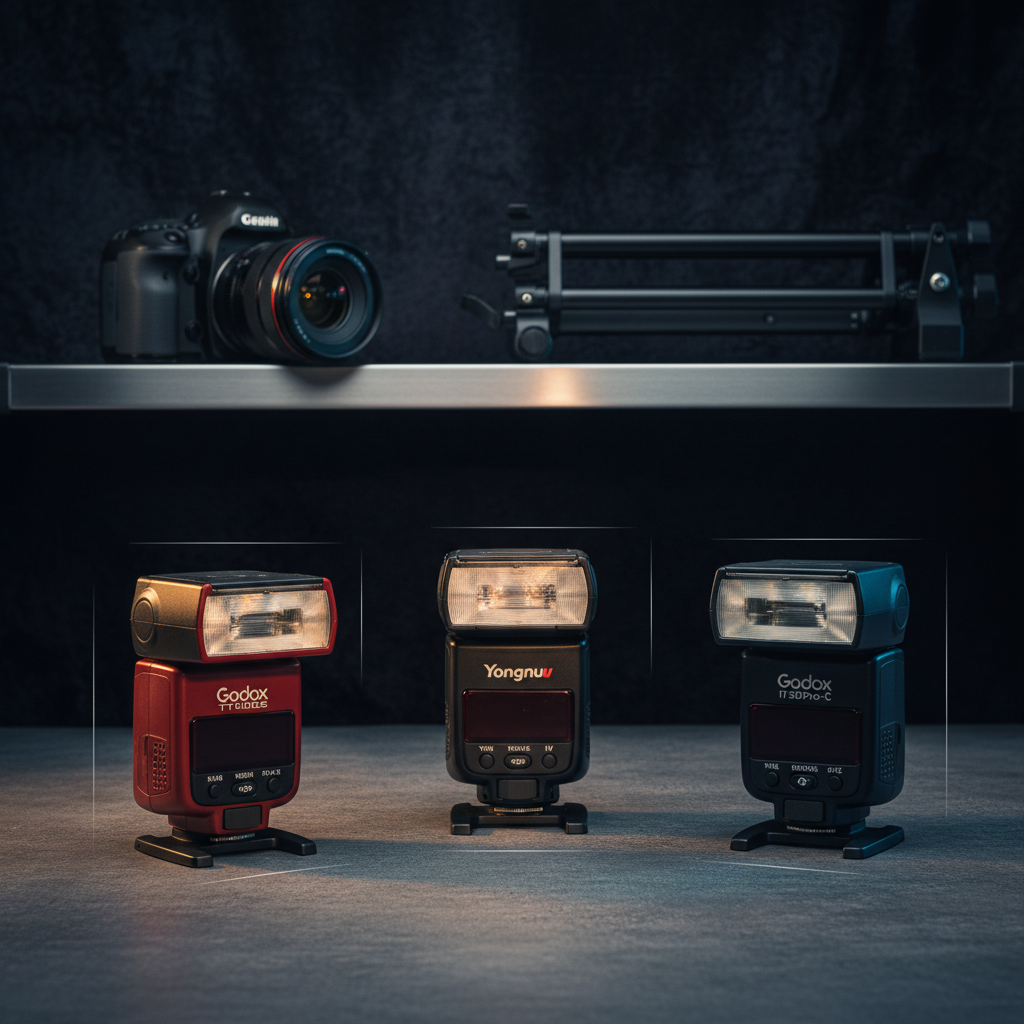
When you need off‑camera lighting that talks to your camera over a 2.4 GHz radio, the market offers a surprisingly diverse set of flashes. A comparison of 12 options shows the spread runs from a $48.60 entry‑level unit up to the $719.00 top‑shelf strobe, giving you a price range of $48.60 – $719.00. The highest‑rated model, the Godox MS300V, earned a 4.7/5 score from 223 reviewers, while the Godox TT600S – a Sony‑focused speedlite – carries a 4.5/5 rating based on 1,358 reviews.
The flashes are grouped into three price tiers. The budget tier (Godox TT520II, TT600, iT30Pro‑C, TT600S) stays under $71 and includes solid guide numbers like GN60 for the TT600S. Mid‑range picks (Yongnuo YN560 IV at $85.00 and Godox MS300V at $119.00) add features such as stroboscopic modes and higher output. The premium tier (starting at $150.00 and topping out at $719.00) brings TTL, high‑speed sync, and battery‑powered power packs for on‑location work.
Below is a breakdown of each model’s strengths, weaknesses, and ideal use‑cases to help you match the right wireless flash to your shooting style.

Godox TT600S
Its compact size—63.96 mm tall and 189.93 mm long—delivers strong performance in a portable package.

Yongnuo YN560 IV
Ideal for enthusiasts seeking a sturdy flash with extra depth—78 mm height, 60 mm depth—priced at $85, about $15 more than the Best Overall.

Godox iT30Pro-C
Offers 560 full‑power flashes per charge (900 mAh battery), ideal for home or office shoots where cordless reliability matters.
Also considered
Score Analysis
Key score advantages vs. runner-up (Yongnuo YN560 IV)
Price Range
Godox TT600S
$70.00
Yongnuo YN560 IV
$85.00
Godox iT30Pro-C
$74.90

Godox TT600
$65.00

Godox MS300V
$129.00
Flashpoint Zoom R2
$179.00

Godox AD100Pro
$259.00
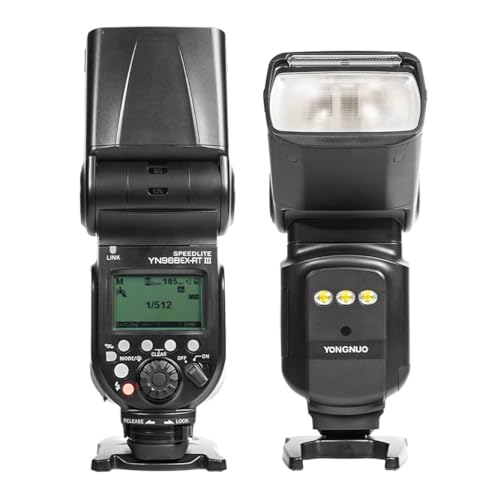
Yongnuo YN968EX-RT III
$150.00

Godox TT520II
$48.60

Flashpoint XPLOR 600 PRO
$719.00
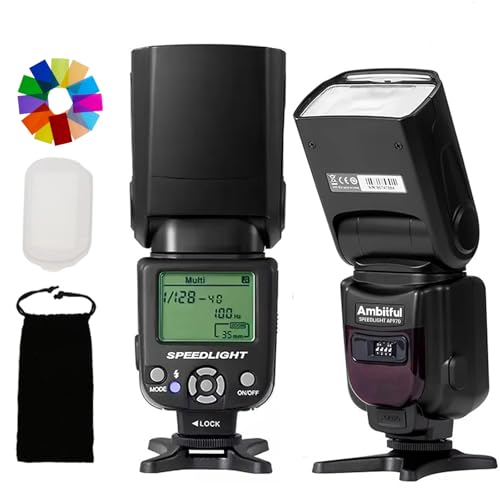
Ambitful AF970
$59.46

Godox TT520III
$64.00
Spec Comparison
TL;DR: The Godox TT600S offers a GN60 guide number, 32‑channel 2.4 GHz wireless, and up to 100 m range for $70, making it a solid manual flash for Sony shooters who need off‑camera power.
The TT600S packs a 60‑meter guide number at ISO 100 (200 mm) and a 100‑meter wireless transmission range on a 2.4 GHz band, giving you plenty of reach for portrait or event lighting. Weighing 1.10231131 Pounds (500 g) and measuring 63.96 mm × 75.96 mm × 189.93 mm, it’s a compact unit that still feels solid in hand.
Compared with other flashes in this roundup, it’s heavier than the ultra‑light iT30Pro‑C (120 g) but matches the weight of the standard Godox TT600 (about 1.1 Pounds). Its 32 wireless channels outpace the TT520III’s 16‑channel system, and the 100 m range exceeds the TT520III’s listed 20‑meter indoor range. While the iT30Pro‑C offers a 15 m guide number, the TT600S delivers a much stronger GN60, putting it ahead in raw output.
Reviewers consistently praise the flash’s value, noting its reliable 100 m radio range and its ability to use high‑speed sync up to 1/8000 s when off‑camera. Users also like the built‑in diffuser panel, focus‑assist lamp, and over‑temperature protection that keep the unit stable during long shoots. The main criticism targets its manual‑only operation—no TTL—and notes that high‑speed sync doesn’t work when the flash is mounted on‑camera. Battery life provides roughly 230 full‑power flashes per AA set, which some users find short for extended sessions.
Pros
Cons
Best for: Budget‑conscious Sony shooters who need a well‑reviewed, reliable manual flash with solid wireless range for off‑camera lighting.
Avoid if: You rely on TTL, need on‑camera high‑speed sync, or prefer built‑in Li‑ion power for longer battery life.
“Perfect for off-camera flash on a budget.”
“HSS works great with my X1T-S trigger – I can shoot wide open in daylight.”
TL;DR: The Yongnuo YN560 IV offers a 58 m guide‑number flash with built‑in 2.4 GHz radio, eight power levels and a lightweight 0.76875 lb body for under $90.
The standout feature is its integrated 2.4 GHz wireless transmitter, which reaches up to 100 m in open space and works across 16 channels and three groups. Combined with a guide number of 58 m at ISO 100 (105 mm focal length) and eight main power levels fine‑tuned in 29 steps, the unit gives you precise manual control without needing a separate trigger.
Compared with other flashes in this roundup, the YN560 IV is lighter than the Godox TT600 (which weighs about 1.1 lb) and slimmer than the Godox TT600’s 190 mm depth, yet its width of 190 mm is broader than the TT600’s 75.96 mm. Its radio range matches the TT600’s 100 m line‑of‑sight capability, but the YN560 IV offers fewer power‑level steps (8 versus 22 on the TT600). Recycle time sits at 3 seconds, a tad slower than the TT600’s maximum 2.6 seconds, while both share the same 5600 K color temperature.
User sentiment's largely positive: reviewers praise the flash’s reliability, the value of the built‑in transmitter, and the solid 4.4‑star rating from 2,630 reviews. Common complaints focus on the need for four AA batteries and a monochrome LCD that can be hard to read in bright sunlight. Professional reviewers note the lack of TTL and high‑speed sync as limiting factors for fast‑action work.
Technically, the YN560 IV uses an insulated‑gate bipolar transistor (IGBT) circuit and supports an external HV battery port for Yongnuo SF‑17C/SF‑18C packs, extending flash output to 100–1500 shots per battery set. The flash also includes a built‑in bounce card and a 20 mm wide‑angle diffuser, adding versatility for studio and event lighting.
Pros
Cons
Best for: Budget‑conscious photographers who want a reliable manual flash with built‑in radio capability for studio or event work.
Avoid if: You need TTL, high‑speed sync, or plan to shoot fast action where manual control is impractical.
TL;DR: The Godox iT30Pro‑C packs a 15 m guide‑number, 2.8‑inch touchscreen and 560‑flash battery into a 120 g pocket‑sized unit with 2.4 GHz X‑system wireless.
The standout spec is its 15 m (49.2 ft) guide‑number at ISO 100 combined with a full‑color 2.8‑inch touchscreen that lets you dial power, TTL compensation (±3 EV) and wireless settings with a swipe. Weighing only 120 g, the flash offers up to 560 full‑power flashes on a single 900 mAh Li‑ion pack and recharges via USB‑C fast charging.
Compared with the bulkier Godox TT600 series—both the TT600S and TT600 weigh about 500 g—the iT30Pro‑C is dramatically lighter and far more compact (65 × 46 × 47 mm). Its 100 m (328 ft) wireless range and 32 channels match the range of the TT600’s 100 m transmission but in a size that fits in a pocket.
Everyday users love the built‑in diffuser that reduces output by roughly 0.7 EV and the ultra‑compact form factor for travel or street shooting. Professional reviewers praise the precise TTL metering and the on‑screen distance scale that calculates exposure from the guide‑number. Some users note the touchscreen can feel sluggish in cold weather and that the flash head sits low, so larger lenses may need a riser for even lighting. Wireless performance may dip at the farthest 100 m range if interference is present.
Pros
Cons
Best for: Home and office users seeking a balance of features and value
Avoid if: You want the best value-per-dollar in its price range
“the best small camera flash I’ve tested so far”
“pocket-sized powerhouse”
TL;DR: The Godox TT600 offers a GN 60 manual flash with built‑in 2.4 GHz X‑system, 100 m radio range and fast recycle for $65, making it a solid entry‑level wireless option.
The standout spec is its guide number of 60 m (ISO 100, 200 mm), which lets you illuminate subjects at a distance that many budget flashes can’t reach. Coupled with a built‑in 2.4 GHz X‑system, it transmits up to 100 m line‑of‑sight on any of 32 channels and 5 slave groups, giving you reliable off‑camera control without extra transmitters.
In size and weight, the TT600 sits on the heavier side of the lineup. At 1.1 Pounds (500 g with batteries) it is significantly heavier than the iT30Pro‑C’s 120 g chassis, yet matches the TT600S at 500 g. Its depth of 190 mm makes it deeper than the TT520III’s compact 47 mm profile, while its height of 76 mm is shorter than the TT520III’s 181 mm. Compared with the Ambitful AF970, the TT600 is a bit heavier than the AF970’s 390 g, and it out‑weights the Yongnuo YN560 IV’s roughly 0.77 pound body.
Users consistently praise the TT600 for its consistent output and the large backlit LCD that makes setting power levels straightforward. Reviewers note the convenience of the 32‑channel, 5‑group radio system for building multi‑light setups, especially in studio or product work. The main trade‑off is the manual‑only operation – there’s no TTL metering, and high‑speed sync (HSS) only works when the flash is triggered off‑camera with a compatible Godox trigger. Battery life of roughly 230 full‑power flashes with 2500 mAh Ni‑MH cells is adequate for short shoots but can feel limited with alkaline cells.
Technical details reinforce its value: the flash recycles in as little as 0.1 seconds and up to 2.6 seconds at lower power, and its flash duration ranges from 1/300 s to 1/20 000 s, giving you control over motion blur. You can adjust power output from 1/1 to 1/128 in 1/3‑stop steps, and the color temperature stays at 5600 K ± 200 K across the range, ensuring reliable color consistency.
Pros
Cons
Best for: Budget-conscious buyers seeking a reliable entry‑level option
Avoid if: You need advanced features or professional‑grade performance
“Perfect for product photography — consistent output and easy to sync.”
“I use four TT600s with X1T triggers for portraits — rock-solid wireless performance.”
TL;DR: The Godox MS300V delivers 300 Ws of power, a 58 m guide number and built‑in 2.4 GHz wireless control for $119.00, making it a solid mid‑range studio strobe for portrait and product work.
The standout spec is its 300 Ws maximum output paired with a 58 m guide number (ISO 100, 7″ 55° reflector), giving you plenty of reach in a compact housing. A 10 W LED modeling lamp is dimmable from 5 % to 100 % and can be controlled remotely via the built‑in 2.4 GHz radio receiver, which offers 32 channels, 5 groups and a 100 m (328 ft) transmission range.
Compared with the other eleven flashes in this roundup, the MS300V is noticeably heavier than the Godox TT600 (about 1.1 lb) and the Yongnuo YN560 IV (0.77 lb), but its sturdy construction includes a 5 A fuse and fan‑cooled design. Its guide number sits just below the Yongnuo YN968EX‑RT III’s GN60, while its wireless range matches the Flashpoint Zoom R2’s 100 m capability. The radio frequency matches the same 2.4 GHz band used by the YN968EX‑RT III, ensuring compatibility with common X‑Series triggers.
Reviewers consistently praise the MS300V’s compact dimensions—336.0 mm depth, 229.1 mm height and 191.0 mm width—making it easy to fit into small studios or travel kits. Users also highlight the dimmable LED modeling lamp for low‑heat preview and the stable output that stays within a 2 % tolerance over long sessions. Common complaints revolve around the audible fan, the lack of TTL and high‑speed sync, and the requirement for AC power, which limits on‑location flexibility.
Pros
Cons
Best for: Most users seeking a balanced, mainstream option
Avoid if: You're shopping on a tight budget — it's priced at $119.00
“Perfect for small studios”
“LED modeling is a game-changer”
TL;DR: The Flashpoint Zoom R2 offers a GN 60 m, 1.5 s recycle, and built‑in 2.4 GHz R2 radio with 32 channels, delivering fast, powerful off‑camera flashes for events and portraits.
This speedlight’s headline spec is its GN 60 m at ISO 100 with a 20–200 mm zoom range, backed by a rapid 1.5 s recycle time at full power. The integrated R2 radio runs on 2.413–2.4645 GHz, provides 32 channels, and reaches up to 100 m, so you can reliably trigger off‑camera units across a large studio or venue.
Compared with the other eleven flashes in the roundup, the Zoom R2 is heavier than the ultra‑light Godox iT30Pro (120 g) and the Yongnuo YN968EX‑RT III (445 g), but its 19 oz (540 g) body feels solid for on‑camera use. Its guide number matches the top‑tier Yongnuo YN968EX‑RT III and Godox TT600, both have a GN 60 m, and it outpaces the Yongnuo YN560 IV’s 3 s recycle time. Wireless range mirrors the Godox TT600’s 100 m line‑of‑sight capability, while the 5 dBm max transmitting power gives a strong signal on the same 2.4 GHz band used by several peers.
Reviewers consistently praise the flash’s speed and power, noting that the 1.5 s recycle enables rapid event shooting and that the 10‑level SMD LED model light is handy for video work. Professional testers highlight the reliable 32‑channel radio and high‑speed sync up to 1/8000 s as major strengths. On the downside, users mention the lack of weather sealing, a non‑replaceable Li‑ion battery, and an older‑looking monochrome LCD that can feel dated in modern rigs.
Beyond the headline numbers, the Zoom R2 includes a 2000 mAh, 11.1 V Li‑ion battery that delivers roughly 650 full‑power flashes per charge. Its multi‑flash mode can fire up to 90 flashes at 99 Hz, and the built‑in 10‑level LED provides flexible modeling light for both stills and video. The flash also supports Sony TTL, iTTL, manual, remote ETTL II, and high‑speed sync, giving you a full suite of exposure controls without needing external triggers.
Pros
Cons
Best for: Event and wedding photographers who need fast recycle, high guide number, and a reliable built‑in radio for off‑camera lighting.
Avoid if: You frequently shoot in rain, require a replaceable AA battery, or need a fully weather‑sealed flash.
“Perfect for event photography — fast, reliable, and powerful.”
“Love the built-in radio — no need for extra triggers.”
TL;DR: The Godox AD100Pro packs 100 Ws of power, 1/8000 s high‑speed sync and a built‑in 2.4 GHz wireless X system into a 524 g, pocket‑sized flash for on‑location shooters.
The standout spec is its 100 Ws output combined with a flash duration as short as 1/8000 s, letting you freeze fast action even in bright daylight. It fits in a compact body measuring 2.99 in (75.9 mm) deep and high, with a 4.72 in (119.9 mm) width, and the OLED screen makes power and mode adjustments intuitive. A 2600 mAh lithium‑ion battery provides up to 360 full‑power flashes and automatically powers off after 30 minutes.
Compared with the other eleven flashes in this roundup, the AD100Pro sits at the higher end of the price spectrum, while still weighing less than bulkier studio units such as the Godox MS300V. Its 32 wireless channels and five groups give it more configurability than many peers, and the 100‑meter transmission range matches the range offered by the Flashpoint Zoom R2. It also weighs less than the Flashpoint’s 540 g model with battery, positioning it as a truly portable option.
Everyday users rave about the flash’s portability, the clear OLED interface and the reliable TTL integration across multiple camera brands. Professional reviewers highlight the fast recycle times and the convenience of the built‑in 2.4 GHz X wireless system. Common complaints focus on the modest 1.8 W modeling lamp, which many find insufficient for video work, and occasional reliability hiccups after limited use. Some owners also mention they're confused about battery replacement procedures.
Pros
Cons
Best for: Those prioritizing quality and willing to pay for premium performance
Avoid if: You're shopping on a tight budget — it's priced at $299.00
“Works well in a home studio for portraits & still life as well as location.”
TL;DR: The Yongnuo YN968EX‑RT III delivers a GN60 guide number, 2.4 GHz radio up to 100 m, and a 3‑second recycle, all for $150, making it a solid off‑camera flash for Canon shooters.
The flash’s standout spec is its GN60 guide number at ISO 100 and 200 mm, giving you plenty of punch for portraits and events. It talks to Canon cameras on a 2.4 GHz radio band and can trigger reliably out to 100 m, even through walls. A recycle time of 3 s keeps the shooting rhythm smooth, while the built‑in LED modeling light shines at 300 lux (1 m) with a 5500 K color temperature.
At 445 g, the YN968EX‑RT III sits between the Flashpoint Zoom R2’s 420 g (without battery) and the Godox TT600’s 500 g (with batteries), offering a balanced handheld feel. Its 100 m wireless range matches both the Flashpoint and the Godox TT600, so you won’t lose range compared to other options in this roundup. The guide number ties with the TT600’s 60 m rating, putting it on par with a popular competitor while still delivering a full‑featured TTL engine.
Users repeatedly praise the flash’s strong output and dependable radio performance, noting that the LED modeling light is handy for video and focus assistance. However, many mention that the reliance on four AA cells can limit shooting time, especially in cold weather, and bright sunlight may make the LCD hard to read. Professional reviewers also highlight the solid build quality that feels comparable to Canon’s flagship speedlites.
Beyond the headline specs, the unit offers a 360° swivel and a tilt range from –7° to +150°, giving you flexible positioning. It supports TTL, manual, multi‑flash, and group modes, plus high‑speed sync up to 1/8000 s, so you can freeze fast action or work with wide apertures. The large backlit LCD and auto‑save settings make on‑the‑fly adjustments straightforward.
Pros
Cons
Best for: Wedding and event photographers needing reliable off‑camera flash, and portrait shooters who rely on high‑speed sync.
Avoid if: You require a built‑in rechargeable battery, need continuous high‑power bursts without external packs, or shoot extensively in cold weather where AA performance declines.
“Works perfectly with my 5D Mark IV and 600EX-RT flashes.”
“The LED light is a game-changer for low-light events.”
TL;DR: The Godox TT520II offers a 33‑meter guide‑number flash with built‑in 433 MHz wireless, tilt‑and‑swivel head and an integrated diffuser for just $48.60, making it a solid entry‑level choice for beginners.
The flash’s standout spec is its guide number of 33 meters at ISO 100, and its built‑in 433 MHz receiver reaches up to 15 meters indoors. It also sports a 0°‑90° tilt range and a 0°‑270° swivel, plus an integrated wide‑panel diffuser and bounce card for softer lighting straight out of the box.
At $48.60 it lands well below the price of many peers in this twelve‑product set, and at 310 g it's noticeably lighter than the 500 g Godox TT600. While the TT520III shares a similar form factor, the TT520II stays manual‑only, lacking the TTL and high‑speed sync features that some competitors list.
Reviewers appreciate the reliable 433 MHz trigger and the convenience of the included RT transmitter, noting that the diffuser delivers pleasant portrait light without extra accessories. Common complaints focus on the absence of an LCD screen for quick setting checks and a recycle time that can stretch to 5 seconds when using alkaline AA cells.
In practice the unit runs on four AA batteries (alkaline or Ni‑MH) and can fire between 100 and 1500 flashes per charge, giving ample stamina for indoor events. Eight power‑output levels from 1/128 to full power let you dial exposure manually, while the manual mode, S1 and S2 optical slave options keep the operation straightforward.
Pros
Cons
Best for: Budget‑conscious buyers seeking a reliable entry‑level flash with solid wireless capability.
Avoid if: You need advanced features like TTL, high‑speed sync, or a built‑in LCD for quick visual feedback.
“Worked perfectly with my Sony A7III—reliable triggering and great bounce lighting.”
“Used it on my Nikon Z50 with no issues; the diffuser makes light very soft.”
TL;DR: The Flashpoint XPLOR 600 PRO delivers studio‑grade 600 Ws power, a 87 m guide number and 2,600 mAh battery, but its premium $719 price and 12.8‑lb weight keep it in the pro‑tier niche.
At the heart of the XPLOR 600 PRO is a 600 Ws output and an 87 m (ISO 100) guide number, giving you the kind of reach usually reserved for studio strobes. Its 38 W LED modeling lamp (TLIC 93) offers bright, color‑accurate preview, while the built‑in fan keeps the unit cool during long shoots. Power comes from a 2,600 mAh, 28.8 V rechargeable lithium‑ion pack that delivers roughly 350–370 full‑power flashes per charge.
Compared with many of the other 11 flashes in this roundup, the XPLOR 600 PRO sits at the top end of size and output. It is considerably taller than the compact Godox AD100Pro (215.9 mm vs 75.9 mm height) and far wider than the AD100Pro’s 119.9 mm width. Its 80 m wireless range falls short of the Flashpoint Zoom R2’s 100 m range, but still provides ample coverage for most on‑location setups. In weight, the XPLOR’s 12.8 lb (5,806 g) chassis dwarfs the sub‑kilogram builds of the Godox TT600S, Yongnuo YN560 IV and the Zoom R2 (540 g with battery), making it a heavier, more studio‑oriented option.
Reviewers consistently praise the unit’s lightning‑quick recycle—0.01 s at low power up to 0.9 s at full power—and the stability of its 5,600 K ± 200 K color temperature across the entire power range (±75 K variation). Professionals note the powerful modeling lamp and reliable TTL performance as major workflow wins. The most common criticisms focus on the unit’s heft, the lack of an ultra‑fast 1/20,000 s flash‑duration mode for extreme motion freeze, and the absence of a rear LCD screen for remote setting confirmation.
Pros
Cons
Best for: Those prioritizing quality and willing to pay for premium performance
Avoid if: Reliability and user satisfaction are your top concerns
“Perfect for outdoor weddings and events — fast recycle and TTL make life so much easier”
“Color consistency is excellent — no color shifts when adjusting power”
TL;DR: The Ambitful AF970 delivers a strong 60 m guide number and 2.4 GHz wireless triggering for under $51, making it a solid budget flash for beginners who can work with manual controls.
The standout spec is its 60 m (197 ft) guide number at ISO 100, which puts it on par with higher‑priced units like the Godox TT600 and TT600S that share the same output. It also packs a built‑in 2.4 GHz wireless receiver, a newer band than the 433 MHz used by the Godox TT520III, allowing reliable off‑camera triggering without extra transmitters. Power comes from four AA alkaline cells, and the flash offers eight manual power steps from 1/1 down to 1/128.
At 390 g, the AF970 is heavier than the Godox TT520II’s 310 g body but lighter than the TT600’s 500 g (with batteries) and comparable to the TT600S’s 500 g weight. Its guide number outclasses the TT520II’s 33 m and the iT30Pro‑C’s modest 15 m, while still matching the TT600 series. The tilt range of –7° to +90° and a swivel of 0° to 270° give you plenty of positioning flexibility, a feature set that rivals the broader tilt of the TT520III (‑7° to +120°) and exceeds many entry‑level flashes.
Users appreciate the affordable price point, the strong output, and the included accessories such as a mini stand, diffuser, and a 12‑piece gel set. Professional reviewers note the value‑oriented design and the modern 2.4 GHz wireless capability as highlights. Common complaints focus on the manual‑only operation—there’s no TTL or high‑speed sync (limited to 1/200 s)—and the reliance on alkaline AA batteries, which some find less convenient than rechargeable packs. Reviewers also say the plastic housing feels less rugged than metal alternatives.
Pros
Cons
Best for: Entry-level buyers or those on a tight budget
Avoid if: You need advanced features or professional‑grade performance
“Great price for a manual flash”
“Easy to use off-camera with wireless”
TL;DR: The Godox TT520III offers a 33 m guide‑number flash with a built‑in 433 MHz receiver, 400 full‑power AA‑battery flashes, and a quick 1.8 s recycle, all for $64.
This flash’s most distinctive spec is its integrated 433 MHz wireless receiver that supports 16 channels and up to 15 meters of range, letting you trigger it without an external trigger. It delivers a GN of 33 meters (ISO 100) and provides eight manual power levels from 1/128 to full power, with fine‑tuning of ±1/3‑stop. The unit recycles in about 1.8 seconds and can fire roughly 400 full‑power flashes on four AA batteries.
Compared with the other eleven units, the TT520III is lighter than the Godox TT600 (400 g) but heavier than the compact iT30Pro‑C (120 g). Its wireless range of up to 15 meters is shorter than the TT600’s 100 meter line‑of‑sight reach. The 33 m guide number matches the older TT520II but falls well below the TT600’s 60 m GN and the Yongnuo YN560 IV’s 58 m GN. Battery life of 400 full‑power flashes sits between the iT30Pro‑C’s 560 flashes and the TT600S’s roughly 230 flashes per set.
Reviewers consistently praise the flash’s fast 1.8 s recycle and the long battery life, noting that the built‑in diffuser and white bounce card improve light quality straight out of the box. However, users frequently mention the lack of TTL and high‑speed sync, which doesn't allow flexibility for fast‑action shooting. Professional reviewers also point out that the 433 MHz system is outdated and won’t talk to Godox’s newer 2.4 GHz X‑system, and the plastic housing feels less rugged than metal alternatives.
Technically, the TT520III operates only in manual (M) mode, offering eight power steps and ±1/3‑stop fine‑tuning. Flash duration ranges from 1/510 to 1/31000 seconds, providing enough speed for most indoor and portrait work. Compatibility spans major brands—Canon, Nikon, Sony, Fujifilm, Olympus, Panasonic, Pentax—though it’s not compatible with several entry‑level Canon Rebels and newer Sony A7III bodies without an adapter.
Pros
Cons
Best for: Entry‑level buyers or anyone on a tight budget who needs a manual flash with solid power and built‑in wireless.
Avoid if: You rely on TTL, high‑speed sync, or need a flash that integrates with newer Godox X‑system triggers.
“Worked perfectly with my Sony A7III—reliable triggering and great bounce lighting.”
“Used it on my Nikon Z50 with no issues; the diffuser makes light very soft.”
Breakdown
Godox TT600S
Pros
Yongnuo YN560 IV
Pros
Godox iT30Pro-C
Pros
Cons
Godox TT600
Pros
Based on scoring data and product specs
Personalized picks
Best Overall Pick
Godox TT600S
Best OverallBest for: Most users looking for a well-reviewed, reliable mainstream option
Yongnuo YN560 IV
Best for: Most users looking for a well-reviewed, reliable mainstream option
$85.00+$15.00 vs winner
Skip Godox TT520III if…
Reliability and user satisfaction are your top concerns
We name the Godox TT600S the winner. It earns a 4.5‑star rating from 1,358 reviewers, offers a 60‑meter guide number at ISO 100, and supports 32 wireless channels across five groups with a 100 m (328 ft) transmission range—features that make off‑camera work reliable and flexible.
The Yongnuo YN560 IV lands as runner‑up, especially if you need a flash that already includes a built‑in bounce card and a 20 mm wide‑angle diffuser for portrait or small‑studio lighting. It delivers a 58 m guide number, 16 radio channels, three wireless groups and up to 100 m radio trigger distance, giving solid coverage without extra accessories.
For those on a tighter budget, the Godox TT520II at $48.60 provides a compact, entry‑level flash that still covers basic wireless triggering. If you’re willing to invest for top performance, the Flashpoint XPLOR 600 PRO at $719.00 brings premium power and advanced features for demanding studio setups.
Pick the Godox TT600S today and get the most capable wireless flash for your kit.
Both the Godox TT600S and the Yongnuo YN560 IV list a maximum radio transmission range of about 100 m (328 ft) in open space, so they are essentially equal in that regard. The choice between them should therefore focus on other features such as power levels or built‑in accessories.
Please sign in to leave a review
No reviews yet. Be the first to review!
