⚡ Quick Answer
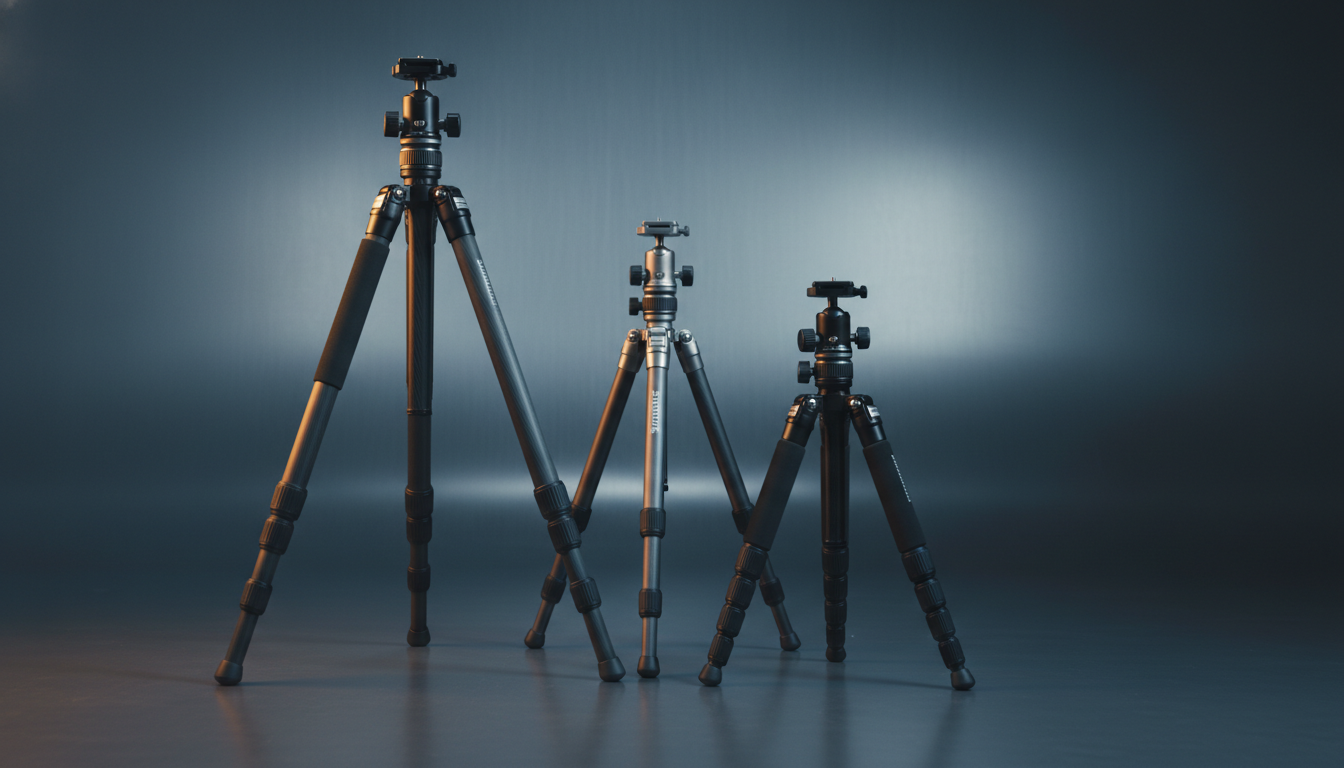
Carbon‑fiber tripods promise the sweet spot of strength and lightness, a combo that matters whether you’re hiking up a ridge or shooting a studio portrait. In this roundup we compared 11 models, spanning a price spread from $98.79 for the Neewer Upgraded 80.7‑inch tripod up to $599.90 for the Peak Design Travel, and offering load capacities from 5 kg on the Sirui 60 to 26.5 lb on the Neewer. The selection covers everything from ultra‑compact 315 mm folded lengths to towering 80.7‑inch heights, so you can match the rig to your shooting style.
The choices fall into three price tiers. The budget tier includes the Neewer, K&F Concept 60‑inch, Sirui AM‑224S (rated 4.8/5) and Sirui 60, delivering sub‑kilogram weights and load capacities up to 5 kg for lightweight mirrorless kits. Mid‑range options such as the Zomei Z669C (4.2/5) and SmallRig AP‑20 add extra height while staying affordable. Premium contenders—K&F Concept X‑Series, SmallRig Heavy Duty, Sirui AM‑324, and the Peak Design Travel—bring higher load capacities and refined features for pros who need maximum stability on the go.
Read on to see how each model balances height, weight, and durability, and find the carbon‑fiber tripod that fits your next adventure.

Neewer Upgraded 80.7-inch Tripod
Offers a max monopod height of 83.8 in, giving serious reach for a $98.79 price tag.
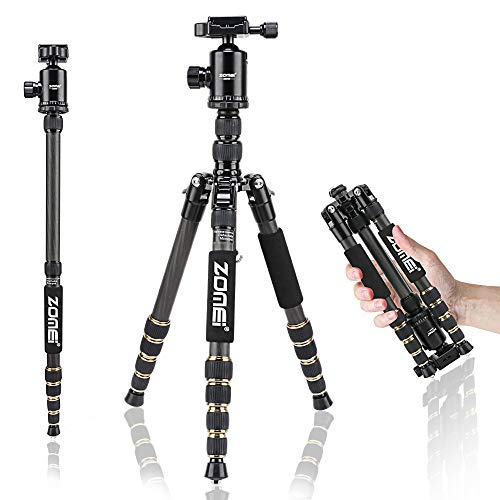
Zomei Z669C
Ideal for photographers who need a compact 5.31 in packed height, and at $124.99 it’s about $26 more than the Neewer.

Sirui AM-224S
Stands out with a 37 mm ball‑head base and 69 mm height, delivering precise control the other two lack.
Also considered
Score Analysis
Key score advantages vs. runner-up (Zomei Z669C)
Price Range
Neewer Upgraded 80.7-inch Tripod
$99.49
Zomei Z669C
$124.99
Sirui AM-224S
$95.20

K&F Concept 60-inch
$99.94

Peak Design Travel
$594.95

Sirui AM-324 32mm
$179.04

SmallRig Heavy Duty Tripod
$119.99

Sirui 60
$109.50

K&F Concept X-Series 68-inch Tripod
$149.99

SmallRig AP-20
$119.20

Benro Mammoth
$319.95
Spec Comparison
TL;DR: The Neewer N55CR carbon‑fiber tripod reaches 80.7 in tall, holds up to 26.5 lb, and folds to 20.5 in, offering a solid budget option for travel shooters.
The standout spec is its maximum tripod height of 80.7 in (205 cm), which out‑reaches every other carbon‑fiber model in this roundup. It also carries a 26.5 lb (12 kg) load capacity and features a reversible two‑section center column that converts to a monopod of up to 83.8 in (213 cm). With four leg sections, a 36 mm ball head, and two built‑in bubble levels, the unit balances reach and stability while staying under 4.4 lb (2 kg).
Compared with the peers, the Neewer's heavier than the K&F Concept 60‑in (≈2.2 lb), Sirui AM‑224S (≈2 lb), Sirui 60 (≈2.1 lb), SmallRig AP‑20 (≈3.3 lb), Zomei Z669C (≈3.2 lb) and the K&F Concept X‑Series (≈3.9 lb). However, its price point of $98.79 means it's cheaper than most, as the Sirui and SmallRig options sit around $119 and the K&F X‑Series tops $149. Its 26.5 lb load capacity exceeds the K&F Concept 60‑in (≈17.6 lb) and Sirui AM‑224S (≈13 lb), matching the SmallRig’s 22–26.4 lb range while staying below the Zomei’s 28‑33 lb ceiling.
Professional reviewers note the removable center column as a fast way to switch to monopod mode, and they praise the large ball head with a quick‑release plate and built‑in bubble levels for precise framing. Everyday users appreciate the included carrying bag, but several comments mention the relatively high minimum tripod height of 26.8 in (68 cm), which can limit low‑angle macro work. Weight listings vary between 3.875 lb and 4.4 lb, a discrepancy that some buyers have flagged.
Additional technical details include an Arca‑type QR plate, three extra 1/4″ screws, a sandbag hook for added stability, and quick‑release twist‑lock leg locks. The telescopic two‑section center column adds versatility, and the 360° panorama ball head offers smooth panning for video.
Pros
Cons
Best for: Budget‑conscious travelers who need a tall, sturdy tripod that can double as a monopod.
Avoid if: You require ultra‑low tripod heights for ground‑level macro work or the lightest possible carry weight.
TL;DR: The Zomei Z669C is a lightweight 5‑section carbon‑fiber tripod that lifts to 60–61.4 in, holds up to 28–33 lb, and folds down to 13–15 in for travel.
This model’s standout spec is its 8‑layer carbon‑fiber legs with a 25 mm maximum diameter, delivering a maximum load capacity of 28–33 lb (15 kg) while keeping the overall weight to just 3.22 lb. The tripod reaches a full height of 60–61.4 in and collapses to a compact 13–15 in, making it a true travel companion.
Compared with the other ten entries, the Z669C sits a bit above the SmallRig AP‑20’s price point and is marginally lighter than that model’s 3.37 lb. It’s heavier than the Sirui AM‑224S, which tips the scales at under 2 lb, but it offers a larger maximum load than the Sirui 60 and K&F Concept 60‑inch options. Its 25 mm leg diameter matches the SmallRig AP‑20, while the K&F Concept X‑Series uses a wider 36 mm head. The Z669C balances a mid‑range price with a solid load rating and a compact folded size.
Everyday users applaud the tripod’s ultra‑light feel and the convenience of the included carrying case, the built‑in retractable spikes, and the quick‑swap monopod conversion. Professional reviewers highlight the solid interlocking tube design and acceptable damping, but they also flag the yaw (lateral) stiffness as a weak point, especially when using longer lenses or extending the center column. Video shooters frequently note the ball head’s limited panning smoothness.
Additional technical touches include a bottom hook for added stability, twist‑lock leg mechanisms, a built‑in bubble level, and a pull‑out button for leg‑angle adjustment. The package measures 5.31 in × 18.50 in × 5.31 in, fitting neatly into most travel bags.
Pros
Cons
Best for: Travel and hiking photographers who need a compact, lightweight tripod with solid load capacity.
Avoid if: You require high lateral rigidity for heavy telephoto lenses or professional studio setups.
TL;DR: The Sirui AM-224S folds to just 315 mm, weighs 900 g, and carries up to 6 kg, making it a feather‑light, ultra‑compact carbon‑fiber tripod that’s perfect for travel but limited by its 1.39 m max height.
The standout dimension is its 315 mm folded length, paired with a 900 g total weight that includes the integrated ball head. With a 5‑section leg design and a maximum load of 6000 g, it balances portability and payload capacity while staying under the kilogram mark.
Compared with its peers, the AM‑224S is noticeably shorter than the Sirui 60’s 364 mm folded height and the K&F Concept’s 350 mm folded length. It also feels lighter than the Sirui 60, which tips the scales at over 2 pounds, and lighter than most aluminum‑leg rivals listed in the roundup. While some competitors offer four leg sections, this model provides five, giving you a bit more flexibility when adjusting height.
Travel photographers and vloggers repeatedly praise the pocket‑sized 31.5 cm profile and sub‑kilogram weight for easy bag stowage. Professionals highlight the sealed twist locks and reversible center column as handy features for macro work. The most common complaints focus on wobble at the 1389 mm maximum height and the relatively thin 10‑22 mm leg tubes, which can flex in wind or under heavier loads.
The ball head sits on a 37 mm base diameter and rises 69 mm, offering dual bubble levels, a 360° panorama rotation and a 90° portrait notch. Anti‑twist pins, a built‑in hex wrench, and a quick‑release plate (30 × 38 mm) round out a feature set that aims to simplify setup on the go.
Pros
Cons
Best for: Travel photographers, vloggers, and macro shooters who need a sub‑kilogram, ultra‑compact tripod.
Avoid if: You want the best value‑per‑dollar in its price range.
“fits in camera bag lens slot, perfect for hiking/macro”
“needs care in wind due to slim tubes”
TL;TD: The K&F Concept 60‑inch carbon‑fiber tripod weighs just 2.20 lb, folds to 350 mm, reaches 1520 mm tall, and carries up to 8000 g, making it a lightweight travel pick at a budget price.
The tripod’s standout spec is its ultra‑light weight—listed at 2.20 lb (1 kg)—combined with a compact folded length of 350 mm, so it slips into a small backpack or carry‑on without hassle. Even fully extended, the max height of 1520 mm (about 60 in) gives you a tall shooting platform for most travel scenarios.
Compared with the other ten models, it’s lighter than the Neewer Upgraded (3.88 lb) and the Zomei Z669C (3.22 lb), yet a touch heavier than the Sirui 60 (2.07 lb). Its five‑section legs match the Sirui AM‑224S and outnumber the Neewer’s four‑section design, while the 8000 g load capacity sits below the Neewer’s 12 kg rating but above the Sirui AM‑224S’s 6000 g limit.
Users repeatedly praise the tripod’s feather‑light feel and the 13.8‑in folded size, calling it ideal for hiking and airline travel. Professional reviewers note the smooth 360° ball head with a single bubble level, but they also flag wobble when the center column is fully extended and mention that the twist‑lock clamps feel less secure than flip‑locks.
Technical details include a 25 mm Arca‑Swiss‑compatible ball head, a detachable monopod that spans 370–1590 mm, a horizontal scale for precise framing, and a cold‑weather foam sleeve on one leg. The leg angle adjusts via a push‑pull button, and the two‑section, 180° reflex center column folds neatly for transport.
Pros
Cons
Best for: Budget‑conscious buyers seeking a reliable entry‑level option
Avoid if: You need maximum stability for heavy telephoto lenses, studio work, or windy outdoor shooting
TL;DR: The Peak Design Travel Carbon Fiber tripod folds to a 2.75‑inch diameter, weighs 2.8 lb, and supports up to 20 lb, making it a premium‑priced but ultra‑portable choice for serious travel shooters.
Its standout spec is its ultra‑compact folded size – the legs collapse to a 2.75 in (7 cm) diameter, the same width as a water bottle, while still offering five leg sections and a load capacity of 20 lb (9.07 kg).
Compared with the other ten tripods in this roundup, the Peak Design Travel is lighter than the Benro Mammoth (4.3 lb) and the SmallRig Heavy Duty model (5.95 lb), and even a touch lighter than the Sirui AM‑324 (3.09 lb). Its maximum height of 60 in matches the Zomei Z669C and sits just below the K&F Concept X‑Series (68 in) and Benro’s 63 in reach. Its load capacity is lower than the heavy‑duty Benro and Sirui units, which list capacities around 39 lb, but it still exceeds the SmallRig AP‑20’s 22–26 lb range.
Customer feedback repeatedly praises the tripod’s portability and the confidence it provides when supporting full‑frame DSLRs with telephoto lenses. Reviewers note the integrated load‑hanging hook and phone‑mount compatibility as handy extras for content creators. On the flip side, some users feel the folded bundle is bulkier than they’d like for ultra‑compact travel, and the single friction ring can make fine‑tuning a bit tricky. Professional reviewers note the vibration‑damping performance – pitch stiffness of 1007.8 Nm/rad and yaw stiffness of 349 Nm/rad – which rivals larger, less portable tripods.
Pros
Cons
Best for: Buyers willing to invest in a proven, high‑quality option
Avoid if: You're shopping on a tight budget — it's priced at $599.90
TL;DR: The Sirui AM-324 offers a sturdy 18 kg load capacity in a lightweight 3.09‑lb carbon‑fiber frame, but its 52‑cm folded height makes it less travel‑friendly than many five‑section rivals.
The standout spec is the 18 kg (≈ 39.7 lb) load capacity, which tops the 16 kg limit of the K&F Concept X‑Series and the 15 kg rating of the Zomei Z669C. Combined with an 8‑layer carbon‑fiber construction and a 32 mm max tube diameter, the tripod balances strength and weight, coming in at just 3.09 lb (1.75 kg for the legs alone, 1.9 kg for the full kit).
Compared with the other ten contenders, the AM‑324 is lighter than the SmallRig Heavy Duty Tripod’s 5.95 lb frame and also lighter than the K&F Concept’s 3.88 lb and the Zomei Z669C’s 3.22 lb. Its four‑section legs are fewer than the Sirui AM‑224S’s five sections, but the added leg‑angle options (22°, 55°, 85°) give it good stability on uneven ground. The folded height of 520 mm (≈ 20.5 in) is shorter than the SmallRig Heavy Duty’s 870 mm (≈ 34 in) but longer than the K&F Concept’s 15.7 in folded length, so it sits in the middle of the portability spectrum.
Reviewers consistently praise the carbon‑fiber legs for a high strength‑to‑weight ratio and note that the blue metal twist locks with anti‑slip rubber pads lock securely even under the full 18 kg load. The bundled AM‑40 Low Gravity Ball Head provides 360° continuous rotation and comes with a rubber‑pad tightening tool, which users say speeds up setup. The most common complaint is the relatively long folded height, which can be a hassle for airline carry‑on limits, and the total kit weight of 1.9 kg is heavier than ultra‑light travel tripods.
Pros
Cons
Best for: Professional photographers and videographers who need a high‑load (up to 18 kg) carbon‑fiber tripod with reliable stability.
Avoid if: You prioritize ultra‑light weight and ultra‑compact folded dimensions for backpacking or airline travel.
“a little long”
TL;DR: The SmallRig Heavy Duty Tripod blends carbon‑fiber lightness (5.95 lb) with a fluid video head and a 10 kg (2204.62 lb) load capacity, delivering tall 185 cm reach for solo creators at $159.99.
What really stands out is the carbon‑fiber leg construction, which keeps the whole kit under 6 lb while still supporting a 10 kg (2204.62 lb) load. The aluminum hydraulic fluid head offers continuously adjustable tilt damping, and the 65 mm bowl adapter lets you mount a wide range of plates. With a pan bar length of 280 mm and a quick‑release plate that’s 105 mm long, the head feels solid yet easy to operate.
Compared with the other ten tripods in this roundup, the SmallRig is heavier than the K&F Concept X‑Series (3.88 lb) and the Sirui AM‑324 (3.09 lb), but it tops many rivals in reach—its extended height of 185 cm beats the K&F’s 68 in maximum and the Sirui AM‑324’s 153 cm limit. Load capacity sits at 10 kg, which is lower than the K&F’s 16 kg and Sirui AM‑324’s 18 kg but higher than the Sirui AM‑224S’s 6 kg. It uses a 3‑section, 2‑2‑1 leg layout, fewer sections than the K&F’s four‑section design, yet the leg diameters (14/24/20 mm) give it a sturdy feel.
Users appreciate how the rope‑lift mechanism and side‑loading quick release make setup almost painless, and the interchangeable spiked and rubber feet adapt to indoor and outdoor surfaces. Professional reviewers praise the smooth tilt damping for cinematic moves, while everyday shooters love the sub‑3 kg carry weight. The main drawbacks are the standard height of 163 cm, which can feel short for tall operators, the fixed pan drag that limits pan‑resistance tweaking, and occasional flex when you load the tripod near its 10 kg limit.
Technical notes: the bowl adapter diameter is 65 mm, the pan bar spans 280 mm (about 11 in), and the quick‑release plate measures 105 mm (4.1 in). The kit includes a carrying case, hex wrench, and a smartphone holder, and it’s covered by a 2‑year warranty.
Pros
Cons
Best for: Solo content creators, YouTubers, vloggers, and mobile videographers who need a portable, stable tripod.
Avoid if: You need advanced pan‑drag customization, taller eye‑level reach without extension, or professional‑grade performance for demanding cinematography.
“really light”
“hype-worthy stability”
TL;DR: The Sirui Traveler X‑III is a 60‑inch carbon‑fiber tripod that folds to 364 mm, weighs about 2.07 lb, and supports up to 10 kg, making it a lightweight travel option with an integrated 360° ball head.
The standout feature is its built‑in 360° panoramic ball/video head, paired with a carbon‑fiber leg construction that keeps the overall weight down to 2.07 lb (≈940 g). With a maximum height of 1520 mm and a minimum height of 190 mm, it covers shooting angles from 190 mm to 1520 mm while still fitting into a compact 364 mm folded profile.
Compared with the other ten tripods in this roundup, the Sirui 60 is lighter than the SmallRig AP‑20, Zomei Z669C, Neewer 80.7‑inch, and K&F Concept X‑Series, all of which tip the scales at over 3 lb. It also offers a higher load capacity than the Sirui AM‑224S (6 kg) and the K&F Concept 60‑inch (8 kg), while staying in the same price tier as those models. Its maximum height matches the K&F Concept 60‑inch but exceeds the Sirui AM‑224S’s 1389 mm reach.
User feedback consistently praises the ultra‑light build and the smooth, vibration‑free panning thanks to the integrated head. Reviewers note the quick‑lock leg mechanism and the 2‑second leg‑extension time as real‑world time‑savers. The only recurring gripe cites occasional back‑order delays and the perception that the tripod doesn’t stretch its dollar value as far as some similarly priced rivals.
Technical details that matter on‑the‑go include an invertible aluminum center column, Arca‑Swiss‑compatible quick‑release plates (60×49 mm, 40 g; 30×38 mm, 15 g), a 43 mm base diameter, and a built‑in bubble level. The twist‑lock legs, 5‑section design, and 1/4″ thread round out a feature set aimed at travel photographers and vloggers.
Pros
Cons
Best for: Entry-level buyers or those on a tight budget
Avoid if: You want the best value‑per‑dollar in its price range
TL;DR: The K&F Concept X-Series 68‑inch carbon‑fiber tripod offers a lightweight 3.88 lb build, 68 in maximum height and a 16 kg load capacity, making it a solid mid‑range choice for travel shooters.
This model reaches a full‑extension of 68 in, which is taller than many compact travel tripods and still fits into a folded length of roughly 15.7–16.5 in. At 3.88 lb (1760 g) the carbon‑fiber construction keeps the kit ultra‑light, while the 28 mm full‑tube design adds rigidity.
Compared with peers, it’s lighter than the SmallRig Heavy Duty Tripod (about 5.95 lb) but heavier than the Zomei Z669C (3.22 lb). Its 16 kg load capacity outstrips the Zomei’s 15 kg rating and the SmallRig AP‑20’s 10–12 kg range, giving you extra headroom for larger DSLR‑lens combos. The four‑section legs have fewer sections than the five‑section design on the Sirui AM‑224S, which may affect low‑angle stability.
Users consistently praise the tripod’s portability and the buttery‑smooth operation of the 36 mm CNC metal ball head, noting that the rapid‑lock center column and ballast hook make quick adjustments easy. Common complaints focus on the limited ground‑level height results from the center column and the twist‑style leg locks that feel a bit stiff until you get used to them.
Additional technical touches include a 360° pan ball head with a single release knob, Arca‑type 36 mm mount, and reversible center column for low‑angle shots. The tripod also converts to a 59.1 in monopod, adding versatility for video work or tight‑space shooting.
Pros
Cons
Best for: Travel photographers, vloggers, and hybrid shooters who need a lightweight yet sturdy tripod for on‑the‑go work.
Avoid if: You need ultra‑heavy video rigs or a true ground‑level tripod without a center column.
TL;DR: The SmallRig AP‑20 is a carbon‑fiber travel tripod that folds to 40.3 cm, weighs just 1.49 kg, and can carry up to 12 kg, making it a lightweight, versatile choice for on‑the‑go shooters.
What really stands out is the combination of a 158 cm (62.2 in) maximum height with a folded length of only 40.3 cm (15.8 in). At 1.49 kg (3.28 lb) the tripod is feather‑light, yet it supports a 10–12 kg (22–26.4 lb) payload on the legs and an 8 kg (17.6 lb) load on the integrated Arca‑Swiss ball head.
Compared with the other carbon‑fiber options in this roundup, the AP‑20 is lighter than the Sirui 60, which tips the scales at about 2.07 lb, and it has fewer leg sections than the Sirui AM‑224S’s five‑section design. Its price sits in the mid‑tier range, so it’s neither the cheapest nor the most premium choice among the eleven models.
Reviewers consistently praise the tripod’s portability and the quick‑setup feel of the flip‑lock legs. Professionals note the detachable, reversible center column and the built‑in panoramic ball head as handy for low‑angle or vlog shots. Some users, however, mention that the ball head feels small for very heavy rigs and that the flip‑lock mechanism can be less precise than twist‑lock alternatives.
Additional technical details include a 25 mm proximal leg diameter, three leg‑angle stops (23°, 55°, 85°), and 1/4‑20 threaded holes on each leg for accessories. The ball head offers a full 360° pan range, 90° tilt, and a graduated horizontal scale, all on a compact 2.5 in × 4 in (64 mm × 102 mm) platform.
Pros
Cons
Best for: Travel photographers, videographers, vloggers, and hikers who need a lightweight, compact tripod with solid payload capacity.
Avoid if: You require a larger, more robust ball head for heavy‑duty cinema or broadcast rigs that exceed 12 kg.
TL;DR: The Benro Mammoth carbon‑fiber tripod offers a 39.7 lb load capacity, 63 in maximum height and twist‑lock legs, but its $319.95 price and 4.3 lb weight place it in the premium tier.
The standout spec is its 39.7 lb load capacity paired with a 63 in maximum height, using carbon‑fiber legs that collapse to a 22.4 in closed length. With four leg sections, twist‑lock mechanisms and a 75 mm interchangeable bowl, the Mammoth balances sturdy construction with relatively compact packing.
At 4.3 lb, the Mammoth is heavier than the Sirui AM‑324 (≈3.09 lb) and the K&F Concept X‑Series (≈3.88 lb) but lighter than the SmallRig Heavy Duty Tripod (≈5.95 lb). Its 63 in height exceeds the Sirui’s 1534 mm and Zomei Z669C’s 60–61.4 in, while falling short of the K&F’s 68 in reach. The 39.7 lb payload tops the Sirui’s 18 kg rating and outstrips the load capacities of the Zomei (28–33 lb) and SmallRig AP‑20 (10–12 kg).
Professional reviewers praise the Mammoth’s high payload and quick‑setup twist locks, noting the interchangeable 75 mm bowl and three 3/8‑16″ accessory mounts as handy for video rigs. Users, however, point out that the advertised payload can feel optimistic under extreme conditions and that the lack of an integrated bubble level means a separate tool is needed for precise leveling.
Pros
Cons
Best for: Those prioritizing quality and willing to pay for premium performance
Avoid if: You're shopping on a tight budget — it's priced at $319.95
Breakdown
Neewer Upgraded 80.7-inch Tripod
Pros
Zomei Z669C
Pros
Cons
Sirui AM-224S
Pros
Cons
K&F Concept 60-inch
Pros
Cons
Based on scoring data and product specs
Personalized picks
Best Overall Pick
Neewer Upgraded 80.7-inch Tripod
Best Budget PickBest for: Budget-conscious buyers seeking a reliable entry-level option
Zomei Z669C
Best for: Most users seeking a balanced, mainstream option
$124.99+$25.50 vs winner
Skip Benro Mammoth if…
You're shopping on a tight budget — it's priced at $319.95
The Neewer Upgraded 80.7‑inch Tripod wins the carbon‑fiber category. It tops the list at $98.79, carries a 4.6‑star rating from 4,897 reviewers, and can support up to 26.5 lb of gear. Its max height of 80.7 in and a compact folded length of 20.5 in make it versatile for both indoor shoots and outdoor setups, while the included carrying bag adds convenience. The 360° panorama ball head with an Arca‑type QR plate and quick‑release twist locks lets you mount and adjust your camera in seconds.
Zomei's Z669C takes the runner‑up spot, ideal if you need extra leg sections and a higher load capacity for heavier lenses. With five carbon‑fiber sections, it reaches 60–61.4 in tall, handles up to 28–33 lb, and still weighs just 3.22 lb. Built‑in spikes, a twist‑lock system and an included carrying case round out a solid all‑rounder for travel photographers, and the removable center post lets you convert it to a monopod for tight‑space shooting.
For those who prefer a clear budget tier, the Neewer remains the best‑value choice. The mid‑range sweet spot is the Zomei Z669C, offering the extra height range and load margin at $124.99. If premium build and travel‑ready ergonomics matter most, the Peak Design Travel stands out as the top premium pick at $599.90.
Pick the Neewer Upgraded 80.7‑inch Tripod today and get reliable carbon‑fiber performance without breaking the bank.
The Neewer Upgraded 80.7‑inch Tripod lists a maximum load capacity of 26.5 lb (12 kg), which is higher than any other model mentioned. This makes it the best choice for heavy DSLR or mirrorless setups.
No reviews yet — be the first to share your experience.
Please sign in to leave a review