⚡ Quick Answer
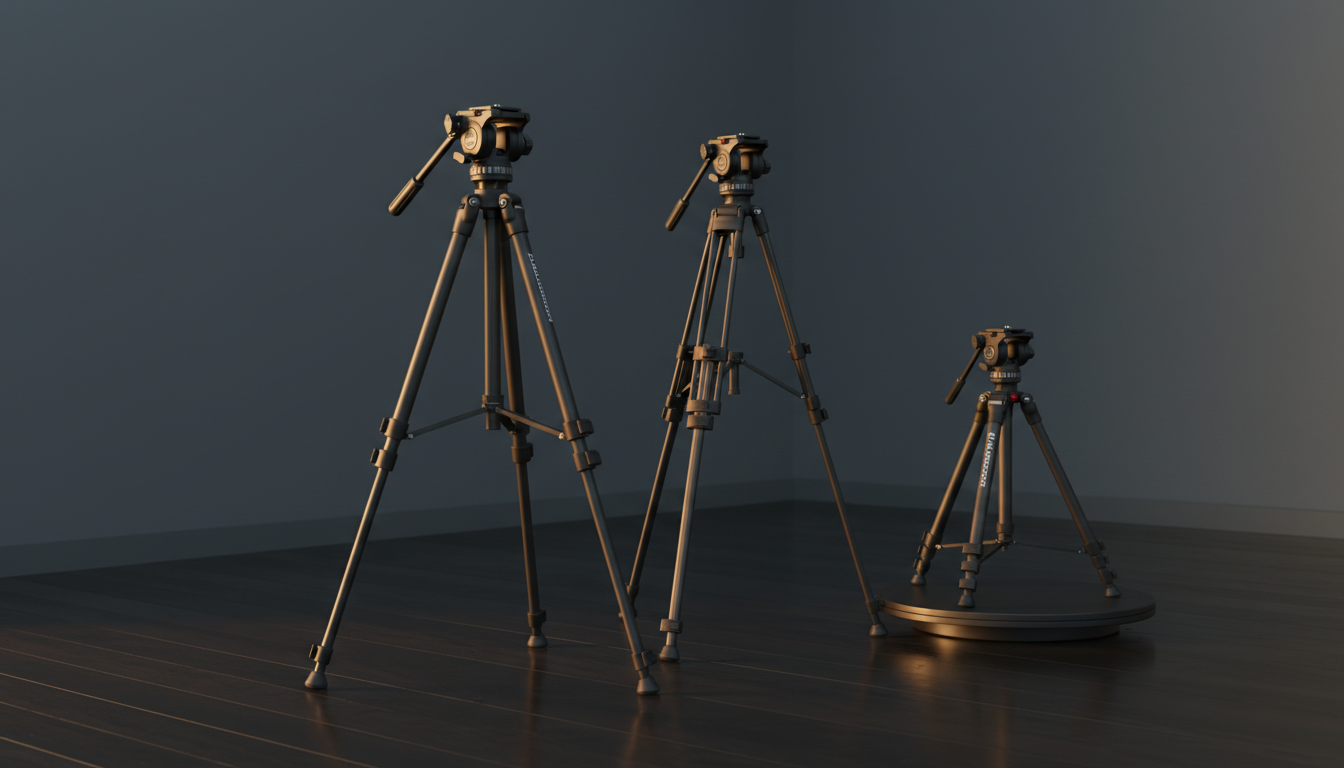
If you shoot video, a sturdy tripod with a fluid head is essential for smooth pans and steady shots. We compared 10 models ranging from compact travel rigs to heavyweight carbon‑fiber units, so you can match a tripod to your shooting style and budget.
The selection spans three price tiers. Budget‑friendly choices like the K&F Concept 72‑inch ($69.89, 4.6/5) and the Magnus VT‑300 sit under $80, while mid‑range options such as the K&F Concept 90‑inch ($129.99, 4.6/5) and SmallRig AD‑01 ($159.99, 4.5/5) offer taller maximum heights and higher load capacities. Premium models—including the SmallRig Heavy Duty, Sirui AVT‑12, SmallRig FreeSpeed and Manfrotto Befree Live—push the price ceiling to $213.74 and provide professional‑grade fluid heads, carbon‑fiber legs, and load limits up to 10 kg.
Below you’ll find a breakdown of each tripod’s key specs, user feedback, and ideal use cases, helping you decide which rig will keep your footage buttery smooth for your projects.

K&F Concept 90-inch Tripod
Its 28 mm center‑column diameter provides solid stability, underpinning the high rating and strong brand confidence.

K&F Concept 72-inch Tripod
Ideal for budget‑conscious creators, it’s $69.89—about $60 less than the Best Overall—while still delivering solid performance.

SmallRig AD-01
With an 889 mm folded length, you can transport a full‑height 890 mm tripod in a compact package, a size advantage the other picks lack.
Also considered
Score Analysis
Key score advantages vs. runner-up (K&F Concept 72-inch)
Price Range
K&F Concept 90-inch Tripod
$129.99
K&F Concept 72-inch Tripod
$69.99
SmallRig AD-01
$127.99

Manfrotto Befree Live
$213.74

SmallRig Heavy Duty Tripod
$119.99

Magnus VT-300
Out of Stock
Sirui AVT-12
$169.00

SmallRig FreeSpeed
$167.99

Slik U9000
$69.95

Neewer 79-inch Tripod
$79.99
Spec Comparison
TL;DR: The K&F Concept 90‑inch tripod reaches a towering 2310 mm, supports 10 kg, and stays under 5 lb, making it a tall yet portable choice for video creators.
This tripod’s standout spec is its 2310 mm maximum height, which the magnesium‑aluminum alloy frame achieves while weighing just 4.94 pounds (2241 g). A 28 mm center‑column diameter adds rigidity, and a 10 kg load capacity lets you mount most DSLR‑mirrorless combos without strain.
Compared with the other nine options, the K&F is lighter than the Neewer 79‑inch model (over 12 lb) and the SmallRig AD‑01 (8.8 lb), yet a bit heavier than the Slik U9000 (3.9 lb) and the K&F 72‑inch variant (around 3.6 lb). Its folded length of 550 mm measures shorter than the SmallRig AD‑01’s 889 mm yet longer than the Magnus VT‑300’s 26.5 in. In height, it outstretches the Magnus (163 cm) and the Sirui AVT‑12 (73 in), positioning it among the tallest in the lineup.
Professional reviewers say the magnesium‑aluminum construction keeps the 2.3 m reach under 2 kg while staying rigid. Users love the reversible center column that tilts 0‑120° and spins 360°, plus the fluid head’s smooth panning, quick‑release plate, and built‑in bubble level. The detachable monopod doubles as a walking stick, a handy perk for on‑the‑move shoots. However, several reviewers noted the box omits a panoramic arm, and at full extension the tripod can feel heavier than expected, often requiring an external counterweight for perfect stability.
Technical extras include a 360° rotating center column, a counterweight hook for added balance, and the option to swap between the FH‑03 fluid head or the BH‑28L 28 mm metal ball head. The quick‑release plate speeds up camera changes, and the built‑in bubble level helps keep shots level without a separate tool.
Pros
Cons
Best for: Content creators, vloggers, and photographers who need tall, versatile support for overhead, flat‑lay, or macro video work.
Avoid if: You prioritize ultra‑light travel gear or require a built‑in panoramic arm for seamless panoramas.
“very very nice”
“BEAST”
TL;DR: The K&F Concept 72‑inch Tripod reaches 1850 mm tall, holds up to 8 kg, weighs just 3.64 lb and folds to 440 mm, making it a compact, high‑capacity choice for budget‑focused shooters.
What really stands out is the 1850 mm (72 in) maximum height combined with an 8 kg load capacity, letting you frame eye‑level shots without extra extensions while still supporting most DSLR‑mirrorless kits. The ball head rotates a full 360°, and the twist‑lock legs lock securely in place.
At 3.64 lb, it’s lighter than the Slik U9000’s 3.9 lb and noticeably lighter than the Magnus VT‑300’s 4.5 lb, while its 440 mm folded length is far shorter than Magnus’s 26.5‑inch (≈673 mm) folded size. Compared with the bulkier Neewer 79‑inch model (12.88 lb, 910 mm folded), the K&F tripod is far more portable, yet it still offers a higher load capacity than the Slik (2 kg) and Magnus (6.8 kg) units.
Reviewers consistently note the solid aluminum construction that holds up to 8 kg without flexing, delivering the stability needed for video pans. Professionals praise the smooth 360° ball head for precise positioning, while everyday users appreciate the included phone holder and the 32‑ft remote‑control range. The trade‑off is the added weight compared with carbon‑fiber alternatives, and the twist‑lock mechanism can feel slower than lever‑locks when you need rapid adjustments.
Pros
Cons
Best for: Budget‑conscious buyers seeking a reliable entry‑level option
Avoid if: You have limited desk space or need portability
“very very nice”
“BEAST”
TL;DR: The SmallRig AD-01 packs a 75 mm fluid head, 8000 g load capacity and a 889 mm folded length, delivering solid stability for video work at a premium price.
The AD-01’s standout feature is its half‑ball fluid head with a 75 mm diameter, offering 360° pan and smooth tilt damping while supporting a head load of 6000 g. It can carry up to 8000 g of gear even though the tripod itself weighs 8.8 pounds, and it folds down to a compact 889 mm length for transport.
Compared with the nine other options, the AD-01 is heavier than most aluminum and carbon‑fiber models, but it matches the load capacity of the Neewer 79‑inch tripod and exceeds the 6.8 kg capacity of the Magnus VT‑300. Its price aligns with the SmallRig Heavy Duty Tripod, placing it in the premium tier while offering a stronger fluid head than the lighter Manfrotto Befree Live.
User feedback highlights the tripod’s excellent balance and the fluid head’s cinematic motion, with professional reviewers noting the dual‑mode quick‑release that works with Manfrotto plates and DJI RS 2/3/3 Pro gimbals. However, owners mention the plastic leg latch feel and occasional need to tighten tension under full load, and they point out inconsistent reporting of the tilt range.
Additional technical details include a height range of 85–186 cm, three‑section flip‑lock legs, built‑in bubble level, integrated wrench, and a carry bag with shoulder strap. The tripod also provides both 1/4‑20 and 3/8‑16 accessory threads on the plate and head base.
Pros
Cons
Best for: Professional videographers, photographers, vloggers, and DJI gimbal users who need a portable, heavy‑duty tripod with a fluid head.
Avoid if: You need an ultra‑lightweight gimbal‑only tripod, require extreme low‑angle tilt beyond –60°, or have limited desk space.
“really well built”
“light”
TL;DR: The Manfrotto Befree Live packs a fluid video head, 4 kg payload and a 15.7‑inch folded size into a 1.75‑lb aluminum tripod, ideal for travel‑focused vloggers despite a modest 1.5‑m max height.
The standout feature is its integrated MVH400AH fluid head that delivers 360° pan and a tilt range of –90° to +65°, all while supporting up to 4000 g (4 kg) of gear. The tripod folds to just 399 mm (about 15.7 in), and you can set the leg angles to 22°, 54° or 89° with a single‑finger selector, making rapid setup a breeze.
Compared with the other nine options, the Befree Live is lighter than the SmallRig FreeSpeed (≈7.5 lb) and Sirui AVT‑12 (≈7.3 lb), but heavier than the Slik U9000 (≈3.9 lb) and Magnus VT‑300 (≈4.5 lb). Its 1510 mm maximum height is shorter than the Sirui AVT‑12’s 73 in and the K&F Concept’s 2310 mm, yet taller than the SmallRig AD‑01’s 890 mm. In terms of payload, its 4 kg capacity is lower than SmallRig AD‑01’s 8000 g (8 kg) and SmallRig FreeSpeed’s 8 kg head load, positioning it as a mid‑range choice for lighter camera kits.
User reviews repeatedly praise the ultra‑compact footprint and sub‑4‑lb weight for backpack travel, while professional reviewers note the fluid drag system’s smooth 360° pan and precise tilt control. The built‑in bubble level and 501PL sliding quick‑release plate further speed up framing. However, several owners mention that the 1510 mm max height can feel limiting for taller subjects, and the small form factor may wobble in windy conditions.
Additional technical touches include selectable leg angles (22°, 54°, 89°), an aluminum construction that balances durability with weight, and an operating temperature range from –30 °C to 60 °C, ensuring reliable performance in most environments.
Pros
Cons
Best for: Hobbyist videographers, vloggers, and independent creators who need a lightweight, travel‑ready tripod with a built‑in fluid head.
Avoid if: You require a tall maximum height, heavy‑duty payload, or are on a tight budget.
“Perfect for those on the go... under 4 lbs, suitable for travel, lever‑locks dependable and simple.”
“Compact, efficient... lightweight for travel, worth every penny.”
TL;DR: The SmallRig Heavy Duty Tripod offers a carbon‑fiber leg system, a fluid video head with adjustable tilt damping, and a 10 kg load capacity, all in a compact, travel‑ready package.
This tripod’s standout spec is its carbon‑fiber leg construction, keeping the total weight to just 5.95 lb while still supporting a 10 kg (10000 g) load. The fluid head provides continuously adjustable tilt drag and a fixed pan drag, and the maximum extended height reaches 1850 mm, with a standard height of 1630 mm.
Compared with peers, it's heavier than the Manfrotto Befree Live (1.75 lb) but lighter than SmallRig’s AD‑01 model (8.8 lb). Its 10 kg load capacity matches the K&F Concept 90‑inch Tripod and exceeds the Manfrotto’s 4 kg payload, while still falling short of the Sirui AVT‑12’s 33 lb rating. The 1850 mm reach is taller than the Slik U9000’s 1499 mm full‑extension height, yet shorter than the Sirui’s 73 in (≈1854 mm) maximum.
Reviewers consistently praise the tripod’s portability – the kit’s net weight is only 2800 g and it folds to a compact 870 mm length, making it easy to carry for solo shoots. Reviewers frequently mention the quick‑lift rope and interchangeable spiked/rubber feet for fast setup and versatile ground contact. On the downside, users note that the 1630 mm standard height can feel low for eye‑level framing, and the fixed pan drag limits advanced panning techniques. A few reports mention slight flex when the full 10 kg capacity is used.
Additional technical details include a 65 mm bowl adapter that fits 501PL plates, a 280 mm pan bar, and a 105 mm side‑loading quick‑release plate. Tilt range spans +90° to –50°, and the head’s drag can be tuned continuously, offering smooth motion for video work.
Pros
Cons
Best for: Solo content creators, vloggers, and mobile videographers who value lightweight carbon‑fiber construction and a smooth fluid head.
Avoid if: You need higher maximum height, adjustable pan drag, or professional‑grade stability for heavy‑load cinematography.
“really light”
“hype-worthy stability”
TL;DR: The Magnus VT-300 offers a built‑in 360° fluid head, 6.8 kg load capacity, and folds to 26.5 in, all for $79.95, making it a solid entry‑level video tripod.
The standout feature is the integrated two‑way fluid head that swivels a full 360° and provides independent pan and tilt locks, letting you achieve smooth panning shots. It supports cameras up to 6.8 kg and reaches a maximum height of 64.3 in while its minimum height is 25 in, giving you a versatile height range for most shooting angles.
At 4.5 lb, the VT‑300 is heavier than the 3.9 lb Slik U9000 but far lighter than the 12.88 lb Neewer 79‑inch Tripod. Its folded length of 26.5 in is longer than the Neewer’s 910 mm (≈35.8 in) but shorter than the K&F Concept 90‑inch’s 550 mm (≈21.7 in) when compacted. Load‑capacity wise, Magnus tops out at 6.8 kg, which is lower than the 8 kg capacity of both the Neewer and K&F Concept 72‑inch models, yet still sufficient for most entry‑level DSLRs and camcorders.
Users consistently praise the fluid head’s smooth motion and the foam‑padded pan bar that stays comfortable during long panning sessions. Professional reviewers note the head’s simplicity as a benefit for beginners, while also pointing out the non‑illuminated bubble level doesn't read well in dim settings and the lack of spiked feet limits stability on uneven terrain. The aluminum construction keeps the tripod lightweight, and the included carry case with shoulder strap adds portability for on‑the‑go shoots.
Pros
Cons
Best for: Budget‑conscious buyers seeking a reliable entry‑level option
Avoid if: You need heavy‑rig support, advanced fluid‑head drag control, or outdoor stability on uneven terrain
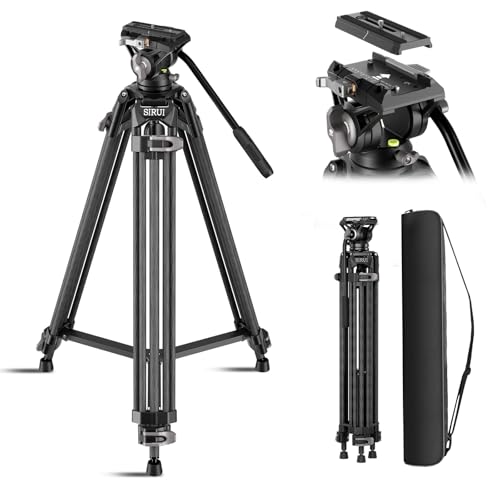
TL;DR: The Sirui AVT‑12 is a carbon‑fiber, fluid‑head tripod that reaches 73 in tall, carries up to 33 lb, and earns a 4.6‑star rating for its solid build—at a $199 price tag.
The standout feature is its 360° pan range combined with a fluid head that tilts from –60° to +90°, giving you smooth motion for video shoots. Built from carbon fiber, the tripod extends to a maximum height of 73 in while folding down to a compact 35.4 in for transport.
At roughly 7.3 lb, the AVT‑12 is lighter than the SmallRig FreeSpeed (about 7.5 lb) but considerably heavier than the Manfrotto Befree Live, which weighs under 2 lb. Compared with the Neewer 79‑inch model that tops 12.9 lb, Sirui feels more manageable on‑the‑go. Its $199 price places it in the premium tier, so it’s pricier than several aluminum‑based alternatives in the roundup.
User reviews frequently praise the sturdy carbon‑fiber construction and the built‑in hex key that eliminates the need for extra tools. Reviewers also note the fluid head’s smooth operation, especially for handheld‑style video work. The main complaint centers on the higher price point, which some buyers feel is steep for a tripod that, while sturdy, lacks the ultra‑light weight of some competitors.
Additional technical touches include a one‑step quick‑release plate that works with DJI RS series plates and standard 1/4" / 3/8" mounting threads. Sirui backs the AVT‑12 with a six‑year manufacturer warranty, underscoring confidence in its durability.
Pros
Cons
Best for: Those prioritizing quality and willing to pay for premium performance
Avoid if: You're shopping on a tight budget — it's priced at $199.00
TL;DR: SmallRig FreeSpeed offers a carbon‑fiber, 10 kg‑capacity fluid‑head tripod with ultra‑fast single‑action leg deployment, but its 99 cm folded length and plastic latches make it less travel‑friendly.
The FreeSpeed’s standout spec is its 10 kg load capacity paired with an 8 kg head load limit, letting you mount heavier camera rigs without strain. Its carbon‑fiber legs keep the overall weight to 3.7 kg (about 7.5 lb), and the single‑action knob lets you extend the legs in one smooth motion. The fluid head provides a full 360° pan and a tilt range of +90° / -60°, while an adjustable damping knob lets you fine‑tune smoothness for panning shots.
Compared with the other nine tripods, the FreeSpeed is heavier than the Manfrotto Befree Live’s 1.75 lb frame and lighter than the Neewer 79‑inch’s 12.88 lb build, placing it in the mid‑weight range. Its 10 kg capacity exceeds the Manfrotto’s 4 kg payload and matches the K&F Concept’s 10 kg rating, while surpassing the Sirui AVT‑12’s 33 lb (≈15 kg) limit in raw kilogram terms. However, the 99 cm folded length is longer than the Manfrotto’s 399 mm and the K&F’s 550 mm, making the FreeSpeed bulkier than many travel‑oriented options.
User feedback repeatedly highlights the ultra‑fast one‑lever leg deployment as a major time‑saver on set, and reviewers note the carbon‑fiber construction feels both sturdy and relatively lightweight. Professional reviewers also praise the adjustable fluid‑head damping for precise pan and tilt control. On the downside, several users mention the plastic leg latches feel less premium than metal alternatives, and the longer folded size can be cumbersome for on‑the‑go shooting.
The tripod includes interchangeable wide and spike feet for varied terrain, a 3/8" (10 mm) thread on the handle for accessories, and a padded carrying bag for transport. The handle length ranges from 23 cm to 36 cm, and the 75 mm bowl diameter offers a solid base for the fluid head.
Pros
Cons
Best for: Those prioritizing quality and willing to pay for premium performance
Avoid if: You're on a tight budget or only need basic functionality
“drop all the way to the ground”
TL;DR: The Slik U9000 offers a fluid‑effect 3‑way head, geared center column and a 1.5 m maximum height while staying under 2 kg, making it a lightweight, budget‑friendly option for lightweight cameras.
The standout feature is its fluid‑effect 3‑way pan‑and‑tilt head with 360° pan and 90° tilt, paired with a geared rack‑and‑pinion center column that extends an additional 300 mm for fine height tweaks. The tripod reaches a full‑extension height of 1499 mm and folds down to 589 mm, fitting easily into a backpack. Its aluminum‑alloy legs weigh 1769 g (about 3.9 lb) and can support up to 2041 g, which translates to roughly 2.04 kg of gear.
Compared with the other nine models, the U9000 is heavier than the K&F Concept 72‑inch (1650 g) but lighter than the Neewer 79‑inch (12.88 lb) and SmallRig AD‑01 (3992 g). Its folded length of 589 mm is longer than the K&F Concept 72‑inch’s 440 mm yet considerably shorter than the SmallRig Heavy Duty’s 870 mm compact length. While its 2.04 kg load capacity is solid for mirrorless bodies, it falls short of the 8 kg‑plus capacities seen in most peers, such as the K&F Concept 90‑inch (10 kg) and Sirui AVT‑12 (≈15 kg).
Reviewers consistently praise the tripod’s lightweight aluminum build and the smooth, “fluid‑like” motion of its head, noting that the geared column makes precise height adjustments easy on location. Everyday users appreciate the quick‑deploy flip‑lock legs and the rubberized 1/4″‑20 quick‑release plate, which helps keep the camera steady on uneven surfaces. The main criticism revolves around the modest 2.04 kg load limit, which some photographers find restrictive for heavier DSLR rigs or larger lenses.
Additional technical details include 23 mm leg diameter, 3‑section leg design, and rubber feet with twist‑out metal spikes for added stability on soft ground. The integrated center brace adds rigidity, and the head’s single handle simplifies panning during video shoots.
Pros
Cons
Best for: Entry‑level buyers or those on a tight budget
Avoid if: You need powerful performance or professional‑grade features
TL;DR: The Neewer LL38 offers a 2000 mm maximum height, 8 kg load capacity, and a fluid head with 360° pan, but its 12.88 lb weight makes it less portable than many rivals.
This tripod’s standout spec is its 2000 mm (78.7 in) maximum height, letting you achieve eye‑level shots without a tall extension column. The fluid head provides a full 360° horizontal pan and a tilt range of –70° to +90°, which professionals note delivers smooth motion for video pans and tilts.
Compared with the other nine models, the Neewer is considerably heavier than the Magnus VT‑300 (about 4.5 lb) and the Slik U9000 (around 3.9 lb), yet its 8 kg load capacity exceeds the Magnus’s 6.8 kg and matches the K&F Concept 72‑inch and SmallRig AD‑01, both rated at 8 kg. Its 2000 mm height outstrips the Magnus (64.3 in) and Slik (1499 mm) but falls short of the K&F 90‑inch’s 2310 mm reach.
Reviewers praise the one‑step quick‑lock leg system for rapid height changes, and the built‑in bubble level helps keep the frame level on uneven surfaces. However, the 12.88 lb weight draws criticism from anyone needing a lightweight travel setup, and the 4.1‑star rating from 201 reviews sits below the average for comparable video tripods.
Pros
Cons
Best for: Intermediate videographers or photographers who need a tall, stable platform on a modest budget.
Avoid if: You require an ultra‑light travel tripod or a professional‑grade system with higher load capacity.
“This product doesn't have any reviews yet.”
Breakdown
K&F Concept 90-inch Tripod
Pros
K&F Concept 72-inch Tripod
Pros
SmallRig AD-01
Pros
Manfrotto Befree Live
Pros
Cons
Based on scoring data and product specs
Personalized picks
Best Overall Pick
K&F Concept 90-inch Tripod
Best OverallBest for: Most users looking for a well-reviewed, reliable mainstream option
K&F Concept 72-inch Tripod
Best for: Budget-conscious buyers seeking a reliable entry-level option
$69.99-$60.00 vs winner
Skip Neewer 79-inch Tripod if…
You need advanced features or professional-grade performance
The K&F Concept 90‑inch Tripod takes the top spot thanks to its 4.6‑star rating from 1,658 reviewers, a solid 10 kg load capacity and a dedicated fluid head (FH‑03) that offers 360° panning and a built‑in bubble level. At a maximum height of 2310 mm it gives you plenty of reach for video work, while the 4.94‑pound magnesium‑aluminium frame stays sturdy enough for smooth pans.
Meanwhile, the runner‑up K&F Concept 72‑inch Tripod shines when you need a compact, travel‑friendly setup for on‑the‑go vlogging. Weighing just 3.64 pounds and folding down to 440 mm, it slips into a backpack easily, and it comes with a phone holder, two quick‑release plates and a monopod conversion—perfect for quick location changes.
Looking at the budget tier, the K&F Concept 72‑inch remains the best value, delivering solid 8 kg capacity and versatile accessories at $69.89. For a premium alternative, the Manfrotto Befree Live stands out with its professional‑grade construction and fluid head, catering to creators who need top‑level performance despite the higher $213.74 price tag.
Secure smooth video stability with the K&F Concept 90‑inch Tripod.
The K&F Concept 90‑inch Tripod lists a load capacity of 10 kg, which is higher than the 8 kg limit of the K&F Concept 72‑inch, the 8 kg of the SmallRig AD‑01, and the 10 kg rating of the SmallRig Heavy Duty. This makes it the top choice for heavier rigs.
No reviews yet — be the first to share your experience.
Please sign in to leave a review