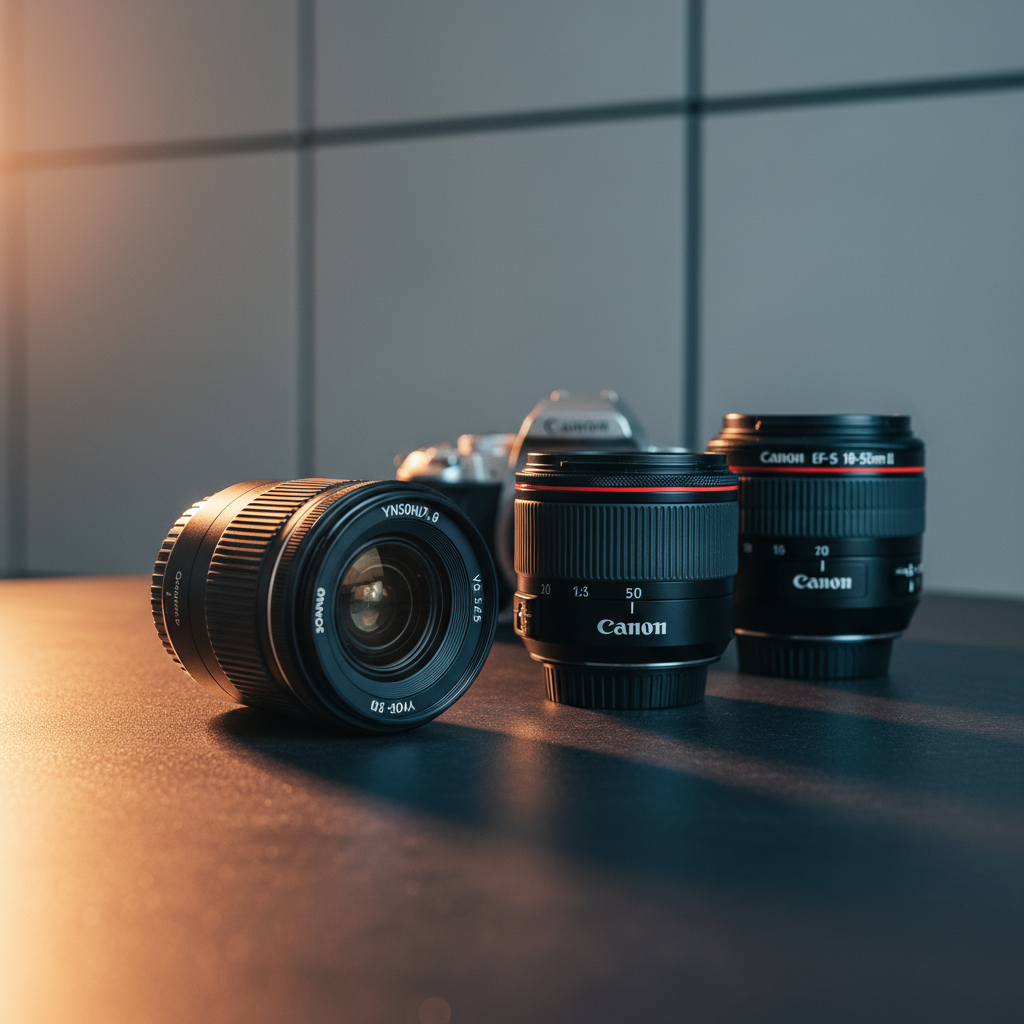
Choosing the right Canon EF‑mount lens can feel overwhelming, especially when you’ve got 14 options on the table. To make things easier, we’ve grouped the lineup into three price tiers that match common shooting needs. The budget tier packs a punch with the Yongnuo YN50mm f/1.8 at $82.00 (4.5‑star rating from 5,340 reviews) and the Lightdow EF85mm f/1.8 for $96.99, both ultra‑light and fast. Mid‑range choices include the Canon EF‑S 18‑55mm II at $139.94 and the Canon EF 50mm f/1.8 at $169.00 (4.8‑star rating from 18,346 reviews), offering versatile focal lengths and solid build quality. Premium offerings such as the Meike MK‑00835CE at $169.99, the Samyang SY135M‑C at $429.00, and the Zeiss Classic Planar 50mm at $599.00 bring premium optics and specialist features for demanding work.
For street and travel photographers who value a discreet, lightweight prime, the Yongnuo 50mm f/1.8 wins the budget crown. Those needing a flexible everyday zoom should look at the Canon EF‑S 18‑55mm II, the clear mid‑range favorite. Portrait and low‑light specialists will gravitate toward the premium Zeiss Planar 50mm, whose 9‑blade aperture and all‑metal build deliver classic rendering. The Tokina AT‑X 120 AF PRO DX, lacking a listed price, sits as a niche ultra‑wide option for wide‑angle enthusiasts. Below we’ll break down each category and show why these lenses earned their spots.
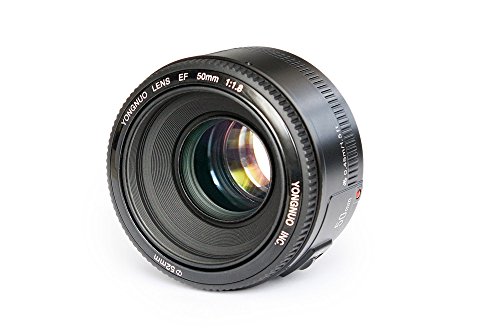
Yongnuo YN50mm F1.8 Canon
Its compact 83 mm height and 83 mm length make it lightweight and easy‑to‑carry, an entry‑level lens.

Canon EF 50mm f/1.8
It's ideal for enthusiasts wanting a proven, high‑quality prime; it costs about $87 more than the Yongnuo budget option.

Canon EF-S 18-55mm II
Offers a versatile 18‑55 mm zoom in a compact 68.5 mm diameter body, covering a range the fixed‑focus picks don’t.
Also considered
Score Analysis
Key score advantages vs. runner-up (Canon EF 50mm)
Price Range
Yongnuo YN50mm F1.8 Canon
$82.00
Canon EF 50mm f/1.8
$169.00
Canon EF-S 18-55mm II
$142.99

Yongnuo YN35mm F2 Canon
$106.00

Meike MK-00835CE
$169.99

Samyang SY135M-C
$416.68

Lightdow EF85mm f/1.8
$96.99

Tokina AT-X 120 AF PRO DX
-$0.01

Zeiss Classic Planar 50mm
$599.00
Meike 85mm f/1.8
$169.98

Jintu 85mm F1.8
$95.99

Yongnuo YN50mm F1.8 II Canon
$99.00

Lightdow 420-800mm F8.3
$67.99

Jintu 420-1600mm
$94.99
Spec Comparison
TL;DR: The Yongnuo YN50mm f/1.8 Canon lens packs a fast f/1.8 aperture, 7‑blade circular diaphragm and a feather‑light 0.2625 lb body into a compact 83 mm × 80 mm package for just $82.
This lens’s standout spec is its maximum aperture of f/1.8, which lets you shoot in low light and achieve shallow depth of field. Coupled with a 7‑blade circular diaphragm, it produces smooth bokeh that many reviewers praise. The lens also weighs only 0.2625 pounds (119 g) and measures 83 mm in height and length, making it easy to carry all day.
Compared with the other 13 lenses in the roundup, the YN50mm is among the lightest—far lighter than the Jintu 420‑1600mm (over 2 lb) and the Lightdow 420‑800mm (about 1.7 lb). It’s also more compact than the Jintu 85mm F1.8, which stands 177.8 mm tall, and slimmer than the Lightdow EF85mm (77 mm diameter). Even the newer Yongnuo YN50mm II Canon tips the scales at roughly 0.35 lb, so the original model remains the lighter option.
Everyday users consistently highlight the lens’s sharpness and value, calling it a perfect entry‑level prime for street and travel photography. Professional reviewers note the fast f/1.8 aperture and the pleasant bokeh, while also pointing out minor distortion when shooting close‑up and a noisier autofocus on DSLR bodies. The build is a plastic exterior with a metal bayonet mount and gold‑plated contacts, which keeps weight down but feels less rugged than higher‑priced metal lenses.
Optically, the lens features a 5‑group/6‑element construction, a 52 mm filter thread and a multi‑coated surface to reduce flare. Its DC‑motor autofocus offers quick focusing, though the noise can be noticeable on video. It focuses as close as 450 mm, delivering a maximum magnification of 0.15×, useful for modest close‑up work.
Pros
Cons
Best for: Budget-conscious buyers seeking a reliable entry-level option
Avoid if: You need a rugged metal construction or silent autofocus for video work
“The autofocus doesn’t get quite as sharp as the original Canon… and the motor is very loud.”
“For portraits, the image quality is pretty great… but for video, I would highly recommend against it.”
TL;DR: The Canon EF 50mm f/1.8 STM delivers a fast f/1.8 aperture, lightweight 159 g build, and quiet STM autofocus, making it a top‑rated, budget‑friendly prime for portraits and low‑light shooting.
The lens’s 50 mm focal length paired with a maximum aperture of f/1.8 gives a diagonal angle of view of 46°, letting you capture tight‑framed subjects while keeping the background creamy. Its STM motor locks focus in about 0.3 seconds, which is especially useful for video work where silent operation matters.
At 0.35 pounds, the Canon is noticeably lighter than the Meike 85mm f/1.8 (which tips the scales at over 0.9 pounds) and about the same weight as the Yongnuo YN50mm f/1.8 II (roughly 0.35 pounds). It’s a bit heavier than the Yongnuo YN35mm (around 0.4 pounds) but its 109.2 mm height is shorter than the Meike’s 127 mm, making it easier to tuck into a small bag.
Everyday shooters love the lens for its sharpness from f/2.8 to f/8 and the shallow depth of field that the f/1.8 aperture provides. Professional reviewers point out the pleasant bokeh that the rounded 7‑blade diaphragm creates, while many users note the plastic barrel feels less premium than higher‑end lenses and wish a hood came in the box. The focus‑by‑wire system works well for video, though the lack of hard stops can feel imprecise for some photographers.
With 6 elements in 5 groups and a minimum focusing distance of 350 mm, the lens can achieve a maximum magnification of 0.21×, useful for close‑up portraits. On APS‑C bodies it behaves like an 80 mm lens, giving a tighter field of view without sacrificing speed.
Pros
Cons
Best for: Beginners learning prime photography, portrait shooters on APS‑C bodies, and anyone needing a lightweight, fast‑aperture lens for low‑light or video work.
Avoid if: You need rugged, weather‑sealed gear, require a built‑in hood, or are on an ultra‑tight budget.
“Game-changer for portraits and low light.”
“So much sharper than the kit zoom.”
TL;DR: The Canon EF‑S 18‑55mm II delivers a lightweight 200 g kit zoom with up to 4‑stop image stabilization, earning 4.6‑star ratings from over a thousand reviewers, though its plastic build and variable f/3.5‑f/5.6 aperture keep it from high‑end performance.
One of the most distinctive features of the Canon EF‑S 18‑55mm II is its built‑in image stabilization, which the manufacturer claims can compensate for up to 4 stops of camera shake. At just 200 g (0.440924524 pounds) and a compact 68.5 mm diameter by 70 mm length, the lens stays light in the bag. Its 18–55 mm focal range (28.8–88 mm equivalent) paired with a maximum magnification of 0.34× and a minimum focusing distance of 0.25 m gives beginners flexibility from wide‑angle scenes to modest telephoto shots.
Compared with the other lenses in this 14‑item roundup, the EF‑S 18‑55mm sits in the middle of the weight spectrum: it is lighter than the Meike 85 mm f/1.8 (0.9259415004 pounds) and the Meike MK‑00835CE (1.3007273458 pounds), but a bit heavier than the Canon EF 50 mm f/1.8 (0.35 pounds) and the Yongnuo 35 mm (0.3968320716 pounds). Its six rounded diaphragm blades match the Lightdow EF85 mm, yet it has fewer blades than the Canon EF 50 mm’s seven and the Meike 85 mm’s nine. The 58 mm filter thread is smaller than the 67 mm thread on the Meike 85 mm and the 77 mm thread on the Lightdow EF85 mm, but larger than the 52 mm thread on the Yongnuo 35 mm.
Everyday users appreciate the lens’s portability and the four‑stop IS, noting that it makes handheld low‑light shots far more achievable. Professional reviewers echo this, pointing out that the image stabilization “makes the lens much more usable in low light” (DPReview). However, many owners mention the plastic barrel and mount feel cheap, and the variable f/3.5–f/5.6 aperture limits performance when lighting is dim. Users often describe autofocus as slower and noisy, and edge softness or barrel distortion often appear at the widest settings, matching typical consumer criticisms.
The optical formula comprises 11 elements in 9 groups, including one aspherical element, and Canon coats the lens with Super Spectra Coating to reduce flare. A 58 mm filter diameter lets you attach standard screw‑in filters, and the six rounded blades help produce smoother bokeh when shooting at wider apertures. The minimum focusing distance of 0.25 m and a maximum magnification of 0.34× give modest close‑up capability for everyday subjects.
Pros
Cons
Best for: Most users looking for a well‑reviewed, reliable mainstream option
Avoid if: You're shopping on a tight budget — it's priced at $139.94
“Game-changer for portraits and low light.”
“So much sharper than the kit zoom.”
TL;DR: The Yongnuo YN35mm F2 is a budget‑friendly 35 mm prime with a bright f/2 aperture, compact 52 mm square body, and solid image quality for $106.
With a maximum aperture of f/2, this lens lets you shoot in low light while keeping the depth of field shallow. It measures just 52 mm in height, length and width, and the whole package weighs only 0.3968320716 lb, making it easy to carry on any camera strap.
Compared with the other lenses in this roundup, the YN35mm sits in the middle of the weight range: it’s heavier than the Yongnuo 50mm f/1.8 options (around 0.35 lb and 0.26 lb) but noticeably lighter than the Lightdow EF85mm f/1.8 (about 1.58 lb) and the massive Jintu 420‑1600mm (over 2 lb). Its seven curved aperture blades also outnumber the six blades on the Lightdow 85mm, promising smoother bokeh.
Reviewers consistently praise the lens for its value, compactness, and the multi‑coated glass that tames flare and ghosting. They note good center sharpness at f/2, but many point out that autofocus can be slow and hunt in dim conditions, and the filter thread feels a bit fragile. Professional reviewers highlight the solid metal mount and fast aperture, while also noting that the build quality doesn’t quite match first‑party lenses and there’s no image stabilization.
Pros
Cons
Best for: Value-conscious buyers seeking quality at $106.00
Avoid if: You need professional‑grade autofocus speed or edge‑to‑edge sharpness at wide apertures
“Perfect for travel”
“Reignited my creativity”
TL;DR: The Meike MK‑8mm f/3.5 offers a massive 200° rectangular fisheye view in an all‑metal, manual‑focus package for $169.99, earning 4.6‑star praise from 442 users.
The lens’s headline spec is its 200° diagonal angle of view, achieved with an 8 mm focal length and a manual aperture ring ranging from f/3.5 to f/22. Its all‑metal construction (height 124 mm, lens length 84 mm, overall length 154 mm, width 144 mm) gives a solid, professional feel while keeping the weight at 1.3007273458 pounds.
Compared with the other lenses in this roundup, the Meike fisheye is considerably heavier than the Canon EF 50mm f/1.8 (0.35 pounds) and the Canon EF‑S 18‑55mm II (0.440924524 pounds), yet lighter than the Lightdow EF85mm f/1.8 (1.58 lb). Its 200° diagonal view dwarfs the Meike 85mm f/1.8’s 28.5° and the Yongnuo YN35mm F2’s 63°, and it offers a wider field than the Canon 50mm’s 46°. While its overall length (154 mm) matches the Meike 85mm, it is much longer than the compact Yongnuo 35mm (59 mm barrel length) and the Canon 18‑55mm kit lens (70 mm length).
Reviewers consistently note the lens’s “solid metal feel” and sharp central performance, especially when the multi‑layer nano coating keeps flare and ghosting at bay. Users love the creative distortion for architecture, travel, and video, but they also point out that the manual‑focus design makes fast‑moving subjects tricky and that edge softness appears when shooting wide open at f/3.5. Because it lacks electronic contacts, you get no autofocus, no EXIF transmission, and you must change aperture on the ring.
Technically, the lens packs 11 elements in 8 groups, uses a 9‑blade diaphragm, and can focus as close as 10 cm (up to 35 cm depending on the subject). It ships with a lens pouch, cleaning cloth, and a recessed‑front lens hood, adding practical value for on‑the‑go shooting.
Pros
Cons
Best for: Creative and experimental photographers, videographers, architecture/interior shooters, and travel enthusiasts who want a dramatic fisheye effect.
Avoid if: You need fast autofocus, electronic lens data, or a lightweight, budget‑only solution for everyday shooting.
“Exceptional value for money — delivers fisheye performance at a fraction of the cost of OEM lenses.”
“Sharpness in the center and vibrant color rendition.”
TL;DR: The Samyang SY135M-C is a manual‑focus 135 mm f/2.0 telephoto prime for Canon EF, offering nine‑blade bokeh and ultra‑multi coating, but it weighs 1.8 lb and costs $429.00.
At the heart of the SY135M-C is a 135 mm focal length paired with a bright f/2.0 maximum aperture. The nine‑blade diaphragm and Ultra Multi Coating (UMC) work together to deliver sharp contrast and smooth, creamy bokeh even at the closest focusing distance of 0.8 m.
Compared with the Zeiss Classic Planar 50 mm, which tips the scales at 0.8375 lb, the Samyang feels substantially heavier at 1.8 lb. It also outweighs the Meike 85 mm f/1.8 (0.9259415004 lb) and the Yongnuo 35 mm f/2 (0.3968320716 lb). While its price places it in a premium tier, the feature set is richer than many budget primes in this lineup.
Buyers have given the lens a 4.6‑star average across 227 reviews, repeatedly noting razor‑sharp resolution and a pleasing out‑of‑focus rendering. Professional reviewers echo the sharpness praise and highlight the low longitudinal chromatic aberration. The most common complaints revolve around its manual‑focus only design, the lack of a tripod foot, and the relatively heavy aluminum build.
Optically, the lens comprises 11 elements in 7 groups, including one Extra‑Low Dispersion (ED) element to tame chromatic aberration. The 77 mm filter thread lets you add polarizers or ND filters, and the removable petal‑shaped hood helps control flare. The high‑strength aluminum alloy frame gives a solid feel, while the smooth focus ring provides precise manual control.
Pros
Cons
Best for: Portrait photographers, low‑light shooters, and studio users who value sharpness and creamy bokeh.
Avoid if: You need fast autofocus for sports or run‑and‑gun video, or you’re on a tight budget—the lens costs $429.00.
“Razor sharp from f/2.0 to f/5.6”
“Best 135mm lens I’ve ever used”
TL;DR: The Lightdow EF 85mm f/1.8 is a manual‑focus portrait prime with a fast f/1.8 aperture, 6‑blade rounded iris, and compact 430 g build, offering solid sharpness at a budget‑friendly price.
The lens centers on an 85 mm focal length paired with a bright f/1.8 maximum aperture, giving you shallow depth of field and decent low‑light capability. Its rounded 6‑blade diaphragm helps render creamy bokeh, while the optical formula of 9 elements in 7 groups—including a single hybrid aspherical element—aims to keep aberrations in check. Internal focusing means the front element doesn’t rotate, which is handy for using polarizing filters.
Compared with other options in this roundup, the Lightdow feels noticeably more compact: its 70 mm height sits well under the 177.8 mm height listed for the Jintu 85mm, making it easier to stash in a small bag. The 72 mm filter thread is larger than the 52 mm thread on the Yongnuo YN35mm, giving you more flexibility with filters. However, its 6‑blade aperture is fewer than the 7‑blade design found on the Yongnuo YN50mm f/1.8, which can affect the smoothness of out‑of‑focus highlights.
Users consistently praise the lens’s center sharpness and the pleasant bokeh that the fast aperture delivers, especially for portrait work. A common complaint is the stiff focus ring, which can make fine manual adjustments feel cumbersome. Because the lens lacks electronic contacts, cameras often display a “No Lens Attached” message, so you’ll need to enable manual‑lens mode in the menu.
Professional reviewers also note the Ultra Multi Coating (UMC) does a solid job of reducing flare, helping maintain contrast in back‑lit situations. The single hybrid aspherical element contributes to tighter control of spherical aberration, a benefit for anyone looking to squeeze out extra clarity without spending on higher‑end glass.
Pros
Cons
Best for: Entry-level buyers or those on a tight budget
Avoid if: You need advanced features or professional‑grade performance
“Great for the price”
“Sharp images”
TL;DR: The Tokina AT‑X 11‑20mm f/2.8 PRO DX delivers a constant f/2.8 aperture across an ultra‑wide 11‑20 mm range on Canon APS‑C bodies, with solid build, sharp optics, and a 1.23‑lb weight.
The lens’s standout spec is its fast, constant f/2.8 maximum aperture throughout the 11‑20 mm zoom range, letting you shoot in low‑light interiors or capture night skies without raising ISO. Internally, it houses three SD ultra‑low dispersion elements and a hybrid P‑MO aspherical element, all protected by a multi‑layer coating that helps keep flare and ghosting to a minimum.
Compared with the other lenses in this roundup, the Tokina is dramatically wider than the telephoto‑oriented Lightdow 420‑800mm and Jintu 420‑1600mm, and it offers a much shorter minimum focus distance (28 cm) than those long‑reach options. It’s also heavier than the compact Yongnuo 50mm f/1.8 (0.2625 lb) but lighter than the Lightdow EF85mm (1.58 lb). While many of the peers lack an aperture larger than f/2.8, the Tokina’s constant f/2.8 and nine‑blade rounded diaphragm give it a distinct edge for creative depth‑of‑field control.
User feedback consistently praises the lens’s corner‑to‑corner sharpness and the bright f/2.8 opening for landscape, architectural, and interior photography. Professional reviewers note the lens resolves over 3,000 lines per frame at f/8 and keeps barrel distortion under 5 % at 11 mm. On the downside, owners report a slow, noisy micro‑motor autofocus that can be a nuisance for video work, and the lack of weather sealing means you’ll need to be careful in dust or rain.
Additional technical details include a 77° focus‑ring rotation, 61° zoom‑ring rotation, and internal focusing that prevents the front element from extending. The filter thread is 82 mm, and the lens measures 92 mm in height, 89 mm in length, and 89 mm in width, making it a reasonably compact ultra‑wide solution for APS‑C shooters.
Pros
Cons
Best for: Landscape, architectural, interior, and astrophotographers using Canon APS‑C bodies who need a fast ultra‑wide angle lens.
Avoid if: You need silent video‑friendly AF, weather sealing, or a lightweight travel‑oriented lens.
“Sharp from corner to corner, especially at f/5.6–f/8”
“The f/2.8 aperture is a game-changer for nightscapes and interiors”
TL;DR: The Zeiss Classic Planar 50mm f/1.4 is a full‑metal, manual‑focus prime with a 9‑blade diaphragm, 45° angle of view, and premium build for $599.00.
This lens’s standout spec is its fast f/1.4 maximum aperture paired with a 9‑blade circular diaphragm, delivering creamy bokeh that reviewers praise for its three‑dimensional portrait rendering. The optical formula of 7 elements in 6 groups covers a full‑frame image circle of 43.3 mm, and the non‑rotating front element plus distance scale add to precise manual focusing.
Compared with the other 13 lenses in the roundup, the Zeiss is heavier than the Canon EF 50mm f/1.8 (0.35 lb), Canon EF‑S 18‑55mm (0.44 lb) and the Yongnuo YN35mm (0.40 lb), but lighter than the Samyang 135mm (1.8 lb) and the two Meike options (around 1.3 lb and 0.93 lb). Its 45° diagonal field of view is almost identical to the Canon EF 50mm’s 46°, yet considerably wider than the Samyang’s 18.8° full‑frame view. The 58 mm filter thread is smaller than the Samyang’s 77 mm thread, making filters a bit cheaper, and the 45 mm length makes it one of the more compact full‑frame primes in the set.
Professional reviewers note the “tank‑like” build quality, smooth focus‑ring damping, and the T* anti‑reflective coating that delivers high contrast and accurate colors. Everyday users echo these points, loving the solid metal construction and the smooth, buttery focus feel. The common criticisms focus on softness at f/1.4, visible purple fringing when shooting wide open, and the lack of autofocus, which can hinder fast‑action work. Reviewers also describe the focus confirmation as unreliable, and the lens isn’t weather‑sealed, so it’s less suited for harsh environments.
Pros
Cons
Best for: Those prioritizing quality and willing to pay for premium performance
Avoid if: You're shopping on a tight budget — it's priced at $599.00
“Users consistently praise the lens’s build quality, calling it “tank‑like” and “built to last generations.””
“The bokeh is frequently described as “smoothest ever,” “cinematic,” and “dreamy,” especially at f/1.4–f/2.”
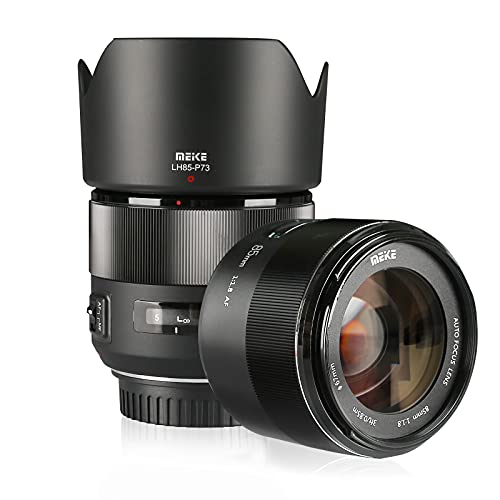
TL;DR: The Meike 85mm f/1.8 offers a fast f/1.8 aperture, 9‑blade rounded diaphragm and lightweight 420 g build for portrait shooters, though its autofocus can be noisy and corners soften wide open.
This lens sports a maximum aperture of f/1.8 and a 9‑blade rounded aperture, delivering shallow depth‑of‑field control that’s rare at its $169.98 price point. Its physical footprint is modest – 127 mm tall, 154 mm long and 127 mm wide – and it weighs 0.9259415004 pounds (420 g), making it easy to carry on‑camera.
Compared with the other lenses in the roundup, the Meike sits in the middle of the weight spectrum: it’s lighter than the Lightdow EF85mm (1.58 lb) and the Meike MK‑00835CE (1.3007273458 lb), but heavier than the Canon EF 50mm f/1.8 (0.35 lb) and the Yongnuo YN50mm F1.8 II (0.35053499658 lb). Its price aligns closely with the Canon 50mm f/1.8, while still undercutting the heavier full‑frame options.
Users consistently praise the lens for its low cost, fast aperture and smooth bokeh, especially noting solid center sharpness at f/1.8. Professional reviewers agree, noting the central resolution and the low distortion (+0.4 % to +0.63 %). However, many users flag the autofocus as slow and noisy, and both consumers and experts note corner softness and noticeable purple/green fringing when shooting wide open.
Optically, the lens comprises 9 elements in 6 groups and features a multi‑layer anti‑reflective coating on both sides. It accepts 67 mm filters and offers a minimum focusing distance of 0.85 m (EF mount) or 0.90 m (E‑mount). The design includes front and rear caps, a petal‑shaped hood, a pouch and a user manual, but it lacks image stabilization and weather sealing.
Pros
Cons
Best for: Photography students, hobbyists and budget‑conscious creators who need a fast 85mm prime for portrait work.
Avoid if: You require rapid, silent autofocus for action or wildlife, need weather sealing for harsh conditions, or are looking for a lower‑cost entry‑level lens.
“The Meike AF 85mm f/1.8 STM does a surprisingly good job for a $200 lens... center sharpness is excellent at f/1.8, and the bokeh is very smooth in the background.”
“The fringing can be a spoiler in high‑contrast scenes... it’s a major weakness.”
TL;DR: The Jintu 85mm f/1.8 manual‑focus portrait lens offers a fast f/1.8 aperture, solid metal build, and sharp, creamy bokeh for $95.89, but lacks autofocus and stabilization.
This lens’s most eye‑catching spec is its maximum aperture of f/1.8, paired with a single hybrid aspherical element that helps keep images crisp at wide openings. It’s a fully manual‑focus prime, weighing 490 g and measuring 177.8 mm in both height and width, with a 55 mm filter thread.
Compared with the Lightdow EF85mm f/1.8, the Jintu is noticeably lighter and uses fewer lens elements (6 vs. 9), while still delivering the same 85 mm focal length and hybrid aspherical element. It also feels more compact than the bulkier Jintu 420‑1600mm zoom, which tips the scales at over 2 lb. Among the 50 mm primes from Yongnuo, the Jintu is heavier but offers a longer focal length and a wider maximum aperture.
Users consistently praise the lens’s sharpness at f/1.8 and the “creamy” bokeh it produces for portrait work, calling the metal/aluminum alloy body “durable.” Professional reviewers echo the sharpness claim and note its value compared with premium lenses. The main complaints focus on the manual‑focus workflow, the camera’s “lens not attached” warning that forces a manual exposure mode, and the lack of image stabilization, which limits low‑light handheld shooting.
Pros
Cons
Best for: Entry-level buyers or those on a tight budget
Avoid if: You want the best value-per-dollar in its price range
“Incredible sharpness and bokeh for the price.”
“The metal body feels solid and well-made.”
TL;DR: At $99.00 the Yongnuo YN50mm F1.8 II earns a 4.3‑star rating from 1,349 reviewers, praised for value and light weight but noted for slower, noisy autofocus.
The Yongnuo YN50mm F1.8 II is a budget‑friendly prime lens from Yongnuo, priced at $99.00 and sitting at rank #12 out of 14 in our Best Canon EF Mount Lenses roundup. Its 4.3‑star rating from a solid base of 1,349 reviews places it in the upper‑mid tier among the group.
Users consistently highlight the lens’s strong price‑to‑performance ratio, describing the image quality as sharp when the aperture is stopped down and appreciating the lightweight, compact feel for travel and street shooting. Reviewers also love the metal mount and the fact that the front element doesn’t rotate, which helps when using filters. The most common criticisms focus on the autofocus, which many find noisy and slower than higher‑end options, as well as a plasticky barrel that feels less premium. Some also mention softness at the widest aperture and flare in strong backlight, and the lack of a quiet motor makes it less suitable for video work.
Based purely on its $99.00 price tag and a 4.3‑star rating, this lens lands as a solid choice for beginners and budget‑conscious shooters who need a reliable, everyday prime. It won’t compete with premium optics in speed or build quality, but it offers a well‑reviewed entry point into fast‑aperture photography.
Pros
Cons
Best for: Most users looking for a well‑reviewed, reliable mainstream option
“The autofocus doesn’t get quite as sharp as the original Canon… and the motor is very loud.”
“For portraits, the image quality is pretty great… but for video, I would highly recommend against it.”
TL;DR: The Lightdow 420‑800mm F8.3 delivers super‑telephoto reach at $67.99, with a manual focus system, solid metal build, and a lightweight 758 g body, but lacks autofocus and image stabilization.
This lens covers a 420–800 mm focal range and automatically shifts its aperture from f/8.3 at the short end to f/16 at full zoom. The minimum focusing distance is 1.6 m, and the filter thread is 62 mm. Its internal focusing mechanism and smooth manual zoom ring let you adjust focus and framing without changing the lens length.
At 758 g, it feels considerably lighter than the Jintu 420‑1600mm, which weighs over 2 lb, and its 62 mm height sits below the Yongnuo 50mm’s 83 mm height. However, the lens exceeds the Yongnuo’s 83 mm length, so it extends further forward on a tripod.
Users appreciate the sharp center performance at long focal lengths and the durable metal construction, noting that the price of $67.99 makes this reach affordable. Professional reviewers point out that edge sharpness softens at 800 mm and that manual focus can be slow in low light, especially without image stabilization.
The lens includes a 2× teleconverter in some bundles, extending the reach to 840–1600 mm, and features Ultra Multi‑Coating (UMC) for reduced flare.
Pros
Cons
Best for: Entry-level buyers or those on a tight budget
Avoid if: You need advanced features or professional‑grade performance
“Great for birding and moon photography — sharp enough for my needs”
“Surprisingly good build quality for the price”
TL;DR: At $94.99 the Jintu 420‑1600mm lands a 3.8‑star rating from 272 reviewers, praised for its reach and build but criticized for manual focus and soft images at full zoom.
The Jintu 420‑1600mm is a budget‑focused super‑telephoto zoom from the Jintu brand, priced just under $95 and earning the lowest rating among the fourteen lenses in this roundup. Its price makes it the most affordable option for anyone chasing extreme focal length without breaking the bank.
Reviewers consistently highlight the lens’s surprising portability and solid metal construction, noting that the included accessories—such as a teleconverter, case and tripod mount—add real value. However, many users point out that the lack of autofocus or image‑stabilisation makes tracking moving subjects a challenge, and the image quality tends to soften noticeably when the lens is pushed to its longest reach. Users also describe the zoom ring as stiff, and the fixed aperture forces photographers into manual exposure modes.
Given its price and rating, this lens sits at the entry end of the lineup. It may appeal to hobbyists who need extraordinary reach for moon or distant wildlife shots in bright daylight, but it falls short for anyone needing fast, reliable performance or high‑resolution results.
Pros
Cons
Best for: Entry-level buyers or those on a tight budget
“Great for birdwatching and moon photography on a budget.”
“Surprisingly sharp at 500–600mm with good lighting.”
Breakdown
Yongnuo YN50mm F1.8 Canon
Pros
Canon EF 50mm f/1.8
Pros
Canon EF-S 18-55mm II
Pros
Cons
Yongnuo YN35mm F2 Canon
Pros
Based on scoring data and product specs
Personalized picks
Best Overall Pick
Yongnuo YN50mm F1.8 Canon
Best Budget PickBest for: Budget-conscious buyers seeking a reliable entry-level option
Canon EF 50mm f/1.8
Best for: Buyers willing to invest in a proven, high-quality option
$169.00+$87.00 vs winner
Skip Jintu 420-1600mm if…
Reliability and user satisfaction are your top concerns
The Yongnuo YN50mm F1.8 Canon takes the top spot, thanks to its ultra‑affordable $82.00 price tag, a solid 4.5‑star rating from 5,340 reviewers, and a lightweight 0.2625‑pound build that makes it easy to carry on any shoot.
Coming in second, the Canon EF 50mm f/1.8 is the runner‑up if you need near‑silent autofocus for video work – its STM stepping motor delivers smooth, quiet focusing, and the lens has a 4.8‑star rating from 18,346 reviews, a fast f/1.8 aperture, and a close‑up minimum focusing distance of 350 mm.
For those looking beyond the top two, the Canon EF‑S 18‑55mm II at $139.94 offers a versatile zoom range for everyday photography, while the Zeiss Classic Planar 50mm at $599.00 delivers premium‑grade optics for the most demanding image quality needs.
Pick the Yongnuo YN50mm F1.8 today and get reliable, fast‑aperture performance without breaking the bank.
The Yongnuo YN50mm f/1.8 costs $82 and delivers the same maximum aperture as the Canon EF 50mm f/1.8, but it’s lighter at 119 g and uses a simple DC‑motor autofocus. For shooters who prioritize budget over the smoother STM focus of the Canon lens, the Yongnuo gives comparable shallow‑depth‑of‑field performance at roughly half the price.
Please sign in to leave a review
No reviews yet. Be the first to review!
