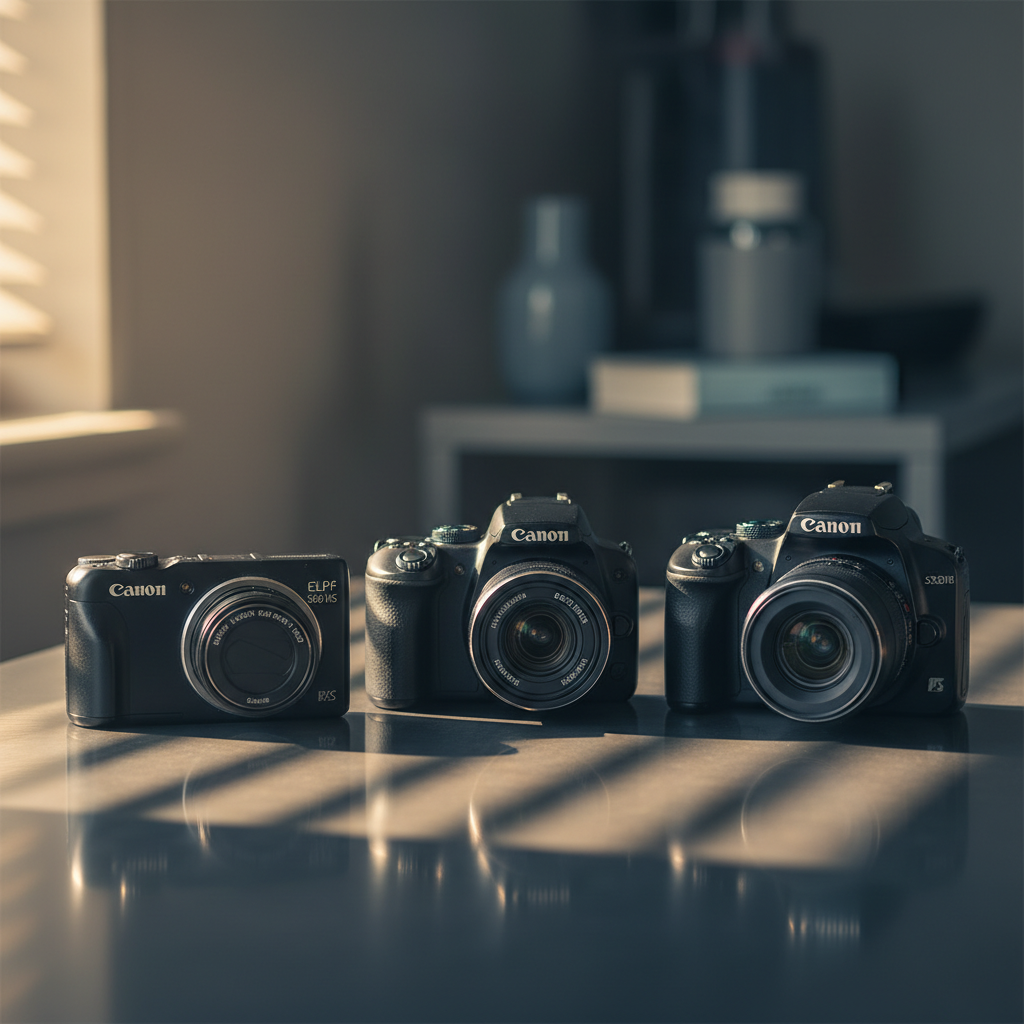
Choosing the right Canon point‑and‑shoot can feel overwhelming, especially when you’ve got nine models on the table. Our roundup spans the full price spectrum—from the $148.80 Sure Shot Zoom‑S at the budget end to the $1,099.99 SX740 HS that sits at the premium extreme—so you can see how each camera fits your wallet and your shooting style.
Among premium models, the ELPH 360 HS leads with a 4.3/5 rating from 1,608 reviews, a 12× optical zoom, optical image stabilization, and a lightweight 0.32 pound body priced at $499.00. The SX30 IS follows at $518.00, offering a 35× optical zoom and a 2.7‑inch LCD for those who need extra reach. Mid‑range choices include the AF35M at $299.98 and the PowerShot A3400, which lacks a listed price but brings a 5× optical zoom and a touch screen interface. Budget‑focused cameras like the Sure Shot Zoom‑S ($148.80) and the PowerShot A4000 (rated 3.8/5) give you 8× zoom capability without breaking the bank.
Below you’ll find a closer look at each model’s strengths, so you can pinpoint the Canon that matches your everyday needs.
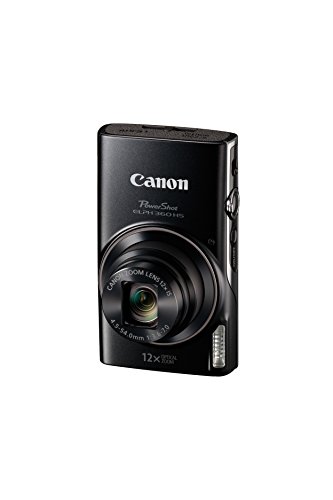
Canon ELPH 360 HS Black
Offers 180 shots per charge thanks to its 800 mAh battery, delivering solid value for its price.
Canon PowerShot SX520 HS
Great for everyday shooters who want a balanced, mainstream camera, and it’s $11 cheaper than the Best Value pick.
Canon SX30 IS
Stands out with up to 400 EVF shots (370 LCD), giving premium users far longer shooting time than the other two models.
Also considered
Score Analysis
Key score advantages vs. runner-up (Canon PowerShot SX520)
Price Range
Canon ELPH 360 HS Black
$499.00
Canon PowerShot SX520 HS
$488.00
Canon SX30 IS
$518.00
Canon Sure Shot
$259.90
Canon Sure Shot Zoom-S
$129.00

Canon PowerShot A4000 Blue
$278.00

Canon AF35M
$258.90

Canon PowerShot A3400
-$0.01
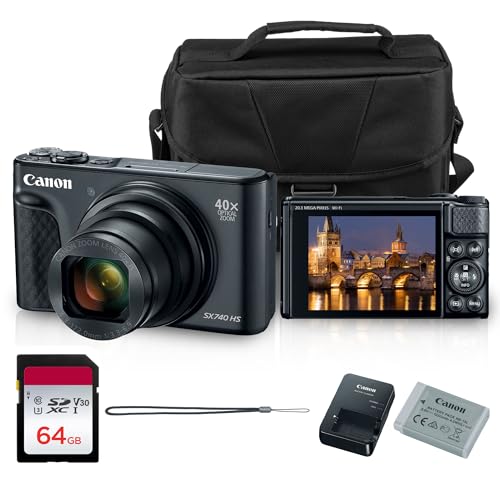
Canon PowerShot SX740 HS Digital Camera
$1,099.99
Spec Comparison
TL;DR: The Canon ELPH 360 HS packs a 12× optical zoom, 20.2 MP sensor, and built‑in Wi‑Fi into a 0.32‑lb pocket‑sized body, offering solid image quality for casual shooters at $499.
The standout feature of the ELPH 360 HS is its 12× optical zoom paired with Canon’s Intelligent Optical Image Stabilizer, letting you capture subjects from 25 mm to 300 mm equivalent without blur. Behind the lens sits a 20.2 MP 1/2.3″ BSI CMOS sensor and the DIGIC 4+ processor, delivering vibrant daylight images. The camera runs on an 800 mAh NB‑11LH rechargeable battery that provides roughly 180 shots per charge and up to 50 minutes of Full HD video.
Among the nine‑camera roundup, the ELPH 360 HS weighs just 0.32 lb (145 g), compared with the SX520 HS’s 0.97 lb and the SX30 IS’s 1.32 lb. Its compact dimensions—111.76 mm depth, 66.04 mm height, and 78.74 mm width—make it easier to slip into a pocket than the larger SX30. The 3.0‑inch LCD offers approximately 461,000 dots, more than double the 230,000‑dot screen on the SX30, while the SX520’s LCD resolution isn’t listed. Digital zoom reaches up to 4×; the SX30’s digital zoom isn’t listed, so the ELPH 360 HS provides a clear spec in that area.
User reviews repeatedly praise the camera’s powerful zoom and pocket‑friendly size, noting it outshines smartphone zoom on family trips. Professional reviewers highlight the 12× zoom and the sensor’s vibrant daylight output. However, several owners report noisy images when the ISO climbs above 800 or when shooting at the f/7.0 telephoto aperture, and they mention occasional Wi‑Fi or NFC pairing hiccups. The 180‑shot battery life also surfaces as a limitation for all‑day outings.
Additional technical details include an ISO range of 80–3200, a flash that reaches up to 4 meters, and continuous shooting at 2.5 fps (standard) or up to 7.2 fps in high‑speed burst mode. Video records in 1080p Full HD at up to 29.97 fps, stored as MP4 files. While the camera lacks RAW support and advanced manual exposure controls, its suite of scene modes—such as Handheld Night Scene and High‑Speed Burst—helps casual shooters adapt to various situations.
Pros
Cons
Best for: Casual photographers who want more zoom than a smartphone, travelers needing a pocketable camera.
Avoid if: You need extensive manual controls, RAW shooting, or strong low‑light performance.
TL;DR: The Canon PowerShot SX520 HS offers a 42× optical zoom and 16 MP sensor in a sturdy 0.97‑lb body, but its premium $488 price makes it a higher‑cost bridge camera.
The standout feature is the 42× optical zoom (24–1008 mm equivalent) paired with a 16.0 MP back‑illuminated CMOS sensor and the DIGIC 4+ image processor. A 3.0‑inch LCD shows roughly 461,000 dots, giving a clear view for framing distant subjects. At 0.97 pounds (441 g) the camera feels solid enough for outdoor shooting while still fitting in a large backpack.
Compared with the other eight cameras in this roundup, the SX520 HS is heavier than the ultra‑compact ELPH 360 HS (0.32 lb) and the lightweight PowerShot A4000 (0.2875 lb), yet lighter than the bulkier SX30 IS (1.32 lb) and the high‑zoom SX740 HS (2.73 lb). Its 42× optical zoom outpaces the ELPH 360 HS’s 12× and even nudges past the SX740 HS’s 40×, though the SX740 HS can shoot up to 10 fps versus the SX520’s 1.6 fps standard burst. Battery life of roughly 210 shots per charge beats the ELPH 360 HS’s 180‑shot rating, and the LCD exceeds the SX30 IS’s 2.7‑inch screen.
User feedback highlights the camera’s ease of use and the ability to capture far‑away subjects, especially for travel or wildlife outings. Reviewers often praise the 5‑axis Enhanced Dynamic IS that offers about 2.5‑stop shake reduction, and the dedicated movie button makes 1080p Full HD video with zoom straightforward. On the downside, several owners note that low‑light performance can be soft and the body feels a bit bulky for everyday pocket carry.
Pros
Cons
Best for: Most users seeking a balanced, mainstream option
Avoid if: You're shopping on a tight budget — it's priced at $488.00
TL;DR: The Canon SX30 IS packs a massive 35× optical zoom, a fully articulating 2.7‑inch LCD and solid image‑stabilisation, but its bulk, low‑resolution screens and 720p video keep it in the premium‑point‑and‑shoot niche.
The standout spec is the 35× optical zoom that stretches from a wide‑angle 24 mm equivalent out to a telephoto 840 mm equivalent, paired with a 4.5‑stop lens‑shift stabiliser. Under the hood sits a 14.1 MP 1/2.3‑inch CCD sensor and a 2.7‑inch LCD that resolves 230,000 dots. The camera can fire up to 400 shots when using the electronic viewfinder, and it weighs 1.32 pounds, giving it a DSLR‑like feel.
Compared with the eight other cameras in this roundup, the SX30 IS is noticeably heavier than the ultra‑light ELPH 360 HS (0.32 pounds) and the PowerShot A4000 (0.2875 pounds), and it also carries a higher price tag than those two models. Its 35× zoom dwarfs the ELPH 360 HS’s 12× optical zoom and far exceeds the zoom ranges of the other point‑and‑shoots, most of which doesn’t list an optical zoom at all. The SX30’s LCD is smaller than the PowerShot SX520’s 3.0‑inch screen, and none of the other cameras in the set offer an electronic viewfinder, so the SX30 provides a viewfinder option the competition lacks.
Reviewers consistently praise the camera’s colour accuracy and the manual controls that feel DSLR‑like, especially when paired with the hot shoe for external Speedlite units. The same experts note the lack of RAW shooting, the modest 720p HD video cap, and the low‑resolution LCD and 202,000‑dot EVF as drawbacks. Users also flag the absence of Wi‑Fi or Bluetooth, which makes remote shooting or quick sharing harder than on newer models.
Beyond the zoom, the SX30 IS offers a 67 mm filter thread (via adapter), a pop‑up flash that reaches 0.5–5.8 m, and a battery that delivers 400 EVF shots or 370 LCD shots per charge. The camera’s shutter speeds range from 15 s to 1/3200 s, and it can record at 30 fps in 720p MOV format with built‑in stereo sound.
Pros
Cons
Best for: Enthusiasts who need extreme zoom reach and manual control, and who don’t mind a larger, heavier body.
Avoid if: You need a compact, lightweight camera, high‑resolution video, RAW shooting, or built‑in Wi‑Fi/Bluetooth connectivity.
TL;DR: The Canon Sure Shot offers a waterproof 35 mm film body with a 32 mm f/3.5 lens, infrared triangulation autofocus, and a 5‑meter depth rating for budget‑friendly point‑and‑shoot fun.
The standout feature is its underwater capability: the A1 model handles depths up to 5 meters (16 feet) and still delivers a flash range of 3.4 m (maximum) and 0.45 m (minimum). It features infrared triangulation autofocus (AiAF) that provides fast, accurate focus on land and in water, and the flash recycles in roughly 4 seconds.
Compared with the eight peers, the Sure Shot’s 53 mm depth makes it slimmer than the AF35M’s 55 mm and the Zoom‑S’s 55.9 mm, while its 300 g weight is lighter than the AF35M’s 440 g and the SX520 HS’s 441 g. The flash guide number of 14 m (Supreme) matches the AF35M’s 14 m, and exceeds the PowerShot A4000’s unspecified range. Its viewfinder magnification of 0.42× (A1) is lower than the AF35M’s 0.5×, but still provides clear framing for casual shooting.
Users consistently praise the camera’s ease of use: professional reviewers highlight the infrared autofocus as “fast and accurate,” and celebrate the waterproof seal for snorkeling trips. Everyday shooters appreciate the solid metal construction—300 g on the A1 and 405 g on the Supreme—giving the camera a durable feel. However, some note that the variable aperture on the Zoom XL variant can limit low‑light performance, and the Tele model’s battery compartment may require a screwdriver to open.
Pros
Cons
Best for: Entry-level buyers or those on a tight budget
Avoid if: You want the best value-per-dollar in its price range
TL;DR: The Canon Sure Shot Zoom‑S delivers a 38‑60 mm f/3.8‑5.6 power‑zoom lens, infrared‑assist 3‑point AF and an 11 m guide‑number flash for just $148.80, making it a budget‑friendly film point‑and‑shoot.
The camera’s most distinctive hardware features a 38–60 mm zoom lens built from six elements in six groups, paired with a 3‑point Smart Autofocus that uses a near‑infrared assist beam. The built‑in flash offers a guide number of 11 m at ISO 100 and recycles in roughly 2.5 seconds, while the viewfinder covers 84 % of the frame with 0.64× magnification on telephoto.
At $148.80 the Zoom‑S sits well below the price points of the PowerShot SX740 HS, the ELPH 360 HS and the SX30 IS, and it’s lighter than the AF35M’s 440 g body. Its depth of 55.9 mm is shorter than the A4000’s 95.0 mm depth, though its overall width of 141 mm makes it wider than that same model. Compared with the digital peers, it lists fewer modern specs such as LCD resolution or optical zoom, but it compensates with classic film handling features like automatic loading and mid‑roll rewind.
Users consistently praise the Sharp image quality that rivals Canon’s FD SLR zooms and the fast, reliable infrared‑assist autofocus, even in low light. Professional reviewers note the smooth power‑zoom operation and the solid metal feel. The most common complaints focus on the camera’s noisy operation—described as sounding like a small tank—and the flash’s tendency to revert to “On” after power‑off, as well as the challenge of finding 2CR5 batteries.
Pros
Cons
Best for: Shoppers on a tight budget who want the most for their money
TL;DR: At $278, the Canon PowerShot A4000 Blue offers a 16 MP sensor, 8× optical zoom, and 720p video in a lightweight 130.5 g body, but its modest burst speed and lack of Wi‑Fi keep it in the entry‑level camp.
The standout feature is its 8× optical zoom paired with a 16.0 MP CCD sensor and DIGIC 4 image processor, delivering decent detail for everyday snaps. The camera also includes Intelligent IS with six stabilization modes, which helps keep handheld shots sharp even at the telephoto end.
Compared with the other eight cameras in this roundup, the A4000 is lighter than the AF35M (440 g) and the SX30 IS (1.32 lb), and only a shade heavier than the ELPH 360 HS (0.32 lb). Its 3.0‑inch LCD matches the SX520 HS’s screen size but is larger than the SX30 IS’s 2.7‑inch panel. While its 8× optical zoom is respectable, it falls short of the ELPH 360 HS’s 12× and the SX740 HS’s massive 40× zoom. Battery life of about 175 shots per charge sits just below the SX520 HS’s roughly 210‑shot rating and the SX30 IS’s 370‑shot capacity.
Users consistently praise the camera’s pocketable dimensions (95 mm × 55.9 mm × 23.9 mm) and the bright 3.0‑inch LCD with 100 % coverage and 230,000‑dot resolution. Professional reviewers highlight the effective optical image stabilization and the convenience of a dedicated movie button for 720p HD recording. However, the low continuous‑shooting speed of 2.8 fps in low‑light mode and the absence of manual exposure controls, RAW support, and modern connectivity (no Wi‑Fi, HDMI, or Bluetooth) are common criticisms.
Technically, the A4000 uses a 1/2.3‑inch CCD sensor and offers ISO settings from 100 to 1600, which is typical for cameras in this class. Its lens covers a 35 mm‑equivalent focal range of 28–224 mm, and the camera provides a 4× digital zoom on top of the optical zoom, resulting in a total 32× zoom capability.
Pros
Cons
Best for: Entry-level buyers or those on a tight budget
Avoid if: You need advanced features or professional‑grade performance
TL;DR: The Canon AF35M delivers fully automatic 35 mm shooting with pioneering infrared autofocus, a sharp 38 mm f/2.8 lens, and a compact 440 g body for just $299.98.
The standout feature is its passive infrared (IR) autofocus system, one of the first consumer‑grade implementations, paired with a 38 mm prime lens that opens to f/2.8. The built‑in flash offers a guide number of 14 meters at ISO 100, giving reliable fill light in daylight situations. Its dimensions—55 mm depth, 73 mm width, and 122 mm height—make it truly pocket‑sized.
At $299.98, the AF35M sits above the entry‑level Canon Sure Shot Zoom‑S and Canon PowerShot A4000 in price, yet below the higher‑end SX‑series models. Weighing 440 g, it's a shade lighter than the Canon PowerShot SX520 HS (441 g) but noticeably heavier than the A4000’s 0.2875 Pounds. The camera runs on two 1.5 V AA alkaline batteries, matching the modest power needs of its fully automatic design.
Users appreciate how the pre‑focus self‑timer and automatic film loading turn shooting into a one‑handed experience, and many praise the sharpness of the images straight out of the 38 mm f/2.8 lens. Professional reviewers note the historic significance of the IR autofocus, while everyday shooters mention occasional focus hiccups in low‑light or when shooting through glass. The lack of manual exposure controls and a single central focus point are common complaints, as is the faster battery drain when the flash is used frequently.
Technically, the AF35M uses a full‑auto program exposure system with a CdS metering cell covering EV 6–17 at ISO 100. Shutter speeds are stepless between 1/4 and 1/500 sec, and the camera accepts 35 mm film speeds from ISO 25 to 400. The reversed Galilean viewfinder provides 85 % coverage at 0.5× magnification, and the camera can capture up to 1 frame per second in continuous mode.
Pros
Cons
Best for: Value-conscious buyers seeking quality at $299.98
“Takes sharp, well-exposed photos with zero effort.”
“Love the pre-focus trick—lets me control composition.”
TL;DR: The Canon PowerShot A3400 IS packs a 16 MP CCD sensor, 5× optical zoom and a 3‑inch touchscreen, delivering easy‑to‑use shooting with about 180 shots per charge.
The camera’s 16.0 MP effective sensor pairs with a bright f/2.8 wide‑angle lens and a 5× optical zoom that reaches 140 mm (35 mm equivalent). A 3.0‑inch LCD shows roughly 230,000 dots, and the touch‑panel lets you focus and shoot with a tap. Manufacturer lists battery life at approximately 180 shots per charge, and Intelligent IS helps keep images sharp.
At 141 g, the A3400 IS weighs less than the SX30 IS and SX740 HS, which each exceed a pound, and it compares to the A4000 Blue’s 0.2875‑pound body. Its battery life matches the A4000 Blue’s ~175‑shot rating but falls short of the SX520 HS’s ~210‑shot claim. The 5× optical zoom offers modest reach compared with the ELPH 360 HS’s 12× zoom, while the LCD resolution matches the SX30 IS’s 230,000‑dot display. No other model in this roundup offers a touchscreen.
Users consistently praise the touch‑screen interface and the Intelligent Optical Image Stabilization, noting that the f/2.8 wide lens improves low‑light shots. Professional reviewers also highlight the sharp 16 MP stills. Common complaints revolve around the short battery life, the low‑resolution LCD, and video records at 720p @ 25 fps with no HDMI or Wi‑Fi. Lacking manual exposure and focus controls makes it less suitable for enthusiasts.
Under the hood, the CCD sensor measures 1/2.3‑inch (6.17 × 4.55 mm) and supports ISO 100–1600. Intelligent IS provides six stabilization modes, and continuous shooting runs at 0.8–1.0 fps. The built‑in flash reaches 0.5–3.0 m on the wide side and 1.0–2.0 m on telephoto, while the 5× optical zoom can be extended to a combined 20× digital zoom.
Pros
Cons
Best for: Beginners and casual shooters who want a compact, touch‑controlled camera with built‑in image stabilization.
TL;DR: The Canon PowerShot SX740 HS packs a 40× optical zoom, 4K video and 5‑axis image stabilization into a 2.73‑pound pocketable body, but its $1,099.99 price and modest 265‑shot battery may limit its appeal.
What really sets this camera apart is the 40× optical zoom that reaches a 24–960 mm equivalent focal length, paired with a 3.0‑inch TFT LCD that flips up 180° for selfies and vlogging. The DIGIC 8 processor drives 4K UHD video at 30 p and a high‑speed burst of 10.0 fps for up to 59 shots, while the 5‑axis OIS claims up to 3.5 stops of shake reduction.
Compared with the other eight cameras in the roundup, the SX740 HS is noticeably heavier than the ultra‑light ELPH 360 HS (0.32 pounds) and the A4000 Blue (0.2875 pounds), but lighter than the bulkier SX30 IS (1.32 pounds). Its 265‑shot battery life falls short of the SX30 IS’s 400‑shot rating and the SX520 HS’s 210‑shot figure, while the 40× optical zoom dwarfs the 12× zoom of the ELPH 360 HS and the modest zoom ranges of the other models.
Reviewers consistently praise the extreme reach and the convenience of the flip‑up screen, calling it a solid travel companion for capturing distant subjects. Professional reviewers note the 5‑axis OIS and 4K video as strong upgrades, yet they also flag noticeable shutter lag of up to one second in auto mode and soft images at the far end of the zoom. Everyday users love the Wi‑Fi/Bluetooth connectivity for quick sharing, but many point out that low‑light performance lags behind modern smartphones and the lack of RAW support limits post‑processing flexibility.
Pros
Cons
Best for: Travelers and casual shooters who need a pocketable superzoom with 4K video and up to 3.5 stops of stabilization.
Avoid if: You're shopping on a tight budget — it's priced at $1,099.99.
Breakdown
Canon ELPH 360 HS Black
Pros
Canon PowerShot SX520 HS
Pros
Cons
Canon SX30 IS
Pros
Canon Sure Shot
Cons
Based on scoring data and product specs
Personalized picks
Best Overall Pick
Canon ELPH 360 HS Black
Best ValueBest for: Audiophiles and enthusiasts seeking premium sound quality and advanced features
Canon PowerShot SX520 HS
Best for: Most users seeking a balanced, mainstream option
$488.00-$11.00 vs winner
Skip Canon PowerShot SX740 HS Digital Camera if…
You're shopping on a tight budget — it's priced at $1099.99
The Canon ELPH 360 HS Black is the clear winner, thanks to its solid 4.3/5 rating from 1,608 reviewers, a 12× optical zoom paired with Optical Image Stabilizer, and a 20.2 MP back‑illuminated CMOS sensor that delivers sharp shots even in low light. At just 0.32 pounds and with built‑in Wi‑Fi and NFC, it’s easy to carry and share your photos on the go.
Canon PowerShot SX520 HS, the runner‑up, shines when you need serious reach for wildlife or sports photography. Its 42× optical zoom (24–1008 mm equivalent) and 16 MP high‑sensitivity sensor let you capture distant subjects, while the rechargeable NB‑6LH battery provides roughly 210 shots per charge.
Pick the Canon ELPH 360 HS Black today and enjoy top‑value performance in a compact, easy‑to‑use package.
The ELPH 360 HS is priced at $499 and is praised for its overall value, while the SX520 HS costs $488, only $11 less. Even though the SX520 is slightly cheaper, the ELPH 360 HS offers a more balanced feature set for its price, making it the better value choice for most travelers.
Please sign in to leave a review
No reviews yet. Be the first to review!
