⚡ Quick Answer
We’ve lined up 11 coffee grinders that promise precise, adjustable grind settings, spanning a price spread from $17.99 for the Ceving Mini Manual up to $399.95 for the Fellow Gen 2 Ode. The selection covers every budget tier: four budget‑friendly options (including the SHARDOR Professional Conical Burr at $74.99), two mid‑range models (such as the Timemore Chestnut C3S PRO Black at $95.00), and four premium picks (like the Baratza Encore ESP at $199.95). This range lets you match your brew routine—whether you’re pulling a single espresso shot on a campsite or grinding beans for a weekday pour‑over.
Our comparison leans on concrete data: the Timemore C3S PRO Black holds a 4.7/5 rating from 2,416 reviews and offers a classic dial step of roughly 0.08 mm per click, while the Ceving Mini Manual offers 40 external grind settings for just $17.99. Across the board we considered weight, burr size, grind‑setting granularity and user‑reported reliability. In the sections that follow, we’ll break down how each grinder performs in real‑world brewing scenarios, so you can pinpoint the right tool for your coffee ritual.

Timemore Chestnut C3S PRO Black
Its espresso dial steps of 0.0233 mm per click give ultra‑fine grind control, earning it the top spot.

SHARDOR Professional Conical Burr Coffee Grinder
Ideal for budget‑conscious home brewers, it costs $74.99—about $20 less than the Best Overall model.

Ceving Mini Manual Coffee Grinder
Its ultra‑compact 170 mm height and 188 mm length make it suitable for tight countertops where larger grinders won’t fit.
Score Analysis
Key score advantages vs. runner-up (SHARDOR Professional Conical)
Price Range
Timemore Chestnut C3S PRO Black
$95.00
SHARDOR Professional Conical Burr Coffee Grinder
$69.99
Ceving Mini Manual Coffee Grinder
$19.99

Baratza Encore ESP
$199.95

Fellow Opus
Out of Stock

SHARDOR Conical Burr Espresso Coffee Grinder
$79.99
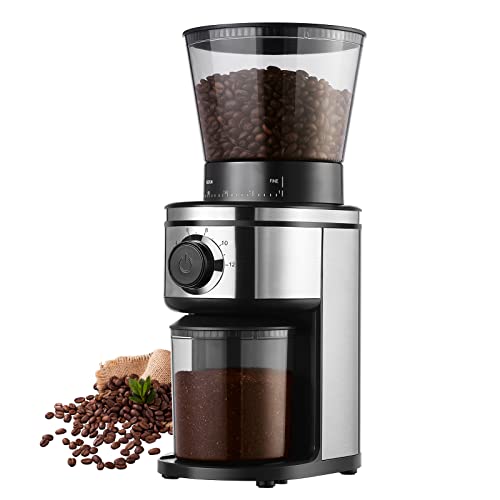
Ollygrin Burr Coffee Grinder
$79.99

Timemore Chestnut C3 ESP Pro Black
$99.00

Fellow Gen 2 Ode
$339.95

IMAVO Manual Coffee Grinder
$39.99
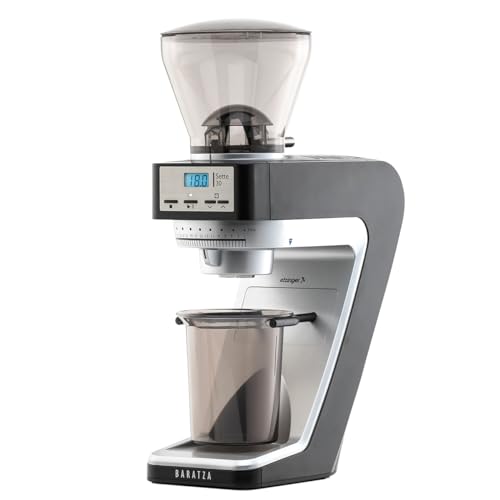
Baratza Sette 30
$299.95
Spec Comparison
TL;DR: The Timemore Chestnut C3S PRO delivers precise 0.0233 mm espresso grind steps, solid 38 mm stainless‑steel burrs, and a foldable handle, all in a compact 1.5‑lb manual grinder.
What really sets this grinder apart is its dual‑bearing system paired with a foldable crank handle, letting you grind with smooth, wobble‑free motion. The espresso dial clicks every 0.0233 mm, while the classic dial moves 0.0833 mm per click, and the unit offers roughly 36 adjustment levels for fine‑tuning.
Compared with the other ten grinders in this roundup, the C3S PRO sits in the middle of the size spectrum: it’s taller than the Ceving Mini’s 170 mm body but shorter than the Ollygrin’s 304.8 mm height. At 1.5 pounds, it’s heavier than the ultra‑light Ceving Mini (about 0.84 lb) yet far lighter than the bulky Ollygrin (over 4 lb). Its 38 mm burrs are smaller than the 40 mm or 64 mm burrs that some competitors use, but the stainless‑steel S2C660 material and 55‑58 HRC hardness earn praise for consistency.
Reviewers love the uniform grind and the stable silicone base that keeps the grinder from slipping on a countertop. Users repeatedly note the compact, travel‑ready design as a major plus. On the downside, the multi‑chamber hopper makes filling evenly fiddly, and grinding down to the finest espresso setting demands more manual effort than electric options. Some experts suggest the burr edges could be sharper for the absolute finest grind.
Pros
Cons
Best for: Home coffee enthusiasts, travelers, and campers who want precise manual grinding in a compact package.
Avoid if: You need high‑volume rapid grinding, prefer an electric grinder, or require the absolute fastest workflow for multiple cups.
“Precise and a pleasure to use... fantastic build quality, precise coffee grounds... strong and easy grip.”
TL;DR: The SHARDOR Professional Conical Burr Grinder packs a 64 mm stainless steel burr, 48 grind settings and a 1‑minute LED timer for $74.99, earning a 4.4‑star rating from 1,279 reviewers.
This grinder’s headline feature is its 64 mm stainless‑steel conical burr, noticeably larger than the 40 mm burrs found in the SHARDOR espresso‑only model and the Ollygrin grinder. It offers 48 distinct grind settings and an electronic timer that can be set up to 1 minute in 0.1‑second increments, giving you fine control over dosage for anything from a single espresso shot to a 12‑cup batch.
Compared with the ten other grinders in the roundup, the SHARDOR sits slightly heavier than the Ollygrin unit (4.87 lb vs 4.41 lb) but lighter than the SHARDOR espresso‑only version (6.15 lb). Its burr diameter outclasses both competitors, which helps deliver the uniform grind that reviewers praise. The timer max of 1 minute matches the Ollygrin and the SHARDOR espresso model, and both grinders also share the 0.1‑second increment, so you won’t lose precision on timing.
Professional reviewers note that the grinder can pull an 18‑gram espresso dose in roughly 10 seconds, confirming the fast grinding speed many home users love. However, the same reviews flag noticeable coffee retention in the grinding chamber, meaning you’ll need to purge a small amount between doses. Users also appreciate the upgraded anti‑static technology, which keeps grounds from clinging to the chamber, and the lockable hopper that helps keep beans fresh.
Beyond speed, the machine runs at low speed to minimize heat buildup, and it includes a removable upper burr for easy cleaning or future upgrades. The LED display, built‑in portafilter cradle (compatible with 50‑54 mm and 58 mm baskets), and included brush and scoop round out a feature set that feels solid for its price tier.
Pros
Cons
Best for: Home espresso enthusiasts and intermediate coffee hobbyists who want fast, precise dosing with a large burr at a budget‑friendly price.
Avoid if: You need ultra‑low retention for exact dosing, high‑volume commercial use, or the absolute best value‑per‑dollar in this segment.
TL;DR: The Ceving Mini Manual Coffee Grinder delivers 40 precise grind settings in a 380 g, 30 g‑capacity body for under $18, making it a portable, budget‑friendly choice for single‑serve brewing.
What really sets this grinder apart is its 40 external numbered grind settings, giving you fine‑tuned control from espresso‑fine to coarse. It uses a conical ceramic burr, which reviewers say keeps heat low and flavor intact, and the 30 g bean capacity holds enough beans for one to two cups of coffee.
Compared with the other ten grinders in the roundup, the Ceving Mini weighs dramatically less than the SHARDOR Professional (over 4 lb) and the SHARDOR Espresso model (around 6 lb). It’s also shorter than the Timemore Chestnut C3S PRO, which measures about 190 mm tall, while the Ceving stands at 170 mm. In the price department, it sits at the low‑end of the spectrum, far below the $79‑plus electric options, making it the most affordable manual choice.
Users love how easy it is to adjust the grind thanks to the numbered ring, and many note that the metal body and ceramic burr feel sturdy during use. Professional reviewers point out the smooth crank action and the low‑heat grinding that preserves coffee nuances. The main complaints revolve around the limited 30 g bean hopper, which restricts batch size, and the grinder’s body can become slippery when grinding for a while, requiring a firmer grip.
Pros
Cons
Best for: Solo coffee drinkers, travelers, campers, and office workers who need fresh grinds for one to two cups without breaking the bank.
Avoid if: You regularly brew for multiple people, need a large hopper, or prefer the hands‑off ease of an electric grinder.
TL;DR: The Baratza Encore ESP offers a 40 mm conical burr, 40 micro‑macro grind steps and a 230 g hopper, delivering precise espresso grinding in a sturdy 5.56‑pound unit.
The standout feature is its 40 mm conical burr paired with a dual‑range adjustment that gives you 40 distinct steps—micro steps 1‑20 for espresso and macro steps 21‑40 for filter brewing. Running at a low 550 RPM, the grinder minimizes heat buildup, which users say helps keep espresso flavors clean. Its 230 g bean hopper lets you load enough beans for several drinks without frequent refills.
Compared with the other ten grinders, the Encore ESP is heavier than the Fellow Opus (5.56 lb vs 3.99 lb) and taller than the Opus’s 268 mm height (335 mm vs 268 mm). It shares the same 40 mm burr size as the Fellow Opus and the Ollygrin model, but its burr speed of 550 RPM outpaces the Opus’s 350 RPM. The hopper capacity of 230 g is more than double the Opus’s 110 g, giving you more beans on hand. It is also substantially heavier than the Timemore Chestnut C3 ESP Pro (5.56 lb vs 0.95 lb) and the Timemore Chestnut C3S PRO (5.56 lb vs 1.5 lb), and heavier than the Ollygrin’s 4.41 lb unit, though lighter than the high‑capacity Baratza Sette 30 at 9.70 lb.
Reviewers frequently note the consistent particle size produced by the 40 mm burrs and appreciate the fine micro‑step adjustment for dialing in espresso shots. Professional reviewers highlight the low‑speed motor and thermal overload protection as key to stable dosing and long‑term durability. Reviewers cite the premium price point as the main trade‑off; some feel the precision justifies it, but it may be steep for casual brewers.
Under the hood, the grinder uses a direct‑drive gearbox for efficient power transfer, a pre‑calibrated system that can also be user‑calibrated, and a quick‑release burr for easy cleaning. It operates manually, fits 54 mm portafilters directly and includes an adapter for 58 mm portafilters, making it versatile for most home espresso setups.
Pros
Cons
Best for: Buyers willing to invest in a proven, high‑quality option
Avoid if: You have limited desk space or need portability
TL;DR: The Fellow Opus blends a 40 mm conical burr, 140 W motor and 41+ micro‑adjustments into a compact 210 mm‑deep, 3.99‑lb grinder that delivers café‑grade consistency for home baristas.
The Opus packs a 40 mm conical stainless‑steel burr and a 140 W motor delivering 6 N·m of torque, all within a 210 mm × 129 mm × 268 mm footprint. Its 350 RPM burr speed and 41+ grind settings give you granular control from espresso to cold brew.
At roughly 3.99 lb it’s lighter than the Baratza Encore (5.56 lb) and the SHARDOR (6.15 lb), but noticeably heavier than the Timemore Chestnut C3 ESP Pro (0.95 lb) and its C3S PRO sibling (1.5 lb). The Opus’s depth of 210 mm exceeds the Encore’s 145 mm, while its height of 268 mm is shorter than the Encore’s 335 mm, so it fits tighter countertops. With over 41 grind settings it also out‑grinds the 30‑setting Ollygrin and the roughly 36‑level Timemore C3S PRO.
Professional reviewers praise the Opus for its pro‑level grind consistency, mess‑free anti‑static system and timed auto‑stop that prevents over‑grinding. Home users echo these points, highlighting the single‑dose freshness and versatility across brewing methods. The 3.9‑star rating from 1,740 reviews sits below the 4‑star mark, and some owners note weight listings that swing between 4 lb and 5 lb, hinting at minor build‑quality variations. A few reviewers also point out conflicting motor power and voltage specs, which can be confusing at the point of purchase.
Beyond the burr and motor, the Opus includes anti‑static technology, a direct‑drop low‑retention architecture, and a spouted catch that keeps grounds contained. Tool‑free calibration lets you adjust burr alignment without tools, and the 1 m power cord offers flexible placement on the counter. The hopper holds up to 110 g of beans, while the dosing lid can carry 100 g, making it suitable for single‑dose or small batch brewing.
Pros
Cons
Best for: Those prioritizing quality and willing to pay for premium performance
Avoid if: Reliability and user satisfaction are your top concerns
“a true all-rounder”
“the cheapest espresso grinder I can recommend”
TL;DR: The SHARDOR CG018 packs a 40 mm stainless‑steel conical burr, 51 grind settings and an LCD touchscreen into a 13.5‑inch, 6.15‑lb unit for reliable home espresso grinding.
The standout spec is the 40 mm stainless‑steel conical burr paired with 51 precise grind settings, letting you dial from fine espresso to French‑press coarse with a 0.1‑second timer increment and a maximum timer of 1 minute. An LCD touchscreen shows grind time and cup selection, while the anti‑static design helps keep grounds from clinging to the chamber.
Compared with the other grinders in this roundup, the SHARDOR is heavier than the 4.41‑lb Ollygrin and the 4.87‑lb SHARDOR Professional models, but it shares the same 40 mm burr size as Ollygrin, while the Professional version uses a larger 64 mm burr. It's taller at 13.5 inches versus Ollygrin’s 12.0 inches, and longer at 7.4 inches versus Ollygrin’s 5.4 inches, yet it's narrower at 4.9 inches compared with Ollygrin’s 7.0 inches. The Timemore Chestnut C3S PRO and C3 ESP Pro both feature smaller 38 mm burrs and weigh significantly less (1.5 lb and 0.95 lb respectively), placing the SHARDOR in a mid‑range size and weight category.
Users rate the grinder 4.4 stars across 732 reviews, frequently praising the uniform particle size from the 40 mm burr and the repeatable dosing enabled by the timer and touchscreen. Reviewers highlight the included grounds cleaner, dosing ring and portafilter cradle as handy extras that reduce mess. A recurring theme in the feedback is that, while the grinder performs solidly, some buyers wish it offered a better value‑per‑dollar compared with lighter, lower‑priced alternatives.
Beyond the burr and timer, the machine runs on 120 V, supports 1‑12 cup batches, and comes with anti‑static technology to minimize static cling. The stainless‑steel construction promises durability, and the LCD interface makes setting grind time intuitive for daily use.
Pros
Cons
Best for: Budget-conscious buyers seeking a reliable entry-level option
Avoid if: You want the best value‑per‑dollar in its price range
TL;DR: The Ollygrin Burr Coffee Grinder packs a 40 mm stainless‑steel conical burr and 30 precise grind settings into a compact 12‑inch tall, 4.41‑lb unit for reliable home brewing at $79.99.
What sets this grinder apart is its 40 mm conical burr paired with 30 distinct grind settings, letting you dial from French‑press coarseness to espresso‑fine grind without swapping parts. The one‑button rotary control makes selection quick, and the auto‑locking 10 oz hopper holds enough beans for several brews.
At 4.41 lb, the Ollygrin sits lighter than the SHARDOR Espresso model’s 6.15 lb frame but is comparable to the SHARDOR Professional’s 4.87 lb build. Its 12.0 in height is shorter than the 13.5 in height of the SHARDOR Espresso grinder, while the 5.4 in length and 7.0 in width make it more compact than the bulkier professional unit. The 40 mm burr matches the SHARDOR Espresso’s burr size, out‑sizing the Timemore Chestnut’s 38 mm burrs and offering a larger grinding surface than the manual Ceving and IMAVO models.
Reviewers consistently praise the low‑heat gear‑reduction motor for preserving coffee aroma, and many note the uniform grind size across the 30 settings. Users also highlight the simplicity of the single‑button operation and the convenience of the auto‑locking hopper. On the downside, a few coffee enthusiasts mention that the finest settings stop short of true ultra‑fine espresso fineness, and occasional static cling can leave grounds on the container.
Pros
Cons
Best for: Most users looking for a well‑reviewed, reliable mainstream option
Avoid if: You need advanced features or professional‑grade performance
TL;DR: The Timemore Chestnut C3 ESP Pro blends a 38 mm stainless‑steel conical burr with a 0.0233 mm per‑click adjustment and a foldable handle, delivering precise espresso grinding in a compact, well‑rated manual grinder.
The standout spec is the ultra‑fine adjustment increment of 0.0233 mm per click, achieved through a 30‑click internal dial. Coupled with a 38 mm SUS420 stainless‑steel conical burr, this grinder can dial in espresso doses with a consistency that reviewers label “highly consistent.” Its all‑metal aluminum alloy body keeps the weight down to 0.95 lb, and the handle extends to 159 mm before folding for travel.
Compared with the other ten grinders in the roundup, the C3 ESP Pro is markedly lighter than the Ollygrin Burr Coffee Grinder (over 4 lb) and also lighter than the Timemore Chestnut C3S PRO (about 1.5 lb). Its 52 mm body width matches the classic dial step size of the C3S PRO, yet it offers a dedicated espresso dial that the larger, bulkier SHARDOR models lack. While some competitors provide more grind‑setting options, the C3 ESP Pro’s ~36 total levels focus on espresso precision rather than sheer quantity.
Consumer feedback highlights the grinder’s speed and uniform particle distribution, especially for espresso and pour‑over brews. Users love the portability of the foldable handle and the included carry bag, calling it the best travel manual grinder they’ve owned. On the flip side, reviewers describe the internal adjustment dial as “fiddly,” and reviewers see the usable espresso clicks as limited—roughly a dozen settings for true espresso extraction. Professional reviewers echo these points, praising the burr design while noting the dial’s less‑convenient placement.
Technically, the grinder features a dual‑bearing central axis that smooths each rotation, and a bean capacity of 20‑25 g fits single‑serve espresso shots. Grinding an 18 g espresso dose takes about 1.5 minutes, while a 15 g pour‑over batch finishes in roughly 38 seconds. The manufacturer doesn’t list a warranty, voltage, or hopper capacity, so those details remain unavailable.
Pros
Cons
Best for: Home espresso enthusiasts, travelers, and pour‑over users who want precise, well‑reviewed manual grinding without sacrificing portability.
Avoid if: You need high‑volume commercial grinding, prefer an external stepless dial, or prioritize an ultra‑light weight above all else.
“Precise and a pleasure to use... fantastic build quality, precise coffee grounds... strong and easy grip.”
TL;DR: The Fellow Gen 2 Ode delivers 31 precise grind settings with 64 mm flat burrs, ultra‑quiet operation, and anti‑static technology, but its $399.95 price and 100 g hopper suit dedicated brew enthusiasts rather than espresso lovers or large households.
The grinder features a 64 mm flat stainless‑steel burr set, paired with a constant 1400 RPM motor that maintains consistent speed across the 250‑300 micron grind range. With 31 distinct grind settings and a single‑dose design, you can dial in pour‑over, French press or cold‑brew recipes without worrying about static cling, thanks to the built‑in anti‑static system.
At 4600 g (9.92 lb), the Ode feels heavier than most competitors in this roundup, giving it a solid, premium presence on the countertop. Its $399.95 price tag puts it above the Baratza Sette 30, Timemore Chestnut models and the Ollygrin grinder, making it a higher‑end option for those who value build quality and quiet operation over budget.
Reviewers consistently praise the near‑silent grinding experience, noting that the heavy construction and sound‑insulating housing keep noise down enough for apartment living. Users also appreciate the magnetically aligned catch bin and low‑grind‑retention button, which together minimize waste and make pouring grounds effortless. Reviewers point out the modest 100 g hopper, which requires frequent refills, and the grinder’s inability to reach espresso‑fine particle sizes.
Pros
Cons
Best for: Home coffee enthusiasts who prioritize grind consistency, quiet operation, and premium build for pour‑over, French press, or cold‑brew brewing.
Avoid if: You need espresso‑grade grinding, a large hopper for high‑volume use, or are working with a tight budget.
“compact but meaty”
TL;DR: The IMAVO Manual Coffee Grinder costs $39.99, earns a 4.0/5 rating from 1,163 reviewers, and offers a vintage wooden design with a continuously variable top‑knob for grind size.
This grinder’s standout feature is its simple top‑knob that lets you dial the grind continuously from coarse French‑press particles to fine espresso grounds. The mechanism uses ceramic burrs paired with a cast‑iron wheel, and the whole unit sits on a hexagonal pine‑wood base that gives a retro look to any countertop.
At $39.99 it sits below the price of the SHARDOR Professional, SHARDOR Espresso, Ollygrin, and Timemore models, making it one of the more affordable options in this eleven‑product roundup. Because the IMAVO listing provides fewer technical details than many competitors, it also looks less spec‑heavy than the metal‑burr grinders that publish burr size, exact grind‑setting counts, and weight.
Both consumer and professional feedback note slower grinding speed and a lack of measurable grind‑uniformity data, which can turn off espresso purists. Reviewers consistently praise the grinder’s aesthetic – a “cool vintage look” that doubles as a decorative piece. Users also note the ease of turning the single knob, describing it as “intuitive” and “gift‑ready.” Some buyers voice concerns about long‑term durability of the wooden body and ceramic burrs.
Pros
Cons
Best for: Entry-level buyers or those on a tight budget
Avoid if: You need powerful performance or professional‑grade features
TL;DR: The Baratza Sette 30 packs a 40 mm conical steel burr, 30 precise grind settings and ultra‑low retention into a 9.70‑lb unit that grinds fast but can be noisy.
The standout spec is its 30‑step grind range combined with a 40 mm conical steel burr, delivering dosing accuracy of 0.54 g and grind retention of ≤0.5 g. Its straight‑through mechanism and programmable dosing let you dial in espresso shots with minimal waste.
Compared with the other grinders in this roundup, the Sette 30 is heavier than the compact Timemore Chestnut C3S PRO (1.5 lb) and the Fellow Opus (≈4 lb), but a touch lighter than the Fellow Gen 2 Ode (≈9.92 lb). It shares the same 40 mm burr diameter as the Baratza Encore ESP and the Fellow Opus, while the Timemore models use 38 mm burrs. Its 30 grind steps match the Ollygrin Burr Coffee Grinder, yet most peers list fewer or no grind‑setting numbers.
Reviewers love the rapid grinding speed (3.5–5.5 g/s), which pulls a dose in seconds, and they praise the near‑zero retention that keeps each shot fresh. Professional reviewers highlight the fluffy, clump‑free grounds the straight‑through design produces, especially for espresso and AeroPress. On the flip side, users repeatedly call out the loud operation and the plastic housing, which feels less premium than metal‑cased rivals.
Additional technical context includes a digital timer with 0.1‑second resolution and a step‑time difference of roughly 5 seconds between grind settings, giving you fine control over extraction time. The grinder measures 381 mm tall, 240 mm long and 130 mm wide, fitting comfortably on a standard countertop.
Pros
Cons
Best for: Espresso beginners and AeroPress fans who value fast, low‑retention grinding and are willing to invest in a premium‑tier grinder.
Avoid if: You need a quiet machine, a metal‑body feel, or a grinder for coarse methods like French press, or if you’re on a tight budget.
Breakdown
Timemore Chestnut C3S PRO Black
Pros
SHARDOR Professional Conical Burr Coffee Grinder
Pros
Cons
Ceving Mini Manual Coffee Grinder
Pros
Baratza Encore ESP
Pros
Based on scoring data and product specs
Personalized picks
Best Overall Pick
Timemore Chestnut C3S PRO Black
Best OverallBest for: Most users looking for a well-reviewed, reliable mainstream option
SHARDOR Professional Conical Burr Coffee Grinder
Best for: Budget-conscious buyers seeking a reliable entry-level option
$69.99-$25.01 vs winner
Skip Baratza Sette 30 if…
You're on a tight budget or only need basic functionality
The Timemore Chestnut C3S PRO Black takes the top spot thanks to its precise grind control and solid build. It offers roughly 36 adjustment levels with a classic dial step of 0.0833 mm per click (and an even finer 0.0233 mm step for espresso), letting you dial in consistency across filter, pour‑over, immersion and espresso brews. Its 38 mm stainless‑steel burrs rate 55‑58 HRC, and users have given it a 4.7‑star rating from 2,416 reviews, indicating strong satisfaction.
The SHARDOR Professional Conical Burr Coffee Grinder lands as the runner‑up, especially if you need a plug‑in unit that can handle larger batches. It provides 48 grind settings, a 64 mm stainless‑steel burr set and low‑speed grinding to keep heat down, making it a solid choice for high‑volume home brewing or small office use. Reviewers rate it 4.4 stars from 1,279 opinions, and its 8.5‑12.5 oz hopper lets you grind enough beans for several drinks in one go.
For tighter budgets, the Ceving Mini Manual Coffee Grinder at $17.99 delivers the best value with a simple hand‑crank and compact size. If you’re willing to spend more for premium features, the Fellow Gen 2 Ode at $399.95 offers consistent results and sleek design for serious enthusiasts.
Pick the Timemore Chestnut C3S PRO if you want the most precise, well‑rated grinder for everyday use.
The Ceving Mini Manual Coffee Grinder is the lightest at 380 g and folds to a compact size, making it easy to pack, while the Timemore Chestnut C3S PRO weighs 680 g and has a foldable crank but is bulkier. For pure portability without a power source, the Ceving’s manual operation and low weight give it the edge.
No reviews yet — be the first to share your experience.
Please sign in to leave a review
Also considered
$69.99
