⚡ Quick Answer
Comparing 10 color‑accurate monitors shows a wide range. The most affordable option starts at $67.47, and the high‑end model reaches $349.00, so you’ll see what each price tier delivers. The Sceptre E275W packs a 27‑inch screen for $104.97 and earned a 4.5/5 rating from 8,084 reviewers, thanks to its 100 % sRGB coverage and 100 Hz refresh rate.
The guide defines three price tiers: budget picks include the Sansui 22‑inch and both Sceptre models; mid‑range contenders are the Asus PA248QV and the Innocn 4K USB‑C; premium choices feature the AOC Q27G3XMN with a 137.5 % sRGB gamut, the BenQ PD2706QN, Philips 346E2CUAE, and the Asus PA279CRV USB‑C. Each monitor meets the sRGB 100 %+ or Calman‑verified criteria, but they differ in size, refresh rates, and extra features like HDR or USB‑C power delivery.
See how these specifications translate into real‑world use cases and which model fits your workflow best.

Sceptre E275W
Features built‑in 2 W speakers per channel, so you get usable sound straight from the monitor.
Asus PA248QV
Ideal for mainstream users who want a solid desktop monitor, and it sits about $54 higher than the budget pick.

AOC Q27G3XMN
Its 20.94 in height offers a larger viewing area, setting it apart from the shallower budget and runner‑up models.
Also considered
Score Analysis
Key score advantages vs. runner-up (Asus PA248QV)
Price Range
Sceptre E275W
$97.97
Asus PA248QV
$199.95
AOC Q27G3XMN
$299.99

Sceptre Curved 27-inch Prime Monitor
$99.97

BenQ PD2706QN
$269.99
Sansui Curved Monitor 27-inch
$112.99
Sansui Computer Monitor 22-inch
$81.99

Philips 346E2CUAE
$279.99

Asus PA279CRV USB-C
$399.00

Innocn 4K USB-C Monitor
$259.99
Spec Comparison
TL;DR: The Sceptre E275W delivers a 27‑inch VA panel with 100 % sRGB coverage, 100 Hz refresh and built‑in speakers, all for under $110, but its tilt‑only stand limits ergonomics.
This monitor’s standout spec is its 100 % sRGB color gamut combined with a 100 Hz refresh rate and a 1 ms blur‑reduction response time, which together promise vivid colors and fluid motion on a 27‑inch screen.
At 7.21 pounds, the E275W is heavier than the Sceptre Curved 27‑inch Prime (5.5 pounds) yet lighter than the Sansui Curved 27‑inch (10.0 pounds) and the BenQ PD2706QN (9.1 pounds). Its depth with stand—7.66 inches—is far shallower than the Curved’s 15.09 inches, making it easier to fit on cramped desks. The 0.3114 mm pixel pitch mirrors the Curved’s 0.311 mm, and the 100 Hz refresh matches the Sansui Curved and BenQ while outpacing the Asus PA248QV’s 75 Hz. Like the Curved, it includes built‑in speakers, and it’s still VESA‑mountable like many rivals.
Reviewers repeatedly praise the monitor’s vivid, accurate colors and the smooth gameplay enabled by FreeSync and the high refresh rate. Reviewers appreciate the built‑in 2 W speakers for eliminating a separate audio box, though some note they lack punch. Professional reviewers highlight the 99.2 % sRGB coverage and eye‑care features—Blue Light Shift and Anti‑Flicker—that reduce strain during long sessions. Common complaints focus on the tilt‑only stand, which restricts height and swivel adjustments, and the soft 1080p image on a large 27‑inch panel, which lowers perceived sharpness.
Beyond the core display, the E275W offers a dynamic contrast ratio of 1,000,000:1, a frameless design, and a suite of picture and game presets (Standard, Movie, FPS, RTS). Connectivity includes two HDMI 2.0 ports, a DisplayPort 1.2, a 3.5 mm headphone jack, and audio line‑in/out, giving you plenty of options for consoles and PCs.
Pros
Cons
Best for: Budget-conscious buyers seeking a reliable entry-level option
Avoid if: You want the best value‑per‑dollar in its price range
“great job for budget 1080p gaming despite barebones stand.”
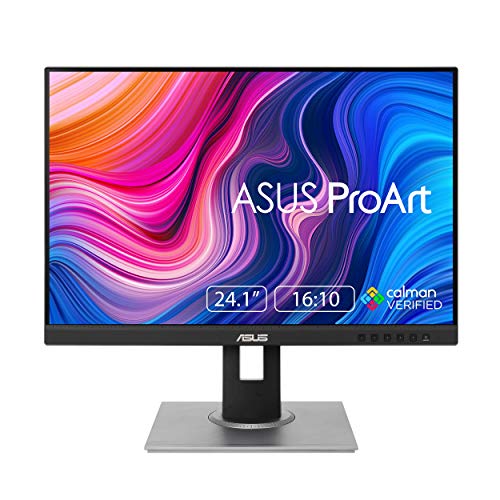
TL;DR: The Asus PA248QV delivers factory‑calibrated 100 % sRGB color accuracy on a 24.1‑inch IPS panel with 75 Hz refresh, making it a solid budget‑friendly choice for photographers and designers.
The standout feature is its Calman Verified calibration with a ΔE < 2, guaranteeing out‑of‑the‑box color precision. The IPS display covers 100 % of the sRGB and 100 % of the Rec.709 gamuts on a 24.1‑inch screen, while Adaptive Sync runs at 75 Hz for smoother motion.
At 13.45 lb, the PA248QV is heavier than the 10‑pound Sansui Curved Monitor and the 7.21‑pound Sceptre E275W, yet lighter than the 15.56‑pound AOC model. Its 75 Hz refresh sits between the 60 Hz of the Innocn 4K USB‑C Monitor and the 100 Hz panels common among the other rivals.
Users consistently praise the monitor’s color accuracy and eye‑care features such as Ultra‑Low Blue Light and flicker‑free operation. Common complaints focus on the 1920 × 1200 resolution, which feels less sharp than 2K/4K options, and the modest 300 cd/m² brightness that struggles in bright rooms. Reviewers also note it lacks height or tilt adjustments on the stand.
The panel offers a 1000:1 contrast ratio, 0.270 mm pixel pitch, and 94 PPI, delivering deep blacks and fine detail. Built‑in speakers, anti‑glare coating, and ProArt Preset modes (sRGB, Rec.709, Scenery, Reading, Darkroom, Rapid Rendering) streamline creative workflows.
Pros
Cons
Best for: Creative professionals such as photographers, videographers, and graphic designers who need precise color accuracy without breaking the bank
Avoid if: You need high‑resolution (2K/4K) detail, extensive ergonomic tweaks, or a high‑brightness HDR display for gaming or bright‑room work
TL;DR: The AOC Q27G3XMN packs a Mini‑LED Fast VA panel with 137.5% sRGB coverage, 180 Hz DP refresh and 1 ms response in a 27‑inch QHD chassis, but its HDMI cap and weight may limit some setups.
What really stands out is the Mini‑LED backlight with 336 local dimming zones, delivering VESA DisplayHDR 1000 performance and a contrast ratio of 4000:1. Combined with a 137.5% sRGB color gamut and a 1 ms gray‑to‑gray response, the monitor delivers vivid HDR gaming and ultra‑smooth motion at its native 180 Hz refresh via DisplayPort.
Compared with the BenQ PD2706QN (9.1 lb) and the Sansui Curved Monitor (10.0 lb), the Q27G3XMN weighs 15.56 lb. Its depth of 10.19 in is shallower than BenQ’s 17.0 in design but deeper than the Sansui’s 8.31 in profile. Refresh‑rate wise, it outpaces the BenQ’s 100 Hz panel, the Sansui’s 100 Hz, and the Sceptre models that sit at 100 Hz, offering the highest DP‑driven refresh in the group.
Users consistently praise the monitor’s HDR impact and the buttery feel of its high‑refresh gameplay, noting the adjustable stand as a practical touch. However, several reviewers flag blooming from the local dimming zones and point out that HDMI tops out at 144 Hz, which can frustrate console gamers seeking the full 180 Hz experience. The 15.56 lb package also draws comments about heft and occasional build‑quality quirks during assembly.
Beyond the eye‑catching panel, the Q27G3XMN supports Adaptive Sync and FreeSync Premium Pro, includes a VESA‑compatible 100 × 100 mm mount, and draws 54 W in typical use while staying at 0.5 W in standby (Energy Class G). The stand offers 130 mm of height adjustment, letting you fine‑tune ergonomics for long sessions.
Pros
Cons
Best for: Budget‑conscious gamers who want a 27‑inch QHD monitor with high refresh, strong HDR, and extensive color coverage.
Avoid if: You rely on HDMI for high‑refresh console gaming, need precise professional color grading, or prefer a lighter, more compact display.
“really competitively priced”
TL;DR: The Sceptre Curved 27‑inch Prime Monitor delivers a 1500R VA panel with 99% sRGB coverage, 100 Hz refresh and built‑in speakers at a $99.97 price, though its tilt‑only stand limits ergonomics.
Its 1500R curvature wraps around a 27‑inch VA screen, giving a more immersive feel than flat panels. The display offers 99% sRGB color coverage, a brightness of 250 cd/m², a 0.311 mm pixel pitch and a fast 8 ms response time, all backed by a 100 Hz refresh rate that smooths motion for casual gaming and video.
Compared with the other nine monitors in this roundup, the Sceptre is noticeably lighter at 5.5 pounds versus the 7.21‑pound Sceptre E275W and the 10‑pound Sansui curved model. Its depth of 15.09 inches is deeper than the 7.66‑inch stand depth of the Sceptre E275W but still shallower than the 22.55‑inch depth of the Asus PA248QV. Brightness sits at 250 cd/m², lower than the 300 cd/m² of the Asus and the 350 cd/m² typical level of the Innocn 4K monitor, while its 100 Hz refresh matches the BenQ PD2706QN but falls short of the 180 Hz offered by the AOC Q27G3XMN.
Everyday users appreciate the immersive curve and the smooth 100 Hz refresh, noting that the lightweight 5.5‑pound build makes desk placement easy. Professional reviewers call it the best budget curved option for its price, praising the 99% sRGB gamut for decent color accuracy. Main complaints revolve around the rear control buttons being hard to reach in multi‑monitor setups and the stand offering only tilt adjustment, which limits ergonomic flexibility. Additionally, base model lacks FreeSync, a point highlighted by reviewers seeking smoother frame‑sync for gaming.
Pros
Cons
Best for: Budget‑conscious buyers seeking a reliable entry‑level option
Avoid if: You need advanced features or professional‑grade performance
TL;DR: The BenQ PD2706QN delivers factory‑calibrated 100% sRGB color, a 100 Hz IPS panel and 90 W USB‑C charging in a compact 27‑inch package, ideal for design work.
The standout feature is its factory‑calibrated color accuracy with Delta E ≤ 2, 100% sRGB and 95% DCI‑P3 coverage, plus a 100 Hz refresh rate and 5 ms response time that keep motion smooth for animation and video editing.
At 9.1 pounds, the PD2706QN weighs less than the AOC Q27G3XMN (15.56 lb) and the Asus PA279CRV (18.25 lb), but weighs more than the Sceptre E275W (7.21 lb). Its 100 Hz panel outpaces the Innocn 4K USB‑C Monitor’s 60 Hz and the Asus PA279CRV’s 60 Hz, yet it doesn’t reach the AOC’s 180 Hz (DP) / 144 Hz (HDMI). Brightness peaks at 400 nits, matching the Innocn and Asus PA279CRV, but falls well short of the AOC’s 1000 nits peak.
Professional reviewers highlight the monitor’s Pantone‑verified Delta E ≤ 2 accuracy and the convenience of a built‑in KVM switch for dual‑device workflows. Users appreciate the 90 W USB‑C power delivery and the Nano Matte coating that reduces glare, though several note the 1000:1 static contrast ratio produces less deep blacks than higher‑contrast panels and the 3 W stereo speakers feel under‑powered.
Pros
Cons
Best for: Graphic designers, animators, CAD/CAM professionals, and MacBook users who need precise color reproduction and versatile connectivity.
Avoid if: Deep‑black performance, high‑end audio, or the highest pixel density (e.g., 4K resolution) are top priorities.
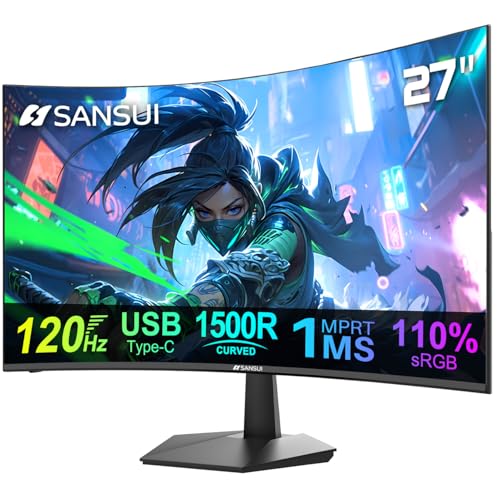
TL;DR: The Sansui 27‑inch curved monitor delivers 110 % sRGB color, a 100 Hz refresh rate and 1 ms MPRT response in a budget‑friendly package, though its 1080p panel can feel soft on a large screen.
What really sets this monitor apart is its 1500R curvature combined with a VA panel that reaches 110 % sRGB coverage and 300 nits brightness. At 27 inches the screen offers a 4000:1 contrast ratio and HDR support, while the 1 ms (MPRT) response time and Adaptive Sync keep motion blur to a minimum. The built‑in 2 W speakers and 3.5 mm audio jack add basic sound without extra peripherals.
Compared with the other nine monitors in the roundup, the Sansui is heavier than the ultra‑light Sceptre Curved 27‑inch Prime model and deeper than the Sceptre E275W, but it still fits a standard 100 × 100 mm VESA mount. Its USB‑C port and HDMI 1.4 input give it more connectivity than many budget peers that lack USB‑C, while the ultra‑thin bezel and matte surface keep the design sleek. However, it doesn’t include a DisplayPort, which some rivals do provide.
Reviewers note the smooth 100 Hz to 160 Hz performance range and praise the monitor’s ability to handle casual gaming and fast‑moving video. Shoppers also like the convenience of a single‑cable USB‑C connection and the built‑in speakers for everyday use. The most common complaint is the low pixel density of a 1920 × 1080 resolution on a 27‑inch panel, which can make text and images appear less sharp. Users also point out the limited tilt‑only stand and the modest 2 W speaker power as trade‑offs for the low price.
It includes a 3H hard coating for durability, an anti‑glare matte surface, a low‑blue‑light filter and a tilt range of –5° to 15°. The monitor runs on 110 V mains and ships with a 30‑day money‑back guarantee plus lifetime technical support, which adds confidence for budget‑focused buyers.
Pros
Cons
Best for: Budget-conscious buyers seeking a reliable entry-level option
Avoid if: You want the best value-per-dollar in its price range
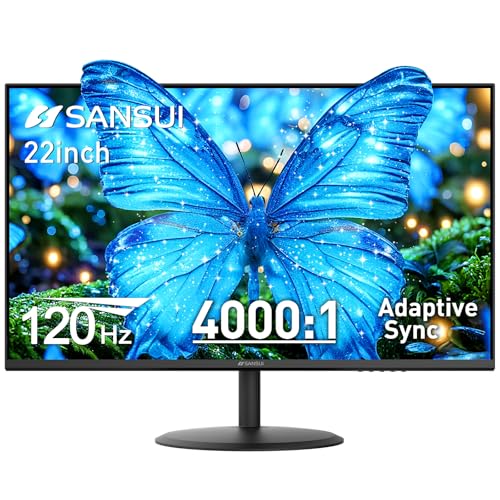
TL;DR: The Sansui 22‑inch IPS monitor delivers 120 Hz smoothness, 100% sRGB color accuracy and HDR support for just $67.47, making it a solid budget pick for gamers and home‑office users.
The standout spec is the 120 Hz refresh rate, which far outpaces the 100 Hz ceiling of most peers such as the Sceptre Curved 27‑inch and the Sansui Curved 27‑inch, and dwarfs the 75 Hz of the Asus PA248QV. Coupled with an IPS panel that covers 100% of the sRGB gamut and a 4000:1 contrast ratio, the display promises vibrant, consistent colors and deep blacks for everyday work and casual gaming.
In a lineup that includes heavier or deeper models, the Sansui weighs just 6.65 lb (3016 g) and measures a shallow 210 mm depth, so it's lighter than the 13.45‑lb Asus PA248QV and slimmer than the 15.09‑inch depth of the Sceptre Curved 27‑inch. Its width of 492 mm and height of 359 mm sit comfortably on a modest desk, while the VESA‑mount‑compatible 75×75 mm pattern gives you mounting flexibility that many larger monitors lack.
Reviewers consistently praise the fluid 120 Hz motion and the accurate 100% sRGB coverage, noting that the built‑in blue‑light filter and anti‑flicker technology reduce eye strain during long sessions. Professional voices highlight the HDR support and Adaptive Sync as extra value at this price point. The main complaints revolve around limited connectivity—only two HDMI ports and a VGA input—so users looking for USB hubs or a DisplayPort’ll need adapters or a different monitor.
Pros
Cons
Best for: Budget-conscious buyers seeking a reliable entry-level option
Avoid if: You've limited desk space or need portability
“incredible value pick”
“sharp and clear”
TL;DR: The Philips 346E2CUAE delivers a 34‑inch curved VA panel with 121% sRGB coverage, 300 cd/m² brightness, USB‑C power‑delivery and solid build quality for color‑critical work.
The standout spec offers a 34‑inch screen that folds into a gentle curve, paired with a VA panel reaching 121% sRGB and 99.5% NTSC coverage. At 0.23175 mm pixel pitch and 110 PPI you get crisp detail across the ultra‑wide 3440 × 1440 resolution, while the 4 ms GtG (and 1 ms MPRT) response times keep motion reasonably smooth.
Compared with the nine other monitors in this roundup, the Philips is noticeably larger than the 27‑inch models from BenQ, AOC, Innocn, Asus and Sceptre. Its pixel density of 110 PPI is on par with BenQ’s 109 PPI, yet its 300 cd/m² brightness sits below BenQ’s typical 350 nits and Innocn’s 350 cd/m², matching Sansui’s 300‑nit panel. At 7.83 kg it's heavier than the 5.5‑pound Sceptre Curved Prime but lighter than the 18.25‑pound Asus PA279CRV.
Users consistently praise the ultra‑wide real‑estate for multitasking, the convenience of a single USB‑C cable that supplies power and video, and the built‑in speakers that handle basic audio. The most common complaints focus on the monitor’s weight making desk setup a bit of a chore, the modest 300 cd/m² brightness limiting HDR impact in bright rooms, and the VA panel’s 4 ms GtG response that can show slight ghosting compared with faster IPS screens.
Pros
Cons
Best for: Professionals who need extensive screen real‑estate and accurate colors for design, finance or CAD work.
Avoid if: You are a competitive gamer demanding refresh rates above 144 Hz or an HDR enthusiast needing higher peak brightness.
TL;DR: The ASUS PA279CRV USB‑C is a 27‑inch 4K IPS monitor priced at $349.00, offering factory‑calibrated ΔE < 2 color accuracy, 99% DCI‑P3 coverage, and 96 W USB‑C power delivery for creators who need precision.
What really sets this monitor apart is its out‑of‑the‑box color fidelity – Calman verifies the panel with a Delta E < 2 and it covers 100% of the sRGB spectrum plus 99% of both Adobe RGB and DCI‑P3. Coupled with a 10‑bit 1073.7 million‑color depth, it delivers accuracy that professional photographers and video editors rely on. The 27‑inch 3840 × 2160 IPS display also supports HDR10 and VESA DisplayHDR 400, giving you a usable HDR experience at a peak brightness of 400 cd/m².
In the context of this roundup, the PA279CRV weighs noticeably more at 18.25 lb compared with the BenQ PD2706QN’s 9.1 lb and the AOC Q27G3XMN’s 15.56 lb. Its depth of 24.1 in also exceeds the BenQ’s 17.0 in and AOC’s 10.19 in, while the width of 8.46 in is narrower than BenQ’s 9.02 in. Brightness peaks at the same 400 cd/m² as the BenQ, but the PA279CRV limits the refresh rate to 60 Hz, which is lower than BenQ’s 100 Hz and far below AOC’s 180 Hz/144 Hz options. The response time of 5 ms GTG sits between the BenQ’s 5 ms and AOC’s 1 ms, making it adequate for creative work but not for fast‑action gaming.
Professional reviewers highlight the monitor’s factory calibration and 96 W USB‑C Power Delivery as major workflow boosters, noting that the built‑in hub lets you power a laptop and connect peripherals with a single cable. Users appreciate the anti‑glare matte surface and 178° viewing angles for comfortable long‑hour sessions. However, the reviewers point out that the 60 Hz panel and HDR400 brightness limit its suitability for high‑speed gaming or cinema‑grade HDR projects.
Pros
Cons
Best for: Creative professionals who prioritize color accuracy, wide gamut coverage, and a single‑cable workstation solution.
Avoid if: You're shopping on a tight budget — it's priced at $349.00.
“perfect for designers, video editors, and colorists due to Adobe certification and wide gamut.”
“high 4K resolution for sharp text and multitasking”
TL;DR: The Innocn 27‑inch 4K IPS monitor delivers 100% sRGB color with ΔE<2, HDR400 brightness and a 65 W USB‑C connection for $244.99, making it a solid choice for color‑critical work.
At 27 inches, the screen resolves 3840 × 2160 pixels on an IPS panel that covers 100% of the sRGB gamut and ships factory‑calibrated to ΔE<2. Brightness lists at 350 cd/m² typical and can peak at 400 nits, while HDR400 support adds extra punch for photo and video editing. The monitor also supplies up to 65 W over USB‑C, letting you power a laptop with a single cable.
Compared with the other nine contenders, Innocn feels lighter than the BenQ PD2706QN (which tips the scales at 9.1 lb) and far slimmer than the Sansui Curved Monitor’s 8.31‑inch depth. Its 66.0 mm depth and 355.6 mm height keep the footprint tight, yet the 120 mm stand‑height adjustment and ±90° pivot give more flexibility than many rivals that lack such range. Brightness‑wise, it outshines the Philips 346E2CUAE’s 300 cd/m² and sits below the AOC Q27G3XMN’s 1000‑nit peak, while its 60 Hz refresh rate trails the 100 Hz or higher rates offered by several competing models.
Everyday users praise the single‑cable USB‑C setup for decluttering desks, and professional reviewers highlight the accurate colors and strong HDR400 output as ideal for creative tasks. The trade‑off is a modest 60 Hz refresh, which reviewers say isn’t suited for fast‑paced gaming, and the lack of built‑in speakers means you’ll need external audio for multimedia.
Pros
Cons
Best for: Creative professionals who need precise colors and a tidy single‑cable USB‑C connection.
Avoid if: You need high refresh rates for fast‑paced gaming or built‑in speakers for multimedia.
“The 400 nits brightness is a lot brighter than my previous monitor.”
Breakdown
Sceptre E275W
Pros
Cons
Asus PA248QV
Pros
AOC Q27G3XMN
Pros
Sceptre Curved 27-inch Prime Monitor
Pros
Cons
Based on scoring data and product specs
Personalized picks
Best Overall Pick
Sceptre E275W
Best Budget PickBest for: Budget-conscious buyers seeking a reliable entry-level option
Asus PA248QV
Best for: Most users looking for a well-reviewed, reliable mainstream option
$199.95+$101.98 vs winner
Skip Innocn 4K USB-C Monitor if…
You have limited desk space or need portability
The Sceptre E275W takes the top spot thanks to its 27‑inch VA panel that covers 100 % of the sRGB gamut, a 100 Hz refresh rate and a 1 ms blur‑reduction response time—all for just $104.97. Its 4.5‑star rating from 8,084 reviewers shows users are happy with the picture quality, and the frameless design keeps the desk looking clean.
The Asus PA248QV lands as the runner‑up, ideal if you need extra vertical screen real‑estate for tasks like photo editing or coding. Its 24.1‑inch IPS panel offers 100 % sRGB and 100 % Rec.709 coverage, Calman Verified it with a Delta E < 2, and runs at 75 Hz, giving you precise colors and wide viewing angles.
For those looking beyond the winner, the mid‑range pick is the Asus PA248QV ($159.00) – it delivers professional‑grade color accuracy and an IPS panel without breaking the bank. The premium alternative is the Asus PA279CRV USB‑C ($349.00), which adds top‑shelf USB‑C connectivity and higher‑end specs for power users who demand the best.
Grab the Sceptre E275W now—it's a top color‑accurate monitor you can buy on a budget.
The Asus PA248QV is factory‑calibrated, is Calman Verified and lists a Delta E of less than 2, plus dedicated ProArt preset modes. The Sceptre E275W only advertises 100 % sRGB coverage without any calibration claim, so the Asus model provides tighter color accuracy right out of the box.
No reviews yet — be the first to share your experience.
Please sign in to leave a review