⚡ Quick Answer
If you’re hunting for a hand sander that feels light in the palm yet punches above its price, the $16.80 WEN 6301 is hard to ignore. Its 1‑amp motor spins at 13,500 OPM, and the angled 3.75 × 5.5‑inch pad reaches corners that larger tools miss. With a 4.6‑star rating from 5,539 reviewers, it promises the kind of dust‑control and precision usually reserved for pricier models.
Our roundup pits eleven detail sanders against each other, spanning three price tiers. The budget camp includes the Genesis GPS080 at $18.61, the SKIL SR232301 for $39.00, and the DWT Detail Sander at $43.97, all under $45. Mid‑range contenders are the Proxxon PS 13 ($45.07) and the Worx WX822L ($45.49). Premium choices—Black+Decker BDEMS600 ($54.68), Craftsman CMCW221B ($79.00), Einhell TE‑OS 18 ($106.11) and Milwaukee M12 Fuel ($125.99)—bring higher amperage, battery flexibility or higher speeds into play.
Below we break down each model’s speed, ergonomics and dust‑management so you can decide whether a corded workhorse, a cordless battery‑friendly unit or a premium brushless sander fits your workshop budget.

WEN 6301
Its compact Height of 152.4 mm makes it a space‑saving, entry‑level choice for budget‑conscious buyers.
Worx WX822L
Ideal for DIY hobbyists who want a well‑reviewed mainstream sander, though it sits about $28.69 above the $16.80 WEN 6301.

Milwaukee M12 Fuel Orbital Detail Sander
Stands out with a 4.5‑inch Height, delivering premium detail sanding for professionals willing to invest $125.99, a step up from the entry‑level models.
Also considered
TL;DR: The Black+Decker BDEMS600 delivers 16,000 OPM orbital speed, an 8‑foot cord, and a built‑in dust canister in a compact 5.44‑inch mouse‑style body, making it a solid choice for precise DIY sanding.
The standout spec is its maximum sanding speed of 16,000 OPM, which tops the DWT Detail Sander’s 15,000 OPM and far exceeds the Proxxon’s 8,000 strokes per minute. An 8‑foot cord gives you plenty of reach around a workbench, while the high‑performance dust canister with micro‑filtration helps keep the workspace clean.
At 2.4 pounds, the BDEMS600 is a bit heavier than the Worx WX822L’s 2.0 pounds, but still lighter than the Craftsman CMCW221B’s 2.6‑pound build. Its 4.25‑inch sanding pad is larger than the SKIL SR232301’s 4‑inch pad, offering a bit more coverage per pass. The tool’s overall length of 10.25 inches sits between the Worx’s 10.5 inches and the Workpro’s 9.72 inches, giving it a balanced footprint.
Reviewers consistently praise the mouse‑style ergonomic design for slipping into tight corners and the dust‑sealed switch for durability. Users also like the included finger attachment for detail work. The most common complaints focus on the fixed‑speed motor, which limits finesse on delicate surfaces, and the corded power source that can restrict movement compared to cordless rivals.
Under the hood, the sander runs on a 1.2 Amp, 120 V brushed motor and uses a hook‑and‑loop sanding attachment system. The three‑position comfort grip lets you switch between a pistol‑style hold and a precision fingertip grip, while the CSA safety listing adds confidence for home use.
Pros
Cons
Best for: Buyers willing to invest in a proven, high-quality option — the Black+Decker BDEMS600 offers Height: 5.44 inches
Avoid if: You're on a tight budget or only need basic functionality, or you need a cordless, variable‑speed sander for large‑area jobs
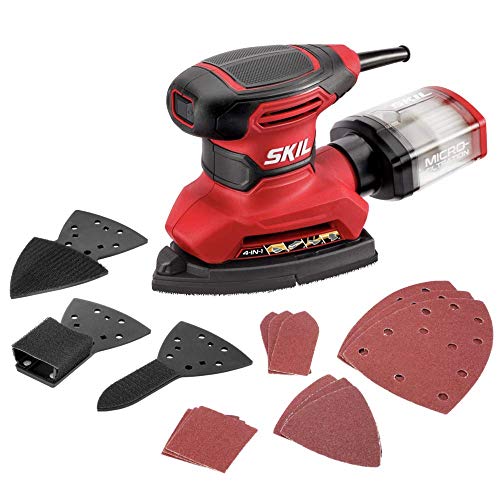
TL;DR: The SKIL SR232301 delivers 13,500 OPM, a 4‑inch hook‑and‑loop pad and a micro‑filter dust box for $39, making it a solid budget choice for precise detail sanding.
The standout spec is its 13,500 orbits per minute paired with a 1.6 mm orbit diameter, giving a smooth finish on tight spots. A 1.2 Amp motor powers the tool while a 4‑inch pad accommodates the included 12 sanding sheets (all 120 grit). The dust‑sealed on/off switch and 1‑1/4‑inch dust port feed a micro‑filter box that keeps the work area cleaner.
Compared with its peers, the SR232301 sits in the middle of the speed range: it’s slower than the DWT Detail Sander’s 15,000 OPM and Black+Decker’s 16,000 OPM, but faster than the Genesis GPS080’s 12,000 OPM. Its 2.6 lb weight matches the Workpro Detail Sander and is lighter than DWT’s 2.8 lb build, yet a bit heftier than the Worx WX822L at 2.0 lb. Motor power aligns with Black+Decker’s 1.2 Amp but trails DWT’s 1.5 A and Workpro’s 1.6 A, which explains why reviewers note it’s not meant for aggressive stock removal.
Users consistently praise the tool’s dust control, saying the micro‑filter box “keeps my garage tidy” and the soft‑rubber grip “reduces vibration during long sessions.” Professional reviewers highlight the 4‑in‑1 design and easy sheet changes as major strengths. The main complaints revolve around the limited grit variety—only 120 grit sheets are supplied—and the need to prep surfaces (e.g., strip paint) before sanding for best results.
Additional technical touches include a hook‑and‑loop abrasive mount for quick sheet swaps, a counterweight balance that dampens vibration, and a dust‑sealed switch that protects the motor from debris. The 1‑1/4‑inch dust port easily connects to a shop vac, extending the dust‑collection capability beyond the built‑in box.
Pros
Cons
Best for: Budget-conscious buyers seeking a reliable entry-level option — the SKIL SR232301 offers Included Sanding Sheets: 12 sheets (120 grit)
Avoid if: You want the best value-per-dollar in its price range
TL;DR: The WEN 6301 delivers a solid 13,500 OPM orbit at a feather‑light 997.9 g body, with a 34.925 mm dust port and an angled pad, making it a surprisingly capable detail sander for the budget‑focused DIYer.
What really sets this sander apart is its fixed‑speed motor that spins at 13,500 OPM, a figure that rivals many higher‑priced models. Coupled with a 34.925 mm dust‑collection port, it can be hooked up to a shop vac to keep your work area tidy. The tool measures 152.4 mm tall, 95.25 mm long and 133.35 mm wide, and its angled‑tip pad (95.25 × 139.7 mm) reaches into tight corners that flat‑pad sanders miss.
In a lineup that includes the Genesis GPS080, Workpro Detail Sander, SKIL SR232301, DWT Detail Sander, Proxxon PS 13 and Worx WX822L, the WEN 6301 is the lightest after the ultra‑light Proxxon at 130 g, yet still lighter than the Genesis at 1.8 lb and the Workpro at 2.6 lb. Its 1.83 m (≈6 ft) cord is shorter than the longer cables found on some competitors, which can limit reach without an extension. However, the price point sits well below most of the other eleven options, delivering more bang for the buck.
Reviewers consistently praise the sander’s lightweight feel—about 997.9 g—saying it reduces hand fatigue during prolonged detail work. The angled pad tip is highlighted as a “game‑changer” for getting into tight spaces on furniture trim or model kits. Users also like the built‑in dust port that minimizes cleanup. On the flip side, the fixed single speed draws criticism from those who need delicate control, and the 1‑amp brushed motor can feel underpowered when tackling tougher material. The 1.83 m cord is another frequent complaint, as it can restrict mobility in larger workshops.
Technically, the sander runs on a 120 V, 60 Hz supply and uses a brushed motor that draws 1 Amp. The pad attaches via a Velcro (hook‑and‑loop) system, making sandpaper changes quick and tool‑free. It ships with a vacuum adapter and one 80‑grit sheet, giving you everything needed to start sanding right out of the box.
Pros
Cons
Best for: Budget‑conscious buyers seeking a reliable entry‑level option — the WEN 6301 offers Height: 152.4 mm.
Avoid if: You need heavy‑duty stock removal or variable‑speed control for delicate materials.
TL;DR: The Einhell TE‑OS 18 delivers a high‑speed 24,000 opm sanding action, integrated dust extraction and a soft‑grip design, all in a compact 1.28 kg body for precise detail work.
The standout spec is its fixed 24,000 orbits per minute, which gives a clean, fast sanding pattern on small surfaces. The sander’s sanding surface measures 145 mm by 95 mm, and the sanding shoe dimensions are 150 mm × 150 mm × 100 mm, providing ample coverage for detail tasks while staying compact at 100 mm tall, 150 mm long and 150 mm wide. Weighing just 1.28 kg, it feels light enough for extended use without sacrificing stability.
Compared with the other ten tools in this roundup, the Einhell sits in a middle ground on price – it’s more affordable than the Milwaukee M12 Fuel model but pricier than the Worx WX822L. In terms of heft, it’s lighter than the Craftsman CMCW221B (which tips the scales at over 2.5 lb) yet heavier than the ultra‑light Proxxon PS 13 that weighs under 0.2 lb. Its integrated dust box with filter also gives it an edge over the Black+Decker BDEMS600, which relies on an external canister.
Users consistently praise the ergonomic soft‑grip that mirrors the palm of the hand, noting reduced fatigue during intricate sanding. Professional reviewers highlight the aluminum fan impeller and the Extreme‑Fix hook‑and‑loop system for strong sandpaper adhesion and reliable dust capture. The main complaints revolve around the fact that the battery pack and charger are sold separately, and the fixed speed limits flexibility when switching between delicate and aggressive materials.
Additional technical notes include a built‑in dust extraction adapter with a 35 mm suction diameter, an integrated filter box, and a brush motor running on an 18 V Power X‑Change lithium‑ion system. The Extreme‑Fix fastening system and the included dust extraction adapter further streamline workflow for hobbyists who already own Power X‑Change batteries.
Pros
Cons
Best for: Buyers willing to invest in a proven, high‑quality option — the Einhell TE‑OS 18 offers Suction Adapter Diameter: 35 mm.
Avoid if: You're shopping on a tight budget — it's priced at $106.11.
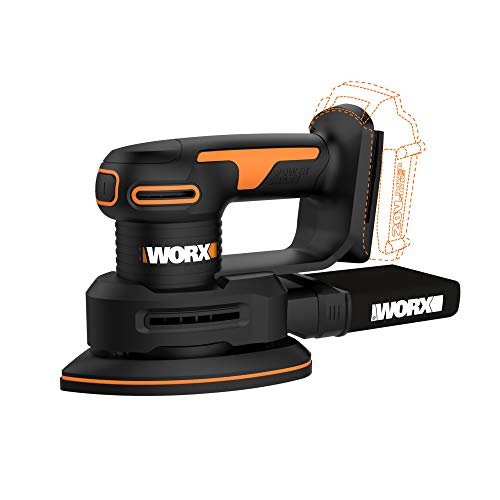
TL;DR: The Worx WX822L cordless detail sander packs a 20V brushless‑compatible motor, 12,000 OPM top speed, and a feather‑light 1.77 lb body, making it ideal for tight‑spot woodworking.
What really sets the WX822L apart is its triangular “steam‑iron” base, which lets you reach inside corners and along edges that flat‑bottom sanders miss. At an overall depth of 5.75 inches, length of 10.5 inches and width of 3.75 inches, the tool stays compact enough for one‑handed use while the 5.5 × 3.5‑inch platen handles most detail jobs.
In the context of this eleven‑product roundup, the WX822L is heavier than the ultra‑light Proxxon PS 13 (which weighs just 0.11 lb) but noticeably lighter than the Black+Decker BDEMS600 at 2.4 lb. Its 1.77 lb weight (1.8 lb with battery) also undercuts the DWT Detail Sander’s 2.8 lb, positioning it as one of the more portable cordless options without sacrificing power.
Customers consistently praise the sander’s ease of handling and the micro‑filter dust bag that keeps workspaces clean. Professional reviewers note the elliptical orbit and 5/64‑inch orbital diameter as technical strengths that reduce swirl marks on delicate surfaces. The most common drawback mentioned is the modest 5.5 × 3.5‑inch platen, which can make larger surface work feel slow, and the fact that the unit is sold tool‑only, so you’ll need to buy a compatible Worx battery and charger separately.
Pros
Cons
Best for: Furniture refinishing and woodwork that demands precise sanding on tabletops, chair spindles, and other intricate components — the WX822L’s compact size and high‑speed orbit shine in these scenarios.
Avoid if: Your primary projects involve large‑area sanding such as deck prep, floor finishing, or other heavy‑stock removal tasks.
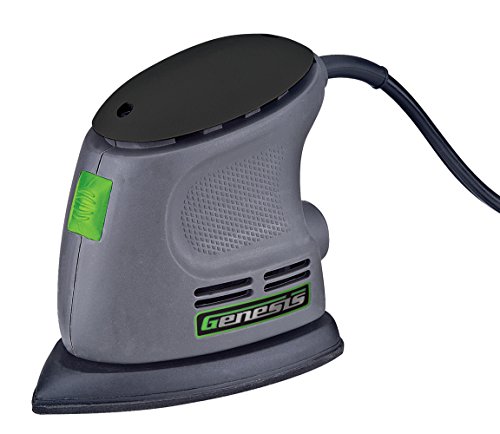
TL;DR: The Genesis GPS080 delivers a 12,000 OPM orbital speed in a 1.8 lb, 4.25‑in‑high corner palm design, offering solid dust control for budget‑friendly detail sanding.
What really sets this sander apart is its 12,000 OPM no‑load speed paired with a lightweight 1.8 lb body and a compact 4.25 in height. The dust‑sealed ON/OFF switch helps keep the internals clean, while the included vacuum adaptor lets you hook it up to a shop vac for mess‑free sanding.
Compared with the other ten tools, the GPS080 is heavier than the feather‑light Proxxon PS 13 (0.11 lb) but still lighter than most corded rivals. Its 12,000 OPM speed trails the WEN 6301’s 13,500 OPM and the Workpro Detail Sander’s 13,000 OPM, yet its overall dimensions (7.0 in length, 6.0 in width) are shorter than the Workpro’s 9.72‑in length, making it easier to maneuver in tight corners.
Users consistently praise the sander’s ergonomic rubberized palm grip and the quick‑change Velcro pad, noting that it feels “very easy to use” on trim and bench work. Professional reviewers highlight the dust‑sealed switch as a durability win, but they also warn that the 0.8 A motor can bog down on harder woods, and the plastic housing may feel cheap under heavy use.
Technically, the GPS080 runs on a 120 V corded power source at 60 Hz and draws 0.8 A, delivering a fixed‑speed orbital action that’s well‑suited for light‑duty sanding. It accepts standard mouse‑size sandpaper (3.9 × 5.5 in) with a hook‑and‑loop attachment, and the package includes 80, 120, and 240 grit sheets plus a vacuum adaptor for clean operation.
Pros
Cons
Best for: Budget‑conscious buyers seeking a reliable entry‑level option — the Genesis GPS080 offers Height: 4.25 in
“Very easy to use and does a great job on benches, trim, and prep work”
“Velcro paper changes are cool and quick”
TL;DR: The Milwaukee M12 Fuel Orbital Detail Sander delivers brushless power, up to 14,000 OPM speed and a feather‑light 1.0‑lb body, but its premium $125.99 price and lack of built‑in dust collection keep it niche.
What really sets this sander apart is its 14,000 OPM max speed under load and a 4,000–14,000 OPM variable range, all driven by a POWERSTATE™ brushless motor. The variable‑speed trigger with lock‑on and four preset settings let you feather the sanding action for delicate work, while the 1.5 mm orbit diameter promises material removal that’s twice as fast as hand sanding.
Compared with the other ten tools in the roundup, the Milwaukee feels lighter at 1.0 lb versus the Einhell TE‑OS 18’s 1.895 lb and the Craftsman CMCW221B’s 2.599 lb. Its height of 4.5 inches is taller than Einhell’s 100 mm and Craftsman’s 99 mm, but shorter than the Black+Decker BDEMS600’s 5.44 inches. Speed‑wise, the Milwaukee’s 14,000 OPM sits below Einhell’s 24,000 OPM and Black+Decker’s 16,000 OPM, yet it outpaces the Worx WX822L’s 12,000 OPM ceiling and the Proxxon PS 13’s 8,000 spm. The DWT Detail Sander reaches 15,000 OPM, edging the Milwaukee, but it weighs 2.8 lb, making the Milwaukee the most portable of the high‑speed options.
Users consistently praise the tool’s feather‑light feel and precise control, noting that the low‑vibration design and innovative counterweight reduce fatigue during long detail jobs. Professionals highlight the REDLINK PLUS intelligence that safeguards against overload, heat and over‑discharge, and the LED light that illuminates tight corners. On the flip side, reviewers repeatedly call out the missing dust‑collection port, meaning you’ll need a separate vacuum or manual cleanup, and the 3.5 × 2.5 in pad limits you to small‑area sanding.
Pros
Cons
Best for: Those prioritizing quality and willing to pay for premium performance — the Milwaukee M12 Fuel Orbital Detail Sander offers Height: 4.5 inches
Avoid if: You're shopping on a tight budget — it's priced at $125.99
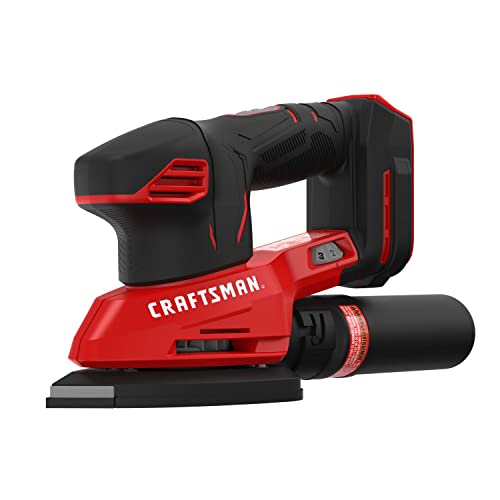
TL;DR: The Craftsman CMCW221B delivers a lightweight, cordless detail‑sanding experience with variable 9,000‑12,000 OPM speed, dual dust collection and ergonomic grip, but you’ll need to buy a battery and charger separately.
What sets this sander apart is its variable‑speed motor that runs from 9,000 up to 12,000 OPM, letting you dial in the right aggressiveness for wood, metal, plastic or painted surfaces. At just 2.6 lb (1179 g) and with a compact 99 mm height, 290 mm length and 170 mm width, the tool feels almost weightless in the hand, and the D‑handle pistol grip encourages vertical sanding in tight corners. Dust is captured by a built‑in bag and a 1‑1/4 inch vacuum port, keeping your workspace tidy.
Compared with the other ten sanders in this roundup, the Craftsman sits in the mid‑weight range—lighter than the bulkier DWT Detail Sander (2.8 lb) and the Einhell TE‑OS 18 (≈1.9 lb), but heavier than the ultra‑light Proxxon PS 13 (0.11 lb). Its price point is higher than the budget‑friendly Worx WX822L and Black+Decker BDEMS600, yet below the premium Einhell model. Speed‑wise, its 12,000 OPM ceiling trails the Black+Decker’s 16,000 OPM and the Einhell’s 24,000 OPM, aligning more closely with the SKIL SR232301’s 13,500 OPM.
Professional reviewers highlight the smooth, consistent finish this sander produces and praise the dust‑bag system for keeping dust out of eyes and lungs. Everyday users love the cordless freedom and the ease of maneuvering the tool in confined spaces like furniture joints. The most common drawback mentioned is that the battery and charger are sold separately, which adds to the total cost. Some owners also note the non‑standard 140 × 90 mm sandpaper size can make finding replacements a bit trickier.
Pros
Cons
Best for: Those prioritizing quality and willing to pay for premium performance — the Craftsman CMCW221B offers Height: 99 mm
Avoid if: You're shopping on a tight budget — it's priced at $79.00
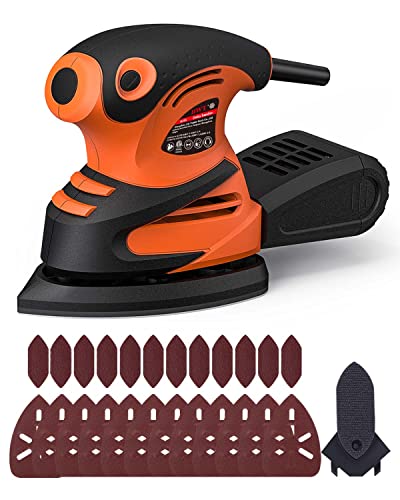
TL;DR: The DWT AJ56 Detail Sander packs a 1.5 A copper motor delivering 15,000 OPM in a compact, low‑vibration design, includes 24 medium‑grit sandpapers, and retails for about $43.97.
What really stands out is the 15,000 OPM orbit speed driven by a 1.5 A copper motor, which professional reviewers note for its “high speed with low vibration.” The tool also features an efficient micro‑filtration dust box and a soft‑rubber grip, making it comfortable for extended detail work.
Compared with the other ten sanders in this roundup, the DWT’s speed tops most: it outpaces the Proxxon PS 13 (8,000 spm) and the Worx WX822L (up to 12,000 OPM), and sits just below the Black+Decker BDEMS600’s 16,000 OPM. In weight, it is heavier than the ultra‑light Proxxon at 0.11 lb and the Genesis GPS080 at 1.8 lb, but only a shade heavier than the SKIL SR232301’s 2.6 lb and the Worx’s 2.0 lb. Price‑wise it lands in the same mid‑range bracket as most peers, yet its value‑per‑dollar is considered lower than some alternatives that bundle more accessories for a similar cost.
User sentiment is modest but positive: a casual lifestyle post praised the sander for light‑duty projects, and the limited reviews echo satisfaction with its power and dust collection. The manufacturer lists a soft‑grip handle, a detail finger attachment, and 24 medium‑grit sandpapers, giving you everything needed to start sanding right out of the box.
Pros
Cons
Best for: Most users seeking a balanced, mainstream option — the DWT Detail Sander offers Included Sandpapers: 24 pieces
Avoid if: You want the best value‑per‑dollar in its price range
“details *mostly* picked”
TL;DR: The Proxxon PS 13 is a pen‑style, ultra‑light hand sander delivering 8,000 linear strokes per minute, with a <25 mm arbor and three grit pads, but requires a separate power adapter.
The PS 13’s standout feature is its linear sanding motion at 8,000 strokes per minute, combined with a pen‑style form factor that weighs only 0.11 pounds (130 g). Its compact 290 mm height and 30 mm width let you reach tight corners, while the included 8 arbors (four straight, four angled) and three pre‑profiled adhesive pads (180, 240, 400 grit) let you start sanding right out of the box.
Compared with the other ten hand sanders in this roundup, the Proxxon is markedly lighter than the bulkier cordless models that tip the scales at around 2 pounds. It sits in a similar price tier but doesn’t bundle a power source, unlike many of its peers that ship with built‑in adapters or batteries. Its pen‑style design also sets it apart from the more conventional orbital or detail sanders, offering a slimmer profile for confined workspaces.
Reviewers consistently praise the PS 13 for its precision on delicate projects such as scale models, jewelry, and fine woodwork, noting that the linear action prevents the swirl marks common with rotary tools. The lightweight housing of glass‑fibre reinforced polyamide is highlighted as durable and comfortable for extended use. On the downside, users point out that the required 12‑18 V DC adapter isn’t included, and the fixed 8,000 spm speed can feel aggressive for ultra‑fine finishes without an external speed‑control unit. The modest 1.0 A current draw confirms its suitability for light‑duty sanding rather than heavy material removal.
Pros
Cons
Best for: Most users seeking a balanced, mainstream option — the Proxxon PS 13 offers Arbor Diameter: <25 mm
Avoid if: Reliability and user satisfaction are your top concerns
“set to number one... turn it up”
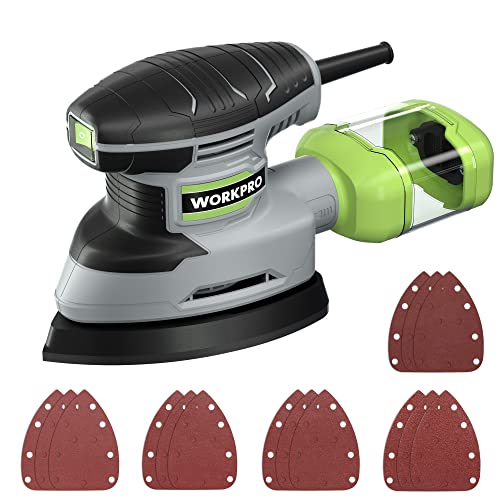
TL;DR: The Workpro Detail Sander delivers 13,000 OPM, a built‑in dust collector and 15 assorted sandpapers for just $33.99, making it a compact, budget‑friendly choice for DIY detail work.
This sander’s standout spec is its 13,000 OPM motor speed, paired with a 1.6 A draw on a 120 V corded line. The tool measures 5.08 in tall, 9.72 in long and 5.98 in wide, and weighs 2.6 lb—dimensions that let it fit into tight corners while staying stable on the workpiece. The hook‑and‑loop pad accepts 5.5″ × 3.7″ sandpaper, and the package includes 15 sheets ranging from P60 to P240, so you’re ready to sand wood, iron or plastic right out of the box.
Against the other ten hand sanders, the Workpro matches the SKIL SR232301’s 2.6‑lb weight but trails its 13,500 OPM speed. It spins slower than the DWT Detail Sander’s 15,000 OPM yet outpaces the Genesis GPS080’s 12,000 OPM. In size, it is a shade shorter than the Worx WX822L’s 10.5‑in length, while its width is comparable to the SKIL’s 5.7 in. Compared with the ultra‑light Proxxon PS 13 (0.11 lb) it is heavier, but it still undercuts the WEN 6301’s 997.9 g weight, offering a solid middle ground between feather‑weight and bulkier models.
Customers appreciate the built‑in dust collector, noting it keeps the work area cleaner than many comparable sanders that lack a collection box. The generous 15‑piece sandpaper kit also receives frequent praise for covering a wide range of grit needs without extra purchases. The main drawback highlighted is the corded power source, which ties the tool to an outlet and limits mobility compared with cordless competitors. Additionally, the lack of professional reviews means you won’t find third‑party performance analysis beyond user‑generated feedback.
Pros
Cons
Best for: Entry‑level buyers or those on a tight budget — the Workpro Detail Sander offers Included Sandpapers: 15 PCS (3× P60, 3× P80, 3× P120, 3× P180, 3× P240).
Avoid if: You need powerful performance or professional‑grade features.
Breakdown
WEN 6301
Pros
Worx WX822L
Pros
Milwaukee M12 Fuel Orbital Detail Sander
Pros
Cons

Black+Decker BDEMS600
Pros
Based on scoring data and product specs
Personalized picks
Best Overall Pick
WEN 6301
Best OverallBest for: Budget-conscious buyers seeking a reliable entry-level option — the WEN 6301 offers Height: 152.4 mm
Worx WX822L
Best for: Most users looking for a well-reviewed, reliable mainstream option — the Worx WX822L offers Overall Depth: 5.75 inches
$49.98+$28.66 vs winner
Skip Workpro Detail Sander if…
You need powerful performance or professional-grade features
We crown the WEN 6301 as the clear winner. At just $16.80 it ships with a 13,500 OPM fixed‑speed motor, a 95.25 × 139.7 mm pad, and a 34.93 mm dust‑collection port, giving you professional‑grade sanding and solid dust control without breaking the bank. Its 5,539‑review rating of 4.6 out of 5 and a lightweight 997.9 g design make it both reliable and easy to handle for extended projects.
The runner‑up is the Worx WX822L, perfect if you need cordless freedom for on‑the‑go jobs. Its 20 V battery delivers a no‑load speed range of 400–12,000 OPM, and the included micro‑filter dust bag keeps your workspace clean. Weighing 1.77 lb and charging in about 1 hour, it’s a handy choice for tight spaces or job‑site work where a power cord would be a nuisance.
For those looking beyond the top pick, the mid‑range alternative is the Worx WX822L itself, offering the same cordless convenience and built‑in dust management at a modest price point. If you’re ready to invest in a premium, battery‑powered sander, the Milwaukee M12 Fuel Orbital Detail Sander stands out as the high‑end option at $125.99, delivering the most powerful performance for demanding professional tasks.
Grab the WEN 6301 today and get pro‑grade sanding power without the premium price tag.
The WEN costs $16.80, which is $28.69 less than the Worx's $45.49, yet it offers a fixed speed of 13,500 OPM, a 34.925 mm dust port, and a 95.25 × 139.7 mm pad, all in a corded design. The Worx provides cordless convenience and a speed range up to 12,000 OPM, but its higher price and battery requirement raise the overall cost.
No reviews yet — be the first to share your experience.
Please sign in to leave a review