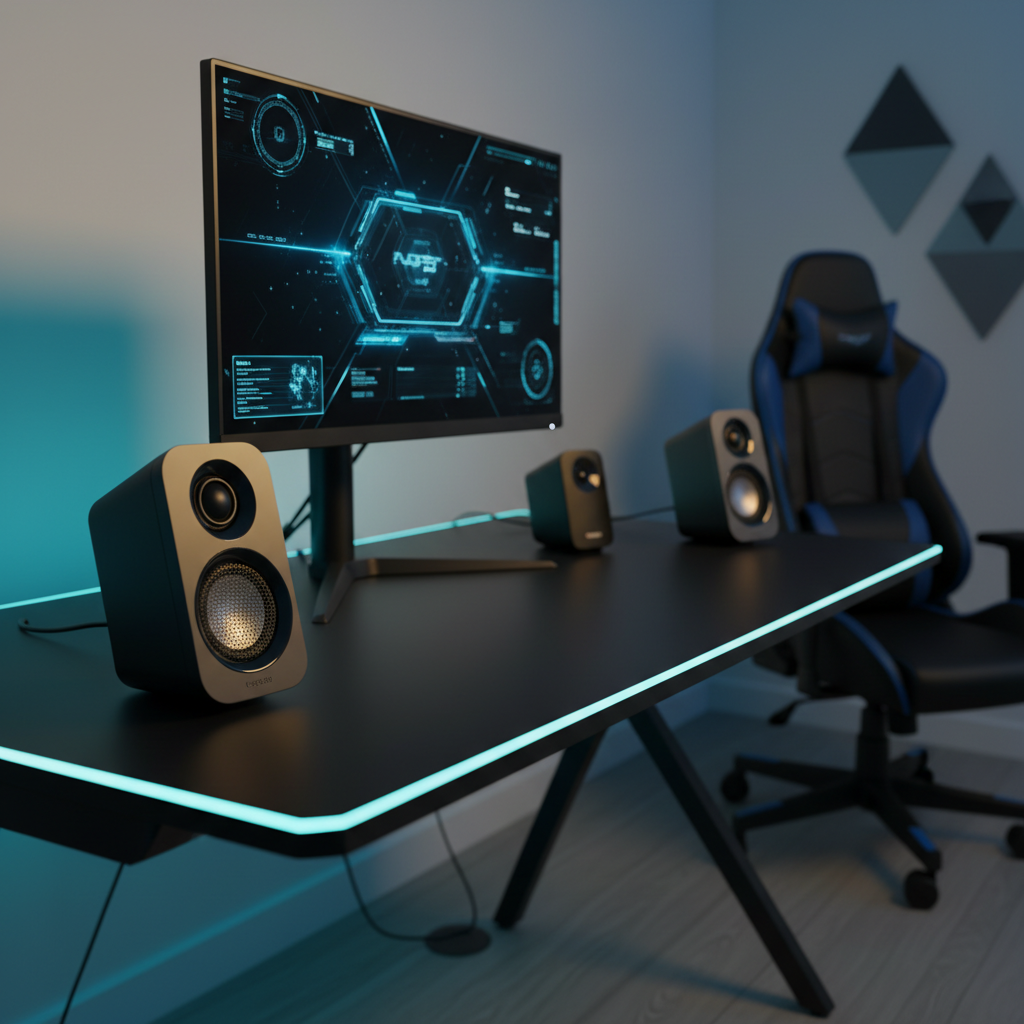
Choosing a speaker that fits a cramped desk without sacrificing game‑time immersion can feel like a guessing game, especially when 13 different models are on the market. Our roundup spans every price tier – from the $15.99 Logitech S150, a lightweight 0.4‑pound USB pair that earned 4.2 / 5 stars from 12,788 reviewers, up through mid‑range options like the Redragon GS520 at $25.83, and onto premium contenders such as the Nylavee SK100, which has a 72 dB signal‑to‑noise ratio and a $53.99 price tag.
What really matters on a small desk is footprint, power source, and audio clarity. The budget‑friendly Jeecoo M20 squeezes a 10 W maximum output into a 78 mm‑tall chassis, while the premium Ohayo C6 delivers an 80 dB SNR and Bluetooth 5.3 in a compact 293 mm‑high enclosure. In practice, you’ll want to balance the USB‑only convenience of the Logitech S150 against the richer driver sizes of the Redragon GS510’s 2‑inch units, especially if you lean toward gaming or media playback.
Below, we break down each tier, highlight the top‑rated picks, and point out which speakers excel at delivering clear, immersive sound without hogging your workspace.
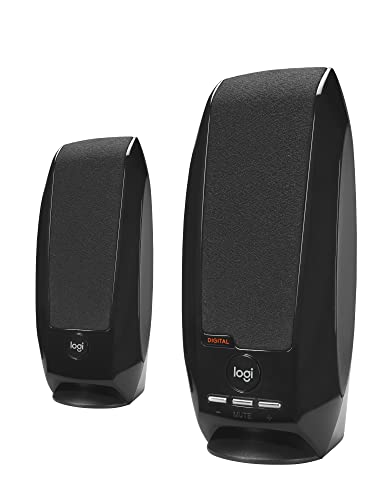
Logitech S150
Its 50.8 mm driver delivers clear mids and highs, providing the best sound balance for compact desk setups.
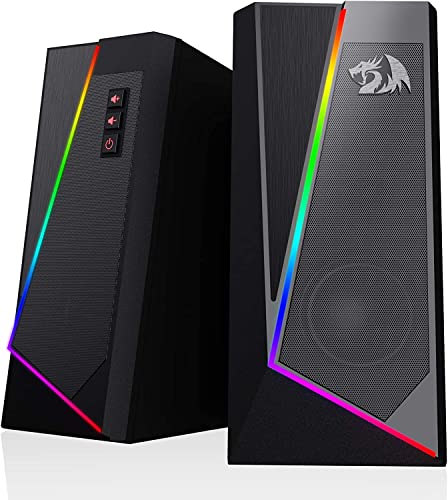
Redragon GS520
Ideal for value‑conscious gamers who want a 2 in (50.8 mm) driver, though it sits about $9.84 above the Logitech S150.

Redragon GS500
Stands out with >35 dB channel separation and a larger 2.5 in driver, delivering clearer stereo imaging for budget‑focused setups.
Also considered
Score Analysis
Key score advantages vs. runner-up (Redragon GS520)
Price Range
Logitech S150
$15.99
Redragon GS520
$25.82
Redragon GS500
$22.97
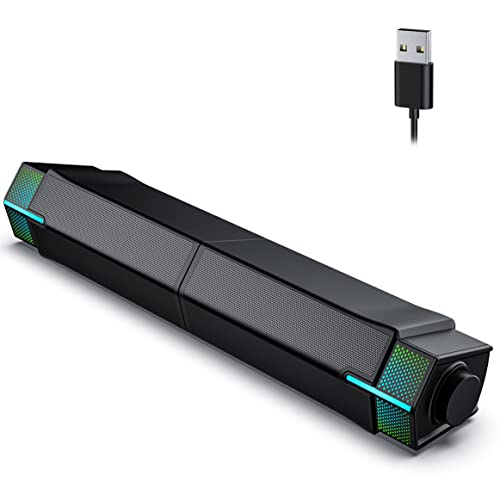
Jeecoo M20
$18.04
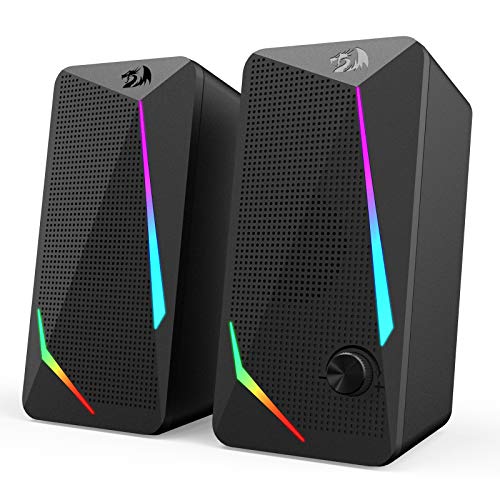
Redragon GS510
$24.99

Nylavee SK100
$53.99

Ohayo C6
$66.49

Littoak GM03
$51.33

Redragon GS560 White
$33.98
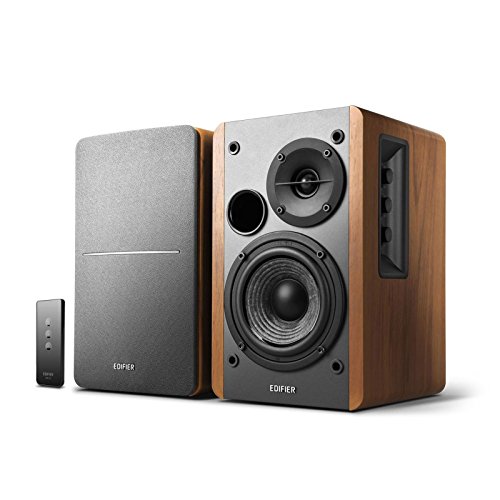
Edifier R1280T
$119.99

Razer Leviathan V2 X Renewed
$62.00

SteelSeries Arena 3
$149.99
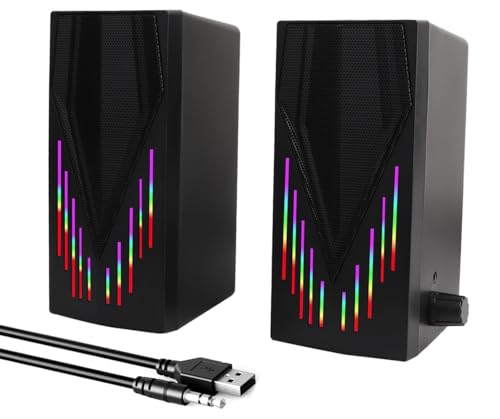
YXHDZ DN6012
$11.99
Spec Comparison
TL;DR: The Logitech S150 delivers clear, USB‑powered stereo sound from 2‑inch drivers in a 0.4‑pound, 64 mm‑deep package for just $15.99, ideal for tight desk spaces.
The standout spec is the 50.8 mm (2‑in) dynamic full‑range driver paired with a 1.2 W RMS output, giving you a modest but clean audio window from 90 Hz to 20 kHz. Its single 4‑foot USB‑A cable powers the speakers and carries the digital signal, so you won’t need a separate adapter.
Compared with the other twelve entries, the S150 weighs noticeably less than the Jeecoo M20 (over three times heavier) and the YXHDZ DN6012 (about three times heavier). Its driver is smaller than the Redragon GS500’s 2.5‑in units and the GS560’s 2‑in drivers, but matches the Jeecoo M20’s 50.8 mm size. The inter‑speaker cable measures 5 feet, shorter than the Redragon GS500’s 838 mm link, limiting how far apart you can place the satellites.
Users consistently praise the plug‑and‑play USB convenience and the speakers’ ability to outshine laptop built‑ins, noting clearer mids and a tidy footprint that fits into a cramped study nook. Professional reviewers highlight the lack of static and the minimalist matte black design. Common complaints focus on the abrupt volume jumps from mute to loud, the short, non‑detachable cables, and the modest bass response that may need an EQ boost for music lovers.
Pros
Cons
Best for: Students, remote workers, and travelers who need a lightweight, USB‑powered speaker that fits on a small desk or laptop tray.
Avoid if: You demand deep bass, high volume for gaming, or wireless/multi‑device connectivity.
“Great sound for such a small package”
“Volume jumps from mute to very loud”
TL;DR: The Redragon GS520 packs 2‑inch drivers, USB power and six‑mode RGB into a compact 1.8‑pound desktop pair that delivers clear mids for gamers on a $25.83 budget.
The GS520’s most eye‑catching spec is its 2 in (50.8 mm) dynamic drivers paired with 3 W RMS per speaker and a 20 kHz frequency response. At 88.9 mm deep, 177.8 mm tall and 101.6 mm wide per unit, the speakers sit comfortably on a small desk, while the 800 mm inter‑speaker cable keeps the pair tidy. USB‑powered operation (5 V DC) means you only need a single wall outlet, and the 10 m maximum signal range lets you place your PC or laptop a comfortable distance away.
Compared with its peers, the GS520 is heavier than the Logitech S150 (0.4 lb) but lighter than the Redragon GS560 (2.03 lb). Its driver size matches the Jeecoo M20’s 50.8 mm drivers, yet it offers a longer inter‑speaker cable than the Jeecoo’s 640 g unit (the GS520’s 800 mm versus the GS510’s 990 mm, making the GS520’s cable shorter). The RGB lighting shines brighter too, with six touch‑controlled modes versus the GS510’s four, giving you more colour‑customisation without extra software.
Reviewers consistently applaud the GS520’s “clear mids and highs” that make in‑game footsteps and dialogue easy to spot. They call the touch‑controlled RGB “effective” and say it adds a gamer‑friendly vibe to any setup. However, many note the bass feels thin – a common complaint for compact 2‑channel speakers – and describe the physical volume buttons as “stiff”. Professional reviewers also point out the lack of Bluetooth, which some users expected from the spec sheet.
Beyond the sound, the GS520 includes a 3.5 mm mic/headset pass‑through jack, making it simple to switch between game chat and music. The ABS plastic chassis with brushed finish and aluminum accents gives it a solid feel for its price, and the one‑year warranty adds a modest safety net.
Pros
Cons
Best for: Value‑conscious gamers and desk‑workers who want clear audio and RGB flair at $25.83.
Avoid if: You need deep bass, a subwoofer, or Bluetooth connectivity for wireless use.
“Sounded better than expected”
“RGB light won’t stay on selected color”
TL;DR: The Redragon GS500 delivers 10 W RMS output, >35 dB channel separation and a red LED backlight in a compact 185 mm‑deep tabletop form for under $23.
The standout spec is its >35 dB channel separation, which helps keep left‑right audio distinct on a tiny desk. Power comes from a USB‑C 5 V input and the speakers push a total of 10 W RMS, enough for casual gaming or video calls without needing a wall outlet.
Compared with the other twelve entries, the GS500 sits in the middle of the price band – it’s more affordable than the Redragon GS560 White while being a touch pricier than the Logitech S150. Its 838 mm inter‑speaker cable is shorter than the 990 mm cable on the Redragon GS510, meaning you’ll need a modest desk width to place the two drivers.
Users repeatedly praise the plug‑and‑play USB power and the fixed red LED that adds a gaming vibe to small spaces. Reviewers note the balanced stereo imaging for its class, though several mention that bass feels thin and volume tops out in larger rooms. Professional reviewers highlight the clean stereo separation and the compact plastic chassis as a good fit for dorms or home offices.
Technical details round out the picture: the drivers are 2.5 in dynamic units, the frequency response spans 270 Hz – 20 kHz, and the dimensions (110 mm × 170 mm × 185 mm) keep the footprint modest. At 762 g the pair is lightweight enough to reposition without a mount.
Pros
Cons
Best for: Budget‑conscious buyers seeking a reliable entry‑level option
Avoid if: You want the best value‑per‑dollar in its price range
“Perfect for my small apartment—clear sound and doesn’t take up space.”
“Easy setup: plugged into my laptop and it worked instantly.”
TL;DR: The Jeecoo M20 offers a 50.8 mm driver, 10 W output and Bluetooth 5.3 in a modular, RGB‑lit design for under $20, but expect limited bass and a lightweight plastic build.
The standout spec is the 50.8 mm dynamic driver paired with a maximum output of 10 W, which the manufacturer claims delivers clear mids at moderate volumes. The speakers also feature Bluetooth 5.3 with a 10 m range and a 5 V DC USB power source, so you can go wireless without needing a wall outlet.
Compared with other options in this roundup, the M20 is heavier than the Logitech S150’s 0.4 pounds but lighter than the Redragon GS560 White’s 2.03045743302 pounds. Its driver size matches the Logitech S150’s 50.8 mm unit, while it is smaller than Redragon’s 2.5 in drivers. The included 1.6 m USB cable is shorter than the hard‑wired inter‑speaker cable of the Logitech S150, but the modular slide‑way lets you separate or combine the speakers—something the Redragon models don’t advertise.
User feedback highlights the ease of setup and the attractive gradient RGB lighting, which you can turn off if you prefer a minimalist look. Reviewers praise the clear mids at lower volumes, but many note distortion and a loss of bass when cranking the volume. The plastic enclosure feels lightweight, and several users report occasional LED flickering, which professional reviewers also flag as a downside.
Pros
Cons
Best for: Students, remote workers and budget‑conscious users who need a compact desktop speaker with Bluetooth and customizable lighting.
Avoid if: You prioritize audiophile‑grade sound, deep bass, high‑volume room‑filling audio, Xbox or console gaming, or require a 3.5 mm AUX jack.
“Perfect for my small desk—love that I can separate the speakers!”
“Sound is clear for YouTube, Zoom calls, and music.”
TL;DR: The Redragon GS510 delivers 5 W RMS per channel, RGB lighting and touch controls in a compact 550 g tabletop package for $24.99, but its bass sounds thin and the build feels cheap.
The GS510’s standout spec is its 5 W RMS output per channel, giving a total of 10 W RMS power from two 2 in (51 mm) dynamic drivers. It runs off a 5 V USB source, so you just plug it into a PC and you’re ready to go. Touch‑sensitive controls sit on a sleek ABS plastic frame, and four RGB lighting modes let you add a splash of color to a small desk.
At 550 g (about 1.2 lb), the GS510 is lighter than the Redragon GS520, which tips the scales at 1.8 lb, yet it matches the weight of the YXHDZ DN6012 (≈1.21 lb). Its 990 mm inter‑speaker cable outstretches the 800 mm cable of the GS520 and the 838 mm run on the GS500, while still being shorter than the 1.22 m USB power cable on the GS520. Height and depth (110 mm × 185 mm) are identical to the GS500, and the speakers sit higher than the ultra‑compact Logitech S150 (0.4 lb). In short, the GS510 offers a balanced size‑to‑weight ratio compared with its peers.
Everyday users love the low price point and the plug‑and‑play USB setup, rating the speakers around 4.3 stars. Reviewers repeatedly praise the RGB lighting and the ease of getting sound out of the box. However, a vocal minority notes a tinny audio profile, weak bass response, and distortion when cranked up. Professional reviewers also point out the plasticky feel of the ABS housing and limited audio customization options, though they acknowledge the “enhanced clear bass” claim from the manufacturer.
Technical details round out the picture: the speakers use a full‑range crossover, deliver a signal‑to‑noise ratio of ≥60 dB, and cover a frequency range of 160 Hz – 20 kHz. You can turn off the 4‑mode RGB backlight, and the one‑year warranty backs the unit against early failures.
Pros
Cons
Best for: Budget-conscious buyers seeking a reliable entry-level option
Avoid if: You want the best value-per-dollar in its price range
“great for the price.”
“unit shorting out and nearly causing a fire”
TL;DR: The Nylavee SK100 offers a compact, USB‑powered 2.0 soundbar with Bluetooth 5.0, 5 W output and 4 RGB lighting modes at $53.99, delivering clear audio for tight desk setups.
The SK100 packs four full‑range drivers, two independent bass diaphragms and a 2 in (51 mm) tweeter into a tabletop soundbar that measures just 2.36 in deep, 2.75 in high and 2.7 in wide. It runs on a 5 V USB supply, draws only 5 W of power, and offers Bluetooth 5.0 with a 33 ft (10,058 mm) range and 40 ms latency, making wireless gaming and video calls hassle‑free.
Compared with the other speakers in this roundup, the SK100 is notably lighter than the Littoak GM03’s 4.2 lb chassis and roughly matches the Razer Leviathan V2 X’s 1.98 lb weight, yet its 5 W output sits far below the Razer’s 65 W total power. Its signal‑to‑noise ratio of 72 dB trails the 80 dB SNR of Littoak GM03 and Ohayo C6, but it still outperforms the Redragon GS560’s ≥65 dB and the GS510’s ≥60 dB figures. In terms of driver size, the SK100’s 2 in tweeter is smaller than Littoak’s 2.75 in (70 mm) unit, though its overall footprint stays the most space‑saving of the group.
Reviewers consistently praise the SK100 for its plug‑and‑play simplicity, the built‑in microphone and headphone jack, and the “crystal‑clear” mids and highs that beat many built‑in monitor speakers. Professional reviewers note the premium driver materials—double‑layer neodymium magnets and mica fiber diaphragms—that help deliver that clarity despite the modest 5 W ceiling. The most common complaints revolve around the modest bass depth and occasional Bluetooth pairing hiccups, especially in larger rooms where the 5 W output doesn't feel powerful enough.
Pros
Cons
Best for: Remote workers, students, and casual gamers who need clear, balanced audio on a small desk without extra cables.
Avoid if: You require room‑filling bass, high‑power output for large spaces, or a full 2.1/5.1 surround experience.
TL;DR: The Ohayo C6 packs 60 W of active stereo power, Bluetooth 5.3 and an MDF enclosure into a compact 293 mm‑high desktop speaker that sounds clear but leans on the pricey side.
At the heart of the C6 is a 30 W active amp per driver delivering a total output of 60 W, backed by an 80 dB signal‑to‑noise ratio. The system uses a 76 mm carbon‑fiber full‑range woofer paired with a 19 mm silk‑dome tweeter, and it supports Bluetooth 5.3, USB‑C digital audio, 3.5 mm AUX and RCA inputs. A rear‑facing bass port adds a little low‑end depth, while the MDF wood enclosure helps keep resonance in check.
In practice the C6 is noticeably heavier than many of its rivals – each speaker weighs 2,436 g, versus about 898 g for the Razer Leviathan V2 X and roughly 862 g for the Nylavee SK100 – but that extra mass comes with more power. Its 60 W total output sits just under the Razer’s 65 W but far above the Redragon GS560’s 6 W RMS and the GS510’s 10 W RMS. The newer Bluetooth 5.3 also outpaces the Razer’s 5.0, while most competitors don’t list a Bluetooth version at all.
Reviewers consistently praise the C6 for its crystal‑clear highs and balanced mids, noting that the integrated independent sound card keeps playback smooth. Users like the stable Bluetooth connection and the tidy desktop footprint, but several point out that the bass can feel thin in larger rooms and that the sound starts to lose clarity when cranked to max volume. The USB‑only power source means you’ll need an outlet nearby, which limits true portability.
Beyond the core specs, the C6’s front‑facing rotary volume knob and rear bass/treble knobs give you on‑the‑fly tone shaping without reaching for software. The 2‑year manufacturer warranty adds peace of mind, and the included accessories – an AC power cable, USB‑C data cable and 3.5 mm AUX cable – mean you can plug in a PC, console or phone right out of the box.
Pros
Cons
Best for: Those prioritizing quality and willing to pay for premium performance
Avoid if: You're shopping on a tight budget — it's priced at $69.99
“deliver crystal-clear highs and rich mid-bass”
“an excellent choice for gaming”
TL;DR: The Littoak GM03 offers 30 W of stereo sound, 70 mm drivers, and six RGB lighting modes in a compact 12‑in‑wide desktop pair for gamers, but it carries a higher price tag.
The standout spec is its 30 W total output (15 W per channel) driven by 70 mm full‑range drivers, delivering clear mids and highs without a separate subwoofer. The front panel houses touch‑sensitive controls and six customizable RGB lighting modes, letting you sync the look with your rig. With a 6 Ω impedance and an 80 dB signal‑to‑noise ratio, the speakers promise low hiss and reliable power draw from the 19 V DC adapter.
Compared with the other 12 speakers in this roundup, the GM03 is noticeably heavier at 4.2 lb versus the Nylavee SK100’s 1.9 lb and the Redragon GS560’s roughly 2 lb. Its driver diameter (70 mm) also exceeds the SK100’s 51 mm tweeter and the Redragon GS510’s 51 mm unit. While the Razer Leviathan V2 Renewed pushes 65 W total output, the GM03’s 30 W still outpaces the Redragon GS560’s 6 W RMS power, giving you louder, more detailed sound than many budget pairs.
Users consistently praise the GM03 for delivering loud, clear audio and eye‑catching RGB that brightens a small desk setup. Reviewers note the three preset EQ profiles—Music, Movie, Gaming—help fine‑tune the sound without extra software. The downsides that surface are a desire for deeper bass (no subwoofer), limited RGB customization (no color‑picker app), and front‑touch controls that can feel overly sensitive during intense gaming sessions.
The speakers support Bluetooth (version not listed), a 3.5 mm AUX input, and a USB port that doubles as audio input and power source. Their compact footprint—12.0 in wide, 8.3 in high, and 5.8 in deep—fits neatly beside a monitor, while the ABS plastic chassis keeps the pair sturdy for daily use.
Pros
Cons
Best for: Gamers on a budget who want built‑in lighting and preset sound profiles; students and office workers looking for a stylish desktop audio solution.
Avoid if: You're shopping on a tight budget — it's priced at $51.33, and audiophiles needing deep bass or extensive lighting customization may be disappointed.
“Excellent sound quality for the price”
“RGB looks amazing on my desk”
TL;TD: The Redragon GS560 White delivers 6 W RMS stereo sound with plug‑and‑play USB power, bright RGB lighting and a compact tabletop footprint for under‑$35.
At the heart of the GS560 is a dual‑driver setup that puts out a total RMS power of 6 W, draws power directly from a 5 V USB source. Its signal‑to‑noise ratio of ≥65 dB keeps background hiss low, while the 71.12 mm height and 68.58 mm width let it sit neatly under most monitors. The included touch‑sensitive logo lets you cycle through four to six RGB lighting presets without reaching for a mouse.
Compared with the other speakers in this roundup, the GS560 costs a bit more than the Logitech S150 and the Jeecoo M20, but it delivers more power than Logitech’s 1.2 W RMS total. It also weighs more than the GS520’s 1.8‑pound chassis, reflecting its sturdier plastic housing and built‑in lighting. While the Littoak GM03 supplies 4.2 lb of mass and a larger driver, the GS560’s sub‑pound footprint makes it a better fit for cramped desks.
Users consistently praise the clear mids and crisp highs, noting that voice chat and in‑game effects sound noticeably cleaner than laptop speakers. Professional reviewers highlight the “uncompromisingly clear sound quality” for the price point, though they also point out the flat bass response that comes from the lack of a dedicated subwoofer. The RGB sync can be a bit finicky, with some users reporting one‑sided lighting during fast action scenes.
Pros
Cons
Best for: Budget PC builders, office workers, casual gamers, and students who need a tidy, USB‑powered speaker with decent sound and RGB ambience.
Avoid if: You require deep bass, Bluetooth connectivity, or a truly audiophile‑grade listening experience.
“Sound quality exceeds this price range”
“Great volume, much better than my monitor speakers”
TL;DR: The Edifier R1280T delivers 42 W RMS of balanced sound with a 4‑inch (102 mm) woofer, analog tone controls and a wood‑finish, but it lacks any wireless streaming.
At the heart of the R1280T is a 42 W RMS total output, split into 21 W per channel, driven by a 4‑inch (102 mm) bass driver and a 13 mm silk‑dome tweeter. The speakers achieve a signal‑to‑noise ratio of ≥85 dB, and the front‑mounted bass‑reflex port helps extend the low‑end response.
Compared with the other twelve entries, the R1280T is noticeably heavier than the Razer Leviathan V2 X (1.98 lb), the Nylavee SK100 (1.9 lb) and the Redragon GS560 (2.03 lb). Its 4‑inch driver matches the driver size of the SteelSeries Arena 3, while its 42 W RMS output sits below the Razer’s 65 W total but far above the Redragon’s 6 W RMS. Unlike the Bluetooth‑enabled Ohayo C6 and the Razer, the Edifier relies on dual RCA and a 3.5 mm input, so wired connectivity is its only option.
Users consistently award the pair 4.6 / 5 stars across 19,121 reviews, praising the “rich, balanced sound” and the ability to tweak bass and treble from –6 dB to +6 dB. Professional reviewers note the “powerful audio performance with bright, clear highs.” The most common complaints focus on the lack of Bluetooth, a volume knob without level markings, a dim power LED that’s hard to see in bright rooms, and all controls sit on a single speaker.
Technical details include a 4 Ω impedance for both woofer and tweeter, a frequency response of 75 Hz – 18 kHz (±9 dB), and a wood‑effect MDF enclosure that adds a stylish desktop presence. The package comes with dual RCA cables, a 3.5 mm to dual RCA cable, an 8 ft speaker‑to‑speaker cable and a wireless remote for volume and mute.
Pros
Cons
Best for: Buyers willing to invest in a proven, high-quality option
Avoid if: You need advanced features or professional‑grade performance
“Best sub-$150 speakers I’ve ever owned.”
“Sound quality is incredible for the price — fills my bedroom easily.”
TL;DR: The Razer Leviathan V2 X Renewed packs 14‑zone Chroma RGB, 65 W total output and USB‑C/Bluetooth 5.0 into a 3‑inch‑high soundbar for $62, but its bass is thin and it lacks a 3.5 mm jack.
What really sets this soundbar apart is the 14‑zone Razer Chroma RGB lighting that syncs with games and the 65 W combined power from two 2 in (50.8 mm) full‑range drivers, each fed 32.5 W. The bass‑reflex enclosure with two 2 in × 4.1 in passive radiators tries to add low‑end punch while keeping the unit only 3.0 in tall.
In the context of the other 12 speakers, the Leviathan sits on the pricier side and is heavier than the Redragon GS560 (about 2 lb) but roughly the same weight as the Nylavee SK100 at 1.9 lb. Its 3.0 in height is much shorter than the Ohayo C6’s 293 mm overall height, making it ideal for cramped desks. The 14 RGB zones outnumber the lighting options on most peers, though its Bluetooth version 5.0 trails the 5.3 found in the Ohayo C6.
Everyday users love the plug‑and‑play USB‑C connection and the eye‑catching RGB glow, saying it’s good value for a compact gaming bar. Professional reviewers note the limited bass depth and occasional distortion once the 90 dB maximum SPL is reached, and they point out the missing 3.5 mm auxiliary input as a drawback. Some say the Synapse software isn’t needed, but the dual‑connectivity (Bluetooth 5.0 plus USB‑C) gets consistent praise.
Pros
Cons
Best for: Gamers with compact desk setups who want RGB lighting and decent stereo sound without a subwoofer.
Avoid if: You need deep bass, a dedicated subwoofer, or are on a tight budget.
“Great value soundbar”
“Lacks bass and power”
TL;DR: The SteelSeries Arena 3 offers crystal‑clear mids, 4‑inch drivers, 100 dB SPL and Bluetooth 4.2 in a compact 7.72‑inch‑deep package, but its premium $135.15 price may deter budget‑focused gamers.
The Arena 3 centers on a pair of 4‑inch two‑way drivers that deliver up to 100 dB SPL without distortion, and front‑firing bass‑reflex ports help boost low‑end response despite the lack of a subwoofer. Bluetooth 4.2 reaches 10 meters and the speakers also accept a 3.5 mm AUX input, so you can blend wireless and wired sources with the built‑in multi‑input mixing. Physical controls include a volume dial and a power/Bluetooth button on the right‑hand base.
At $135.15, the Arena 3 sits at the higher end of the price range, making it pricier than the Edifier R1280T but lighter than that model’s listed weight of over 10 pounds. Its combined weight of 2134 grams (1040 g left, 1094 g right) is heavier than the Razer Leviathan V2, Nylavee SK100, Redragon GS560 and slightly heavier than the Littoak GM03, while still being lighter than the Edifier’s heft. Its footprint—7.72 in depth, 4.97 in height and 4.13 in width—fits comfortably on a small desk compared with the bulkier dimensions of some peers.
Everyday users rave about the speaker’s clarity, noting that the on‑speaker volume knob makes quick adjustments painless and that the SteelSeries Sonar software adds a noticeable EQ boost. Professional reviewers highlight the precise mids and highs, as well as the durable plastic construction with stable bases. The most common complaints focus on the weak low‑end bass caused by the lack of a subwoofer, and occasional Bluetooth instability in crowded RF environments, which some users attribute to the older Bluetooth 4.2 codec support.
The system runs on an external 12 V DC adapter, offers front‑firing bass reflex ports, and integrates with SteelSeries Sonar for EQ customization and virtual surround sound. There’s no RGB lighting, keeping the design understated, and the base allows a slight tilt for angle adjustment.
Pros
Cons
Best for: Those prioritizing quality and willing to pay for premium performance
Avoid if: You're on a tight budget or only need basic functionality
“Incredibly clear audio—perfect for gaming and podcasts.”
“Love the volume knob on the speaker; so much better than software controls.”
TL;DR: The YXHDZ DN6012 offers compact 2.0‑channel sound, USB‑C power and customizable RGB at a very low price, though it’s a bit heavier than the lightest desk speakers.
One of the most noticeable features is the built‑in RGB lighting with multiple modes, letting you add a splash of color to a small desk without extra accessories. The speakers measure just 5.9 inches tall, 2.9 inches wide and 2.8 inches deep, so they sit comfortably beside a monitor, and the 24‑inch cable gives enough reach for most setups.
Compared with the other twelve entries, the DN6012 is heavier than the ultra‑light Logitech S150 (0.4 pounds vs 1.21033781838 pounds) and a touch deeper than that model’s listed depth. It’s lighter than the Jeecoo M20, which tips the scales at 1.4109584768 pounds, and its overall footprint is smaller than the bulkier Redragon GS500 and GS560 units that feature larger drivers and deeper enclosures.
The 4.3‑star rating from 135 reviewers suggests most owners are satisfied, often highlighting the convenient 3.5 mm headphone jack and the included USB‑C adapter for easy power. Users also appreciate the two‑year manufacturer warranty, which adds confidence despite the lack of detailed driver or power specifications.
From a technical standpoint, the speakers deliver stereo (2.0) output, include a 3.5 mm headphone jack for private listening, and come with a USB‑C adapter that simplifies connection to modern laptops. The 24‑inch cable length is sufficient for most desktop arrangements without creating clutter.
Pros
Cons
Best for: Entry‑level buyers or those on a tight budget
Avoid if: You need powerful performance or professional‑grade features
Breakdown
Logitech S150
Pros
Cons
Redragon GS520
Pros
Cons
Redragon GS500
Cons
Jeecoo M20
Cons
Based on scoring data and product specs
Personalized picks
Best Overall Pick
Logitech S150
Best OverallBest for: Users with specific technical requirements or compatibility needs
Redragon GS520
Best for: Value-conscious buyers seeking quality at $25.83
$25.82+$9.83 vs winner
Skip YXHDZ DN6012 if…
You need powerful performance or professional-grade features
Logitech’s S150 takes the top spot as the best compact gaming speakers for small desks. It packs a 50.8 mm driver and 2 W peak power while staying ultra‑light at just 0.4 pounds, fitting easily on any tabletop. The system earns a solid 4.2 / 5 rating from 12,788 reviewers and costs $15.99, giving you clear audio without breaking the bank.
The Redragon GS520 lands as the runner‑up, perfect if you need a speaker pair that also doubles as a handy desktop hub. It includes a 3.5 mm auxiliary jack for easy plug‑in, offers RGB lighting with six selectable modes, and pushes up to 3 W per speaker—all for $25.83 and a manageable 1.8 pound weight.
For tighter budgets, the YXHDZ DN6012 stands out as the cheapest option at $11.99. If you want a step up in features without splurging, the GS520 (mid‑range) gives you connectivity and lighting upgrades. At the premium end, the SteelSeries Arena 3 delivers a top‑shelf experience for $135.15, catering to audiophiles who want the most elaborate setup.
Pick the Logitech S150 today and you’ll enjoy balanced sound on your small desk without compromise.
All the speakers in this roundup are USB‑powered via a standard USB‑A connector, so you’ll need a USB‑C‑to‑USB‑A adapter or a USB‑C cable that includes a USB‑A end. Models like the Logitech S150, Redragon GS520, and Jeecoo M20 work perfectly with an adapter, while those that also offer a 3.5 mm input (e.g., Redragon GS520, GS500, GS510) let you bypass USB altogether if you prefer a direct audio jack.
Please sign in to leave a review
No reviews yet. Be the first to review!
