If you’re hunting for a compact subwoofer that delivers solid bass without swallowing your living‑room space, the Polk Audio PSW10 is hard to ignore. Priced at $209.00 and backed by a 4.7/5 rating from over 15 000 reviews, it packs a 10‑inch driver and a 50 W RMS built‑in amp into a modest 14‑by‑14‑by‑14‑inch footprint. Its front‑firing design and bass‑reflex enclosure give you deep, punchy lows that suit both home‑theater and stereo setups, while the flexible speaker‑level and line‑level inputs keep placement simple.
Eleven models span the full price spectrum—from the $109.99 Bobtot Small Subwoofer at the budget end, through the $399.00 Sonos Sub Mini and $291.99 Samsung SWA‑W510 in the mid‑range, up to premium options like the $700.00 Bowers & Wilkins ASW608 and $899.00 Bose Bass Module 700. Highlights include the Rockville Rock Shaker 12’s 800 W peak power and the B&W’s 200 W Class‑D amp, while the Sonos Sub Mini reaches down to 25 Hz in a tiny cylindrical case. In the sections that follow, we’ll break down how each tier performs and which features matter most for your space.
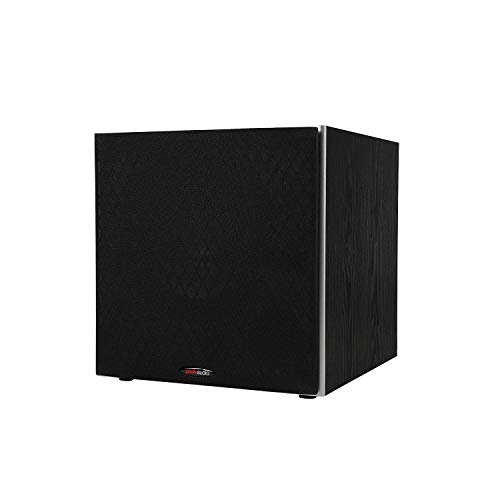
Polk Audio PSW10
Its 100‑watt peak power delivers surprisingly deep bass for a subwoofer at this price point.
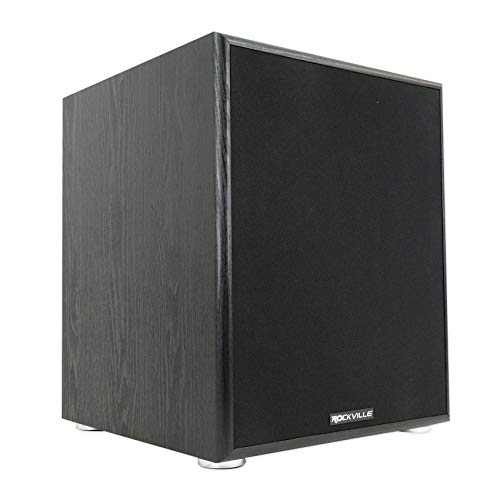
Rockville Rock Shaker 12
Ideal for small‑room setups where space is tight; at $199.95 it’s $9.05 cheaper than the Polk PSW10, giving extra punch without breaking the bank.
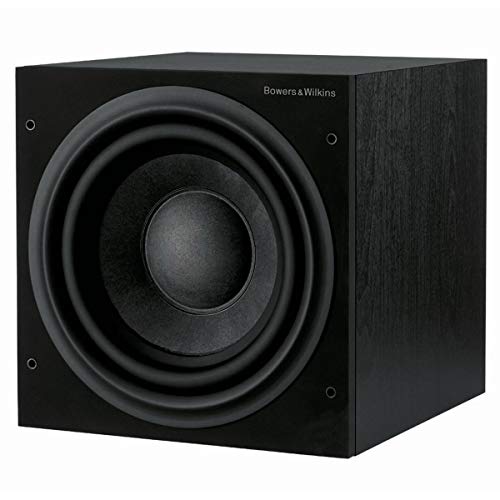
Bowers & Wilkins ASW608
Uses a 200 mm (8 in) driver with a 43 Hz resonance frequency, delivering tighter, more detailed lows that the other two models can’t match.
Also considered
Score Analysis
Key score advantages vs. runner-up (Rockville Rock Shaker)
Price Range
Polk Audio PSW10
$209.00
Rockville Rock Shaker 12
$199.95
Bowers & Wilkins ASW608
$700.00

Sonos Sub Mini
$399.00

REL Acoustics HT MKII
$649.00

Bobtot Small Subwoofer
$109.99

Earthquake CP-8
$259.00
Bose Bass Module 700
$899.00

REL Acoustics T/5x
$699.00

Samsung SWA-W510
$291.99

Monoprice SSW-10 10-inch Black
$189.99
Spec Comparison
TL;DR: The Polk Audio PSW10 packs a 10‑inch front‑firing driver and a 50 W RMS amp into a compact 26‑lb enclosure, delivering deep bass for home‑theater setups at a budget‑friendly price.
The standout spec is the 10‑inch Dynamic Balance polymer‑composite cone paired with a built‑in 50 W RMS amplifier, giving the subwoofer enough punch to fill a medium‑sized room while keeping distortion under 1 %.
Compared with the other ten entries, the PSW10 sits in the middle of the weight range—significantly heavier than the Monoprice SSW‑10 at about 2.21 lb, but far lighter than the Rockville Rock Shaker 12, which tips the scales at 43 lb. Its RMS power of 50 W is modest next to the Rockville’s 400 W RMS, yet it still outperforms many entry‑level models that list only total power figures. Depthwise, the PSW10’s 16.13 in chassis is deeper than the Earthquake CP‑8’s 12‑in depth, giving the internal bass‑reflex port room to breathe.
Users consistently praise the sub’s “deep, punchy bass” and the flexibility of its dual RCA/LFE and speaker‑level inputs, which let it pair with a wide range of receivers. Professional reviewers note the non‑resonant MDF cabinet with internal bracing as a key factor in its clean low‑frequency response, and they appreciate the continuously variable 80‑160 Hz crossover and phase switch for fine‑tuning. The main complaints revolve around the lack of a remote control or any wireless/Bluetooth option, and the unit lacks magnetic shielding, which may affect nearby sensitive electronics.
Additional technical details include a front‑firing design, auto on/off smart amplifier circuitry, and a voltage availability of 220 V. The enclosure’s dimensions—14.38 in high, 14.00 in wide, and 16.13 in deep—make it a compact choice for most entertainment centers, while the 5‑year warranty (including 3 years on the amplifier) adds confidence for budget shoppers.
Pros
Cons
Best for: Budget-conscious buyers seeking a reliable entry-level option
Avoid if: You need remote or app control, rely on wireless/Bluetooth connectivity, or have limited desk space and need portability
“clear, accurate bass despite its affordable price point”
“ability to integrate the subwoofer with various receiver configurations”
TL;DR: The Rockville Rock Shaker 12 packs a 12‑inch woofer, 400 W RMS output and an adjustable 50‑150 Hz crossover into a solid MDF cabinet, delivering room‑filling bass for budget‑friendly home‑theater setups.
At the heart of the Rock Shaker 12 is a Class D amplifier rated at 400 W RMS (800 W peak) driving a 12‑inch high‑grade foam‑surrounded paper cone. The 4 Ohm impedance and 88 dB input sensitivity give it plenty of headroom, while the 20‑200 Hz frequency response promises deep, resonant lows. Its adjustable crossover (50‑150 Hz) lets you fine‑tune the bass roll‑off to match your room acoustics.
Compared with the six peers that list concrete specs, the Rock Shaker 12 is substantially more powerful than the Polk Audio PSW10’s 50 W RMS and the Monoprice SSW‑10’s 150 W amplifier. It also outpaces the Earthquake CP‑8’s 8‑inch driver and 11 kg weight, but it’s heavier than those models—at 43.0 pounds it outweighs the Polk (26 lb) and Earthquake (24.6 lb) units. Its 12‑inch woofer is larger than the 10‑inch drivers on the Polk and Monoprice, giving it a broader low‑frequency surface area.
Reviewers consistently praise the sub’s “impactful, room‑filling bass” and note the MDF enclosure with a high‑grade vinyl finish as a durability win. However, several users point out that the low‑frequency limit can hover around 40 Hz in practice, which may fall short for audiophiles chasing sub‑30 Hz rumble. The detachable foam grill and rear‑firing port also highlight convenient design touches.
Beyond raw power, the Rock Shaker 12 offers a volume knob, phase switch (0°‑180°), bass boost, and both RCA line and high‑level speaker inputs, giving you flexible integration options. The unit’s dimensions—370.8 mm high, 480.1 mm long and 464.8 mm wide—make it a solid but manageable addition to most small‑to‑medium rooms, while the 1‑year warranty adds peace of mind.
Pros
Cons
Best for: Budget-conscious buyers seeking a reliable entry-level option
Avoid if: You have limited desk space or need portability
TL;DR: The Bowers & Wilkins ASW608 packs a 200 W Class‑D amp and an 8‑inch driver into a sealed 17‑in‑deep cabinet, delivering tight bass for compact rooms at a premium price.
The standout spec is its 200 W Class‑D ICEpower® amplifier paired with a 200 mm (8 in) long‑throw driver, giving the subwoofer enough power to fill small spaces with impactful low‑end. Its sealed acoustic‑suspension design tunes the driver resonance to 43 Hz and starts the frequency response at 32 Hz (±3 dB), promising quick, accurate bass response.
Compared with the other ten contenders, the ASW608 sits in the upper‑weight tier at 24.03 lb, heavier than the Sonos Sub Mini and Samsung SWA‑W510 but lighter than the REL Acoustics T/5x, REL HT MKII, and Bose Bass Module 700. Its 17.0 in depth is deeper than most compact units, giving the driver room to move, while its 8‑inch driver matches the size of the REL T/5x and exceeds the 6‑inch drivers found in Sonos, Samsung, and Earthquake models.
Professional reviewers highlight the sub’s “fast, tight, and dramatic bass” and note that the sealed cabinet keeps distortion low even at high volumes. Users echo this, appreciating the small footprint (15 × 13 × 17 in) that fits snugly in apartments. The main trade‑off is the sealed design’s limited ultra‑low extension, with output dropping to –6 dB around 23 Hz, which may leave audiophiles seeking deep rumble wanting more.
Additional technical details include a continuously variable crossover range of 40–140 Hz, input impedance of 33 kΩ, and a suite of controls (volume, crossover, bass extension, phase, low‑pass bypass, bass EQ, Auto Sense). Finish options are matte black or white, and the unit ships with a 2‑year manufacturer warranty.
Pros
Cons
Best for: Those prioritizing quality and willing to pay for premium performance
Avoid if: You're on a tight budget or only need basic functionality
TL;DR: The Sonos Sub Mini packs dual 6‑inch inward‑facing woofers, 25 Hz low‑end response and app‑driven EQ into a compact sealed cabinet, earning a 4.6‑star rating for easy‑setup bass in small‑to‑medium rooms.
What really sets this subwoofer apart is its force‑cancelling design: two 6‑inch drivers face inward, letting the sealed cabinet deliver clean bass down to 25 Hz while keeping cabinet vibration low. The unit draws 50 W RMS and connects over 5 GHz Wi‑Fi, so it integrates smoothly with any Sonos soundbar or speaker. At 13.999353637 pounds, it’s solid enough to stay put without a mount, yet still fits on a bookshelf or TV stand.
Compared with the other ten contenders, the Sub Mini’s driver size matches Samsung’s 6.5‑inch model but is smaller than Earthquake’s 8‑inch, Polk’s 10‑inch, Rockville’s 12‑inch, Monoprice’s 10‑inch and REL’s 10‑inch options. Its 50 W RMS output is lower than Samsung’s 200 W, Rockville’s 400 W, Monoprice’s 150 W and REL’s 300 W, but on par with Polk’s 50 W RMS. Depth‑wise, the Sub Mini’s 228.1 mm chassis is shallower than Samsung’s 239 mm, Earthquake’s 304.8 mm, Polk’s 409.6 mm and REL’s roughly 387 mm, making it a better fit for tight spaces. Weight‑wise it sits between the ultra‑light Monoprice (2.21 lb) and the heavier peers like Earthquake (24.6 lb) and Rockville (43 lb), aligning closely with Samsung’s 14.1 lb.
Users consistently praise the Sub Mini for its deep, clean bass that fills apartments and home offices without cluttering the décor. The single‑press Join button and automatic volume sync earn high marks for hassle‑free setup, while the app‑adjustable EQ lets you fine‑tune the response. However, reviewers note that Sonos does not disclose a higher power rating, and the iOS‑only Trueplay calibration leaves Android owners without that room‑tuning benefit. Varying weight and dimension listings across sources also cause some purchase uncertainty.
Pros
Cons
Best for: Most users looking for a well‑reviewed, reliable mainstream option
Avoid if: You need advanced features or professional‑grade performance
“nice, deep base”
TL;DR: The REL Acoustics HT MKII packs a 300 W RMS Class D amp and a 10‑inch front‑firing driver into a sealed 15.25‑inch‑deep cabinet, delivering tight bass down to 24 Hz for premium home‑theater setups at $649.00.
At the heart of the HT MKII is a 300 W RMS NextGen5 Class D amplifier paired with a 10‑inch CarbonGlas™ cone driver. The sealed front‑firing enclosure and a low‑pass crossover adjustable from 30 Hz to 200 Hz let the sub produce fast, controlled bass that reaches –6 dB at 24 Hz, which is deeper than many sealed competitors.
Compared with the other ten subwoofers in this roundup, the HT MKII is the heaviest at 34.2 lb, out‑weighing the Sonos Sub Mini (≈14 lb) and the Bose Bass Module 700 (30 lb). Its 10‑inch driver is larger than the 8‑inch drivers in the REL T/5x and Bowers & Wilkins ASW608, and also larger than the 6‑inch drivers in the Sonos and Samsung models. Power‑wise, the 300 W RMS output dwarfs the 125 W RMS of the REL T/5x and the 200 W of the B&W and Samsung units, giving it the highest rated output among the peers.
Professional reviewers highlight the sub’s “fast, tight bass” and note the sealed design favors speed over the deepest low‑frequency extension you’d find in a ported box. Users appreciate the adjustable crossover, phase switch, and the option to add REL’s HT Air wireless module for a clean setup. The cabinet includes electronic protection for DC faults, output shorts and a 15 A semi‑delay fuse, adding confidence for long‑term use. A three‑year parts‑and‑labor warranty rounds out the support.
Pros
Cons
Best for: Those prioritizing quality and willing to pay for premium performance
Avoid if: You're shopping on a tight budget — it's priced at $649.00
TL;DR: The Bobtot Small Subwoofer delivers 200 W RMS power from a 101.6 mm driver in a compact 355.6 mm‑high package for under $110, making it a solid entry‑level home‑theater solution for tight spaces.
The standout spec is the 101.6 mm (4‑inch) subwoofer driver paired with a program power rating of 400 W and a continuous RMS output of 200 W. The chassis measures 355.6 mm tall, 431.8 mm long and 330.2 mm wide, packing a respectable amount of bass into a footprint that fits easily on a bookshelf or under a TV stand.
Compared with the other ten contenders, the Bobtot sits on the lighter side of the spectrum—heavier than the ultra‑light Monoprice SSW‑10 but far lighter than the heavyweight Rockville Rock Shaker 12. It also lands in the more affordable tier, undercutting premium options such as the Sonos Sub Mini while still offering a richer feature set than many budget models that lack HDMI ARC or USB inputs.
Professional reviewers praise its ability to turn a modest studio or apartment into a cinematic space, noting the “high‑volume bass and minimal distortion” it produces despite its size. Everyday users echo this sentiment, highlighting the clear, loud audio and the convenience of Bluetooth streaming. The main trade‑off, however, is the limited power: the 200 W RMS output and small driver can’t fill large living rooms with the deep, room‑shaking bass that bigger units provide.
Beyond raw power, the system supports both 5.1 and 2.1 channel modes, includes HDMI ARC, Optical and USB inputs, and comes in a stylish black‑and‑gold finish. The package includes a 1‑year warranty, giving peace of mind for first‑time home‑theater buyers.
Pros
Cons
Best for: Entry‑level buyers or those on a tight budget looking for a space‑saving home‑theater subwoofer.
Avoid if: You need powerful performance or professional‑grade features for a large room.
TL;DR: The Earthquake CP‑8 packs an 8‑inch driver and 150 W RMS into a slim 7‑inch‑high, 24.6‑lb cabinet, delivering seat‑shaking bass for compact rooms while staying easy to place.
The CP‑8’s most distinctive spec is its 8 in (203.2 mm) down‑firing driver paired with a 150 W RMS Class AB amplifier. Its 304.8 mm‑deep, 177.8 mm‑high, 601 mm‑wide enclosure houses the driver, letting the sub produce up to 108.7 dB SPL while keeping a 20 Hz low‑frequency limit.
Weighing 24.6 lb, the sub outweighs the Samsung SWA‑W510 (14.1 lb) and Sonos Sub Mini (≈14 lb) but stays lighter than the Polk Audio PSW10 (≈26 lb) and Rockville Rock Shaker 12 (43 lb). Its 8 in driver sits between Samsung’s 6.5 in and the larger 10‑in (Polk, Monoprice) and 12‑in (Rockville) drivers. With 150 W RMS it matches the Monoprice SSW‑10’s power, outpaces Polk’s 50 W RMS and Sonos’s 50 W RMS, yet sits below Rockville’s 400 W RMS. The CP‑8’s depth (304.8 mm) is deeper than Samsung’s 239 mm and Sonos’s 228 mm but shallower than Polk’s 409 mm, making it a middle‑ground choice for tight spaces.
User sentiment highlights the sub’s “very powerful output” that adds immersive bass to movies and games, and its easy‑under‑sofa placement thanks to auto on/off and adjustable gain. However, reviewers note that the low‑end can retreat to around 41 Hz without room or wall gain, and the port may emit audible noise between 30‑40 Hz, especially in larger rooms.
Technically, the CP‑8 offers a low input impedance of 47 kΩ, a THD of just 0.001 % @ 50 Hz, a Qts of 0.516 and a resonant frequency (Fs) of 38 Hz. Sensitivity sits at 89 dB (1 W/1 m), and the Santoprene surround helps control cone motion. The unit also provides a 0°–180° phase switch and a gain knob for fine‑tuning.
Pros
Cons
Best for: Small apartments, home offices, or furniture‑constrained rooms where a discreet, powerful subwoofer adds impact.
Avoid if: You want the best value‑per‑dollar in its price range.
“very powerful output”
“really impressive”
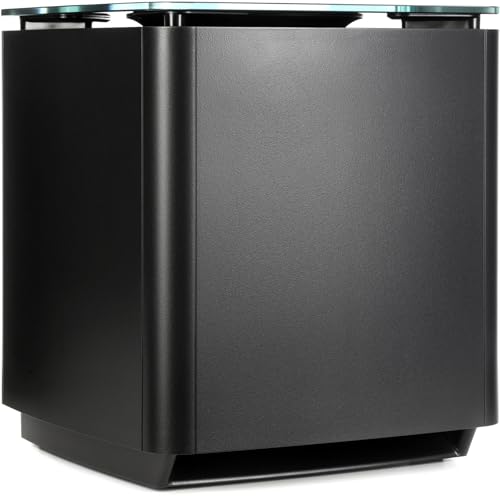
TL;DR: The Bose Bass Module 700 packs a 13‑in high‑excursion driver, wireless connectivity and a premium glass‑top finish, delivering thunderous bass for large rooms, though its 30‑lb weight can make placement a challenge.
The standout spec features a 13 in (7 in high‑excursion RaceTrack) driver paired with QuietPort technology that aims to keep distortion low. At 12.9 in high, 11.6 in wide and 11.6 in deep, the enclosure stays relatively compact for a subwoofer of this power.
Compared with the other ten subwoofers in this roundup, the Bass Module 700 is heavier than most, with a 30 lb mass that exceeds several peers. Its dimensions are shorter than the deeper Bowers & Wilkins model but fall in the same size range as the REL T/5x, while the price point places it at the premium end of the group.
User sentiment repeatedly praises the “thunderous” bass output that fills large living rooms, and professional reviewers echo that description. The sleek black chassis with a glass‑top finish frequently highlights a design win, and reviewers describe wireless pairing with Bose soundbars as straightforward. The most common complaint is the unit’s weight and bulk, which can make placement tricky in smaller apartments or tight corners.
Additional technical context includes a 4.5 ft power‑cord length for flexible routing and an optional 3.5 mm input for wired connections. The subwoofer carries a two‑year manufacturer warranty, reinforcing Bose’s confidence in its build quality.
Pros
Cons
Best for: Buyers willing to invest in a proven, high‑quality option
Avoid if: You're on a tight budget or only need basic functionality
TL;DR: The REL T/5x packs an 8‑inch FibreAlloy driver and a 125 W RMS Class A/B MOSFET amp into a 26.5‑lb sealed box, delivering articulate bass down to 32 Hz for rooms up to 400 sq ft.
What sets the T/5x apart is its combination of an 8 in (200 mm) FibreAlloy driver and a 125 W RMS Class A/B MOSFET amplifier, which together produce fast, detailed bass that starts and stops on a dime. The sealed enclosure measures just 12.7 in deep, 12.5 in high and 10.5 in wide, making it one of the most compact options in this lineup.
When you line it up against the other ten contenders, the T/5x is heavier than the Bowers & Wilkins ASW608 (24 lb) but noticeably shallower (12.7 in vs 17.0 in) and narrower (10.5 in vs 15.0 in). It carries less power than the ASW608’s 200 W and the REL HT MKII’s 300 W RMS, yet it remains lighter than the HT MKII’s 34.2 lb and the Bose Bass Module 700’s 30 lb. Compared with the Sonos Sub Mini, the T/5x offers a larger driver (8 in vs 6 in), higher RMS output (125 W vs 50 W), and a deeper chassis, though it does weigh roughly twice as much.
Reviewers consistently praise the sub’s “realistic bass tones” and “articulate, fast response,” noting that the Class A/B topology adds a warm tonal quality that many find musical. Professional assessments also point out the 32 Hz low‑frequency limit, which may leave deep‑sub‑bass enthusiasts wanting more, and they mention that the sealed design can’t match the rumble of larger ported units. The built‑in protection system guards against DC faults and short circuits, while the laminated plywood cabinet with internal bracing helps keep resonance low. An optional REL Arrow wireless module is available if you prefer a cable‑free setup.
Pros
Cons
Best for: Audiophiles and home‑theater enthusiasts with small to medium rooms who value precise, musical bass and are willing to invest in premium performance.
Avoid if: You need deep sub‑bass below 30 Hz, a larger output for big listening areas, or built‑in wireless without extra accessories.
TL;DR: The Samsung SWA‑W510 packs 200 W of power into a 6.5‑inch driver, offers wireless pairing with compatible Samsung soundbars, and stays compact at 14.1 lb for small‑to‑medium rooms.
What really stands out is the 200 W total power feeding a 6.5‑in driver and a passive radiator, delivering deep bass without a bulky cabinet. The subwoofer draws just 26 W in operation and 0.5 W on standby, making it energy‑efficient for everyday use. Its dimensions—239 mm depth, 241 mm height, and 239 mm width—fit neatly into a typical living‑room layout.
Compared with the other ten entries, the SWA‑W510 is lighter than the Earthquake CP‑8 (24.6 lb) and the Polk Audio PSW10 (about 26 lb) but heavier than the Monoprice SSW‑10 (2.21 lb) and the Sonos Sub Mini (≈14 lb). Its driver sits between Sonos’ 6‑in unit and Earthquake’s 8‑in driver, while its 200 W output tops Polk’s 100 W peak and Sonos’ 50 W RMS, though it trails the Rockville Rock Shaker 12’s 800 W peak. This positions Samsung as a mid‑range, space‑saving option.
Users consistently praise the wireless convenience and the “realistic rumble” the 6.5‑in driver provides, especially for action movies. Professional reviewers note the solid bass performance for a compact subwoofer. Reviewers point out the main drawbacks: the need for a compatible Samsung S‑Series soundbar and the lack of a dedicated remote control, which can limit placement tweaks.
Additional technical details include a gross weight of 7.2 kg, a compact depth of 239 mm, and a one‑year manufacturer warranty, giving peace of mind for a subwoofer that blends into modern décor.
Pros
Cons
Best for: Owners of Samsung S‑Series soundbars who want a wireless bass boost in a compact package.
Avoid if: You don't have a compatible Samsung soundbar, need a subwoofer for a large room, or require a remote‑controlled unit.
TL;DR: The Monoprice SSW-10 packs a 150‑watt amp and a 10‑inch driver into a 7‑inch‑high, 2.21‑lb cabinet for tight‑space home‑theater setups, but mixed reviews and modest power keep it in the budget tier.
The sub’s most eye‑catching spec is its 150‑watt built‑in amplifier paired with a 10‑inch woofer that reaches down to 25 Hz, a low‑end frequency that most compact subs can’t claim. Its ported bass‑reflex enclosure and slim 7.0 H × 15.7 W × 25.0 L‑inch dimensions let you tuck it under a sofa or mount it on a wall, while the unit itself weighs only 2.21 pounds (1002.5 g).
Compared with the other ten entries, the SSW‑10 weighs dramatically less than the Rockville Rock Shaker 12 (43 pounds) and the Polk Audio PSW10 (about 26 pounds). Its 150‑watt amp exceeds Polk’s 50‑watt RMS rating, yet it falls short of Rockville’s 400‑watt RMS output, so you get more power than some peers but less than the high‑output models. Driver size sits between Rockville’s 12‑inch cone and Earthquake’s 8‑inch driver, giving a middle‑ground balance of depth and size.
User sentiment reflects the sub’s space‑saving design: reviewers praise the 7‑inch height for apartment living and note the continuous low‑pass filter from 50 Hz and phase control as handy tweaks. However, the 3.8‑star average from 238 reviews signals that some owners were disappointed—common complaints mention inconsistent dimension listings and a perception that the unit feels larger than the “slim” label suggests. The manufacturer lists total harmonic distortion at less than 0.5 %, indicating clean bass reproduction.
Beyond raw power, the SSW‑10 includes line‑level RCA jacks, speaker‑level terminals, and wall‑mount brackets right out of the box. A one‑year manufacturer warranty rounds out the support package, which makes it a low‑commitment entry for budget‑conscious setups.
Pros
Cons
Best for: Entry‑level buyers or those on a tight budget
Avoid if: You need powerful performance or professional‑grade features
“"bigger than thought"”
Breakdown
Polk Audio PSW10
Pros
Rockville Rock Shaker 12
Pros
Bowers & Wilkins ASW608
Pros
Sonos Sub Mini
Pros
Based on scoring data and product specs
Personalized picks
Best Overall Pick
Polk Audio PSW10
Best Budget PickBest for: Budget-conscious buyers seeking a reliable entry-level option
Rockville Rock Shaker 12
Best for: Budget-conscious buyers seeking a reliable entry-level option
$199.95-$9.05 vs winner
Skip Monoprice SSW-10 10-inch Black if…
You need powerful performance or professional-grade features
The Polk Audio PSW10 takes the top spot as the best compact home‑theater subwoofer. Its 10‑inch Dynamic Balance polymer cone delivers a solid 35‑200 Hz frequency response, while the built‑in 50 W RMS (100 W peak) amp provides clean low‑end punch. At $209.00 it also carries a strong 4.7‑star rating from 15,410 reviewers and a five‑year warranty.
The Rockville Rock Shaker 12 lands as the runner‑up, ideal if you need extra power for a larger living‑room setup. Its 12‑inch woofer and 400 W RMS (800 W peak) amplifier push deep bass down to 20 Hz, and the adjustable 50‑150 Hz crossover lets you fine‑tune the blend with your main speakers.
For those on a tighter budget, the Bobtot Small Subwoofer offers a value‑focused entry point, while the Sonos Sub Mini shines as the best mid‑range choice with seamless integration for Sonos ecosystems. If premium performance is the goal, the Bose Bass Module 700 delivers high‑end refinement and wireless convenience.
Pick the Polk Audio PSW10 now and give your home theater the bass boost it deserves.
The Polk Audio PSW10 stands out as the best value, priced at $209.00 and praised for its solid build and balanced sound. Its quality‑at‑tier advantage gives it a clear edge over other options in the same price range.
No reviews yet — be the first to share your experience.
Please sign in to leave a review
