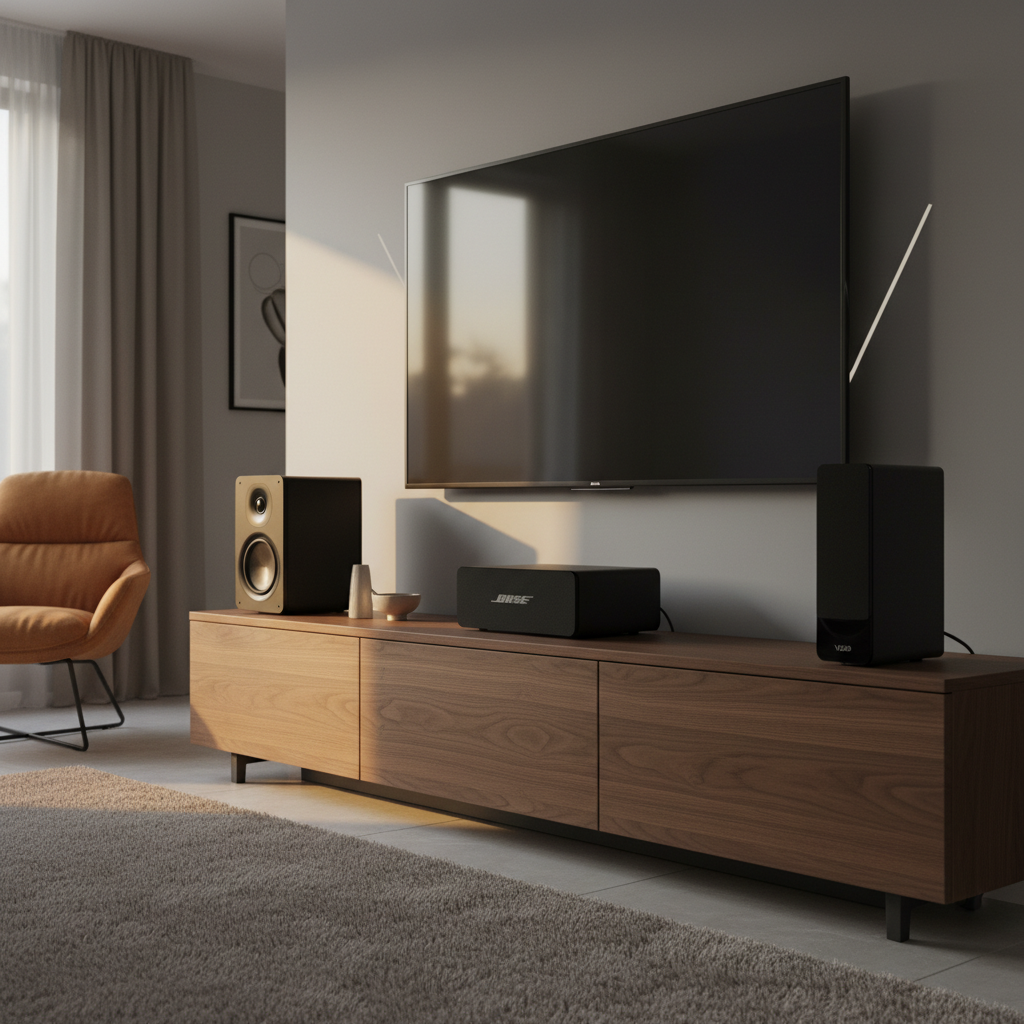
Finding a home‑theater system that fits a cramped living room or bedroom can feel like hunting for a needle in a haystack. In this roundup we compared six compact solutions, from the entry‑level Vizio V20‑J8 at $84.99 to the high‑output Definitive Technology ProCinema 6D at $699.99. Each model promises strong sound without demanding floor space.
Two budget picks – the Vizio bar (4.4/5 from 1,389 reviews) and the Sonos Ray (4.3/5 from 1,250 reviews) – deliver clear dialogue and a tidy footprint. The mid‑range Bose 892079‑1100, priced at $549.00, adds Dolby Atmos and AI‑driven dialogue enhancement for a richer cinematic feel. Premium contenders include the Denon D‑M41 at $630.00, rated 4.3/5, and the Definitive Technology ProCinema 6D, rated 4.2/5, both featuring higher wattage output and sturdier construction. The Bose SoundTouch 520, though lacking a listed price, rounds out the set with a 5.1‑channel layout and Wi‑Fi streaming.
Below we break down each system’s connectivity, soundstage and space requirements so you’ll match the right compact theater to your apartment or dorm room.

Denon D-M41
Its 30 W per channel into 6 Ω provides strong, clear sound that fills compact spaces without sacrificing quality.

Bose 892079-1100
Ideal for mainstream users who want balanced sound, priced at $549—about $81 less than the Denon D-M41.
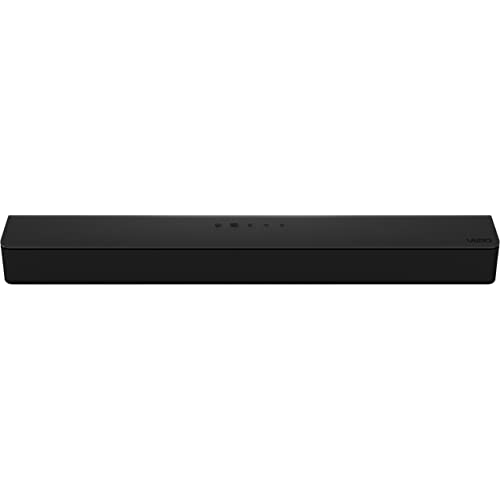
Vizio V20-J8
Stands out with a 70 Hz–20 kHz frequency range, delivering detailed audio at a $84.99 price point that is lower than the other two.
Also considered
Score Analysis
Key score advantages vs. runner-up (Bose 892079-1100)
Price Range
Denon D-M41
$630.00
Bose 892079-1100
$549.00
Vizio V20-J8
$84.99

Sonos RAYG1US1BLK
$219.00

Bose SoundTouch 520
-$0.01

Definitive Technology ProCinema 6D
$699.99
Spec Comparison
TL;DR: The Denon D‑M41 packs a 30 W per‑channel amp into a 308 mm‑deep chassis, delivering audiophile‑grade sound with Bluetooth streaming, but it lacks HDMI and a USB port.
The D‑M41’s 30 W RMS output into a 6 Ω load pairs a 4 ¾‑inch woofer with a 1‑inch tweeter, giving it a surprisingly full bass response for a system that measures just 308 mm deep, 115 mm high and 210 mm wide. Its signal‑to‑noise ratio of 98 dB on the line‑in further underlines the clean playback you can expect.
In the small‑space lineup, the Denon sits heavier than the Sonos Ray and Vizio soundbars, lighter than the Bose SoundTouch 520, and matches the weight of the Definitive Technology ProCinema 6D. Its depth exceeds the Bose and Sonos units, while its height is taller than the Bose but still modest compared with larger home‑theater components.
Reviewers consistently praise the system’s balanced mids, crisp highs and robust bass, calling the sound “full‑bodied” and “rich.” Professional critics note the Triple Noise Reduction Design and build quality that rivals full‑size Denon gear. Users love the Bluetooth streaming for up to five devices, but common complaints focus on the missing USB port, lack of HDMI/network inputs, and a clock that stays on, drawing extra power.
Pros
Cons
Best for: Buyers willing to invest in a proven, high‑quality option
Avoid if: You're on a tight budget or only need basic functionality
“Sound quality exceeds expectations—frequently described as “full-bodied,” “rich,” and “crisp””
“Bluetooth works seamlessly with minimal latency for music (though video sync lag noted)”
TL;DR: The Bose Smart Soundbar 900 packs five speakers, up‑firing drivers and AI Dialogue Mode into a 6.91‑lb, 27‑inch‑wide bar, delivering immersive Dolby Atmos for apartments and small rooms.
What really sets this soundbar apart is its internal configuration of five built‑in speakers, including two up‑firing drivers, all within a 102 mm depth, 56 mm height and 694 mm width chassis. The 5‑speaker layout and Bose TrueSpace technology upmix stereo and 5.1 sources to a 5.1.4 experience, while AI Dialogue Mode sharpens speech so you don’t miss a line.
Compared with the other five contenders, the Bose bar is lighter than the Denon D‑M41, Definitive Technology ProCinema 6D and Bose SoundTouch 520, each of which tip the scales at over 30 pounds. It does weigh more than the Sonos Ray (about 4.3 lb) and Vizio V20‑J8 (around 3.8 lb), but its compact footprint still fits comfortably under most TVs. While the Sonos and Vizio models list fewer connectivity options, Bose adds HDMI eARC, optical input, Bluetooth, AirPlay 2, Chromecast built‑in and Spotify Connect, giving it a richer feature set.
Everyday owners rave about the crystal‑clear dialogue that the AI Dialogue Mode provides, and professional reviewers highlight that same feature as a standout for movie nights. Users also appreciate the easy setup through the Bose Music app and the built‑in Alexa with Voice4Video, which lets you control the TV and cable box by voice. Many users say the thin bass response needs a separate subwoofer, and the lack of DTS/DTS:X support limits some media libraries.
Pros
Cons
Best for: Apartment dwellers or small‑room users who want immersive Dolby Atmos without a bulky setup.
Avoid if: You prioritize deep bass or need broad DTS format support for a large home theater.
“Dialogue is crystal clear, even in action scenes.”
“Easy to set up with the Bose app.”
TL;DR: The Vizio V20-J8 delivers 2.0‑channel sound with 40 W RMS power, DTS Virtual:X and Bluetooth 5.0 at a budget‑friendly $84.99, making it a solid pick for small‑room upgrades.
The V20-J8’s standout spec is its 40 W RMS output paired with a 95 dB SPL rating, giving enough volume for a bedroom TV without needing a separate subwoofer. Its frequency response spans 70 Hz – 20,000 Hz, and the built‑in DTS Virtual:X engine creates a virtual surround effect from a single, low‑profile bar.
At just 3.84 pounds, the V20‑J8 is the lightest of the six contenders – considerably lighter than the Bose SoundTouch 520 (≈39.68 lb) and far lighter than the Denon D‑M41 and Definitive Technology ProCinema models (≈30.86 lb each). Its 81 mm depth is shallower than Sonos’s 95 mm depth and Bose 892079‑1100’s 102 mm depth, helping it slip under most TVs. While the V20‑J8 is wider than Sonos (610 mm vs 559 mm), it’s narrower than the Bose 892079‑1100 (694 mm). It offers a single HDMI ARC port, which is fewer than the four HDMI inputs on the Bose SoundTouch 520 but matches the HDMI eARC port on the Bose 892079‑1100. Bluetooth 5.0 also gives it a newer wireless standard than the Bose SoundTouch 520’s Bluetooth 4.0.
User feedback highlights the bar’s clear, balanced audio and crisp dialogue, with many noting the “plug‑and‑play” simplicity of HDMI ARC or optical connections. Professional reviewers praise the inclusion of Dolby Audio and DTS Virtual:X at this price point, while everyday owners love the voice‑assistant compatibility with Alexa, Google and Siri. The most common drawback is the lack of a dedicated subwoofer, which leads to weaker bass and a low‑end roll‑off that starts around 70 Hz. Reviewers also point out that the plastic housing feels less premium and that advanced formats like Dolby Atmos lack support.
Pros
Cons
Best for: Budget-conscious buyers seeking a reliable entry-level option
Avoid if: You need deep bass, Dolby Atmos support, or a system for a large open‑concept space
TL;DR: The Sonos Ray packs a quad‑class‑D amp, 2.0 stereo drivers and 1.5 m of optical input into a 4.299014109‑lb, 71 mm‑high soundbar that upgrades TV audio while staying budget‑friendly.
The Ray’s most distinctive hardware features four Class‑D digital amplifiers paired with two full‑range mid‑woofers, two tweeters and two passive bass‑reflex ports, all driven by a quad‑core 1.4 GHz A‑53 CPU and backed by 1 GB SDRAM and 4 GB NV storage. Its compact footprint—71 mm H × 559 mm W × 95 mm D—means it slides easily under a 32‑ to 48‑inch TV, and the included 1.5 m optical cable lets you connect without a HDMI port.
Compared with the five other contenders, the Ray sits in the middle of the weight range: it’s heavier than the Vizio V20‑J8 at 3.84 pounds but far lighter than the Bose SoundTouch 520 (≈39.68 pounds), the Bose 892079‑1100 (≈6.91 pounds), the Denon D‑M41 (≈30.86 pounds) and the Definitive Technology ProCinema 6D (≈30.86 pounds). Unlike Vizio, which lists an HDMI port, and the Bose models that include HDMI inputs, the Ray provides no HDMI or HDMI‑ARC connection. It also lacks Bluetooth, whereas Vizio offers Bluetooth 5.0 and Bose 520 lists Bluetooth v4.0. Optical input serves as a shared strength with Vizio, Bose 520, Bose 892079‑1100 and Denon, all of which list at least one optical input.
Professional reviewers praise the Ray’s clear, balanced sound and especially its dialogue clarity, noting that the built‑in Trueplay tuning (iOS only) adapts the output to your room. Everyday users echo this, saying the Ray noticeably lifts TV audio without cluttering the space. The downsides that surface in both expert and consumer feedback include the absence of HDMI/ARC, which forces an optical link, and the limited bass punch that many feel would benefit from a separate subwoofer.
Beyond the basics, the Ray supports Apple AirPlay 2, a full suite of Sonos S2 app controls, and an infrared receiver for remote pairing. It handles Dolby Digital 5.1 and DTS Digital Surround streams despite its 2.0 speaker layout, and it offers adjustable EQ for bass, treble and loudness, plus Night Sound and Speech Enhancement modes for late‑night viewing.
Pros
Cons
Best for: Small to medium rooms, especially for owners of existing Sonos gear who want a tidy upgrade to TV sound.
Avoid if: You want the best value‑per‑dollar in its price range or need HDMI‑ARC and deep‑bass performance.
“Much better than my TV speakers”
“Easy setup with the Sonos app”
TL;DR: The Bose SoundTouch 520 delivers a full 5.1‑channel surround experience in a compact package, with a wireless subwoofer, ADAPTiQ calibration and four HDMI inputs, but it carries a modest 3.9‑star rating and is no longer in production.
This system’s standout spec is its 5.1‑channel layout built around Direct/Reflecting Series II cube speakers and a wireless Acoustimass subwoofer, all fitting inside a chassis that measures 546 mm high, 406 mm wide and 513 mm deep and weighs 39.68320716 pounds. Bluetooth v4.0 reaches up to 9 m, and the unit supplies four HDMI inputs plus one HDMI output, supporting 4K video.
Compared with the other five entries, the SoundTouch 520 is considerably heavier than the Vizio V20‑J8 (3.84 pounds) and the Sonos RAYG1US1BLK (4.299014109 pounds), and it also outweighs the Denon D‑M41 and Definitive Technology ProCinema 6D (both 30.86471668 pounds). It wins on connectivity, offering four HDMI inputs versus the Vizio’s single HDMI port, and adds a 3.5 mm auxiliary, digital coaxial and optical inputs that many peers lack.
Users repeatedly praise the “cinema‑quality” soundstage and the deep, cable‑free bass from the wireless subwoofer, noting that the ADAPTiQ calibration headset makes setup feel “plug‑and‑play”. Professional reviewers highlight the elegant design and refined audio imaging, while some owners report occasional SoundTouch app instability and HDMI handshake quirks with certain 4K TVs.
Bose released the system in 2015 and discontinued it in 2016, but it still ships with a one‑year parts warranty. It runs on a 100–240 VAC power source and includes a Wi‑Fi adapter for network streaming, though it doesn't have a built‑in Ethernet port.
Pros
Cons
Best for: Home‑theater enthusiasts who want a compact 5.1 system with wireless bass and integrated streaming.
Avoid if: You need Dolby Atmos, Ethernet networking, or guaranteed long‑term manufacturer support.
TL;DR: The Definitive Technology ProCinema 6D packs a 250 W Class D subwoofer, 5.1‑channel sound and a 22 Hz‑30 kHz frequency range into a compact, 30.86471668Pounds system, but it commands a premium price.
The standout spec is the 250 watts (Class D) internal amplifier powering the subwoofer, paired with a full 5.1‑channel layout that fits into an overall footprint of 406.4 mm × 609.6 mm × 342.9 mm. Its sensitivity of 89 dB (1 W @ 1 m) and a frequency response stretching from 22 Hz to 30,000 Hz promise detailed highs and deep lows without a massive cabinet.
Compared with the other five options in this roundup, the ProCinema 6D is about the same weight as the Denon D‑M41 (both 30.86471668Pounds) but far heavier than the Bose model at 6.909pounds and the Vizio speaker at 3.84Pounds. It also sits at the higher end of the price spectrum, and the competing units don’t have a dedicated 250 W subwoofer or the same level of driver technology.
Reviewers consistently praise the system’s crystal‑clear dialogue and tight, room‑filling bass, noting that the BD & SS drivers and aluminum dome tweeter deliver “exceptional clarity and imaging.” Professional reviewers highlight the balanced sound signature and the sleek, modern design. The main trade‑off is a 24‑48 hour break‑in period to reach peak performance, and the subwoofer’s bulk makes handling a challenge. Users also point out the lack of wireless or app‑based controls, meaning volume adjustments rely on the side‑mounted knob.
Additional technical context includes a nominal impedance range of 4–8 ohms, a total of six components (four satellites, one center, one subwoofer), and auto on/off functionality for the subwoofer. The center channel features a sealed MDF enclosure with a 1‑inch tweeter, dual 3.25‑inch BD & SS mid‑bass drivers, and dual 3.25‑inch planar bass radiators, handling 10–175 watts. The system comes with a 5‑year speaker warranty and a 3‑year subwoofer amplifier warranty, underscoring its premium positioning.
Pros
Cons
Best for: Those prioritizing quality and willing to pay for premium performance
Avoid if: You need advanced features or professional‑grade performance
“Filled my room with more sound than I know what to do with”
“Dialogue is crystal clear, and the surround effects are immersive.”
Breakdown
Denon D-M41
Pros
Vizio V20-J8
Pros
Sonos RAYG1US1BLK
Pros
Cons
Based on scoring data and product specs
Personalized picks
Best Overall Pick
Denon D-M41
Best ValueBest for: Buyers willing to invest in a proven, high-quality option
Bose 892079-1100
Best for: Most users seeking a balanced, mainstream option
$549.00-$81.00 vs winner
Skip Definitive Technology ProCinema 6D if…
You need advanced features or professional-grade performance
The Denon D‑M41 earns the top spot thanks to its strong 4.3‑star rating from 519 reviewers, a solid 30 W per‑channel output that delivers clear sound in tight rooms, and Bluetooth that supports up to five devices simultaneously. Its compact dimensions (210 mm W × 115 mm H × 308 mm D) and removable, magnetically attached grilles make it a practical fit for any small‑space setup, all for $630.00.
The Bose 892079‑1100 claims runner‑up honors if you need immersive Dolby Atmos and hands‑free control. It supports Dolby Atmos, Dolby Digital Plus and Dolby TrueHD, while AI Dialogue Mode sharpens speech. Built‑in Alexa and a noise‑rejecting mic array let you command the system without a remote, and the two up‑firing drivers add height to the soundstage—all for $549.00.
For tighter budgets, the Vizio V20‑J8 offers decent performance at $84.99, making it the best budget pick. If you’d prefer a mid‑range alternative, the Bose 892079‑1100 (the runner‑up) balances features and price nicely. For those willing to splurge, the Definitive Technology ProCinema 6D delivers premium sound at $699.99.
Choose the Denon D‑M41 now and you’ll bring cinema‑quality audio into your small living area.
The Bose Smart Soundbar 900 is only 102 mm deep and 56 mm tall, making it easy to fit on a narrow TV stand, while the Denon D‑M41 sits at 308 mm depth, which may require a bit more clearance. Both deliver immersive sound, but the Bose’s slimmer profile gives it a practical edge in tight spaces.
Please sign in to leave a review
No reviews yet. Be the first to review!
