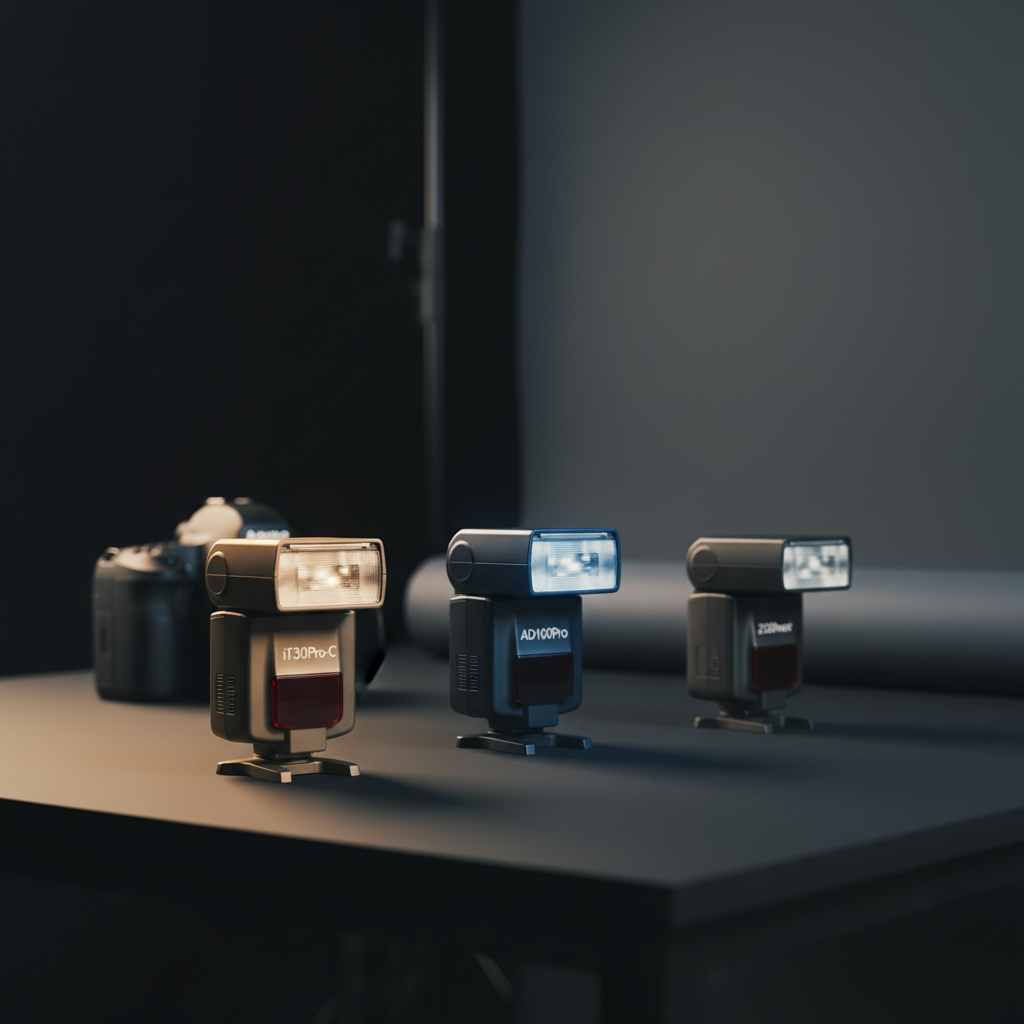
If you’re hunting for a flash that won’t weigh down your kit, you’ve come to the right place. We’ve compared 14 compact and pocket‑sized flashes, from the ultra‑light Leekai S12 at $19.19 to the powerhouse Godox AD100Pro at $299.00, so you can see which model fits your shooting style and budget.
The lineup splits neatly into three price tiers. On the budget end you’ll find the Ulanzi SL01 for $19.84 (4.3/5) and the Neewer Z120 SE for $29.99 (4.4/5), both under 130 g and offering hundreds of full‑power flashes per charge. Mid‑range choices like the Godox iM30 at $30.90 (4.3/5) and the Godox iT20 F for $39.90 (4.9/5) add features such as USB‑C charging and guide numbers 15 m. Premium options include the Godox iT30Pro‑C at $67.90 (4.6/5) with a 2.8‑inch touchscreen and a 15 m guide number, and the Godox AD100Pro at $299.00 (4.6/5) delivering 360 full‑power flashes and a 100 Hz multi‑flash rate.
Below you’ll find a closer look at each flash’s strengths, so you can pick the perfect pocket‑size lighting partner for your next shoot.

Godox iT30Pro-C
Offers 560 full‑power flashes on a single charge, delivering premium performance for quality‑focused shooters.

Godox AD100Pro
Designed for enthusiasts who need a compact flash with professional output, but costs $231.10 more than the iT30Pro-C.
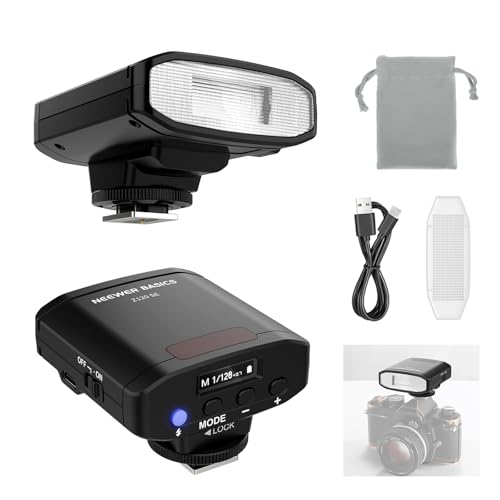
Neewer Z120 SE
Stands out with a 2000 mAh battery, giving longer shooting time than the iT30Pro‑C and AD100Pro, while staying at a $29.99 price point.
Also considered
Score Analysis
Key score advantages vs. runner-up (Godox AD100Pro)
Price Range
Godox iT30Pro-C
$74.90
Godox AD100Pro
$259.00
Neewer Z120 SE
$39.99

Ulanzi SL03
$24.99
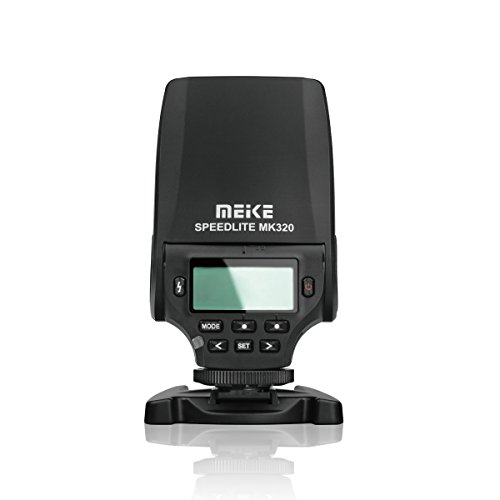
Meike MK-320S
$59.99

Ulanzi SL01
$19.99
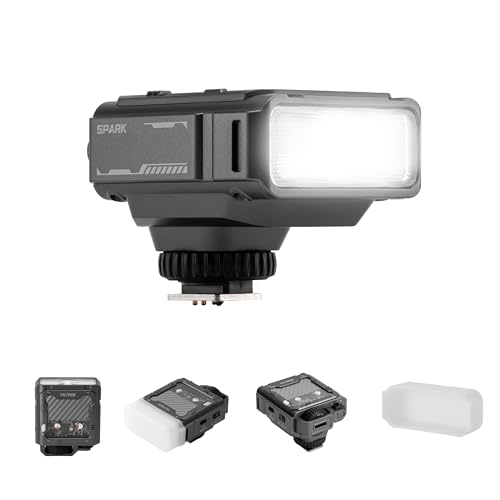
Viltrox Spark Z3
$54.99

Godox iM30
$30.90

Godox iT20 F
$39.90

Leekai S12
$23.99

ULANZI SL01 Mini Flash Speedlite, GN8 6500K Camera Flash Light Compatible
$19.99
Godox iT30 Pro S
$74.90

Hersmay CY-20
$18.59
Camedaflx CF3
$29.99
Spec Comparison
TL;DR: The Godox iT30Pro‑C packs a 15 m guide‑number, 2.8‑inch touchscreen and 560‑flash battery into a 120 g, pocket‑sized unit, making it a top pick for portable Canon lighting.
At just 120 g and measuring 65 × 46 × 47 mm, the iT30Pro‑C is one of the lightest Canon‑compatible flashes. Its 2.8‑inch full‑color touchscreen lets you set power, TTL and wireless channels with a tap or a rotary dial, and the built‑in 2.4 GHz X‑system gives you 32 channels and a 100 m wireless range.
Compared with the Godox iT20 F, which weighs only 45 g but holds a 300 mAh battery, the iT30Pro‑C is heavier but offers a larger 900 mAh pack and about 560 full‑power flashes—more than the Neewer Z120 SE’s 500 flashes per charge. It also outmatches the Meike MK‑320S’s 150 g body while staying under the Viltrox Spark Z3’s 144 g weight.
Reviewers love how the built‑in diffuser softens light without extra gear, and they praise the reliable TTL metering that avoids the classic “rabbit‑in‑the‑headlights” look. Some users note the flash head sits low, so larger lenses can cast unwanted shadows unless you add a riser, and the lack of tilt or swivel means you’ll need accessories for bounce lighting. The touchscreen can feel sluggish in cold weather, and the 100 m wireless range may suffer interference in busy RF environments.
The flash delivers a 15 m (49.2 ft) guide‑number at ISO 100, with high‑speed sync up to 1/8000 s and a multi‑flash frequency of up to 100 Hz for rapid burst shooting. Recycling takes about 1.5 s at full power, and TTL compensation spans ±3 EV in 0.3 EV steps, giving you fine control over exposure.
Pros
Cons
Best for: Travel, street, event and wedding photographers who need a discreet, lightweight flash with full TTL and wireless control.
Avoid if: You require built‑in tilt/swivel for bounce lighting or need a heavy‑duty studio flash.
“the best small camera flash I’ve tested so far”
“pocket-sized powerhouse”
TL;DR: The Godox AD100Pro packs 100 Ws of power, 1/8000 s high‑speed sync, a 2600 mAh battery and OLED screen into a 524 g pocket flash, though its $299 price is premium.
The AD100Pro delivers a full 100 Ws output and can sync as fast as 1/8000 s, letting you freeze fast motion or shoot wide apertures in bright light. Its 2600 mAh lithium‑ion battery provides up to 360 full‑power flashes on a single charge, and the clear OLED screen shows battery level, settings and flash exposure compensation at a glance.
Weighing 524 g, the unit is considerably heavier than the ultra‑light iT20 (45 g) and the iT30Pro‑C (120 g), and its depth of 2.99 in (75.9 mm) exceeds the iT20’s 32 mm depth. However, it also offers far more output than those sub‑100 Ws models, and the basic iT20 lacks the built‑in 2.4 GHz X wireless system with 32 channels and 5 groups.
Reviewers love the portability and the 4.6‑star rating from 64 users, especially the TTL integration and the intuitive OLED interface. Common praise highlights the flash’s power‑to‑size ratio for on‑location work. On the downside, users note the 1.8 W modeling lamp is too weak for video, and a few have reported that the unit stops after limited use.
Pros
Cons
Best for: Travel and event photographers who need a lightweight yet powerful on‑location flash.
Avoid if: You need strong continuous light for video or are shopping on a tight budget — it’s priced at $299.00.
“Works well in a home studio for portraits & still life as well as location.”
TL;DR: The Neewer Z120 SE packs a 12‑meter guide‑number flash, a 2000 mAh battery for up to 500 full‑power pops, and a 0.1‑second recycle time into a pocket‑sized, 0.3125‑lb body.
The standout spec is its 2000 mAh lithium‑ion battery, which the manufacturer says can fire up to 500 full‑power flashes on a single charge. Combined with its 0.1‑second recycle time, you can keep shooting bursts without waiting. Its guide number of 12 meters at ISO 100 and 5600 K daylight balance gives reliable illumination for everyday subjects.
Compared with the other flashes in this roundup, the Z120 SE is heavier than the Camedaflx CF3 (about 0.055 lb) and the Ulanzi SL03 (around 0.095 lb), but its battery capacity far exceeds theirs—2000 mAh versus 190 mAh, 300 mAh, or 250 mAh in the peers. The flash count of 500 full‑power pops also tops the Godox iM30’s 230‑flash claim, though it sits below the Godox iT20 F’s 700‑flash figure. Its 12‑meter guide number is modest against the iT20 F’s 15 meter rating, yet still higher than many ultra‑compact units that lack a listed guide number.
Reviewers love the reliability of the fast recycle and the included diffuser, noting that the flash feels solid for its price. Professional reviewers point out the “surprising performance for its size” and appreciate the eight‑level manual power ladder. Common complaints focus on the lack of TTL, the single‑contact hot shoe that can’t talk to some Canon bodies, and the fixed head that can cause vignetting on longer lenses.
Pros
Cons
Best for: Content creators, vloggers, beginner photographers, and travel shooters who need a well‑reviewed, lightweight manual flash.
Avoid if: You need TTL, high‑speed sync, or a tilting/swiveling head for fast‑action or professional event work.
“Perfect for vlogging and YouTube — small, bright, and lasts all day.”
“The S2 mode works great with my Canon DSLR’s pop‑up flash as master.”
TL;DR: The Ulanzi SL03 packs a 300 mAh USB‑C‑charged battery, 43 g weight, and 90° tilt flash into a 68.6 × 43.2 × 23 mm body, delivering GN 8 output and 130 lux continuous light.
What really stands out is the 90° adjustable flash head, letting you bounce light for softer illumination—a rare feature in a unit this small. The unit runs on a 300 mAh lithium‑ion battery that lasts up to 47 minutes of continuous LED output and recharges in just 1 hour via USB‑C. At only 43 g, it’s light enough to slip into a pocket, and its dimensions (68.6 mm × 43.2 mm × 23 mm) keep it unobtrusive on‑camera.
Compared with the other 13 entries, the SL03 is lighter than the Neewer Z120 SE (which weighs 0.3125 lb) but heavier than the Camedaflx CF3’s 25 g body. Its 300 mAh battery sits between the CF3’s 190 mAh cell and the Z120 SE’s 2000 mAh pack, offering a middle‑ground runtime without the bulk of larger units.
Reviewers praise the combo of a manual flash and a fixed‑output LED for vloggers and street shooters, especially the high CRI 97 colour accuracy and the quick USB‑C charge. The main complaints focus on the lack of TTL or automatic exposure modes and the modest GN 8 guide number, which struggles in bright daylight or larger indoor spaces. Professional reviewers also note the 2.5 s recycle time at full power as acceptable for casual use but slower than some dedicated speedlights.
Pros
Cons
Best for: Travel and street photographers using compact mirrorless systems, vloggers needing a lightweight flash/LED combo.
Avoid if: You need powerful performance or professional‑grade features such as TTL, higher guide numbers, or adjustable fill‑light intensity.
“cool little gadget”
“barely noticeable”
TL;DR: The Meike MK-320S packs a GN 32 (ISO 100) output, TTL control and optical wireless master into a 150 g, 36 mm‑high body, making it a solid compact flash for Sony shooters.
The flash delivers a guide number of 32 meters at ISO 100, which is notably higher than the GN 16 of the Viltrox Spark Z3 and the GN 15 of the Godox iT30Pro‑C. It supports TTL, manual, stroboscopic and optical slave modes, and can act as an optical wireless master for other Meike units. Physically, it measures 36 mm (H) × 65 mm (W) × 110 mm (L) and weighs 150 g, fitting comfortably on a Sony hot shoe without adding bulk.
Compared with its peers, the MK‑320S is a bit heavier than the Viltrox Spark Z3 (which weighs 144 g) but shares a similar footprint. It sits at a higher price point than the Spark Z3, while still undercutting many Godox options. Its recycle time of 5 seconds is longer than the sub‑second recycle of the Neewer Z120 SE, so rapid burst shooting may feel slower than that model. However, the guide number outshines the GN 15‑16 range of those competitors, giving you more reach in low‑light situations.
Users repeatedly praise the flash’s pocketable size, TTL automation and the built‑in LED assist for video work. Professional reviewers highlight the IGBT circuitry that provides precise flash duration control. The most common criticisms focus on the lack of high‑speed sync above 1/200 s, the fixed 24 mm zoom head that can’t auto‑zoom, and a backlit LCD that can be hard to read in bright sunlight.
Technical extras include ±3 EV exposure compensation in 1/3‑stop steps, manual power levels from 1/1 down to 1/128, a 150° horizontal swivel and –7° to +90° vertical tilt, and indoor/outdoor light‑sensing distances of 15 m and 10 m respectively. The optical wireless master mode reaches up to 14.9 meters (49 ft), and the flash runs on 2 × AA batteries, which deliver 100–1500 flashes depending on battery type.
Pros
Cons
Best for: Travel, street and vlog photographers who need a lightweight, TTL‑enabled flash with wireless master control.
Avoid if: You require high‑speed sync, a bounce‑head, or a lower‑cost basic flash for studio work.
“Perfect size for my A6000—doesn’t make the camera top-heavy.”
“TTL works great indoors; flash adjusts automatically without fiddling.”
TL;DR: The Ulanzi SL01 delivers a GN8, ≥97 CRI flash in a 33 g, pocket‑sized body, offering USB‑C charging and 500‑flash battery life for just $19.84, making it a strong budget fill‑light.
The SL01 measures just 29.21 mm × 43.94 mm × 35.56 mm and weighs 33 g, so it slips into any camera bag without adding bulk. Its 250 mAh battery provides at least 500 full‑power flashes on a single charge, and a 60‑minute USB‑C charge gets you back in action quickly. With a GN8 output, 6500 K ± 300 K color temperature and a CRI of ≥97, it delivers daylight‑balanced, color‑accurate illumination.
Compared with other options in the roundup, the SL01 is lighter than the Leekai S12 (0.23 lb) and Hersmay CY‑20 (0.22 lb), and even lighter than the Ulanzi SL03 (≈0.095 lb). It also comes in at a lower price than the SL03’s $24.99 list, while offering a comparable 60‑minute charge time. Although the Leekai S12’s 1200 mAh and Neewer Z120 SE’s 2000 mAh batteries are larger, the SL01 still reaches the benchmark of ≥500 flashes, which many users find ample for street and travel shooting. Its full‑power recycle time of ~5 seconds runs slower than the Neewer’s sub‑second fastest recycle, yet it matches the manual‑only speed of other budget units.
Reviewers consistently praise the tiny footprint and the high CRI, noting that colors look natural straight out of the flash. They highlight the USB‑C charging and long flash count as modern conveniences that keep the unit ready for on‑the‑go shoots. The main criticisms focus on the manual‑only control—no TTL or high‑speed sync—and occasional misfires when using silent or electronic shutters, as well as compatibility gaps with certain Sony, Canon and Fuji models.
Pros
Cons
Best for: Travel and street photographers who need a feather‑light, budget‑friendly fill flash.
Avoid if: You need advanced TTL, high‑speed sync, or professional‑grade wireless control.
TL;DR: The Viltrox Spark Z3 packs a 26 Ws, GN16 TTL flash into a 144 g, USB‑C‑charged body, delivering 1‑second recycle and up to 650 full‑power bursts—ideal for travel shooters who value speed and portability.
The Spark Z3’s battery holds 1800 mAh and can fire up to 650 full‑power flashes before needing a recharge, while a full USB‑C charge takes just 70 minutes. Its guide number is GN16 (ISO 100) and the flash recycles in a single second at full power, giving you rapid shooting without waiting.
Compared with the other flashes in this roundup, the Spark Z3 weighs a bit more than the Meike MK‑320S (150 g) but less than many studio‑oriented units. Its 1800 mAh battery dwarfs the 300 mAh cell in the Godox iT20 F and is double the 900 mAh capacity of the Godox iT30Pro‑C. The 1‑second recycle outpaces the Meike’s 5‑second cycle and is faster than the typical multi‑second recycle times seen elsewhere. While its GN16 is lower than the Meike’s GN32, it matches the Godox iT20’s GN15, placing it solidly in the mid‑range for on‑camera fill lighting.
Users consistently praise the flash’s pocketable size and the ultra‑fast recycle, noting that it lets them keep shooting on the street or during a macro session without missing a beat. Professional reviewers highlight the durable matte‑metal body and the reliable TTL metering for everyday fill. Reviewers note the measured color temperature of 4887–4930 K runs noticeably warmer than the advertised 6500 K ± 200 K, often requiring a gel for color‑critical work. The fixed flash head also limits bounce lighting, a point echoed by several reviewers.
Pros
Cons
Best for: Travel and street photographers needing a lightweight, always‑ready flash with ultra‑fast recycle and solid TTL performance.
Avoid if: You require bounce control, precise color temperature, or a higher guide number for studio or portrait work.
“Perfect for travel—fits in my pocket.”
“TTL works great for portraits and events.”
TL;DR: The Godox iM30 is a pocket‑size manual flash with a 15 m guide number, 230 full‑power flashes on two AAA cells, and a retro look that fits on most hot‑shoe cameras.
The iM30’s most eye‑catching spec is its 15 m (49.2 ft) guide number at ISO 100, which delivers enough reach for everyday shooting while staying under 108 g with batteries installed. Its 7 manual power steps (1/64 to 1/1) let you dial exposure precisely, and the built‑in optical slave modes S1 and S2 add off‑camera flexibility without any radio gear.
Compared with the other flashes in this roundup, the iM30 is lighter than the Neewer Z120 SE but heavier than the ultra‑light Camedaflx CF3. It also carries fewer advanced features than the Godox iT20 F, which offers TTL and a rechargeable pack, but it wins on pure portability and the nostalgic design that many users praise.
Reviewers consistently highlight the flash’s compact size (78 g without batteries) and vintage styling as a major plus for street, travel, and film photographers. Lack of a battery indicator and a recycle time of 3.6 seconds draw common complaints, especially as the AAA cells drain. Professional reviewers note the fixed head and absence of TTL, HSS, or bounce/swivel limit creative control, making the iM30 best suited for beginners or shooters who prefer manual simplicity.
Pros
Cons
Best for: Film photographers, mirrorless users with compact bodies, and beginners who want a well‑reviewed manual flash that’s easy to carry.
Avoid if: You need TTL, HSS, bounce/swivel, or fast recycle for demanding studio or event work.
“perfect reincarnation of 70s and 80s flashes”
“doesn’t ruin the camera’s profile”
TL;DR: The Godox iT20 F delivers a 15 m guide‑number TTL flash in a 45 g, USB‑C‑rechargeable body, offering 700 flashes per charge and magnetic modifiers for ultra‑compact Fujifilm shooting.
What really sets the iT20 F apart is its combination of power and portability. It packs a 15 m (ISO 100) guide number into a flash that measures just 32 mm deep, 41 mm high and 41.5 mm wide, and it weighs only 45 g. The built‑in 300 mAh Li‑ion battery recharges via USB‑C in 70 minutes, and a single charge can fire roughly 700 full‑power flashes. A monochrome OLED screen controls TTL automation, and you can fine‑tune output in ±1/3‑stop steps from 1/32 to full power.
Compared with the other 13 entries, the iT20 F sits in the mid‑price range—priced at $39.90, it’s pricier than the Neewer Z120 SE at $29.99 but cheaper than the Viltrox Spark Z3 at $52.24. In terms of weight, it’s heavier than the ultra‑light Camedaflx CF3 (≈0.055 lb) and the Ulanzi SL03 (≈0.095 lb), yet considerably lighter than the Godox iM30, which tips the scales at about 0.172 lb with batteries installed. Its flash output capacity of 700 shots per charge exceeds the 500‑flash claim of the Neewer Z120 SE and the 230‑flash capacity of the Godox iM30.
Users consistently praise the flash’s “pocket‑size” feel and the convenience of USB‑C charging, calling it an ideal companion for street and travel photography. Professional reviewers note the TTL accuracy and the solid 15 m GN, but they also flag the fixed head as a limitation—no bounce or swivel means you can’t shape light beyond direct illumination, and longer lenses may cast a noticeable shadow. The lack of any wireless or high‑speed sync (HSS) functionality further narrows its use to on‑camera scenarios.
Technical details reinforce its niche focus: flash compensation spans ±3 EV, recycle time is a swift 1.5 seconds at full power, and the sync speed tops out at 1/160 sec. While the flash duration numbers list 1/2170 sec at full power, most shooters will care more about the reliable TTL response and the magnetic accessory system—magnetic CTO/CTB filters, diffusers and honeycomb grids snap on in seconds, letting you experiment without extra gear.
Pros
Cons
Best for: Street and travel photographers who need a lightweight, always‑ready flash with TTL and magnetic modifiers.
Avoid if: You require bounce, swivel, wireless triggering, or high‑speed sync for studio or advanced off‑camera lighting.
“the *perfect* compact flash”
“makes photography feel fun again”
TL;DR: The Leekai S12 is a 0.23 lb pocket flash with a GN12 output, 1200 mAh USB‑C rechargeable battery and full‑range brightness control, ideal for travel‑light shooters on a modest budget.
The standout spec is its GN12 guide number at ISO 100 (50 mm) paired with a 1200 mAh rechargeable lithium‑ion battery that reaches a full charge in about 150 minutes. Weighing just 0.23 lb (105 g), the unit fits comfortably in a camera bag or even a pocket, and the large digital display lets you dial brightness from 1 % to 100 % with five quick‑preset levels.
Compared with the other 13 flashes in this round‑up, the S12 is heavier than most of its peers – the Ulanzi SL01, SL01 Mini, SL03 and Camedaflx CF3 all tip the scales well below 0.1 lb, while the Neewer Z120 SE is noticeably bulkier at 0.3125 lb. Its price sits alongside the Hersmay CY‑20 and Ulanzi SL01, making it neither the cheapest nor the most expensive option. In terms of output, its GN12 is modest next to the Hersmay’s GN20, but the daylight‑balanced 5600 K color temperature matches the standard set by many competitors.
Professional reviewers highlight the flash’s simplicity and portability, noting that the manual‑only design keeps the unit affordable and reliable for controlled lighting scenarios. Everyday users love the USB‑C charging and the clear digital interface, calling it well suited for street photography and travel. The trade‑offs include the lack of TTL and high‑speed sync, and users have reported black‑edge vignetting when shooting faster than 1/250 s – a limitation to keep in mind for fast‑moving subjects.
Pros
Cons
Best for: Entry‑level buyers or those on a tight budget
Avoid if: You want the best value‑per‑dollar in its price range
TL;DR: At $19.99, the Ulanzi SL01 Mini Flash packs a GN8 output into a 33 g, 29 × 36 × 44 mm body with USB‑C fast charging, but offers only manual control and modest power.
The standout spec is its ultra‑compact size: it weighs just 33 g and measures 29.3 mm × 35.7 mm × 44.0 mm, making it easy to slip into any camera bag. Its guide number of GN8 (ISO 100) delivers enough light to outshine most built‑in flashes, while the 250 mAh battery provides 375–500 full‑power flashes per charge.
Compared with the other 13 flash options, the SL01 is lighter than the Leekai S12, which tips the scales at 0.23 pounds, and it shares a similar weight to the peer‑listed Ulanzi SL01 (about 0.07 pounds). Its battery capacity of 250 mAh is smaller than the Leekai’s 1200 mAh pack, but the 60‑minute USB‑C charge time matches the faster chargers in the lineup.
Everyday users appreciate the flash’s brightness boost over camera‑built‑ins and the convenience of charging via USB‑C while shooting. Professional reviewers note the high colour accuracy (6500 K, CRI 96–97+) and the quick recycle times—5 s at full power, dropping to 2 s at 1/4 power. Feedback highlights the main drawbacks: lack of TTL or bounce head, limited GN8 reach (effective up to about 3‑4 m), and occasional compatibility mismatches with newer camera models.
Pros
Cons
Best for: Travel photographers, vloggers and content creators who need a pocket‑sized flash that’s quick to charge and easy to carry.
Avoid if: You need advanced TTL features, high‑power studio lighting, or have a camera model that’s incompatible.
TL;DR: The Godox iT30 Pro S packs a 2.8‑inch color touchscreen, TTL and HSS up to 1/8000 s, and 560 full‑power flashes in a 120 g, pocket‑sized body.
This flash’s standout feature is the 2.8‑inch full‑color LCD touchscreen that lets you adjust TTL, manual power and flash modes with a tap. It delivers a guide number of 15 m (49.2 ft) at ISO 100 and can fire up to 560 full‑power flashes on a single charge from its 900 mAh built‑in Li‑ion battery. The unit weighs just 120 g and measures 65 × 46 × 47 mm, it's truly portable.
Compared with other options in the roundup, the iT30 Pro S matches the Godox iT30Pro‑C in weight (120 g) and battery capacity (900 mAh), but it's lighter than the Meike MK‑320S (150 g) and Viltrox Spark Z3 (144 g). It's heavier than the Godox iT20 F (45 g) and the Godox iM30 (108 g). Its guide number of 15 m is lower than the Meike’s 32 m but on par with the iT20 F. Recycling at 0.4 s on 1/4 power is faster than the 5‑second recycle times listed for the iT20 F and Meike, though the Neewer Z120 SE can recycle as quickly as 0.1 s.
Reviewers consistently praise the iT30 Pro S for its travel‑friendly size and reliable TTL performance, noting that the touchscreen makes setting flash power a breeze. The full‑speed sync capability up to 1/8000 s is listed as a strong point for outdoor action. The main complaints focus on the fixed, non‑rotating flash head, which limits bounce or swivel options, and the modest 15 m guide number that can feel under‑powered in larger venues.
Additional technical details include a standard ISO 518 hot shoe, a 2.5 mm sync port, and built‑in 2.4 GHz wireless control with a 100 m (330 ft) range. The flash supports TTL, manual, auto, multi‑flash, front‑and rear‑curtain sync, and offers TTL exposure compensation of ±3 EV.
Pros
Cons
Best for: Travel photographers, street and documentary shooters, and event photographers who need a compact fill flash.
Avoid if: You need high power, bounce or swivel heads, or a flash designed for studio‑level lighting.
“Perfect for travel”
“TTL works flawlessly”
TL;DR: The Hersmay CY‑20 is a $18.59, ultra‑light 100 g speedlight with a GN 20 m output, manual control, and a 0‑90° tilt head—ideal for beginners seeking a portable, budget flash.
The standout spec is its guide number of GN 20 m at ISO 100, which, together with a 5600 K daylight‑balanced color temperature, provides enough light for indoor portraits. The flash head tilts from 0° up to 90°, letting you bounce light off ceilings or walls, and the unit weighs just 100 g (0.22 lb), so it's easy to carry on a travel‑ready camera kit.
At $18.59, the CY‑20 sits at the low‑end of the price spectrum in this 14‑item roundup, cheaper than most of its peers. Its 100 g weight also makes it slightly lighter than the Leekai S12 (about 105 g) but a bit heavier than the ultra‑light Ulanzi SL01, which tips the scales at roughly 32 g. While many competing flashes list rechargeable lithium‑ion packs, the CY‑20 relies on two AA cells (1.5 V each), a trade‑off that keeps operating costs low but adds the need for spare batteries.
Everyday users praise the flash’s affordability and the convenience of the 2.5 mm PC sync port for off‑camera setups. Reviewers note that the manual‑only mode is a helpful learning tool for those getting comfortable with flash exposure, though they also point out the slow 7‑second recycle time and the lack of TTL or high‑speed sync, which can hinder fast‑action shooting. Pros highlight the adjustable tilt as a strong point for beginners, while also flagging the plastic housing and Sony‑shoe incompatibility as drawbacks.
Pros
Cons
Best for: Entry‑level buyers or those on a tight budget
Avoid if: You need powerful performance or professional‑grade features
“Great for the price — does exactly what I need for indoor portraits.”
“Lightweight and easy to carry — perfect for travel.”
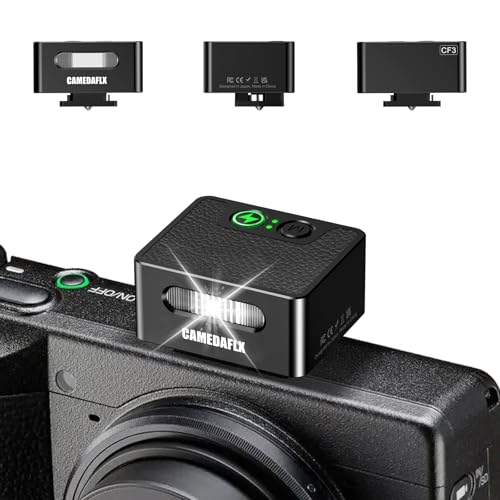
TL;DR: The Camedaflx CF3 packs a GN 5 flash, 700‑shot battery and USB‑C recharge into a 36 × 30 × 17 mm, 25 g body that fits in any pocket.
The standout spec is its ultra‑compact chassis – just 36 mm long, 30 mm wide and 17 mm tall, weighing only 25 g (≈0.0551 lb). Despite the tiny envelope, it delivers a guide number of 5 m at ISO 100 and a recycle time of about 4 seconds at full power, so you can keep shooting without waiting long between bursts.
Compared with the other 13 flashes in this roundup, the CF3's the lightest (0.0551 lb versus 0.3125 lb for the Neewer Z120 SE, 0.17196 lb for the Godox iM30 and 0.0948 lb for the Ulanzi SL03). Its dimensions also beat the Neewer’s 46.7 mm cube and the Godox iM30’s 206 mm depth. Battery capacity sits at 190 mAh, which is lower than the Neewer’s 2000 mAh and the Ulanzi SL03’s 300 mAh, but the CF3 still out‑lasts them with up to 700 full‑power flashes per charge versus 500 for the Neewer and 230 for the Godox iM30.
Everyday users rave about the pocket‑size feel and the “grab‑and‑go” convenience of USB‑C charging, noting the high flash count as a real advantage on location shoots. Professional reviewers point out the premium CNC‑aluminum body and the reliable 6200 K ± 400 K color temperature, but they also flag the limited two‑step power control and the lack of TTL, HSS or a swivel head as drawbacks for more demanding lighting setups.
Pros
Cons
Best for: Street and travel photographers using compact cameras such as the Ricoh GR3, Sony ZV‑1/E10 or Fujifilm X‑M5.
Avoid if: You need high‑output lighting, TTL/HSS automation, or bounce/swivel capabilities for studio, indoor‑wedding or large‑room fill work.
“Fits in my jeans pocket — I never leave home without it.”
“Perfect match for my Ricoh GR3 — finally a flash that doesn’t ruin the portability.”
Breakdown
Godox AD100Pro
Pros
Cons
Neewer Z120 SE
Pros
Ulanzi SL03
Pros
Based on scoring data and product specs
Personalized picks
Best Overall Pick
Godox iT30Pro-C
Best OverallBest for: Those prioritizing quality and willing to pay for premium performance
Godox AD100Pro
Best for: Audiophiles and enthusiasts seeking premium sound quality and advanced features
$259.00+$184.10 vs winner
Skip Camedaflx CF3 if…
You have limited desk space or need portability
The Godox iT30Pro‑C takes the top spot as the best compact flash. It packs a 15 m (49.2 ft) guide number into a 120 g, pocket‑sized body, and its 560 full‑power flashes per charge keep you shooting all day. The 2.8‑inch full‑color touchscreen and 32‑channel 2.4 GHz wireless range, plus a 100 m (328 ft) wireless range, simplify setup.
For larger subjects or studio work, the Godox AD100Pro shines as the runner‑up. It delivers a 100 Ws output with a 9‑stop adjustment range, and its 360 full‑power flashes per charge let you work longer between batteries. The clear OLED screen gives instant feedback on settings, and its 1/8000 s high‑speed sync lets you freeze fast action even in bright light.
If you’re on a tighter budget, the Hersmay CY‑20 at $18.59 offers a simple, lightweight flash that covers basic fill‑light needs. For a solid mid‑range choice, the Neewer Z120 SE at $29.99 balances power and price, making it a reliable everyday companion. When you want premium performance without breaking the bank, the Godox AD100Pro at $299.00 provides studio‑grade output in a portable package. All three alternatives deliver reliable performance for their price point.
Pick the Godox iT30Pro‑C and enjoy compact power that fits right in your pocket.
The Godox iT30Pro‑C packs a full‑color 2.8‑inch touchscreen, built‑in wireless master, high‑speed sync to 1/8000 s and 560 full‑power flashes for just $67.90, while the AD100Pro adds a larger OLED screen, a higher 100 Ws output and 90 Hz stroboscopic mode but costs $299.00. For most users the iT30Pro‑C delivers more features per dollar, though the AD100Pro’s extra power and OLED display may justify the higher price for specialists.
Please sign in to leave a review
No reviews yet. Be the first to review!
