⚡ Quick Answer
Choosing a band saw can feel like navigating a maze of specs, prices, and user reviews. In this roundup we compare six models that span the full price spectrum—from the budget‑friendly WEN Portable Band Saw at $129.27 up to the premium QD‑KYOHO 14‑Inch Bandsaw at $1,399.99. The selection is split into three clear tiers: budget (WEN Portable and VEVOR Portable), mid‑range (Skil BW9501 and WEN 10‑Inch), and premium (Milwaukee 6232‑20 and QD‑KYOHO). All six carry strong user ratings, with the Skil earning a 4.5‑star average from 279 reviews.
The Skil BW9501 stands out in the mid‑range tier, packing a 2.5 HP induction motor that spins at 2,500 RPM and a three‑bearing blade guide for steady cuts. Its 9‑inch throat depth, 43‑lb weight, and 147 sq in aluminum table give it a solid, shop‑ready feel without demanding a large footprint. By contrast, the budget WEN Portable relies on a 10 HP corded motor but offers a smaller 5‑inch throat, while the premium Milwaukee delivers an 11 HP brushed motor and a 5 × 5 inch cutting capacity for heavy‑duty metal work.
Below we break down each saw’s strengths, quirks, and ideal use cases so you can match the right tool to your workshop or job site.
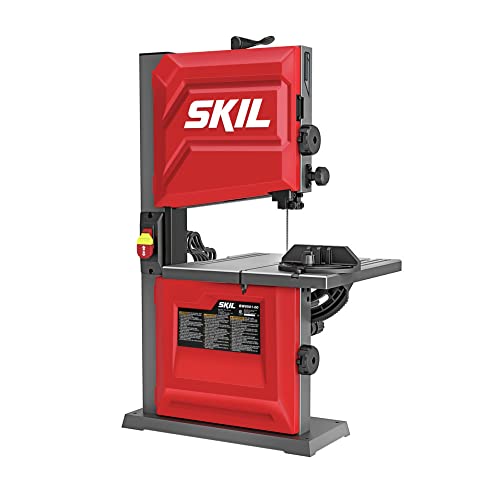
Skil BW9501
Its 59.5‑inch blade length provides ample cutting capacity at, making it a solid value for serious woodworkers.
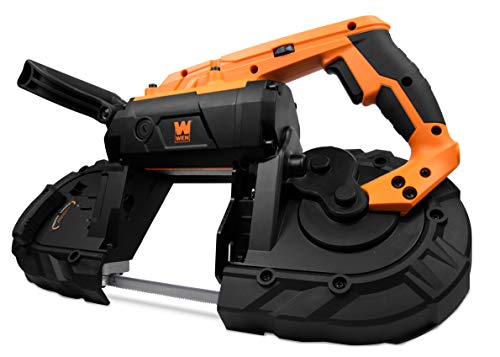
WEN Portable Band Saw
Ideal for budget‑conscious hobbyists, it’s about cheaper than the Skil BW9501 and fits tight spaces with an 8.25‑inch overall height.
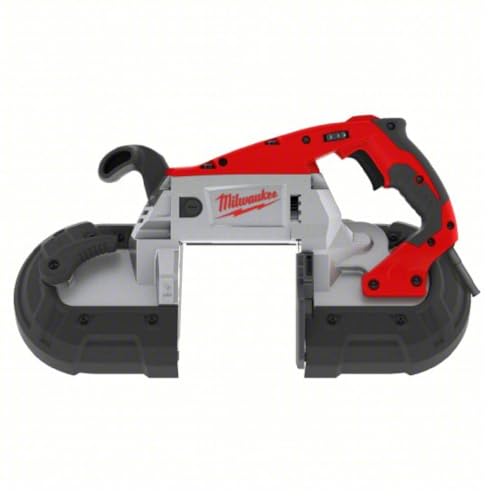
Milwaukee 6232-20
Features an 11 HP motor and adjustable shoe blade guide, delivering premium power and precision that the other two models lack.
Also considered
TL;DR: The WEN Portable Band Saw packs a 10 HP motor into a 14.5‑lb handheld unit, delivering a 5 × 5‑inch cutting capacity and six speed settings for on‑site metal, wood, and plastic work.
What really stands out is the 10 HP corded motor paired with a variable blade speed that ranges from 60 to 420 FPM across six discrete settings. At just 14.5 lb, the saw is light enough to carry up the jobsite while still offering the torque needed for tough materials like rebar.
Compared with the other five band saws in this roundup, the WEN model is considerably lighter than the VEVOR (over 28 lb) and far lighter than the Skil BW9501, which tips the scales at around 38 lb. Its overall length of 20.25 in and width of 13.0 in make it more compact than the Milwaukee 6232‑20, which measures about 21.65 in long, yet it still provides the same 5 × 5 in cutting envelope that the Milwaukee lists.
Professional reviewers praise the high power‑to‑weight ratio and the six‑step speed control, noting that users can dial in the optimal speed for metal, wood, or plastics. However, the manual does not label each speed step, so users must estimate the appropriate setting. The tool is also sold without a stand, so it’s best suited for handheld, mobile tasks rather than bench‑mounted, high‑volume shop work.
Pros
Cons
Best for: Budget-conscious buyers seeking a reliable entry‑level option — the WEN Portable Band Saw offers Height: 8.25 inches
Avoid if: You need a stationary bench saw or larger cutting capacity for heavy‑duty shop work
TL;DR: The VEVOR Portable Band Saw packs a 1100W pure‑copper motor, 5‑inch round cutting capacity and a 2000 mm cable into a 28.66‑lb unit, offering solid power for DIY metalwork at a budget price.
The VEVOR model is driven by a 1.5 HP, 1100W pure‑copper motor that spins the blade up to 472.4 RPM. It offers a 5‑inch (127 mm) round‑cutting capacity and a rectangular capacity of 119.38 mm × 119.38 mm. The overall footprint measures 14.0 in high, 17.7 in wide and 23.2 in long, while the 2000 mm power cable lets you move around a workshop without hunting for an outlet. Speed control is variable with six levels, and the blade guard is fully adjustable for safety.
At 28.66 lb, the VEVOR is noticeably heavier than the 14.5‑lb WEN Portable Band Saw, but still lighter than the 38.65‑lb Skil BW9501 that sits at the top of the range. Its length of 23.2 in also exceeds the 20.25 in length of the WEN unit, giving a more stable base, while the overall width of 17.7 in is broader than the 13.0‑in width of that same competitor. Compared with the Milwaukee 6232‑20, the VEVOR’s weight is similar, yet it provides a longer cable and a higher cutting capacity on round stock.
User reviews repeatedly highlight the tool’s spark‑free cutting, which many DIYers find essential when working indoors or on thin metal. The adjustable 0‑45° angle and ergonomic soft‑grip handle are frequently praised for making awkward cuts easier. However, several owners note that the 28.66‑lb mass can lead to arm fatigue during long handheld sessions, and a handful of reports mention inconsistent build quality from unit to unit. Professional reviewers echo the positive sentiment about cut accuracy and blade tracking, while warning that heavy use may accelerate blade wear.
The saw meets UL‑tested safety standards and features an adjustable blade guard that keeps debris away from the operator. Its removable alloy‑steel base lets you switch between a stationary bench setup and a fully portable configuration, a flexibility that hobbyists appreciate for on‑site repairs. With a 10 A current draw at 110 V, the machine stays within typical household circuits, and the universal motor design contributes to its rugged feel.
Pros
Cons
Best for: Budget-conscious buyers seeking a reliable entry-level option — the VEVOR Portable Band Saw offers Cable Length: 2000 mm
Avoid if: You want the best value‑per‑dollar in its price range
TL;DR: The WEN 10‑Inch Band Saw packs a 0.47 HP motor, 72‑inch blade and 9‑3/4 in throat into a sturdy benchtop unit, ideal for hobbyists who value cutting width and dual‑speed flexibility.
The standout spec is its 72‑inch blade length paired with a 0.47 HP universal motor that runs at 2 620 RPM and offers true speed control. Ball‑bearing blade guides keep the blade steady, while the 9‑3/4 in throat depth lets you tackle moderately wide stock without constantly repositioning the workpiece.
Compared with the other five band saws in this roundup, the WEN is noticeably heavier than the Milwaukee 6232‑20 (14.5 lb) and the Skil BW9501 (about 38.6 lb), but it also delivers a longer blade than both—the Milwaukee’s 44.875 in blade and Skil’s 59.5 in blade. Its 9‑3/4 in throat beats the Milwaukee’s 5 × 5 in cutting capacity and matches the Skil’s 9‑in throat, giving you more room for wider cuts while still fitting on a compact workbench.
Users consistently praise the dual‑speed capability for handling everything from soft pine to harder hardwoods, and they like the included work light, fence, miter gauge and stand that keep the footprint tidy. The main criticisms focus on the 6‑in maximum cutting depth, which can feel restrictive for thicker projects, and the cast‑aluminum table, which some reviewers say doesn’t hold up as well as heavier steel tables under heavy use. The 3.5 Amp motor is described as solid for entry‑level to intermediate work but not suited for prolonged, heavy‑duty cutting.
Pros
Cons
Best for: Most users seeking a balanced, mainstream option — the WEN 10‑Inch Band Saw offers Motor Power: 3.5 Amp
Avoid if: You need advanced features or professional‑grade performance
TL;DR: The Skil BW9501 packs a 2.5 HP induction motor, 59.5‑inch blade and dual‑speed drive into a 43‑lb benchtop unit that feels solid enough for hardwoods while staying compact enough for a small shop.
The standout spec is the 59.5‑inch blade paired with a 2.5 HP, 2.8 A induction motor that can run at either 1,700 FPM or 2,500 FPM. That range lets you dial in slower speeds for fine cuts and faster speeds for quick rip‑throughs, a flexibility you don’t see in every portable saw. The three‑bearing blade guide and tool‑free tensioning add a level of precision usually reserved for larger, pricier models.
Compared with the five other saws in this roundup, the Skil is heavier than the 14.5‑lb WEN portable band saw and the 28.66‑lb VEVOR unit, but it’s far lighter than the 80.8‑lb WEN 10‑inch band saw and the 302‑lb QD‑KYOHO 14‑inch model. It also offers a selectable speed setting, a feature not listed for most peers, and an aluminum table that tilts 0‑45°, whereas many competitors leave table material and tilt unmentioned.
Users consistently praise the tool‑free blade and belt tensioning for getting the machine up and running without a wrench. Professional reviewers highlight the three‑bearing guide as a “higher‑end” feature that keeps the blade steady during demanding cuts. The built‑in light and yellow safety key add convenience and a safety net that beginners appreciate. On the flip side, owners note that the sliding miter gauge can feel loose, which may compromise bevel accuracy, and the 3.5‑inch maximum cutting height limits work on thicker stock.
Beyond the core specs, the BW9501’s dust port measures 2.5 in, helping keep the workspace cleaner, and the rack‑and‑pinion table adjustment makes fine positioning easy. A three‑year limited warranty backs the build, and the 4.5‑star rating from 279 reviewers signals solid overall satisfaction.
Pros
Cons
Best for: Value-conscious buyers seeking quality at $219.00 — the Skil BW9501 offers Dust Port Size: 2.5 inches
Avoid if: You have limited desk space or need portability
“just seems to have plenty of power”
“gutless wonder”
TL;DR: The QD‑KYOHO 14‑Inch Bandsaw packs a 2 HP motor, 111‑inch blade and a massive 302‑lb cast‑iron build, delivering pro‑grade power and stability for serious resawing at a premium price.
What really sets this saw apart is its 2 HP induction motor paired with dual‑speed operation—1445 FPM for delicate cuts and 2950 FPM for fast material removal. The 111‑inch rectangular blade and 13.625‑inch throat depth let you resaw lumber up to 13 inches thick, while the 338.25 sq in cast‑iron table provides a rock‑solid surface for accurate work.
Compared with the other five entries, the QD‑KYOHO is a heavyweight champion. At 302 lb it dwarfs the Milwaukee 6232‑20’s 14.5‑lb frame and the portable WEN models that sit around 14‑15 lb. Its blade length of 111 in far exceeds the Milwaukee’s 44.875 in and the Skil BW9501’s 59.5 in, giving it a clear advantage for long cuts. The trade‑off is a significantly higher price tag than the Skil or VEVOR units, and a bulkier footprint that won’t fit in a cramped workshop.
Customers have rewarded the saw with a 4.8‑star average from 68 reviews, repeatedly noting the smooth, powerful cuts on thick hardwoods and the stability that comes from its massive cast‑iron table. Reviewers also appreciate the quick blade tension system and the 5° left‑tilt plus 45° right‑tilt table adjustment. Common criticisms focus on the setup complexity for blade tensioning, the lack of a dedicated dust‑collection port, and the limited left‑tilt angle compared with some competitors.
Additional technical highlights include overload protection, a true speed‑control feature, and a 120 V, 14 A power draw delivering 1.5 kW of output. The welded steel plate frame and alloy‑steel handle reinforce durability, while the work‑light socket adds convenience for low‑light projects.
Pros
Cons
Best for: Those prioritizing quality and willing to pay for premium performance — the QD‑KYOHO 14‑Inch Bandsaw offers Motor Power: 2 HP
Avoid if: You're on a tight budget, need a lightweight portable saw, or require extensive left‑side table tilt
TL;DR: The Milwaukee 6232‑20 delivers a massive 5 × 5‑inch cutting capacity and a 44.88‑inch blade on a surprisingly light 14.5‑lb frame, making deep metal cuts feel manageable for pros.
The standout spec is its 5 × 5‑inch rectangular cutting capacity, the industry’s largest for a handheld band saw, paired with a 44.88‑inch blade that reaches deep into stock. At 14.5 lb, the tool balances on a metal‑with‑Job‑Site‑Armor housing, keeping fatigue low while you chase those long cuts.
Compared with the other five entries, the Milwaukee sits in the mid‑weight range: it matches the WEN Portable Band Saw’s 14.5‑lb weight but is dramatically lighter than the WEN 10‑Inch model’s 80.8 lb heft. Its blade length is shorter than the Skil BW9501’s 59.5‑inch blade, yet the Skil’s overall dimensions and 38.65‑lb weight make it bulkier on the job site. The VEVOR Portable Band Saw is lighter at roughly 28.66 lb, but it lacks the 5 × 5‑inch capacity that the Milwaukee boasts.
Professional reviewers highlight the all‑metal direct drive and Constant Power Technology (CPT™) that keep speed steady under load, while users applaud the tool‑free adjustable shoe and built‑in LED for better visibility. The most common complaint is that the blade isn’t included, adding an extra purchase, and the corded 120 V supply can limit mobility for on‑site tasks. Some users also note the 14.5‑lb mass feels “still relatively heavy” when used for extended handheld periods.
Pros
Cons
Best for: Those prioritizing quality and willing to pay for premium performance — the Milwaukee 6232‑20 offers Motor Power: 11 Amps
Avoid if: You need ultra‑portable, battery‑powered operation or very light‑duty tasks where the corded source and 14.5‑lb weight become drawbacks
Breakdown
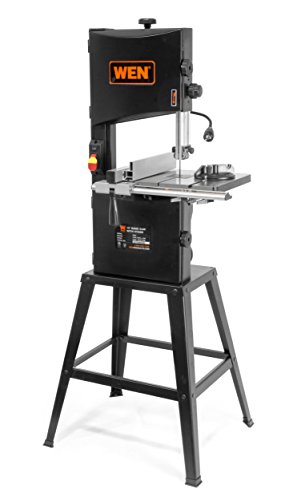
Skil BW9501
Pros
WEN Portable Band Saw
Pros
Milwaukee 6232-20
Pros
Cons

VEVOR Portable Band Saw
Pros
Cons
Based on scoring data and product specs
Personalized picks
Best Overall Pick
Skil BW9501
Best OverallBest for: Value-conscious buyers seeking quality at $219.00 — the Skil BW9501 offers Dust Port Size: 2.5 inches
WEN Portable Band Saw
Best for: Budget-conscious buyers seeking a reliable entry-level option — the WEN Portable Band Saw offers Height: 8.25 inches
$129.27-$49.73 vs winner
Skip WEN 10-Inch Band Saw if…
You need advanced features or professional-grade performance
The Skil BW9501 earns the top spot thanks to its professional‑grade power and solid build. It packs a 2.5 HP induction motor that spins up to 2,500 RPM, while a three‑bearing blade guide keeps cuts steady. A 3‑year limited warranty backs the 43 lb steel‑framed unit, which also offers a generous 9‑inch throat depth and a 20‑inch wide, 147 sq in aluminum table for stability.
If you need a lightweight, handheld saw for quick cuts on metal, wood, plastics or fiberglass, the WEN Portable Band Saw lands as the runner‑up. Weighing just 14.5 lb, it measures 8.25 in tall, 13.0 in wide and 20.25 in long, making it easy to maneuver in tight spaces. Its 10 HP corded motor delivers a 60‑420 RPM range with true speed‑control, and a 5‑inch throat depth lets you tackle modest‑sized workpieces.
On a tighter budget, the WEN Portable Band Saw remains the best value under $130, offering portable convenience without sacrificing power. For those willing to invest in top‑tier performance, the QD‑KYOHO 14‑Inch Bandsaw stands out as the premium choice, carrying the highest user rating and a professional‑level capacity at $1,399.99.
Choose the Skil BW9501 for a balanced blend of power, portability, and durability.
The Skil uses a 2.5 HP induction motor and a three‑bearing blade guide, delivering smoother blade tracking, and it runs at a blade speed of 2500 RPM, which is higher than the WEN Portable’s 60‑420 RPM range. Additionally, the Skil’s aluminum table of 147 sq in and 3‑year warranty add professional‑grade durability that many users value.
No reviews yet — be the first to share your experience.
Please sign in to leave a review