⚡ Quick Answer

🏆 Best Overall
Jet JWBS-14SFX
$1,699.00
When it comes to midsize band saws, the Jet JWBS‑14SFX packs a serious punch. Its 1.75 HP single‑phase motor spins a 3000 RPM blade that can handle a 13.5‑inch throat depth, while the 360 sq in cast‑iron table gives you plenty of surface for precise cuts. Weighing in at 272 lb, the machine feels rock‑solid on the floor, and a 4.6‑star rating from 217 reviewers backs up its reputation for durability. At $1,529.10 it sits squarely in the mid‑range price tier, offering industrial‑grade performance without the premium‑shop price tag.
The roundup covers 12 models spanning four budget picks (Seesii Benchtop, WEN 9‑inch, VEVOR Portable, and WEN Metal) that start under $200 and still earn solid 4‑plus star scores. The mid‑range camp features the Jet JWBS‑14SFX and the QD‑KYOHO 14‑inch, both with 13‑inch‑plus resaw capacity and cast‑iron tables. Premium contenders—Powermatic PWBS‑14CS, Jet HVBS‑712D, Laguna MBand14BX, and Powermatic PM1500—push weights above 250 lb and offer larger tables and higher horsepower for heavy‑duty shop work.
In the sections that follow, we’ll break down each saw’s strengths, weaknesses, and ideal user scenarios so you can match the right tool to your workshop needs.
Jet JWBS-14SFX
Its 3,000 SFPM blade speed delivers fast cuts, giving home and office users a strong blend of performance and value.

VEVOR Portable Band Saw
Ideal for hobbyists or occasional DIYers, this portable saw costs about $1,361 less than the Jet, making it a wallet‑friendly entry point.

QD-KYOHO 14-Inch Bandsaw
Unique table tilt of up to 45° left and right lets you angle cuts that the Jet and VEVOR can’t, appealing to precise woodworking projects.
Also considered
TL;DR: The WEN 9‑Inch Band Saw delivers 2500 FPM blade speed and a 9‑inch throat in a compact 40‑lb benchtop package, making precise hobby cuts affordable and reliable.
What sets this saw apart is its 2500 FPM blade speed paired with a 59‑½‑inch blade, driven by a 2.8‑amp motor. The ball‑bearing blade guide type helps keep the blade steady for clean curves, while the 0‑to‑45‑degree table tilt adds flexibility for angled cuts.
Compared with the other eleven contenders, the WEN is heavier than the VEVOR portable model (about 28.66 lb) but far lighter than the industrial‑grade Jet JWBS‑14SFX, which tips the scales at 272 lb. Its 9‑inch throat beats the Seesii benchtop’s 8‑inch cutting width, though the VEVOR’s round‑cut capacity of 127 mm is smaller than the WEN’s overall throat.
Users consistently praise the saw’s compact footprint (19 × 14.1 × 29 in) and the included accessories—rip fence, miter gauge, and an adjustable blade guard with ball‑bearing supports—that make setup quick. Reviewers note the precision of cuts and the value of the package, while professional eyes highlight the robust power delivery for woodwork. The primary trade‑off mentioned is the entry‑level 2.8‑amp motor, which may feel modest for heavy‑duty industrial projects.
Technical details reinforce its hobby‑friendly design: a 3‑½‑inch cutting depth, blade width range of 1/8 to 3/8 in, and a 12‑¼ × 11‑7/8 in table surface. The saw runs on 120 V, 60 Hz AC power and carries a 2‑year warranty, underscoring WEN’s confidence in durability.
Pros
Cons
Best for: Budget-conscious buyers seeking a reliable entry-level option — the WEN 9-Inch Band Saw offers Blade Speed: 2500 FPM
TL;DR: The VEVOR Portable Band Saw packs a 1.5 HP, 1100 W pure‑copper motor, 5‑in round cutting capacity and a 2000 mm cord into a 28.66‑lb handheld unit for budget‑friendly metalwork.
What really stands out is the 1.5 HP universal motor delivering 1100 W of power through a pure‑copper winding, paired with a variable speed control that offers six selectable levels and a blade speed of 472.4 RPM. That combination lets you make spark‑free cuts on steel, aluminum and PVC pipe while keeping burrs to a minimum. The tool’s overall dimensions—14.0 in high, 17.7 in wide and 23.2 in long—fit comfortably on a workbench, and the 2000 mm cable gives you plenty of reach without a trailing extension.
Compared with the other eleven band saws in this roundup, the VEVOR is noticeably lighter than the WEN 9‑Inch model (40 lb) and dramatically lighter than the Jet JWBS‑14SFX (272 lb). Its 5‑in round cutting capacity is smaller than the 9‑in throat of the WEN 9‑Inch, but it still outpaces the 3‑in‑plus capacities of the Baileigh and QD‑KYOHO units. While many bench‑top competitors lack a long cord, VEVOR’s 2000 mm cable gives it a reach advantage over stationary models that rely on fixed power sources.
Users consistently praise the saw’s quick, spark‑free cuts and the flexibility of its 0°‑45° adjustable angle, which makes it handy for DIY furniture projects. Professional reviewers highlight the accurate blade tracking and the UL‑tested safety features as strong points for a tool at this price. On the downside, the 28.66‑lb weight can cause fatigue during extended handheld use, and some owners report variability in build quality between units, which raises concerns for heavy‑duty shop floors.
Pros
Cons
Best for: Budget‑conscious buyers seeking a reliable entry‑level option — the VEVOR Portable Band Saw offers Cable Length: 2000 mm
Avoid if: You need a lightweight, cordless tool for prolonged handheld work or an industrial‑grade machine for high‑volume production
TL;DR: The Jet JWBS-14SFX packs a 1.75 HP motor, 3,000 SFPM blade speed and a 13‑plus‑inch resaw capacity into a rock‑solid 272‑lb steel frame, delivering industrial‑grade precision for serious woodworkers.
The standout spec is its 1‑3/4 HP single‑phase motor paired with a blade speed of 3,000 SFPM, letting you tackle thick stock at full 13 + inch resaw capacity. The 116‑inch blade length and 12‑inch cutting width give you plenty of room for large panels, while the ball‑bearing blade guides keep cuts smooth and accurate.
Compared with the other eleven bandsaws in this roundup, the JWBS‑14SFX sits toward the heavier end – it weighs 272 lb net, which is lighter than the 302‑lb QD‑KYOHO but considerably heftier than the 178‑lb Powermatic model. Its 1.75 HP motor outpaces many peers that list lower horsepower, and the 3,000 SFPM blade speed matches the high‑speed specs of the Powermatic PWBS‑14CS.
Users consistently praise the rigid steel frame for cutting vibration, noting that the twin‑beam design feels more stable than single‑tube competitors. The Jet Black coating earns kudos for resisting rust, and the quick‑release tensioning wheel is called “convenient” in several reviews. Professional reviewers highlight the ball‑bearing blade guides and the 5‑year warranty as indicators of long‑term durability. The main trade‑off is the 272‑lb weight, which makes relocation a chore, and the need for a dedicated 20 A circuit because of its 15 A full‑load draw.
Pros
Cons
Best for: Serious woodworkers and hobbyists who need reliable resaw capacity and industrial‑grade performance – the Jet JWBS‑14SFX offers Blade Speed: 3,000 SFPM (15.24 m/s).
Avoid if: You have limited space or need a portable bandsaw, as the 272‑lb weight and 20 A power requirement restrict mobility.
TL;DR: The QD‑KYOHO 14‑Inch Bandsaw packs a 2 HP induction motor, 111‑inch blade and 302‑lb cast‑iron build, delivering industrial‑grade power and stability for serious woodworkers.
This midsize saw’s standout spec is its 2 HP induction motor paired with a 2950 RPM blade speed, giving you enough torque to slice through thick hardwoods. The 111‑inch rectangular blade and 13‑5/8‑inch throat width let you tackle generous resaw projects, while the solid cast‑iron table (338.25 sq in) keeps vibration to a minimum.
At 302 lb, the QD‑KYOHO is heavier than the Jet JWBS‑14SFX, which weighs 272 lb, and considerably heftier than the Powermatic PWBS‑14CS at 178 lb. Its blade length is a few inches shorter than Jet’s 116‑in blade but longer than Powermatic’s 93-1/2 in blade, placing it solidly in the middle of the pack. Compared with the ultra‑heavy Jet HVBS‑712D (374 lb) and the lightweight WEN Metal Band Saw (48.4 lb), the QD‑KYOHO offers a balanced blend of mass and maneuverability.
Reviewers consistently praise the saw’s smooth, powerful cuts and the stability that comes from its massive frame. Users also note the intuitive angle adjustments—45° right and 5° left—make bevel work straightforward. On the flip side, several owners mention the blade‑tension setup can be fiddly, and the lack of a built‑in dust port means you’ll need an external collection solution. The 302‑lb weight, while contributing to rigidity, does make relocation a chore.
Beyond raw power, the machine features adjustable upper and lower blade guides, a quick‑blade‑tension mechanism, and true speed‑control capability, letting you switch between the two speed settings for different materials. The work light socket adds convenience for low‑light projects, and the overload protection safeguards the motor during demanding cuts.
Pros
Cons
Best for: Most users seeking a balanced, mainstream option — the QD‑KYOHO 14‑Inch Bandsaw offers Motor Power: 2 HP
Avoid if: You need advanced left‑tilt range, lighter portability, or a machine built for nonstop industrial‑level production
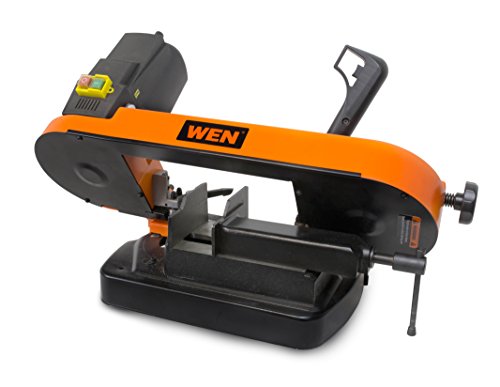
TL;DR: The WEN BA4555 offers a 56.5‑inch blade, variable 125‑260 ft/min speed, and sturdy cast‑iron construction for under $340, making it a solid budget choice for hobby‑level metalwork.
The standout spec is the 56.5 in blade paired with a variable blade speed range of 125 to 260 feet per minute, letting you dial in the right pace for brass, aluminum, copper or steel. Ball‑bearing blade guides keep the cut smooth, while the cast‑iron frame and 24.4 sq in cast‑iron table add industrial‑grade rigidity to a benchtop size.
At 48.4 lbs, the WEN is heavier than the VEVOR Portable Band Saw’s 28.66 lb chassis but far lighter than the Jet JWBS‑14SFX, which tips the scales at 272 lb. Its 56.5 in blade is a touch shorter than the WEN 9‑Inch model’s 59.5 in blade, yet virtually identical to Baileigh’s 56.69 in blade, and considerably less than Jet’s 116 in offering. Variable speed control is a feature not listed for most peers, giving the WEN an edge for fine‑tuning cuts.
Reviewers consistently praise the variable speed for handling different metals and the cast‑iron construction for reducing vibration. A common note is that the 0.73 HP motor can feel under‑powered when tackling thick steel, so it’s best suited for hobby or light‑shop projects. The product carries a 2‑year limited warranty, runs on a 120 V AC motor drawing 4.5 amp, and measures 27 in high, 15.5 in wide and 14 in deep.
Pros
Cons
Best for: Entry-level buyers or those on a tight budget — the WEN Metal Band Saw offers Blade Speed: 125 to 260 feet per minute
TL;DR: The Jet HVBS-712D offers a 3/4 HP motor, 93‑inch blade and hydraulic downfeed in a rugged 374‑lb frame, delivering premium metal‑cutting precision for serious hobbyists and small shops.
This midsize band‑saw’s standout feature is its quick‑change horizontal‑to‑vertical design, paired with a multi‑position blade guide and an adjustable hydraulic downfeed. A 1‑gallon coolant reservoir keeps the 0.032 inch blade cool, while preset miter angles at 15°, 30° and 45° let you lock the tool‑less vise in seconds. The 93‑inch blade runs up to 260 SFPM, giving you ample cutting length for most metal projects.
At 374 lb, the HVBS‑712D is heavier than Jet’s own JWBS‑14SFX (272 lb) but lighter than Baileigh’s BS‑712MS (425 lb). Its 93‑inch blade is a touch shorter than Laguna’s 116‑inch maximum, yet matches Powermatic’s 93‑½‑inch offering. While the price sits above the JWBS‑14SFX, the added hydraulic downfeed and larger coolant capacity justify the premium position in this twelve‑product roundup.
Professional reviewers praise the machine’s versatile conversion and the ease of setting preset miter angles, noting that the hydraulic downfeed delivers repeatable cuts on thick stock. The main criticism is the fixed four‑speed pulley system, which forces manual belt changes when you need a different blade speed. Users also point out that the 374‑lb weight can be a drawback for shops that need to move the saw frequently, and the 3/4 HP motor may feel modest when tackling extremely tough alloys.
Additional technical context includes a steel worktable of 108.5 sq in, a throat depth of 8 in, and a zero‑degree head movement for straight cuts. The machine runs on 115 V (compatible with 230 V as listed) and carries a two‑year warranty, reinforcing Jet’s reputation for durability.
Pros
Cons
Best for: Those prioritizing quality and willing to pay for premium performance — the Jet HVBS-712D offers Motor Power: 3/4 HP
Avoid if: You need advanced features or professional‑grade performance
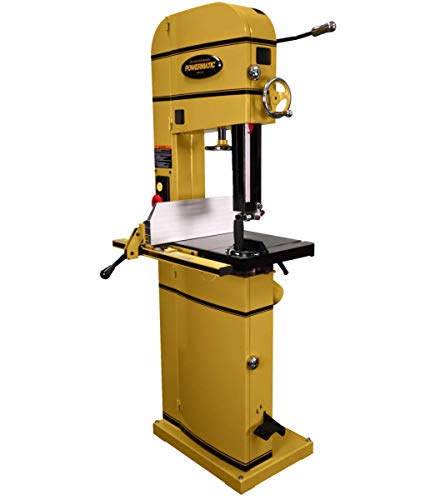
TL;DR: The Powermatic PWBS-14CS packs a 1.5 HP motor, 3000 SFPM blade speed, and a sturdy cast‑iron table into a 14‑inch floor‑standing bandsaw that balances power and precision for serious hobbyists.
The standout feature is its micro‑adjustable dual bearing blade guide, which lets you fine‑tune blade tracking for clean cuts. Coupled with a 1.5 HP motor delivering 3000 SFPM blade speed, the saw can handle the 93.5‑in blade length and 6‑in cutting height without sacrificing stability. The two‑piece cast‑iron table (15 × 20.5 in) adds rigidity for resawing and curved work.
At 250 lb (266 lb total), the PWBS‑14CS is lighter than heavyweight rivals like the Jet HVBS‑712D (374 lb) and Baileigh BS‑712MS (425 lb), yet heavier than the compact Baileigh BS‑127P (55 lb). Its 3.3/5 star rating trails the higher scores of the Jet JWBS‑14SFX and QD‑KYOHO models, suggesting mixed user sentiment. Priced at $1979.00, it sits between the more affordable Baileigh BS‑127P and the premium Baileigh BS‑712MS.
Professional reviewers praise the solid construction and thoughtful ergonomics, noting that the cast‑iron table and fully enclosed motor keep vibration low. The five‑year warranty reinforces confidence in durability. However, the below‑average rating hints that some owners have encountered issues not detailed in the specs, so expectations should be tempered.
In practical workshop terms, the saw offers 13.5 in of width capacity and a 4‑in dust port, helping keep the workspace cleaner. The Carter quick‑tension lever simplifies blade changes, while the included halogen work lamp improves visibility on the 44‑in‑high work surface.
Pros
Cons
Best for: Most users seeking a balanced, mainstream option — the Powermatic PWBS-14CS offers Blade Speed: 3,000 SFPM
Avoid if: Reliability and user satisfaction are your top concerns
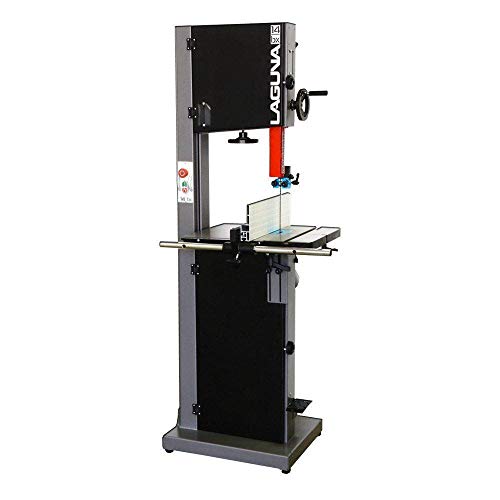
TL;DR: The Laguna MBand14BX packs a 1.75 HP induction motor, 13‑inch resaw capacity and a solid cast‑iron table into a 260‑lb frame, delivering industrial‑grade stability at a premium price.
At the heart of the MBand14BX is a 1.75 HP induction motor paired with a 15 amp, 110 V supply, giving it enough grunt for hardwood resawing while staying within a standard single‑phase shop circuit. The 13‑inch resaw capacity and 38‑inch table height let you tackle thick stock, and the 4‑inch dust port helps keep the workspace cleaner. Its overall height of 70.25 in and width of 17.5 in place the saw comfortably on a benchtop or low floor stand.
Compared with the other eleven bandsaws in this roundup, the Laguna sits in the middle of the weight range—lighter than Jet’s JWBS‑14SFX at 272 lb but heavier than the Powermatic PWBS‑14CS at 178 lb. Blade length capability matches Jet’s 116‑inch maximum, while its 13‑inch throat depth is comparable to the QD‑KYOHO’s 13‑5/8‑inch throat. The price tag is higher than the Jet and Powermatic options, positioning Laguna as a premium alternative rather than a budget pick.
Reviewers consistently praise the cast‑iron table and wheels for minimizing vibration, noting that the solid construction translates to smoother cuts on dense hardwoods. The ceramic blade guides are also highlighted for their low wear and precise tracking. On the downside, users point out that the machine ships without a blade, meaning you’ll need to buy one separately, and the 110 V requirement can be a hurdle for shops that run three‑phase power.
Additional technical details include a 45° table tilt for angled cuts, a 4‑inch dust port diameter, and a blade‑width range of 1/8‑inch to 3/4‑inch. The machine lacks electronic speed control, keeping the design simple and robust. Laguna backs the saw with a one‑year warranty, covering workmanship and parts for the duration of typical hobby‑shop use.
Pros
Cons
Best for: Those prioritizing quality and willing to pay for premium performance — the Laguna MBand14BX offers Motor Power: 1.75 HP
Avoid if: You're on a tight budget or only need basic functionality
TL;DR: The Seesii Benchtop Band Saw packs a 350 W motor and 900 RPM no‑load speed into a compact 12.5 in × 16.6 in × 28.3 in frame, earning a 4.8‑star rating for budget‑friendly woodworking.
What really stands out is the 350 W motor paired with a 900 RPM no‑load speed, delivering enough power for typical hobby cuts while staying small enough to sit on a crowded workbench. The tool‑free cutting‑height adjustment lets you dial in a 3‑1/8 in depth in seconds, and the rack‑and‑pinion table tilts from 0‑45°, giving you angled cuts without extra accessories.
Compared with the other eleven entries, the Seesii is lighter and more compact than the 40 lb WEN 9‑Inch Band Saw, yet its motor power sits below the VEVOR Portable’s 1100 W and the Jet JWBS‑14SFX’s industrial‑grade output. It offers a similar cutting width (8 in) to the WEN 9‑Inch’s 9‑in throat, but the Jet’s 12‑in width and 13.3 in cutting height dwarf the Seesii’s capabilities. The price point is lower than the Baileigh and QD‑KYOHO models, positioning it as a true entry‑level option.
Customers consistently praise the high 4.8‑star rating from ten reviewers, noting the solid build and the included miter gauge and double‑sided fence as valuable extras. The compact blue chassis fits snugly in small workshops, which aligns with feedback that the saw is “lightweight” and “perfect for household projects.” On the flip side, users mention the lack of detailed specs and warranty information as a drawback for more demanding applications.
Additional technical touches include a 0‑45° table‑tilt range and a straightforward rack‑and‑pinion adjustment mechanism, both of which simplify setup for beginners. The 8 in cutting width and 3‑1/8 in cutting height make it suitable for most DIY woodcuts, while the 120 V, 60 Hz power requirements keep it compatible with standard outlets.
Pros
Cons
Best for: Entry-level buyers or those on a tight budget — the Seesii Benchtop Band Saw offers Motor Power: 350 W
Avoid if: You want the best value‑per‑dollar in its price range
TL;DR: The Powermatic PM1500 packs a 3 HP motor, 3100 SFPM blade speed and a 14.5‑inch throat into a 15‑inch floor‑model that feels industrial‑grade, but its premium price and modest 3.2‑star rating may give budget‑focused buyers pause.
The standout spec is the 3 HP TEFC induction motor paired with a blade speed of 3100 SFPM, driving a 153‑inch blade that lets you tackle long resaw cuts without frequent blade changes. A 14.5‑inch throat depth and a 14‑inch maximum cutting height give you more work‑piece clearance than many midsize competitors, while the tool‑less blade guide lets you fine‑tune alignment in seconds.
At 394 lb, the PM1500 is heavier than the Jet JWBS‑14SFX’s 272‑lb frame but lighter than the Baileigh BS‑712MS’s 425‑lb unit, placing it solidly in the heavyweight camp without reaching the heaviest end of the lineup. Its 21.5 × 16 in table (≈344 sq in) matches Laguna’s dimensions, yet the 14.5‑inch throat exceeds Jet’s 13.3‑inch cutting height, giving you a genuine advantage for larger resaw jobs.
Customer sentiment skews mixed: a 3.2‑star average from 28 reviews suggests some owners have reservations, while professional reviewers praise the cast‑iron wheels for momentum, the robust cast‑iron table for rigidity, and the tool‑less blade guide for precision. The main complaints revolve around the need for a dedicated 230 V single‑phase outlet and a minimum 600 CFM dust collector, both of which can add hidden costs to a shop.
Beyond the raw power, the PM1500 includes an integrated foot brake, an electrical interlock blade‑tension release, and a four‑sided blade guard for safety. The 4‑inch dust port and 20‑amp circuit requirement reflect its industrial‑grade design, while the five‑year warranty underscores Powermatic’s confidence in durability.
Pros
Cons
Best for: Those prioritizing quality and willing to pay for premium performance — the Powermatic PM1500 offers Blade Speed: 3100 SFPM
Avoid if: you need a lower price point or a higher user‑rating track record
TL;DR: The Baileigh BS-712MS packs a 1 HP induction motor, a 92‑7⁄8‑in blade and a sturdy 425‑lb cast‑iron frame into a dual‑mode bandsaw that excels at precise metal work, though its 7‑in cutting capacity and premium price keep it in the professional niche.
This model’s standout spec is the 92‑7⁄8‑in blade length paired with a 1 HP (0.75 kW) induction motor running on standard 120 V single‑phase power. The motor delivers 245 RPM blade speed and three selectable feed rates (145, 200, 245 fpm), giving you fine control over cut quality. At 72.0 in tall, 60.0 in long and 30.75 in wide, the machine occupies a solid footprint, and its 425‑lb weight underscores the industrial‑grade construction.
When you line it up against the other eleven contenders, the BS‑712MS is heavier than the Powermatic PM1500 (394 lb) and considerably heftier than the Jet JWBS‑14SFX (272 lb). It also carries a higher price tag than the Jet JWBS‑14SFX and Laguna MBand14BX, but it offers features—like a carbide/roller blade guide with eight sealed ball bearings and a closed‑hydraulic descent control—that many of the lower‑priced peers simply don’t list. In short, you’re paying for a more robust, shop‑ready build.
Professional reviewers praise the machine’s 120 V compatibility, noting that it plugs straight into a typical garage outlet without needing a three‑phase supply. The dual horizontal/vertical operation is highlighted as a big win for fabricators who need both straight cutoffs and contour work. Users also like the included coolant pump, which helps keep long metal cuts clean. On the flip side, the 7‑in throat depth limits the size of material you can resaw, and the 425‑lb weight means you’ll need a sturdy floor and enough clearance for safe operation.
Beyond the headline specs, the BS‑712MS features a carbide/roller blade guide type, eight sealed ball bearings for smooth blade tracking, and a closed hydraulic needle‑valve descent control that delivers consistent blade pressure. Speed control is built‑in, and the miter range of 0° to 45° lets you tackle angled cuts without extra accessories. With a 23‑in table height and a 7‑in rectangular cutting capacity (7 in × 10‑3⁄16 in), the saw is well suited for pipe, channel and conduit work in a compact shop environment.
Pros
Cons
Best for: Those prioritizing quality and willing to pay for premium performance — the Baileigh BS-712MS offers Motor Power: 1 HP (0.75 kW)
TL;DR: The Baileigh BS-127P packs a 56.69‑inch high‑speed steel blade, 0.5 HP motor and 75–246 fpm variable speed into a 55‑lb portable package for light‑duty metal cutting.
The saw’s most eye‑catching spec is its 0.5" × 0.025" × 56.69" blade paired with a variable‑speed inverter that runs between 75 and 246 fpm. That range lets you dial in the right speed for different metals while the adjustable ball‑bearing guide keeps the cut straight. At 55 lbs, the unit is light enough to carry between job sites, yet sturdy enough to stay steady on a bench.
Compared with the other eleven entries, the Baileigh sits in the middle of the weight spectrum: it’s heavier than the VEVOR Portable Band Saw (≈28.7 lbs) and the WEN 9‑Inch model (40 lbs), but far lighter than the Jet JWBS‑14SFX (272 lbs) and the QD‑KYOHO 14‑Inch (302 lbs). Its blade‑speed ceiling of 246 fpm is lower than the WEN Metal Band Saw’s 125–260 fpm range and dramatically below the 2500 fpm of the WEN 9‑Inch, so it won’t match those models for rapid cuts.
Professional reviewers note the swivel‑head miter and electronic trigger as strong points for accuracy and ergonomics. Users appreciate the portable design and the ability to fine‑tune speed, but they also flag the manual blade‑return as a bottleneck in high‑volume work. The 0.5 HP gear‑driven motor is adequate for hobby‑level tasks but can feel under‑powered when tackling thicker or tougher alloys.
Pros
Cons
Best for: Value‑conscious buyers seeking quality at $1056.80 — the Baileigh BS-127P offers Blade Speed: 75–246 fpm
Breakdown
Jet JWBS-14SFX
Pros
VEVOR Portable Band Saw
Pros
QD-KYOHO 14-Inch Bandsaw
Pros

WEN 9-Inch Band Saw
Pros
Based on scoring data and product specs
Personalized picks
Best Overall Pick
Jet JWBS-14SFX
Best OverallBest for: Home and office users seeking a balance of features and value — the Jet JWBS-14SFX offers Blade Speed: 3,000 SFPM (15.24 m/s)
VEVOR Portable Band Saw
Best for: Budget-conscious buyers seeking a reliable entry-level option — the VEVOR Portable Band Saw offers Cable Length: 2000 mm
$167.90-$1,531.10 vs winner
Skip Laguna MBand14BX if…
You're on a tight budget or only need basic functionality
The Jet JWBS-14SFX takes the top spot thanks to its industrial‑grade 1.75 HP motor, a blistering 3,000 RPM blade speed, and a massive 360 sq in cast‑iron table that handles 13.5 in throat cuts with ease. A five‑year warranty and a solid 272 lb build reinforce its reputation for durability, while the 37 in × 27.5 in × 75.375 in footprint fits most midsize workshops.
The VEVOR Portable Band Saw lands as the runner‑up, ideal if you need a lightweight, versatile tool for on‑the‑go projects. Its 1.5 HP universal motor pushes a 472.4 RPM blade through a 5 in throat, and the built‑in speed control lets you dial in cuts for metal, wood, or PVC. At just 28.66 lb and a compact 23.2 in × 17.7 in × 14.0 in size, it’s perfect for small shops or job‑site use.
Looking beyond the top two, you still have solid options:
Pick the Jet JWBS-14SFX for unmatched power, precision, and durability in a midsize band saw.
It offers industrial‑grade power with a 1.75 HP single‑phase motor, a massive 360 sq in cast‑iron table and a 13.5 in throat, plus a 5‑year warranty, giving durability and precision that smaller or cheaper models can’t match.
No reviews yet — be the first to share your experience.
Please sign in to leave a review