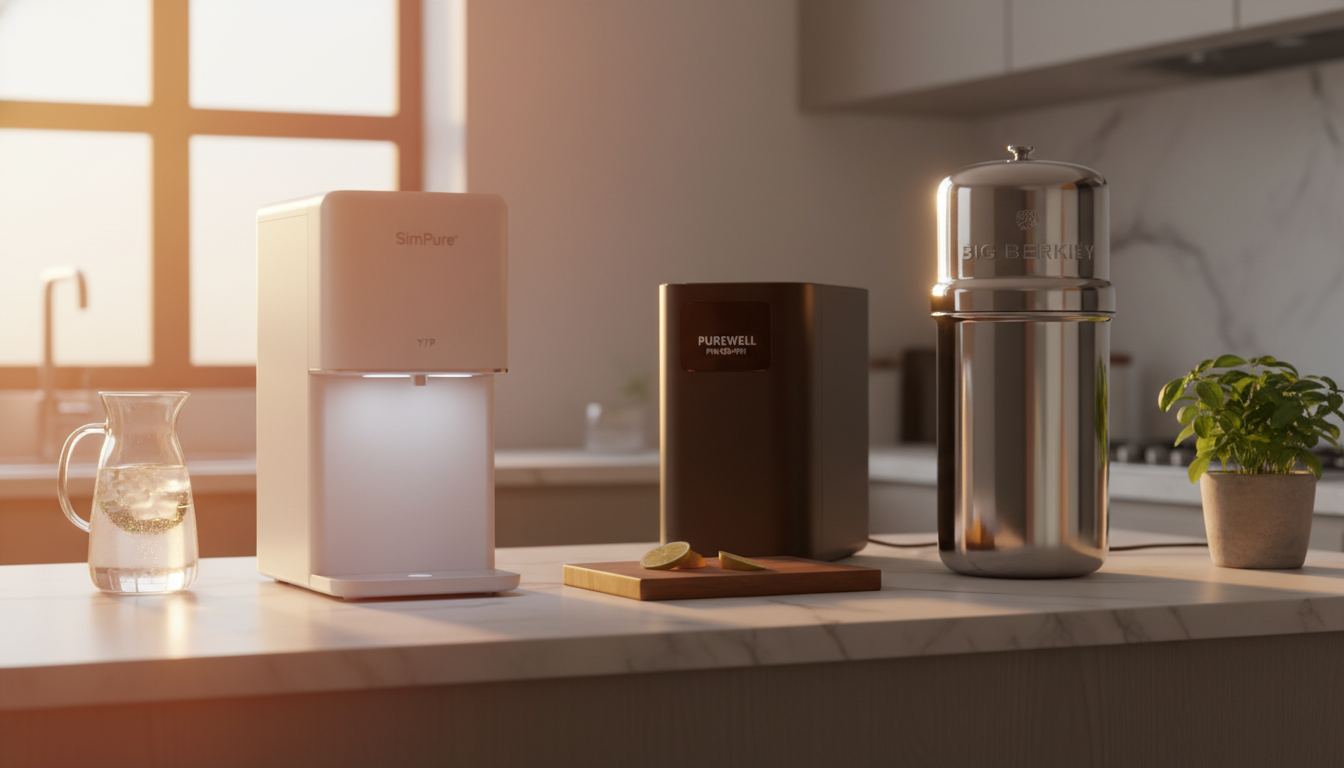
⚡ Quick Answer
One model in our lineup pulls off a rare mix of advanced multi‑stage filtration, a low‑waste 4:1 pure‑to‑drain ratio, and a countertop footprint that fits even a cramped kitchen. Priced at $229.98 and carrying a 4.3‑star rating from more than 3,300 reviewers, it offers a touch‑panel interface, tool‑free filter twists, and a 1.3‑gallon feed tank that can fill a cup in about 15 seconds. Its compact dimensions—roughly 17.3 in × 7.5 in × 16.1 in—make it a solid choice for renters, RVs, or any small household that wants restaurant‑grade water without permanent plumbing.
We compared 10 systems that span the full price spectrum, from the $69.51 budget‑friendly Home Master Jr. F2 to the $475.00 premium AquaTru Classic. The lineup includes four budget options, two mid‑range contenders, and four premium models, with user ratings ranging from 4.0 to 4.6 stars. In the sections that follow, we break down how each unit performs on filtration stages, water waste, installation ease, and everyday practicality, so you can match the right system to your home and budget.

SimPure Y7P
Its 17.3‑inch depth provides ample filtration capacity, reinforcing SimPure’s strong value and popularity.

Home Master TMJRF2 Jr F2
Ideal for budget‑conscious buyers, this entry‑level system costs $69.51, roughly $160 cheaper than the SimPure Y7P.

Big Berkey 2.25 Gallon
Its 8.5‑inch diameter and 21‑inch height give high‑capacity storage, a size the other picks don’t offer.
Also considered
TL;DR: The Big Berkey 2.25 gallon system costs $367.00, holds 2.25 gallons of water, and uses gravity‑fed Black Berkey filters to remove 200+ contaminants without electricity.
The standout spec is its 2.25‑gallon storage capacity housed in a stainless‑steel body that measures 8.5 inches in diameter and 21 inches tall when in use. With a filled weight of 25 pounds, the unit stays stable on a countertop while still being nestable for transport.
Compared with the nine other systems in this roundup, the Big Berkey is heavier than the lightweight Bluevua RO100ROPOT‑Lite UV (2.4 lb) and the Epic Nano (2.98 lb), but its empty weight matches the APEC RO‑CTOP’s 7‑pound chassis. Its 2.25‑gallon capacity dwarfs the Purewell PW‑OB’s 1.5‑gallon clean‑water capacity and the Epic Pure’s 0.5‑gallon output, though it lacks the plug‑in convenience of the SimPure Y7P’s 30 W rated power.
Users consistently praise the Berkey’s durability and the long lifespan of its Black Berkey elements, which can treat 3,000–6,000 gallons each. Professional reviewers note that the system exceeds NSF/ANSI Standard 53 in lab tests, delivering >99.9% removal of atrazine and >97% reduction of uranium. The trade‑off is a slower flow rate—around 3.5 GPH with two filters, dropping to 0.75 GPH when PF‑2 filters are added—meaning it can take over two hours to fill the full reservoir.
Pros
Cons
Best for: Buyers willing to invest in a proven, high‑quality option — the Big Berkey 2.25 gallon offers Diameter: 8.5 inches
Avoid if: You need instant, high‑volume water output or a fully NSF‑certified turnkey system.
TL;DR: The SimPure Y7P delivers restaurant‑grade, 5‑stage RO water with UV sterilization, a 4:1 pure‑to‑drain ratio and tool‑free filters, all in a compact countertop unit for $229.98.
The Y7P’s five‑stage system combines a composite pre‑filter, RO membrane, post‑filter and UV sterilization that kills 99.99% of microbes. It pushes 418 GPD of purified water and uses a 4:1 pure‑to‑drain ratio, which translates to roughly 1,500% water savings compared with traditional RO units.
At 17.3 inches deep and weighing 18.0 pounds, the SimPure sits taller and heavier than most peers—Bluevua’s depth is only 9.7 inches and its unit weighs 2.4 lb, while the APEC model is 6.5 inches high and 7.0 lb. Even the larger Purewell options are shorter or lighter, making the Y7P a more substantial countertop presence.
Users rave about the quick ~15‑second dispense per cup and the noticeable improvement in taste, crediting the UV kill‑rate and high contaminant removal. Professional reviewers note the convenient tool‑free twist‑and‑lock filter swaps, yet they also point out that rear‑tank access can be awkward and the system only accepts feed water with TDS below 500 ppm.
Technically, the unit meets NSF/ANSI 58 and EPA 537 standards and is SGS‑tested. Its RO membrane pores are 0.0001 µm, delivering >99.45% chlorine removal, >98.75% PFAS reduction, and >99.6% microplastic capture—all without any BPA‑containing plastics.
Pros
Cons
Best for: Buyers willing to invest in a proven, high‑quality option — the SimPure Y7P offers Depth: 17.3 inches
Avoid if: You have high‑TDS water sources, a tight budget, or need a unit with comprehensive independent NSF/ANSI certifications.
TL;DR: The Purewell PW-OB-PH delivers 0.01‑micron, six‑stage filtration, removing 99.99% of impurities at 4 GPH, with a 1.5‑gallon capacity and a compact 20‑inch tall, 10.8‑lb design.
This unit’s standout spec is its 0.01‑micron pore size combined with six filtration stages, which together achieve 99.99% impurity reduction and 99‑99.6% chlorine removal. It pumps 4 gallons per hour, stores up to 1.5 gallons of clean water, and sits on a non‑slip silicone‑cushioned base. At 20.0 inches high, 8.8 inches wide and deep, and weighing 10.8 pounds, it balances a sturdy feel with countertop‑friendly dimensions.
Compared with the SimPure Y7P, the Purewell is lighter (10.8 lb vs 18.0 lb) and shallower (8.8 in depth vs 17.3 in), though it stands taller (20.0 in vs 16.1 in). The Bluevua RO100ROPOT‑Lite UV is notably lighter (2.4 lb) and shorter (14.1 in height), but Purewell offers a larger clean‑water capacity. Against the earlier Purewell PW‑OB model, the PW‑OB‑PH is heavier (10.8 lb vs 8.5 lb) yet more compact in height (20.0 in vs 26 in), reflecting a refined form factor for small spaces.
Reviewers consistently praise the ease of gravity‑fed operation, the portable countertop footprint, and the “restaurant‑grade” water quality. Users love the transparent water‑level window and the sturdy 304‑stainless‑steel construction. Professional reviewers highlight the superior filtration accuracy of the 0.01‑micron barrier and the eco‑friendly, bottle‑reduction design. The most common criticism is the inability to lower Total Dissolved Solids, and the 1.5‑gallon tank can feel small for larger households that need continuous dispensing.
Technical details reinforce its value: the system is NSF/ANSI 42 & 372 certified, delivers water at a pH of 8‑9, and includes four filters (two carbon, two alkaline) that together last up to 6,000 gallons for carbon and 200 gallons for alkaline stages. Filters are scheduled for replacement every six months, and the design allows up to three carbon filters for extended performance.
Pros
Cons
Best for: Small households of 1‑3 people who want a well‑reviewed, low‑maintenance filter with a six‑month replacement schedule.
Avoid if: You need high‑volume dispensing, TDS reduction, or professional‑grade performance for large families.
TL;DR: The Purewell PW-OB is a countertop, gravity‑fed 3‑stage filter that uses a 0.01 µm membrane to strip 99.99 % of bacteria, weighs 7.7 lb and fits in a 26‑inch tall space.
The standout feature is its 0.01 µm hollow‑fiber ultrafiltration membrane, paired with a silver‑ion layer and an activated‑carbon block. Together they form a three‑stage process that eliminates 99.99 % of bacteria and protozoa, a level of precision that many standard 0.2 µm filters can’t match. The unit holds 2.25 gallons of water and delivers it at a flow rate of 0.07 GPM, all without plugging into electricity.
Compared with the nine other systems in this roundup, the PW‑OB sits in the mid‑price tier—cheaper than the SimPure Y7P but pricier than the Epic Pure. Its 26‑inch height makes it taller than the compact Epic Nano, while its 7.7‑lb weight is heavier than the lightweight Epic Nano (2.98 lb) yet far lighter than the SimPure Y7P (18.0 lb). The six‑month filter lifespan outlasts Epic Pure’s 150‑gallon cartridge but doesn’t stretch as long as some RO units that claim thousands of gallons.
Reviewers consistently praise the system’s ability to remove virtually all microbes and its plug‑free operation, calling it a solid choice for off‑grid cabins or renters without access to power outlets. The main complaints focus on the slower gravity‑driven flow and the fact that it does not lower total dissolved solids, so it isn’t a fit for users battling hard water or high mineral content.
Technical credentials include NSF/ANSI 42 and 372 certifications, confirming compliance with aesthetic and lead‑free standards. The stainless‑steel housing (304 food‑grade) adds durability, while the transparent water‑level window lets you see when the reservoir needs refilling. With a 3‑stage design, a 6‑month replacement interval and a capacity of 2.25 gallons, the PW‑OB balances performance and convenience for everyday household use.
Pros
Cons
Best for: Budget-conscious buyers seeking a reliable entry-level option — the Purewell PW-OB offers Depth: 8.9 inches
Avoid if: You want the best value-per-dollar in its price range
TL;DR: The Epic Nano delivers 99.99% contaminant removal in a compact 12.0‑inch, gravity‑fed pitcher for $79, making it a solid entry‑level choice for budget‑focused households.
The standout figure is its 99.99 % TDS reduction, backed by NSF/ANSI 42, 53, 401, P231 and P473 certifications, so you get restaurant‑grade water quality without plugging in a unit.
Compared with the other nine models, the Nano is lighter than the large Purewell units, more compact than the Big Berkey, and sits at a lower price point than the SimPure Y7P while still offering a full countertop footprint.
Reviewers love the broad contaminant list—bacteria, viruses, PFAS, heavy metals, chlorine and microplastics—but they note the flow slows noticeably once the filter approaches its 3‑4 month lifespan, and the Tritan plastic feels thinner than the bulkier pitchers in the set.
Because it’s gravity‑fed, the Nano needs no electricity and the filter is 100 % recyclable. The lifetime warranty and a filter‑life indicator that counts down 90 days add convenience for users who want set‑and‑forget hydration.
Pros
Cons
Best for: Entry-level buyers or those on a tight budget — the Epic Nano offers Height: 12.0 inches
TL;DR: The Epic Pure pitcher removes 99.9% of PFAS and other contaminants, offers a 150‑gallon filter life, and fits on a fridge shelf for just $84.
What really sets the Epic Pure apart is its PFAS removal efficiency – the filter is certified to pull out 99.9% of forever chemicals, alongside 98.4% chlorine and 95.8% copper. The solid carbon block is only 6 mm thick, yet it still delivers a 150‑gallon (568 liter) lifespan, meaning you’ll replace the cartridge roughly every three months.
Compared with the other nine models in this roundup, the Epic Pure is lighter than the SimPure Y7P (which weighs 18 pounds) but a bit heftier than the Epic Nano’s 2.98‑pound unit. Its 10‑inch height and 6‑inch width make it more compact than the Purewell PW‑OB’s 26‑inch height, and it occupies less vertical space than the Big Berkey’s 21‑inch standing height. While it doesn’t reach the multi‑stage capacity of the APEC RO‑CTOP, it does pack a respectable 10‑cup (2.4 liter) total capacity in a single‑gravity design.
Users consistently note that water tastes cleaner after the initial slow pour, and they appreciate the built‑in LED timer that counts down the 90‑day filter interval. Professional reviewers point out the strong contaminant reduction but also flag the thinner plastic body and the 10‑11 minute fill time as trade‑offs. Some owners mention that the filter can feel “flimsy” compared with bulkier stainless‑steel systems, yet many value the BPA‑free Tritan construction for its recyclability and vegan status.
Pros
Cons
Best for: Entry‑level buyers or those on a tight budget — the Epic Pure offers a 150‑gallon filter lifespan and strong PFAS removal at an affordable price.
Avoid if: Reliability and user satisfaction are your top concerns, given the slower filtration speed and below‑average rating.
TL;DR: The Home Master TMJRF2 Jr F2 delivers five‑stage, 1‑micron carbon block filtration, removes up to 93% of chlorine and fluoride, and costs just $69.51, making it a budget‑friendly countertop solution for renters.
This unit packs a five‑stage system that includes a 1 micron carbon block followed by a 5 micron stage, achieving chlorine removal of up to 93% and fluoride removal of 93% while handling 500 gallons before replacement. Its compact footprint—diameter 114 mm, height 193 mm, length 312 mm, width 239 mm—fits easily on a kitchen counter, and the 152 mm faucet reach lets you attach it to most standard faucets without permanent plumbing.
Compared with the nine other contenders in this roundup, the Home Master sits at the lower end of the price spectrum and is lighter than the Purewell PW‑OB models, while its overall dimensions are shorter than the Epic Pure’s 254 mm height and length. It also offers more filtration stages than the single‑stage gravity units, though it lacks the NSF certification that some higher‑priced alternatives tout.
Reviewers consistently praise the quick, tool‑free installation—no plumber needed—and the instant improvement in taste and odor. Professional reviewers note the specialized channel blocker technology that prevents uneven flow, a common issue in granular filters. The main complaints revolve around the need to replace the cartridge roughly every three months and the visible tubing that can’t be hidden behind cabinets. Because the system preserves calcium and magnesium, it doesn’t lower dissolved mineral levels, which can keep total dissolved solids higher than in reverse‑osmosis setups.
Pros
Cons
Best for: Budget-conscious buyers seeking a reliable entry-level option — the Home Master TMJRF2 Jr F2 offers Faucet Reach: 152 mm.
Avoid if: You require NSF certification, need to remove dissolved minerals, or have high sediment or bacterial concerns.
TL;DR: The AquaTru Classic delivers NSF‑certified 4‑stage RO filtration that removes 84+ contaminants, but its 0.04 GPM flow and $475 price make it a premium choice for those who value purity over speed.
The standout spec is its 84+ contaminant removal count, backed by NSF/ANSI certification that verifies elimination of lead, chromium‑6, chlorine, fluoride, PFAS and more. It uses a four‑stage RO system with sediment, pre‑carbon, high‑efficiency membrane and post‑carbon filters, and the built‑in electric pump lets you install it on any countertop without plumbing.
At 17 lb, the Classic is heavier than the ultra‑light Bluevua RO100ROPOT‑Lite UV (2.4 lb) and the Epic Nano (2.98 lb), yet lighter than the SimPure Y7P (18 lb). Its 14 in depth, height and 12 in width give it a larger footprint than the compact Epic Pure, but it still fits comfortably on a kitchen counter. The $475 list price places it above most peers in this round‑up, so budget‑focused shoppers will notice the premium tag.
Everyday users rave about the crisp, clean taste and the convenience of a plug‑and‑play setup. Reviewers frequently mention the digital display and the satisfaction of seeing contaminants removed. Professional reviewers highlight the 3:1 pure‑to‑waste ratio as more efficient than many under‑sink units. The downside is the slow 0.04 GPM flow, which translates to roughly 12–16 minutes to fill the 0.75‑gallon clean‑water tank (11 cups in 16 minutes). The internal pump also produces a noticeable hum and vibration, a common complaint among renters who need quiet appliances.
Technical context adds perspective: the unit can produce up to 54 GPD under ideal conditions, limited by its 1‑gallon tap‑water tank and 0.75‑gallon purified‑water tank. Filter life ranges from 600 to 1,200 gallons, and TDS reduction sits between 87.1% and 95%. It operates comfortably between 39 °F and 100 °F and plugs into a standard 120 V AC outlet.
Pros
Cons
Best for: Those prioritizing quality and willing to pay for premium performance — the AquaTru Classic offers Flow Rate: 0.04 GPM
“The water tastes crisp, clean, and like bottled water.”
“Ice made from AquaTru water is clearer and less odorous.”
TL;DR: The Bluevua RO100ROPOT‑Lite UV delivers 99.99% contaminant removal, 7‑stage RO plus UV, and a plug‑and‑play countertop design for under‑$220, making restaurant‑grade water accessible for small households.
The system’s headline feature is its 7‑Stage filtration paired with a 0.0001 μm reverse‑osmosis membrane and built‑in UV light (270–280 nm). Together they achieve a listed 99.99% contaminant reduction, while the mineral stage adds calcium, magnesium, potassium and zinc back into the water. The manufacturer also claims a Bottle Replacement Equivalent of 3,936 bottles annually, which translates to a daily filter cost of $0.22.
At 2.4 lb, the Bluevua unit is dramatically lighter than the SimPure Y7P’s 18 lb footprint and lighter than the Epic Nano’s 2.98 lb. Its 9.7 in depth and 14.1 in height make it shallower than the SimPure Y7P (17.3 in depth) but taller than the APEC RO‑CTOP’s 6.5 in height. Compared with the Purewell PW‑OB‑PH’s 8.8 in depth, the Bluevua sits in the middle of the size range while offering more filtration stages than the Purewell’s ultrafiltration‑only design.
Everyday users appreciate the “no‑installation” countertop setup and the LED display that shows filter life and water quality at a glance. Reviewers repeatedly note the 12‑month filter lifespan and the ultra‑quick 3‑second filter replacement as major convenience wins. Professional reviewers highlight the system’s 86% minimum fluoride reduction and 97% strontium reduction, confirming that the UV and RO stages work together effectively.
Technical details reinforce the convenience claim: the unit runs on standard household pressure (0–30 PSI) and accepts water temperatures from 41 °F to 100 °F. Its pure‑to‑drain ratio of 3:1 conserves water, and the auto‑rinse cycle plus automatic shut‑off add safety and low‑maintenance operation.
Pros
Cons
Best for: Most users seeking a balanced, mainstream option — the Bluevua RO100ROPOT‑Lite UV offers Bottle Replacement Equivalent: 3,936 bottles annually.
Avoid if: You're shopping on a tight budget — it's priced at $219.00.
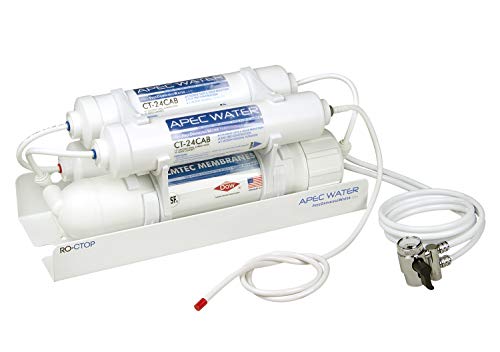
TL;DR: The APEC RO-CTOP delivers up to 90 gallons per day of 99 % pure water from a compact 6.5‑inch‑high, 7‑pound countertop unit, but requires a standard faucet and continuous water flow.
The standout figure is its 90 GPD production capacity, paired with a waste‑to‑purified water ratio of 2:1 and up to 99 % contaminant removal. Those numbers put it on par with many permanent under‑sink systems while staying portable.
At 6.5 inches tall, 14.0 inches long and 6.0 inches wide, the RO‑CTOP is noticeably shorter than the SimPure Y7P (16.1 inches tall) and the Purewell PW‑OB‑PH (20.0 inches tall). Its 7‑pound weight lands between the feather‑light Bluevua RO100ROPOT‑Lite (2.4 lb) and the heavier SimPure (18.0 lb), and it’s comparable to the empty Big Berkey’s 7‑pound weight.
Users consistently praise the “plug‑and‑play” feel – the quick‑connect fittings and included bracket make setup a breeze for renters and travelers. Reviewers also note a marked improvement in coffee and tea taste. On the downside, the system won’t attach to pull‑out, sprayer, or designer faucets, and the lack of a built‑in storage tank means you need a running faucet to get water, which can be inconvenient for intermittent use.
Technically, the RO‑CTOP runs a four‑stage process: a 5‑micron sediment pre‑filter, two coconut‑shell activated‑carbon stages, and a Filmtec high‑rejection TFC membrane. The filter set is designed for roughly once‑per‑year replacement, and the 10‑inch filter size fits the compact housing without permanent installation.
Pros
Cons
Best for: Those prioritizing quality and willing to pay for premium performance — the APEC RO-CTOP offers Height: 6.5 inches.
Avoid if: You have pull‑out or designer faucets, need stored purified water, or are looking for a low‑cost, basic filtration solution.
Breakdown
SimPure Y7P
Pros
Home Master TMJRF2 Jr F2
Pros
Big Berkey 2.25 Gallon
Pros

Bluevua RO100ROPOT-Lite UV
Pros
Cons
Based on scoring data and product specs
Personalized picks
Best Overall Pick
SimPure Y7P
Best OverallBest for: Buyers willing to invest in a proven, high-quality option — the SimPure Y7P offers Depth: 17.3 inches
Home Master TMJRF2 Jr F2
Best for: Budget-conscious buyers seeking a reliable entry-level option — the Home Master TMJRF2 Jr F2 offers Faucet Reach: 152 mm
$69.51-$160.46 vs winner
Skip Epic Pure if…
Reliability and user satisfaction are your top concerns
The SimPure Y7P earns the top spot thanks to its robust 5‑stage filtration that pulls >98.64% of total dissolved solids, a rapid 418 GPD flow rate, and UV sterilization that kills 99.99% of microbes. At $229.98 it’s well under the list price of $369.99, and its 4.3‑star rating from 3,349 reviews shows strong user approval.
If you need a compact faucet‑mount system for a tight kitchen or a rental where permanent installation isn’t an option, the Home Master TMJRF2 Jr F2 is the runner‑up. It costs $69.51, offers 5 filtration stages, and a 500‑gallon filter capacity while removing up to 93% of chlorine and 93% of fluoride.
Here’s how the other price tiers stack up:
Choose the SimPure Y7P today and upgrade your tap water instantly.
The SimPure Y7P uses a 5‑stage system that includes a reverse‑osmosis membrane, UV sterilization that kills 99.99% of microbes, and post‑filtration that removes more than 99% of arsenic, lead, PFAS and other contaminants. Its pure‑to‑drain ratio of 4:1 and an annual output of 528 gallons mean you get a steady supply of clean water without frequent filter changes.
No reviews yet — be the first to share your experience.
Please sign in to leave a review