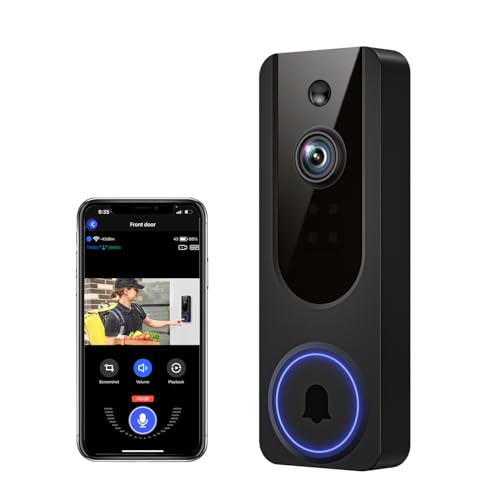
⚡ Quick Answer
We lined up nine doorbell cameras with intercom, spanning true budget picks at $9.99 up to premium models topping $130.99. The Arlo Video Doorbell 2K (2nd Gen) lands at $49.99 with a solid 4.4‑star rating from 1,185 reviewers, offering a 180‑degree field of view and HDR support. On the low end, the VanaOrbi WiFi Video Doorbell costs $9.99 and the Tapo D205 is $34.97, both promising battery operation and AI motion detection. Mid‑range contenders like the Wyze Battery Video Doorbell ($65.98) and Hiseeu Wireless Doorbell Camera ($79.99) bring two‑way audio and respectable night‑vision ranges, while the eufy Security C31 matches that price point with local storage options. Premium choices include the Reolink 2K Battery Video Doorbell at $101.99, Google Nest Doorbell (Wired) at $127.99, and the Reolink Video Doorbell with Chime at $130.99, each delivering higher‑resolution video and advanced smart‑home integration.
All models support two‑way audio, but they differ on power sources, storage options, and subscription requirements. In the sections that follow, we break down how those differences play out in real‑world setups, so you can match the right doorbell camera to your home and budget.
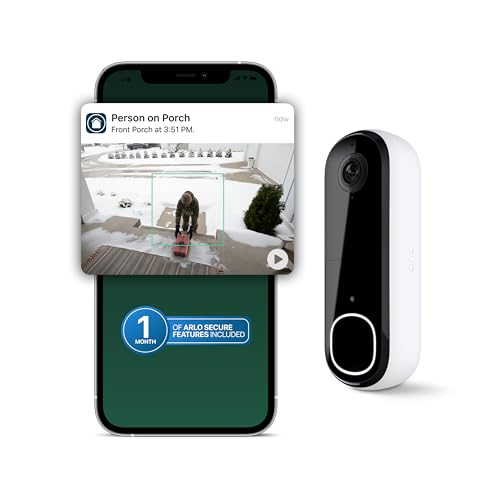
Arlo Video Doorbell 2K (2nd Gen)
12x digital zoom captures clear detail across its 180° diagonal field of view, delivering solid performance at a budget price.

Tapo D205
Ideal for tight‑budget renters who need a simple doorbell, it’s about $15 cheaper than the Arlo option while still offering 160° view and local storage.

Reolink 2K Battery Video Doorbell
Stands out with dual‑band 2.4/5 GHz Wi‑Fi, HDR video and true local storage, delivering higher‑resolution 4 MP footage for users who want premium image quality.
Also considered
TL;DR: The Arlo Video Doorbell 2K (2nd Gen) offers true 2K HDR video, a 180° diagonal view and 12× digital zoom for $49.99, making it a solid, budget‑friendly entry for smart‑home doorbell setups.
The standout spec is its 2K HDR video at 1944 × 1944 pixels, paired with a 180° diagonal field of view that captures head‑to‑toe coverage. A 12× digital zoom lets you zoom in on package details, while the built‑in spotlight and 20‑foot night‑vision range keep the porch visible after dark. At just 0.45 pounds, the unit feels lightweight enough to install without extra support.
Compared with the eight other doorbells in this roundup, the Arlo sits near the lower end of the price spectrum and is lighter than the eufy Security C31 (0.88 pounds) and the Hiseeu Wireless Doorbell (0.63 pounds), yet slightly lighter than the Tapo D205 (0.47 pounds). It also weighs more than the Google Nest Doorbell (0.2675 pounds), positioning it as a mid‑weight option that balances sturdiness with easy mounting.
Everyday users rave about the ultra‑wide 180° view and the reliable 20‑foot night vision, noting that the two‑way audio and onboard siren feel responsive. Professional reviewers echo these points but caution that the 2K video can appear grainy in low light, and the Arlo app has been reported to freeze occasionally. Because most smart‑detection features and cloud storage require an Arlo Secure subscription, the device leans on a subscription model for its full feature set.
Additional technical details include AI motion detection, IP65 weather resistance, and dual power options: a rechargeable lithium‑ion battery or hardwired connection with a minimum 8 V supply. The doorbell runs on a 2.4 GHz Wi‑Fi network and operates from –20 °C up to 45 °C, fitting most climate zones. A one‑year limited warranty rounds out the offering.
Pros
Cons
Best for: Budget-conscious buyers seeking a reliable entry‑level option — the Arlo Video Doorbell 2K (2nd Gen) offers Night Vision Range: 20 feet.
Avoid if: You want the best value‑per‑dollar in its price range.
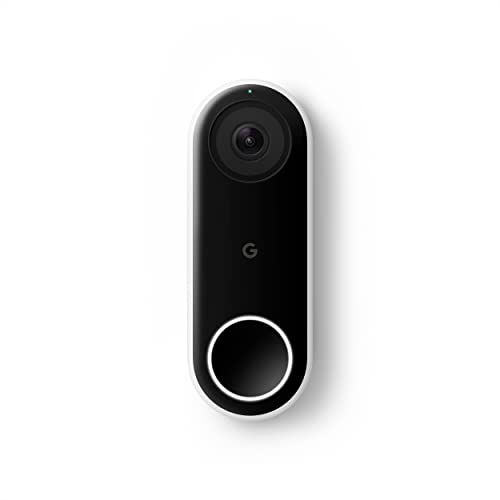
TL;DR: The Google Nest Doorbell (Wired) offers 2K HDR video at 30 FPS, 6× digital zoom and a 145–166° diagonal view for $127.99, delivering crisp, round‑the‑clock monitoring for homes with existing doorbell wiring.
The standout spec is its 960 × 1280 (2K HDR) video resolution paired with a steady 30 FPS frame rate, ensuring clear detail even in fast‑moving scenes. A 6× digital zoom and six 850 nm infrared LEDs give you usable night‑vision out to 3 m (10 ft), while the 145–166° diagonal field of view captures most of a visitor’s body without needing to pan the camera.
Compared with the other eight doorbells in this roundup, the Nest is lighter at 0.2675 lb, out‑weighing the battery‑powered Wyze (0.49 lb) and Hiseeu (0.63 lb) but lighter than the Arlo 2K (0.45 lb) and the eufy C31 (0.88 lb). Its diagonal view is narrower than Arlo’s 180° but still broader than many battery models that list only a single axis. Unlike most peers—Reolink, Wyze, Hiseeu, eufy and Tapo—the Nest runs on a hardwired 16–24 V AC source, eliminating the need for battery recharges and offering continuous 24/7 live view.
Professional reviewers praise the sharp 2K HDR picture and the noise‑cancelling full‑duplex audio for clear two‑way conversations. Users frequently note the reliable wired power as a major upgrade over earlier battery‑only Nest models, while a common complaint is the need to verify that an existing transformer meets the 10–40 VA requirement. The device also leverages on‑device machine‑learning for AI motion detection of people, animals, packages and vehicles, and secures footage with 128‑bit AES encryption over TLS/SSL.
Pros
Cons
Best for: Buyers willing to invest in a proven, high‑quality option — the Google Nest Doorbell (Wired) offers Night Vision Range: 3 m (10 ft)
Avoid if: You need advanced features or professional‑grade performance
TL;DR: The Tapo D205 packs a 2K 3 MP sensor, 160° ultra‑wide view and up to 180 days of battery life for $34.97, making it a solid, budget‑friendly doorbell camera with free AI alerts.
What really stands out is the 2K 3 MP resolution (2304 × 1296) paired with a 160° diagonal field of view, giving you crisp, head‑to‑toe coverage of your doorstep. The battery holds 5200 mAh and the manufacturer lists up to 180 days of operation on a single charge, so you won’t be swapping cells every week.
Compared with the other eight doorbells, the D205 sits in the middle of the pack on several fronts. Its 160° FOV is a few degrees narrower than Arlo’s 180° diagonal view, but wider than Hiseeu’s 150°. The night‑vision range of 7.6 m (about 25 ft) beats Arlo’s 20‑foot claim yet trails Hiseeu’s 64‑foot reach. Battery capacity (5200 mAh) is lower than Wyze’s 6400 mAh and eufy’s 6500 mAh, but still respectable for its price tier. At 0.47 lb the unit is only slightly heavier than Arlo’s 0.45 lb and considerably lighter than eufy’s 0.88 lb. Local storage up to 512 GB dwarfs eufy’s 128 GB limit, and the D205’s IP66 rating matches the ruggedness of its peers.
Users consistently praise the “head‑to‑toe” view that eliminates blind spots and the clear 2K live feed that makes facial details easy to see. Professional reviewers echo the sharp video quality and note that the free AI person detection works reliably without a subscription. Common complaints focus on the black‑and‑white night vision, which lacks the color depth of higher‑end models, and the fact that heavy motion can shorten the advertised 180‑day battery life.
Pros
Cons
Best for: Entry-level buyers or those on a tight budget — the Tapo D205 offers Night Vision Range: 7.6 m
Avoid if: You want the best value‑per‑dollar in its price range
“The head-to-toe view eliminates blind spots completely, which was my main concern with previous doorbells.”
“Battery life is impressive, lasting me about 5 months on a single charge with moderate usage.”
TL;DR: The Reolink 2K Battery Video Doorbell delivers a unique 1:1‑square 4 MP view, HDR and AI motion detection, plus up to 256 GB local storage, but its 15 fps frame rate feels modest for fast motion.
What really sets this doorbell apart is its 1:1 square aspect ratio paired with a 4 MP (2048 × 2048) sensor, giving you a full head‑to‑toe picture of visitors and packages. The 180° diagonal field of view and HDR support help keep faces clear even in strong back‑light, and the built‑in AI can differentiate people, vehicles and packages.
In the broader lineup, the Reolink sits at a higher price tier than budget‑focused models such as the Tapo D205 or VanaOrbi, yet it offers a larger battery (7,000 mAh) and a more generous local‑storage ceiling (up to 256 GB microSD) than many competitors. Its weight of 8.15 oz and compact depth of 6.3 in keep installation tidy, while the dual‑band 2.4/5 GHz Wi‑Fi and optional wired 24 V input give flexible power options.
Reviewers consistently praise the doorbell’s ability to capture packages on the ground and its freedom from mandatory cloud fees, noting the convenience of local storage. Professional reviewers also highlight the HDR capability as a strong point in challenging lighting. The main criticism revolves around the 15 fps frame rate, which some users feel limits smoothness during quick movement, and the square video format can feel unconventional compared with traditional widescreen views.
Additional technical details include IP65 weather resistance, echo‑suppression and noise‑reduction audio, two‑way talk, and Alexa smart‑home integration. The device charges via USB‑C and can also run on a wired 24 V supply, offering both battery‑only and hard‑wired installation routes.
Pros
Cons
Best for: Package‑conscious homeowners who value detailed doorstep coverage and local storage without a subscription.
Avoid if: You need high‑frame‑rate smooth motion capture or prefer the traditional widescreen video format.
TL;DR: The eufy Security C31 offers 2K video with a 4:3 view, a quick‑release 6500 mAh battery or hardwired power, and up to 128 GB local storage for $79.99.
What really stands out is the 2K FHD camera paired with a 4:3 aspect ratio, which gives you a tall, head‑to‑toe view of visitors. The unit packs a 6500 mAh rechargeable lithium battery that snaps out in seconds, and you can also hardwire it for 24/7 recording.
At $79.99 the C31 sits in the same price band as the Hiseeu Wireless Doorbell Camera, but it weighs a bit more than the Arlo Video Doorbell 2K (0.45 lb) and the Tapo D205 (0.47 lb). It’s lighter than the Wyze Battery Video Doorbell (0.49 lb) and comparable in size to the Hiseeu’s 0.63 lb chassis. While the Arlo is slimmer at 0.45 lb, the C31’s 0.88 lb build feels solid without being cumbersome.
Customers repeatedly praise the easy setup and the crisp 2K footage, noting that the 4:3 framing captures more of the doorstep than a typical widescreen view. Reviewers also like the fact that there’s no monthly subscription—local storage up to 128 GB microSD handles recordings. A few users mention the extra step of bypassing the existing chime when hardwiring, and some wish the battery‑life duration was clearer.
Professional reviewers highlight the dual‑power flexibility, the AI human‑and‑motion detection, and the 5‑second pre‑roll that catches moments just before motion triggers. The device integrates with Alexa, Google Assistant, and eufy’s HomeBase S380 or MiniBase Chime, and it supports two‑way audio for real‑time video calls, voice memos, and speak‑to‑bell functions.
Pros
Cons
Best for: Most users seeking a balanced, mainstream option — the eufy Security C31 offers Local Storage Support: Up to 128GB microSD
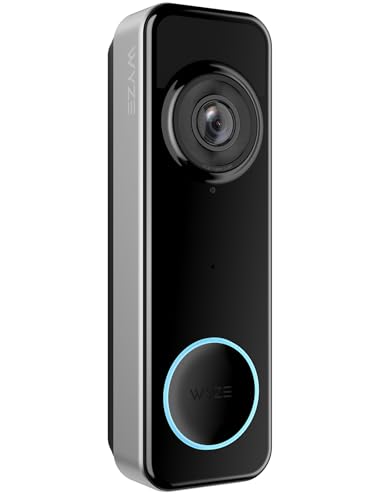
TL;DR: The Wyze Battery Video Doorbell packs a 150°×150° square HD+ view, 8× digital zoom and a 6400 mAh battery for up to six months of wire‑free use at a $65 price point.
What really sets this doorbell apart is its 150° horizontal × 150° vertical square field of view paired with a 1536 × 1536 HD+ sensor. The 8× digital zoom lets you get a closer look without sacrificing the head‑to‑toe coverage that most rectangular lenses miss. Together with 20 FPS daytime and 15 FPS nighttime frame rates, the video stays clear whether it’s sunny or dark.
Compared with the eight other models in our roundup, the Wyze sits in the middle of the pack on size and power. At 0.49 lb it’s heavier than the Arlo 2K (0.45 lb) and the ultra‑light VanaOrbi (0.27 lb), but noticeably lighter than the eufy C31 (0.88 lb). Its 6400 mAh battery is a shade smaller than eufy’s 6500 mAh and the 7000 mAh packs in the Reolink units, yet it outlasts the Hiseeu’s 4500 mAh and Tapo’s 5200 mAh cells. The 8× zoom trails Arlo’s 12× but beats the rest, whose zoom specs aren’t listed.
Everyday owners love the “head‑to‑toe” perspective and the crisp HD+ detail for spotting packages and visitors. Professional reviewers also note the AI‑powered person and package detection that trims down false alerts. The downsides show up in the same threads: the doorbell only talks to 2.4 GHz Wi‑Fi, which can strain crowded networks, and you need a paid subscription to unlock the full AI suite and cloud storage. A few users have mentioned occasional app hiccups, though the hardware itself feels solid.
Pros
Cons
Best for: Most users seeking a balanced, mainstream option — the Wyze Battery Video Doorbell offers Siren Volume: 90 dB.
Avoid if: You need advanced features or professional‑grade performance, such as 5 GHz Wi‑Fi or premium continuous recording without a subscription.
TL;DR: The VanaOrbi WiFi Video Doorbell offers 1080p HD video, AI‑powered human detection and a battery‑powered design for just $9.99, making it the most affordable entry‑level option among the nine doorbells listed.
This doorbell’s standout spec is its 1080p HD video (2 MP) paired with a wide‑angle field of view and infrared night vision using four IR LEDs, giving you clear footage day or night. AI human detection helps cut down on false alerts from squirrels or cats, and the built‑in two‑way audio lets you speak to visitors from your phone.
When you line it up against the eight other doorbells, the VanaOrbi is the cheapest at $9.99, while the next‑lowest price is $34.97 for the Tapo D205. It also offers fewer premium integrations – it doesn’t hook into smart‑home ecosystems and lacks local storage – whereas many higher‑priced models list those capabilities. In short, you get the basics without the extra bells and whistles that drive up cost.
Consumers consistently praise the crystal‑clear 1080p video and the ease of a wireless, battery‑powered install. Professional reviewers note the “impressive budget pricing” and commend the AI’s ability to ignore small animals while still catching human motion. The downside that shows up in both user comments and expert notes is occasional Wi‑Fi instability on crowded 2.4 GHz networks, plus the fact that cloud storage and live view require a subscription.
Technically, the unit runs on a 2.4 GHz Wi‑Fi connection, secures footage with AES 128‑bit encryption, and is powered by a battery. It carries no local storage option and requires a cloud subscription for video access.
Pros
Cons
Best for: Shoppers on a tight budget who want the most for their money — the VanaOrbi WiFi Video Doorbell offers Video Resolution: 1080p HD.
Avoid if: You have limited desk space or need portability.
“1080p looks clear day and night; night vision works very well”
“Wireless battery = no complicated installations; QR code app setup is simple”
TL;DR: The Reolink Video Doorbell with Chime packs a 5 MP 2K+ sensor, 1:1 head‑to‑toe view and a 7,000 mAh battery into a compact 3.5‑ounce unit for premium doorstep security.
What really sets this doorbell apart is its 5 MP (2K+) resolution paired with an unusual 1:1 aspect ratio, delivering a full‑body and ground‑level view that captures packages as they land. The camera uses an F2.0 aperture, a 2.26 mm lens and a 180° diagonal field of view, delivering clear video at the default 20 FPS. HDR night vision keeps the image sharp after dark, and AI motion detection can differentiate people, vehicles and packages without a subscription.
At $130.99 the unit lands at the premium end of the nine‑product roundup, making it pricier than the Arlo Video Doorbell 2K, the Tapo D205 and the Wyze Battery Video Doorbell. Weighing just 3.5 ounces, it’s lighter than the eufy Security C31 (0.88 lb) yet heavier than the Arlo (0.45 lb). Its dual‑band 2.4/5 GHz Wi‑Fi and 433 MHz chime keep it flexible, but the battery‑powered design means you’ll need to recharge every five to six months.
Reviewers consistently praise the head‑to‑toe view for catching every delivery detail and note the crisp 5 MP video holds up both day and night thanks to HDR. The built‑in chime offers ten ringtones and volume control up to 100 dB, while local storage means no monthly fees. On the flip side, users report occasional Wi‑Fi dropouts in weak signal spots and mention the battery‑recharge cycle as a maintenance chore.
Pros
Cons
Best for: Those prioritizing quality and willing to pay for premium performance — the Reolink Video Doorbell with Chime offers Battery Capacity: 7,000 mAh
Avoid if: You're shopping on a tight budget — it's priced at $130.99
“every detail captured”
“unparalleled visibility”
TL;DR: The Hiseeu Wireless Doorbell Camera offers crisp 2K video, a 150° ultra‑wide view and night vision up to 64 ft, all for $79.99, but it needs wired power and a paid cloud subscription.
What really stands out is the 2K HD video paired with a 150° ultra‑wide‑angle lens, letting you see visitors and side‑walk traffic without blind spots. The infrared night vision reaches up to 64 ft, so even a dark porch stays visible. At 0.63 Pounds, the unit is compact enough to blend into most door frames while still housing a 4500 mAh battery for backup.
In this nine‑product roundup, the Hiseeu sits at a higher price point than the Arlo Video Doorbell 2K (2nd Gen) and the Tapo D205, yet it matches the eufy Security C31’s $79.99 tag. It’s lighter than the eufy model (0.88 Pounds) but heavier than the Arlo (0.45 Pounds) and Wyze (0.49 Pounds) units, giving it a middle‑ground feel in both cost and heft.
Reviewers consistently praise the clear night‑vision feed and the reliable two‑way audio for talking to guests from a phone. Professional reviewers note the AI‑driven Smart Human Detection that trims false alerts from pets or passing cars. The main complaints revolve around occasional Wi‑Fi drops on the 2.4 GHz band and the need for a wired DC12 V connection, which limits placement flexibility compared with fully battery‑powered rivals.
Beyond the video quality, the doorbell carries an IP65 rating, meaning it can shrug off rain and dust. It supports both 2.4 GHz and 5 GHz Wi‑Fi, integrates with Alexa, and requires a paid cloud subscription—local storage isn’t an option.
Pros
Cons
Best for: Most users seeking a balanced, mainstream option — the Hiseeu Wireless Doorbell Camera offers Night Vision Range: Up to 64ft (20m).
Avoid if: You're shopping on a tight budget — it's priced at $79.99.
“Clear night vision and easy remote app access”
Breakdown
Arlo Video Doorbell 2K (2nd Gen)
Pros
Cons
Tapo D205
Pros
Cons
Reolink 2K Battery Video Doorbell
Pros
Cons
Wyze Battery Video Doorbell
Pros
Based on scoring data and product specs
Personalized picks
Best Overall Pick
Arlo Video Doorbell 2K (2nd Gen)
Best Budget PickBest for: Budget-conscious buyers seeking a reliable entry-level option — the Arlo Video Doorbell 2K (2nd Gen) offers Night Vision Range: 20 feet
Tapo D205
Best for: Entry-level buyers or those on a tight budget — the Tapo D205 offers Night Vision Range: 7.6 m
$49.99+$0.24 vs winner
Skip Reolink Video Doorbell with Chime if…
You're shopping on a tight budget — it's priced at $130.99
The Arlo Video Doorbell 2K (2nd Gen) takes the top spot thanks to its true 2K (3 MP) video clarity, a wide 180° field of view and built‑in HDR support that keep footage sharp in bright or dark conditions. It also offers two‑way audio, IP65 weather resistance and the option to hardwire or run on its rechargeable battery, all for a list price of $49.99, making it the most balanced budget‑friendly choice.
The runner‑up is the Tapo D205, ideal if you need a completely wire‑free doorbell that can stay powered for months. Its 180‑day battery life and support for microSD cards let you record locally without a subscription, while the 160° field of view and 3 MP resolution still deliver clear video. IP66 rating adds extra peace of mind against the elements.
For those looking beyond the top two, our budget pick is the VanaOrbi WiFi Video Doorbell at just $9.99 – perfect for a tight budget. The mid‑range option is the Wyze Battery Video Doorbell for $65.98, offering solid performance without breaking the bank. If you want premium features and a built‑in chime, the Reolink Video Doorbell with Chime at $130.99 rounds out the lineup.
Pick the Arlo Video Doorbell 2K (2nd Gen) today and upgrade your entryway with crisp video, reliable intercom and smart‑home compatibility.
Arlo delivers true 2K video at 3 MP, HDR support, and a 180° field of view, which give clearer, brighter footage than the Tapo’s 3 MP video without HDR and a 160° view. At $49.99 it’s about $15 higher than the $34.97 Tapo, but the added image quality and HDR justify the modest premium for many homeowners.
No reviews yet — be the first to share your experience.
Please sign in to leave a review