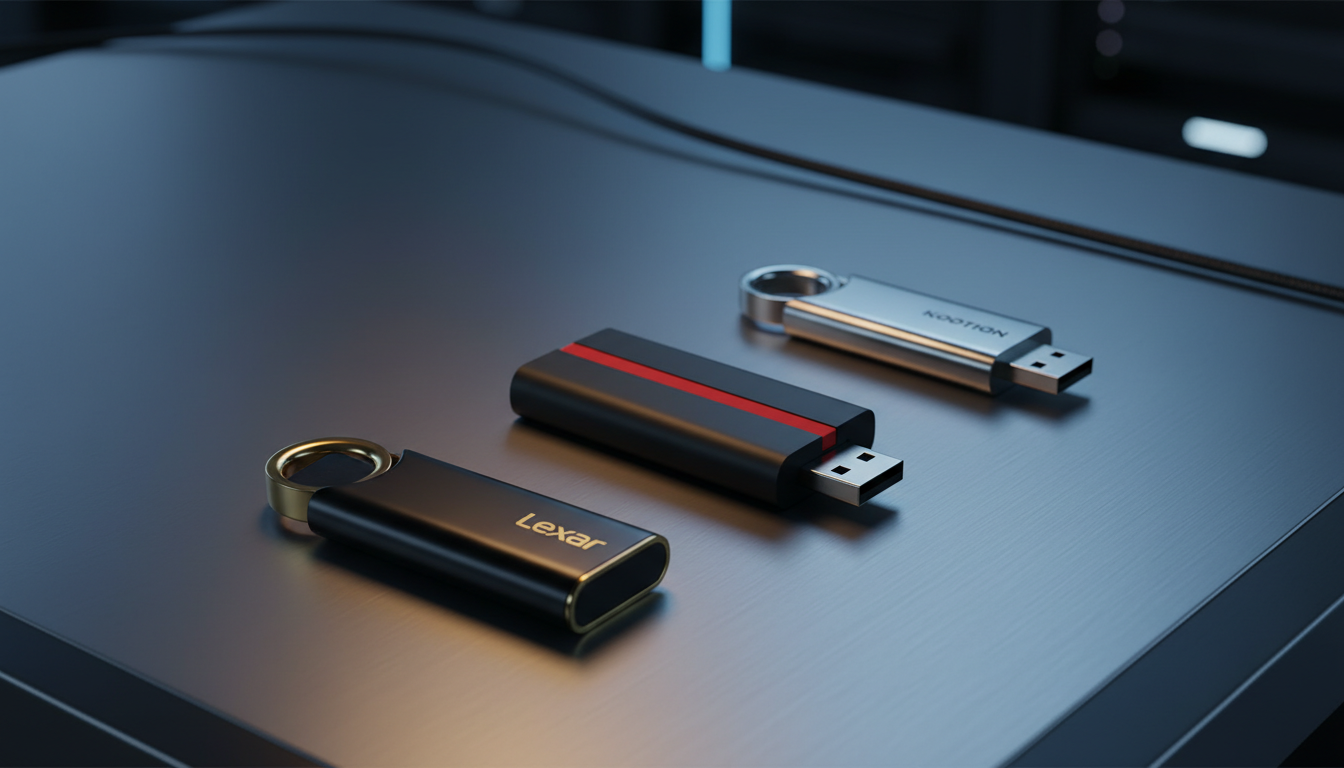
⚡ Quick Answer
When you need a flash drive that slides between a legacy USB‑A laptop and a modern USB‑C phone, the market offers a surprising variety. We compared 10 dual‑connector models, ranging from the $13.99 Kootion USB‑C drive that packs a 64 GB capacity and 130 MB/s sequential read speed, up through premium options like the $373.49 SanDisk Extreme PRO Dual Drive with up to 1000 MB/s read performance. To keep things clear, we’ve grouped them into the three price tiers the data defines: budget picks (Kootion, Kingston Digital, Vansuny, Orico), mid‑range choices (mosDART, Joiot) and premium offerings (Lexar D40E at $42.99 with a 4.5‑star rating, Amazon Basics, SanDisk Phone Drive, and the high‑speed SanDisk Extreme PRO).
For travelers who value a low‑profile metal key‑ring and 256‑bit AES encryption, the compact Lexar D40E’s 26 g weight and 100 MB/s advertised read speed make it a strong candidate. Creators juggling 4K video on the go will appreciate the blistering 1000 MB/s reads of the premium SanDisk Extreme PRO, while students on a shoestring budget might gravitate toward the Vansuny’s 9.1 g design and 10,356‑review popularity. Each tier has a model that shines in its own niche, and the detailed breakdown below will show which drive aligns best with your workflow.

Lexar D40E
Its ultra‑slim 1 mm height makes the Lexar D40E the most pocket‑friendly dual USB‑A + USB‑C drive on the market.

SanDisk Extreme PRO Dual Drive
Audiophiles and tech enthusiasts will appreciate the SanDisk Extreme PRO Dual Drive, though it sits at $373.49—about $330 more than the Lexar D40E.

Kootion USB-C Flash Drive
The Kootion USB‑C Flash Drive stands out with a 0.30 in (7.6 mm) height and $13.99 price, offering a compact, budget‑friendly option the others lack.
Also considered
Score Analysis
Key score advantages vs. runner-up (SanDisk Extreme PRO)
Price Range
Lexar D40E
$44.99
SanDisk Extreme PRO Dual Drive
$359.73
Kootion USB-C Flash Drive
$14.99

Kingston Digital Data Traveler Micro Duo
$14.95
Amazon Basics USB Flash Drive 512GB
$74.09

Joiot USB-C Flash Drive
$26.99
Vansuny USB-C Flash Drive
$15.99

SanDisk Phone Drive
$39.99

mosDART USB Flash Drive 128GB
$27.99

Orico USB Flash Drive 128GB USB-C
$25.99
Spec Comparison
TL;DR: The Lexar D40E offers a sturdy metal swivel body, dual USB‑A/C connectors, 256 GB storage, and up to 183 MB/s sequential read speed, all backed by a 3‑year warranty.
The standout feature is its 360° swivel design, which sits in a zinc‑alloy metal case only 1 mm thick, letting you plug either side into a laptop or phone without removing the drive.
Compared with the other nine drives in this roundup, the D40E weighs more than SanDisk’s 13.6 g model but less than the mosDART’s 27.22 g unit. Its 70 mm length matches SanDisk’s 70.1 mm drive, while its 17 mm width is considerably slimmer than SanDisk’s 80 mm width. Capacity‑wise it outstrips most rivals—Joiot, mosDART, Orico, Vansuny, Kingston, and Kootion all top out at 128 GB or less—though Amazon Basics offers a larger 512 GB option. Write performance at 45.8 MB/s runs slower than SanDisk’s 100 MB/s write speed, making the D40E less suited for heavy file‑copy tasks.
Users consistently praise the plug‑and‑play convenience, the rugged metal swivel housing, and the built‑in 256‑bit AES encryption that protects data without extra software. Professional reviewers note the solid sequential read performance and the dual‑connector flexibility for both legacy and modern devices. The main complaints revolve around the modest sustained write speed and occasional OTG hiccups on certain Android phones.
Pros
Cons
Best for: Buyers willing to invest in a proven, high-quality option
Avoid if: You need advanced features or professional‑grade performance
TL;DR: The SanDisk Extreme PRO Dual Drive packs 2 TB of storage, up to 1000 MB/s read and 900 MB/s write speeds, and dual USB‑C/USB‑A connectors into a lightweight metal body for a premium $373.49 price.
What really stands out is the combination of 2 TB capacity with sequential read speeds of up to 1000 MB/s and write speeds of up to 900 MB/s, all delivered through a USB 3.2 Gen 2 interface. At 10.7 mm tall, 80.0 mm long, 18.3 mm wide, and weighing just 0.05 pounds (23 g), the drive is surprisingly compact for the amount of data it can hold.
Compared with the nine other drives in this roundup, the Extreme PRO is far larger in capacity than the 512 GB Amazon Basics, 256 GB SanDisk Phone Drive, and the 128‑GB models from Joiot, mosDART, and Orico. Its advertised read/write speeds also dwarf the 100 MB/s ceiling of the Phone Drive and the 70 MB/s read / 20 MB/s write of the Joiot drive. Even the Lexar D40E, which lists an advertised read speed of up to 100 MB/s and sequential write of 45.8 MB/s, falls short of the Extreme PRO’s performance. Physically, the drive is slightly lighter than the 26 g Lexar D40E and comparable in weight to the 0.03‑pound Phone Drive, while offering a sturdier metal construction.
Reviewers consistently praise the rapid transfer times, noting that the high sequential speeds make moving large photo or video libraries feel effortless. The dual‑connector design receives commendation for eliminating the need for adapters, and reviewers highlight the built‑in recovery and encryption technology as a useful safeguard for professional work. The only recurring criticism is the premium $373.49 price tag, which many say is justified only for users who truly need the speed and capacity.
Pros
Cons
Best for: Creative professionals, photographers, and videographers who need high‑capacity, high‑speed portable storage with dual‑connector flexibility.
Avoid if: You're shopping on a tight budget — the drive is priced at $373.49.
TL;DR: The Kootion 64 GB USB‑C/A flash drive offers 130 MB/s sequential reads, a retractable connector, and a compact 0.30‑in profile for $13.99, making it a solid budget pick.
What really stands out is the advertised sequential read speed of 130 MB/s, which tops many entry‑level dual‑connector drives. The drive also provides a sequential write rate of 39 MB/s and a random 4 KB write speed of roughly 1.2 MB/s, while packing 64 GB of Grade‑A flash memory.
Compared with the other nine options, Kootion is a bit pricier than the Kingston Digital Data Traveler Micro Duo, which offers 32 GB and a read speed of up to 100 MB/s, but it delivers double the capacity and a higher read rate. Its 0.30 in (7.6 mm) height is slimmer than Kingston’s 8.44 mm and close to Vansuny’s 7.1 mm, yet its 0.63 in (16 mm) width is narrower than Vansuny’s 20.1 mm. Capacity-wise, Kootion sits between the 64 GB Vansuny model and the 128 GB options from Orico, mosDART and Joiot, offering more space than Kingston but less than the higher‑tier drives. Its 39 MB/s write speed outpaces Kingston’s 15 MB/s and Joiot’s 20 MB/s, though it trails the 100 MB/s transfer rates claimed by mosDART and the 45.8 MB/s sequential write of Lexar.
Reviewers consistently praise the retractable connector for keeping the plug safe and the solid plastic feel that fits easily in a pocket or keyring. Professional reviewers highlighted the “very fast” sequential reads for OS loading, while everyday users love the plug‑and‑play convenience across Windows, macOS, Linux and Android OTG devices. The main complaint is the very low random‑write speed of about 1.2 MB/s, which makes small‑file transfers feel sluggish, and several users note that the performance feels comparable to standard USB‑3.0 thumb drives.
Beyond speed, the drive uses heat and X‑ray‑resistant materials and Grade‑A memory chips, which should help maintain data integrity under demanding conditions. It comes pre‑formatted in exFAT, supports USB 3.0 (backward compatible with USB 2.0 and 1.1), and includes a one‑year warranty for peace of mind.
Pros
Cons
Best for: Budget-conscious buyers seeking a reliable entry-level option
Avoid if: You need advanced features or professional-grade performance
“very fast”
“retracable mechanism, dense plastic quality, and portability”
TL;DR: The Kingston DataTraveler Micro Duo offers a metal‑cased, dual USB‑A/USB‑C flash drive with 32 GB storage, 100 MB/s read speed and a 5‑year warranty at a budget‑friendly price.
What really sets this drive apart is its reversible dual‑connector design—both a USB‑A and a USB‑C port—so you can plug straight into laptops, phones or tablets without an adapter. The metal body with translucent accents houses a rotating cap that protects the connectors, and the unit weighs just 0.06 lb, making it easy to slip into a pocket or keyring. Kingston lists read speeds of up to 100 MB/s, sufficient for quick photo backups, while the advertised write speed tops out at 15 MB/s.
Compared with the nine other drives in this roundup, the Micro Duo carries a smaller 32 GB capacity versus rivals that reach 64 GB, 128 GB or even 256 GB. Its write speed of 15 MB/s is also lower than the 39 MB/s sequential write speed seen on the Kootion model and the 20 MB/s on the Joiot drive. In terms of heft, it is heavier than the Vansuny (0.02 lb) and Joiot (0.02 lb) sticks, but lighter than the Orico option (approximately 0.07 lb) and about on par with the mosDART (0.06 lb). A few competitors share the dual‑connector feature, yet Kingston’s metal construction and rotating cap give it a more premium feel than many plastic‑cased alternatives.
Everyday users appreciate the convenience of not needing a separate adapter and the compact 29.94 × 16.60 × 8.44 mm form factor, especially when traveling or shooting on the go. Reviewers consistently note the solid metal build and the peace of mind from a 5‑year warranty with free technical support. Consumer feedback highlights the modest 15 MB/s write speed, which can feel sluggish when moving large video files, and the 32 GB limit may fall short for power users who store extensive media libraries.
Technical details round out the picture: the drive operates from 0 °C to 60 °C and can be stored between –20 °C and 85 °C, fitting comfortably into most environments. It supports Windows 10/8.1/8, macOS, Linux and Chrome OS, and is plug‑and‑play right out of the box. The USB 3.1 (10 Gbps theoretical) interface ensures future‑proof compatibility with newer devices.
Pros
Cons
Best for: Budget-conscious buyers seeking a reliable entry-level option
Avoid if: You need advanced features or professional‑grade performance
“saves the pain... with only USB C”
“good size and decent speed”
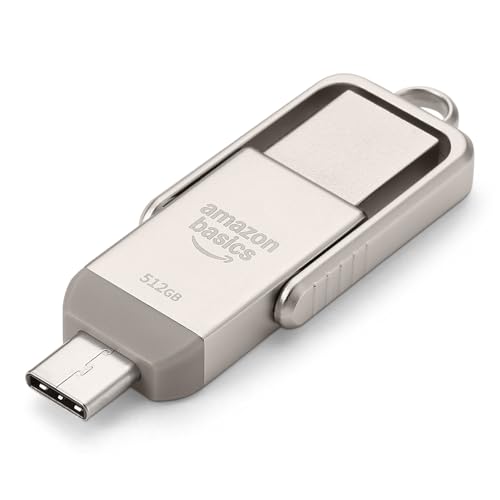
TL;DR: The Amazon Basics 512 GB dual‑port flash drive packs massive storage, a sturdy rotating metal case, and strong sequential speeds, but its random‑access performance and premium price may limit some users.
This drive’s headline feature is its 512 GB capacity, far larger than any of the other nine flash drives in the roundup, which top out at 256 GB. It also offers both USB‑A and USB‑C connectors in a rotating design, so you can plug into legacy laptops or modern phones without an adapter. The metal exterior and built‑in hanging hole add durability and convenient storage on a keychain or bag.
Compared to the competition, the Amazon Basics model offers noticeably larger storage and heavier weight than the ultra‑slim Lex & Rig or the tiny Vansuny, but it shares the rotating‑cap concept with the mosDART and Orico designs. Its dual‑port layout matches the Orico and Kingston options, yet most rivals list only a single connector type. While the price point sits in the premium tier, the 4.6‑star rating from over 3,000 reviewers exceeds the 4.3‑4.5 range seen on the other models, indicating strong buyer satisfaction.
Professional reviewers highlight sequential read speeds that reach roughly 415 MB/s and sequential writes around 421 MB/s, comfortably beating the advertised 400 MB/s claim. Users praise the drive for rapid large‑file transfers, especially when moving video clips or backups. On the downside, the same reviewers note random 4 KB read performance limited to 21‑29 MB/s and a modest ~3 GB pSLC cache, which means sustained writes can slow once the cache is exhausted. Those limitations matter if you need fast random access for running apps or intensive gaming libraries.
Pros
Cons
Best for: Buyers willing to invest in a proven, high‑quality option
Avoid if: You're on a tight budget or only need basic functionality
“very fast”
“retracable mechanism, dense plastic quality, and portability”
TL;DR: The Joiot USB‑C Flash Drive offers 128 GB of storage, dual USB‑A/C connectors, and 70 MB/s read speed in a lightweight 8 g plastic body for $23.99.
At 128 GB, the Joiot gives you plenty of room for documents, photos, and modest media collections while staying in a compact 8.4 mm × 63.5 mm × 17.8 mm footprint. The dual USB‑A and USB‑C connectors let you slip it into laptops, phones, or tablets without an adapter, and the built‑in cap keeps the connectors protected. With a read speed of 70 MB/s and a write speed of 20 MB/s, it moves files faster than many older USB 2.0 sticks.
Compared with the nine other drives in this roundup, the Joiot is notably lighter—at about 0.02 lb it undercuts the mosDART (0.06 lb) and Orico (0.07 lb) models. Its length (63.5 mm) is shorter than the mosDART’s 96 mm but a bit longer than Vansuny’s 56.9 mm, and its width (17.8 mm) is narrower than both the mosDART (30 mm) and Orico (22.24 mm). Speed‑wise, its 70 MB/s read rate sits below the 100 + MB/s advertised by several rivals such as the mosDART, Kingston, and SanDisk, while the 20 MB/s write speed is modestly higher than Kingston’s 15 MB/s but trails the faster 39 MB/s of the Kootion model.
User feedback highlights the convenience of the plug‑and‑play design and the reliability of the dual‑connector layout. Reviewers appreciate the solid plastic housing and the fact that no extra software is required. A few comments note that the write speed feels slower when moving large video files, which aligns with the 20 MB/s specification.
Pros
Cons
Best for: Most users looking for a well‑reviewed, reliable mainstream option
Avoid if: You're shopping on a tight budget — it's priced at $23.99
“very fast”
“retracable mechanism, dense plastic quality, and portability”
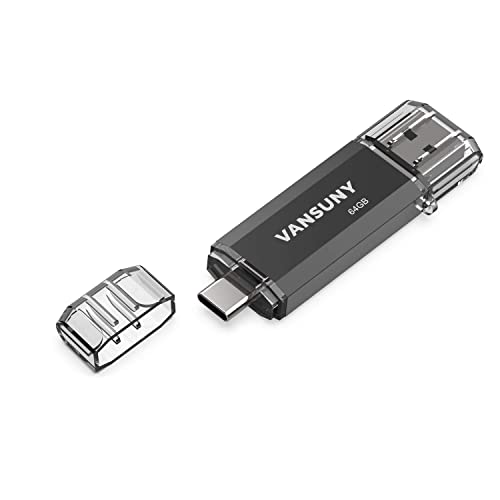
TL;DR: The Vansuny 64 GB USB‑C + USB‑A flash drive packs dual connectors, a metal waterproof body and 5 Gbps USB‑3.0 speed into a 7.1 mm‑thin, 9.1 g package for $15.99.
What really stands out is the 2‑in‑1 OTG design that lets you plug into a USB‑C smartphone or a USB‑A laptop without an adapter, all while staying under 0.02 pounds (9.1 g). The drive measures just 7.1 mm in height, 56.9 mm long and 20.1 mm wide, making it easy to slip onto a keyring – the package even includes a keychain loop.
Compared with the other nine contenders, Vansuny is lighter than the Kingston Digital Data Traveler Micro Duo (≈0.063 lb) and the Orico USB flash drive (≈0.066 lb). Its length of 56.9 mm's a touch longer than Kootion’s 54.0 mm, while its height's a hair shorter than Kootion’s 7.6 mm and its width's wider than Kootion’s 16.0 mm. Capacity‑wise it matches Kootion at 64 GB but falls short of the 128 GB offered by Orico, mosDART, Joiot and SanDisk, and is far smaller than the 256 GB and 512 GB options further up the price ladder.
Users consistently praise the waterproof metal casing for surviving travel‑junky environments, and professional reviewers have highlighted “fantastic” transfer performance, noting real‑world reads near 180 MB/s despite the manufacturer’s more modest 5 Gbps claim. Plug‑and‑play operation works across Android phones, Macs, PCs and tablets, and the drive is backward‑compatible with USB 2.0 devices, so older laptops aren’t left out.
Additional technical notes: the drive ships pre‑formatted as exFAT, supports OTG on USB‑C devices, and the reversible Type‑C connector eliminates orientation worries. While the spec sheet omits formal warranty details, the metal build and user‑reported durability give confidence for everyday media storage.
Pros
Cons
Best for: Budget-conscious buyers seeking a reliable entry-level option
Avoid if: You rely exclusively on USB‑C ports without an adapter, or you need the absolute fastest performance and larger capacity.
“very fast”
“retracable mechanism, dense plastic quality, and portability”
TL;DR: The SanDisk Phone Drive packs 256 GB, dual USB‑C/A connectors and up to 100 MB/s read/write speeds into a lightweight 13.6 g keyring‑ready flash drive for Android users.
What really stands out is the 256 GB capacity paired with a uniform 100 MB/s read and write speed, all driven by a USB 3.2 Gen 1 interface. The drive’s dual USB‑C and USB‑A plugs let you move files straight from a phone to a laptop without adapters, and the built‑in keyring hole keeps it handy on a bag or set of keys.
Compared with the nine other dual‑connector drives in this roundup, the Phone Drive is lighter than the Lexar D40E (26 g) and the Orico model (30 g), yet its 80 mm width makes it noticeably wider than most competitors, which sit between 16 mm and 30 mm. Its 256 GB storage dwarfs the 128 GB or smaller capacities of most peers, and its 100 MB/s write speed tops the 20 MB/s of the Joiot drive and the 15 MB/s of the Kingston Micro Duo, though the Kootion model lists a 130 MB/s read speed.
Reviewers praise the drive’s quick file off‑loading and the convenience of the Memory Zone app, which can automate backups from Android devices. Professional reviewers also note the inclusion of RescuePRO Deluxe for file recovery. Some users point out that the write speed is only listed as a single 100 MB/s figure, leaving real‑world performance a bit unclear, and the drive’s Android‑only focus means iOS users will need a different solution.
Pros
Cons
Best for: Buyers willing to invest in a proven, high‑quality option
Avoid if: You're on a tight budget or only need basic functionality
“Fast transfers at 100 MB/s, enabling quick backups and offloading”
TL;DR: The mosDART 128 GB Dual USB‑A + USB‑C flash drive packs a metal sliding design, keychain loop and up to 100 MB/s transfer speed for $20.99.
What really stands out is the dual‑connector layout paired with a sliding metal body that flips between USB‑A and USB‑C. The drive holds 128 GB of exFAT‑formatted space, fits in a 1 mm‑high, 96 mm‑long and 30 mm‑wide profile, and the manufacturer lists a maximum transfer speed of up to 100 MB/s. A small LED indicator and an included keychain make it ready for on‑the‑go use, whether you’re swapping files between a laptop and a phone.
At 27.22 g (0.06 lb) the mosDART sits between the ultra‑light 8 g Joiot and the 9.1 g Vansuny drives, but it is a touch heavier than the 30 g Orico model. Capacity-wise it matches Orico’s 128 GB offering and outpaces the 64 GB Vansuny and Kootion drives, while still falling short of the 256 GB SanDisk and 512 GB Amazon Basics options. Its advertised 100 MB/s speed aligns with Kingston’s read speed claim, but it trails Orico’s 5 Gbps maximum transfer rate and Kootion’s 130 MB/s read speed.
Reviewers love how the thin, metal case slides into tight car USB ports and how the keychain keeps the drive from getting lost. Many note that the 128 GB size comfortably holds music, movies and work documents for everyday travel. On the downside, users frequently report that real‑world speeds hover around 30‑40 MB/s, especially when the drive falls back to USB 2.0 on older machines. Reviewers describe the packaging as a bit stubborn to open, and the plastic hinges feel less rugged than the metal casing of some competitors.
Technical notes: the drive works with Windows 2000 through 10, Linux and macOS 10.3+, and you can make it bootable. It arrives pre‑formatted to exFAT, so no extra drivers are needed for most platforms. While the spec sheet lists USB 3.1, the dual‑mode interface also supports USB 2.0, which can limit the advertised 100 MB/s speed on legacy ports.
Pros
Cons
Best for: Value-conscious buyers seeking quality at $20.99
Avoid if: Reliability and user satisfaction are your top concerns
“very fast”
“retracable mechanism, dense plastic quality, and portability”
TL;DR: The Orico 128 GB Dual USB‑A + USB‑C flash drive costs $19.99, weighs 30 g, and promises up to 5 Gbps (≈411 MB/s read, 353 MB/s write) in a sturdy aluminum body.
What really sets this drive apart is the dual‑connector design that lets you plug straight into either a USB‑A port or a USB‑C port without an adapter. The aluminum alloy casing with an anodized leather surface not only feels premium but also helps dissipate heat during large file transfers. At a listed capacity of 128 GB, the drive offers a maximum transfer rate of 5 Gbps, with advertised sequential read speeds of up to 411 MB/s and write speeds up to 353 MB/s.
When you line it up against the nine other dual‑port drives in this roundup, the Orico's heavier than the ultra‑light Vansuny (9.1 g) and Joiot (8 g) models, but its 30 g weight's close to mosDART’s 27.22 g and comparable to Kingston’s listed weight of about 0.06 lb. In terms of speed, Orico’s read and write numbers dwarf the up‑to‑100 MB/s limits of mosDART, Kingston, and SanDisk, and far exceed the 70 MB/s read of the Joiot drive. Capacity‑wise, it matches mosDART and Joiot at 128 GB, outpaces Kingston’s 32 GB and Kootion’s 64 GB, but sits below SanDisk’s 256 GB offering.
Reviewers consistently highlight the 360° rotatable cap with a 90° stuck point that keeps the connectors secure, and many appreciate the included lanyard ring for easy attachment to a keychain or bag. Professional reviewers note the aluminum body’s effective heat management during sustained transfers, and users love the plug‑and‑play convenience across Windows, macOS, Linux, Android, and iPadOS. The main criticisms revolve around the lack of disclosed long‑term durability data and a rating of 4.3 / 5, which is modest compared with some higher‑rated peers.
Pros
Cons
Best for: Entry-level buyers or those on a tight budget
Avoid if: You need powerful performance or professional‑grade features
“very fast”
“retracable mechanism, dense plastic quality, and portability”
Breakdown
Lexar D40E
Pros
SanDisk Extreme PRO Dual Drive
Pros
Cons
Kootion USB-C Flash Drive
Pros
Kingston Digital Data Traveler Micro Duo
Pros
Based on scoring data and product specs
Personalized picks
Best Overall Pick
Lexar D40E
Best OverallBest for: Buyers willing to invest in a proven, high-quality option
SanDisk Extreme PRO Dual Drive
Best for: Audiophiles and enthusiasts seeking premium sound quality and advanced features
$359.73+$314.74 vs winner
Skip Orico USB Flash Drive 128GB USB-C if…
You need powerful performance or professional-grade features
Lexar’s D40E takes the top spot as the best overall dual‑USB flash drive. It ships with a solid 256 GB of storage, hits a sequential read speed of 183 MB/s and a write speed of 45.8 MB/s, and carries a 4.5‑star rating from 7,225 reviewers. The 360° swivel metal design (zinc alloy) and a 3‑year limited warranty add durability and convenience that set it apart.
The runner‑up, SanDisk’s Extreme PRO Dual Drive, shines when you need massive capacity and top‑tier speed. With a whopping 2 TB of space and advertised sequential speeds of up to 1000 MB/s read and 900 MB/s write, it handles heavy‑duty transfers, video editing, or gaming libraries, and it comes with a lifetime limited warranty.
For tighter budgets, the Kootion USB‑C Flash Drive offers the best value at $13.99, delivering reliable dual‑connector convenience without breaking the bank. If you want a solid mid‑range choice, the Joiot USB‑C Flash Drive stands out at $23.99, balancing price and performance for everyday use. And for those who prioritize premium speed and capacity, the SanDisk Extreme PRO Dual Drive remains the go‑to premium pick despite its higher price tag.
Pick the Lexar D40E today and enjoy fast, secure, and versatile storage right out of the box.
The SanDisk Extreme PRO Dual Drive is built for high‑performance media work, with manufacturer‑claimed sequential read speeds up to 1000 MB/s and write speeds up to 900 MB/s. Those rates are far higher than the 183 MB/s read and 45.8 MB/s write speeds listed for the Lexar D40E, making the SanDisk the faster choice for 4K video editing.
No reviews yet — be the first to share your experience.
Please sign in to leave a review