We compared 12 dual‑mode wireless gaming headsets that can hop between 2.4 GHz dongles and Bluetooth. Prices stretch from $25.98 for the WolfLawS model up to $299.99 for the Logitech Astro A50, so there’s a match for almost any budget. The Turtle Beach Stealth 600 tops the list with a manufacturer‑claimed 80‑hour battery life and a solid 4.4/5 rating from 5,481 reviewers, making it the most endurance‑focused pick.
Our roundup splits into three price tiers. The budget tier – WolfLawS, Logitech G435, HyperX Cloud Jet and Turtle Beach Stealth 500 – all sit under $100 and still manage 18‑ to 40‑hour playtimes. Mid‑range options, Corsair Void v2 and Turtle Beach Stealth 600, push battery life to 70‑80 hours while keeping weights under 0.8 lb. Premium contenders – ASUS ROG Cetra SpeedNova, SteelSeries Arctis Nova 7X, SteelSeries Arctis Nova 7 and Logitech Astro A50 – sit between $149.99 and $299.99 and add features like low‑latency 35 ms mode, high‑resolution 24‑bit audio or graphene drivers.
Below we break down each model’s strengths, connectivity quirks and who will get the most bang for their buck.
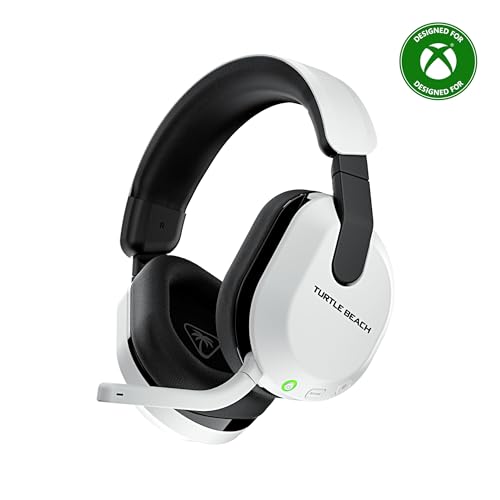
Turtle Beach Stealth 600 Wireless
Its 50 mm drivers deliver spacious sound, backing its top rating and popularity.

HyperX Cloud Jet
Ideal for budget‑conscious gamers, the HyperX Cloud Jet comes in at $59.99—about $49 cheaper than the Stealth 600—while still offering solid 40 mm drivers.

Logitech Astro A50
The Astro A50 stands out with a premium 35 Ω impedance and Logitech’s high‑end brand confidence, justifying its $299.99 price for audiophiles seeking top‑tier performance.
Also considered
Score Analysis
Key score advantages vs. runner-up (HyperX Cloud Jet)
Price Range
Turtle Beach Stealth 600 Wireless
$109.00
HyperX Cloud Jet
$59.99
Logitech Astro A50
$259.99

WolfLawS Wireless Gaming Headset
$26.99

ASUS ROG Cetra SpeedNova
$149.99

Turtle Beach Stealth 500 Wireless
$89.86
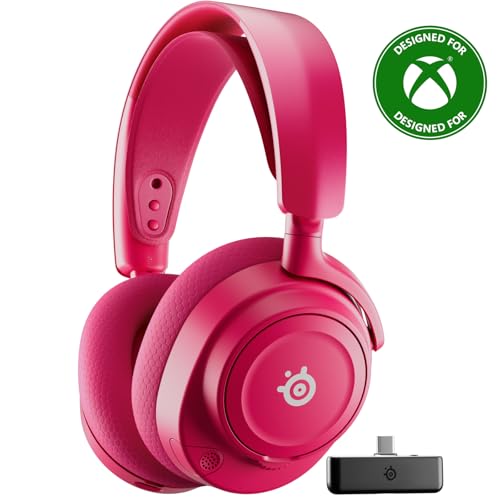
SteelSeries Arctis Nova 7X Wireless Magenta
$199.99

Corsair Void v2
$89.99
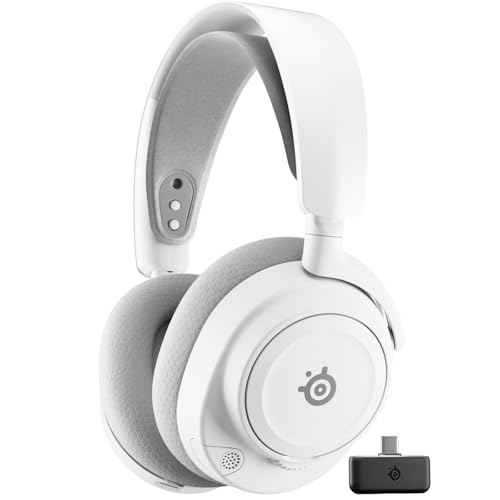
SteelSeries Arctis Nova 7 Wireless White
$179.99
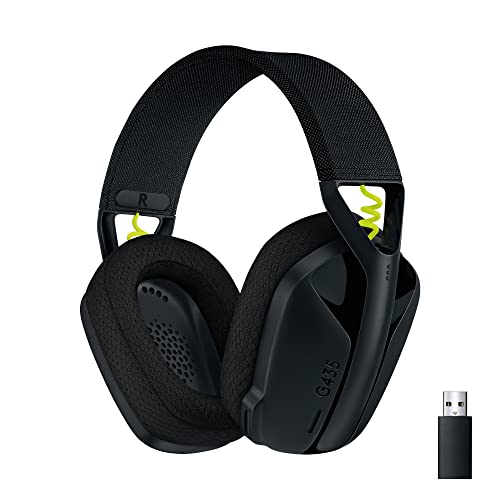
Logitech G435
$49.99

Acer K2 Wireless
$49.99
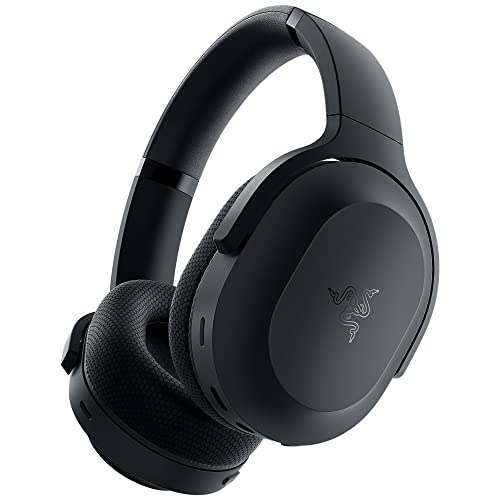
Razer Barracuda
$139.00
Spec Comparison
TL;DR: The Turtle Beach Stealth 600 Wireless delivers 80‑hour battery life, 50 mm drivers and full‑featured app tuning in a comfortable, glasses‑friendly package for $109.
The headline spec is its marathon‑length battery: the headset runs up to 80 hours on a single charge, and a full recharge takes 15 hours via USB‑C. Coupled with 50 mm Nanoclear drivers, 32 Ω impedance and Bluetooth 5.2, it promises high‑resolution audio whether you’re on a console or a phone.
Compared with the other eleven entries, the Stealth 600 is a bit heavier at 0.7054792384 pounds than the Corsair Void v2 (0.66800065386 pounds) and the Razer Barracuda (0.65 pounds), but still lighter than many bulkier models. Its driver size matches the Corsair and Razer units at 50 mm, while it out‑sizes the Turtle Beach Stealth 500 (40 mm), ASUS ROG Cetra SpeedNova (10 mm), HyperX Cloud Jet (40 mm) and Logitech G435 (40 mm). Battery‑wise, 80 hours tops the Razer Barracuda’s 40‑hour claim and sits comfortably above the Stealth 500’s 40‑hour figure. Pricing is higher than the Corsair Void v2 and the Logitech G435, yet the feature set justifies the mid‑tier price point.
Users consistently praise the headset’s comfort—memory‑foam cushions with ProSpecs technology make it a solid choice for glasses wearers. The AI‑enhanced boom mic and 10‑band EQ (including Superhuman Hearing) earn strong commendations, though reviewers note that the advanced audio modes only work in 2.4 GHz mode and that Bluetooth sound can feel a step down. Professional reviewers highlight the 80‑hour battery as “best‑in‑class” and the Swarm II app as a major value add, while also calling out the 15‑hour charge time and the lack of a built‑in carrying case as trade‑offs.
Beyond the basics, the headset carries High‑Resolution Audio Certification and offers spatial audio tuned for Xbox, PlayStation and PC. The app lets you fine‑tune the 10‑band EQ, set game/chat mix levels and enable AI background‑noise suppression, giving you granular control without leaving the game.
Pros
Cons
Best for: Multiplatform gamers who need marathon‑length battery life and enjoy deep app‑driven sound customization.
Avoid if: You require fast charging, a protective case, or full feature access while using Bluetooth.
“lasted a full week of casual use.”
“"cloud‑like" comfort even after 8+ hours of gaming.”
TL;DR: The HyperX Cloud Jet delivers dual‑mode 2.4 GHz and Bluetooth 5.3 wireless, up to 25 hours of battery life, and a lightweight 0.66‑lb design, all for $59.99.
The headset’s standout feature is its dual‑wireless capability: a low‑latency 2.4 GHz dongle plus Bluetooth 5.3, letting you hop between PC, PS5 and mobile devices without re‑pairing. It packs a 40 mm dynamic driver rated at 103 dB sensitivity, and the battery lasts 20 hours on 2.4 GHz and 25 hours on Bluetooth, with a 4.5‑hour charging time.
At 0.65697754076 pounds, the Cloud Jet is heavier than the ultra‑light Logitech G435 (0.3625 lb) and the feather‑weight WolfLawS (0.0529375 lb), but lighter than the Acer K2 (0.771617917 lb) and the Turtle Beach Stealth 500 (0.5070632026 lb). Its Bluetooth range of 15 m matches the Corsair Void v2’s 15 m 2.4 GHz range and exceeds the Acer K2’s 10 m range, while its 25‑hour Bluetooth endurance outpaces the Logitech G435’s 18‑hour runtime yet falls short of the Acer K2’s 100‑hour Bluetooth claim.
Reviewers consistently praise the headset’s comfort: the breathable mesh‑over‑foam ear cushions keep sessions feeling light, and the swivel‑to‑mute boom mic with always‑on sidetone earns praise for clear voice pickup. Professional reviewers note the solid 4.3‑star rating from 6,368 users and commend the long battery life, but they also point out a modest sound signature with weak bass and the absence of active noise cancellation. Reviewers describe the plastic housing as “cheap‑feel” and prone to creaking, and the soft cushions can let ambient noise leak in.
Additional technical notes: the headset uses a magnesium‑alloy and ABS frame, offers physical button controls (no app), and comes with a USB‑C charging cable, a 2.4 GHz dongle, and a small storage pouch. HyperX backs the product with a 2‑year warranty.
Pros
Cons
Best for: Budget-conscious buyers seeking a reliable entry-level option
Avoid if: You want the best value-per-dollar in its price range
“It’s not the best, but it’s not trying to be. It just works.”
TL;DR: The Logitech Astro A50 delivers premium 40 mm graphene drivers, 24‑hour battery life and true‑to‑life multi‑platform switching, but its 0.80027801106‑pound weight and $299.99 price put it in the high‑end tier.
The headset’s standout hardware pairs the 40 mm PRO‑G GRAPHENE driver with a 7‑Core DSP and a 10‑band parametric EQ, giving you detailed, immersive sound across the full 20 Hz – 20 kHz range. It runs on Logitech’s 24‑bit LIGHTSPEED wireless at 2.4 GHz, offers Bluetooth 5.0 for dual‑device mixing, and holds a charge for 24 hours before a 2‑hour recharge. At 363 g (0.80027801106 pounds) it feels solid, and the flip‑to‑mute boom mic records at a 48 kHz sample rate with 78 dB sensitivity.
Compared with the other eleven entries, the A50 is heavier than the SteelSeries Arctis Nova 7X (0.72 pounds) and the Arctis Nova 7 (0.72 pounds), as well as the Razer Barracuda (0.65 pounds) and Turtle Beach Stealth 600 (0.7054792384 pounds). Its 24‑hour battery falls short of SteelSeries’ 38‑hour (2.4 GHz) and 26‑hour (Bluetooth) runtimes, ASUS ROG Cetra’s 36‑hour claim, Razer’s 40‑hour life, Turtle Beach’s 80‑hour endurance, and Corsair Void v2’s 70‑hour (2.4 GHz) and 130‑hour Bluetooth figures. However, the A50 matches SteelSeries on driver size (both 40 mm) while offering a larger 35 Ω impedance versus the typical 32 Ω found in many peers.
Users consistently praise the headset’s crystal‑clear audio and broadcast‑quality 48 kHz microphone, noting that the PLAYSYNC 3‑System switching makes hopping between Xbox, PS5, PC and Switch effortless. Professional reviewers have highlighted its spatial accuracy and cinematic imaging, and they commend the HDMI 2.1 passthrough as a useful differentiator. On the downside, users often call the headband padding insufficient, and they describe the 363 g weight as “heavy” during long sessions. The lack of active noise cancellation also surfaces in several user comments.
Pros
Cons
Best for: Those prioritizing quality and willing to pay for premium performance
Avoid if: You're shopping on a tight budget — it's priced at $299.99
“Best headphone quality EVER”
“Clean sound, amazing microphone”
TL;DR: At $25.98, the WolfLawS TA2000 offers 48‑hour wireless play, 50 mm drivers, and dual 2.4 GHz/Bluetooth connectivity in a feather‑light 0.0529375‑pound design, though its Bluetooth won’t pair with PS5/PS4.
The headset’s standout spec is its 48‑hour continuous battery life, letting you game for two full days on a single charge. It packs that endurance into a 50 mm driver unit and a chassis that weighs only 0.0529375 pounds (255 g), making long sessions comfortable without fatigue.
When you line it up against the other eleven entries, the WolfLawS is dramatically lighter than the Logitech G435 (0.3625 pounds), Acer K2 (0.771617917 pounds), HyperX Cloud Jet (0.65697754076 pounds), Turtle Beach Stealth 500 (0.5070632026 pounds), Corsair Void v2 (0.66800065386 pounds) and Turtle Beach Stealth 600 (0.7054792384 pounds). Its 48‑hour runtime outpaces Logitech G435’s 18‑hour claim and HyperX Cloud Jet’s 20‑hour 2.4 GHz rating, while sitting below Acer K2’s 80‑hour 2.4 GHz figure and Corsair Void v2’s 70‑hour 2.4 GHz rating.
Reviewers consistently praise the headset’s comfort – the protein‑leather ear cushions with memory foam and 90° rotating ear cups keep ears relaxed during marathon play. The detachable noise‑canceling microphone earns praise for clear voice pickup, and reviewers highlight the on‑ear push‑button controls as intuitive. On the downside, users flag the Bluetooth incompatibility with PS5/PS4, occasional mic‑connection shutdowns, and a plastic‑feel that feels budget‑oriented compared with higher‑priced rivals.
Beyond the battery, the TA2000 delivers hardware‑driven 3D virtual surround sound, Bluetooth 5.0, a 2.4 GHz dongle for low‑latency gaming, and a 2.5‑hour charging time. The package includes the headset, USB transmitter, Type‑C charging/audio cable, 3.5 mm audio cable and a user manual, covering all the bases for a multi‑platform setup.
Pros
Cons
Best for: Casual gamers on a tight budget who need long battery life and flexible multi‑platform connectivity.
Avoid if: You require active noise cancellation, reliable Bluetooth on PlayStation consoles, or a premium‑grade build.
“Lasts all week on a single charge”
“Comfortable even with glasses”
TL;DR: The ASUS ROG Cetra SpeedNova earbuds deliver 35 ms ultra‑low latency, up to 46 hours of Bluetooth playtime and high‑resolution 24‑bit/96 kHz audio for $149.99, but they can feel tight on smaller ears.
What really sets the SpeedNova apart is its 35 ms latency when you plug the included 2.4 GHz USB‑C dongle into your PC, a figure that professional reviewers call “ideal for competitive gaming.” The earbuds also support 24‑bit/96 kHz audio via LC3/LC3+ codecs, and the 10 mm neodymium drivers cover a frequency range of 20 Hz – 40 kHz, giving you crisp, detailed sound.
At 0.48942622164 Pounds, the SpeedNova is lighter than the Razer Barracuda (0.65 Pounds), Turtle Beach Stealth 600 (0.705 Pounds) and the SteelSeries Arctis Nova 7X (0.72 Pounds), making it the lightest option in this twelve‑product set. Its driver size of 10 mm is also considerably smaller than the 40‑50 mm drivers most peers use, which contributes to its compact ear‑bud form factor. Battery life tops out at 46 hours on Bluetooth with ANC off and RGB off—surpassing the 40‑hour benchmark of the Razer Barracuda and Turtle Stealth 500, though the Turtle Stealth 600 reaches 80 hours on 2.4 GHz. A 5‑minute fast charge adds a full hour of playback, and a full recharge takes just 45 minutes.
Reviewers consistently praise the crystal‑clear voice quality, the low‑lag gaming experience and up to 46 hours of endurance, while noting that the earbuds can become uncomfortable after long sessions, especially for users with smaller ears. The dongle isn’t stored in the case, which some users find easy to misplace. Lack of Xbox compatibility is another frequent complaint, and some describe the touch‑volume controls as unintuitive.
On the technical side, the SpeedNova runs Bluetooth 5.3 with SBC and AAC codecs, and its 2.4 GHz mode uses LC3 codecs for high‑resolution streaming. The ANC can be toggled on, off or set to ambient via the ASUS Armory Crate app, which also offers an 8‑band EQ, Dirac Opteo DSP and customizable RGB lighting on both earbuds and case. The bone‑conduction sensors and AI‑enhanced beamforming microphones have a sensitivity of -38 dB, delivering clear in‑game chat.
Pros
Cons
Best for: Competitive gamers and multi‑platform users who need ultra‑low latency, high‑resolution sound and extensive customization.
Avoid if: You have small ears, plan to game on Xbox, rely on macOS‑only support, or prefer simple, ergonomic controls over advanced features.
TL;DR: The Turtle Beach Stealth 500 offers 40 hours of battery, dual 2.4 GHz + Bluetooth 5.2 wireless, and a lightweight 0.507 lb design for Xbox gamers at $74.86.
What really sets the Stealth 500 apart is its dual‑mode connectivity: a low‑latency 2.4 GHz link for Xbox consoles paired with Bluetooth 5.2 for mobile devices, plus a 40‑hour battery that lets you game for days without hunting for an outlet.
At 0.507 lb (233 g) the Stealth 500 is lighter than the Corsair Void v2, HyperX Cloud Jet, and Turtle Beach Stealth 600, but a touch heavier than the ultra‑light Logitech G435. Its driver size matches the HyperX Cloud Jet and Logitech G435 at 40 mm, though it’s smaller than the 50 mm units found in the Corsair and WolfLawS models. Battery life sits at 40 hours, which is shorter than the Corsair’s 70‑hour claim but longer than the HyperX’s 20‑hour runtime. The included 0.7 m charging cable is more compact than the 1.8 m cable supplied with the Corsair, and the headset’s 90 mm height and 215 mm length keep it more compact than many bulkier rivals.
Reviewers consistently praise the headset’s comfort—thanks to plush leatherette cushions and a floating headband—plus the convenience of swapping between Xbox and phone audio without swapping hardware. Professional reviewers note the solid spatial audio and the 40‑hour battery, while everyday users flag durability issues like ear‑cup detachment and the absence of active noise cancellation. The 2.4 GHz link works only with Xbox consoles, so PC users must rely on Bluetooth, which some consider a trade‑off.
Pros
Cons
Best for: Most users looking for a well‑reviewed, reliable mainstream option
Avoid if: You need advanced features or professional‑grade performance
“lasted a full week of casual use.”
“"cloud‑like" comfort even after 8+ hours of gaming.”
TL;DR: The Arctis Nova 7X Wireless delivers 38‑hour dual‑mode battery life, 40 mm drivers, and PC‑only Sonar EQ, but its pricey $199.99 tag and console‑limited software may deter budget gamers.
The headset’s standout feature is its dual‑mode wireless system, letting you run a low‑latency 2.4 GHz link while a Bluetooth 5.0 channel stays active for phone calls. You get up to 38 hours of playtime on the 2.4 GHz connection and a rapid 15‑minute fast charge that adds several hours of playback. Inside, a 40 mm neodymium dynamic driver and an impedance of ≈32 Ω aim for clear mids and tight bass.
Compared with its white‑color sibling, the Nova 7X shares the same 0.72 pounds weight but offers a shorter 38‑hour battery span versus the sibling’s 54‑hour claim. It edges out the ASUS ROG Cetra SpeedNova’s 36‑hour 2.4 GHz runtime, yet falls behind the Razer Barracuda’s 40‑hour battery life. Its driver size exceeds the ASUS’s 10 mm unit yet stays below the Razer’s 50 mm drivers, placing it in the middle of the pack. Bluetooth 5.0 matches the Logitech Astro A50 but is a step behind the ASUS (5.3) and Razer (5.2) models.
Reviewers repeatedly praise the headset’s long battery life and the convenience of answering calls without pausing a game. Professional outlets highlight the advanced Sonar software, which provides a parametric EQ and mic tuning—but they note that this PC‑only tool isn’t available on consoles or mobile devices. Users also mention the USB‑C dongle’s bulk, which can block an adjacent USB port, and the fact that Bluetooth is limited to the SBC codec, offering no higher‑quality codecs.
Pros
Cons
Best for: Those prioritizing quality and willing to pay for premium performance
Avoid if: You need advanced features or professional‑grade performance
TL;DR: The Corsair Void v2 delivers up to 70 hours of 2.4 GHz wireless play (130 hours on Bluetooth), Dolby Atmos and a 50 mm driver, all in a comfortable over‑ear design.
The marathon‑length battery stands out: 70 hours on the low‑latency 2.4 GHz dongle and an impressive 130 hours when you switch to Bluetooth 5.3. The headset packs a 50 mm driver, 32 Ω impedance and 116 dB ± 3 dB sensitivity, and it ships with a Dolby Atmos license for immersive spatial audio.
Compared with its peers, the Void v2 is heavier than the Turtle Beach Stealth 500 (0.507 lb) but lighter than the Stealth 600 (0.705 lb). Its 50 mm drivers match the Stealth 600 and WolfLawS models, giving it a larger diaphragm than the 40 mm units found in the HyperX Cloud Jet, Logitech G435 and Stealth 500. Battery life beats the Stealth 500’s 40 hours and the Cloud Jet’s 20/25 hours, sits just below the Stealth 600’s 80 hours, and is comparable to the Acer K2’s 80 hours (2.4 GHz) and 100 hours (Bluetooth). The Bluetooth version (5.3) aligns with the Cloud Jet and Acer K2, while the Stealth 500 uses 5.2.
Reviewers consistently applaud the headset’s comfort – the breathable memory‑foam earpads and lightweight polymer frame let you game for hours without fatigue. Professional outlets highlight the ultra‑long battery and the Dolby Atmos experience as major wins. On the downside, users note that the boom mic sounds muffled and lacks the clarity needed for competitive chat, and the iCUE EQ presets don’t stick to the headset. The plastic construction feels less premium than some rivals, and the RGB lighting can leak in dark rooms.
Pros
Cons
Best for: PC and PS5 gamers who value ultra‑long battery life, Dolby Atmos immersion, and the flexibility of both 2.4 GHz and Bluetooth connections.
Avoid if: You need crystal‑clear mic performance for competitive esports, prefer a neutral sound signature, or plan to use the headset on Xbox Series X|S.
“a fantastic option for those who want immersive gaming audio backed up by comfort and a long‑lasting battery”
“bottom 5 in terms of overall sound quality”
TL;DR: The SteelSeries Arctis Nova 7 Wireless in white delivers 54 hours of battery life, 15‑minute fast charging, dual‑mode 2.4 GHz/Bluetooth 5.0 connectivity, and 200+ game‑specific EQ presets, but its $199.99 price tags it as a premium choice.
The headset’s standout spec is its 54‑hour battery life paired with a 15‑minute fast‑charge that adds several hours of playtime. It runs on Bluetooth 5.0 and a 2.4 GHz USB‑C dongle, letting you hop between PC, consoles and mobile devices—it doesn't miss a beat. Inside, neodymium magnetic drivers cover 20 Hz – 22 kHz and the ClearCast Gen 2.X mic records at 32 kHz / 16‑bit, while active noise cancellation and 360° spatial audio round out the feature set.
Compared with the other eleven headsets in this roundup, the Nova 7’s 0.72‑pound weight matches the Arctis Nova 7X and is heavier than the ASUS ROG Cetra (≈0.49 pounds) but lighter than the Logitech Astro A50 (≈0.80 pounds). Its 54‑hour battery outlasts the Nova 7X’s 38 hours and the Razer Barracuda’s 40 hours, yet it falls short of Turtle Beach’s 80‑hour claim and Corsair’s 70‑hour 2.4 GHz runtime. The Bluetooth 5.0 version is on par with the Logitech Astro and newer than the Razer’s 5.2, while the fast‑charge time mirrors the Nova 7X’s 15‑minute boost.
Reviewers consistently praise the rapid charging and the real‑time app that unlocks 200+ game‑specific EQ presets; PCMag calls the audio “excellent” and notes the ANC works well for most gamers. At the same time, users mention the microphone can sound thin compared with broadcast‑grade mics, and the headset’s weight sometimes leads to fatigue during marathon sessions. Professional opinions also flag the premium $199.99 price as a hurdle for budget‑focused buyers.
Pros
Cons
Best for: Those prioritizing quality and willing to pay for premium performance
Avoid if: You need advanced features or professional‑grade performance
TL;DR: The Logitech G435 offers ultra‑light 165 g comfort, dual‑mode LIGHTSPEED + Bluetooth 5.0 connectivity, and 18 hours of playtime, but its modest battery life and open‑back sound make it best for casual, multi‑device users.
The standout feature of the G435 is its dual‑mode wireless system: Logitech’s low‑latency LIGHTSPEED 2.4 GHz link plus Bluetooth 5.0, letting you hop between PC, consoles and smartphones without a cable. At just 0.3625 pounds (165 g), it’s one of the lightest options in the roundup, and the 18‑hour battery life lets you game or work all day on a single charge.
Compared with the other eleven headsets, the G435 is lighter than most – it tips the scales against the Acer K2, HyperX Cloud Jet, Turtle Beach Stealth 500, Corsair Void v2 and Turtle Beach Stealth 600, though it’s heavier than the ultra‑light WolfLawS model. Its 40 mm drivers match the HyperX Cloud Jet and Turtle Beach Stealth 500, but are smaller than the 50 mm units found in several rivals. Sensitivity sits at 83.1 dB/mW, which is lower than the 103 dB of the HyperX and the 116 dB of the Corsair, so the sound may feel less punchy. The LIGHTSPEED range of 10 m matches the Acer K2’s Bluetooth range, extends a bit beyond the Corsair’s 9 m reach, yet falls short of the HyperX’s 15 m range.
Reviewers consistently praise the headset’s feather‑light feel and the convenience of swapping between LIGHTSPEED and Bluetooth. Users love the 18‑hour battery and the eco‑friendly build – 22 % of the plastic is post‑consumer recycled and the packaging carries FSC certification. Professional reviewers note that the open‑back ear cups leak sound and the bass response feels weak, while the built‑in dual‑beamforming microphone can pick up background chatter.
Pros
Cons
Best for: Entry-level buyers or those on a tight budget
Avoid if: You need advanced features or professional‑grade performance
TL;DR: Acer K2 Wireless offers dual‑mode 2.4 GHz and Bluetooth 5.3 connectivity, up to 100 hours of battery life, and a 50 mm driver, all for $49.99—it's a solid budget choice.
The headset’s standout spec is its marathon‑length battery: 80 hours in 2.4 GHz mode and a full 100 hours on Bluetooth, plus a quick‑charge cycle of 10 minutes for roughly 3 hours of play. Latency stays under 15 ms on the 2.4 GHz link, and the 50 mm dynamic drivers deliver 96 dB sensitivity with a 32 Ω impedance.
Compared with the other eleven models, the K2 is heavier than the Logitech G435 (0.3625 lb), HyperX Cloud Jet (0.6569 lb), WolfLawS (0.0529 lb), Turtle Beach Stealth 500 (0.5071 lb), Corsair Void v2 (0.6680 lb) and Turtle Beach Stealth 600 (0.7055 lb). Its Bluetooth range of 10 m matches the Logitech G435 but falls short of HyperX Cloud Jet’s 15 m. Battery life, however, outlasts most peers – only Corsair Void v2 tops it with 130 hours on Bluetooth, while the rest sit between 18 hours and 80 hours.
Users consistently praise the headset’s ultra‑long battery and the comfort of its oversized memory‑foam ear pads, noting the mic’s clear, noise‑canceling pickup. Professional reviewers also highlight the low‑latency 2.4 GHz link—it's a rare feature at this price. Common complaints focus on the lack of wireless Xbox support, the inability to use wireless mode while charging, and the need for a USB audio adapter for the mic on desktop PCs. Some owners describe the plastic chassis as feeling cheap and prone to creaking over time.
Pros
Cons
Best for: Entry-level buyers or those on a tight budget
Avoid if: You want the best value‑per‑dollar in its price range
“Battery life is outstanding – many users confirm 4–5 days of continuous use”
“The mic clarity is excellent, teammates hear me clearly with minimal background noise”
TL;DR: The Razer Barracuda blends a 50 mm driver, 40‑hour battery and dual‑mode wireless (2.4 GHz + Bluetooth 5.2) into a comfortable, multi‑platform headset, though it carries a premium price tag.
The headline feature is the 50 mm TriForce Titanium driver, paired with a sensitivity of 96 dB SPL/mW @ 1 kHz and a 32 Ω impedance, delivering the full 20 Hz – 20 kHz frequency range that Razer advertises. Coupled with a beamforming noise‑canceling microphone, the audio package delivers clear voice chat and immersive gaming sound.
In the twelve‑product set, the Barracuda is heavier than the ultra‑light ASUS ROG Cetra SpeedNova (0.489 Pounds) and Turtle Beach Stealth 500 (0.507 Pounds), but lighter than Turtle Beach Stealth 600 (0.705 Pounds) and the SteelSeries Arctis Nova 7X (0.72 Pounds). Its 50 mm drivers match the Turtle Beach Stealth 600 and Corsair Void v2, and dwarf the 10 mm unit in the ASUS model. Battery life sits at 40 hours—well below the 80 hours of the Stealth 600 and the 70 hours (2.4 GHz) or 130 hours (Bluetooth) of the Corsair Void v2, yet it outlasts many entry‑level headsets that list shorter runtimes. Bluetooth version 5.2 aligns with the Stealth 500 and Stealth 600, while the ASUS model steps up to 5.3 and the SteelSeries Arctis Nova 7 uses 5.0.
User feedback praises the headset’s sound fidelity and the comfort of its ultra‑soft FlowKnit memory‑foam ear cushions, especially during marathon sessions. Reviewers also note the smooth device switching enabled by Razer’s SmartSwitch Dual Wireless. However, recurring complaints mention Bluetooth dropouts and occasional durability concerns, and the lack of active noise cancellation means you rely on passive isolation alone. Professional reviewers highlight the low‑latency performance of the 2.4 GHz HyperSpeed link, so it's a solid choice for competitive play.
Pros
Cons
Best for: Multi‑platform gamers and remote workers who value high‑quality sound, long battery life and easy switching between PC, consoles and mobile devices.
Avoid if: You need ultra‑lightweight wearables, active noise cancellation, or a headset that never experiences Bluetooth hiccups.
“Great sound!”
“Comfortable for long sessions”
Breakdown
Turtle Beach Stealth 600 Wireless
Pros
HyperX Cloud Jet
Pros
Cons
Logitech Astro A50
Pros
Cons
WolfLawS Wireless Gaming Headset
Pros
Based on scoring data and product specs
Personalized picks
Best Overall Pick
Turtle Beach Stealth 600 Wireless
Best OverallBest for: Most users looking for a well-reviewed, reliable mainstream option
HyperX Cloud Jet
Best for: Budget-conscious buyers seeking a reliable entry-level option
$59.99-$49.01 vs winner
Skip Razer Barracuda if…
You have limited desk space or need portability
The Turtle Beach Stealth 600 Wireless earns the top spot thanks to a 4.4‑star rating from 5,481 reviewers, an industry‑leading 80‑hour battery life, and dual‑mode connectivity that pairs Bluetooth 5.2 with a low‑latency 2.4 GHz RF dongle. Its 50 mm drivers, 32 Ω impedance, and a 10‑band EQ (with five custom presets via the Swarm™ II app) give you detailed sound without sacrificing comfort, and the headset weighs just 0.7054792384 lb, making long sessions feel lighter.
The HyperX Cloud Jet takes the runner‑up slot, especially if you need a budget‑friendly headset that still offers solid wireless endurance. It delivers 20 hours of play on the 2.4 GHz dongle and 25 hours on Bluetooth, carries a 4.3‑star rating from 6,368 reviews, and is priced at $59.99, making it a strong choice for gamers who want decent battery life without the premium price tag.
For tighter budgets, the WolfLawS Wireless Gaming Headset at $25.98 provides basic dual‑mode functionality at a fraction of the cost. If premium features are a priority, the Logitech Astro A50 at $299.99 offers high‑quality build and advanced audio options, rounding out the spectrum of choices for every wallet.
Choose the Turtle Beach Stealth 600 Wireless for the well‑balanced dual‑mode gaming headset on the market today.
The Turtle Beach Stealth 600 Wireless offers the longest listed battery life at 80 hours and a lightweight 320 g design with memory‑foam cushions, making it ideal for extended play. Its dual‑mode support lets you stay on 2.4 GHz for low‑latency gaming or switch to Bluetooth for music breaks without swapping hardware.
Please sign in to leave a review
No reviews yet. Be the first to review!
