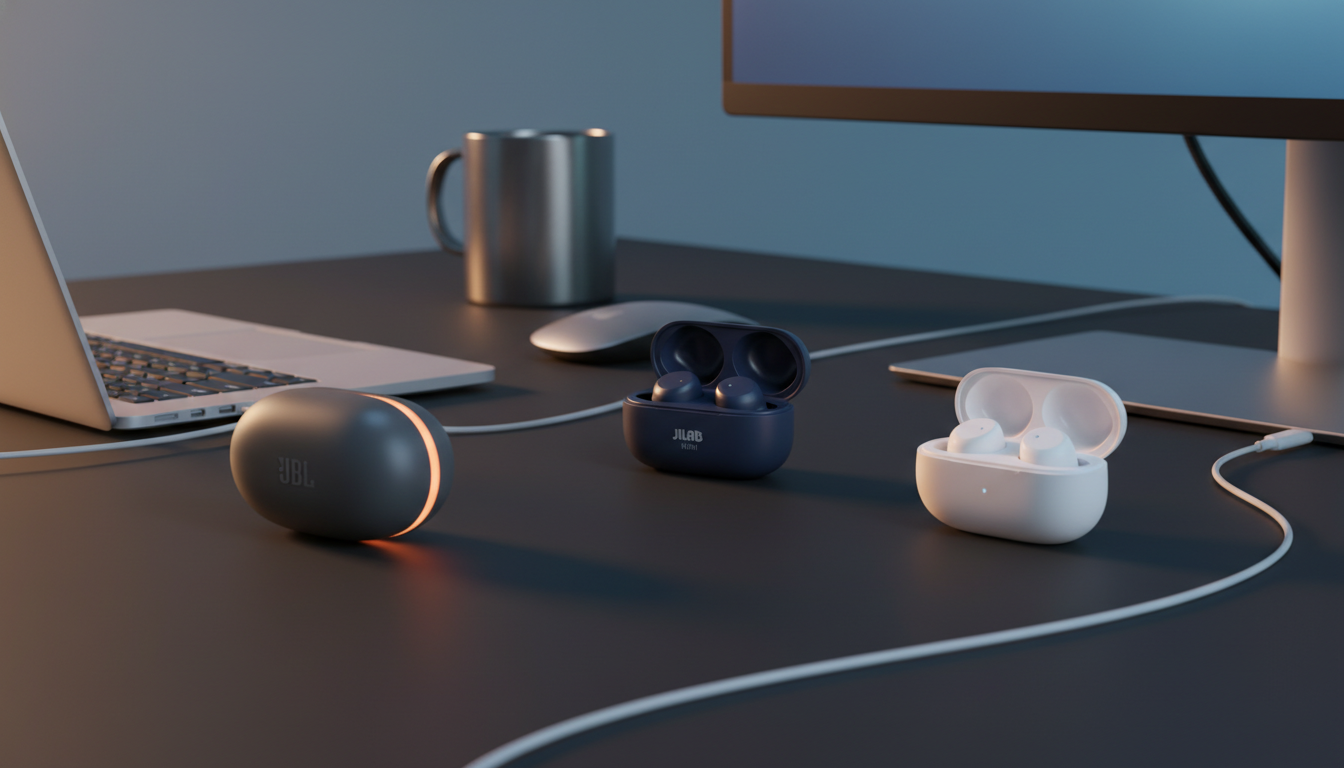
Multipoint Bluetooth lets you hop between a laptop, phone and tablet without missing a beat, and it’s a feature that’s finally showing up in more true‑wireless earbuds. Eleven models were compared, spanning a price range from $15.99 for the Google Pixel Buds up to $279.95 for the Sennheiser Momentum True Wireless 3. The lineup is split into clear tiers – budget picks like the $39.99 JLab JBuds Mini and $29.99 SoundPEATS C30 with ANC, mid‑range options such as the $49.99 Soundcore Space A40 Blue and $59.99 EarFun Air Pro 3, and premium contenders including the $169.95 JBL Live Buds 3 and $247.99 Technics EAH‑AZ100.
Across the board you’ll see a mix of strengths: the JBL Live Buds 3 provide a whopping 40 hours of total playback and a quick‑charge boost of four hours after just ten minutes, while the ultra‑light JLab JBuds Mini weigh only 0.05 lb (3.14 g per earbud) and still deliver more than 20 hours total. If active noise cancellation matters, the SoundPEATS C30 states up to 52 dB of hybrid ANC, and the EarFun Air Pro 3 offers a low 55 ms latency for gaming. Mid‑range models like the Soundcore Space A40 Blue push total playtime to 50 hours, and premium Technics earbuds pair 10 mm drivers with up to 28 hours of use on a single charge.
Below is a breakdown of how each earbud handles multipoint connectivity, battery life and comfort so you can find the perfect pair for your daily workflow.

JBL Live Buds 3
30‑hour case battery life gives you marathon listening without hunting for a charge.

JLab JBuds Mini
Designed for budget‑conscious listeners, the JLab JBuds Mini comes in at $39.99 versus the $169.95 JBL Live Buds 3, delivering solid performance for a fraction of the cost.

Google Pixel Buds
Features an Amazon‑claimed 13 mm driver at just $15.99, a size the other two earbuds don’t list, making it a distinct, ultra‑budget option.
Score Analysis
Key score advantages vs. runner-up (JLab JBuds Mini)
Price Range
JBL Live Buds 3
$169.95
JLab JBuds Mini
$39.99
Google Pixel Buds
$15.99
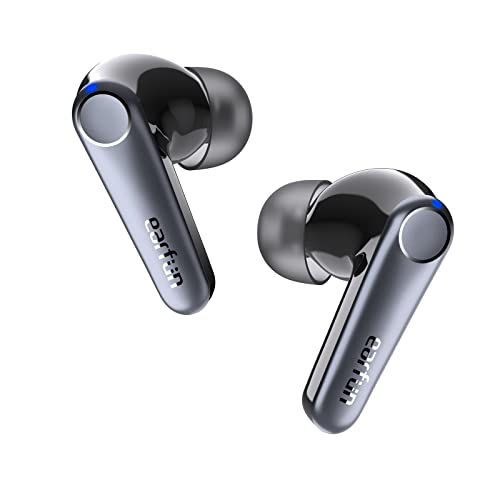
EarFun Air Pro 3
$59.99

Soundcore Space A40 Blue
$49.99

Technics EAH-AZ100
$247.99

SoundPEATS C30 with ANC
$29.99

EarFun Air 2
$42.99

Technics EAH-AZ40M2
$145.34

Sennheiser Momentum True Wireless 3 Graphite
$279.95

Jabra Elite 4
$104.99
Spec Comparison
TL;DR: JBL Live Buds 3 pack a 10 mm driver, True Adaptive ANC and up to 40 hours of total playback into a touchscreen case, but the case’s bulk may bother travelers.
JBL pairs a 10 mm driver with its True Adaptive ANC, which professional reviewers call “best‑in‑class” for cutting ambient noise. Even with ANC on, the earbuds deliver 8 hours of music, and total playback hits 40 hours thanks to a 30‑hour case battery. A quick‑charge burst gives you 4 hours of listening after just 10 minutes on the charger.
Compared with the other ten contenders, JBL’s drivers are larger than the 6 mm drivers in Technics EAH‑AZ40M2 and Jabra Elite 4, match the 10 mm units in Technics EAH‑AZ100 and Soundcore Space A40, and sit just below the 11 mm drivers of EarFun Air Pro 3. Battery‑life wise, JBL’s 40 hours tops the 28‑hour case life of Technics EAH‑AZ40M2 and Jabra Elite 4, exceeds the 30‑hour total of Sennheiser’s flagship, but falls short of Soundcore’s 50‑hour claim. In weight, the 82.2 g total is heavier than the feather‑light 5 g earbuds of Technics EAH‑AZ40M2, yet lighter than Jabra Elite 4’s 130 g package.
User feedback repeatedly praises the long endurance and the intuitive 1.45‑inch touchscreen case that lets you adjust volume, ANC and sound presets without an app. Call quality earns kudos for clear pickup, aided by six built‑in microphones. The case’s dimensions—61 × 51 × 30.8 mm and 73 g—make it bulkier than many rivals, and enabling ANC trims playback from 10 hours to 8 hours. Reviewers note that the specs don’t list a clearly defined transparency mode.
Pros
Cons
Best for: Audiophiles and enthusiasts seeking premium sound quality and advanced features
Avoid if: You're on a tight budget or only need basic functionality
“Long battery, clear calls in noise, easy touchscreen controls, immersive sound”
TL;DR: The JLab JBuds Mini weigh just 0.05 lb each, offer 5.5 h of playback per charge and a total of 20 h, and include multipoint Bluetooth and an IP55 rating for a budget‑friendly, ultra‑light workout companion.
What really stands out is the feather‑light build: each earbud is only 3.14 g, and the charging case tips the scales at 18.5 g. With an IP55 rating, the set shrugs off sweat and dust, while the built‑in Be Aware Audio transparency mode lets you stay aware of your surroundings. The earbuds also support three EQ presets and a MEMS microphone, and they can stay connected to two devices at once thanks to Bluetooth Multipoint.
In the context of this eleven‑product roundup, the JBuds Mini are noticeably lighter than the EarFun Air 2 (0.10 lb) and far lighter than the Jabra Elite 4 (0.29 lb). Their 5.5‑hour earbud battery life is shorter than the 7‑hour runtime of the EarFun Air 2, and the 20‑hour total playtime trails the 35 hours offered by that same model and the 50 hours of the Soundcore Space A40. Nonetheless, the combination of weight, IP55 protection and multipoint connectivity gives them a solid value proposition at $39.99.
Everyday users consistently praise the comfort of the ultra‑light design and the surprisingly punchy bass for the price. Reviewers also highlight the convenience of the Be Aware transparency mode during commutes. On the flip side, several commenters note that the earbuds can slip out during vigorous runs and that the microphone can sound muffled when the tip covers it. Professional reviewers point out the lack of active noise cancellation and the minimal accessory bundle – the case arrives with a key ring, three silicone tip sets and a USB‑C cable, but no wall charger.
Additional technical details include a compact case size of 46 × 35 × 24 mm, touch controls on each earbud, and a charging power range of 2.5–5 W. The JLab app lets you toggle the three EQ modes and adjust the Be Aware setting, while the MEMS microphone delivers clear voice capture for calls and commands.
Pros
Cons
Best for: Small‑ear users who want ultra‑light, sweat‑resistant earbuds for gym sessions, commutes and budget‑friendly everyday listening.
Avoid if: You need active noise cancellation, a wing‑style secure fit for intense sports, or a more extensive accessory set.
TL;DR: The Sidpro Google Pixel Buds deliver 11 mm drivers, up to 12 hours of ANC‑off playback, and multipoint Bluetooth for just $15.99, making them a lightweight, budget‑friendly choice for Android users.
At the core of these earbuds is an 11 mm driver that aims to provide punchy bass, while the battery can sustain 12 hours of listening with ANC off and 8 hours with ANC on. The charging case adds another 20 hours, bringing total playback time to 48 hours when ANC is disabled. Weighing only 6.2 g per earbud and 63 g for the case, they're comfortable in the ear, and a Bluetooth range of 15 m lets you move around a room without dropping the connection.
Compared with the other ten contenders, the Pixel Buds are notably lighter than the SoundPEATS C30, which lists an 11 g earbud weight and a 44 g case. They also beat the C30’s 10 m Bluetooth range, offering a full 15 m. The JLab JBuds Mini provide 5.5 hours of earbud playtime and a 20‑hour total, so the Pixel Buds’ 8‑hour (ANC on) and 12‑hour (ANC off) sessions give you more music per charge, though the JLab case is lighter at 18.5 g. EarFun Air 2’s driver is 10 mm—slightly smaller than the Pixel’s 11 mm—and its total of 35 hours falls short of the Pixel’s 48‑hour claim, while its earbud weight of 5.35 g is lighter. The Soundcore Space A40 pushes total playtime to 50 hours, edging out the Pixel’s 48 hours, but its case is lighter at 48.4 g. Across the board, the Pixel Buds hold their own on battery endurance and range while staying competitively light.
Users consistently praise the strong bass response and the seamless Android integration, noting that instant pairing and Google Assistant access feel natural. Professional reviewers also highlight the long battery life and the convenience of multipoint connectivity. On the downside, several reviewers mention that the fit can loosen after about an hour of moderate activity, leading to occasional drops. Reviewers describe call quality as inconsistent, sometimes requiring you to adjust the earbuds. Finally, reviewers commonly criticize the lack of high‑resolution codecs such as aptX or LDAC for listeners who want audiophile‑grade sound.
Beyond audio, the buds carry an IPX7 rating according to Amazon (IPX4 on the manufacturer’s site), giving them solid resistance to sweat and splashes. Transparency mode lets outside sounds in when you need them, and spatial audio support adds an immersive layer for compatible content. Fast Pairing and touch‑controlled volume swipes on the stem round out a feature set that feels modern despite the low price point.
Pros
Cons
Best for: Entry-level buyers or those on a tight budget
Avoid if: You need powerful performance or professional‑grade features
TL;DR: The EarFun Air Pro 3 offers 11 mm drivers, hybrid ANC with 43 dB reduction, 9 hours of playback and multipoint Bluetooth for $59.99, making it a solid mid‑range choice for everyday commuters.
What really sets the Air Pro 3 apart is its hybrid adaptive ANC that claims up to 43 dB of noise reduction, paired with an 11 mm driver that delivers a bass‑forward, V‑shaped sound signature. The earbuds also support aptX Adaptive, aptX Lossless and LDAC, giving you high‑resolution streaming options that many rivals lack.
At 0.11 pounds (52 g) the Air Pro 3 is heavier than the Soundcore Space A40 (0.04 lb), JLab JBuds Mini (0.05 lb) and the SoundPEATS C30 (0.10 lb), but still lighter than the Jabra Elite 4 (0.29 lb). Compared with EarFun’s own Air 2 (0.10 lb) it carries a bit more heft, which aligns with the added ANC hardware and larger battery.
Users consistently praise the earbuds for their reliable ANC that tames low‑frequency rumble on trains and buses, and for the battery that delivers 9 hours per charge and a total of 45 hours with the charging case. Professional reviewers note the effective low‑frequency noise cancellation and the extensive codec lineup as standout features for the price point. On the downside, the stem‑heavy design can feel bulky after extended wear, and the touch controls are sometimes described as overly sensitive.
Pros
Cons
Best for: Most users looking for a well‑reviewed, reliable mainstream option
Avoid if: You have limited desk space or need portability
“best budget ANC earbuds”
“phenomenal... many years”
TL;DR: The Soundcore Space A40 offers adaptive ANC, 50 hours of total playtime and multipoint Bluetooth for $49.99, making it a solid mid‑range pick for commuters.
The standout spec features an adaptive active‑noise‑cancelling system that cuts ambient sound by up to 98 % using a 10 mm double‑layer metal‑and‑ceramic driver. The charging case delivers 8 hours of playback with ANC on and a total of 50 hours overall. A quick 10‑minute charge adds about 4 hours of listening, which is noticeably faster than the 10‑minute‑for‑2‑hour boost listed for the EarFun Air 2.
Compared with the other ten earbuds in this roundup, the A40 is significantly lighter than the EarFun Air 2 (0.04 lb vs 0.099 lb) and far lighter than the Jabra Elite 4 (0.04 lb vs 0.287 lb). Its total playtime of 50 hours also exceeds the 35 hours offered by the EarFun Air 2 and edges past the 45 hours of the EarFun Air Pro 3. While several peers lack active‑noise‑cancellation, the A40 provides adaptive ANC where models like the EarFun Air 2 list none, giving it a clear advantage for noisy commutes.
User sentiment consistently praises the strong ANC performance, the long battery life, and the comfortable fit of the silicone tips. Professional reviewers highlight the detailed mids and solid bass from the dual‑layer diaphragm, though they note that treble can sometimes sound dull or overly airy. The earbuds also support HearID Sound 2.0 and an 8‑band EQ, letting you fine‑tune the sound profile to your taste.
Pros
Cons
Best for: Value-conscious buyers seeking quality at $49.99
Avoid if: You need studio‑grade audio fidelity or rely on a built‑in tracker for lost earbuds
TL;DR: The Technics EAH‑AZ100 packs 10 mm magnetic fluid drivers, adaptive hybrid ANC and three‑device multipoint Bluetooth into a lightweight 49.9 g earbud that lasts up to 28 hours total, but it sits at a premium $247.99 price point.
At the heart of the EAH‑AZ100 are 10 mm magnetic fluid drivers that claim low distortion and a wide soundstage, paired with Full Adaptive Digital Hybrid ANC that tackles low‑frequency noise like airplane engines. Dolby Atmos with head‑tracking adds immersive spatial audio, while three‑device multipoint Bluetooth lets you hop between phone, laptop and tablet without re‑pairing. Battery life stretches to 15 hours with ANC off, 10 hours with ANC on, and a total of 28 hours when the case is included; a 15‑minute quick charge adds roughly 90 minutes of playback.
Compared with the other ten earbuds in this roundup, the Technics drivers match the JBL Live Buds 3’s 10 mm size but are larger than the Sennheiser Momentum True Wireless 3’s 7 mm drivers and slightly smaller than EarFun Air Pro 3’s 11 mm unit. At 49.9 g, the EAH‑AZ100 is noticeably lighter than the Sennheiser model (0.55 lb) and the JBL pair (0.18077905484 lb). Its 28‑hour total playtime sits just shy of Sennheiser’s 30 hours and well below JBL’s 40 hours, yet it outlasts many budget options. The 10 m Bluetooth range aligns with the range listed for several peers, and its IPX4 rating offers splash resistance, though it isn’t fully waterproof.
Everyday users praise the comfortable fit, the immersive Dolby Atmos experience, and crystal‑clear call quality thanks to six high‑performance microphones. Professional reviewers highlight the reference‑class driver design and the strong ANC performance against low‑frequency rumble. The most common complaints revolve around bass bleeding into mids, a subdued treble that can leave detailed tracks sounding a bit muffled, and occasional hiccups when the earbuds switch between paired devices. The limited IPX4 rating also means it isn’t ideal for heavy‑sweat workouts.
Beyond the audio core, the EAH‑AZ100 supports LDAC for high‑resolution streaming, includes a USB‑C charging port and Qi wireless charging, and comes with a charging case, a USB‑C cable and five eartip pairs. A touch sensor enables voice‑assistant access, and the six‑mic array with Voice Focus AI aims to keep calls clear even in noisy environments.
Pros
Cons
Best for: Audiophiles and frequent travelers who value high‑resolution sound, strong ANC and seamless device switching.
Avoid if: You need a fully waterproof earbud for intense workouts or are shopping on a tight budget — it’s priced at $247.99.
TL;DR: The SoundPEATS C30 offers hybrid ANC up to 52 dB, LDAC Hi‑Res audio and multipoint Bluetooth at $29.99, delivering up to 10 hours of playtime in a compact, IP54‑rated design.
What really sets the C30 apart is its hybrid active‑noise‑cancellation that can suppress ambient sound by up to 52 dB, paired with a 12 mm driver and LDAC support for Hi‑Res playback. The earbuds also run Bluetooth 6.0, include a low‑latency mode and, importantly for multitaskers, support multipoint connectivity.
At about 0.10 lb, the C30 sits in the middle of the weight range for this group – heavier than the JLab JBuds Mini (≈0.05 lb) and Soundcore Space A40 (≈0.04 lb), but lighter than EarFun Air Pro 3 (≈0.11 lb) and the much bulkier Jabra Elite 4 (≈0.29 lb). Its 12 mm driver is the largest among the peers, out‑sizing the 10 mm units in the EarFun Air 2 and Soundcore Space A40, as well as the 11 mm driver in the Air Pro 3 and the 6 mm driver in the Jabra. The 10 m Bluetooth range matches the Jabra Elite 4 but falls short of the 15 m range listed for the EarFun Air 2. Multipoint support is a unique selling point – none of the other ten earbuds in the roundup list this capability.
Critics consistently praise its value‑for‑money, noting that the 52 dB ANC delivers “studio‑grade” silence for commuters and that the battery life of 7.5–10 hours per charge (42–52 hours total with the case) easily covers a full day of use. Fast charging adds about 3 hours of playback after a 10‑minute charge, which users find handy for quick top‑ups. Professional reviewers highlight the combination of LDAC and the 12 mm driver as a rare find at this price point, though they also point out that enabling LDAC disables multipoint, gaming and Movie modes.
Beyond the headline features, these earbuds pack six microphones with wind‑reduction processing, spatial‑audio support, and a transparency mode that lets you hear the world around you, albeit without the pinpoint accuracy some users desire. The IP54 rating means the earbuds can handle sweat and light rain, making them suitable for gym sessions or rainy‑day commutes.
Pros
Cons
Best for: Budget‑conscious buyers seeking a reliable entry‑level option
Avoid if: You rely on iOS for high‑resolution audio or need flagship‑level ANC performance
“best wireless earbuds under $50”
TL;DR: The EarFun Air 2 packs a 10 mm driver, 35 hours of total playback and IPX7 waterproofing into a lightweight 45 g design with multipoint Bluetooth for under $45.
What really stands out is the 10 mm driver paired with an IPX7 waterproof rating, letting you sweat through a workout or catch a rain shower without worrying about damage. The earbuds hold up to 7 hours of music on a single charge and the charging case pushes total playtime to 35 hours, while a 10‑minute quick charge adds roughly 2 hours of listening.
Compared with the other ten entries in this roundup, the Air 2 is heavier than the JLab JBuds Mini (0.05 lb vs 0.10 lb) but still lighter than the Jabra Elite 4, which tips the scales at over 0.28 lb. It also outlasts the JLab model’s 20‑hour total playtime, delivering a longer battery life than many budget competitors. Its driver size matches the 10 mm drivers that the Soundcore Space A40 uses, while the EarFun Air Pro 3 steps up to an 11 mm unit. In terms of Bluetooth range, the Air 2 reaches 15 meters, a solid distance for most indoor and outdoor scenarios.
Professional reviewers praise the long battery endurance and the IPX7 rating for gym‑ready durability, noting the secure ergonomic fit that keeps the earbuds comfortable during extended sessions. Everyday users echo these points, highlighting clear call quality thanks to the four‑mic array and appreciating the convenience of wireless Qi charging. The main criticisms focus on the lack of active noise cancellation and the limited codec lineup, which some listeners feel caps the audio fidelity compared with higher‑priced options.
Beyond the battery and waterproofing, the Air 2 supports multipoint Bluetooth, allowing you to stay connected to two devices at once—a handy feature for switching between a laptop and a phone. Touch controls let you adjust volume with a single tap and manage playback with double or triple taps, while in‑ear detection automatically pauses music when you remove an earbud.
Pros
Cons
Best for: Budget-conscious buyers seeking a reliable entry-level option
Avoid if: You want the best value-per-dollar in its price range
“best budget ANC earbuds”
“phenomenal... many years”
TL;DR: The Technics EAH‑AZ40M2 delivers LDAC‑enabled hi‑res sound, 3‑device multipoint Bluetooth, and IPX4 resistance in a 5 g, 0.011 lb package for $145.34.
What really sets these earbuds apart is the ability to keep three Bluetooth sources connected at once, thanks to Bluetooth 5.3 and a 10 m range. They also support LDAC, AAC and SBC codecs, and the driver measures 6 mm, which matches the Jabra Elite 4 but is smaller than the 10 mm drivers found in JBL Live Buds 3, Soundcore Space A40 and EarFun models.
In the context of the eleven‑product roundup, the EAH‑AZ40M2 is dramatically lighter than JBL Live Buds 3 (0.18077905484 lb) and Jabra Elite 4 (0.2866009406 lb), while its 5 g earbud weight rivals the EarFun Air 2’s 5.35 g. Battery life with ANC on sits at 5.5–7.5 h, which is shorter than JBL’s 8 h ANC runtime but comparable to many mid‑range true‑wireless options. The case‑included 28 h of playback (ANC on) trails JBL’s 30 h case life and the 45 h total playtime of the EarFun Air Pro 3, yet it still exceeds the 35 h total of the EarFun Air 2.
Users consistently praise the seamless device‑switching for hybrid‑work scenarios and note that the single‑hybrid ANC does a decent job of muffling background chatter, though some wish for stronger cancellation. Professional reviewers have highlighted the clear call quality from the two microphones per earbud and the compact low‑profile design—its height's only 25.4 mm, making it 10 % smaller than the previous Technics model. The Qi‑compatible case adds convenience for on‑the‑go charging.
Pros
Cons
Best for: Hybrid‑work professionals and multitaskers who need quick switching between phone, laptop and tablet.
Avoid if: You require top‑tier noise cancellation, the longest possible ANC battery life, or a more robust dual‑hybrid ANC system.
“essential for business calls... multitask with flow”
TL;DR: The Sennheiser Momentum True Wireless 3 packs 7 mm drivers, adaptive ANC and 30 hours of total battery life into a premium $279.95 package, but its 3.1‑star rating and bulkier build may turn price‑sensitive shoppers away.
What really sets these earbuds apart is the 7 mm dynamic driver paired with Sennheiser’s adaptive ANC and a fast‑charge capability that delivers one hour of playback after just 8 minutes on the charger. Multipoint Bluetooth lets you stay linked to two devices at once, and the case holds enough juice for a total of 30 hours of listening before it needs a recharge.
Compared with the other ten contenders, the Momentum’s driver is larger than the 6 mm units in the Technics EAH‑AZ40M2 and Jabra Elite 4, yet smaller than the 10‑11 mm drivers found in the Technics EAH‑AZ100, JBL Live Buds 3, and EarFun Air Pro 3. At 250 g the earbuds are noticeably heavier than the sub‑100‑gram offerings from Technics and EarFun, and the total battery life sits between the 28‑hour runs of the Technics models and the 40‑plus hours claimed by JBL, EarFun and Soundcore. Multipoint support is a unique advantage here; none of the peer specs list this capability.
Users consistently praise the strong ANC isolation and the ability to switch to Transparency mode when they need to hear their surroundings. Professional reviewers highlight the warm sound signature and the rich codec suite—including aptX Adaptive and aptX HD—as a plus for audiophiles. On the downside, some owners of smaller ears complain about the bulkier, chunkier shape, and the limited water resistance (not a full waterproof rating) means the earbuds aren’t suited for heavy rain or swimming. The Sennheiser Smart Control app adds a 5‑band EQ and personalized sound zones, letting you fine‑tune the listening experience.
Pros
Cons
Best for: Those prioritizing quality and willing to pay for premium performance
Avoid if: Reliability and user satisfaction are your top concerns
“very good for sports and fitness”
“impressive for travel”
TL;DR: The Jabra Elite 4 offers hybrid ANC, a six‑mic array, and up to 28 hours of total playtime, plus multipoint Bluetooth for up to six devices, all in a 130 g design.
The standout spec is its 6 mm drivers paired with a total battery life of 28 hours when ANC is off, giving you marathon listening sessions without hunting for a charger.
At roughly 0.29 lb (130 g), the Elite 4's heavier than the EarFun Air Pro 3 (≈0.11 lb) and the SoundPEATS C30 (≈0.10 lb), but still lighter than many bulkier models. Its 28‑hour battery outlasts the EarFun Air Pro 3’s 9‑hour run‑time and the Soundcore Space A40’s 8‑hour ANC mode, positioning it among the longest‑lasting options in this group.
Users consistently praise the secure silicone fit and the clarity of calls, thanks to the six‑microphone array. Professional reviewers note the hybrid ANC does a solid job blocking engine rumble and steady background noise, though they also point out that ANC‑on playback drops to around 5‑6 hours. The Jabra Sound+ app adds customizable EQ, and the earbuds support AAC, aptX and SBC codecs over Bluetooth 5.2.
Pros
Cons
Best for: Most users seeking a balanced, mainstream option
Avoid if: You need advanced features or professional‑grade performance
“Secure fit for workouts/motorcycling (stay in at 70+ mph winds)”
Breakdown
JBL Live Buds 3
Pros
JLab JBuds Mini
Pros
Cons
Google Pixel Buds
Pros
EarFun Air Pro 3
Pros
Based on scoring data and product specs
Personalized picks
Best Overall Pick
JBL Live Buds 3
Best OverallBest for: Audiophiles and enthusiasts seeking premium sound quality and advanced features
JLab JBuds Mini
Best for: Budget-conscious buyers seeking a reliable entry-level option
$39.99-$129.96 vs winner
Skip Jabra Elite 4 if…
You need advanced features or professional-grade performance
JBL Live Buds 3 take the top spot thanks to a solid 4.2‑star rating from 424 reviewers, Bluetooth 5.3 paired with true multipoint connectivity, and a case that holds 30 hours of charge while delivering up to 10 hours of playback per earbud (8 hours with ANC on). At 0.18 lb (82.2 g total) they stay light enough for all‑day wear, and an IP55 rating keeps them safe from sweat and light rain.
The runner‑up, JLab JBuds Mini, shines when you need a feather‑light commuter companion. Weighing just 0.05 lb (24.8 g total) and featuring a compact 18.5 g case, they still offer multipoint Bluetooth, 20 hours of total battery life, and a 4.3‑star rating from 5,756 users—perfect for quick trips and tight pockets.
If you’re watching the price, Google Pixel Buds deliver solid sound at $15.99, the lowest cost. For a balanced mid‑range pick, EarFun Air Pro 3 at $59.99 offers a good mix of features and price. And if premium audio is your goal, the Sennheiser Momentum True Wireless 3 in Graphite caps the range at $279.95, providing a high‑end listening experience.
Pick the JBL Live Buds 3 now and enjoy reliable multipoint performance across all your devices.
The JBL Live Buds 3 and the EarFun Air 2 both carry an IP55 and IPX7 rating respectively, offering solid protection against sweat and light rain. The JBL buds also provide up to 10 hours of playback with ANC off, while the EarFun Air 2 gives 7 hours and a total of 35 hours with its case, making either a reliable choice for active use.
No reviews yet — be the first to share your experience.
Please sign in to leave a review
Also considered
$39.99
