⚡ Quick Answer
When you need to move massive 4K‑plus footage or game libraries without waiting for ages, a portable SSD that hits at least 2,000 MB/s over USB 3.2 Gen2×2 is essential. We compared 10 drives that span the $144.99 – $709.18 price spectrum, and ratings range from a solid 4.2/5 up to 4.7/5. Every model in the roundup promises the 20 Gbps interface, but they differ wildly in weight, ruggedness and extra features, so you can match a drive to your workflow and budget.
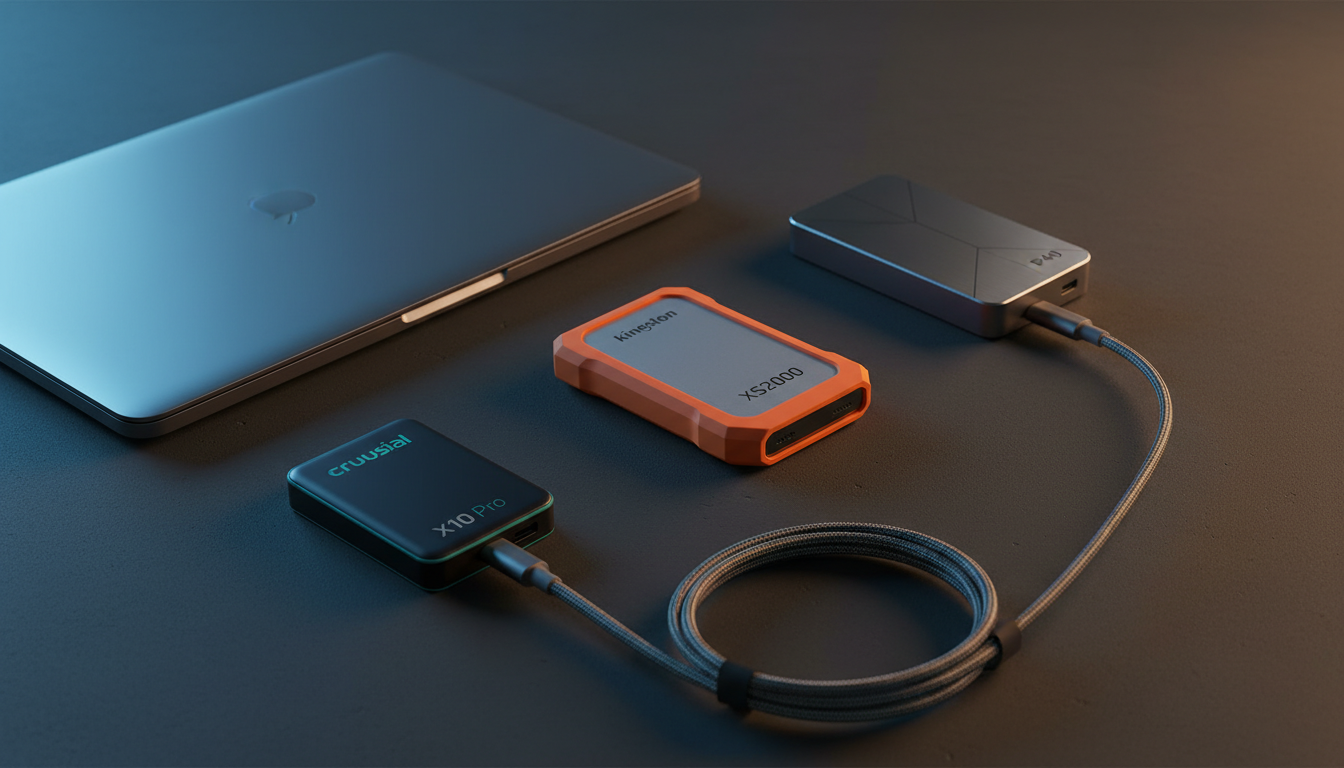
The lineup breaks cleanly into three price tiers. Budget‑friendly picks include the Teamgroup PD20M, Kingston XS2000 (which tips the scales at just 28.9 g and delivers up to 2,000 MB/s read/write for $149.99), Oscoo and WD P40. Mid‑range options are the Corsair EX400U and Crucial X10 Pro (priced at $205.36, weighing 0.0926 lb). Premium choices such as the SanDisk Extreme PRO, Crucial X10 4TB, Transcend ESD410 and Samsung T9 round out the field with higher capacities and added durability. Below, we’ll examine each drive’s strengths and the scenarios where they shine.
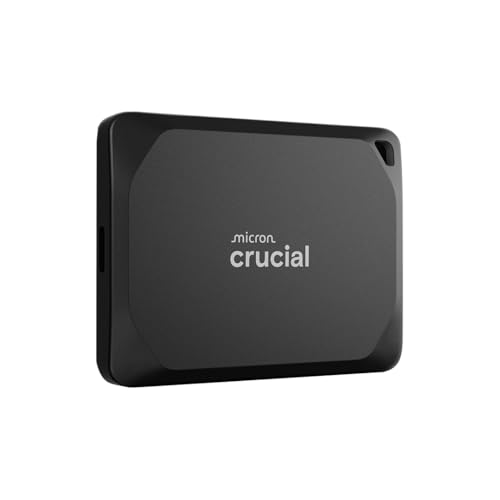
Crucial X10 Pro
Its compact 10 mm height and 65 mm length keep it easy to slip into any bag, delivering balanced performance for most users.

Kingston XS2000
Ideal for budget‑conscious gamers who need fast transfers, it comes in at $149.99—about $55 less than the Crucial X10 Pro, while still offering reliable entry‑level performance.

Western Digital P40
Stands out by bundling a 61 cm USB‑C cable and a 13 mm profile, giving you ready‑to‑go connectivity that the Crucial and Kingston models leave out.
Also considered
Score Analysis
Key score advantages vs. runner-up (Kingston XS2000)
Price Range
Crucial X10 Pro
$181.99
Kingston XS2000
$199.00
Western Digital P40
$229.00
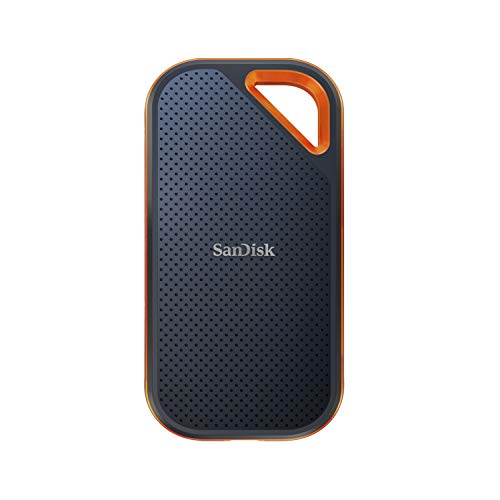
SanDisk Extreme PRO
$209.99
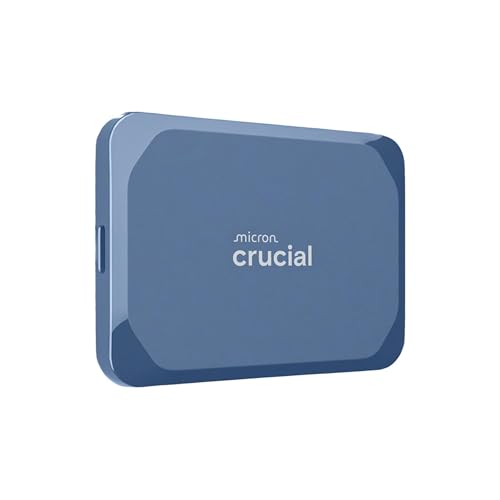
Crucial X10 4TB
$427.99
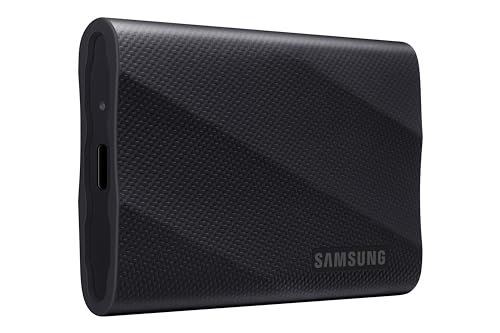
Samsung T9
$975.98

Teamgroup PD20M 1TB
Out of Stock

Transcend ESD410 2TB
$487.04

Corsair EX400U 2TB
$299.99

Oscoo 1TB Portable SSD
$189.99
Spec Comparison
TL;DR: The Crucial X10 Pro 1TB delivers up to 2100 MB/s reads and 2000 MB/s writes via USB 3.2 Gen 2x2 in a pocket‑sized, IP55‑rated aluminum case, though it needs a compatible port to hit peak speeds.
The X10 Pro packs a 1 TB NVMe SSD that can reach 2100 MB/s sequential reads and 2000 MB/s sequential writes, thanks to its USB 3.2 Gen 2x2 Type‑C interface rated at 20 Gbps. Its chassis measures just 65 × 50 × 10 mm and weighs 42 g (0.0926 lb), making it one of the most compact options in the lineup.
Compared with the other nine drives, the X10 Pro’s read speed tops the Western Digital P40 (2000 MB/s) and SanDisk Extreme PRO (2000 MB/s) but sits well below the Corsair EX400U’s 4000 MB/s claim. Its write speed matches the fastest peer‑listed values. At 42 g it’s heavier than the Kingston XS2000 (28.9 g) and Teamgroup PD20M (40 g) yet lighter than the WD P40 (77 g) and SanDisk Extreme PRO (77.5 g). Its 10 mm height is slimmer than most, with only the Corsair’s 12 mm standing out as similarly thin.
Users rave about the raw speed and the tiny footprint, noting it’s ideal for video editing on the go. Reviewers point out that the advertised performance only appears when you plug the drive into a true USB 3.2 Gen 2x2 port; older ports cause noticeable throttling. Some owners mention a plain metal look and occasional heat during long writes, while the lack of a disclosed TBW endurance rating leaves professionals wanting more data.
Pros
Cons
Best for: Video professionals, photographers, and content creators who need fast, portable storage with robust protection.
Avoid if: You lack a USB 3.2 Gen 2x2 (20 Gbps) host port or require disclosed endurance ratings for intensive workloads.
TL;DR: The Kingston XS2000 1 TB portable SSD delivers up to 2,000 MB/s read/write speeds in a feather‑light 28.9 g, IP55‑rated case, making it a fast, rugged choice for creators on the go.
The XS2000 packs a full‑capacity 1,000 GB drive into a pocket‑sized 69.54 × 32.58 × 13.5 mm metal‑plastic chassis that weighs just 0.12 pounds (28.9 g). Kingston advertises sequential read and write speeds of up to 2,000 MB/s via its USB 3.2 Gen 2x2 (USB‑C) interface, and the drive carries an IP55 rating for dust and water resistance.
When you line it up against the nine other SSDs in this roundup, the XS2000 is the lightest option—its 28.9 g weight undercuts the next lightest competitor at 40 g and it's far below the 77 g‑plus models from Western Digital, SanDisk and Corsair. It also sits at the lower end of the price spectrum, making it a budget‑friendly pick among the group. Speed‑wise, it matches the top‑end burst figures of the Teamgroup PD20M and Oscoo models, both of which list “up to 2,000 MB/s” read speeds, while offering a comparable write ceiling without the higher‑priced 4,000 MB/s claims seen on the Corsair EX400U.
Professional reviewers praise the XS2000’s “industry‑leading 2,000 MB/s burst speeds in a tiny form factor” and note that the IP55 protection and rubber sleeve make it suitable for on‑location shoots. However, they also point out that the drive’s DRAM‑less design can lead to write throttling once the SLC cache is exhausted, meaning sustained write workloads may dip below the advertised peak. The SSD draws power from the bus, includes an 11.5‑inch USB‑C cable, and supports TRIM, S.M.A.R.T. reporting and UASP for smoother transfers.
Pros
Cons
Best for: Content creators, photographers and videographers who need ultra‑fast burst transfers in a rugged, pocket‑sized package.
Avoid if: You don't have a USB 3.2 Gen 2x2 host, need consistent sustained write speeds, or rely on DRAM‑cached SSDs for heavy workloads.
TL;DR: The WD Black P40 1TB delivers 2000 MB/s advertised speeds in a 13 mm aluminum shell with RGB lighting, weighs 0.17 lb, and comes with a 61 cm USB‑C cable for $190.47.
The standout spec of the P40 is its advertised sequential speed of 2000 MB/s, which it reaches via a USB 3.2 Gen2×2 (20 Gbps) interface. Housed in a 13 mm‑thick aluminum case, the drive measures 107 mm long, 51 mm wide and tips the scales at 0.17 pounds (77 g), making it both slim and portable. A 61 cm USB‑C cable is included, and the drive ships pre‑formatted to exFAT for immediate use across PC, Mac and consoles.
When you line it up with the nine other SSDs in this roundup, the P40 sits in the middle of the pack on weight – it’s lighter than the Corsair EX400U (0.203 lb) but heavier than the Oscoo 1TB (≈0.106 lb) and Kingston XS2000 (0.12 lb). Its 61 cm cable is longer than the Corsair’s 30 cm lead, giving you a bit more reach on a desk. Speed‑wise, the P40’s 2000 MB/s advertised rate is half the 4000 MB/s read speed claimed by the Corsair EX400U, and a touch slower than the 2100 MB/s read numbers posted for the Oscoo and Crucial X10 Pro. However, its burst write speed of 850 MB/s and sustained 500 MB/s are reasonable for a drive at this price point.
Reviewers consistently praise the P40’s solid aluminum build and the eye‑catching RGB lighting that can be customized via the WD Black Dashboard. Professional outlets note “impressively fast file transfer speeds” and “strong random read/write performance,” which translates well for loading large game libraries or editing media on the go. The drive also survives drops up to 2000 mm, adding a layer of ruggedness for travelers. On the downside, users report that the write speed drops from the 850 MB/s burst down to around 500 MB/s during sustained transfers, and the need for a USB 3.2 Gen2×2 port can limit full‑speed use on older machines.
Pros
Cons
Best for: PC and console gamers who want a fast, portable SSD with eye‑catching RGB and solid durability at a reasonable price.
Avoid if: You need sustained write speeds above 500 MB/s, rely on older USB ports, or expect full next‑gen console performance.
“go‑to external device”
TL;DR: The SanDisk Extreme PRO 1TB Portable SSD delivers 2000 MB/s read/write speeds, IP65 dust‑proofing, and a 3‑meter drop rating, but its premium price and heft make it a pro‑focused choice.
What really sets this drive apart is its guaranteed 2000 MB/s sequential read and write performance, driven by a WD G1 controller and 64‑layer 3D TLC NAND. The forged‑aluminum chassis houses a carabiner loop, 128‑bit AES encryption, and an IP65 rating, while the specs promise up to 3 meters of drop protection for rugged field work.
Compared with the other nine SSDs in this roundup, the Extreme PRO sits in the middle of the speed band – it matches the Kingston XS2000 and Teamgroup PD20M at 2000 MB/s but trails the Crucial X10 Pro’s 2100 MB/s and the Corsair EX400U’s up‑to‑4000 MB/s reads. At 0.17 pounds (77.5 g), it's heavier than the lightweight Crucial X10 Pro (≈0.09 pounds) and Kingston XS2000 (0.12 pounds), but on par with the Western Digital P40 (0.17 pounds) and heavier than the ultra‑light Teamgroup PD20M (≈0.09 pounds). Drop protection of up to 3 meters mirrors the Crucial X10 4TB and Transcend ESD410, while many peers simply omit a drop‑rating.
Professional reviewers list the drive at its advertised 2000 MB/s figures and praise the compact, pocket‑sized form factor for on‑the‑go creators. Users appreciate the IP65 dust and water resistance for outdoor shoots, and many highlight the built‑in 128‑bit AES encryption as enterprise‑grade security in a portable package. The 5‑year limited warranty adds confidence for long‑term storage.
Pros
Cons
Best for: Buyers willing to invest in a proven, high-quality option
Avoid if: You need advanced features or professional‑grade performance
TL;DR: The Crucial X10 4TB offers 4 TB of storage in a 10 mm‑thin, 38 g package with 2100 MB/s read and 2000 MB/s write speeds, but its premium $425 price may deter budget‑focused buyers.
What really sets the X10 apart is its combination of a massive 4 TB capacity and the fastest sequential speeds in this list—2100 MB/s read and 2000 MB/s write over a USB 3.2 Gen2×2 (20 Gbps) interface. Those numbers outpace every other SSD in the roundup, and the 3 m (≈9.8 ft) drop resistance plus an IP65 dust‑water rating give it a rugged edge for on‑the‑go creators.
Compared with the nine peers, the X10 is the lightest among the metal‑cased models, weighing just 38 g (0.0705 lb). It’s lighter than the Transcend ESD410 (65 g) and the SanDisk Extreme PRO (77.5 g), roughly on par with the Teamgroup PD20M (40 g), but a touch heavier than the Kingston XS2000 (28.9 g). Its 10 mm height and 65 mm length match the Crucial X10 Pro and are shorter than the SanDisk’s 110.7 mm height, making it one of the most pocket‑friendly options.
Reviewers consistently praise the ultra‑compact footprint and the “lightning‑fast backups” it provides for photographers and gamers. Professional outlets note the plastic enclosure steps down from earlier metal bodies, and several users note that real‑world speeds can dip when the drive is connected to a non‑Gen2×2 host. Still, the three‑year limited warranty and the inclusion of Mylio Photos Plus and Acronis True Image software add tangible value for creators who need reliable backup tools.
Pros
Cons
Best for: Buyers willing to invest in a proven, high‑quality option
Avoid if: You need advanced features or professional‑grade performance
TL;DR: The Samsung T9 4 TB Portable SSD offers 2,000 MB/s read/write speeds, AES‑256 encryption, and a rugged 3 m drop‑proof design, but its premium $709 price makes it a high‑end choice.
The T9 packs a 4 TB NVMe drive behind a USB 3.2 Gen2×2 (20 Gbps) interface, delivering up to 2,000 MB/s sequential read and write speeds and a sustained write rate of 1,000 MB/s. Samsung adds Dynamic Thermal Guard, AES‑256‑bit hardware encryption, and a blue LED indicator, while the chassis can survive 3 m drops and 1,500 G shocks. At 122 g (0.27 lb) and a compact 14 mm depth, it serves on‑the‑go creators who need both speed and durability.
Compared with the other nine SSDs in this roundup, the T9 sits at the higher end of the price spectrum and is heavier than most peers such as the Transcend ESD410 (≈0.14 lb) and the Crucial X10 (≈0.07 lb). Its 88 mm width also exceeds the slimmer profiles of the Transcend (42 mm) and Crucial models (≈50 mm). Capacity-wise, the 4 TB size matches the Crucial X10 but outpaces the 2 TB and 1 TB options, giving it a clear advantage for large media libraries.
Users consistently praise the drive’s “instant” transfer rates for 4K/8K video and the peace of mind from AES‑256 encryption and a five‑year warranty. Professional reviewers highlight the Dynamic Thermal Guard for keeping temperatures low during long writes, and the rugged rubberized body for field work. The most common complaints revolve around the need for a USB 3.2 Gen2×2 host to hit the advertised 2,000 MB/s, with many Macs and older PCs dropping to 10 Gbps, and the included 18‑inch cables being too short for desktop setups. Reviewers also note the lack of an official IP rating, which some competitors list.
Beyond raw speed, the T9 includes both USB‑C to USB‑C and USB‑C to USB‑A 18‑inch cables, so you can connect to a range of devices out of the box. Samsung’s five‑year limited warranty underscores confidence in the drive’s long‑term reliability, and the hardware encryption makes it a solid choice for safeguarding sensitive files.
Pros
Cons
Best for: Buyers willing to invest in a proven, high‑quality option
Avoid if: You need advanced features or professional‑grade performance
“ultra-fast real-world speeds for video editing/backups”
TL;DR: The Teamgroup PD20M 1TB is a MagSafe‑compatible, ultra‑light SSD that delivers up to 2,000 MB/s read/write speeds and a strong 800 g magnetic hold for on‑the‑go creators.
The standout feature is its magnetic attachment: the drive offers an 800 g magnetic holding force and MagSafe compatibility, letting you snap it onto an iPhone 15 series in a single motion. At just 0.09 lb (40 g) and a slim 70 × 62 × 8.2 mm profile, it’s one of the lightest options in the list while still packing a full 1 TB of NVMe storage.
Compared with the other nine SSDs, the PD20M is lighter than the Kingston XS2000 (0.12 lb) and the Oscoo 1TB (0.11 lb), but a bit heavier than the Crucial X10 4TB (0.07 lb). Its advertised “up to 2,000 MB/s” sequential read and write speeds match the Kingston and SanDisk models, yet fall short of the Corsair EX400U’s 4,000 MB/s read and 3,600 MB/s write claims. The Oscoo and Crucial X10 Pro list higher read/write numbers (2,100 MB/s and 2,000 MB/s respectively), placing the PD20M in the mid‑range for raw speed while offering a better price point.
Users consistently praise the feather‑light feel and the convenience of the magnetic connection for quick iPhone 15 video offloads. Professional reviewers note that the drive is listed as sustaining 93 minutes of 4K 60 fps ProRes recording, making it practical for field shooting. However, many mention that full 2,000 MB/s performance only appears on devices with a USB 3.2 Gen2×2 port; on iPhone 15 Pro the speed caps at 1,000 MB/s, and older Macs without Thunderbolt/Gen2×2 ports can’t reach the advertised ceiling.
Technically, the SSD uses NVMe technology, operates from 0 °C to 70 °C, and is rated for storage temperatures between –40 °C and 80 °C. The 3‑year limited warranty and the aluminum alloy enclosure add durability, while the included USB‑C to USB‑C cable completes the package for immediate use.
Pros
Cons
Best for: Mobile content creators who need a lightweight, MagSafe‑ready SSD with fast USB 3.2 Gen2×2 speeds for on‑the‑go video backup.
Avoid if: You rely on Macs without USB 3.2 Gen2×2 ports or need professional‑grade performance and larger capacities.
TL;DR: The Transcend ESD410 2 TB delivers up to 2000 MB/s read/write via USB 3.2 Gen 2×2, packs a rugged MIL‑STD‑810G body and 64 GB pSLC cache, but its premium $489.99 price may limit appeal.
What sets this drive apart is the advertised maximum read and write speed of 2000 MB/s, paired with an average read of 1941 MB/s and average write of 1128 MB/s. At just 0.14 pounds (65 g) and a slim 14.5 mm profile, it stays portable while offering a solid 2 TB of 3D NAND storage and 256‑bit AES hardware encryption.
Compared with the other nine SSDs in the roundup, the ESD410 shares the USB 3.2 Gen 2×2 (20 Gbps) interface found in the Crucial X10 4TB and Samsung T9, but it is heavier than the Crucial X10 4TB’s 0.07 pounds and lighter than the Samsung T9’s 0.27 pounds. Its 79 mm length exceeds the 65 mm length of the Crucial X10 models, while its 3 m drop resistance matches the rugged claims of the Crucial X10 4TB, Samsung T9 and SanDisk Extreme PRO. The drive’s 64 GB pSLC cache gives it a burst advantage over the Kingston XS2000’s 32.58 mm width and the Oscoo 1TB’s 22.0 mm width, though those competitors list fewer durability features.
Reviewers consistently praise the ultra‑fast transfers, noting that large 4K/8K video files move quickly enough for on‑the‑go editing. Professional reviewers highlight the military‑grade MIL‑STD‑810G construction and IPX5 water‑resistance as ideal for fieldwork. The main criticism centers on sustained write performance, which drops to around 1.1 GB/s once the 64 GB cache is exhausted, and the need for a host with USB 3.2 Gen 2×2 ports to reach the advertised speeds.
Additional technical context includes a 5‑year limited warranty, an operating voltage of 5 V, and an IPX5 rating that guards against water splashes. The drive ships with a USB‑C connector and an included USB‑A cable, so it's ready for most modern laptops and desktops.
Pros
Cons
Best for: Those prioritizing quality and willing to pay for premium performance
Avoid if: You need advanced features or professional‑grade performance, or your computer lacks USB 3.2 Gen 2×2 ports
TL;DR: The Corsair EX400U 2TB packs a USB4‑based 4,000 MB/s read and 3,600 MB/s write capability into a 12 mm‑thick, 0.203‑lb chassis, but its price and weight sit above many rivals.
The standout spec features an advertised sequential read speed of up to 4,000 MB/s and write speed of up to 3,600 MB/s, enabled by a USB4 Type‑C interface that can run at 40 Gbps. Corsair also includes a 30 cm USB‑C to USB‑C cable with 60 W Power Delivery, so the drive runs bus‑powered without an external brick.
Compared with the nine other SSDs in this roundup, the EX400U is noticeably heavier at 0.203 lb, outweighing the Teamgroup PD20M (0.088 lb) and the Kingston XS2000 (0.12 lb). Speedwise, its 4,000 MB/s read rating outpaces the Crucial X10 Pro’s 2,100 MB/s and the Western Digital P40’s 2,000 MB/s advertised sequential speed, placing it at the top of the performance ladder. However, its 4.0‑star rating trails the 4.6‑star scores of Kingston and Western Digital, suggesting some users are less satisfied.
User feedback frequently mentions the drive’s compact 12 mm × 64 mm × 64.3 mm form factor and the white LED indicator as convenient for on‑the‑go editing. Reviewers also note the 1,500 G shock rating and the 0 °C to 70 °C operating temperature range as reassuring for field work. Because it lacks an IP‑rated enclosure, it isn’t marketed for harsh, wet environments.
Pros
Cons
Best for: Content creators and video professionals who need the fastest portable SSD speeds available.
Avoid if: You require rugged, IP‑rated protection for harsh environments or need the lightest possible drive.
TL;DR: The Oscoo 1TB Portable SSD packs a 2100 MB/s read, 1900 MB/s write performance into a feather‑light 48.3 g aluminum‑graphene body, making it a fast, portable option for creators on a budget.
What really stands out is the graphene‑aluminum heat spreader paired with a 12.6 mm‑thin, 22.0 mm‑wide chassis that keeps the drive under 45 °C during long transfers. At just 48.3 g (0.11 lb) and 73.2 mm long, it’s one of the lightest 1 TB SSDs while still delivering a maximum USB 3.2 Gen 2×2 throughput of 20 Gbps, translating to advertised 2100 MB/s reads and 1900 MB/s writes.
Compared with the other nine entries, the Oscoo is lighter than the Western Digital P40 (0.17 lb) and the SanDisk Extreme PRO (0.17 lb), but a touch heavier than the Kingston XS2000 (0.12 lb) and Teamgroup PD20M (0.09 lb). Its read speed matches the Crucial X10 Pro’s 2100 MB/s claim and exceeds the Western Digital P40’s advertised 2000 MB/s, though it falls short of the Corsair EX400U’s up‑to‑4000 MB/s ceiling. Write speeds also outpace the WD P40’s 850 MB/s burst figure, yet sit below the 3600 MB/s burst of the Corsair model and the 2000 MB/s of several rivals.
Professional reviewers praise the graphene‑aluminum cooling for preventing throttling in extended 4K 120 fps HDR recording sessions, while everyday users love the “blazing‑fast” transfers for video editing and gaming. However, many note that older USB‑C ports or non‑optimal hosts can’t sustain the full 2100 MB/s, leading to occasional speed drops. The drive ships with both a USB‑C to USB‑A cable and a USB‑C cable, but lacks a dedicated backup software suite, a point some consumers mention.
Beyond speed, the SSD offers a 650 TBW endurance rating, 4K 120 fps HDR recording support, and advanced error correction with SMART monitoring. Its aluminum alloy plus PC construction adds a premium feel while keeping the device shock‑resistant with drop protection.
Pros
Cons
Best for: Content creators, video editors, and gamers who need a feather‑light, high‑speed portable SSD for 8K‑level workflows.
Avoid if: You rely on older USB hardware, need built‑in backup software, or prioritize rugged, drop‑proof designs.
“perfect for outdoor storage”
“blazing-fast transfers for video editing/gaming”
Breakdown
Crucial X10 Pro
Pros
Cons
Kingston XS2000
Pros
Western Digital P40
Pros
Cons
SanDisk Extreme PRO
Pros
Based on scoring data and product specs
Personalized picks
Best Overall Pick
Crucial X10 Pro
Best Mid-Range PickBest for: Most users seeking a balanced, mainstream option
Kingston XS2000
Best for: Budget-conscious buyers seeking a reliable entry-level option
$199.00+$17.01 vs winner
Skip Oscoo 1TB Portable SSD if…
You need advanced features or professional-grade performance
We’re naming the Crucial X10 Pro the clear winner of the USB 3.2 Gen2×2 external SSD race. It delivers a manufacturer‑claimed 2 100 MB/s sequential read and 2 000 MB/s write speed, while staying feather‑light at just 42 g. The drive also carries an IP55 rating, a 5‑year limited warranty, and a competitive $205.36 price for its 1 TB capacity.
The Kingston XS2000 takes the runner‑up spot, especially if you need an ultra‑light travel companion. At only 28.9 g it’s lighter than the Crucial, and it matches the 2 000 MB/s read/write performance. Its $149.99 price and IP55 protection make it a solid choice for on‑the‑go creators who value portability without sacrificing speed.
Pick the Crucial X10 Pro today and enjoy top‑tier performance without overpaying.
The Crucial X10 Pro combines an IP55 rating with a 2 meter (≈7.5 ft) drop resistance and a rubberized soft‑touch chassis, making it the most rugged option. The SanDisk Extreme PRO also has a 3 meter drop rating and an IP65 rating, but it lacks the extra soft‑touch exterior. For a balance of durability and price, the Kingston XS2000’s IP55 rating and removable rubber sleeve provide solid protection at a lower cost.
No reviews yet — be the first to share your experience.
Please sign in to leave a review