⚡ Quick Answer
If you need to move 4K video, game libraries, or large datasets in a flash, an external SSD that can sustain 2,000 MB/s or faster is essential. The guide covers 12 drives, ranging from budget‑friendly options starting at $119.99 up to premium models topping out at $899.99. All of them promise at least 2,000 MB/s sequential performance, but they differ in price, size, and ruggedness.
A creator on location will appreciate a feather‑light unit like the Kingston XS2000, which weighs just 0.12 pounds, carries a 1 TB capacity and earned a 4.6/5 rating from over 9,000 reviewers. Its IP55 rating and removable rubber sleeve add extra protection against dust and water. Gamers often favor the WD Black P40 for its aluminum body and RGB accents, while professionals with Thunderbolt 3 ports may gravitate toward the Samsung X5, which logs an ATTO read speed of 2,500 MB/s.
The guide breaks down each tier—budget, mid‑range, and premium—so you can match speed, durability, and price to your workflow. It also highlights which drives include accessories such as USB‑C cables or protective cases.

Kingston XS2000
Its 13.5 mm height keeps the drive slim enough for tight laptop bays while staying budget‑friendly.
Crucial X10 Pro
Ideal for everyday creators who need a balanced drive, it costs $205.36—about $55 higher than the Kingston XS2000 budget pick.

Western Digital P40
It includes a 61 cm cable, so you can plug in straight away without hunting for accessories.
Also considered
Score Analysis
Key score advantages vs. runner-up (Crucial X10 Pro)
Price Range
Kingston XS2000
$199.00
Crucial X10 Pro
$181.99
Western Digital P40
$229.00
SanDisk Extreme PRO
$209.99

SanDisk Creator Pro
$229.99
Samsung X5
$699.00

Amazon Basics Portable SSD
$192.13

Transcend ESD410 2TB
$487.04
Lexar ES5 1TB
$199.99

SanDisk Extreme PRO 4TB USB-C
$998.95

Fikwot 1TB External SSD
$119.99

Netac 2TB Portable SSD
$226.99
Spec Comparison
TL;DR: The Kingston XS2000 1 TB SSD delivers up to 2,000 MB/s burst speeds in a pocket‑sized 69.5 × 32.6 × 13.5 mm metal‑plastic case that weighs just 0.12 lb and carries an IP55 rating.
The standout spec is the “up to 2,000 MB/s” sequential read and write performance, which matches the top‑end burst speeds of most rivals while fitting into a chassis that measures only 69.54 mm in length, 32.58 mm in width and 13.5 mm in height. At 0.12 pounds, it’s lighter than the Lexar ES5 (≈0.24 lb) and the Western Digital P40 (0.17 lb), yet only a shade heavier than the Amazon Basics Portable SSD (≈0.11 lb). Compared with the Fikwot 1 TB model, the XS2000 is taller but considerably narrower (32.58 mm vs 50 mm) and shorter in length (69.54 mm vs 100 mm), making it one of the most compact options in this group.
Users and professional reviewers consistently praise the drive’s burst transfers up to 2,000 MB/s and its rugged IP55 protection, noting that it slips into a pocket or camera bag without adding bulk. The same reviewers flag a downside: once the SLC cache fills, sustained write speeds drop—a limitation tied to its DRAM‑less architecture. In addition, the full 2,000 MB/s ceiling only appears when the SSD is paired with a USB 3.2 Gen 2x2 port; older USB‑C ports will cap performance well below the advertised peak.
Beyond speed, the XS2000 supports TRIM, S.M.A.R.T. data reporting and UASP, runs bus‑powered, and comes with an 11.5‑inch USB‑C cable plus a removable rubber sleeve for extra protection. Kingston backs the unit with a five‑year limited warranty, and the 4.6‑star rating from over 9,000 reviewers underscores its reliability in everyday use.
Pros
Cons
Best for: Budget‑friendly content creators, photographers and videographers who need ultra‑fast burst transfers in a truly portable package.
Avoid if: You lack a USB 3.2 Gen 2x2 port, need consistently high sustained write speeds, or require a built‑in DRAM cache for heavy workloads.
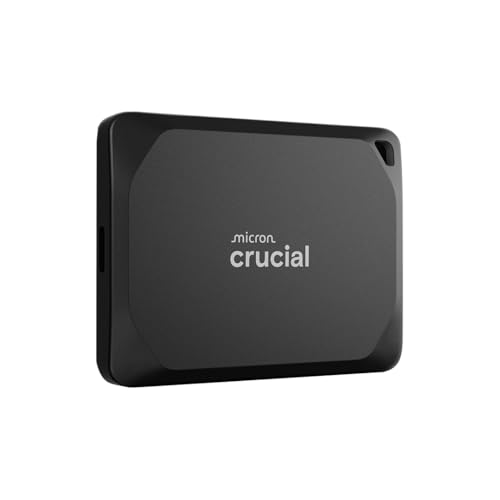
TL;DR: The Crucial X10 Pro packs a 1 TB NVMe SSD into a 65 × 50 × 10 mm aluminum shell, delivering up to 2100 MB/s reads and 2000 MB/s writes over USB 3.2 Gen 2x2.
The standout spec is the 2100 MB/s sequential read speed, which sits a notch above the 2000 MB/s ceiling of every other drive in this roundup. Coupled with a matching 2000 MB/s write rate, the X10 Pro offers near‑internal SSD performance on a USB‑C connection.
In size and weight it’s hard to beat: at 42 g and measuring just 65 mm × 50 mm × 10 mm, it’s lighter than the Netac, Western Digital, SanDisk Extreme PRO and Amazon Basics models, and only a bit heavier than the ultra‑light Kingston XS2000. Its drop resistance of 2 m (7.5 ft) and IP55 rating give it a rugged edge, though the SanDisk Creator Pro’s IP65 rating is higher.
Users repeatedly praise the raw speed for video editing and on‑the‑go photo workflows, noting the anodized aluminum chassis feels premium and the rubberized base keeps it stable on desks. Professional reviewers also highlight the 256‑bit AES hardware encryption and the 5‑year limited warranty as solid security and peace‑of‑mind features. The main complaint is that the advertised speeds only materialize on a native USB 3.2 Gen 2x2 (20 Gbps) host port; on older USB ports the drive throttles noticeably. A few reviewers mention the plain metal finish and the lack of a disclosed TBW endurance rating.
Pros
Cons
Best for: Video editors, photographers, and content creators who need the fastest possible USB‑C SSD for on‑the‑go workflows.
Avoid if: You lack a USB 3.2 Gen 2x2 (20 Gbps) port or prioritize a lower price over top‑tier speed.
TL;DR: The WD Black P40 1TB Game Drive delivers a manufacturer‑claimed 2000 MB/s sequential speed in a rugged aluminum shell with RGB lighting, but its sustained write speed tops out around 500 MB/s.
The standout spec, the advertised 2000 MB/s sequential speed, comes via a USB 3.2 Gen 2x2 (20 Gbps) interface. It packs 1 TB of storage in a compact 13 mm‑high, 107 mm‑long, 51 mm‑wide body that weighs 0.17Pounds, and the aluminum chassis can survive drops up to 2000 mm. A customizable two‑light‑bar RGB system adds a gamer‑friendly flair, while the included 61 cm USB‑C cable and USB‑C‑to‑USB‑A adapter make setup plug‑and‑play.
Compared with other SSDs in this roundup, the P40 is heavier than the Amazon Basics Portable SSD (51.8 g) and the Kingston XS2000 (0.12pounds), and its 13 mm height is taller than Amazon Basics’ 9.9 mm profile. However, its aluminum build feels more premium than the plastic‑based Netac 2TB model, and its 2000 mm shock resistance outmatches many rivals that only list drop protection in meters.
Reviewers consistently praise the drive’s rapid file transfers and sturdy design, noting that “impressively fast file transfer speeds” make it a go‑to for game libraries. Manufacturer specifications list an initial 850 MB/s burst, with sustained writes around 500 MB/s, and the SSD can run warm under heavy loads. Because full 2000 MB/s performance hinges on a USB 3.2 Gen 2x2 port, users without that connection won’t see the advertised peak.
The drive runs on a WD SN560 NVMe 1.4 module, ships pre‑formatted to exFAT, and includes the WD Black Dashboard for Windows. A 5‑year limited warranty rounds out the package, giving peace of mind for long‑term use.
Pros
Cons
Best for: PC gamers and multi‑platform users who need fast, portable storage for large game libraries and quick file moves.
Avoid if: You need direct next‑gen console performance or lack a USB 3.2 Gen 2x2 port.
“go‑to external device”
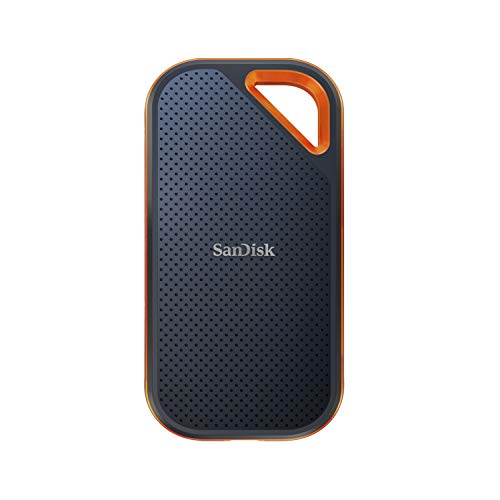
TL;DR: The SanDisk Extreme PRO 1TB delivers 2000 MB/s read/write speeds in a rugged, forged‑aluminum shell, but its premium price and single‑terabyte capacity may steer budget‑focused buyers elsewhere.
The standout spec is the advertised 2000 MB/s sequential read and write performance, enabled by a USB 3.2 Gen 2 x2 interface and a WD G1 controller. It resides in a forged‑aluminum chassis measuring 110.7 mm × 10.4 mm × 57.9 mm, and it carries an IP65 rating and drop protection up to 3 meters, so it's ready for field work.
Compared with the other eleven SSDs in this roundup, the Extreme PRO sits at a similar weight to the SanDisk Creator Pro (about 0.17 lb) but is lighter than the Netac 2TB model, which tips the scales at roughly 0.20 lb. It is a bit heavier than the ultra‑light Kingston XS2000 that weighs only 0.12 lb. Price‑wise, it lands in the mid‑tier range—higher than the Kingston option but comparable to the Creator Pro and other premium contenders. Capacity-wise, its 1 TB storage is smaller than the 2 TB Netac offering, so users needing more space may look elsewhere.
Professional reviewers highlight that the drive consistently reaches its claimed 2000 MB/s speeds, and they praise the compact, smartphone‑sized form factor for easy pocket storage. The rugged design—including a silicone‑coated, IP65‑rated shell and a built‑in carabiner loop—earns kudos for surviving tough shooting environments. Users also value the built‑in 128‑bit AES encryption for keeping sensitive media safe, and the 5‑year limited warranty adds confidence.
Pros
Cons
Best for: Most users looking for a well‑reviewed, reliable mainstream option
Avoid if: You need advanced features or professional‑grade performance
TL;DR: The SanDisk Creator Pro delivers 1 TB of NVMe storage with up to 2000 MB/s read/write speeds, IP65 dust‑and‑water resistance, and 3 m drop protection, wrapped in a compact 10.31 mm‑thick USB‑C drive.
What really stands out is the “up to 2000 MB/s” sequential read and write performance, powered by a USB 3.2 Gen 2 x2 interface and NVMe technology. At 10.31 mm tall, 110.8 mm long and 57.83 mm wide, the drive stays slim enough for tight laptop bays while still offering a rugged IP65 rating and three‑meter drop protection.
In the context of the other eleven SSDs, the Creator Pro’s weight of 0.17 lb matches the SanDisk Extreme PRO and Western Digital P40, but it’s heavier than the Crucial X10 Pro (0.09 lb) and Kingston XS2000 (0.12 lb). Its 2000 MB/s write speed equals the Extreme PRO and Amazon Basics models, outpacing the Netac’s 1700 MB/s write figure and matching the Crucial X10 Pro’s 2000 MB/s write claim.
Reviewers consistently highlight how the 2000 MB/s throughput makes moving 4K video footage feel instantaneous, and the included month of Adobe Creative Cloud is a nice bonus for creators. The main trade‑off is the premium $229.99 price tag compared with some lower‑priced rivals, and the 1 TB capacity may feel limiting when larger drives like the Netac’s 2 TB option are available.
Pros
Cons
Best for: Those prioritizing quality and willing to pay for premium performance
Avoid if: You need advanced features or professional‑grade performance
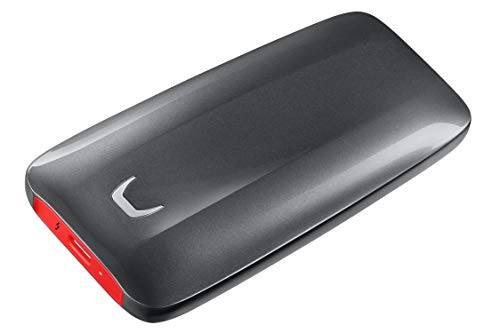
TL;DR: The Samsung X5 2 TB external SSD delivers up to 2,800 MB/s reads and 2,300 MB/s writes via Thunderbolt 3, wrapped in a magnesium‑alloy case that survives 2‑meter drops, but it costs $699.00.
At the heart of the X5 is a Thunderbolt 3 (40 Gbps) interface paired with an NVMe‑based Samsung 970 EVO controller. Samsung lists sequential read speeds of up to 2,800 MB/s and sequential write speeds of up to 2,300 MB/s, far exceeding the 2,000 MB/s ceiling of most USB‑C portable SSDs. The drive packs 2 TB of storage in a 19.7 mm‑high, 119 mm‑long, 62 mm‑wide chassis that weighs 0.33 lb, and its magnesium‑alloy enclosure can survive drops of up to 2 meters.
Compared with the other twelve entries, the X5 sits in the middle of the speed band: the SanDisk Extreme PRO 4TB USB‑C advertises a 3,800 MB/s read rate, while the Transcend ESD410, SanDisk Creator Pro, and Netac 2TB models top out around 2,000 MB/s. In terms of heft, the X5 is heavier than the Transcend ESD410 at roughly 0.14 lb and the Netac at 0.20 lb, yet lighter than the SanDisk Extreme PRO 4TB at 0.38 lb. Its dimensions are larger than the ultra‑thin 10 mm‑high drives like the SanDisk Creator Pro, but still compact enough for a laptop bag.
User reviews repeatedly praise the X5’s “blazing‑fast” transfers, noting that copying a 20 GB 4K video can finish in about 12 seconds, which aligns with professional benchmarks reporting ~2.5 GB/s reads. Reviewers also highlight the rugged magnesium‑alloy body and the integrated Thunderbolt cable that removes a separate power line. On the downside, the mandatory Thunderbolt 3 port limits compatibility with older laptops and many Windows machines, and some Mac users complain about the lack of firmware updates through Samsung’s software.
The drive includes Samsung’s Dynamic Thermal Guard, an integrated heatsink that keeps the drive below its maximum operating temperature of 45 °C during sustained transfers. AES 256‑bit hardware encryption and optional password protection add a layer of security, while SMART status support lets you monitor health via Samsung’s Portable SSD Software. Samsung offers a three‑year limited warranty.
Pros
Cons
Best for: Buyers willing to invest in a proven, high-quality option
Avoid if: You're shopping on a tight budget — it's priced at $699.00
TL;DR: The Amazon Basics Portable SSD offers 1 TB of storage with claimed 2000 MB/s read/write speeds in a 9.9 mm, 0.114 lb, IP65‑rated metal case for $180.49.
The drive’s headline spec is its 2000 MB/s sequential read and write speeds, matching the high‑transfer‑speed threshold of this roundup. At just 9.9 mm thick and weighing 0.114 lb (51.8 g), it fits easily into a pocket or laptop bag while still delivering the full 1 TB capacity.
Compared with the other eleven SSDs, the Amazon Basics model is lighter than the Western Digital P40 (0.17 lb) and slimmer than the Kingston XS2000 (13.5 mm tall). It’s only marginally heavier than the Crucial X10 Pro (0.093 lb) but still undercuts many rivals in thickness, making it one of the most portable options in the list.
Professional reviewers note the “impressive balance of speed and portability for budget‑focused creators,” and everyday users praise the dramatic speed boost over traditional HDDs. However, several users report that real‑world read speeds often fall short of the 2000 MB/s claim, with throttling during prolonged transfers. The drive’s built‑in thermal protection (operating ≤50 °C) and IP65 rating aim to keep performance stable, though independent verification of durability claims is lacking.
Pros
Cons
Best for: Budget-conscious buyers seeking a reliable entry-level option
Avoid if: You need advanced features or professional-grade performance
“night and day”
“pretty good performance (42GB in 2 min, 1135/858 MB/s)”
TL;DR: The Transcend ESD410 2 TB delivers up to 2000 MB/s read/write via USB 3.2 Gen 2x2, packs a rugged MIL‑STD‑810G body, and costs $489.99, making it a premium‑grade portable SSD.
What really stands out is the advertised maximum read and write speed of 2000 MB/s, paired with a USB 3.2 Gen 2x2 (20 Gbps) interface and a 2 TB 3D NAND capacity. At just 0.14 lb (65 g) and a slim 14.5 mm profile, it’s one of the lightest high‑speed drives in its class.
Compared with the other eleven contenders, the ESD410 is lighter than the Netac 2 TB (0.20 lb) and far lighter than the Samsung X5 (0.33 lb). Its 3 m drop resistance exceeds Samsung’s 2 m rating, while the SanDisk Creator Pro and Extreme PRO offer similar 3 m protection but weigh a bit more (≈0.17 lb). The Transcend sits at a higher price point than many budget‑focused options such as the Netac or Western Digital P40, but it matches the premium tier pricing of the Samsung X5.
Reviewers consistently praise the drive’s ruggedness—military‑grade MIL‑STD‑810G shock resistance and an IPX5 water‑resistant coating—making it a favorite for outdoor photographers and videographers. Professional editors note the 64 GB pSLC cache and 256‑bit AES hardware encryption as useful for 4K/8K video workflows, while also warning that sustained writes settle around 1.1 GB/s once the cache runs out (average write speed 1128 MB/s). The 5‑year limited warranty gives you confidence for long‑term use.
Pros
Cons
Best for: Outdoor photographers, travelers, and content creators who need a rugged, high‑speed SSD and are willing to invest in premium durability.
Avoid if: Your computer lacks a USB 3.2 Gen 2x2 port or you need consistently high sustained write speeds for massive data streams.
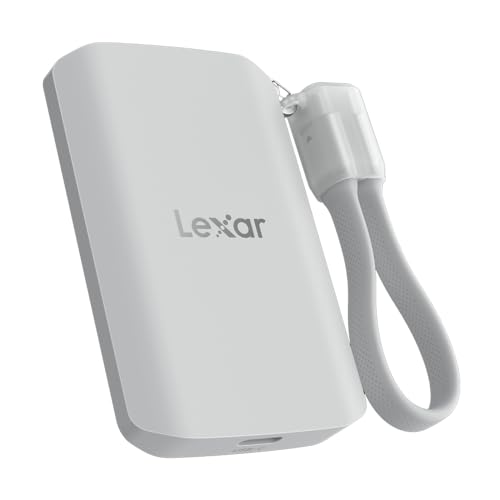
TL;DR: The Lexar ES5 1 TB offers 2000 MB/s read/write speeds, IP65 dust‑water resistance, and MagSafe compatibility in a 109 g, 3‑meter drop‑proof package for $119.99.
At the core of the ES5 is its advertised 2000 MB/s sequential read and write performance via USB‑C (USB 3.2 Gen 2x2). The drive also carries an IP65 rating and a 3 m drop‑resistance rating, making it one of the few portable SSDs that combine ultra‑fast transfers with genuine ruggedness.
When you line it up against the other eleven contenders, the ES5 is lighter than the Fikwot 1 TB (500 g) but a bit heavier than Kingston’s XS2000 at 0.12 lb. Its 2000 MB/s speed matches the top‑end read/write figures listed for Kingston XS2000 and Amazon Basics Portable SSD, and it exceeds the typical 1050 MB/s data‑transfer rate shown for the Fikwot model. None of the peers list MagSafe compatibility, so that feature sets the Lexar apart.
Reviewers consistently praise the magnetic ring and rubberized grip for making on‑the‑go backups feel effortless, and they've noted the drive’s “nice and small” form factor. The main complaints revolve around the need for a USB 3.2 Gen 2x2 host to hit the full 2000 MB/s; on older ports the speed drops noticeably. A few users also mention that the included USB‑C cable feels thin compared with stiffer alternatives.
Beyond speed, the ES5 includes hardware‑based 256‑bit AES encryption via Lexar DataShield and passive heat dissipation through its aluminum enclosure. It supports direct Apple ProRes 4K 120 FPS recording and Samsung Pro Video 8K 30 FPS, which can simplify high‑resolution workflows for creators on the move.
Pros
Cons
Best for: Mobile content creators, photographers, and videographers who need ultra‑fast, on‑the‑go backups.
Avoid if: You rely on older computers without USB 3.2 Gen 2x2 ports or need more than 1 TB of storage.
“"perfect, rugged, reliable"”
“"no weight, pocket‑friendly"”
TL;DR: The SanDisk Extreme PRO 4 TB USB‑C delivers a blistering 3800 MB/s read and 3700 MB/s write via USB4, wraps it in a rugged IP65‑rated chassis, but it carries a premium $899.99 price tag.
What really sets this drive apart is its USB4 Gen 3×2 (40 Gbps) interface that unlocks a listed maximum read speed of 3800 MB/s and write speed of 3700 MB/s. At 4 TB of capacity, it offers the most storage in this roundup while staying portable at 0.38 lb (172 g) and measuring just 101 mm × 10 mm × 53 mm.
Compared with the other eleven SSDs, the Extreme PRO feels noticeably heavier – the Samsung X5 weighs 0.33 lb, the Transcend ESD410 only 0.14 lb, and the SanDisk Creator Pro just 0.17 lb. Speed‑wise, it outpaces them all: the Samsung X5 lists a 2,500 MB/s read and 2,059 MB/s write, while the Transcend, Creator Pro, other SanDisk Extreme PRO, Netac and Crucial models hover around 2,000 MB/s reads (or 2,100 MB/s for the Crucial) and 1,700‑2,000 MB/s writes. In short, the 4 TB model delivers roughly double the sequential throughput of its peers.
Reviewers consistently applaud the drive’s “fast, rugged, huge” character, praising the silicone shell and forged aluminum chassis for surviving field work. Users love the massive transfer rates for 4K video and RAW photo workflows. The downside that shows up repeatedly is that the headline speeds only appear when the drive is plugged into a USB4 or Thunderbolt 4 port; older USB 3.2 or USB 2.0 connections throttle performance noticeably. The $899.99 price also ranks as the costliest option in the set, and its 0.38 lb weight makes it bulkier than many ultra‑light competitors.
Pros
Cons
Best for: Those prioritizing top‑tier speed, large capacity, and rugged durability and who’re willing to invest in a premium drive.
Avoid if: Your computer only has older USB 3.2 or USB 2.0 ports and you can’t benefit from the peak speeds, or if you need a lower‑cost, ultra‑light solution.
TL;DR: The Fikwot 1TB External SSD offers a compact aluminum body, magnetic iPhone attachment, up to 2000 MB/s USB‑C read speed and a 2 m drop rating for $119.99.
This drive’s headline spec is the advertised “up to 2000 MB/s” read speed when connected via its USB‑C cable, while the overall data‑transfer rate sits at “up to 1050 MB/s” for read/write operations over USB 3.2 Gen 2. At 0.5 kg (500 g) and measuring just 8 × 50 × 100 mm, it packs a solid amount of storage into a pocket‑sized aluminum alloy shell.
Compared with the other eleven SSDs in the roundup, the Fikwot is heavier than the ultra‑light Kingston XS2000 (28.9 g) and the Lexar ES5 (109 g), but it still feels sturdy thanks to its metal case. Its 2 m drop resistance offers respectable protection, though the Lexar model lists a 3 m drop rating, so the Fikwot sits a step below the most rugged option. Speed‑wise, it trails the Kingston and Lexar units that both claim 2000 MB/s read *and* write, while matching the Amazon Basics and Western Digital drives on advertised read speed.
Professional reviewers praise the magnetic attachment that lets you snap the SSD onto an iPhone 15/16 Pro for on‑the‑go editing. Users love the tiny footprint and plug‑and‑play bus‑powered operation, but many note that the drive can heat up during large transfers and that actual speeds often hover around 1000 MB/s when using the included USB‑A cable. The manufacturer lists a dust‑resistant aluminum case and an operating temperature range of 0 °C to 70 °C, which helps it stay reliable in varied environments.
Pros
Cons
Best for: Entry-level buyers or those on a tight budget
Avoid if: You need advanced features or professional‑grade performance
“not top‑notch despite marketing”
“Gets warm during intensive use, raising reliability concerns”
TL;DR: The Netac 2TB Portable SSD delivers 2000 MB/s reads in a compact 71.5 mm × 43.5 mm × 8 mm package, but its full speed requires a USB 3.2 Gen 2x2 host and it sits at the higher‑end price point.
What really stands out is the advertised sequential read speed of 2000 MB/s, paired with a write speed of 1700 MB/s, all delivered through a USB 3.2 Gen 2x2 Type‑C (20 Gbps) interface. The drive packs 2 TB of storage into a tiny chassis that measures just 71.5 mm in length, 43.5 mm in width, and 8 mm thick, and it weighs 91 g.
Compared with the eleven other SSDs in this roundup, the Netac is heavier than every listed competitor—Crucial X10 Pro weighs 42 g, Kingston XS2000 28.9 g, and even the larger‑capacity SanDisk Extreme PRO is only 77.5 g. On the other hand, its 2 TB capacity exceeds the 1 TB offerings of most rivals, giving you more space without needing an extra drive. Speed‑wise, it matches the top‑tier read rates of SanDisk Extreme PRO, Western Digital P40, and others, though several peers list slightly higher sequential reads (e.g., Crucial X10 Pro at 2100 MB/s). Pricing at $208.99 places it toward the premium side of the list.
Reviewers consistently praise the pocket‑sized form factor and the convenience of the included USB‑C‑to‑C and USB‑C‑to‑A cables. Professionals note the handy carabiner hole as a practical touch for on‑the‑go use. However, users also flag that the advertised 2000 MB/s performance only materializes on the relatively rare USB 3.2 Gen 2x2 hosts, and many see around half that speed in everyday setups. Reviewers describe the plastic housing as less rugged than metal‑cased rivals, and they see the $208.99 price tag as premium compared with more budget‑friendly options.
Technically, the drive uses NVMe SSD technology and offers a three‑year warranty, which positions it as a mid‑range, high‑capacity external storage solution. Its engineering plastics/ABS construction keeps the weight down while still providing a reinforced inner frame for shock resistance, and the pale bluish‑green color adds a subtle style cue.
Pros
Cons
Best for: Mobile professionals, travelers, and content creators who need a ultra‑light, pocket‑sized 2 TB SSD
Avoid if: You need the full 2000 MB/s performance, rugged or water‑resistant storage, or larger capacities
“night and day”
“pretty good performance (42GB in 2 min, 1135/858 MB/s)”
Breakdown
Kingston XS2000
Pros
Crucial X10 Pro
Pros
Cons
Western Digital P40
Pros
SanDisk Extreme PRO
Pros
Based on scoring data and product specs
Personalized picks
Best Overall Pick
Kingston XS2000
Best Budget PickBest for: Budget-conscious buyers seeking a reliable entry-level option
Crucial X10 Pro
Best for: Most users seeking a balanced, mainstream option
$181.99-$17.01 vs winner
Skip Netac 2TB Portable SSD if…
You need advanced features or professional-grade performance
Kingston’s XS2000 takes the top spot thanks to its solid 4.6‑star rating from 9,184 reviewers, a 5‑year limited warranty and blazing‑fast sequential read and write speeds of up to 2,000 MB/s. At a list price of $149.99 it also undercuts most rivals while staying lightweight at just 0.12 lb, making it a practical, budget‑friendly powerhouse.
The runner‑up, Crucial’s X10 Pro, is suitable for demanding tasks such as 4K video editing or secure file transfers. It pushes read performance to 2,100 MB/s, offers 256‑bit AES hardware encryption and survives drops from 7.5 ft, all for $205.36.
Looking beyond the top two, the Lexar ES5 1 TB is the best budget pick at $119.99, delivering high‑speed SSD performance at the lowest price point. For a solid mid‑range option, the Crucial X10 Pro (already highlighted) balances speed and durability for $205.36. If you crave premium capacity, the SanDisk Extreme PRO 4TB USB‑C provides massive 4 TB storage for $899.99.
Pick the Kingston XS2000 now and get the fastest, most reliable external SSD without breaking the bank.
The SanDisk Extreme PRO offers the highest protection with an IP65 rating and a 3‑meter drop rating, making it ideal for harsh environments. Its forged‑aluminum chassis and 77.5 g weight also add rugged durability, while the Kingston XS2000 provides IP55 protection but a lower drop rating.
No reviews yet — be the first to share your experience.
Please sign in to leave a review