⚡ Quick Answer
When you need a portable drive that can keep up with 4K video, large game libraries, or fast backups, the right USB‑C or Thunderbolt SSD makes a huge difference. This guide covers 10 external SSDs, spread across three price tiers: four budget picks (starting at $125.47), two mid‑range models, and four premium options. All of them promise at least USB 3.2 Gen 2 performance, but the specs and prices vary dramatically.
At the high end, the Samsung T7 4TB in Titan Gray carries a 4.7‑star rating from 37,622 reviewers, delivers up to 1,050 MB/s reads, and weighs just 0.2 lb for a 4 TB capacity at $659.29. If you’re chasing raw speed on a USB‑C‑ready PC, the Kingston XS2000 hits 2,000 MB/s read/write and tips the scales at only 0.12 lb for $149.99. Mid‑range choices like the OWC Express 1TB add USB4‑ready 40 Gb/s throughput for $329.99, while budget‑friendly options such as the SanDisk Extreme Portable SSD 1TB stay under 0.11 lb and still earn a 4.6‑star rating from 88,577 users.
Below is a breakdown of each model’s strengths, matching capacity, speed, and durability to your workflow.
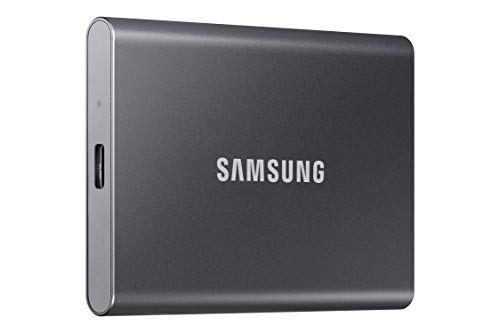
Samsung T7 4TB Gray
Its ultra‑thin 7.9 mm height makes it one of the most portable high‑capacity SSDs on the market.
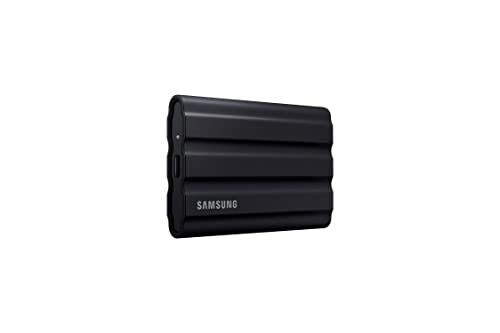
Samsung T7 Shield 2TB
Ideal for mobile creators who need rugged protection; at $399.99 it’s $259.30 cheaper than the top pick model.

Kingston XS2000
Offers a compact 69.54 mm length at $149.99, giving budget buyers a smaller‑footprint SSD that still delivers reliable performance.
Also considered
Score Analysis
Key score advantages vs. runner-up (Samsung T7 Shield)
Price Range
Samsung T7 4TB Gray
$774.17
Samsung T7 Shield 2TB
$495.00
Kingston XS2000
$199.00

Samsung T7 1TB Blue
Out of Stock
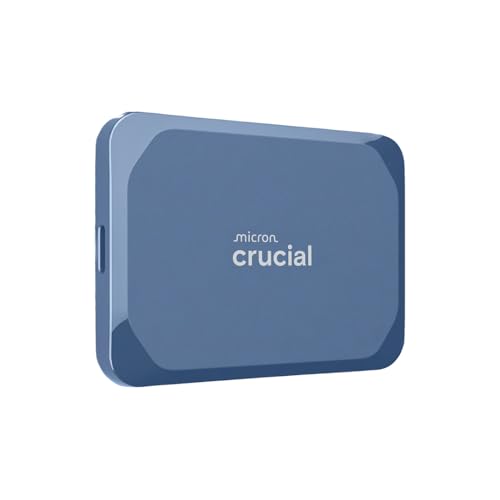
Crucial X10 8TB
$845.99

OWC Express 1TB
$429.99

Amazon Basics Portable SSD
$192.13

Crucial X9
$143.22
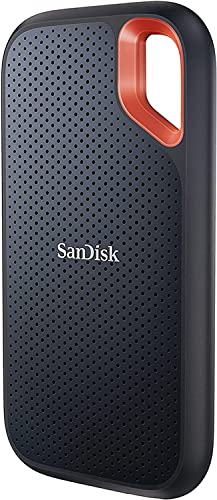
SanDisk Extreme
$179.17

WD My Passport SSD 2TB
$389.99
Spec Comparison
TL;DR: The Samsung T7 4TB Gray delivers 1,050 MB/s reads, 1,000 MB/s writes, and 4 TB of space in a compact, drop‑resistant aluminum case, though it carries a premium price tag.
It offers a standout 4 TB storage capacity paired with sequential read speeds of 1,050 MB/s and write speeds of 1,000 MB/s via a USB 3.2 Gen 2 (10 Gbps) interface. At just 0.2 pounds (90.7 g) and measuring 84.8 mm × 56.9 mm × 7.9 mm, it fits easily in a pocket while still offering AES‑256 hardware encryption, Dynamic Thermal Guard, and support for 4K 60 fps video recording.
Compared with the nine other drives in this roundup, the T7 is pricier but also the only 4 TB option, outpacing the 2 TB and 1 TB models on capacity. Its read/write rates match the 2 TB T7 Shield and exceed many competitors that top out at 1,050 MB/s read and 1,000 MB/s write. At 0.2 pounds it is heavier than the ultra‑light 32 g Crucial X10 or the 46‑g WD My Passport SSD, yet still lighter than the 0.62‑lb OWC Express.
Professional reviewers praise the Dynamic Thermal Guard for keeping performance steady during prolonged 4K video captures, while everyday users love the premium feel and the ability to move terabytes of footage quickly. Most users note the drive becomes noticeably warm under heavy loads, and the lack of an IP rating means it isn’t suited for wet or dusty field work.
Pros
Cons
Best for: Buyers willing to invest in a proven, high‑quality option
Avoid if: You need advanced features or professional‑grade performance
TL;DR: The Samsung T7 Shield 2TB offers 2 TB of storage, up to 1,050 MB/s read and 1,000 MB/s write speeds, and IP65‑rated durability in a compact 98 g, rubber‑cased package.
What really sets the T7 Shield apart is its rugged design: a durable rubber exterior, IP65 water‑ and dust‑resistance, and drop protection up to 3 m. Under the hood it delivers sequential read speeds of up to 1,050 MB/s and write speeds of up to 1,000 MB/s via a USB 3.2 Gen 2 (10 Gbps) interface, all while weighing just 98 g.
Compared with the other nine SSDs in this roundup, the T7 Shield is heavier than the WD My Passport SSD (46 g) and SanDisk Extreme Portable SSD (52 g), but far lighter than the OWC Express (280 g). Its 3 m drop resistance exceeds the WD model’s 1.98 m rating and matches the SanDisk’s 3 m protection. With a 2 TB capacity it also outpaces the 1 TB offerings from Samsung T7, Amazon Basics, and Kingston XS2000, though it sits at a higher price tier than most non‑rugged alternatives.
Reviewers consistently praise the drive’s speed and note that the Dynamic Thermal Guard keeps performance stable during long transfers. Professionals love the built‑in carabiner loop for attaching to gear, and everyday users highlight the peace of mind that comes from the IP65 rating. Some owners mention occasional connectivity quirks with certain operating systems or adapters, so keep that in mind.
Pros
Cons
Best for: Buyers willing to invest in a proven, high‑quality option
Avoid if: You need advanced features or professional‑grade performance
TL;DR: The Kingston XS2000 1 TB USB‑C SSD delivers up to 2,000 MB/s burst speeds in a pocket‑sized, IP55‑rated case weighing just 28.9 g, but needs a Gen 2x2 port for full performance.
The standout spec is its “up to 2,000 MB/s” sequential read and write speed, which the USB 3.2 Gen 2x2 (USB‑C) interface enables. At 13.5 mm × 32.58 mm × 69.54 mm, the drive fits easily in a pocket, and the metal‑plastic shell houses a 1 TB (1,000 GB) NAND module. An IP55 rating and a removable rubber sleeve add ruggedness without bulk.
Compared with the nine other SSDs in this roundup, the XS2000 is notably lighter than the SanDisk Extreme Portable SSD (52 g) and the Amazon Basics Portable SSD (≈51.8 g), while still lighter than the Crucial X9 (32 g) by a small margin. Its 2,000 MB/s burst speed outpaces the Crucial X9, SanDisk Extreme, Samsung T7, and OWC Express’s USB‑C ceiling of 990 MB/s, putting it near the top of the performance curve. Only the OWC Express can exceed these numbers via USB4, but it carries a much larger footprint and higher price point.
Users highlight the drive’s rapid transfers and pocket‑sized ruggedness, especially for on‑location creators who value the IP55 protection. Professional reviewers note the “industry‑leading 2,000 MB/s burst speeds in a tiny form factor” and praise the inclusion of TRIM, S.M.A.R.T., and UASP support. However, they also flag write‑throttling once the SLC cache empties and the reliance on a rare USB 3.2 Gen 2x2 host to unlock the full speed, which can limit usefulness on many laptops and Macs.
Beyond speed, the XS2000 supports TRIM, S.M.A.R.T. data reporting, and UASP for efficient data handling. It’s bus‑powered, so no external brick is needed, and Kingston backs it with a five‑year limited warranty. The included 11.5‑inch USB‑C cable and rubber sleeve round out a ready‑to‑go package for creators on the move.
Pros
Cons
Best for: Content creators and photographers who need ultra‑fast burst transfers in a tiny, rugged package.
Avoid if: You lack a USB 3.2 Gen 2x2 host or need consistently high sustained write speeds for large batch workloads.
TL;DR: The Samsung T7 1 TB Blue delivers 1,050 MB/s reads and 1,000 MB/s writes in a compact 85 × 57 × 8 mm aluminum case, with AES‑256 encryption and a solid 4.7‑star rating.
The standout spec is its PCIe NVMe interface that hits up to 1,050 MB/s sequential reads and 1,000 MB/s writes over USB 3.2 Gen 2 (10 Gbps). At just 58 g (≈0.13 lb) and a thickness of 8 mm, the drive fits easily into a pocket while still offering a 2‑meter drop resistance rating.
Compared with the other nine SSDs in this roundup, the T7 sits in the middle of the speed band: the Amazon Basics and Kingston models claim 2,000 MB/s, while the OWC Express and SanDisk Extreme sit near 990–1,050 MB/s. In terms of weight, it weighs less than the OWC Express (≈0.62 lb) and Samsung T7 Shield (≈0.21 lb) but a bit more than the Crucial X9 (≈0.07 lb) and SanDisk Extreme (≈0.11 lb). Its price exceeds the budget‑focused Amazon Basics and Crucial, yet stays below the premium Samsung T7 Shield and OWC Express.
User sentiment repeatedly praises the T7’s “blazing‑fast” transfers and the sturdy metal shell that stays cool under normal use. Professional reviewers note the effective cooling of the aluminum body but warn that prolonged heavy workloads can cause noticeable heat buildup, especially if the supplied USB‑C cable isn’t used. The drive’s AES‑256‑bit hardware encryption and Samsung Magician software add a layer of security that many users appreciate for travel and on‑the‑go editing.
Pros
Cons
Best for: Most users looking for a well‑reviewed, reliable mainstream option
Avoid if: You need advanced features or professional‑grade performance
TL;DR: The Crucial X10 delivers 8 TB of storage in a 9.9 mm‑thin, IP65‑rated SSD with up to 2,100 MB/s reads, but its $786.52 price and need for a 20 Gbps host keep it premium.
The X10 packs an 8 TB capacity (7.27 TB usable) into a chassis that’s only 9.9 mm tall, 49.8 mm deep and 64.8 mm wide, weighing just 0.07054792384 pounds (32 g). It uses a USB 3.2 Gen 2x2 (20 Gbps) interface and advertises sequential read speeds of 2,100 MB/s and sequential writes of 2,000 MB/s, while also offering 256‑bit AES hardware encryption and an IP65 dust‑and‑water rating.
Compared with the nine other drives in this roundup, the X10 holds the largest capacity—double the 4 TB of the Samsung T7 and far above the 2 TB and 1 TB offerings from the rest. Its 2,100 MB/s read speed outpaces the 1,050 MB/s of the Samsung T7, Samsung T7 Shield, WD My Passport SSD, Samsung T7 1TB and SanDisk Extreme, and even beats the 2,000 MB/s peaks of the Kingston XS2000 and Amazon Basics SSD. The USB 3.2 Gen 2x2 interface is faster than the Gen 2 (10 Gbps) ports found on most peers, and its 0.0705‑pound weight is lighter than the 0.2‑pound Samsung T7, the 0.2138‑pound Samsung Shield, the 0.1014‑pound WD My Passport, and the 0.6173‑pound OWC Express. Drop protection matches the 3‑meter rating of the Samsung Shield and SanDisk Extreme, while the Samsung T7 and WD My Passport protect against lower falls.
Reviewers love the X10’s “record‑breaking compactness” for an 8 TB drive, noting how easy it is to slip into a camera bag or laptop sleeve. The rugged IP65 rating and 3‑meter drop resistance earn praise from field shooters who need a durable backup. On the downside, professional reviewers point out that the full 20 Gbps performance only appears on rare hosts, and many users report sustained transfer speeds closer to the 900 MB/s range, which is lower than the advertised peak. The package includes a USB‑C to USB‑C cable, a quick‑start guide, and three months each of Mylio Photos+ and Acronis True Image software, and it comes with a three‑year limited warranty.
Pros
Cons
Best for: Content creators, photographers, videographers, travelers, and gamers who need massive portable storage without sacrificing speed or durability.
Avoid if: You're shopping on a tight budget — it's priced at $786.52, and you don't have a USB 3.2 Gen 2x2 (20 Gbps) host to unlock its top speeds.
“the smallest 8TB drive imaginable”
“overhyped for non-20 Gbps hosts”
TL;DR: The OWC Express 1TB packs a pre‑installed 1 TB NVMe SSD and a patent‑pending heat‑dissipating aluminum enclosure that reaches up to 3,836 MB/s over USB4, but it carries a premium price tag.
The standout spec is the USB4 interface that tops out at 40 Gb/s, delivering a quoted maximum throughput of 3,836 MB/s and a real‑world speed of about 3,151 MB/s. Coupled with the pre‑installed 1 TB OWC Aura Ultra IV PCIe 4.0 x4 SSD, the drive serves 4K‑ and 8K‑level video editing and massive data transfers. The heat‑dissipating aircraft‑grade aluminum chassis (2.7 in × 5.1 in × 0.9 in) keeps temperatures low, preventing throttling under sustained loads.
In this ten‑product roundup, the Express weighs more than ultra‑light models such as the WD My Passport SSD and Samsung T7 series, and its dimensions exceed the sub‑inch profiles of those same competitors. While many rivals limit themselves to USB 3.2 Gen 2 (10 Gb/s) speeds, the OWC Express offers the faster USB4/Thunderbolt 4 pathway, putting it ahead of most on raw bandwidth. Its price point sits above the budget‑oriented Kingston XS2000 and Crucial X9, making it a mid‑to‑high‑tier option.
Reviewers consistently praise the blistering transfer rates and the sturdy aluminum build, noting that the drive feels “pro‑grade” for creative workflows. The main complaints focus on the need for a screwdriver to swap the internal M.2 SSD—there’s no tool‑less mechanism—and the noticeable speed dip to roughly 990 MB/s when the drive connects via the legacy USB‑C 10 Gb/s mode. The enclosure draws power from the bus, so no external brick is needed, and it ships with a 0.3 m (12 in) USB‑C cable and a QR insert for quick setup.
Pros
Cons
Best for: Prosumers and performance‑oriented creatives who need ultra‑fast external storage for 4K/8K video editing.
Avoid if: You need tool‑less SSD swaps, rely solely on older USB‑C 10 Gb/s ports for full speed, or are looking for a budget‑friendly solution.
TL;DR: Amazon Basics Portable SSD 1TB packs a claimed 2000 MB/s read/write speed in a pocket‑sized, IP65‑rated case for $180.49, earning a 4.7‑star rating from 585 reviewers.
The drive offers a manufacturer‑claimed 2000 MB/s read and 2000 MB/s write speed, backed with a 1 TB capacity and a slim 9.9 mm height. Its metal casing with a scratch‑resistant polymer bottom keeps the unit under 50 °C thanks to built‑in thermal protection, and the IP65 rating promises dust and water resistance.
Compared with the nine other SSDs in this roundup, the Amazon Basics model posts the highest claimed sequential speeds—most rivals list 1050 MB/s read (SanDisk, Samsung T7, WD My Passport, Samsung T7 Shield) and 1000 MB/s write. Only Kingston XS2000 matches the 2000 MB/s claim. At 51.8 g, it's lighter than SanDisk’s 52 g but heavier than Kingston’s 28.9 g and Crucial’s 32 g. Its 9.9 mm thickness is slimmer than SanDisk’s 0.38‑inch profile and comparable to Samsung T7’s 8 mm thickness. Unlike most competitors, it advertises an IP65 rating and ships with both a Type‑C‑to‑C and a Type‑C‑to‑A cable plus a protective case.
Everyday users rave about the noticeable speed jump over traditional HDDs and the drive’s pocket‑friendly size. However, many reviewers note that real‑world transfer rates often hover around 1100 MB/s, well below the 2000 MB/s claim, and that performance can throttle during long, sustained copies. Professional reviewers also point out that independent verification of the durability claims—including IP65 and drop protection—remains lacking.
Technically, the SSD runs on a USB 3.2 Gen 2 interface, which can theoretically deliver up to 20 Gbps, and uses an NVMe‑based controller for fast random access. It ships pre‑formatted in exFAT, so it works out of the box on both Windows and macOS, and its thermal protection helps keep temperatures under the ≤50 °C limit during short bursts.
Pros
Cons
Best for: Budget-conscious buyers seeking a reliable entry-level option
Avoid if: You want the best value-per-dollar in its price range
“night and day”
“pretty good performance (42GB in 2 min, 1135/858 MB/s)”
TL;DR: The Crucial X9 1TB delivers 1050 MB/s read/write speeds in a 32 g, 10 mm‑thin package, priced at $125.47, making it a solid budget-friendly portable SSD for on‑the‑go creators.
The X9 packs a full‑size 1 TB of 3D NAND SSD storage into a 65 mm × 50 mm × 10 mm chassis that weighs just 32 g. It offers symmetrical 1050 MB/s sequential read and write speeds over a USB 3.2 Gen 2 (10 Gb/s) Type‑C interface, and it resists drops up to 7.5 ft (2.3 m). An IP55 rating and an extreme‑temperature‑resistant design add confidence for travel, while the included USB‑C‑to‑C cable and a lanyard hole make it ready to plug into laptops, phones, consoles or tablets right out of the box.
Compared with the nine other SSDs in this roundup, the X9 is among the lightest options—only the Kingston XS2000 (28.9 g) is lighter, while most rivals sit between 46 g and 98 g. Its 10 mm height is slimmer than the Kingston’s 13.5 mm, though the SanDisk Extreme Portable and Samsung T7 share similar thicknesses. Speed‑wise, the X9 matches the Samsung T7 and SanDisk Extreme at 1050 MB/s, but it trails the Kingston XS2000 and Amazon Basics models that claim up to 2000 MB/s. At $125.47 it lands at the lower end of the price spectrum, yet its 4.5‑star rating from 6,951 reviewers is a shade below the top‑rated peers that sit at 4.6‑4.7 stars.
Users consistently highlight the drive’s “pocket‑size convenience” and the “fast read speeds” that make file transfers feel instant. Professional reviewers note the drop‑proof design and the plug‑and‑play experience across Windows, macOS, Android, iOS, iPadOS, Linux, Xbox and PlayStation. A recurring comment is that the write performance, while solid at 1050 MB/s, doesn’t quite keep pace with the very fastest rivals, which matters for large video exports. Some buyers also wish for a more rugged, water‑dust‑proof rating, even though the X9 does carry an IP55 badge.
Beyond speed, the X9 includes three months of Mylio Photos Plus and Acronis True Image software, a 3‑year limited warranty, and a lanyard hole for easy attachment to a bag or keyring. Its USB‑C compatibility with both Type‑A adapters and a built‑in cable means you can power it from virtually any modern device without an external power source.
Pros
Cons
Best for: Budget-conscious buyers seeking a reliable entry-level option
Avoid if: You need advanced features or professional‑grade performance
TL;DR: The SanDisk Extreme Portable SSD 1TB delivers up to 1050 MB/s read speeds in a lightweight 52 g, IP65‑rated case with 3‑meter drop protection, making it a solid choice for on‑the‑go creators.
What really stands out is the 1050 MB/s sequential read speed paired with a full 1 TB of storage. The drive also features a 3‑meter drop protection rating and an IP65 rating, so it can handle the occasional tumble or splash while you’re out shooting video.
Compared with the other nine SSDs in this roundup, the SanDisk is lighter than the Kingston XS2000 (0.12 lb) but a bit heavier than the ultra‑light Crucial X9 (0.07 lb). Its read speed is lower than the 2000 MB/s offered by both the Amazon Basics Portable SSD and the Kingston XS2000, yet it matches the 1050 MB/s read and 1000 MB/s write speeds of the Samsung T7 series and the WD My Passport SSD. In terms of durability, its 3‑meter drop protection exceeds the 2‑meter rating of the Samsung T7 and the 1.98‑meter rating of the WD My Passport, and it ties with the Samsung T7 Shield’s 3‑meter claim.
User feedback frequently mentions the drive’s 1050 MB/s read speed for quick file transfers and the convenience of its 52‑gram, pocket‑sized chassis. Professional reviewers note that the high read speed smooths playback when editing high‑resolution footage. The drive runs bus‑powered, includes a USB‑C to USB‑C cable and a USB‑C to USB‑A adapter, and offers 256‑bit AES hardware encryption for added data security.
Pros
Cons
Best for: Creative professionals and mobile workers who need fast, portable storage for high‑resolution media.
Avoid if: You require the absolute fastest 2000 MB/s transfers or a drive built for extreme ruggedness beyond the 3‑meter drop and IP65 rating.
“night and day”
“pretty good performance (42GB in 2 min, 1135/858 MB/s)”
TL;DR: The WD My Passport SSD 2TB delivers 2 TB of fast NVMe storage at up to 1050 MB/s read, 6.5 ft drop resistance and a 5‑year warranty in a feather‑light 46 g silver case.
The drive’s standout spec is its NVMe‑based performance: up to 1050 MB/s sequential read and up to 1000 MB/s write, which reviewers say suffices for editing 4K video straight from the SSD. It also packs 256‑bit AES hardware encryption and a 6.5 ft (1.98 m) drop‑resistance rating, while weighing only 46 g (about 0.10 lb) and measuring just 9 mm thick.
Compared with the other nine SSDs in this roundup, the My Passport is lighter than the Samsung T7 Shield (≈0.21 lb) and far lighter than the OWC Express (≈0.62 lb), yet a touch heavier than the Kingston XS2000 (≈0.12 lb). Its 2 TB capacity outstrips every 1 TB model listed (Samsung T7, Amazon Basics, SanDisk, Kingston, Crucial) and matches the Samsung T7 Shield, while the Samsung T7 4TB offers more space at a higher weight. Speed‑wise, the WD matches the Samsung T7 Shield, Samsung T7, SanDisk and Crucial at 1050 MB/s read, but lags behind the Amazon Basics and Kingston XS2000, which claim up to 2000 MB/s.
Users consistently praise the drive’s “blazing fast NVMe” performance for field work and its ultra‑light chassis for travel. Professional reviewers say the 5‑year limited warranty's a confidence booster. The main complaints revolve around the 4.5‑star rating—slightly lower than many peers—and the need for a USB 3.2 Gen 2 host to hit advertised speeds. Some note the lack of native ProRes capture on newer iPhone models.
Pros
Cons
Best for: Buyers willing to invest in a proven, high‑quality option
Avoid if: You need advanced features or professional‑grade performance
Breakdown
Samsung T7 4TB Gray
Pros
Cons
Samsung T7 Shield 2TB
Pros
Kingston XS2000
Pros
Samsung T7 1TB Blue
Pros
Based on scoring data and product specs
Personalized picks
Best Overall Pick
Samsung T7 4TB Gray
Best OverallBest for: Buyers willing to invest in a proven, high-quality option
Samsung T7 Shield 2TB
Best for: Buyers willing to invest in a proven, high-quality option
$495.00-$279.17 vs winner
Skip WD My Passport SSD 2TB if…
You need advanced features or professional-grade performance
Samsung’s T7 4 TB in Titan Gray takes the top spot, thanks to its hefty 4 TB capacity, blazing‑fast sequential read speed of 1,050 MB/s and write speed of 1,000 MB/s, and a solid 4.7‑star rating from 37,622 reviewers. The aluminum unibody keeps the drive light at just 90.7 g, while AES‑256 hardware encryption and 2‑meter drop resistance make it both secure and durable for everyday use.
The runner‑up is the Samsung T7 Shield 2 TB in Black, which shines when you need extra ruggedness. Its durable rubber exterior, IP65 rating and drop resistance up to 3 m protect the drive in harsh environments, and it still delivers up to 1,050 MB/s read speeds. At 98 g, it’s still portable enough for on‑the‑go creators.
For tighter budgets, the Crucial X9 1 TB offers a solid entry point at $125.47, delivering reliable performance for everyday storage. If you prefer a mid‑range option, the Samsung T7 1 TB Blue at $249.99 balances speed and capacity without sacrificing the sleek design of the T7 line. For those chasing maximum space, the Crucial X10 8 TB premium pick at $786.52 provides an expansive 8 TB of NVMe storage for heavy‑duty workflows.
Pick the Samsung T7 4 TB Gray now and enjoy fast, secure, and portable storage that tops the class.
The Samsung T7 Shield 2TB Black and the SanDisk Extreme Portable SSD 1TB both carry an IP65 rating and are rated for drops of up to 3 meters, making them the most rugged choices. The T7 Shield also adds a durable rubber exterior and a carabiner loop for easy attachment.
No reviews yet — be the first to share your experience.
Please sign in to leave a review