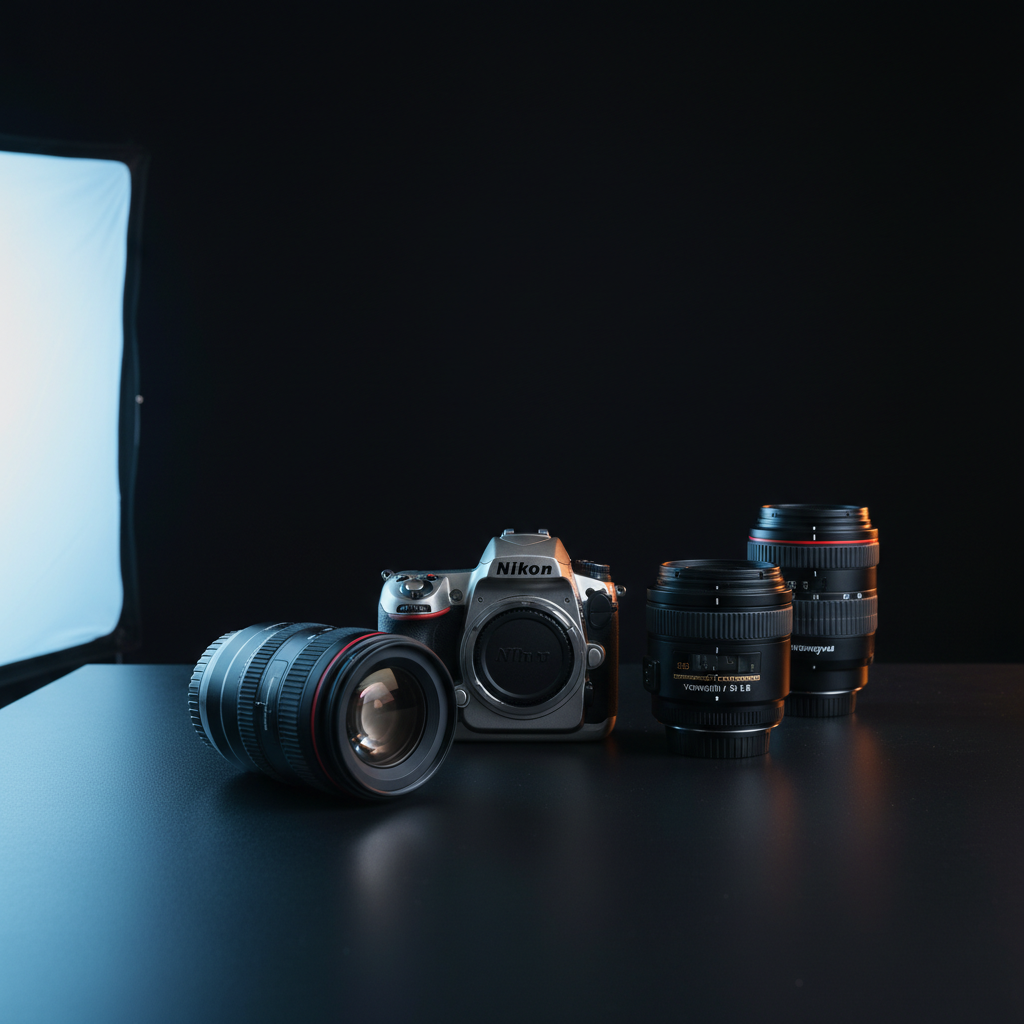
Finding a fast‑aperture lens that fits the Nikon F‑mount can feel like hunting for a needle in a haystack. The review evaluates twelve lenses, from entry‑level primes to high‑end macro specialists, and the price spread runs from $102.00 for the Yongnuo YN50mm f/1.8 up to $654.00 for the Sigma 105mm f/2.8 Macro. The Sigma tops the list with a 4.5‑star rating from 2,445 reviewers, offering a bright f/2.8 aperture, 1:1 magnification and up to four stops of optical stabilization. Meanwhile, the Samyang 135mm f/2.0 delivers a solid 4.5‑star score from 221 users at $429.00.
The lineup splits neatly into three price tiers. Budget‑friendly choices include the Yongnuo YN50mm f/1.8 at $102.00 (4.6 stars from 2,096 reviews) and the Meike 85mm f/1.8 at $179.99, both lightweight and easy to carry. Mid‑range options such as the Irix Dragonfly 45mm f/1.4 ($369.00) and Tokina AT‑X 116 PRO DX ($399.95) give you nine‑blade diaphragms and solid build quality. Premium picks—Sigma, Samyang, Voigtländer and the Tokina 100mm f/2.8 Macro—carry prices from $429.00 to $654.00 and provide features like macro magnification, rounded 9‑blade apertures and weather‑sealed construction. Stay tuned as we break down each lens’s strengths and who will get the most out of them.

Sigma 105mm f/2.8 Macro Nikon
Its 147 mm effective focal length with a 1.4× teleconverter provides macro reach without extra gear.
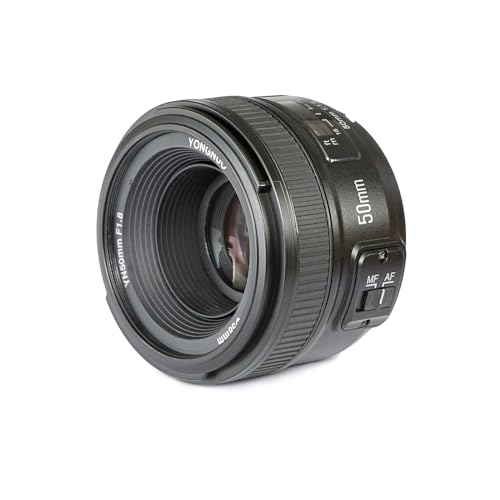
Yongnuo YN50mm F1.8 Nikon
Ideal for budget‑conscious shooters, it costs $102—about $552 less than the Sigma, delivering fast f/1.8 performance on a tight budget.

Meike 85mm F1.8
With a compact 77 mm overall length, it offers portrait‑grade f/1.8 speed in a smaller package than the longer‑reach Sigma and Yongnuo.
Also considered
Score Analysis
Key score advantages vs. runner-up (Yongnuo YN50mm F1.8)
Price Range
Sigma 105mm f/2.8 Macro Nikon
$654.00
Yongnuo YN50mm F1.8 Nikon
$102.00
Meike 85mm F1.8
$179.99

Samyang 135mm f/2.0
$429.00
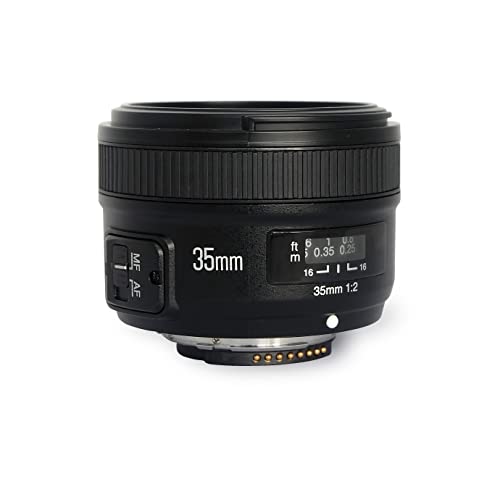
Yongnuo YN35mm F2 Nikon
$106.00

Yongnuo YN35mm F2N
$106.00

Kenko Tokina ATX-i 100mm Macro F2.8
$549.00
Irix Dragonfly 45mm
$419.00
Tokina AT-X 116 PRO DX
$399.95
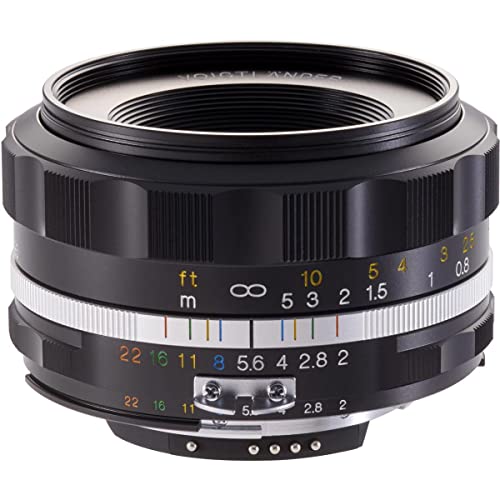
Voigtländer Ultron 40mm
$479.00
Sigma 17-50mm f/2.8 EX
$589.00
Ynlens YN50mm F1.8N Nikon
$102.00
Spec Comparison
TL;DR: Sigma's 105mm f/2.8 macro delivers 1:1 magnification, fast f/2.8 aperture, and up to 4 stops of stabilization in a solid, splash‑proof build for $654.
The lens’s standout spec is its 1:1 life‑size magnification paired with a 142 mm working distance, letting you photograph subjects without crowding them. It sports a maximum aperture of f/2.8, a rounded 9‑blade diaphragm, and optical stabilization rated up to 4 stops, which together produce sharp images with creamy bokeh even in lower light. Internally, the optical formula includes 16 elements in 11 groups plus two Special Low Dispersion (SLD) elements, and the HSM autofocus motor offers quiet, fast focus with a 146° focus‑ring rotation.
Compared with the other lenses in this roundup, the Sigma sits toward the premium end of the price spectrum. It's heavier than the Kenko Tokina 100mm macro (which weighs 1.1574268755 pounds) and the Tokina AT‑X 116 PRO DX (0.44 pounds), but it's lighter than the Samyang 135mm f/2.0 (1.8 pounds) and the Irix Dragonfly 45mm (approximately 2 pounds). Its 62 mm filter thread is smaller than the 77 mm thread on the Sigma 17‑50mm f/2.8 EX, and its overall length of 133.8 mm makes it longer than the compact Voigtländer Ultron 40mm. While it lacks a tripod collar, its splash‑proof construction gives it a durability edge over fully weather‑sealed competitors.
Professional reviewers praise the lens for “strong optical performance and sharpness” and note that the optical stabilization delivers “effective shake reduction” in real‑world use. Everyday users echo this, highlighting the sharpness, creamy bokeh, and the convenience of handheld macro shooting thanks to the stabilization. The most common criticisms are the absence of a tripod collar, a slight loss of stabilization effectiveness at the very closest focusing distances, and a hint of corner softness when shooting wide open at f/2.8.
The technical package rounds out with a minimum focusing distance of 312 mm, a focus‑limiter switch offering three distance ranges, and a four‑year warranty that underscores Sigma’s confidence in durability. The lens’s splash‑proof (though not fully weather‑sealed) body and the included padded nylon case add practical protection for field work.
Pros
Cons
Best for: Buyers willing to invest in a proven, high‑quality macro lens that offers 1:1 reproduction, fast aperture, and effective stabilization.
Avoid if: You're on a tight budget, need a built‑in tripod collar, or prefer the latest firmware‑updatable designs.
TL;DR: The Yongnuo YN50mm f/1.8 for Nikon delivers a fast f/1.8 aperture, lightweight 0.45 lb build, and solid sharpness for $102, making it a strong budget portrait option.
This lens’s standout feature is its bright f/1.8 maximum aperture on a 50 mm focal length, paired with a 7‑blade circular diaphragm that helps render smooth bokeh. At just 0.45 pounds, the optical package measures 74 mm in diameter, 84 mm high, 86 mm long, and 89 mm wide, so it stays comfortable on‑hand for long shooting sessions.
Compared with the other eleven lenses in the roundup, the YN50mm is noticeably lighter than the Irix Dragonfly 45 mm and the Tokina AT‑X 116, and its dimensions are more compact than many of the larger telephoto options. While the Ynlens YN50mm shares the same 74 mm diameter, it is shorter, and the Yongnuo YN35mm is considerably heavier, underscoring the YN50mm’s portability advantage.
Reviewers consistently praise the lens’s sharp center performance and the multi‑coated optics that keep flare at bay, while professional notes highlight the gold‑plated contacts for reliable camera communication. Users do report slower autofocus in dim light and occasional focus‑accuracy quirks that may need fine‑tuning, and the plastic barrel construction feels less rugged than premium glass‑metal designs.
Pros
Cons
Best for: Budget‑conscious buyers seeking a reliable entry‑level option
Avoid if: You need advanced features or professional‑grade performance
“Great lens to learn on”
“Sharp images for portraits and street photography”
TL;DR: The Meike 85mm f/1.8 offers a fast f/1.8 aperture, 9‑blade diaphragm and solid 85mm portrait focal length for $179.99, delivering sharp images and creamy bokeh in a lightweight 386g package.
The standout specification is its f/1.8 maximum aperture paired with a 9‑blade circular diaphragm, which together give a shallow depth of field and smooth, rounded bokeh—ideal for portrait work. At 85mm focal length, the lens provides a classic portrait perspective while keeping the overall length to 77mm and a compact width of 80mm.
Compared with the other lenses in this roundup, the Meike is heavier than the Yongnuo 50mm (which weighs about 0.45 pounds) but lighter than the Irix Dragonfly 45mm that tips the scales at over 900 g. Its f/1.8 aperture is faster than the Yongnuo 35mm f/2 and the Tokina 116 PRO DX f/2.8, yet not as fast as the Irix Dragonfly’s f/1.4. The 67 mm filter thread sits between the Yongnuo lenses’ 58 mm threads and the larger 77 mm threads found on the Irix and Tokina models.
User feedback repeatedly praises the lens’s sharpness across the frame, low chromatic aberration and the “creamy” bokeh that the 9‑blade design produces. Professional reviewers echo these points, noting especially low distortion and warm, natural colour rendering. The most common drawbacks include a moderate autofocus speed that struggles with fast subjects, early‑firmware AF instability, and the lack of full weather sealing, which limits use in harsh conditions.
Technically, the lens comprises 9 elements in 6 groups and features a multi‑layer nano coating to reduce flare. It delivers a maximum magnification of 0.13x and a minimum focusing distance of 0.9 m (E/Z/X/L mounts) or 0.85 m (EF/F mounts). The STM stepping motor on most mounts provides smooth focus transitions, while the DC motor version for EF/F mounts offers a solid, if slower, focus response.
Pros
Cons
Best for: Buyers in the mid price range seeking the best quality at that price point
Avoid if: You need fast‑action autofocus or weather‑sealed durability for demanding shooting conditions
“Blown away by how much better it focuses and the colors are fantastic!”
“Bokeh like wow! Colors are beautiful.”
TL;DR: The Samyang 135mm f/2.0 delivers a fast full‑frame telephoto prime with razor‑sharp resolution, creamy 9‑blade bokeh and solid metal construction for $429, but it’s manual‑focus only and lacks image stabilization.
The lens’s headline spec is its f/2.0 maximum aperture at a 135 mm focal length, paired with a 9‑blade rounded diaphragm that produces smooth, creamy bokeh. It’s built around a metal barrel, weighs 1.8 Pounds (816 g), and accepts 77 mm filters, while internal focusing keeps the front element stationary for easy use with polarizing filters.
Compared with the other eleven lenses in this roundup, the Samyang is heavier than the Tokina AT‑X 116 PRO DX (0.44 Pounds) and the Voigtländer Ultron 40 mm (0.60625 Pounds), yet it shares the same 77 mm filter thread as the Tokina. Its f/2.0 speed outpaces the Tokina’s f/2.8, giving you a brighter view for low‑light portraits, while the Irix Dragonfly 45 mm, which also uses a 77 mm filter, is similar in weight but offers a wider f/1.4 aperture at a much shorter focal length. The Samyang’s minimum focusing distance of 800 mm (0.8 m) is longer than the Tokina’s 300 mm, reflecting its telephoto design.
Reviewers consistently praise the lens for “jaw‑dropping optics” and “razor‑sharp resolution even wide open,” noting that the 9‑blade rounded diaphragm delivers the “smooth, creamy bokeh” many portrait shooters crave. Reviewers highlight the fast f/2.0 aperture as ideal for low‑light and astrophotography work. On the downside, users mention the manual‑focus only design as a barrier for fast‑moving subjects, the lack of image stabilization as a requirement for steady handheld shots, and the absence of a tripod foot as an inconvenience for longer exposures. A few owners report a “grindy” focus ring and a “flimsy” lens hood, especially on smaller camera bodies where the 1.8 Pounds weight feels pronounced.
Optically, the lens houses 11 elements in 7 groups, including one ED element, and Samyang’s Ultra Multi Coating (UMC) coats the lens for high contrast and accurate colour rendition. The manual focus ring feels smooth and the internal focusing design means the front element never rotates, which is handy for using polarizers. With a maximum magnification of 0.13× and a minimum focusing distance of 800 mm, it’s well suited for portrait compression and modest close‑up work.
Pros
Cons
Best for: Portrait and low‑light photographers who value a fast f/2.0 aperture and high sharpness at a mid‑range price.
Avoid if: You need fast autofocus, built‑in image stabilization, or a lightweight, travel‑friendly telephoto lens.
“Best 135mm I’ve ever used”
“Razor-sharp from f/2.0 to f/5.6”
TL;DR: The Yongnuo YN35mm F2 Nikon offers a fast f/2 aperture, 61.3° diagonal view and lightweight 280 g build for under $110, making it a solid budget prime for street and video work.
This 35 mm lens delivers a maximum aperture of f/2 and a seven‑blade circular diaphragm, which helps create smooth bokeh for portrait or street subjects. Its diagonal angle of view measures 61.3°, giving a natural field of view on full‑frame bodies, while the whole package weighs just 280 g.
Compared with other lenses in the roundup, the YN35mm is lighter than the Meike 85mm F1.8, which tips the scales at 386 g, but heavier than the Yongnuo YN50mm F1.8 Nikon listed at 0.45 pounds. Its filter thread is 52 mm, a bit smaller than the 58 mm thread used for the Yongnuo YN35mm F2N, and it carries fewer elements than the Tokina AT‑X 116 PRO DX, which lists two aspherical elements.
Users repeatedly praise the lens’s sharpness from f/2 to f/8 and its compact, premium feel, noting that the multi‑coated optics and nano‑multilayer coating keep ghosting low. Professional reviewers echo the sharpness praise but flag early firmware versions for inconsistent AF accuracy, a problem that a USB‑type‑C update reportedly resolves. Reviewers also mention that diffraction softens images past f/11, and continuous AF can lag on fast‑moving subjects, making the lens less suited for sports or astrophotography.
Technically, the lens incorporates one aspherical element and one low‑dispersion element within an 8‑group, 9‑element construction, helping control chromatic aberration. Its minimum focusing distance is 0.35 m, delivering a maximum magnification of 0.13×, which is adequate for casual close‑ups but not for macro work.
Pros
Cons
Best for: Entry-level buyers or those on a tight budget
Avoid if: You want the best value-per-dollar in its price range
TL;DR: The Yongnuo YN35mm F2N delivers a fast f/2 aperture and a 63° diagonal view in a lightweight 0.70106999316‑lb package for around $106, making it a solid budget prime for Nikon shooters.
The lens’s standout spec is its maximum aperture of f/2, which lets you shoot in low light and achieve shallow depth of field. It measures 120 mm tall, 170 mm long, and weighs 0.70106999316 pounds, so it stays compact enough for travel without adding bulk to your kit.
At the same price point as the Yongnuo YN35mm F2 Nikon, this version offers a slightly wider diagonal field of view—63° versus the Nikon‑branded model’s 61.3°—while keeping the same 7‑blade circular diaphragm. Compared with the Yongnuo YN50mm F1.8 Nikon’s 46° diagonal view, the 35mm provides a noticeably broader perspective, which is useful for street and environmental portraits. It is heavier than the Tokina AT‑X 116 PRO DX (which weighs 0.44 pounds), but still lighter than many full‑frame fast primes.
Everyday users praise the YN35mm F2N for its lightweight build, fast aperture, and smooth bokeh, often calling it perfect for travel and creative projects. Professional reviewers point out the slower, hunting autofocus in dim lighting and say sharpness varies across the frame. Manufacturers list the filter thread as 58 mm, but some units use plastic and other sources cite a 52 mm diameter, raising durability concerns.
Technically, the lens features a 7‑element, 5‑group optical design, a 0.23× maximum magnification, and a minimum focusing distance of 250 mm, giving you decent close‑up capability. Seven aperture blades produce a pleasant bokeh circle, and the lens works with both full‑frame (FX) and APS‑C (DX) Nikon DSLRs, expanding its usefulness across camera bodies.
Pros
Cons
Best for: Budget‑conscious buyers seeking a reliable entry‑level option
Avoid if: Reliability and user satisfaction are your top concerns
TL;DR: The Tokina ATX‑i 100 mm f/2.8 macro delivers true 1:1 magnification, a fast f/2.8 aperture and a unique one‑touch focus clutch, but it’s pricey, heavier than many compact primes, and lacks AF on entry‑level Nikon bodies.
The lens centers on a 100 mm focal length with a maximum aperture of f/2.8 and true 1:1 life‑size reproduction. Its 9 straight‑edged diaphragm blades help render creamy bokeh, while a 55 mm filter thread lets you attach polarizers without the front element rotating. A working distance of 115 mm gives you breathing room for insects and delicate subjects.
At $549.00 the ATX‑i sits in the premium tier, making it pricier than the Voigtländer Ultron 40mm and Tokina AT‑X 116 PRO DX, yet lighter than the Sigma 105mm f/2.8 Macro (1.598351401 lb) and Samyang 135mm f/2.0 (816 g). Its 55 mm filter size is smaller than the 77 mm threads many peers use, and the 9‑blade diaphragm matches the Samyang and Tokina 116 but exceeds the 7 blades on the Sigma 17‑50mm f/2.8 zoom.
Reviewers consistently praise the lens’s corner‑to‑corner sharpness even at f/2.8 and love the one‑touch focus clutch for instant AF/MF switching. Professional observers note the near‑zero distortion and flat field. The main trade‑offs are the lack of autofocus on Nikon entry‑level bodies, no built‑in image stabilization, and plastic filter/aperture rings that feel less rugged than all‑metal designs. It also lacks a tripod collar, which some macro shooters miss.
Pros
Cons
Best for: Those prioritizing quality and willing to pay for premium performance
Avoid if: You're on a tight budget or only need basic functionality
“Sharp as a razor – even at f/2.8, edge-to-edge.”
“The focus clutch is a game‑changer – switching to manual is instant.”
TL;DR: The Irix 45mm f/1.4 Dragonfly delivers a fast f/1.4 aperture, 9‑blade rounded diaphragm and weather‑sealed build, but its manual‑focus design and 905 g weight make it a niche choice for portrait and landscape shooters.
What sets this lens apart is its f/1.4 maximum aperture paired with a 9‑blade rounded diaphragm, delivering a shallow depth of field and creamy bokeh that users repeatedly highlight. The lens also features a 0.4 m minimum focusing distance, allowing you to get close to subjects while keeping the background smooth. Its construction includes 11 elements in 9 groups (including one aspherical and one ED element), and the front element never rotates during focusing.
Compared with the other eleven lenses in the roundup, the Dragonfly is heavier than many, such as the Tokina AT‑X 116 PRO DX, and longer than the Samyang 135mm, which is notably more compact. Its 77 mm filter thread matches the Tokina and Samyang, but the f/1.4 aperture is wider than any other lens here, which mostly top out at f/2.8. While most peers offer autofocus, the Dragonfly’s manual‑focus system with a front‑mounted locking ring gives you precise control—an advantage for landscape and portrait work but a drawback for fast‑action shooting.
Professional reviewers praise the lens’s overall sharpness when stopped down and its premium, weather‑sealed construction, noting that the electronic communication transmits EXIF data and enables focus confirmation. Everyday users echo these points, especially the “beautiful, creamy bokeh” and robust build quality. However, several reviewers call out the focus ring’s resistance and the lens’s bulk, describing it as “large and heavy” for a 45 mm prime. In practice, the manual‑focus nature means you’ll need to be comfortable with focusing by eye, which can slow you down in dynamic situations.
Pros
Cons
Best for: Home and office users seeking a balance of features and value
“perfect 10/10, praising the lens’s sharpness, color rendition, weather resistance, and bokeh, calling it superior to the Pentax DFA★50mm f/1.4 in aberration control.”
“not usable for decent astrophotography shots.”
TL;DR: The Tokina AT‑X 116 PRO DX delivers a constant f/2.8 aperture across an ultra‑wide 11‑16 mm zoom, offering 9‑blade bokeh, 0.3 m minimum focus, and a lightweight 0.44 lb build.
The lens’s standout feature is its fast, constant f/2.8 maximum aperture throughout the 11–16 mm focal range, paired with a 108° angle of view at 11 mm and 82° at 16 mm. Its optical formula includes 13 elements in 11 groups, two aspherical elements and two super‑low dispersion elements, and a water‑resistant coating protects them. The rounded 9‑blade diaphragm helps render smooth background blur, while the 77 mm filter thread accommodates common accessories.
Compared with the other eleven lenses in this roundup, the Tokina is markedly lighter than the Samyang 135 mm f/2.0 (1.8 Pounds) and the Irix Dragonfly 45 mm (905 g), making it easy to carry on location shoots. Its 77 mm filter size also matches the Samyang and the Sigma 17‑50 mm, so you won’t need a separate filter set for those lenses. While some competitors include image stabilization, the Tokina relies on its sturdy build and weather‑sealed mount for reliability.
Professional reviewers praise the lens for “high sharpness across the frame” and note only “0.9 stop vignetting at 11 mm.” Everyday users echo the praise for its solid, “beastly” construction and the intuitive One‑Touch Focus Clutch. Common complaints focus on soft corners at the maximum aperture, barrel distortion that peaks at the widest 11 mm setting, and the lack of built‑in stabilization, especially for handheld video work.
Pros
Cons
Best for: Landscape, architectural, astrophotography, interior and real‑estate work, and videographers who need a fast ultra‑wide zoom.
Avoid if: You require image stabilization, edge‑to‑edge sharpness at f/2.8, or use entry‑level Nikon DSLRs that lack compatible screw‑drive AF.
“the best ultrawide zoom for Nikon DX cameras”
“the world’s fastest and sharpest ultrawide lens for small-format digital SLRs.”
TL;DR: The Voigtländer Ultron 40mm f/2 offers a compact, all‑metal build, manual focus precision and 0.25× macro capability at $479.00, but its full‑frame vignetting and manual‑focus‑only design may limit some users.
This lens’s standout spec is its bright f/2 maximum aperture paired with a 57° diagonal angle of view, giving you a true‑to‑life 40 mm perspective on both full‑frame (FX) and APS‑C (DX) bodies. The optical formula includes six elements in five groups, featuring a double‑sided aspherical element and ultra‑high‑index glass, which professional reviewers note delivers “high contrast and sharpness from center to edges” even wide open.
Compared with the other eleven lenses in this roundup, the Ultron is noticeably lighter than the Samyang 135mm f/2.0 (1.8 Pounds) and considerably more compact than the Tokina AT‑X 116 PRO DX, whose barrel length is listed at 89 mm. Its 52 mm filter thread is smaller than the 77 mm threads found on several peers, meaning you’ll need a slimmer filter set. While many of the alternatives provide autofocus, the Ultron’s manual‑focus‑only operation places it in a niche for shooters who prefer tactile focusing.
Consumer sentiment repeatedly praises the lens’s “compactness, build quality, and beautiful bokeh,” especially the nine curved aperture blades that create a nearly circular iris. However, users also flag “severe vignetting on full‑frame at f/2” and “soft corners when shot wide open,” concerns echoed by expert reviewers who call the corner softness a drawback that improves after stopping down to f/4. The lens’s minimum focusing distance of 250 mm and 0.25× (1:4) maximum magnification give you modest macro capability without sacrificing its portrait‑friendly focal length.
Pros
Cons
Best for: Those who value a premium, all‑metal manual focus prime with classic rendering and are comfortable working with manual focus.
Avoid if: You need autofocus or are shopping on a tight budget — it’s priced at $479.00.
“Perfect size and weight”
“Top‑notch color rendering and sharpness”
TL;DR: The Sigma 17-50mm f/2.8 EX delivers a constant f/2.8 aperture, 4‑stop optical stabilization, and a quiet HSM motor in a lightweight 595 g package, but its corners soften wide open and it lacks weather sealing.
What sets this lens apart is the constant f/2.8 maximum aperture across the full 17–50 mm zoom range, paired with 4 stops of optical image stabilization. Those specs let you shoot handheld in low light without cranking up ISO, and the Super Multi‑Layer Coating helps keep flare under control.
Compared with the other lenses in the roundup, the Sigma is heavier than the Tokina AT‑X 116 PRO DX (which weighs about 0.44 lb) and the Voigtländer Ultron 40 mm (≈0.61 lb), but it's still lighter than the Samyang 135 mm f/2.0 (≈1.8 lb). Its 77 mm filter thread matches the Samyang and Tokina, while its 7‑blade aperture is lower than the 9 blades on those lenses. The lens also extends during zoom, unlike the internal‑focus designs of some peers.
Reviewers consistently praise the fast HSM autofocus motor and the strong center sharpness that persists even at f/2.8. Everyday users love the built‑in stabilization, calling it “effective up to 4 stops” for events and travel shooting. Professional commentary notes that corners soften when shooting wide open, especially below 35 mm, and that barrel distortion at 17 mm often needs correction in post‑process. The lack of weather sealing often draws criticism from photographers who work in rain or dust.
Pros
Cons
Best for: Buyers willing to invest in a proven, high-quality option
Avoid if: You need advanced features or professional‑grade performance
“Incredible value – outperforms my Canon 17-55mm in sharpness and stabilization.”
“Perfect for weddings and events – fast aperture and IS let me shoot in dim light.”
TL;DR: The Ynlens YN50mm f/1.8N delivers a bright f/1.8 aperture, lightweight metal mount, and solid optics for $102, making it a strong budget pick for Nikon shooters.
This lens’s headline spec is its f/1.8 maximum aperture on a 50 mm focal length, giving you a shallow depth of field and strong low‑light capability. The 7‑blade circular diaphragm helps produce smooth bokeh, while the 6‑element, 5‑group optical formula is multi‑coated for better flare control.
In the context of the other eleven lenses, the YN50mm matches the Yongnuo YN50mm in weight (both 203 g) and diameter (74 mm), but it uses a smaller 52 mm filter thread versus Yongnuo’s 58 mm. It’s noticeably shorter than the Yongnuo YN35mm (86 mm length) and the Yongnuo YN35mm F2, yet it stays lighter than the Meike 85mm (386 g) and far lighter than the Irix Dragonfly (905 g). Compared with the Tokina AT‑X 116 PRO DX, it’s similarly weighted but has a more compact 60 mm barrel versus Tokina’s longer 89 mm design.
User feedback highlights strong value: owners love the sharp center performance when stopped down and the pleasing bokeh from the 7‑blade design. Professional reviewers note the metal bayonet mount with gold‑plated contacts adds durability, and the lens delivers good performance at f/2.8‑f/4. However, several users point out that autofocus can be noisy and sluggish in dim environments, and edge softness appears when shooting wide open at f/1.8. The barrel’s plastic construction also draws criticism despite the metal mount.
Technically, the lens offers a minimum focusing distance of 0.45 m and a maximum magnification of 0.15×, suitable for modest close‑up work. The DC‑motor autofocus system provides both AF and MF modes, and the multi‑coated glass helps keep contrast high across the 46° diagonal field of view.
Pros
Cons
Best for: Shoppers on a tight budget who want the most for their money
“Great lens to learn on”
“Sharp images for portraits and street photography”
Breakdown
Sigma 105mm f/2.8 Macro Nikon
Pros
Yongnuo YN50mm F1.8 Nikon
Pros
Meike 85mm F1.8
Pros
Cons
Samyang 135mm f/2.0
Pros
Based on scoring data and product specs
Personalized picks
Best Overall Pick
Sigma 105mm f/2.8 Macro Nikon
Best ValueBest for: Buyers willing to invest in a proven, high-quality option
Yongnuo YN50mm F1.8 Nikon
Best for: Budget-conscious buyers seeking a reliable entry-level option
$102.00-$552.00 vs winner
Skip Sigma 17-50mm f/2.8 EX if…
You need advanced features or professional-grade performance
The Sigma 105mm f/2.8 Macro for Nikon takes the top spot thanks to its 4.5‑star rating from 2,445 reviewers, built‑in image stabilization that claims up to four stops of shake reduction, and a true 1:1 maximum magnification that lets you capture life‑size macro detail. Its nine rounded aperture blades also promise smooth bokeh for portrait work, making it the most versatile fast‑aperture lens in the list.
Coming in second, the Yongnuo YN50mm f/1.8 Nikon shines when you need a bright, lightweight standard prime for portraits or street shooting on a tight budget. It offers a maximum aperture of f/1.8, a 4.6‑star rating from 2,096 reviews, and a feather‑light 0.45 pound (203 g) build that’s easy to carry all day.
Choosing the Sigma 105mm f/2.8 Macro gives you the most capable fast‑aperture Nikon F lens for both macro and portrait needs.
The Sigma costs $654 while the Yongnuo is $102, a $552 difference. Sigma’s 1:1 macro capability, 4‑stop image stabilization, and splash‑proof construction give it a strong advantage for close‑up work, but the Yongnuo offers a very fast f/1.8 aperture at a fraction of the price.
Please sign in to leave a review
No reviews yet. Be the first to review!
