Choosing a fast‑aperture lens for Sony’s E‑mount can overwhelm, especially when you need a balance of low‑light performance, size and price. In this roundup we evaluated 12 lenses, from the $64.00 TTArtisan 25mm f/2 manual prime up to the $999.00 Zeiss Batis 25mm f/2 premium option. All models carry strong community feedback, with ratings ranging from 4.5/5 (663 reviews) to 4.7/5 (over 1,500 reviews).
To make sense of the field we grouped the lenses into three price tiers. The budget tier includes the $64.00 TTArtisan, the $179.00 Viltrox 35mm f/1.7 (170 g) and the $218.49 Meike 85mm f/1.8, each offers respectable speed with apertures from f/1.7 to f/2 for beginners. Mid‑range picks are the Sigma 30mm f/1.4 at $404.00 and the 18‑50mm F2.8 Contemporary at $659.00, both weigh under 0.65 lb and feature silent stepping‑motor AF. Premium choices like the Zeiss Batis (82° angle of view, 335 g) and the Tamron 28‑75mm f/2.8 ($799.00) deliver top‑tier optics and weather sealing. Below we’ll break down each lens’s strengths, key specs, and ideal use cases.

18-50mm F2.8 DC DN Contemporary (for E Mount)
Its compact 61.6 mm barrel diameter keeps the kit lightweight for home and office use.

Sigma 30mm f/1.4 DC DN
Ideal for enthusiasts who want a fast 1.4 aperture on a tighter budget, at $404 it’s $255 less than the Best Overall.

Zeiss Batis 25mm
Featuring a 92 mm lens hood and 36 mm extension, it delivers superior flare control, catering to audiophiles and enthusiasts seeking premium optical performance.
Also considered
Score Analysis
Key score advantages vs. runner-up (Sigma 30mm f/1.4)
Price Range
18-50mm F2.8 DC DN Contemporary (for E Mount)
$573.16
Sigma 30mm f/1.4 DC DN
$419.00
Zeiss Batis 25mm
$999.00

Tamron 28
$799.00

Tamron 17-70mm f/2.8 Di III-A
$699.00

Sony - FE
$278.00

Sigma 10-18mm f/2.8 DC DN
$679.00

Meike 85mm f1.8 SE II
$229.69

Viltrox 35mm F1.7 E STM
$179.00

TTArtisan 25mm f/2 Fuji
$64.00

Meike MK-S-35mm
$69.99
Ebyphan 85mm F1.8 II
$399.00
Spec Comparison
TL;DR: The Sigma 18‑50mm F2.8 DC DN Contemporary delivers a constant f/2.8 aperture in a feather‑light 290 g package, offering fast AF and macro‑like close focus for APS‑C Sony E‑mount users.
The lens’s most eye‑catching spec is its constant f/2.8 maximum aperture across the 18‑50 mm range, paired with a minimum focusing distance of 12.1 cm at the wide end and a 1:2.8 magnification ratio. Its optical formula packs 13 elements in 10 groups, including three aspherical elements and one SLD element, all behind a φ55 mm filter thread.
Compared with the other lenses in this roundup, the 18‑50mm sits between the ultra‑compact Sigma 10‑18mm (which weighs 255 g) and the bulkier Tamron 17‑70mm (which tips the scales at 544 g). It is lighter than the Zeiss Batis 25mm (335 g) and the Tamron 28 (over a pound), yet a touch heavier than the Sigma 30mm f/1.4 (265 g). Its barrel diameter of 61.6 mm and length of 73.7 mm make it shorter than the Sigma 10‑18mm’s 64.0 mm length, while still fitting comfortably on a mirrorless body.
Users repeatedly praise the lens for its pocket‑size feel, silent stepping‑motor AF, and the creamy bokeh that the 7‑blade diaphragm produces. Professional reviewers highlight the excellent center sharpness even wide open at f/2.8. The downside appears as noticeable barrel distortion at 18 mm, pin‑cushion distortion toward 50 mm, and some vignetting when shooting wide open at f/2.8. Because the lens relies on in‑body stabilization, cameras without IBIS lack optical image stabilization, and the counter‑clockwise zoom rotation can feel unintuitive for some shooters.
Construction includes dust‑ and splash‑resistant rubber sealing on a high‑precision brass bayonet, and the petal‑shaped LH582‑02 hood helps mitigate flare. With a 4‑year warranty and a solid 4.7‑star rating from 1,554 reviewers, the lens balances performance and durability for everyday use.
Pros
Cons
Best for: Street and documentary shooters who need a discreet, fast lens; travel photographers seeking a light, versatile zoom.
Avoid if: You're shopping on a tight budget — it's priced at $659.00
“Perfect everyday carry lens — small enough to forget it’s there.”
“Autofocus is silent and fast — great for street and video.”
TL;DR: The Sigma 30mm f/1.4 DC DN delivers a bright f/1.4 aperture, solid build and quiet STM autofocus in a compact APS‑C‑friendly package, though it’s a bit larger and pricier than many f/1.8 primes.
This lens’s standout spec is its maximum aperture of f/1.4, giving you a 50.7° angle of view on APS‑C bodies and a minimum focusing distance of 300 mm. At 0.584225 pounds (265 g), the lens feels solid yet still fits comfortably on smaller mirrorless bodies.
Compared with the other options in the roundup, the Sigma is heavier than the Viltrox 35mm F1.7 (170 g) and lighter than the 18‑50mm F2.8 (290 g). Its 52 mm filter thread is slightly smaller than the 55 mm thread on the 18‑50mm, and its length of 73.7 mm matches that of the 18‑50mm while being a touch taller than the Viltrox’s 80 mm height. In price terms, it sits above many of the f/1.8 primes such as the Meike 85mm f/1.8, but below the higher‑end 10‑18mm zoom.
Reviewers consistently praise the lens for razor‑sharp images even wide open and for the creamy bokeh that the f/1.4 aperture produces. Video creators praise the quiet stepping‑motor (STM) autofocus for smooth, silent focusing, making it a solid choice for video as well as stills. The trade‑off is the lack of dust and splash resistance and a size that’s a bit bulkier than the typical f/1.8 prime, which some street shooters find less discreet.
Pros
Cons
Best for: Portrait, street and documentary shooters who want a well‑reviewed, fast prime with reliable autofocus on APS‑C Sony E‑mount cameras.
Avoid if: You need weather‑sealed gear or the lightest possible setup for travel.
“Perfect everyday carry lens — small enough to forget it’s there.”
“Autofocus is silent and fast — great for street and video.”
TL;DR: The Zeiss Batis 25mm f/2.0 delivers premium sharpness in a compact, weather‑sealed body with an innovative OLED focus display, but its premium $999 price may deter budget shooters.
What really sets this lens apart is the built‑in OLED display that shows focus distance and depth of field right on the barrel, a feature you won’t find on the other lenses in this roundup. At 25 mm and f/2.0, it offers a wide angle and a fast aperture while staying lightweight at 335 g and measuring just 81 mm tall and 79 mm long.
Compared with its peers, the Batis is pricier than the Tamron 28 mm f/2.8 and the Tamron 17‑70 mm f/2.8, yet it’s lighter than those lenses (both over 1 lb). It’s heavier than the Sigma 30 mm f/1.4 (about 0.58 lb) and the Sigma 10‑18 mm f/2.8 (0.56 lb), but those serve different focal ranges. Its 9‑blade rounded diaphragm and five aspherical elements give it an optical edge over the 7‑blade design of the 18‑50 mm and the simpler constructions of the other primes.
Reviewers consistently praise the lens for its razor‑sharp resolution and contrast, noting the OLED display is a boon for low‑light manual focusing. However, users report the display can be hard to read in bright sunlight, and the focus gearing isn’t perfectly linear, which can make smooth focus pulls tricky for video work. Professional testers highlighted a few units with decentering issues.
Technically, the lens delivers 99.1 % focus repeatability, a 0.6 s focus speed from infinity to 0.32 m, and a 3 % focus breathing figure. Its 82° angle of view, 9‑blade diaphragm, and ZEISS T* coating help keep vignetting low after f/2.8, and the 190 mm minimum focusing distance yields a 1:4.8 maximum magnification.
Pros
Cons
Best for: Landscape, architecture, street, travel, and photojournalism shooters who need a lightweight, weather‑sealed wide‑angle prime with fast f/2.0 optics.
Avoid if: You need a budget‑friendly lens or a video‑centric tool that requires perfectly linear focus throws.
TL;DR: The Tamron 28‑75mm f/2.8 offers a constant fast aperture, compact 540 g build, and silent VXD autofocus, making it a sharp, travel‑friendly option at $799.00.
The lens delivers a 28–75 mm focal range with a constant f/2.8 maximum aperture and a 9‑blade diaphragm, giving you a bright, smooth bokeh across the frame. Its internal focusing system rotates a full 1060° and the VXD linear motor provides fast, nearly silent autofocus, while the USB‑C port lets you fine‑tune focus settings directly.
At 540 g, it’s slightly lighter than the Tamron 17‑70mm f/2.8 (544 g) and shares the same 67 mm filter thread, but it’s noticeably heavier than the Sigma 10‑18mm f/2.8 (255 g) and the 18‑50mm f/2.8 (290 g). The 116.8 mm length sits between the ultra‑compact 64 mm of the Sigma 10‑18mm and the 119.4 mm of the Tamron 17‑70mm, while its diameter (75.8 mm) is larger than the 72.2 mm of the Sigma 10‑18mm but comparable to the 75.7 mm of its own barrel.
Reviewers consistently praise the lens’s sharpness and the VXD motor’s quiet performance, especially for video and street shooting. Everyday users love the lightweight, travel‑ready design and the ability to adjust focus via USB‑C. The most common complaints focus on the missing 24 mm ultra‑wide end, noticeable distortion and vignetting at the extremes, and a plastic barrel feel that some find less premium.
Technically, the optical construction comprises 17 elements in 15 groups, including two low‑dispersion (LD) and two ultra‑high‑refractive‑index (GM) elements, which help control chromatic aberrations despite some reviewers noting residual color fringing. The minimum focus distance is 380 mm (38 cm / 15 in) at the telephoto end and 180 mm (18 cm / 7.1 in) at the wide end, giving you decent close‑up capability without an in‑lens stabilization system.
Pros
Cons
Best for: Hybrid shooters who need fast, silent autofocus for video, plus travel and street photographers who value sharpness in a compact package.
Avoid if: You need a true 24 mm ultra‑wide perspective, rely on in‑lens stabilization, or are shopping on a tight budget — it’s priced at $799.00.
“Incredibly sharp from corner to corner at 28mm”
“Autofocus is silent and locks instantly — perfect for video”
TL;DR: The Tamron 17‑70mm f/2.8 Di III‑A delivers a constant fast aperture, 4.1× zoom and built‑in VC in a 544 g, travel‑ready package, earning 4.7‑star praise from over 1,700 reviewers.
This lens’s standout spec is its constant f/2.8 maximum aperture across the entire 17‑70mm range, paired with a 4.1× zoom ratio and nine rounded diaphragm blades for smooth bokeh. The optical formula packs 16 elements in 12 groups, including two glass‑molded aspherical and one hybrid aspherical element, which helps keep focus breathing minimal—a boon for video shooters.
Compared with the other lenses in the roundup, the Tamron sits in the middle of the weight spectrum: it’s heavier than the ultra‑light Sigma 10‑18mm (255 g) but lighter than the Tamron 28 (about 1.18 lb). Its 67 mm filter thread matches the Sigma 10‑18mm and the Tamron 28, while the 18‑50mm f/2.8 weighs roughly 0.64 lb, making the 17‑70mm a solid mid‑range option in terms of bulk and handling.
Users consistently applaud the lens’s sharpness, especially from 25 mm onward, and love the ability to shoot low‑light scenes thanks to the f/2.8 aperture. Professional reviewers note the effective VC works well with in‑body stabilization for smooth video. However, many mention soft corners at the wide 17 mm end and noticeable barrel distortion that only eases when stopped down. Flare and ghosting in back‑lit situations also appear in several consumer comments.
Additional technical context includes a minimum focusing distance of 190 mm (7.5 in) at the wide end and 390 mm (15.4 in) at telephoto, delivering maximum magnifications of 0.21× and 0.19× respectively. The RXD stepping motor provides quiet autofocus, and the internally extending barrel adds about an inch of length when zoomed.
Pros
Cons
Best for: Buyers willing to invest in a proven, high-quality option
Avoid if: You need advanced features or professional‑grade performance
“Users consistently praise the lens for its sharpness, especially in the center, and its ability to deliver professional‑quality images across a wide zoom range.”
“Recurring user reports of strong purple fringing and flare in backlit conditions.”
TL;DR: The Sony FE 50mm f/1.8 delivers fast aperture and solid image quality in a compact, lightweight package for $278, though its autofocus can feel slow and noisy.
The lens’s standout spec is its f/1.8 maximum aperture on a 50 mm focal length, giving you shallow depth‑of‑field control in low light. It weighs just 0.4125 Pounds and measures 119.13 mm in height by 103.89 mm in length, making it easy to carry on a daily shoot.
Compared with peers, the Sony is a bit heavier than the Viltrox 35mm f/1.7 (0.3748 Pounds) but still lighter than many larger portrait lenses. Its 7‑blade rounded diaphragm is fewer than the 11 blades on the Meike 85mm f/1.8, though it still produces pleasing bokeh. The full‑frame angle of view is 47°, a shade wider than the Viltrox’s 45°, giving you a slightly broader perspective.
Users consistently praise the lens for sharpness from f/2.8 to f/8 and the smooth bokeh created by the rounded blades. Professional reviewers note “very good image quality” and “minimal color fringing,” but they also call the autofocus “Captain Slow” and point out heavy vignetting at f/1.8 and soft corners at the widest aperture. The lack of weather sealing means you should keep it out of rain or dust.
Technically, the lens uses a DC motor for autofocus, an internal focusing design that extends during focus, and a double‑Gauss optical formula with 6 elements in 5 groups, including 1 aspherical element. The filter thread is 49 mm, and the minimum focusing distance is 450 mm, allowing modest close‑up work.
Pros
Cons
Best for: Beginner and intermediate photographers who need an affordable, well‑reviewed standard prime for travel or everyday shooting.
Avoid if: You need professional‑grade video performance, silent fast AF, or weather‑resistant construction.
“Perfect walk-around lens”
“Autofocus is slow and loud”
TL;DR: The Sigma 10‑18mm f/2.8 DC DN delivers an ultra‑wide 109.7° view in a feather‑light 255 g body, but its soft corners at 18 mm and premium $679 price may steer pros toward cheaper alternatives.
This lens’s standout spec is its constant f/2.8 aperture across a 10‑18 mm zoom range, giving you a 109.7° angle of view at the widest setting while keeping the weight down to just 255 g. The 7‑rounded diaphragm blades and 13‑element construction (including 3 FLD, 1 SLD and 4 aspherical elements) help deliver the “ultra‑wide brilliance” many reviewers praise.
Compared with the other lenses in the roundup, the Sigma is lighter than the 18‑50mm f/2.8 (which tips the scales at 290 g) and shares the same 67 mm filter thread as the Tamron 17‑70mm f/2.8 and Tamron 28 mm f/2.8, but it carries a dust‑ and splash‑resistant rubber gasket that the peer lenses don’t list. While it sits at a higher price point than the 18‑50mm and the Tamron 17‑70mm, its compact dimensions (72.2 mm diameter, 64.0 mm length) make it the most travel‑friendly ultra‑wide option among the group.
Users consistently highlight the lens’s portability and low‑light capability, noting that the f/2.8 aperture lets vloggers shoot handheld in dim environments without cranking ISO. Professional reviewers also commend the minimal focus breathing—it's valuable for video work. The common criticism centers on corner softness at 18 mm when shooting wide open, as well as noticeable vignetting and distortion that often require post‑processing correction, especially on high‑resolution 40 MP APS‑C sensors.
Additional technical details include an inner focusing system driven by a stepping motor for silent AF, a push‑on petal‑type hood (LH706‑02), and a 4‑year manufacturer’s warranty from Japan. The minimum focusing distances are 11.6 cm at 10 mm (0.25× magnification) and 19.1 cm at 18 mm (≈0.15× magnification), so you'll get decent close‑up capability for an ultra‑wide lens.
Pros
Cons
Best for: Travel photographers, landscape shooters, and vloggers who value a fast, ultra‑wide lens and can invest in a premium piece.
Avoid if: You need flawless corner performance on high‑resolution APS‑C sensors or are constrained by a tight budget.
“Perfect everyday carry lens — small enough to forget it’s there.”
“Autofocus is silent and fast — great for street and video.”
TL;DR: The Meike 85mm f/1.8 SE II delivers studio‑grade center sharpness (64.8 lp/mm) and smooth 11‑blade bokeh at a $218 price, though its plastic build and modest AF speed may limit demanding shooters.
What really stands out is the lens’s optical performance: it records 64.8 lp/mm center sharpness at its maximum aperture and 36.8 lp/mm corner resolution at f/1.8, all while delivering zero distortion and zero focus breathing. The 11‑blade diaphragm and true T1.8 transmission add extra brightness and creamy background blur, and the 62 mm filter thread makes accessories easy to add.
Compared with the other eleven lenses in this roundup, the Meike sits in the middle of the price spectrum – it’s pricier than the Viltrox 35mm f/1.7 (about $179) but cheaper than the Sony FE 85mm and the Sigma 30mm f/1.4. At 369 g it is noticeably heavier than the Viltrox (≈0.17 kg), Sony (≈0.19 kg), and the Meike MK‑S‑35mm (≈0.18 kg), and it offers more aperture blades than those models (11 vs. 9, 7, or 8). Its filter thread (62 mm) is larger than the TTArtisan 25mm’s 43 mm but smaller than the Ebyphan 85mm’s 72 mm.
Users repeatedly praise the lens’s razor‑sharp center performance and the “beautiful” bokeh that the 11 blades produce. Professional reviewers note the low lateral chromatic aberration and that the true T1.8 transmission makes it effectively brighter than a typical f/1.8 design. On the flip side, several owners mention that autofocus can hunt in low light and that the plastic barrel feels less rugged than higher‑priced alternatives. The single rubber seal at the mount provides only limited weather protection.
Pros
Cons
Best for: Entry‑level buyers or those on a tight budget who need a fast‑aperture portrait lens with strong sharpness and pleasing bokeh.
Avoid if: You want the best value‑per‑dollar in its price range or need rugged weather sealing for demanding outdoor work.
“Incredible value for money”
“Sharper than expected, especially in the center”
TL;DR: The Viltrox 35mm f/1.7 E STM delivers a fast aperture, lightweight build (0.3747858454Pounds), and sharp center performance at a $179 list price, making it a strong budget option for APS‑C shooters.
The lens’s standout spec is its f/1.7 maximum aperture paired with a 9‑blade rounded diaphragm, which helps produce smooth bokeh and good low‑light capability. It stays compact with a 64 mm diameter, 80 mm height, and 130 mm length, and the internal‑focusing design means the barrel never extends during focus.
Compared with the other lenses in this roundup, the Viltrox is lighter than the Meike MK‑S‑35mm (0.4 pounds) and the Sony FE (0.4125 pounds), and considerably lighter than the Sigma 30mm f/1.4 (0.584225 pounds). Its f/1.7 aperture matches the Meike MK‑S‑35mm but is slower than the Sigma’s f/1.4, while offering more diaphragm blades than the Sony FE’s 7‑blade design. The 52 mm filter thread is larger than the Meike’s 49 mm thread, giving you a bit more flexibility with filters.
Reviewers consistently praise the lens’s sharp center performance right from f/1.7 and its low distortion, noting the high‑definition nano‑coating keeps flare in check. Professional reviewers highlight the quiet STM autofocus and its suitability for eye‑/face‑detect modes, though they also point out strong vignetting at full‑open aperture (about 2.3 EV) and occasional axial chromatic aberration that shows up as purple‑green fringing. Everyday users love the feather‑light feel and the “hidden‑gem” reputation, but some mention the plasticky barrel and the lack of weather sealing as drawbacks.
Its optical formula comprises 11 elements in 9 groups, including one aspherical element, one ED element, and two HR elements, all protected by a high‑definition nano‑coating. Minimum focus distance is 0.33 m (13 in) with a maximum magnification of 0.13x, making it handy for casual close‑ups without sacrificing the 35 mm focal length’s natural perspective.
Pros
Cons
Best for: Entry-level buyers or those on a tight budget
Avoid if: You’re after the best value‑per‑dollar in its price range
“Incredibly sharp for the price”
“Perfect for street and portrait work”
TL;DR: The TTArtisan 25mm f/2 manual prime delivers a bright f/2 aperture, 61° angle of view and all‑metal build for just $64, making it a solid budget choice for street and travel shooters.
What really stands out is the fast f/2.0 maximum aperture paired with a generous 61° diagonal angle of view, giving you a natural 37.5 mm equivalent perspective on APS‑C bodies. The lens sports a 7‑blade circular diaphragm and a 0.13x maximum magnification, while the minimum focus distance of 0.25 m lets you get close to subjects without sacrificing sharpness.
At $64 it sits well below the price of peers like the Viltrox 35mm F1.7 ($179) and the Sigma 30mm f/1.4 ($404), yet it still offers a comparable metal construction. Compared with the Meike MK‑S‑35mm, which has 8 aperture blades, the TTArtisan’s 7 blades give a slightly different bokeh character. Its 61° field of view is noticeably wider than the Meike’s roughly 40° diagonal, and the 43 mm filter thread is smaller than the Viltrox’s 49 mm thread.
Reviewers appreciate the vintage‑style handling and the lightweight 166 g body, calling it “premium‑feeling” for the price. Professionals note the solid metal barrel and the useful 37.5 mm equivalent focal length for street work. The main criticisms focus on the lack of electronic contacts, forcing you to tag EXIF data manually, and a mushy aperture ring that can feel imprecise. Users also report flare and reduced contrast when shooting wide open at f/2, but image quality improves after stopping down to f/2.8.
Pros
Cons
Best for: Entry-level buyers or those on a tight budget
Avoid if: You need powerful performance or professional‑grade features
“feels like using a vintage lens, but with a modern standard of build”
“the ultimate wide-angle lens for Fuji X-mount cameras”
TL;DR: The Meike MK‑S‑35mm delivers a fast f/1.7 aperture in a tiny 41 mm, 0.4 lb package for $69.99, making it a solid budget pick despite soft corners and a de‑clicked aperture ring.
This lens’s standout spec is its f/1.7 maximum aperture, which lets you isolate subjects with shallow depth of field on APS‑C bodies (equivalent to 52.5 mm on full‑frame). It’s a manual‑focus prime that features six elements in five groups and a multi‑coated design, and it focuses down to 0.3 m with a 0.113x maximum magnification.
At 41 mm length, it dramatically shortens the profile compared with the Viltrox 35 mm f/1.7, which measures 130 mm, and it weighs a modest 0.4 lb—just a shade heavier than Viltrox’s 170 g. The lens uses an 8‑blade circular diaphragm, fewer than Viltrox’s nine blades but more than the TTArtisan 25 mm’s seven. Its 49 mm filter thread is larger than the TTArtisan’s 43 mm, and the 40°20’ diagonal angle of view is narrower than the TTArtisan’s 61° but close to the Viltrox’s 45° field.
Reviewers consistently praise the lens for razor‑sharp centre resolution and creamy bokeh, noting that the all‑metal construction feels solid in the hand. However, they also point out that corners soften from f/1.7 to about f/4, and vignetting shows up noticeably at the widest aperture. The aperture ring lacks detents, so accidental changes are a common complaint.
Pros
Cons
Best for: Budget‑conscious buyers seeking a reliable entry‑level option
Avoid if: you need edge‑to‑edge sharpness for landscapes or fast autofocus for action photography
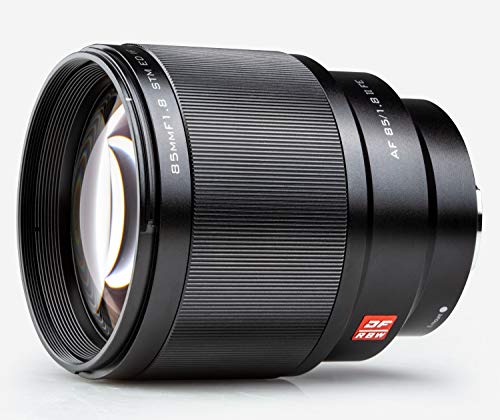
TL;DR: The Ebyphan 85mm f/1.8 II offers a fast f/1.8 aperture, 9‑blade rounded diaphragm, and silent STM autofocus in an all‑metal build for $399, earning a 4.5‑star rating from 149 reviewers.
This lens’s standout spec is its maximum aperture of f/1.8 combined with a 9‑blade rounded diaphragm, which helps create the creamy bokeh portrait shooters love. The optical formula includes 10 elements in 7 groups, with one ED element and four short‑wavelength high‑transparency lenses, all protected by an HD Nano multilayer coating.
Compared with the other eleven lenses in the roundup, the Ebyphan is noticeably heavier than the Viltrox 35mm (170 g) and the Sigma 30mm (265 g), and its overall length of 142.24 mm exceeds the Viltrox’s 130 mm and the Sigma’s 73.7 mm. Its 72 mm filter thread is also larger than the Sigma’s 52 mm thread, giving you more flexibility with larger filters.
Users repeatedly praise the lens’s sharpness and the silent stepping‑motor focus, especially for video where eye‑AF support and IBIS compatibility shine. Professional reviewers note the near‑flagship optical performance and the smooth bokeh from the rounded blades. On the downside, several owners point out that the actual weight feels heavier than the listed 484 g, and the lack of a focus‑hold button limits tactile control. Owners also describe the focus‑by‑wire manual focus as less precise than a mechanical ring.
Pros
Cons
Best for: Most users seeking a balanced, mainstream option
Avoid if: You need advanced features or professional‑grade performance
“Incredible value for money”
“Sharper than expected, especially in the center”
Breakdown
18-50mm F2.8 DC DN Contemporary (for E Mount)
Pros
Cons
Sigma 30mm f/1.4 DC DN
Pros
Zeiss Batis 25mm
Pros
Cons
Tamron 28
Pros
Cons
Based on scoring data and product specs
Personalized picks
Best Overall Pick
18-50mm F2.8 DC DN Contemporary (for E Mount)
Best OverallBest for: Home and office users seeking a balance of features and value
Sigma 30mm f/1.4 DC DN
Best for: Most users looking for a well-reviewed, reliable mainstream option
$419.00-$154.16 vs winner
Skip Ebyphan 85mm F1.8 II if…
You need advanced features or professional-grade performance
The Sigma 18‑50mm F2.8 DC DN Contemporary for Sony E‑Mount takes the top spot with a solid 4.7/5 rating from 1,554 reviewers, a constant f/2.8 aperture across its 18‑50 mm (27‑75 mm 35 mm‑equiv) zoom range, and a sturdy build that includes dust‑ and splash‑resistant sealing plus a 4‑year warranty. Its 13‑element, 10‑group optical design and 7‑blade diaphragm keep images sharp and bokeh smooth, while the lens weighs just 0.6393405598 pounds, making it easy to carry for day‑to‑day shooting.
If you need ultra‑fast light gathering, Sigma’s 30 mm f/1.4 DC DN shines for low‑light portraits or street work. It offers an f/1.4 maximum aperture, 9 rounded diaphragm blades for creamy background blur, and a stepping‑motor focus drive that feels smooth on video. With a 4.7/5 rating from 4,795 reviews and a compact 265 g body, it delivers high‑speed performance at a $404.00 price point.
For tighter budgets, the TTArtisan 25 mm f/2 Fuji at $64.00 provides a very affordable prime that still delivers decent sharpness for casual shooting. If premium optics are your priority, the Zeiss Batis 25 mm at $999.00 offers top‑tier image quality and weather‑sealed construction for professional‑grade results.
Choose the Sigma 18‑50mm F2.8 DC DN Contemporary as your go‑to fast‑aperture E‑mount lens and enjoy versatile performance without compromise.
The Sigma 18‑50mm F2.8 DC DN Contemporary offers a useful 18‑50 mm (27‑75 mm full‑frame equivalent) zoom range with a constant f/2.8 aperture, making it adaptable to many scenes. At 290 g it’s lightweight, and its dust‑ and splash‑resistant construction adds durability for on‑the‑go shooting.
Please sign in to leave a review
No reviews yet. Be the first to review!
