⚡ Quick Answer
If you want a fitness tracker that blends a bright AMOLED screen with solid GPS performance without breaking the bank, the Garmin Forerunner 165 catches the eye. It carries a 4.7‑star rating from nearly 4,900 reviewers and retails for $199.00, well under its $249.99 list price. The 1.2‑inch AMOLED display stays vivid in sunlight, while the battery stretches to up to 19 hours of continuous GPS tracking and 11 days in smartwatch mode.
The roundup compares ten trackers across three price tiers. At the budget end, the Kaloc Pedometer Watch starts at $19.99 and the Samsung Galaxy FIT 3 Gray sits at $44.99, both offering multi‑day battery life. Mid‑range choices include the Xiaomi Smart Band 9 Midnight for $53.31 with a 1.62‑inch, 1200‑nit AMOLED, and the Amazfit Bip 6 at $74.99, which features a 1.97‑inch, 2,000‑nit screen. Premium options such as the Polar Ignite 3 ($449.99) and Garmin Forerunner 570 ($542.99) deliver advanced training metrics and larger storage.
The following sections break down each model’s display quality, battery endurance, and feature set to help match the right AMOLED‑equipped tracker to your workout routine.

Garmin Forerunner 165
Offers up to 20 days of battery saver life, giving you weeks between charges while still delivering reliable GNSS tracking.

Xiaomi Smart Band 9 Midnight
Ideal for budget‑focused users, it retails at $53.31—about $145 less than the Garmin—while still providing reliable 21‑day battery life.

Polar Ignite 3
Stands out with 88‑hour eco‑training battery life and premium sound quality, catering to audiophiles and serious fitness enthusiasts.
Also considered
Score Analysis
Key score advantages vs. runner-up (Xiaomi Smart Band)
Price Range
Garmin Forerunner 165
$199.99
Xiaomi Smart Band 9 Midnight
$52.30
Polar Ignite 3
$418.49

Garmin Forerunner 570
$549.99

Samsung Galaxy FIT 3 Gray
$42.48

Amazfit Bip 6
$74.99
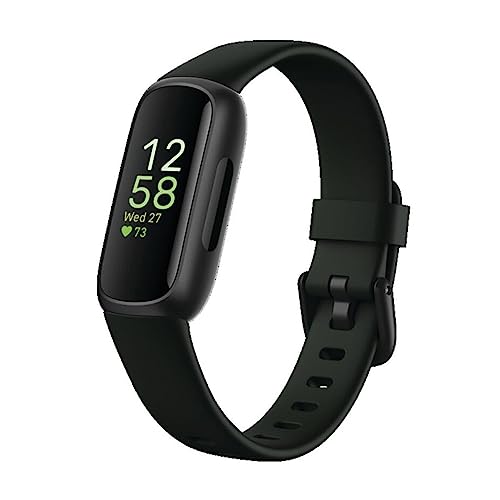
Fitbit Inspire 3
$97.50
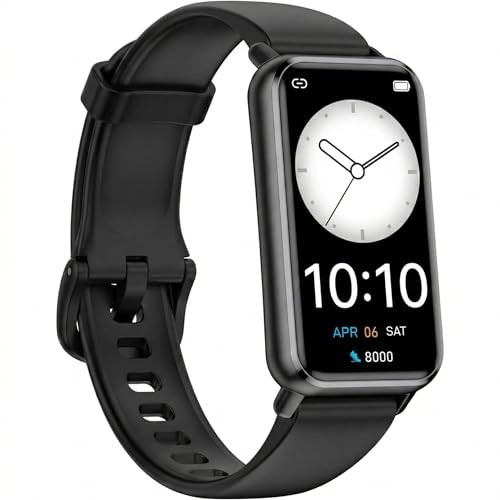
Kaloc Pedometer Watch
$19.99
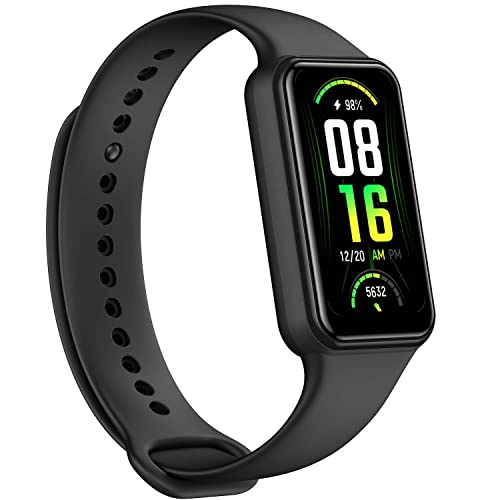
Amazfit Band 7
$49.99

Moremore Fitness Tracker
$25.99
Spec Comparison
TL;DR: The Garmin Forerunner 165 packs a vivid 1.2‑inch AMOLED screen, 5 ATM water resistance, and up to 20 days of battery‑saver life for $199, making it a lightweight, feature‑rich choice for runners.
Its standout spec is the 1.2‑inch (30.4 mm) AMOLED touchscreen with a crisp 390×390‑pixel resolution, housed in a 43 mm fiber‑reinforced polymer bezel and chemically strengthened glass lens. At just 39 g (0.08625 lb), the watch feels barely there on the wrist, and the 5 ATM rating means you’ll wear it while swimming.
Compared with the other nine trackers, the Forerunner 165 is lighter than the Fitbit Inspire 3 (108 g) but heavier than the ultra‑light Xiaomi Smart Band 9 Midnight (15.8 g). Its battery‑saver mode lasts up to 20 days, which outpaces the Fitbit’s 5‑day life and the Amazfit Bip 6’s typical 14‑day claim, while matching the Xiaomi’s 21‑day endurance. The screen is larger than the Fitbit’s 0.7‑inch display and the Samsung Galaxy FIT 3’s 1.6‑inch LCD, yet smaller than the Amazfit Bip 6’s 1.97‑inch panel.
Reviewers consistently praise the watch’s bright, easy‑to‑read display and the comfort of its lightweight design during long runs. Users also highlight the reliable GPS and the depth of health data – wrist‑based heart rate, Pulse Ox spot‑check, HRV status, and VO₂ Max – as valuable for beginners. Professional reviewers note the lack of built‑in music storage and the absence of a dedicated triathlon mode, which may steer more advanced athletes elsewhere.
Beyond the screen, the Forerunner 165 offers 25+ activity profiles, daily suggested workouts (up to seven per week), Garmin Coach plans, and recovery insights like sleep score and HRV. NFC‑enabled Garmin Pay adds contactless payment convenience, and the quick‑release 20 mm strap makes swaps effortless.
Pros
Cons
Best for: Buyers willing to invest in a proven, high‑quality option
Avoid if: You need advanced features or professional‑grade performance
TL;DR: The Xiaomi Smart Band 9 Midnight delivers a 1.62‑inch 1200‑nit AMOLED screen, up to 21 days of battery life, and a feather‑light 15.8 g chassis for reliable daily health tracking.
The standout spec is its 1200‑nit peak brightness on a 1.62‑inch AMOLED panel, which reviewers say stays readable in direct sunlight. Coupled with a 192 × 490‑pixel resolution and a 60 Hz refresh rate, the display feels crisp for a band of this size.
Compared with the other nine trackers, the Band 9 is lighter than the Samsung Galaxy FIT 3 (0.08 lb) and the Amazfit Bip 6 (0.09 lb), and it matches the Amazfit Band 7’s weight of about 0.06 lb. Its 233 mAh battery outpaces Samsung’s 208 mAh cell and is on par with the Amazfit Band 7’s 232 mAh, yet it offers a longer endurance—up to 21 days versus Samsung’s 14 days and Amazfit Band 7’s typical 18 days. The screen is slightly larger than Samsung’s 1.6‑inch display, though smaller than the Bip 6’s 1.97‑inch panel. Brightness trails the Bip 6’s 2,000‑nit peak, but still ranks among the brightest in this group.
User sentiment highlights the band’s “all‑day comfort” and “sunlight‑readable screen,” with many noting the convenience of a single charge lasting three weeks. Professional reviewers praise the linear‑motor vibration for clear workout cues and the upgraded optical heart‑rate sensor, which claims a 16 % accuracy boost. Common complaints focus on the lack of built‑in GPS, occasional sync hiccups with the Mi Fitness app, and the modest 192 × 490 resolution limiting detail in notifications.
Beyond the display, the tracker packs 150+ sports modes, advanced VO₂ max and recovery metrics, and an IP 5 ATM water rating for 50‑meter submersion. Sensors include an accelerometer, gyroscope, ambient‑light detector, optical heart‑rate and SpO₂ sensors, all driven by HyperOS and Bluetooth 5.4. The magnetic charging cable tops off the 233 mAh cell in about one hour.
Pros
Cons
Best for: Most users looking for a well‑reviewed, reliable mainstream option
Avoid if: You need advanced features or professional‑grade performance
TL;DR: The Polar Ignite 3 Titanium blends a feather‑light 36 g titanium case with a bright 1.28‑inch AMOLED screen, dual‑frequency GPS and multi‑day battery life, but its small display and premium $449.99 price keep it niche.
The standout spec is its ultra‑light construction: the watch itself weighs just 36 g, while the interchangeable band adds only 21 g, making it feel almost weightless on the wrist. Its 1.28‑inch AMOLED display packs a crisp 416 × 416 resolution behind Gorilla Glass 3, delivering vivid colors that stay readable in bright conditions.
Compared with the nine other trackers in this roundup, the Ignite 3 is heavier than the Garmin Forerunner 570 (0.003747858454 lb) but a tad lighter than the Forerunner 165 (0.08625 lb). Its battery capacity of 215 mAh supports up to 120 hours in watch mode, which translates to several days of use—shorter than the Forerunner 570’s 11‑day smartwatch mode but longer than many budget bands that list only a few days. Its screen size is smaller than the Amazfit Bip 6’s 1.97‑inch display and the Samsung Galaxy FIT 3’s 1.6‑inch screen, which reviewers often note.
User sentiment highlights how comfortable the titanium case feels during long runs and overnight sleep tracking. Professional reviewers praise the dual‑frequency GPS (GPS, GLONASS, Galileo) for cutting position errors in urban canyons, and they commend the Precision Prime optical heart‑rate sensor for reliable data. However, several users mention the limited widget selection and the absence of advanced health sensors such as ECG or SpO₂, which some competitors provide.
Pros
Cons
Best for: Fitness enthusiasts who value a feather‑light titanium watch, precise GPS and solid battery life for daily training.
Avoid if: You’re shopping on a tight budget — the $449.99 price tag places it well above most entry‑level trackers.
“crazy light at 35–36 g”
TL;DR: The Garmin Forerunner 570 delivers a vivid 1.4‑inch AMOLED display, 8 GB of storage, and up to 11 days of smartwatch‑mode battery, but its $542.99 price puts it at the premium end of fitness trackers.
Its standout feature is a 1.4‑inch (35.3 mm) AMOLED touchscreen with a 454×454‑pixel resolution; Corning Gorilla Glass 3 protects it. Weighing just 1.7 g, it feels feather‑light on the wrist, and the 8 GB of internal storage lets you keep plenty of music and apps without worrying about space.
The Forerunner 570 costs more than most and weighs dramatically less than the lightest competitor, which tips the scales at about 15.8 g. Its 8 GB of storage outstrips the Forerunner 165’s 4 GB and the Fitbit Inspire 3’s 6.4 GB, while matching the higher end of the group. Battery life in smartwatch mode reaches up to 11 days, matching the Forerunner 165 and exceeding many budget bands that list 5‑7 days, though it falls short of the 14‑21 day endurance claimed by some ultra‑budget options.
Users consistently praise the bright AMOLED screen and the Gen5 optical heart‑rate sensor, noting reliable readings even in cold weather. Professional reviewers highlight the addition of 23 new sport profiles and the aluminum bezel as solid upgrades, while also calling out the noticeable price jump from the previous model. Reviewers also mention that the battery drains noticeably faster when GPS is paired with music playback, limiting longer sessions.
Technical extras include a built‑in microphone and speaker for calls, a 5 ATM water‑resistance rating for swimming, and a suite of sensors—altimeter, SpO₂, skin temperature, accelerometer, gyroscope, and compass—making it a well‑rounded multisport companion.
Pros
Cons
Best for: Dedicated runners, triathletes, and multisport athletes who want detailed training insights and a premium AMOLED display.
Avoid if: You're shopping on a tight budget — it's priced at $542.99.
TL;DR: The Samsung Galaxy Fit 3 offers a 1.6‑inch AMOLED display, 14‑day battery life, and a lightweight aluminum build at $44.99, but lacks built‑in GPS and music storage.
At the core of the Galaxy Fit 3 is a 1.6‑inch AMOLED panel that packs a 256 × 402‑pixel resolution and 302 PPI, delivering crisp colors on a slim 9.9 mm depth. The tracker sits on an aluminum case and weighs just 36.8 g (0.081130112416 lb), making it almost unnoticeable on the wrist. Power comes from a 208 mAh battery that Samsung says can last up to 14 days, and a fast‑charge that reaches 50 % in 30 minutes.
Compared with the other nine contenders, the Fit 3 is heavier than the Amazfit Band 7 (28 g) but still far lighter than the Fitbit Inspire 3 (108 g). Its 14‑day endurance sits below the Amazfit Band 7’s 18‑day typical life, yet matches the Kaloc Pedometer Watch’s 14‑day claim. The 1.6‑inch screen is a touch smaller than the Xiaomi Smart Band 9’s 1.62‑inch display, while the 5ATM/IP68 rating gives it stronger water resistance than many budget options.
User reviews repeatedly mention the comfort of the lightweight aluminum strap and the vividness of the AMOLED screen, with many noting they can forget the device is on. Professional reviewers also point out the rectangular display is about half an inch larger than the previous generation, adding more on‑screen data. The main complaints target the missing built‑in GPS and the lack of onboard music storage, which forces you to rely on a smartphone for those features.
Under the hood, the Fit 3 runs Samsung’s FreeRTOS on an ARM Cortex‑M33 processor, which uses 16 MB of RAM and 256 MB of internal storage. Sensors include an optical heart‑rate monitor, SpO₂, barometer, gyroscope, accelerometer, and light sensor, feeding into over 100 exercise modes, auto‑detect workouts, sleep coaching, and snore detection.
Pros
Cons
Best for: Budget-conscious buyers seeking a reliable entry-level option
Avoid if: You need advanced features or professional‑grade performance
TL;DR: The Amazfit Bip 6 packs a 1.97‑inch, 2,000‑nit AMOLED screen, 14‑day battery life and a lightweight 0.09‑pound aluminum body into a budget‑friendly fitness watch.
Its ultra‑bright 2,000‑nit AMOLED display stands out, outshining many rivals and staying readable in direct sunlight. At 1.97 inches, the screen is considerably larger than the 0.7‑inch display on the Fitbit Inspire 3 and rivals the 1.6‑inch panels of the Samsung Galaxy FIT 3 and Kaloc Pedometer Watch.
Battery life reaches up to 14 days typical, matching the Samsung Galaxy FIT 3 and Kaloc Pedometer Watch, and beating the Fitbit Inspire 3’s 5‑day runtime. It falls short of the Xiaomi Smart Band 9 Midnight’s 21‑day claim and the Amazfit Band 7’s 18‑day typical life, but still offers a comfortable charging interval for most users.
Professional reviewers praise the bright screen and the lightweight aluminum‑alloy frame (0.09 pounds), noting the device feels almost unnoticeable on the wrist. Users echo this sentiment, highlighting the long battery and comfortable strap, while some report occasional Bluetooth drops and a less premium feel compared with higher‑end models. The watch also includes AI coaching, 140+ workout modes, IP 5 ATM water resistance and Zepp OS for a well‑rounded experience.
Pros
Cons
Best for: Most users looking for a well‑reviewed, reliable mainstream option
Avoid if: You're shopping on a tight budget — it's priced at $74.99
TL;DR: Fitbit Inspire 3 offers a crisp 0.7‑inch AMOLED screen, 5‑day battery, and comprehensive health sensors in a 108‑g band, but its small display and modest battery lag behind many rivals.
The standout feature is its 0.7‑inch AMOLED display, which delivers vivid colors despite the modest size. Fitbit pairs the screen with 6.4 GB of internal storage and a suite of sensors—including a 3‑axis accelerometer, optical heart‑rate monitor, and red‑plus‑infrared SpO2 sensor—so you can track steps, heart rate, oxygen levels, and sleep without needing a phone.
Compared with the other nine trackers, the Inspire 3 is heavier at 108 g (≈0.24 lb) than the Amazfit Bip 6 (0.09 lb), Xiaomi Smart Band 9 (0.06 lb), and Samsung Galaxy FIT 3 (0.08 lb). Its battery lasts five days, which is shorter than the up‑to‑14‑day life of the Amazfit Bip 6 and the up‑to‑21‑day life of the Xiaomi model. The screen is also smaller than the 1.97‑inch display on the Bip 6, the 1.62‑inch on the Xiaomi band, and the 1.6‑inch on the Samsung FIT 3, making the Inspire 3 feel more compact.
Reviewers note the band feels comfortable for all‑day wear, and the sleep‑stage and stress‑tracking features add real value to daily health monitoring. Some users, however, mention that the tiny 0.7‑inch screen can feel cramped when scrolling through detailed stats, and a few wish the battery could stretch beyond five days.
Additional technical details include water resistance to 50 meters, an operating temperature range from 0 °C to 40 °C, and a maximum operating altitude of 28,000 ft. It supports both Android and iOS, and its vibration motor provides discreet alerts for reminders and alarms.
Pros
Cons
Best for: Buyers willing to invest in a proven, high-quality option
Avoid if: You're on a tight budget or only need basic functionality
TL;DR: The Kaloc Pedometer Watch offers a 1.58‑in AMOLED screen, 14‑day battery life and 5 ATM water resistance for just $19.99, making it a lightweight, budget‑friendly tracker for casual fitness fans.
At the heart of the Kaloc watch is its 1.58‑in AMOLED display paired with five adjustable brightness levels, delivering clear visuals even in bright outdoor conditions. The device runs on a lithium‑polymer battery; the manufacturer says it lasts 14 days on a single charge, charges in 1 hour, and stays in standby for up to 30 days. Its 5 ATM rating means you’ll wear it while swimming, and the built‑in heart‑rate, SpO₂ and sleep sensors round out the health suite.
Compared with the other nine trackers in this roundup, Kaloc’s screen sits between Moremore’s 1.47‑in and Samsung’s 1.6‑in panels, while its 0.15 lb weight is heavier than Moremore’s 50 g but lighter than Fitbit Inspire 3’s 0.24 lb and Garmin Forerunner 165’s 0.09 lb. Battery life matches Samsung’s claimed 14‑day endurance, exceeds Moremore’s 7‑10 day range, but falls short of Xiaomi’s 21‑day claim and Amazfit Band 7’s 18‑day typical life. Most peers don’t list a 5 ATM water resistance, giving Kaloc an edge for swimmers.
Users consistently praise the feather‑light feel and the long‑lasting battery, noting the AMOLED screen stays bright during runs and hikes. Professional reviewers highlight accurate step, distance and calorie counts after calibrating stride length via the companion HeroBandIII app, but they also point out that the battery often tops out around a week in real‑world use, which is below the advertised 14 days. Health metrics such as heart‑rate and SpO₂ are described as non‑medical, so they’re useful for general wellness but not for clinical tracking.
Beyond the core sensors, the watch supports over 100 sports modes, customizable watch faces, music control, vibration alerts and weather updates. The band adjusts from 5.85 in to 8.78 in, fitting most wrist sizes, and Bluetooth connectivity works with Android 6.0+ and iOS 12.0+ devices.
Pros
Cons
Best for: Shoppers on a tight budget who want the most for their money
Avoid if: You need GPS, advanced sport analytics or medical‑grade health monitoring
“lightweight feel (1 oz) and slim design for comfort, long battery alleviating 'charging anxiety,' and simple pedometer use without phone”
TL;DR: The Amazfit Band 7 offers a 1.47‑inch AMOLED screen, up to 18 days of typical battery life (28 days in saver mode), and a full suite of health sensors for $44.99, making it a solid budget pick.
The standout spec is the 1.47‑inch AMOLED display with 282 ppi and a 194 × 368 pixel resolution, protected by tempered glass with an anti‑fingerprint coating. Power‑wise, the 232 mAh battery delivers 18 days of typical use and can stretch to 28 days in battery‑saver mode, with a charging time of up to 2 hours.
Compared with the nine other trackers in this roundup, the Band 7 outlasts the Samsung Galaxy FIT 3 (up to 14 days) and the Moremore Fitness Tracker (7‑10 days), but it falls short of the Xiaomi Smart Band 9’s 21‑day claim. At 0.06 pounds (28 g), it's lighter than most peers—only the Xiaomi model (0.059 pounds) is lighter—while its 1.47‑inch screen is smaller than the Samsung (1.6 in), Xiaomi (1.62 in) and Kaloc (1.58 in) devices, yet larger than the Fitbit Inspire 3 (0.7 in) and Garmin Forerunner 165 (1.2 in). The 5 ATM water‑resistance rating is a feature many competitors don’t list.
User feedback highlights the vibrant AMOLED panel and the convenience of a 28‑day saver mode, with many noting the band stays comfortable all day thanks to its slim 12.2 mm profile. Professional reviewers praise the battery endurance and the breadth of health tracking—heart‑rate, SpO₂, stress, sleep and 120 sport modes—while also pointing out the lack of built‑in GPS and occasional app‑sync hiccups. The longer strap length may feel loose on smaller wrists, a common complaint.
Pros
Cons
Best for: Entry-level buyers or those on a tight budget
Avoid if: You need advanced features or professional‑grade performance
“Fitbit aesthetics for under $50”
“nice 1.47-inch HD AMOLED”
TL;DR: The $29.99 Moremore Fitness Tracker offers a 1.47‑inch AMOLED screen, 24/7 health sensors and up to 10 days of battery life, making it a solid entry‑level option for casual fitness fans.
The device sports a 1.47‑inch AMOLED panel with a 170 × 320 pixel resolution and an IP68 water‑resistance rating, all packed into a lightweight 50 g case. Battery life runs 7‑10 days, and a magnetic charging stand delivers fast charging in roughly 2 hours.
Compared with the other nine trackers, the Moremore weighs more than the Samsung Galaxy FIT 3 Gray (36.8 g) but less than the Kaloc Pedometer Watch, which weighs about 0.15 lb. Its 7‑10‑day battery span sits below the 14‑day lives of Kaloc, Samsung, Amazfit Bip 6 and the 18‑day span of Amazfit Band 7, yet it outlasts the Fitbit Inspire 3’s 5‑day claim. The 1.47‑inch screen is smaller than Samsung’s 1.6‑inch and Xiaomi’s 1.62‑inch displays, but larger than the Fitbit’s 0.7‑inch and Garmin’s 1.2‑inch screens.
Professional reviewers highlight the tracker’s sleek design and reliable sensor suite, noting accurate heart‑rate, SpO₂ and blood‑pressure data during workouts. Everyday users appreciate the clear indoor display and the convenience of 25 sports modes, smart notifications and remote camera control. However, several reviewers point out that the screen becomes hard to read in bright sunlight and that continuous night‑time SpO₂ monitoring can cut battery life down to about two days. The companion app defaults to metric units, which some users find inconvenient.
Pros
Cons
Best for: Entry-level buyers or those on a tight budget
Avoid if: You want the best value‑per‑dollar in its price range
“Provides most of the heart health data I’m looking for”
“going for two days when one of the night monitors is active”
Breakdown
Garmin Forerunner 165
Pros
Cons
Xiaomi Smart Band 9 Midnight
Pros
Polar Ignite 3
Pros
Cons
Garmin Forerunner 570
Pros
Cons
Based on scoring data and product specs
Personalized picks
Best Overall Pick
Garmin Forerunner 165
Best ValueBest for: Buyers willing to invest in a proven, high-quality option
Xiaomi Smart Band 9 Midnight
Best for: Most users looking for a well-reviewed, reliable mainstream option
$52.30-$147.69 vs winner
Skip Moremore Fitness Tracker if…
You want the best value-per-dollar in its price range
We’re naming the Garmin Forerunner 165 the clear winner. Its 1.2‑inch AMOLED screen (390 × 390 px) looks crisp, while the Battery Saver mode stretches to up to 20 days on a single charge. At $199.00 it offers a 4.7‑star rating from 4,895 reviewers and weighs just 39 g, making it both affordable and lightweight.
The runner‑up is the Xiaomi Smart Band 9 Midnight, perfect if you want an always‑on, ultra‑bright display for everyday fitness. Its 1.62‑inch AMOLED panel pushes 1,200 nits, the battery lasts up to 21 days, and it tracks more than 150 sports modes—all for $53.31 and a solid 4.4‑star rating from 5,142 users.
For tighter budgets, the Kaloc Pedometer Watch shines at $19.99 with basic step‑counting and a simple design. If you’re willing to splurge, the Garmin Forerunner 570 offers premium features and a robust build for $542.99, delivering premium features beyond those of the value‑focused Forerunner 165.
Pick the Garmin Forerunner 165 today and get the best blend of display quality, battery life, and price for your fitness tracking needs.
The Garmin Forerunner 165 can last up to 20 days in battery‑saver mode and still provides up to 17 hours of GPS tracking, while the Xiaomi Smart Band 9 Midnight offers up to 21 days of overall battery life but only spot‑check GPS. If you need a balance of long standby time and solid GPS endurance, the Forerunner 165 edges ahead.
No reviews yet — be the first to share your experience.
Please sign in to leave a review