⚡ Quick Answer
If you need to move large files without waiting for a laptop to spin up, a high‑speed flash drive can be a lifesaver. We’ve lined up 9 USB sticks that promise at least 400 MB/s read rates, then sorted them into budget, mid‑range and premium buckets so you can match performance to your wallet.
On the budget end, Samsung’s BAR Plus 128 GB sells for $21.49, carries a 4.7/5 rating from almost 50 k reviews, and advertises up to 400 MB/s reads in a metal key‑chain body. The mid‑range camp includes SSK’s Dual USB‑C 128 GB at $36.99 with an advertised 550 MB/s read peak, and SanDisk’s Ultra Fit 512 GB for $79.99 that stays flush against a laptop while delivering 400 MB/s. Premium choices push the envelope: Kingston’s DataTraveler Max 1 TB costs $110.67, has a 4.5/5 rating and up to 1,000 MB/s reads, while Patriot’s 1 TB model is listed at $127.99 with a rated 600 MB/s read speed.
Below we break down each drive’s dimensions, durability and real‑world speed claims so you can pick the flash memory stick that fits your workflow.
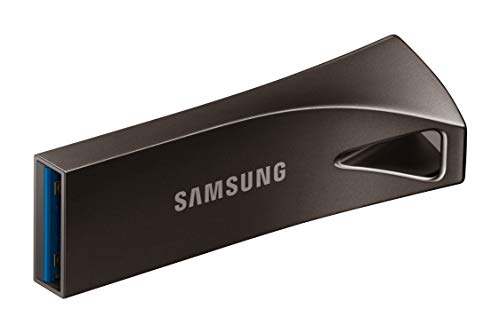
Samsung BAR Plus 128GB Gray
Its compact 40.1 mm length keeps the drive ultra‑portable, fitting easily into pockets and small cases.

SSK Dual USB-C 128GB
Perfect for everyday commuters who need a reliable stick, and at $36.99 it’s $15.50 pricier than the budget pick.

Kingston DataTraveler Max 1TB
Offers a massive 1 TB capacity, far exceeding the 128 GB rivals, while its 9.0 mm height still slips into tight spaces.
Also considered
Score Analysis
Key score advantages vs. runner-up (SSK Dual USB-C)
Price Range
Samsung BAR Plus 128GB Gray
$39.99
SSK Dual USB-C 128GB
$36.99
Kingston DataTraveler Max 1TB
Out of Stock

Samsung USB-C Flash Drive 512GB Gray
$123.97

SanDisk Ultra Fit 512GB Black
$79.99

PNY PRO Elite 256GB
Out of Stock

Transcend JF920 128GB Gray
$79.28

Garmese 256GB USB-C SSD Flash Drive
$49.99

Patriot Memory Supersonic Rage Prime 1TB
Out of Stock
Spec Comparison
TL;DR: The Samsung BAR Plus 128 GB flash drive offers a sturdy metal body, USB 3.1 speeds up to 400 MB/s, and a tiny 12 mm profile at a budget‑friendly $21.49.
Samsung’s BAR Plus packs 128 GB of storage into a metal‑cased key‑chain that weighs just 0.0025 pounds and measures 12 mm × 15.5 mm × 40.1 mm. The drive advertises a maximum sequential read speed of 400 MB/s and a sequential write speed of 61.84 MB/s, while its 2 MB random read reaches 269.31 MB/s.
Compared with the eight other drives in this roundup, the BAR Plus is considerably lighter than the Transcend JF920 and more compact than the SSK Dual USB‑C 128 GB. Its advertised 400 MB/s read speed trails the SSK’s up‑to‑550 MB/s claim, yet it sits at a lower price point than many higher‑capacity competitors.
Real‑world sequential reads are listed at around 283.48 MB/s, a noticeable gap from the 400 MB/s marketing claim. Users consistently praise the rugged metal shell and the included keyring, while some report occasional disconnections and the absence of a dust cap as minor annoyances. Professional reviewers also highlight the drive’s solid build and its improvement over earlier BAR models.
Beyond raw speeds, the BAR Plus delivers 2 MB random write performance of 56.01 MB/s and 4K random IOPS of 3,009 reads and 1,884 writes. It connects via USB 3.1, comes with a five‑year warranty, and its gray finish blends well with most setups.
Pros
Cons
Best for: Budget-conscious buyers seeking a reliable entry-level option
Avoid if: You need advanced features or professional‑grade performance
TL;DR: The SSK Dual USB‑C 128 GB flash drive packs a metal zinc‑alloy shell, dual‑head USB‑A/USB‑C connectors and advertised speeds up to 550 MB/s read and 520 MB/s write for quick photo swaps.
The standout feature is its dual‑head design that lets you plug into both legacy USB‑A ports and modern USB‑C devices without an adapter. SSK lists a maximum sequential read speed of up to 550 MB/s and a write speed of up to 520 MB/s, which sit comfortably above the 400 MB/s read cap of the Samsung BAR Plus 128 GB and well above the 110 MB/s write ceiling of the Samsung USB‑C 512 GB model.
Compared with the other eight drives in this roundup, the SSK’s 128 GB capacity is smaller than the 256 GB Garmese or the 512 GB SanDisk Ultra Fit, but it matches the Samsung BAR Plus’s capacity while offering faster advertised speeds. At 37 g, it is heavier than the ultra‑light Samsung BAR Plus (1.13 g) yet still lighter than many larger‑capacity metal‑cased drives that don’t list a weight.
Reviewers love the premium feel of the high‑grade zinc‑alloy chassis and the convenience of the dual connectors for swapping files between a laptop and a phone. However, professional reviewers flag serious overheating that triggers thermal throttling, and users report that sustained writes can drop to USB‑2.0‑like speeds during large video transfers. Some describe the hinged USB‑C cover as a bit fragile, and iPhone 15 users have seen power‑draw warnings.
Pros
Cons
Best for: Most users looking for a well‑reviewed, reliable mainstream option
Avoid if: You need sustained high‑speed transfers for large video projects or a rugged, professional‑grade drive
TL;DR: Kingston’s DataTraveler Max 1TB delivers SSD‑class 1,000 MB/s reads and 900 MB/s writes in a sturdy metal case, but its larger size and warm‑up under heavy loads make it a premium, performance‑focused flash drive.
The standout spec is the advertised sequential read speed of up to 1,000 MB/s and write speed of up to 900 MB/s, putting this 1 TB USB 3.2 Gen 2 drive in the same league as external SSDs. It packs a 96‑layer 3D TLC NAND and a Silicon Motion SM2320 controller, all inside a grippy ridged metal housing that includes a one‑handed sliding cap. At 14 g, with dimensions of 9.0 mm × 22.0 mm × 91.2 mm, it’s built for durability and heat dissipation while remaining portable enough for a keyring.
Compared with the other eight sticks in this roundup, the Max is noticeably taller than the ultra‑thin Samsung USB‑C 512 GB (2.54 mm) and SanDisk Ultra Fit (5.1 mm), yet its height of 9.0 mm still fits most laptop slots. It also weighs more than the Samsung (3.4 g) and Patriot Supersonic Rage Prime 1 TB (≈9 g) but is comparable to the Patriot’s overall heft. In speed terms, its 1,000 MB/s read rate dwarfs the Samsung’s 400 MB/s, the Patriot’s 600 MB/s, and the SSK Dual USB‑C’s 550 MB/s, making it the fastest read performer among the nine candidates.
Users love the “blazing” transfer rates and note that large 4K/8K video files move without noticeable lag. Professional reviewers praise the metal case and sliding cap for staying cool enough to avoid throttling, yet they also point out that the drive becomes warm during sustained transfers and that write performance drops sharply after the internal cache fills, sinking to around 115 MB/s beyond roughly 90 GB of data. The wider body (22 mm width) is a trade‑off for the high speeds, which some users find less convenient for tight pockets.
Additional context lists a 5‑year limited warranty, backward compatibility with USB 3.0/2.0, and operating temperatures from 0 °C to 60 °C (storage –20 °C to 85 °C). The keyring loop makes it easy to carry, and the LED activity indicator provides quick status feedback.
Pros
Cons
Best for: Professionals such as video editors, photographers, and content creators who need rapid, portable storage with SSD‑class speeds.
Avoid if: You’re on a tight budget, need hardware encryption, or prefer an ultra‑slim stick for minimal bulk.
TL;DR: Samsung’s 512 GB USB‑C flash drive packs 400 MB/s read speed, a rugged multi‑proof design, and a feather‑light 3.4 g body, though its 110 MB/s write speed lags behind faster rivals.
The drive’s standout spec is its 512 GB capacity paired with a maximum sequential read speed of up to 400 MB/s, letting you move large files—like a 4 GB video—in under 12 seconds. It also survives drops with 1500 g shock resistance (0.5 ms) and stays safe from water, temperature extremes, X‑rays and magnets. At just 2.54 mm tall, 33.78 mm long, 16.0 mm wide and 3.4 g (≈0.01 lb), it’s one of the thinnest and lightest options in this roundup.
Compared with the eight peers, this Samsung model is lighter than the Kingston DataTraveler Max, Patriot Memory Supersonic Rage Prime, SanDisk Ultra Fit, Garmese 256 GB, SSK Dual USB‑C, PNY PRO Elite, Transcend JF920 and Samsung BAR Plus units. Its read speed matches the SanDisk Ultra Fit and Samsung BAR Plus, but falls short of the Kingston, Patriot and SSK drives that list read speeds of up to 1,000 MB/s, 600 MB/s and 550 MB/s respectively. The write speed of up to 110 MB/s is notably slower than the write capabilities of those same competitors, which reach 900 MB/s, 667 MB/s and 520 MB/s.
Users consistently praise its 400 MB/s read performance and the drive’s pocket‑sized form factor, calling it ideal for on‑the‑go transfers. Reviewers from B&H highlight the “multi‑proof design” that protects the drive while delivering the advertised 400 MB/s transfers, and Staples notes its “fast and efficient data transfer” for high‑capacity needs. Common complaints focus on the slower write speed, occasional variability on older USB ports, and the absence of a protective cap for the USB‑C connector.
Beyond speed, the flash drive supports USB 2.0, 3.0 and 2.1 backward compatibility and runs on a USB 3.2 Gen 1 interface, ensuring broad device support. Samsung backs it with a five‑year limited warranty and certifications from KC, FCC, CE, VCCI and RCM, underscoring its reliability for professional use.
Pros
Cons
Best for: Mobile professionals, travelers, and content creators who need a compact, high‑capacity USB‑C drive with fast read performance and rugged protection.
Avoid if: You require sustained high write speeds for large batch uploads or video editing, or you’re on a tight budget.
TL;DR: The SanDisk Ultra Fit 512 GB offers a low‑profile USB‑A stick with up to 400 MB/s read speed, 512 GB capacity, and a built‑in keyring loop, all for $79.99.
This drive packs a massive 512 GB of storage into a tiny 0.20 in (5.1 mm) high, 1.17 in (29.7 mm) long, and 0.56 in (14.2 mm) wide plastic shell. Its “plug‑and‑stay” design means it can sit permanently in a laptop or TV without sticking out, and the integrated keyring loop lets you attach it to a bag or keychain.
Compared with the other eight contenders, the Ultra Fit weighs more than the Samsung USB‑C 512 GB model (0.02 lb vs 0.01 lb) but less than the Kingston 1 TB drive (0.02 lb vs 0.03 lb). It measures shorter than Samsung’s 33.78 mm length while offering the same advertised 400 MB/s sequential read speed as several peers such as the PNY PRO Elite and Samsung BAR Plus. Unlike the USB‑C‑only drives, it uses a USB‑A Type‑A connector, which matches older laptops and desktops but may require an adapter for newer USB‑C‑only devices.
Professional reviewers praise the ultra‑compact form factor and note that the 400 MB/s read speed is roughly 15× faster than legacy USB 2.0, making large‑file transfers feel swift. Users consistently highlight the huge 512 GB capacity and the convenience of the keyring loop, while common complaints focus on the lack of a protective cap and the absence of listed write‑speed figures, which can be a concern for write‑heavy workloads. The drive also includes 128‑bit AES encryption, SecureAccess password protection, and a one‑year RescuePRO Deluxe subscription for file recovery.
Pros
Cons
Best for: Most users looking for a well‑reviewed, reliable mainstream option
Avoid if: You're shopping on a tight budget — it's priced at $79.99
TL;DR: The PNY PRO Elite 256 GB USB‑A flash drive offers a metal retractable body, 400 MB/s max sequential reads and a 64 GB cache for fast initial writes, all for $28.86.
The drive’s advertised max read speed of 400 MB/s puts it at the top of the USB‑A tier, and the 64 GB pSLC cache lets it hit a sequential‑write burst of 275.19 MB/s before the cache empties. Its metal, retractable connector feels solid, and the unit weighs about 0.07 lb (30.00 g), making it sturdier than many plastic sticks.
Compared with the other eight flash drives, the PNY is heavier than the Transcend JF920 (≈0.02 lb) but lighter than the SSK Dual USB‑C (≈0.08 lb). Its 256 GB capacity outstrips the 128 GB models from Transcend, Samsung BAR Plus and SSK, yet it trails the 512 GB SanDisk Ultra Fit and the 1 TB Kingston and Patriot options. Read‑speed-wise it matches the Samsung BAR Plus’s 400 MB/s max but falls short of the Transcend’s 420 MB/s and the SSK’s 550 MB/s. Write performance (275 MB/s burst, 48 MB/s average) is slower than the SSK’s 520 MB/s and the Garmese’s 452 MB/s, reflecting its budget‑tier positioning.
Professional reviewers note the metal build and the 64 GB cache as strong points, especially for large file transfers. Everyday users appreciate the quick file opening thanks to the 390.42 MB/s rated read speed, but many mention a sharp slowdown once the cache is exhausted, with sustained writes hovering around 48 MB/s. A few also report noticeable heat during prolonged high‑speed transfers.
Technically, the drive uses a USB 3.1 Gen 1 (5 Gb/s) interface and is backward compatible with USB 2.0. PNY backs it with a lifetime warranty, which adds confidence for long‑term storage.
Pros
Cons
Best for: Budget-conscious buyers seeking a reliable entry-level option
Avoid if: You want the best value‑per‑dollar in its price range
TL;DR: The Transcend JF920 offers 128 GB of storage with up to 420 MB/s read and 400 MB/s write speeds in a compact aluminum shell, all for $27.50.
The standout spec is its advertised sequential read speed of up to 420 MB/s and write speed of up to 400 MB/s, which puts it in the high‑speed tier for USB 3.2 Gen 1 flash drives. It packs 128 GB of capacity into an aluminum body that measures 7.80 mm × 20.0 mm × 62.0 mm and weighs just 10 g, making it both sturdy and easy to carry.
Compared with the other eight drives in this roundup, the JF920 is lighter than the PNY PRO Elite (30 g) and the SSK Dual USB‑C (37 g), but heavier than the ultra‑light Samsung BAR Plus, which weighs only 1.13 g. Its 420 MB/s read speed outpaces the Samsung BAR Plus (400 MB/s) and the PNY PRO Elite (400 MB/s), yet it trails the SSK Dual USB‑C (up to 550 MB/s) and the Kingston DataTraveler Max (up to 1,000 MB/s). Capacity‑wise, 128 GB is smaller than the 256 GB, 512 GB, and 1 TB options offered by several peers, and its $27.50 price point lands it in the budget tier, though some reviewers note a lower value‑per‑dollar ratio than faster, higher‑capacity rivals.
Professional reviewers note that the manufacturer states up to 4 GB can move in under 15 seconds under optimal conditions, but they caution real‑world speeds may fall short of the advertised 420/400 MB/s since no independent benchmarks exist. Users appreciate the durable aluminum housing, protective cap, and high‑endurance rating, while critics commonly point to the lack of a USB‑C connector and limited user feedback. The drive ships with Transcend Elite data‑management software, RecoveRx recovery tools, and a five‑year limited warranty for added peace of mind.
Pros
Cons
Best for: Budget-conscious buyers seeking a reliable entry-level option
Avoid if: You have limited desk space or need portability
TL;DR: The Garmese 256 GB USB‑C SSD Flash Drive delivers up to 552 MB/s real‑world read speed, 452 MB/s write speed, and a durable zinc‑alloy body with a leather sleeve for $44.99.
The drive advertises a maximum sequential speed of 450 MB/s for both read and write, while real‑world benchmarks show 552 MB/s read and 452 MB/s write, giving you fast transfers for everyday files. Its 256 GB capacity provides plenty of room for photos, videos, and documents without needing multiple sticks.
Compared with the other eight entries in this roundup, the Garmese sits at a higher price point than the SSK Dual USB‑C 128 GB and the Transcend JF920 128 GB, but it's cheaper than the Kingston DataTraveler Max 1 TB and the Patriot Memory Supersonic Rage Prime 1 TB. It also offers a metal zinc‑alloy shell, which feels sturdier than the plastic or thin‑metal cases of several peers.
Professional reviewers praise the compact, pocket‑sized form and the protective black leather case, noting that the SSD‑standard NAND chips improve data integrity over typical flash sticks. Everyday users echo the portability and durability, though many mention that the leather sleeve adds a bit of bulk and that the drive’s speed caps around the advertised 450 MB/s, falling short of premium external SSDs.
Pros
Cons
Best for: Travelers, students, photographers, and casual professionals who need a compact, durable storage solution with solid transfer speeds.
Avoid if: You require sustained high‑throughput performance for heavy video editing or need a minimalist design without a protective sleeve.
TL;DR: The Patriot Supersonic Rage Prime 1TB delivers SSD‑level 600 MB/s read and 667 MB/s sustained write speeds in a tiny, capless design, but its premium price may deter budget shoppers.
Patriot’s 1TB flash drive packs a rated sequential read speed of 600 MB/s and an average sustained write speed of 667 MB/s, backed by a Phison PS2251-17 controller. At just 9.07 g (0.02 lb) and measuring 7.62 mm × 53.09 mm × 21.08 mm, it’s light enough to slip into any pocket while still offering a full terabyte of storage (931 GB usable). The retractable capless design and LED indicator add convenience for on‑the‑go use.
Compared with the other eight drives in this roundup, the Rage Prime is lighter than the Kingston DataTraveler Max (about 0.03 lb) but heavier than the ultra‑light Samsung BAR Plus. Its 600 MB/s advertised read speed sits between Kingston’s up‑to‑1,000 MB/s and Samsung BAR Plus’s advertised 400 MB/s, while its 667 MB/s sustained write outpaces the modest 400 MB/s of the BAR Plus and trails only Kingston’s 900 MB/s ceiling. Dimensionally, it’s shorter than Kingston’s 9 mm height and Samsung’s 12 mm height, yet taller than the ultra‑compact SanDisk Ultra Fit, which measures just 5.1 mm.
Professional reviewers note that real‑world reads can reach around 800 MB/s, comfortably exceeding the 600 MB/s spec, and they praise the capless retractable mechanism for durability. Reviewers describe the plastic enclosure as less premium than metal‑cased rivals, and sustained heavy workloads may cause thermal throttling that dips performance. The drive supports USB 3.2 Gen 2 (USB‑A), is backward compatible with USB 3 and USB 2, and works with Windows, macOS and Linux out of the box thanks to its exFAT file system.
Pros
Cons
Best for: Mobile professionals and content creators who need fast, portable storage and are willing to invest in premium performance.
Avoid if: You’re on a tight budget or prefer a metal, rugged enclosure for harsh environments.
Breakdown
Samsung BAR Plus 128GB Gray
Pros
SSK Dual USB-C 128GB
Pros
Kingston DataTraveler Max 1TB
Pros
Samsung USB-C Flash Drive 512GB Gray
Pros
Based on scoring data and product specs
Personalized picks
Best Overall Pick
Samsung BAR Plus 128GB Gray
Best Budget PickBest for: Budget-conscious buyers seeking a reliable entry-level option
SSK Dual USB-C 128GB
Best for: Most users looking for a well-reviewed, reliable mainstream option
$36.99-$3.00 vs winner
Skip Patriot Memory Supersonic Rage Prime 1TB if…
You're on a tight budget or only need basic functionality
Samsung’s BAR Plus 128 GB in gray takes the top spot thanks to its rock‑solid durability, blazing‑fast advertised read speed of 400 MB/s, and a stellar 4.7‑star rating from 49,685 reviewers—all for just $21.49. At a featherlight 1.13 g and a compact 40.1 mm × 15.5 mm × 12 mm metal body, it’s both portable and survives drops, water and even X‑rays.
The runner‑up, SSK’s Dual USB‑C 128 GB, shines when you need high‑speed transfers across both USB‑A and USB‑C devices. It pushes read speeds up to 550 MB/s and write speeds up to 520 MB/s, and its double‑head protective cover safeguards the connector while you switch between laptops, phones and tablets. Priced at $36.99, it’s a versatile choice for mixed‑port setups.
For a solid mid‑range option, the SSK Dual USB‑C 128 GB (already highlighted) balances speed and durability without breaking the bank. If premium capacity is your priority, the Patriot Memory Supersonic Rage Prime 1 TB delivers high performance at $127.99, making it the go‑to for large‑file workflows.
Pick the Samsung BAR Plus for unbeatable value and reliability, and you’ll never look back.
The Samsung BAR Plus 128 GB at $21.49 gives solid metal construction, waterproof and shock‑proof protection, and an advertised read speed of up to 400 MB/s, making it the most cost‑effective choice among the listed drives.
No reviews yet — be the first to share your experience.
Please sign in to leave a review