⚡ Quick Answer
FPV drone kits bundle a tiny quadcopter, goggles and a controller, giving you the thrill of first‑person view without a separate build. In this roundup we compare 4 kits, spanning a price range from $104.99 to $259.99. The BETAFPV Meteor75 Pro leads the pack with a 4.7‑star rating from 46 reviewers, promising solid performance for its cost.
To help you navigate the market, we split the offerings into two price tiers. The budget tier features the Meteor75 Pro at $104.99, which provides a 5.5‑minute flight time and a 300‑metre maximum range, and the Tiny Hawk EZ Pilot at $155.00, delivering a modest 4‑minute flight window. The premium tier includes the Apex FPV Drone Kit for $169.99, offering 15‑18 minutes of airtime, and the Tiny Hawk Tinyhawk 3 at $259.99, which has a 22 dBm output power for reliable indoor links.
Next we’ll break down each kit’s build quality, camera view, and ease of use so you can match the right package to your flying goals.

BETAFPV Meteor75 Pro
Offers 5.5 minutes of flight time on a 550 mAh battery, delivering solid runtime for the price.
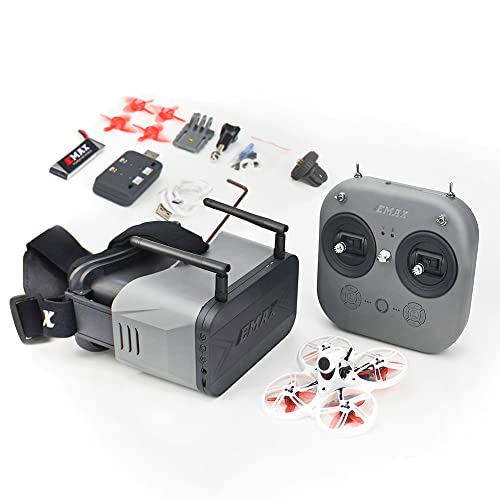
Tiny Hawk Tinyhawk 3
Ideal for pilots seeking premium performance, the Tiny Hawk Tinyhawk 3 justifies its $155 higher price over the Meteor75 Pro, offering advanced features for serious hobbyists.

Apex FPV Drone Kit
Stands out with three interchangeable 400 mAh batteries, letting you swap mid‑flight—something the Meteor75 Pro and Tinyhawk 3 don’t provide.
Score Analysis
Key score advantages vs. runner-up (Tiny Hawk Tinyhawk)
Price Range
BETAFPV Meteor75 Pro
$104.99
Tiny Hawk Tinyhawk 3
$256.07
Apex FPV Drone Kit
$172.99
Tiny Hawk EZ Pilot
$154.55
Spec Comparison
TL;DR: The BETAFPV Meteor75 Pro packs a 75 mm brushless frame, 22000 KV motor and 550 mAh battery for about 5.5 minutes of flight, offering durable crash protection and digital video at a budget‑friendly price.
The Meteor75 Pro’s standout spec is its 22000 KV brushless motor paired with 45 mm propellers, driven by a 550 mAh 1S LiHV battery that delivers roughly 5.5 minutes of flight per charge. Its 75 mm propeller‑guard diameter and shock‑absorbing canopy keep the quad sturdy during aggressive maneuvers, while the adjustable camera angle (10°‑35°) lets you fine‑tune your view.
Compared with the Tiny Hawk EZ Pilot, the Meteor is considerably lighter at 0.35 lb versus the Tiny Hawk’s 2.01 lb, and it also carries a larger 550 mAh battery versus the Tiny Hawk’s 450 mAh. It's a bit heavier than the Apex FPV Drone Kit (0.35 lb vs 0.22 lb), but it still offers a higher battery capacity than Apex’s 400 mAh cells. The Meteor delivers more power and endurance than its peers while staying in the same compact class.
Reviewers praise the durable shock‑absorbing canopy and the quiet operation, noting that the digital DJI O4 Air Unit provides clear 4K‑level video. Professionals highlight the reliable performance in up to 10 mph wind and the hassle‑free setup thanks to pre‑flashed Betaflight 4.5.1 firmware. On the downside, users report voltage sag around 3.3 V that can trigger VTX shutdowns during aggressive flight, and the dipole antenna yields a weaker indoor signal compared with higher‑gain options.
Pros
Cons
Best for: Beginners to intermediate pilots who want a durable, versatile whoop with digital video support and can tolerate a modest weight for added robustness.
Avoid if: You need ultra‑light indoor racing performance or the strongest indoor signal strength.
“perfect for indoor/outdoor/freestyle”
“best tiny whoop for beginners”
TL;DR: The Tiny Hawk Tinyhawk 3 RTF kit packs a 15000 Kv brushless motor, 450 mAh battery and full goggles‑transmitter bundle into a 42 g indoor‑ready drone, but its short 4‑minute flight time and $259.99 price keep it in the premium‑entry niche.
This kit’s standout spec is the 15000 Kv motor paired with a feather‑light 42 g all‑up drone weight, delivering quick, responsive handling for indoor racing. The package also includes EMAX Transporter goggles, an E6 transmitter and a 450 mAh 1S HV LiPo battery, so you can lift off straight out of the box.
Compared with the other three kits, the Tinyhawk 3 weighs more than the Apex FPV Drone Kit (≈0.22 lb) and the BETAFPV Meteor75 Pro (≈0.35 lb), but weighs less than the Tiny Hawk EZ Pilot (≈2.01 lb). Its 4‑minute flight time matches the EZ Pilot’s 4‑minute claim, yet falls short of Apex’s 15‑18 minute and Meteor’s 5.5‑minute runtimes. Battery capacity sits at 450 mAh, the same as the EZ Pilot, while the Apex kit uses a 400 mAh pack.
Reviewers consistently praise the kit as an ideal starter for new pilots, noting the durable polypropylene frame with protective guards and the smooth stability from the F4 flight controller running MPU6000 gyro firmware. Professional reviewers highlight the integrated motor beeper and the ready‑to‑fly convenience. On the downside, users flag the 25 mW SmartAudio VTX and 3 A ESC as limiting for outdoor range, and the 398 g goggles with a 480×272 resolution feel bulky for longer sessions.
Pros
Cons
Best for: Those prioritizing quality and willing to pay for premium performance
Avoid if: You're shopping on a tight budget — it's priced at $259.99
“Amazing for beginners”
“Battery life too short”
TL;DR: The Apex FPV Drone Kit packs a 100 g, 400 mAh beginner‑friendly drone with 1080p, 120°‑150° VR vision and 15‑18 min flight time into an all‑in‑one package for $169.99.
The kit’s most eye‑catching spec is its dual 400 mAh batteries that deliver roughly 15‑18 minutes of flight on a single charge, while the drone itself weighs just 100 g (0.22 lb). Its 120–150° field‑of‑view camera streams 1080p video, and the built‑in Wi‑Fi/5.8 GHz link streams to low‑latency goggles for an immersive experience.
In the four‑product roundup, Apex lands in the mid‑range price tier—more expensive than the Tiny Hawk EZ Pilot but cheaper than the Tinyhawk 3. It's also notably lighter than the Tiny Hawk EZ Pilot (over 2 lb) and the Tinyhawk 3 (over 3 lb), and a touch lighter than the BETAFPV Meteor75 Pro (about 0.35 lb). Its 340 mm length and 239 mm width give it a medium footprint that balances stability with indoor maneuverability.
Reviewers love how the kit arrives ready to fly: the drone, two batteries, goggles and controller are all in the box, and the ELRS‑compatible protocol auto‑connects without extra dongles. Professional reviewers praise the straightforward setup and the “sub‑$100”‑style value for a complete system. The most common complaints point to inconsistent 1080p video clarity, the need to power the controller with AAA batteries, and a 40‑45 minute charge cycle for each battery. Some users also note that the altitude‑hold mode can feel imprecise during indoor flights.
Pros
Cons
Best for: Absolute beginners, indoor flyers, and educators who want a ready‑to‑fly FPV experience without hunting for separate parts.
Avoid if: You need professional‑grade video quality, long‑range performance, or a modular system for advanced upgrades.
“so much fun”
“best drone for beginners UNDER $100 in 2020”
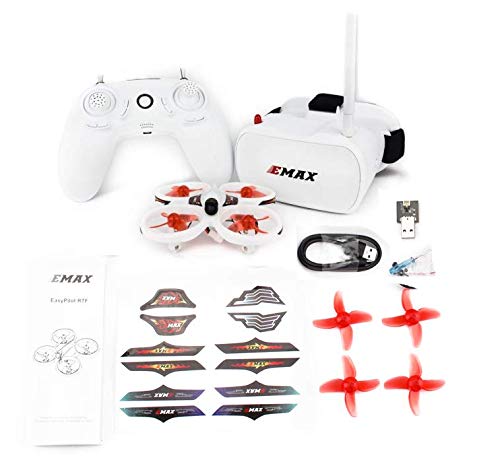
TL;DR: The Tiny Hawk EZ Pilot bundles a drone, goggles, transmitter and charger in one $155 kit, but its 4‑minute flight time and brushed motors keep it firmly in the beginner‑budget tier.
This RTF kit ships with a 1S 450 mAh HV LiPo battery, a 40 mm propeller, and a 22 dBm video link, giving you a ready‑to‑fly experience straight out of the box. The airframe weighs just 35 g dry, and the whole package—including controller and goggles—weighs 912.5 g (about 2.01 lb).
Compared with the other three kits, the EZ Pilot is heavier than the Apex FPV Drone Kit (≈0.22 lb) and the BETAFPV Meteor75 Pro (≈0.35 lb), but lighter than the Tiny Hawk Tinyhawk 3 (≈3.24 lb). Its 450 mAh battery matches the Tinyhawk 3’s capacity, exceeds Apex’s 400 mAh, yet falls short of Meteor75 Pro’s 550 mAh. It flies for only 4 minutes, which is far shorter than Apex’s 15‑18 minutes and BETAFPV’s 5.5 minutes.
Professional reviewers praise the included prop guards and the plug‑and‑play nature of the kit, noting that beginners can start flying without extra purchases. Everyday users echo the convenience but repeatedly mention the short 4‑minute battery life and the grainy 600 TVL camera image as drawbacks. The brushed 0816 motors and 4‑in‑1 3 A ESC keep the drone lightweight, though reviewers flag brushed motors as less durable than brushless alternatives.
Pros
Cons
Best for: Entry-level buyers or those on a tight budget
Avoid if: Reliability and user satisfaction are your top concerns
“Amazing for beginners”
“Battery life too short”
Breakdown
BETAFPV Meteor75 Pro
Pros
Tiny Hawk Tinyhawk 3
Pros
Cons
Apex FPV Drone Kit
Pros
Tiny Hawk EZ Pilot
Pros
Cons
Based on scoring data and product specs
Personalized picks
Best Overall Pick
BETAFPV Meteor75 Pro
Best Budget PickBest for: Users with specific technical requirements or compatibility needs
Tiny Hawk Tinyhawk 3
Best for: Those prioritizing quality and willing to pay for premium performance
$256.07+$151.08 vs winner
Skip Tiny Hawk EZ Pilot if…
Reliability and user satisfaction are your top concerns
The BETAFPV Meteor75 Pro clinches the top spot as the best‑budget FPV drone kit. It ships for $104.99, carries a solid 4.7/5 rating from 46 reviewers, and offers a respectable 5.5‑minute flight time on its two 550 mAh 1S LiHV batteries. Its digital DJI O4 Air Unit gives you a clean video link, while the 75 mm prop‑guard frame and 300 m maximum range keep indoor flights safe and still let you explore a modest outdoor area.
The Tiny Hawk Tinyhawk 3 lands as the runner‑up, ideal for those who want an all‑in‑one package that includes goggles and a transmitter right out of the box. Priced at $259.99, it scores 3.9/5 from 117 reviews and delivers a 4‑minute flight time with a 56 kph top speed, making it suitable for beginner racers who prefer a ready‑to‑fly experience without extra purchases.
Among the budget‑friendly alternatives, the Tiny Hawk Tinyhawk 3 also stands out as the premium pick, offering a complete RTF kit with EMAX Transporter goggles, a 398 g headset, and a 480×272 display for an immersive start‑up experience.
Consider the BETAFPV Meteor75 Pro today for a capable, affordable entry into FPV flying.
The BETAFPV Meteor75 Pro costs about $104.99, roughly $155 less than the Tiny Hawk Tinyhawk 3, and it ships with a DJI O4 digital air unit that provides a crisp digital feed. Its lower price and pre‑tuned Betaflight firmware make it a stronger value for newcomers.
No reviews yet — be the first to share your experience.
Please sign in to leave a review