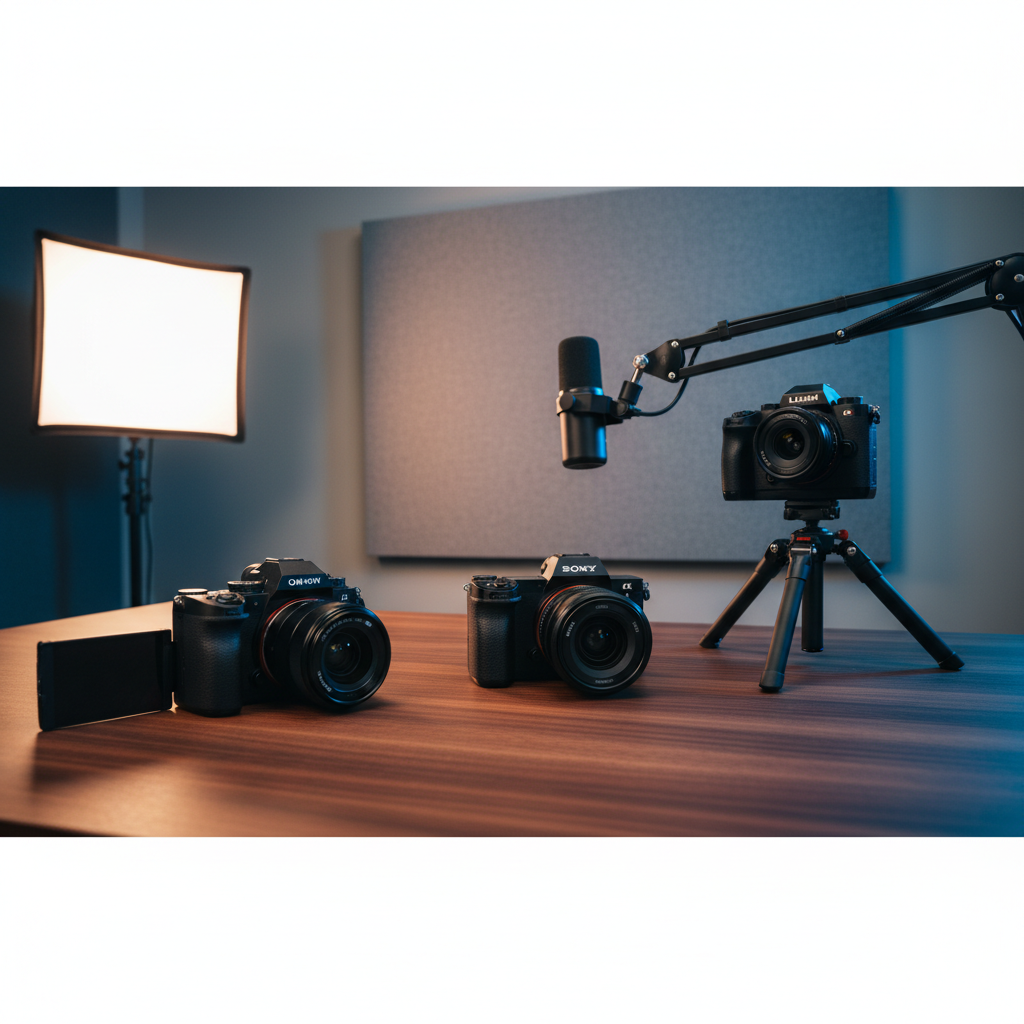
Even though the Panasonic LUMIX G85 sits in the mid‑range tier, it ties the premium Sony a6400 for the top user rating of 4.6/5. In this roundup of 4 Fujifilm‑compatible mirrorless cameras with articulating screens, we compare a budget option (OM System E‑M10 Mark IV at $699.99), a mid‑range pick (Panasonic LUMIX G85 at $897.99) and a premium contender (Sony a6400 at $1248.00), plus the ultra‑compact Samsung NX Mini, which lacks a listed price.
The OM System E‑M10 Mark IV packs 5‑axis in‑body stabilization and a 20.3 MP Micro Four Thirds sensor into a 0.84‑pound body, making it a lightweight travel companion despite a 4.4/5 rating. Sony’s a6400 features lightning‑fast 0.02‑second autofocus with 425 phase‑detect points covering 84 % of the frame, plus a flip‑up screen that’s popular with vloggers, reflected in its 4.6/5 score. Panasonic’s G85 offers weather‑sealed construction, 5‑axis IBIS and 4K video without crop, also earning a 4.6/5 rating. The Samsung NX Mini, at just 0.43 pounds and a 3.0‑inch screen, delivers 650‑shot battery life but trails with a 2.9/5 rating. Next, we’ll break down how each camera’s screen articulation, stabilization and video features serve vloggers in real‑world scenarios.

OM System E-M10 Mark IV
Offers 4.5‑stop in‑body image stabilization, helping you capture steady footage without a gimbal, and a 360‑shot battery life.
Sony a6400
Ideal for creators who value extensive customization, with 89 assignable functions and eight custom buttons, though it sits about $548 higher than the OM System E‑M10 Mark IV.

Panasonic LUMIX G85
Stands out with a wide 2500–10000 K color temperature range in 100 K steps, giving you precise white‑balance control that the other two models don’t provide.
Score Analysis
Key score advantages vs. runner-up (Sony a6400)
Price Range
OM System E-M10 Mark IV
$699.99
Sony a6400
$1,498.00
Panasonic LUMIX G85
$897.99

Samsung NX Mini
-$0.01
Spec Comparison
TL;DR: The OM System E-M10 Mark IV packs a 20.3 MP sensor, 5‑axis in‑body stabilization up to 4.5 stops and a fully articulating 3‑inch touchscreen into a 0.84‑pound body for a solid entry‑level mirrorless experience.
The camera’s standout feature is its 5‑axis sensor‑shift stabilization, which the manufacturer rates at up to 4.5 stops of shake correction. Coupled with a 20.3 MP Live MOS Micro Four Thirds sensor and a 3.0‑inch touch LCD that tilts upward 80° and downward 180°, it delivers steady stills and flexible framing for vlog‑style shooting.
At 0.84 pounds, the E‑M10 Mark IV's lighter than the Panasonic LUMIX G85 (1.11 pounds) and the Sony a6400 (1.61 pounds), yet it's heavier than the Samsung NX Mini (0.43 pounds). Its 121‑point contrast‑detection AF sits between the Panasonic’s 49‑area system and Sony’s 425‑point hybrid AF, offering more coverage than the former while being less extensive than the latter. None of the three rivals list an articulating screen, making the E‑M10’s flip‑down monitor a unique advantage.
User sentiment highlights the camera’s compact retro design, the fun of manual dials, and the creative 31‑type Art Filters. Professional reviewers praise the balance of portability and image quality, noting the 8.7 fps burst without AF and 5 fps with AF tracking. However, reviewers also point out that the contrast‑detect AF can lag with fast subjects, and the flip‑under screen may interfere with tripod mounting.
Battery life delivers roughly 360 shots per charge via a micro‑USB‑charged BLS‑50 cell, and connectivity includes Bluetooth 4.2, Wi‑Fi 802.11b/g/n and a micro‑HDMI port. While the body uses plastic with magnesium‑alloy dials, it lacks weather sealing, and there's no external microphone input for improved audio on video.
Pros
Cons
Best for: Budget-conscious buyers seeking a reliable entry-level option
Avoid if: You need advanced features or professional-grade performance
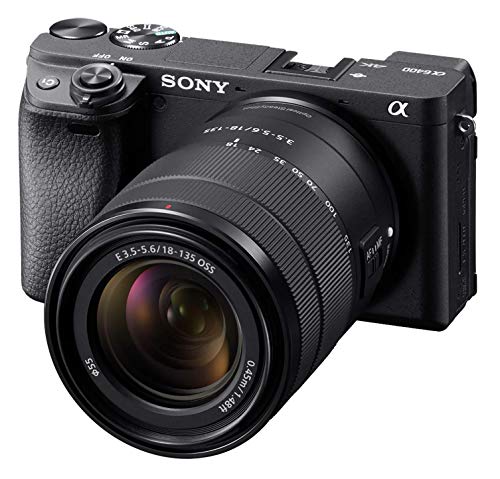
TL;DR: The Sony a6400 packs ultra‑fast 0.02 s autofocus, 425 focus points and 4K video into a 1.61‑lb body with a flip‑up screen, but its grip and weather sealing feel less robust.
The a6400’s 0.02‑second AF acquisition speed, backed by 425 phase‑detect points covering 84 % of the frame, locks focus faster than most mirrorless rivals. Its 24.2‑megapixel APS‑C sensor delivers 6000 × 4000‑pixel stills, and the camera records 4K video at 3840 × 2160 p with full pixel readout and no crop.
At 1.61 pounds, the Sony is heavier than the Panasonic LUMIX G85 (1.11 pounds), the OM System E‑M10 Mark IV (0.84 pounds) and the Samsung NX Mini (0.43 pounds). Its LCD‑mode battery life of 540 shots exceeds the OM’s 360‑shot rating but falls short of the Samsung’s 650‑shot capacity. The ISO range stretches to 102 400, far beyond the Panasonic’s 25 600 ceiling, and the 425 AF points dwarf the Panasonic’s 49‑area and Samsung’s 21‑point systems.
Reviewers consistently praise the 0.02‑second focus and the fully articulating 180° tilt screen, calling it a natural fit for vloggers. Professional reviewers note that the grip feels cramped during long handheld sessions, and many users report the touchscreen can feel laggy. Because the body lacks full weather sealing, photographers who shoot in rain or dust should pair it with protective lenses.
Inside, the camera houses a 1080 mAh NP‑FW50 battery that delivers up to 540 LCD shots or 410 viewfinder shots per charge. Continuous shooting reaches 8 fps electronically, and the 3.0‑inch OLED EVF offers 100 % coverage with 2,359,296‑dot resolution. A pop‑up flash provides a 6 m guide number, and the USB‑Micro‑B port lets you charge on the go.
Pros
Cons
Best for: Buyers willing to invest in a proven, high-quality option
Avoid if: You're on a tight budget or only need basic functionality
TL;DR: The Panasonic LUMIX G85 packs a 16 MP sensor, 5‑axis IBIS up to 5 stops, and full‑width 4K video in a weather‑sealed, fully articulating body for around $898.
The standout feature is its 5‑axis in‑body image stabilization, which gives up to 5 stops of shake reduction when paired with POWER O.I.S. lenses. Combined with a 16 MP (16,000,000 effective pixels) Live MOS sensor, the G85 delivers sharp stills and 4K UHD video at 30 fps without any sensor crop.
Weighing 1.11 pounds, the G85 is heavier than the OM System E‑M10 Mark IV (0.84 pounds) but lighter than the Sony a6400 (1.61 pounds). Its IBIS advantage of 5 stops also tops the 4.5‑stop stabilization of the OM System. Battery capacity's 1200 mAh, yielding about 320 shots on the EVF and 330 shots on the LCD—just shy of the 360‑shot rating of the OM System. In autofocus, the G85 offers a 49‑area focusing system, whereas the Sony a6400 provides 425 contrast‑detection points, so the Sony can track a broader area.
Reviewers consistently praise the camera’s solid build, noting the magnesium‑alloy front plate and dust‑and splash‑proof sealing. Users love the fully articulating 3.0‑inch TFT touchscreen for selfie‑friendly vlogging, and the built‑in pop‑up flash (GN 9.0 at ISO 200) adds flexibility in low light. Professional reviewers highlight the full‑sensor 4K video as a major plus, but they also flag rolling‑shutter artifacts when the electronic shutter is used at high frame rates, and they point out the modest battery life compared with some rivals.
Pros
Cons
Best for: Most users looking for a well-reviewed, reliable mainstream option
Avoid if: You have limited desk space or need portability
TL;DR: The Samsung NX Mini packs a 20.5 MP 1‑inch sensor, 180° flip‑up 3‑inch touchscreen, and a lightweight 0.43‑pound body into a 22.5 mm‑deep package, but its contrast‑detect AF and low‑resolution screen can hold back fast shooting.
The most eye‑catching spec is its ultra‑slim depth of just 22.5 mm while weighing only 0.43 pounds. It houses a 20.5 MP backside‑illuminated 1‑inch sensor and a 3.0‑inch tilting touchscreen that flips 180° upward, making it selfie‑friendly for vlogging.
Compared with the other three cameras in this roundup, the NX Mini is the lightest (0.43 lb vs. 0.84 lb for the OM System E‑M10 Mark IV, 1.11 lb for the Panasonic LUMIX G85, and 1.61 lb for the Sony a6400). Its battery delivers about 650 shots per charge, outlasting the OM’s 360‑shot rating and the Sony’s 540‑shot LCD rating. The camera’s 22.5 mm depth is also far slimmer than the OM’s 49 mm chassis, reinforcing its pocket‑size advantage.
Reviewers consistently praise the NX Mini’s portability, the 20.5 MP sensor’s detail, and the flip‑up screen for quick selfies and social‑media uploads. Professional critics note the sensor quality and compact build, while everyday users love the built‑in Wi‑Fi/NFC for instant sharing. The main complaints revolve around the contrast‑detect AF, which feels sluggish for action or video, and the 460,800‑dot display that can be hard to read in bright light. Additionally, the lack of in‑body or lens‑based stabilization limits handheld low‑light work.
Technically, the camera offers an ISO range of 160–12800 (expandable to 100–25600), a maximum shutter speed of 1/16000 s, and continuous shooting up to 30 fps at 5 MP or 6 fps at full resolution. It includes a 39 mm filter thread, an interchangeable lens mount with optical IS on the kit 9‑27 mm lens, and an external mic input for better audio in video recordings.
Pros
Cons
Best for: Vloggers and travel creators who prioritize a tiny, flip‑up screen and decent image quality over high‑speed autofocus.
Avoid if: You need fast phase‑detect AF, robust stabilization, or a rugged build for demanding action photography.
“Loved the slim design and pocketability”
Breakdown
OM System E-M10 Mark IV
Pros
Sony a6400
Pros
Panasonic LUMIX G85
Pros
Samsung NX Mini
Cons
Based on scoring data and product specs
Personalized picks
Best Overall Pick
OM System E-M10 Mark IV
Best ValueBest for: Budget-conscious buyers seeking a reliable entry-level option
Sony a6400
Best for: Buyers willing to invest in a proven, high-quality option
$1,498.00+$798.01 vs winner
Skip Samsung NX Mini if…
Reliability and user satisfaction are your top concerns
The OM System E‑M10 Mark IV wins the showdown. At a list price of $699.99 it delivers strong value, has a 4.4‑star rating from 501 reviews. Its 5‑axis sensor‑shift stabilization corrects up to 4.5 stops of shake, and the flip‑down monitor tilts down 180° for easy self‑framing. A single charge yields about 360 shots, so you can vlog longer without hunting for power.
The Sony a6400 takes the runner‑up slot, perfect if you need lightning‑fast hybrid autofocus and an external microphone jack for clearer audio. It offers real‑time eye AF for humans and animals, 425 phase‑detect points covering 84% of the frame, and a 3.5 mm mic input. Battery life reaches roughly 540 LCD shots, and the fully tilting screen lets you compose from any angle.
For those looking beyond the top two, the Panasonic LUMIX G85 at $897.99 provides a solid mid‑range option with reliable video performance, while the Sony a6400 at $1248.00 remains the premium choice for advanced autofocus and audio features.
Choose the OM System E‑M10 Mark IV today and start vlogging with confidence.
The OM System E‑M10 Mark IV’s flip‑down monitor can tilt upward up to 80° and downward up to 180°, giving both selfie and low‑angle options. While the Sony a6400 and Samsung NX Mini tilt 180° upward and the Panasonic LUMIX G85 swivels fully, the OM’s ability to flip down makes its articulation the most versatile.
Please sign in to leave a review
No reviews yet. Be the first to review!
