Our top pick is the Skytech Aqua, a premium pre‑built that blends an Intel Core Ultra 9 285K CPU with an RTX 5070 (or Ti) GPU, 32 GB DDR5‑6000 RAM and a 360 mm AIO liquid cooler. At $2199.99 it carries a solid 4.5‑star rating from 363 reviewers, and its dual‑tempered‑glass chassis looks as good as it performs, making it the top choice for 1440p ultra‑settings gaming and streaming.
The review covered 14 desktops, sorted into three price tiers. Budget‑friendly options include the Zotac MEK 5050 at $799.99 (4.2/5 from 21 reviews) and the CyberPowerPC Gamer Xtreme VR at $1129.00 (4.7/5 from 533 reviews). Mid‑range contenders like the iBUYPOWER Slate RTX 5070 ($1699.99, 5.0/5 from 3 reviews) and HP OMEN 16L 2025 ($1763.99) strike a balance between performance and cost. Premium machines—ASUS ROG G700 ($1899.99, 4.2/5 from 92 reviews), Thermaltake LCGS View V17B ($2199.99) and its V38M sibling—push the envelope with high‑end CPUs, RTX 5070 GPUs and advanced cooling.
Below you’ll find a deeper look at each tier so you can match the right desktop to your gaming setup.
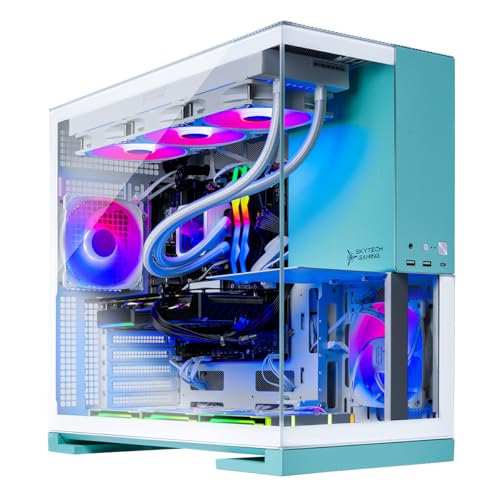
Skytech Aqua
Its 360 mm cooler size gives premium cooling performance, supporting high‑end GPUs and long gaming sessions.

Skytech Azure 3
Ideal for entry‑level gamers on a tight budget, it’s $750 cheaper than the Skytech Aqua.

Thermaltake LCGS View V17B
With a 22‑in depth and height, it provides extra room for premium components, a space advantage the Skytech models lack.
Also considered
Score Analysis
Key score advantages vs. runner-up (Skytech Azure 3)
Price Range
Skytech Aqua
$2,199.99
Skytech Azure 3
$1,449.99
Thermaltake LCGS View V17B
$2,199.99

CyberPowerPC Gamer Xtreme VR
$1,129.99

iBUYPOWER Slate RTX 5070
$1,699.99

HP OMEN 16L 2025
$1,763.99

Alienware Aurora ACT1250
$1,499.99

ASUS ROG G700
$1,869.99
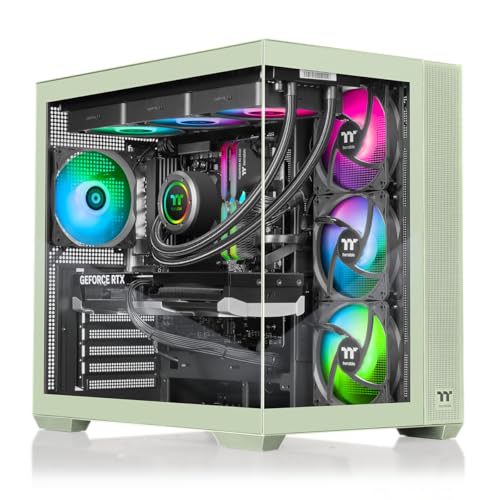
Thermaltake LCGS View V38M
$2,199.99
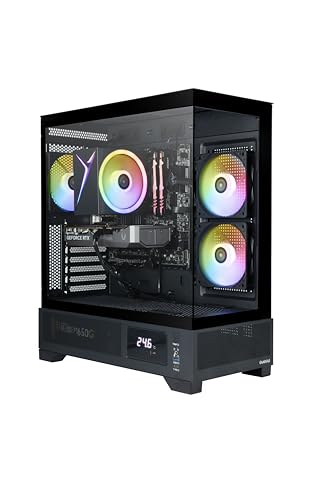
Zotac MEK 5050
$799.99

Thermaltake LCGS View V17S
$1,796.45

Acer Predator Orion 3000
$1,699.98
HP OMEN 45L
$2,599.99
ASUS ROG G700 XS
$1,922.49
Spec Comparison
TL;DR: The Skytech Aqua packs a 24‑core Intel Core Ultra 9 285K, RTX 5070/5070 Ti GPU and 850 W PSU into a compact 18.9‑in‑deep, 41.6‑lb tower for high‑frame‑rate 1440p gaming.
What really sets the Aqua apart is its 360 mm AIO liquid cooler with ARGB fans, paired with a 24‑core, 5.7 GHz turbo Intel Core Ultra 9 285K CPU. The system ships with 32 GB DDR5‑6000 RAM and an 850 W ATX 3.0 power supply, giving you plenty of headroom for demanding titles and content‑creation workloads.
Compared with the other 13 machines in this roundup, the Aqua is more compact than the Thermaltake LCGS View V17B, which measures 22 in deep, 22 in high and 12 in wide. It also weighs more than the Thermaltake V17B’s 25.85 lb chassis but is lighter than the HP OMEN 45L’s 49.82 lb frame. Its 18.9‑in depth and 17.3‑in height sit between the ASUS ROG G700 XS (9.45 in depth, 19.8 in height) and the bulkier Thermaltake V38M (depth 403.8 mm, height 531.9 mm). This balance of size and heft makes the Aqua a good fit for desks with limited space while still providing solid build quality.
Users highlight smooth 1440p performance on ultra settings and praise the liquid cooling solution. Professional reviewers note the combination of DDR5‑6000 memory and the Z890 chipset as future‑proof for multitasking and upgrades. However, several owners reported receiving a different GPU model or SSD size than ordered, and the Wi‑Fi 802.11ac radio falls short of newer Wi‑Fi 6/6E standards.
Pros
Cons
Best for: Those prioritizing quality and willing to pay for premium performance
Avoid if: You're on a tight budget, need Wi‑Fi 6/6E connectivity, or require a guaranteed specific GPU/SSD configuration
“smooth 1440p gameplay”
“The liquid cooling system keeps temperatures low even during marathon sessions.”
TL;DR: The Skytech Azure 3 packs a Ryzen 7 7700 CPU, RTX 5060 Ti GPU, 16 GB DDR5‑6000 RAM and a 1 TB Gen4 SSD in a tempered‑glass case for $1,449.99, but its 30.6993699835 lb weight and stock cooler may be drawbacks.
What really stands out is the combination of a 16 GB NVIDIA GeForce RTX 5060 Ti graphics card and 16 GB of DDR5 memory running at 6000 MHz, backed by a 1 TB Gen4 NVMe SSD that can reach up to 5000 MB/s sequential reads. The system's powered by a 650 W 80 Plus Gold PSU and sits in a 436.48 mm deep, 452.12 mm high, 231.14 mm wide case that weighs 30.6993699835 pounds.
Compared with the other desks in this roundup, the Azure 3 is noticeably heavier than the Acer Predator Orion 3000 (16.58 lb) and the CyberPowerPC Gamer Xtreme VR (28.6 lb), yet lighter than the iBUYPOWER Slate RTX 5070 at 36 lb. Its DDR5‑6000 memory outpaces the Acer’s 3200 MHz DDR4 and the HP OMEN’s unspecified speed, and the 16 GB VRAM exceeds the 8 GB found in the Acer configuration.
Reviewers appreciate the out‑of‑the‑box gaming performance, especially at 1080p‑1440p and in VR, and they like the thoughtful packaging that includes a basic keyboard and mouse. However, they frequently point out inconsistent component quality—such as a low‑grade motherboard and a modest stock cooler—and cable‑management quirks that create a bulge on the rear panel.
Pros
Cons
Best for: 1080p‑1440p gamers and VR enthusiasts who want a ready‑to‑play PC with modern CPU/GPU combos.
Avoid if: You need top‑tier component quality, custom‑build flexibility, or a lightweight chassis.
“Awesome so far!”
“Great PC and More”
TL;DR: The Thermaltake LCGS View V17B packs an Intel i9‑14900KF and RTX 5070 in a sleek tempered‑glass chassis, offering 32 GB DDR5 at 6000 MT/s and 850 W power for premium 4K gaming at $2199.99.
This desktop’s standout spec is the 24‑core (8 P + 16 E) Intel Core i9‑14900KF, which can boost up to 6.0 GHz and pairs with a 12 GB GDDR7 RTX 5070. Coupled with 32 GB DDR5 memory running at 6000 MT/s, the system delivers the multi‑threaded horsepower that content creators and hardcore gamers crave. The 850 W 80 Plus Gold PSU ensures the CPU and GPU have ample headroom, while the dual‑chamber chassis and 240 mm AIO liquid cooler keep temperatures in check during long sessions.
Compared with the other 13 machines in this roundup, the V17B is notably larger – its 22 in depth exceeds the Skytech Aqua’s 18.9 in and the Thermaltake V38M’s roughly 16 in depth. It also sits taller than the ASUS ROG G700 XS, which measures about 9.45 in deep, meaning the V17B offers more internal volume for airflow and future upgrades. While the HP OMEN 45L’s heavier, the V17B’s 25.85 lb weight places it in the mid‑range for premium builds, giving it a solid, sturdy feel without being overly cumbersome.
Reviewers consistently praise the machine’s out‑of‑the‑box experience, noting the “hassle‑free” setup and responsive support. Users love the full‑tempered‑glass side panel and ARGB lighting that give the rig a premium look on any desk. Professional reviewers highlight the efficient cooling solution that keeps the i9 and RTX 5070 temperatures low, even under 4K gaming loads. The only recurring complaint is the lack of a bundled keyboard or mouse, and a few users point out that 12 GB of VRAM might become a bottleneck for future AAA titles that push beyond that limit.
Pros
Cons
Best for: Those prioritizing quality and willing to pay for premium performance
Avoid if: You're shopping on a tight budget — it's priced at $2199.99
“Excellent gaming system and even better support!”
“Straightforward to plug in and get started.”
TL;DR: The CyberPowerPC Gamer Xtreme VR offers an Intel i5‑13400F, 16 GB DDR5 at 6000 MHz, RTX 4060 graphics and a 1 TB PCIe 4.0 SSD for $1,129, delivering solid 1080p gaming in a tempered‑glass mid‑tower.
This desktop’s standout spec is the 6000 MHz DDR5 memory paired with an RTX 4060 GPU that carries 8 GB of VRAM, all backed by a 1 TB PCIe 4.0 NVMe SSD for fast load times. The Intel Core i5‑13400F runs at a 2.5 GHz base clock across 10 cores and 16 threads, while the 65 W TDP keeps power draw modest.
At 28.6 pounds, the Xtreme VR is heavier than the Zotac MEK 5050 (23.0 pounds) but lighter than the Skytech Azure 3 (about 30.7 pounds). Its 380 mm depth is shorter than Skytech’s 436.48 mm and Zotac’s 420 mm, yet its 594 mm height and 590 mm width make it noticeably bulkier than the more compact designs of Skytech, Zotac and Acer. The 6000 MHz RAM speed matches Skytech’s high‑end memory and outpaces the 3200 MHz found in Zotac and Acer, while the 8 GB VRAM sits between Zotac’s 8 GB and Skytech’s 16 GB.
Reviewers praise the machine for quiet cooling, out‑of‑the‑box performance and the attractive tempered‑glass side panel with custom RGB lighting. Users also note the included full‑size keyboard and mouse feel basic, and some units ship with older Wi‑Fi 5 instead of the advertised Wi‑Fi 6, which can be a drawback for those wanting the latest wireless speeds. The 600 W power supply suffices for the RTX 4060 but may limit future upgrades to higher‑end GPUs.
Pros
Cons
Best for: Budget-conscious buyers seeking a reliable entry-level option
Avoid if: You have limited desk space or need portability
“ready in minutes”
“You wouldn’t even know it’s running”
TL;DR: The iBUYPOWER Slate RTX 5070 packs an 8‑core Ryzen 7 8700F, 12 GB RTX 5070 GPU, 32 GB DDR5 at 5200 MHz, and a 1 TB NVMe SSD in a 36‑lb, RGB‑lit case.
The standout component is the NVIDIA GeForce RTX 5070 with 12 GB GDDR6 VRAM, paired with an AMD Ryzen 7 8700F that delivers eight cores, sixteen threads, a 4.1 GHz base clock and a 5.0 GHz boost clock. Together they provide the horsepower needed for high‑settings 1440p and entry‑level 4K gaming.
At 36 pounds, the Slate's heavier than the HP OMEN 16L (12.76 pounds) and the Acer Predator Orion 3000 (16.58 pounds), but it's lighter than the ASUS ROG G700 (40.39 pounds). Its 20.1‑inch depth also exceeds the HP’s 6.1‑inch depth and the Thermaltake LCGS View V17S’s 480 mm depth, making it a bulkier tower than many midsize competitors.
Buyers have awarded it a flawless 5.0/5‑star rating across three reviews, praising the strong multi‑threaded performance of the Ryzen 7 8700F and the DLSS 4 upscaling on the RTX 5070. Professional reviewers highlight the CPU’s suitability for gaming and streaming, while some users note that the included membrane keyboard feels cheap and the air‑cooled tower can become noisy under load.
The system ships with a 750 W PSU, 11 total USB ports (including six USB 3.1), Bluetooth 5.1, Wi‑Fi 6, three DisplayPort outputs and one HDMI port. A 1 TB NVMe PCIe Gen4 SSD provides fast load times, and the 32 GB DDR5 RAM runs at 5200 MHz for smooth multitasking.
Pros
Cons
Best for: Most users seeking a balanced, mainstream option
Avoid if: You want the best value-per-dollar in its price range
“Incredible value for the specs.”
“Boots in seconds, games run flawlessly at high settings.”
TL;DR: The HP OMEN 16L packs a 20‑core Intel Core Ultra 7 265F, 16 GB GDDR7 RTX 5060 Ti and a compact 16‑liter chassis for solid 1440p gaming while staying under 13 lb.
The standout feature is its ultra‑compact footprint: just 6.1 inches deep, 13.26 inches wide and 12.12 inches tall, with a volume of 16 liters and a weight of only 12.76 pounds. Inside, a 20‑core (8 Performance + 12 Efficient) Intel Core Ultra 7 265F pushes up to 5.3 GHz and pairs with a NVIDIA GeForce RTX 5060 Ti that carries 16 GB of GDDR7 VRAM. Memory runs at a fast 5600 MT/s on 32 GB DDR5 with heatsink‑backed RGB modules.
Compared with the other 13 entries, the OMEN 16L is markedly lighter than the iBUYPOWER Slate RTX 5070 (36 pounds) and the ASUS ROG G700 (40.39 pounds), and even lighter than the Thermaltake LCGS View V17S (11.75 kg). Its depth of 6.1 inches is also far shallower than Thermaltake’s 480 mm and iBUYPOWER’s 20.1 inches, making it a true space‑saving option. On the graphics side, its 16 GB VRAM exceeds the 12 GB that both the Thermaltake and iBUYPOWER models use, giving it a head‑room advantage for texture‑rich titles.
Users consistently praise the system’s smooth 1440p performance and the quiet operation of its 92 mm RGB air cooler, front 120 mm intake and rear 90 mm exhaust. Professional reviewers note the “excellent 1440p performance” and “minimal noise” during demanding sessions, while everyday owners love the plug‑and‑play setup and the immersive DTS X Ultra 3D sound. A recurring downside is that the rear I/O limits itself to USB 2.0 ports with no USB‑C, and some base configurations may ship with a single 16 GB stick, which can restrict memory bandwidth.
Beyond the core hardware, the machine includes a 500 W 80 PLUS Platinum power supply, a 1 TB PCIe Gen4 NVMe SSD (expandable to 2 TB), 2.5 GbE Ethernet, Wi‑Fi 6E AX211, and a suite of OMEN software tools such as Gaming Hub, AI‑driven FPS optimization, and Light Studio for RGB control. The chassis comes in a Panda‑style ceramic‑white and jet‑black finish with a tempered‑glass side panel, and the outer packaging is 100 % recyclable, reflecting HP’s focus on sustainability.
Pros
Cons
Best for: Gamers who want high‑performance 1440p gaming in a compact, stylish desktop.
Avoid if: You need extensive rear USB‑C ports, a large power budget for future GPU upgrades, or a workstation‑class PCIe expansion.
“Perfect for 1440p gaming!”
TL;DR: The Alienware Aurora ACT1250 packs a 20‑core Intel Core Ultra 7 265KF CPU, RTX 5060 Ti graphics and a compact 458.4 mm chassis for high‑frame‑rate gaming, but its 500 W PSU may curb future upgrades.
The standout spec is the 20‑core Intel Core Ultra 7 265KF processor, which can boost up to 5.3 GHz and sits behind a 125 W TDP. Coupled with an NVIDIA GeForce RTX 5060 Ti GPU offering 12‑16 GB GDDR7 VRAM, the system delivers the raw horsepower needed for modern esports and AAA titles. Memory runs at 5200 MT/s on 16 GB DDR5, and storage starts with a 1 TB Gen4 NVMe SSD.
Compared with the other 13 desktops in this roundup, the Aurora’s 458.4 mm depth and 197 mm width make it noticeably more compact than the iBUYPOWER Slate RTX 5070’s 510.5 mm depth and 220.0 mm width, while it’s 15.37 kg, making it heavier than the HP OMEN 16L 2025’s lighter chassis. Its RAM speed lags behind the Skytech Azure 3’s 6000 MHz, and the base 500 W platinum‑rated PSU is lower than the optional 1000 W option, which some rivals provide out of the box.
Professional reviewers praise the Aurora for delivering smooth performance—often exceeding 144 FPS at 1080p—and note the near‑silent operation thanks to its optimized airflow and optional 240 mm liquid AIO. Users consistently highlight the striking “stadium” AlienFX lighting and the tool‑less chassis that eases upgrades. However, many point out that the 500 W power supply can become a bottleneck when swapping in higher‑end GPUs, and the default 16 GB of RAM may feel tight for heavy multitasking or AI workloads.
Pros
Cons
Best for: Enthusiast gamers who want high performance in a compact mid‑tower with premium aesthetics.
Avoid if: You prioritize maximum value‑per‑dollar or need a high‑wattage PSU for aggressive future GPU upgrades.
TL;DR: The ASUS ROG G700 packs a 32 GB DDR5 kit, RTX 5070 GPU, 850 W PSU, and 240 mm AIO cooler into a 40.39‑lb tower for high‑end gaming at $1,899.99.
The standout hardware includes 32 GB DDR5 memory running at 4800 MHz, an NVIDIA GeForce RTX 5070 with 16 GB GDDR7, and an 850 W power supply that leaves room for future upgrades. A 240 mm all‑in‑one liquid cooler with a quad‑fan layout keeps the system cool while staying relatively quiet, and the chassis measures 20.05 in wide, 18.88 in high, and 9.45 in deep.
Compared with the other 13 contenders, the G700 is heavier than the Thermaltake LCGS View V17S and lighter than the bulkier HP OMEN 16L, while its size matches the ASUS ROG G700 XS. It also offers more connectivity options than many peers, featuring Bluetooth 5.3, Wi‑Fi 6E, a 2.5 Gbps Ethernet port, and a generous mix of USB‑C and USB‑A ports on both front and rear.
Reviewers consistently praise the quiet operation of the liquid cooling loop and the out‑of‑the‑box performance in demanding titles. Users love the dual tempered‑glass panels for a premium look, though the glass does attract fingerprints, prompting frequent cleaning. The pre‑installed Armoury Crate suite, which many call bloated, and the shark‑fin Wi‑Fi antenna split opinion among enthusiasts.
From a technical standpoint, the system supports PCIe 5.0 expansion and can accommodate up to 64 GB DDR5, giving it a solid upgrade path for future GPU or storage upgrades. The combination of a high‑end CPU, ample RAM, and a fast 1 TB PCIe 4.0 NVMe SSD makes it a versatile choice for both hardcore gaming and content‑creation workloads.
Pros
Cons
Best for: Value-conscious buyers seeking quality at $1899.99
Avoid if: You need advanced features or professional-grade performance
“Works perfect out of the box”
“Great value for money”
TL;DR: The Thermaltake LCGS View V38M packs a Ryzen 7 9800X3D, RTX 5070, 32 GB DDR5 at 6000 MT/s, a 2 TB PCIe Gen 5 SSD and a 360 mm AIO cooler into a striking tempered‑glass chassis for $2199.99.
The standout hardware is the 360 mm AIO liquid cooler paired with seven case fans, which together keep the Ryzen 7 9800X3D’s 8 cores (up to 4.7 GHz) and the RTX 5070’s 12 GB GDDR7 GPU running cool under load. The 32 GB DDR5 runs at 6000 MT/s, while the 2 TB NVMe M.2 SSD on a PCIe Gen 5.0 interface promises rapid game loads and smooth multitasking.
Compared with the other 13 contenders, the V38M sits in a mid‑tower that’s shallower than the Skytech Aqua’s 480 mm depth, yet deeper than the V17S’s 480 mm case. At 14968.5 g it’s heavier than the V17S’s 11.75 kg build but lighter than the HP OMEN 45L’s 49.82‑lb chassis. The V38M also outpaces many peers on fan count, offering seven fans versus the ASUS ROG G700 series’ four 120 mm fans, and it provides more USB 3.0 ports (2) than the V17B’s unspecified high‑speed ports.
Everyday users applaud the desktop’s cooling efficiency and the visual impact of its full tempered‑glass side and front panels with ARGB lighting on the RAM and fans. Professional reviewers highlight the Ryzen 7 9800X3D’s 15‑20 % gaming edge over comparable Intel chips and the RTX 5070’s projected 40 % uplift over the RTX 4070 when DLSS 4 is enabled. The inclusion of Wi‑Fi 6/6E, Bluetooth, and a 750 W 80 Plus Gold PSU (estimated) adds future‑proof connectivity, while the 1‑year warranty offers basic peace of mind.
Pros
Cons
Best for: Those prioritizing quality and willing to pay for premium performance
Avoid if: You're on a tight budget or only need basic functionality
“Excellent gaming system and even better support!”
“Straightforward to plug in and get started.”
TL;DR: The Zotac MEK 5050 packs an AMD Ryzen 5 5500, 8 GB RTX 5050 GPU at 2602 MHz boost, 16 GB DDR4 RAM and a 650 W PSU in a sleek tempered‑glass chassis for $799.99.
What really stands out is the RTX 5050 Twin Edge OC GPU delivering a 2602 MHz boost clock and 8 GB GDDR6 memory, complemented by DLSS 4 and fifth‑gen Tensor cores for AI‑enhanced visuals. The system also ships with 16 GB DDR4 3200 MHz RAM, a 1 TB NVMe M.2 SSD and a 650 W 80+ Gold power supply, giving you a solid foundation for modern games.
At 23.0 pounds, the MEK 5050 is lighter than the CyberPowerPC Gamer Xtreme VR (28.6 pounds) and the Skytech Azure 3 (around 30.7 pounds), yet heavier than the Acer Predator Orion 3000 (16.58 pounds). Its 420 mm depth and 464 mm height sit between the compact Acer (377 mm × 384 mm) and the taller Alienware Aurora ACT1250 (458.4 mm × 418 mm). Compared with the iBUYPOWER Slate RTX 5070, it’s considerably lighter (36.0 pounds) while offering a similar feature set.
Users praise the clean Windows 11 Home install and the quiet operation of the three 120 mm ARGB PWM fans, noting the attractive tempered‑glass side panel. However, several owners report power‑on failures that seem linked to the PSU, and many mention missing or incomplete setup documentation that forces a manual Wi‑Fi driver install.
Beyond the GPU, the MEK 5050 includes Wi‑Fi 6E, Bluetooth 5.2, 7.1‑channel HD audio, a mix of USB 3.2 ports (including a front USB‑C) and HDMI 2.1 plus three DisplayPort 1.4a outputs. The 6‑core/12‑thread Ryzen 5 5500 can boost to 4.2 GHz, and the 650 W PSU should comfortably power the configuration for most mid‑tier gaming sessions.
Pros
Cons
Best for: Entry-level buyers or those on a tight budget
Avoid if: You need advanced features or professional‑grade performance
“Runs Cyberpunk 2077 on medium, World of Warcraft smoothly.”
“Plays BO6 on ultra at ~80 FPS, very quiet.”
TL;DR: The Thermaltake LCGS View V17S packs a 20‑core Intel Core Ultra 7 CPU, RTX 5070 GPU, 32 GB DDR5 at 6000 MT/s and an 850 W PSU in a sleek white glass chassis for $1,783.
Thermaltake’s most eye‑catching feature is the dual‑chamber tempered‑glass case paired with a 240 mm ARGB AIO liquid cooler, which keeps the 20‑core Intel Core Ultra 7 265KF (3.8 GHz base) and NVIDIA RTX 5070 (12 GB GDDR7) comfortably cool under load. The system also ships with 32 GB of TOUGHRAM RGB DDR5 running at 6000 MT/s, a 1 TB PCIe Gen 5 NVMe SSD, and a reliable 850 W 80 Plus Gold power supply.
Compared with the other 13 desktops in this roundup, the V17S is lighter than the iBUYPOWER Slate RTX 5070 (36 lb) and the ASUS ROG G700 (40.39 lb), but heavier than the HP OMEN 16L (12.76 lb) and the Alienware Aurora ACT1250 (15.37 kg). Its depth of 480 mm matches the depth of the ASUS ROG G700, making it’s more compact than the iBUYPOWER’s 510.5 mm depth while still offering a full‑tower feel.
Early owners praise the instant boot times from the PCIe Gen 5 SSD and the “stunning” RGB lighting that accentuates the glass panels. Professional reviewers highlight the raw CPU power and the RTX 5070’s sweet‑spot performance for 1440p gaming, noting that the dual‑chamber layout delivers excellent thermals. However, several users point out the 1 TB SSD may fill up quickly for large game libraries, and a few mention the absence of a front USB‑C port and occasional BIOS quirks that require updates to fully unlock the CPU.
Pros
Cons
Best for: Most users seeking a balanced, mainstream option
Avoid if: Reliability and user satisfaction are your top concerns
“Excellent gaming system and even better support!”
“Straightforward to plug in and get started.”
TL;DR: The Acer Predator Orion 3000 packs a 12‑core i7‑12700F and RTX 3070 into a compact 16.58‑lb tower, offering solid 1440p gaming with fast Wi‑Fi 6E and dual 1 TB drives.
The NVIDIA GeForce RTX 3070 GPU, paired with 8 GB GDDR6 memory and backed by a 12‑core Intel Core i7‑12700F that can boost up to 4.90 GHz, serves as the standout hardware. Combined with 16 GB DDR4 RAM running at 3200 MHz, the system delivers smooth high‑settings play at 1440p and decent entry‑level 4K performance.
At 16.58 lb, the Orion 3000 is notably lighter than the iBUYPOWER Slate RTX 5070, which tips the scales at 36.0 pounds, and its 14.84‑in depth makes it more compact than the Slate’s 20.1‑in chassis. Compared with the Alienware Aurora ACT1250, which weighs about 33.9 pounds, the Orion is also considerably lighter, though it sits a bit heavier than the HP OMEN 16L’s 12.76 lb footprint.
Reviewers praise the system’s rapid boot times, the attractive RGB lighting on the dual Predator FrostBlade 2.0 fans, and the low‑latency Wi‑Fi 6E connection. Users also like the inclusion of a Predator RGB keyboard and mouse. Professional reviewers note the limited number of rear USB 3.2 ports as a minor inconvenience.
Beyond the core components, the Orion 3000 offers a 500 W 80 Plus Gold PSU, dual storage (1 TB 7200 RPM SATA HDD plus a 1 TB PCIe Gen4 NVMe SSD), and a rich I/O suite: a USB‑C 20 Gbps port, a USB‑A 10 Gbps front port, four rear USB 2.0 ports, two rear USB 3.2 Gen 1 ports, and three DisplayPort 1.4a plus an HDMI 2.1 output. Bluetooth 5.2 and Intel Wi‑Fi 6E round out the connectivity options, while DTS:X Ultra delivers immersive audio through five 3.5 mm jacks.
Pros
Cons
Best for: Enthusiast gamers targeting 1440p high‑settings play and streamers who need a solid CPU/GPU combo in a compact tower.
Avoid if: You need maximum 4K performance, extensive rear USB 3.2 connectivity, or plan to upgrade to a higher‑end GPU that demands more than 500 W.
TL;DR: The HP OMEN 45L packs a 20‑core Intel Core Ultra 7, RTX 5080 graphics, 1000 W PSU and a 360 mm‑ready Cryo Chamber cooling system in a compact 8‑inch‑deep, 45‑L chassis for $2,299.
What really sets this desktop apart is HP’s patented Cryo Chamber cooling, which can accommodate a 360 mm AIO radiator and comes with four 120 mm RGB/ARGB fans. The design keeps the system cool enough to let the 20‑core Intel Core Ultra 7 265K run at up to 5.50 GHz while the RTX 5080 delivers 12 GB of GDDR7 memory.
At 49.82 lbs, the OMEN 45L is heavier than the Thermaltake LCGS View V17S (about 11.75 kg) and the Thermaltake V17B (25.85 lbs), but its 8.03‑in depth is far shallower than the Skytech Aqua’s 18.9 in depth and the Thermaltake V17S’s 22 in depth, making it a better fit for tighter desk spaces. Its fan count is lower than the Thermaltake V38M’s seven fans, yet it still matches the 360 mm radiator size found in several peers.
Reviewers consistently praise the raw performance, noting the 20‑core CPU can boost to 5.50 GHz, and the tool‑less access that lets you swap storage, RAM or GPUs without screws. Professional reviewers highlight the superior cooling design, while everyday users love the sleek metal frame with tempered‑glass side panel. The most common complaints revolve around the preinstalled OMEN Hub software, which some say adds glitches, and occasional RGB lighting sync hiccups.
Pros
Cons
Best for: Those prioritizing quality and willing to pay for premium performance
Avoid if: You're on a tight budget or only need basic functionality
“Perfect for 1440p gaming!”
TL;DR: The ASUS ROG G700 XS packs a 240 mm AIO liquid cooler, 850 W PSU and 32 GB DDR5 RAM into a compact 58 L steel chassis for high‑end 1440p/4K gaming at a $2099 price point.
The standout hardware pairs a 240 mm AIO liquid cooler with a quad‑fan airflow design, helping keep the Intel Core Ultra 7 265F (up to 5.3 GHz) and the NVIDIA GeForce RTX 5070 (2,512 MHz boost, 16 GB GDDR7) cool and quiet. With a 58 L chassis volume and a depth of just 9.45 in, the G700 XS fits into tighter spaces than many full‑tower rivals.
Compared with other entries in this roundup, the G700 XS is shallower than the Skytech Aqua’s 18.9 in depth, yet deeper than the HP OMEN 45L’s 8.03 in depth. It also carries more weight at 40.38801 lb, making it heavier than the Thermaltake LCGS View V17B, which tips the scales at about 25.85 lb. While the ASUS ROG G700 (the non‑XS sibling) shares the same chassis volume, the XS model adds a faster 4,800 MHz memory speed and a larger 850 W power supply.
User feedback praises the system’s “stellar performance” and “quiet operation,” especially when the liquid cooler is present. Reviewers also note the tool‑less access and Aura Sync RGB as convenient customization points. On the downside, owners mention that the tempered‑glass panels collect fingerprints easily and that a few units arrived with air cooling despite the liquid‑cooler marketing. The Armoury Crate software also draws criticism for occasional bugs that limit RGB control.
Pros
Cons
Best for: Those prioritizing quality and willing to pay for premium performance
Avoid if: You need advanced features or professional‑grade performance
“Works perfect out of the box”
“Great value for money”
Breakdown
Skytech Aqua
Pros
Skytech Azure 3
Pros
Thermaltake LCGS View V17B
Pros
Cons
CyberPowerPC Gamer Xtreme VR
Pros
Based on scoring data and product specs
Personalized picks
Best Overall Pick
Skytech Aqua
Best OverallBest for: Those prioritizing quality and willing to pay for premium performance
Skytech Azure 3
Best for: Entry-level buyers or those on a tight budget
$1,449.99-$750.00 vs winner
Skip ASUS ROG G700 XS if…
You need advanced features or professional-grade performance
Skytech’s Aqua takes the top spot with a hefty 32 GB of DDR5‑6000 MHz RAM, an NVIDIA GeForce RTX 5070 (or RTX 5070 Ti) with up to 16 GB of GDDR7 VRAM, and a robust 850 W 80 Plus Gold power supply. Its 360 mm AIO liquid cooler and ARGB fans keep the 24‑core Intel Core Ultra 9 285K CPU (5.7 GHz turbo) running cool, while the 4.5‑star rating from 363 reviewers backs the specs.
The runner‑up, Skytech Azure 3, shines for a capable machine at 1080p‑1440p gaming without breaking the bank. It packs an AMD Ryzen 7 7700 (8 cores, 5.3 GHz boost), 16 GB DDR5 at 6000 MHz, and an RTX 5060 Ti with 16 GB GDDR7, all powered by a 650 W Gold PSU for a solid performance‑to‑price balance for $1449.99.
For tighter budgets, the Zotac MEK 5050 delivers entry‑level gaming at $799.99, making it the best budget pick. If you want a step up without reaching premium pricing, the iBUYPOWER Slate RTX 5070 at $1699.99 offers a strong RTX 5070 GPU and balanced components, earning the mid‑range badge.
Pick the Skytech Aqua today and lock in top‑tier performance for your gaming rig.
The Aqua costs $2,199.99 versus $1,449.99 for the Azure 3, a $750 difference. It justifies the premium with a higher‑end RTX 5070 GPU (up to 16 GB VRAM on the Ti version), 32 GB of DDR5 RAM, a 360 mm AIO liquid cooler, and an 850 W 80 Plus Gold PSU, all of which deliver stronger performance headroom.
Please sign in to leave a review
No reviews yet. Be the first to review!
