⚡ Quick Answer
Choosing a headset with a detachable boom mic can feel like navigating a maze of specs, prices, and platform quirks. We compared 10 gaming headsets that all let you pop the mic off when you’re done chatting, spanning a price range from $26.99 for the WolfLawS Wireless Gaming Headset up to $149.00 for the EPOS H6Pro. The lineup splits into three clear tiers: budget options (WolfLawS, JBL Quantum 100M2, Skullcandy SLYR, Fifine), mid‑range choices (HyperX CloudX and Redragon H510 Zeus White), and premium contenders (Cooler Master MH650, Logitech Pro X, HyperX Cloud Alpha Wireless, EPOS H6Pro).
The HyperX CloudX leads the mid‑range group with a 53 mm driver, a 4.5/5 rating from 7,004 reviews, and a $39.99 price tag that undercuts many competitors while still offering an official Xbox‑licensed build. On the budget end, WolfLawS impresses with 48 hours of wireless play for just $26.99, and the JBL Quantum 100M2 keeps the weight down to 220 g at $29.95. Premium picks bring extra firepower: the HyperX Cloud Alpha Wireless features a 300‑hour battery life for $119.99, and the Logitech Pro X adds a 50 mm PRO‑G driver and Blue VO!CE mic for $119.54.
Next, the guide breaks down how each model performs in comfort, audio fidelity, mic clarity, and platform compatibility so you can match a headset to your gaming style.
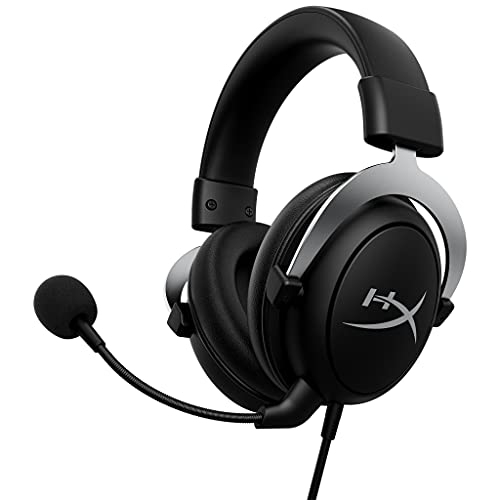
HyperX CloudX
Its 53 mm drivers deliver spacious sound, making it a solid mid‑range choice.

HyperX Cloud Alpha Wireless
Ideal for gamers who want wireless freedom and premium sound, it costs about $80 more than the $39.99 HyperX CloudX.
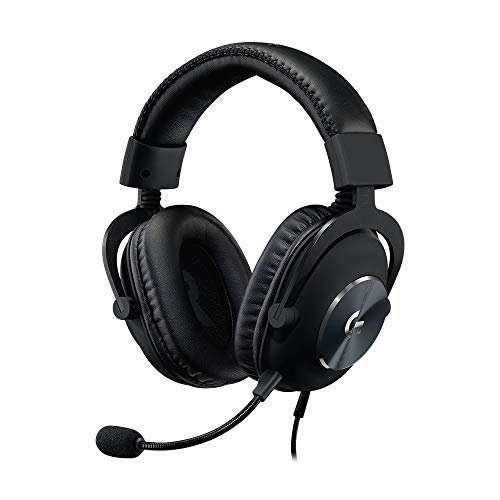
Logitech Pro X 50mm 3.5mm Blue
Stands out with a 32 Ω impedance, delivering strong audio on low‑power devices—an edge the HyperX models don’t provide.
Also considered
Score Analysis
Key score advantages vs. runner-up (HyperX Cloud Alpha)
Price Range
HyperX CloudX
$44.98
HyperX Cloud Alpha Wireless
$119.99
Logitech Pro X 50mm 3.5mm Blue
$99.13

Fifine Wired Gaming Headset
$37.99

Cooler Master MH650
$99.99

WolfLawS Wireless Gaming Headset
$26.99
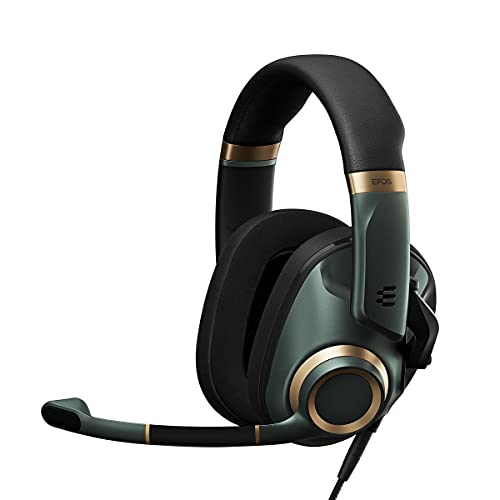
EPOS H6Pro
$149.00
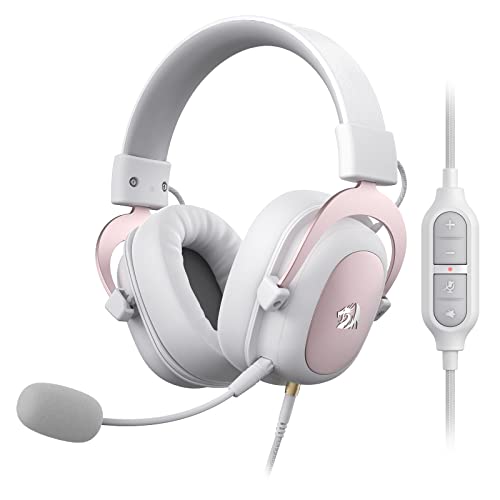
Redragon H510 Zeus White
$61.99

JBL Quantum 100M2
$29.95
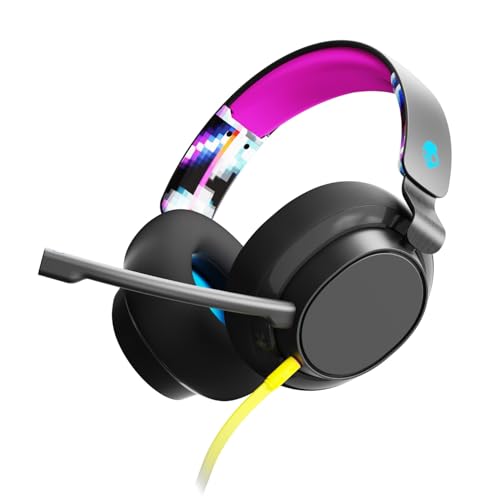
Skullcandy SLYR
$37.43
Spec Comparison
TL;DR: The HyperX CloudX delivers Xbox‑licensed, over‑ear comfort with 53 mm drivers, a detachable mic and solid build at a mid‑range price, though its wired design limits mobility.
The headset’s standout spec is its 53 mm dynamic drivers with neodymium magnets, paired with 41 Ω impedance and a sensitivity of 95 dBSPL/mW, promising strong bass and clear mids across a 15 Hz‑25 kHz range. Total harmonic distortion sits under 2 %, and the detachable noise‑cancelling mic measures –39 dBV, ensuring clear voice pickup.
Compared with the other nine contenders, the CloudX’s driver size matches the Redragon H510 Zeus (both 53 mm) but outpaces the 50 mm drivers found in the Fifine, Skullcandy, Cooler Master, Logitech and HyperX Alpha Wireless models. At roughly 0.74 lb (337 g), it's heavier than the Fifine (≈0.73 lb), Skullcandy (≈0.58 lb), JBL (≈0.49 lb) and the lightweight WolfLawS (≈0.05 lb), yet lighter than the Redragon (≈1.54 lb). Its 1.3 m cable is shorter than the Fifine’s 10‑ft (≈3.05 m) lead and the Logitech’s 2‑m cable, which can be a trade‑off for desk clutter.
Professional reviewers praise the durable aluminum frame and 100 % memory‑foam ear cushions for marathon sessions, noting the headset’s low distortion and wide frequency response as “high‑fidelity” audio. Users echo this comfort, but many flag the fixed 1.3 m wired connection as restrictive, especially when compared to wireless alternatives that offer greater freedom of movement.
Additional context includes an official Xbox license, a flexible braided cable, and a two‑year warranty, rounding out a package that targets console gamers who value build quality and sound clarity without the expense of premium wireless gear.
Pros
Cons
Best for: Wired Xbox gamers who prioritize comfort, durability, and high‑quality audio for extended play.
Avoid if: You need wireless freedom, Bluetooth connectivity, or advanced virtual‑surround features.
TL;DR: The HyperX Cloud Alpha Wireless delivers 300‑hour battery life, 50 mm dual‑chamber drivers and detachable boom mic in a lightweight aluminum frame, but its PC‑only wireless and average mic may limit some gamers.
The standout spec advertises a 300‑hour battery life at 50 % volume, meaning you can game for weeks without hunting for an outlet. It pairs that endurance with 50 mm dual‑chamber drivers, a 62 Ω impedance and a sensitivity of 103 dB SPL/mW, plus DTS Headphone:X spatial audio for immersive sound.
Weighing roughly 322 g (0.71 pounds), the headset outweighs the Logitech Pro X (259 g) and Skullcandy SLYR (265 g) but matches the Cooler Master MH650 (322.5 g) and ties the EPOS H6Pro (322 g). Its driver size matches many rivals, though the Redragon H510 Zeus uses larger 53 mm drivers. Its 62 Ω impedance exceeds the 32 Ω in Logitech and Cooler Master models, which may require a stronger source for optimal volume.
Users consistently praise the ultra‑long battery life and the comfort of the memory‑foam cushions backed by an aluminum frame. Professional reviewers note the clear audio and effective spatialization from the dual‑chamber design. However, several reviewers point out that the microphone, while detachable and noise‑cancelling, picks up background chatter, and the wireless dongle works only with PC, lacking Bluetooth or native console support.
Beyond the battery, the headset runs at 24‑bit/48 kHz resolution, offers a 4.5‑hour USB‑C charge, and includes the NGENUITY software for EQ tweaks and battery monitoring. The detachable boom mic and bi‑directional noise‑cancelling pattern add flexibility for voice chat, while the DTS Headphone:X engine enhances positional cues in games.
Pros
Cons
Best for: Those prioritizing ultra‑long battery life and spatial audio in a PC‑focused gaming setup.
Avoid if: You need Bluetooth connectivity, a microphone with studio‑grade isolation, or a console‑centric wireless solution.
TL;DR: Logitech G PRO X pairs 50 mm drivers with a Blue VO!CE‑enabled detachable mic, offering PC‑only 7.1 surround and solid build at a premium $119.54 price point.
The headset’s standout spec is its 50 mm PRO‑G drivers paired with a sensitivity of 91.7 dB SPL @ 1 mW, 1 cm and a 32 Ω impedance, delivering accurate sound across the 20 Hz‑20 kHz range. A detachable 6 mm cardioid boom mic with a pop filter adds noise reduction, while the included USB DAC and Blue VO!CE processing let you fine‑tune voice output through Logitech G HUB. On PC you also get DTS Headphone:X 2.0‑based 7.1 surround.
In the lineup, its 50 mm drivers match those of HyperX Cloud Alpha Wireless, Cooler Master MH650, Fifine, and Skullcandy SLYR, and its 32 Ω impedance is identical to Cooler Master, Fifine and Skullcandy. At 0.57125 lb it’s lighter than the HyperX Cloud Alpha Wireless and EPOS H6Pro, a shade lighter than Skullcandy SLYR, but a bit heavier than the JBL Quantum 100M2. The 1 500 mm mobile cable equals Skullcandy’s length and out‑lasts HyperX CloudX’s 1.3 m cable, while the 2 000 mm PC cable is shorter than Cooler Master’s 2.2 m lead.
Reviewers consistently praise the crystal‑clear mic and the memory‑foam ear cushions that keep comfort high during marathon sessions. Professionals note the precise audio imaging from the 50 mm drivers and the durable aluminum/steel frame. Common complaints focus on the lack of Bluetooth, the fact that the USB DAC and EQ features don’t work on Xbox consoles, and a stock rubber cable that can tangle and feel average, with some users reporting fatigue from the headset’s weight over long play.
Additional technical details include a microphone frequency response of 100 Hz‑10 kHz, built‑in noise reduction, and onboard EQ accessible via G HUB. The frame’s aluminum construction and steel headband add a pro‑grade feel, while the travel bag and spare memory‑foam pads round out the package for esports‑focused gamers.
Pros
Cons
Best for: Buyers willing to invest in a proven, high-quality option
Avoid if: You need advanced wireless connectivity or full console USB‑DAC support
TL;DR: The Fifine Wired Gaming Headset offers virtual 7.1 surround, three EQ presets and RGB lighting for $37.99, but its 330 g weight can feel bulky during long sessions.
What really stands out is that the headset’s virtual 7.1 surround sound runs over a USB‑type‑A connection, paired with a 50 mm driver and a sensitivity of 95 dB. The in‑line controller lets you switch between three EQ modes, mute the mic, and adjust volume without leaving the game. A 10‑ft (3048 mm) cable gives you plenty of reach, and the RGB lighting adds a splash of personality to any setup.
Compared with the other nine entries, the Fifine is heavier than the Skullcandy SLYR’s 265 g build but lighter than the HyperX CloudX’s 337 g chassis. Its 50 mm drivers match the Skullcandy’s size while the HyperX uses slightly larger 53 mm units. The cable is longer than Skullcandy’s 5‑ft lead and longer than the HyperX’s 1.3 m (about 4.3 ft) cable, giving you more freedom of movement. In terms of features, it provides a detachable boom mic and RGB lighting, which some peers lack.
Users consistently praise the headset’s clear positional audio that highlights footsteps and its plug‑and‑play USB convenience. Professional reviewers note the immersive 7.1 effect and the three EQ presets as strong points for a budget model. The most common complaint is the 330 g weight, which can cause fatigue on smaller heads during marathon gaming. The condenser mic, while functional, tends to pick up keyboard clatter, and the USB‑only interface limits console compatibility without an adapter.
The technical details reinforce its value: a 32 Ω impedance keeps it easy to drive, while the microphone’s –42 dB sensitivity delivers adequate voice‑chat quality. Power draw sits at 200 mA with a 5 V supply, and the detachable boom mic adds flexibility for streamers who might want to reposition or replace it.
Pros
Cons
Best for: Budget‑conscious buyers seeking a reliable entry‑level option
Avoid if: You want the best value‑per‑dollar in its price range
TL;DR: The Cooler Master MH‑650 offers 50 mm drivers, virtual 7.1 surround, a detachable omni‑directional boom mic, and a 2.2 m USB cable, delivering solid gaming audio for $99.99.
The headset’s core audio hardware centers on 50 mm drivers with a 32 Ω impedance and a sensitivity of 107 dB, while the detachable boom microphone is rated at –40 dB sensitivity. Users can toggle Virtual 7.1 surround on or off, and the unit includes a single RGB LED zone and a 2.2 m braided USB cable for reliable connectivity.
Compared with the other nine contenders, the MH‑650 shares the 50 mm driver size of the Logitech Pro X and the HyperX Cloud Alpha Wireless, but it offers a detachable boom mic like the EPOS H6Pro. At roughly 0.62 lb, it sits heavier than the Logitech Pro X (≈0.57 lb) yet considerably lighter than the Redragon H510 Zeus (≈1.54 lb). Few of the peers list virtual 7.1 surround, making this feature a relative differentiator.
Professional reviewers praised the headset’s lightweight feel—roughly 322.5 g with cable—and its sturdy braided cable, noting that the mesh‑fabric cushions stay comfortable during long sessions. However, the same reviewers flagged the omni‑directional mic as weak for streaming, and users have reported audible white‑noise at low volumes and some sound leakage at higher levels.
The package also includes a power‑mode switch, on/off control for the virtual surround, and Cooler Master’s MasterPlus software for RGB customization. With a maximum input power of 80 mW and a two‑year warranty, the MH‑650 balances feature depth with a mid‑range price point.
Pros
Cons
Best for: Casual PC and console gamers who want virtual 7.1 surround and a detachable mic without breaking the bank.
Avoid if: You need a high‑fidelity microphone for streaming or a headset with minimal sound leakage.
TL;DR: The WolfLawS TA2000 offers 48‑hour wireless playtime, 50 mm drivers and a detachable boom mic for just $26.99, making it a lightweight, budget‑friendly choice for casual gamers.
The headset’s standout spec is its 48‑hour continuous battery life paired with a low‑latency 2.4 GHz wireless link, so you can game for days without hunting for a charger. It houses 50 mm drivers that deliver 3D surround sound, and the detachable noise‑canceling boom mic includes a windscreen plus a secondary built‑in mic for clear voice chat.
Weighing roughly 0.05 lb (24 g), it’s significantly lighter than the JBL Quantum 100M2 (≈0.49 lb) and far lighter than the HyperX CloudX (≈0.74 lb), which helps reduce fatigue during marathon sessions. Its price point of $26.99 also places it well below the majority of the ten‑product roundup, giving it a clear value edge without sacrificing core gaming features.
Users consistently praise the headset’s long battery life and feather‑light feel, noting that the on‑ear controls and voice feedback make volume tweaks and mic muting effortless. Professional reviewers highlight the lack of audio sync issues in wireless mode, but they also point out that Bluetooth isn’t supported on PS4/PS5 and that the initial pairing can require a manual audio‑device selection step. The absence of a companion app means you won’t find customizable EQ presets, which may disappoint audiophiles.
Pros
Cons
Best for: Budget‑conscious gamers who want a lightweight, long‑lasting wireless headset with a detachable mic.
Avoid if: You need Bluetooth audio on PlayStation consoles or desire extensive EQ/app customization.
TL;DR: The EPOS H6Pro delivers detailed, bass‑rich sound with a lightweight 322 g frame and a detachable lift‑to‑mute boom mic, but its premium $149 price may deter budget‑focused buyers.
At just 0.7099 lb (322 g) and measuring 251 mm tall, 222 mm long and 106 mm wide, the H6Pro packs a lightweight profile into a solid closed‑acoustic design. Professional reviewers highlight its proprietary 42 mm dynamic drivers for delivering accurate detail across the spectrum while keeping bass punchy.
Compared with the nine other headsets in this roundup, the H6Pro shares the same 0.7099 lb weight as the HyperX Cloud Alpha Wireless, but it is heavier than the Logitech Pro X (0.571 lb), Cooler Master MH650 (0.622 lb), Skullcandy SLYR (0.584 lb) and JBL Quantum 100M2 (0.485 lb). It remains lighter than the Redragon H510 Zeus (1.543 lb) and only marginally lighter than the HyperX CloudX (0.743 lb) and Fifine Wired Gaming Headset (0.725 lb). Like the Redragon and JBL models, the H6Pro features a detachable boom microphone, yet it adds a lift‑to‑mute function that few competitors list.
Consumers repeatedly praise the headset’s crystal‑clear sound and the comfort of its memory‑foam ear pads, noting that long gaming sessions feel fatigue‑free. Professional reviewers also commend the magnetic, detachable mic for clear voice transmission. On the downside, users report that the maximum volume feels lower than expected, sometimes requiring an external amp, and a subset of Xbox Series X owners have run into mic compatibility hiccups. Frequent criticism targets the lack of any wireless or Bluetooth option for those seeking cable‑free freedom.
Beyond the core drivers, the H6Pro’s closed acoustic architecture helps isolate ambient noise, while the 2‑axis hinge and lightweight headband support extended wear. The lift‑to‑mute boom arm lets you silence the mic with a simple upward motion, a convenience that several expert reviews highlight.
Pros
Cons
Best for: Competitive gamers, streamers, and audio enthusiasts who need precise wired sound and a comfortable, detachable mic.
Avoid if: You're shopping on a tight budget — it's priced at $149.00.
“one of the more comfortable ones out”
“impressive bass”
TL;DR: The Redragon H510 Zeus White packs 53 mm drivers and 7.1 virtual surround into a comfortable, steel‑framed headset for $52.98, but its heavier build and modest mic may limit competitive use.
What really stands out is the 53 mm neodymium driver paired with a USB sound card that delivers 7.1 virtual surround sound. The detachable noise‑cancelling boom mic and memory‑foam ear pads round out a feature set that targets immersive gaming and movie sessions.
Compared with the nine other headsets in this roundup, the H510’s drivers are larger than the typical 50 mm units found in models like the HyperX CloudX and Logitech Pro X. At roughly 1.54 lb, it's noticeably heavier than the lightweight options such as the JBL Quantum 100M2 and WolfLawS Wireless, which feel feather‑light on the head. Its $52.98 price point also sits above many entry‑level choices, positioning it in the mid‑range segment.
Users consistently praise the headset’s immersive soundstage and the comfort of its leatherette‑wrapped memory foam pads, calling it a “budget king” for casual multiplayer play. Professional reviewers note the clear audio from the 53 mm drivers, yet Tom’s Hardware points out a plasticky feel that can make the unit feel less durable over time. The microphone’s background‑noise pickup and limited cancellation also surface as common complaints, especially for those who stream or need crystal‑clear voice chat.
Beyond the drivers, the H510 offers a free‑adjustable steel headband, a detachable 3.5 mm braided cable, and a USB‑controlled independent line for volume, power, and mic mute. Compatibility spans PC, PS4/3, Xbox One X/Series X, Nintendo Switch, and mobile devices, making it a versatile choice for multi‑platform gamers.
Pros
Cons
Best for: Budget‑conscious gamers who want 7.1 virtual surround on PC or consoles, casual multiplayer players.
Avoid if: You need precise audio positioning for competitive esports or require a lightweight headset for long‑term wear.
“right for the price”
“precisely clear audio”
TL;DR: The JBL Quantum 100M2 offers a detachable directional boom mic, breathable memory‑foam cushions and Windows Sonic support for $29.95, making it a lightweight, wired option for budget‑focused gamers.
The headset’s standout feature is its detachable directional boom microphone with a mute switch and windscreen foam, aimed at clear voice chat. Weighing just 0.49 lb (220 g) and measuring 33 mm × 229 mm × 246 mm, it stays comfortable during long sessions. JBL equips it with 40 mm dynamic drivers and a 1.2 m wired cable, delivering the brand’s QuantumSOUND Signature audio profile.
Compared with the nine other headsets in this roundup, the Quantum 100M2 sits near the low‑end of the price range but it's heavier than the ultra‑light WolfLawS wireless model while it's lighter than most wired competitors such as the Skullcandy SLYR, HyperX CloudX and Redragon H510 Zeus. Its feature set is more modest than wireless or 7.1‑surround options, which explains the “lower value‑per‑dollar” note in the data‑derived analysis.
User reviews frequently highlight the mic’s clarity and the comfort of the fabric‑covered memory‑foam ear cushions. Reviewers also appreciate the Windows Sonic spatial sound for a more immersive experience on PC and consoles. However, several comments point out that the headset lacks advanced features like Bluetooth or active noise cancellation, which some competitors list.
Pros
Cons
Best for: Entry‑level buyers or those on a tight budget
Avoid if: You need powerful performance or professional‑grade features
TL;DR: The Skullcandy SLYR packs 50 mm drivers, AI‑powered boom mic and a feather‑light 265 g frame into a wired headset that delivers solid bass for a budget‑friendly price.
What really stands out is the 50 mm dynamic driver paired with a V‑shaped sound signature and 95 dB sensitivity, giving you punchy bass and clear highs. The removable bi‑directional boom mic adds AI noise isolation and an LED mute indicator, so your voice stays crisp even in noisy rooms. At just 265 g, the headset feels almost weightless on long gaming sessions.
Compared with the other nine models in this roundup, the SLYR is lighter than the HyperX CloudX (about 0.74 lb) and the Fifine Wired Gaming Headset (about 0.73 lb), yet noticeably heavier than the ultra‑light WolfLawS Wireless (around 0.05 lb). Its 50 mm drivers match the Fifine and Cooler Master units, but are smaller than the 53 mm drivers found in the HyperX CloudX and Redragon H510 Zeus. The 1.5 m cable is shorter than the 10 ft cable on the Fifine headset, while the 32 Ω impedance lines up with both the Fifine and Cooler Master models.
User feedback repeatedly praises the memory‑foam ear cushions and the plug‑and‑play simplicity of the 3.5 mm connector. Reviewers note that the AI‑driven Clear Voice Smart Mic cuts background chatter and the LED mute light’s a handy visual cue. A common criticism is that the upper mids and highs can sound harsh, and the thin frame sometimes feels less secure during intense play.
Technical details reinforce the headset’s value: an impedance of 32 Ω makes it easy to drive from consoles and PCs, while the 95 dB sensitivity ensures loud, detailed audio without needing extra amplification. The frequency response spans 20 Hz – 20 kHz, and the built‑in PC splitter cable adds flexibility for chat and game audio.
Pros
Cons
Best for: Entry-level buyers or those on a tight budget
Avoid if: Reliability and user satisfaction are your top concerns
“plug and play, sounds great”
“awesome mic quality”
Breakdown
HyperX CloudX
Pros
HyperX Cloud Alpha Wireless
Pros
Cons
Logitech Pro X 50mm 3.5mm Blue
Pros
Fifine Wired Gaming Headset
Pros
Cons
Based on scoring data and product specs
Personalized picks
Best Overall Pick
HyperX CloudX
Best Mid-Range PickBest for: Home and office users seeking a balance of features and value
HyperX Cloud Alpha Wireless
Best for: Those prioritizing quality and willing to pay for premium performance
$119.99+$75.01 vs winner
Skip Skullcandy SLYR if…
Reliability and user satisfaction are your top concerns
The HyperX CloudX clinches the top spot as the best gaming headset with a detachable boom mic. It’s priced at $39.99 (down from $69.99), carries a strong 4.5‑star rating from 7,004 reviewers, and packs 53 mm dynamic drivers. At roughly 0.74 lb, it’s light enough for marathon sessions, and its detachable, noise‑cancelling microphone keeps chat clear.
If you need wireless freedom for long PC or console sessions, the HyperX Cloud Alpha Wireless lands as the runner‑up. It offers a 2.4 GHz wireless link with a 20‑meter range, a 300‑hour battery life, and dual‑chamber 50 mm drivers for richer sound. The detachable mic and $119.99 price make it a solid choice for those who value cordless play.
Choose the HyperX CloudX now and enjoy reliable sound and a detachable mic without overspending.
The HyperX CloudX stands out as the most budget‑friendly option at $39.99 while still earning a strong rating from users. Its detachable noise‑cancelling boom mic, durable aluminum frame, and comfortable memory‑foam cushions make it a solid all‑round choice without the premium price tag.
No reviews yet — be the first to share your experience.
Please sign in to leave a review