⚡ Quick Answer
When you hunt for a headset that can outlast a marathon gaming session, the numbers can be surprising. The budget‑friendly Razer BlackShark V2, priced at $69.99, still carries a solid 4.0‑star rating from over a thousand reviewers—showing that a low price doesn’t automatically mean a compromise on user satisfaction. Meanwhile, the HyperX Cloud Alpha Wireless offers an industry‑leading 300‑hour battery life at 50 % volume, and the ASUS ROG Delta II pushes 110 hours while delivering 24‑bit/96 kHz audio in its 2.4 GHz mode.
Our comparison spans 7 headsets across three price tiers: budget options (Razer BlackShark V2, Turtle Beach Stealth 600, HyperX Cloud Alpha Wireless), a mid‑range pick (Corsair Void v2 MAX), and premium contenders (Razer BlackShark V3, Razer BlackShark V2 Pro, ASUS ROG Delta II). Ratings range from 3.6 to 4.4 stars, and battery endurance spans from 70 hours up to a staggering 300 hours, giving you plenty of data to match endurance with sound quality and comfort.
Next, we’ll break down each model’s strengths, quirks, and which gaming scenarios they shine in, so you can pinpoint the perfect long‑lasting headset for your setup.

HyperX Cloud Alpha Wireless
Its 50 mm drivers provide a wide soundstage, which helped it clinch the top spot.

ASUS ROG Delta II
Built for performance‑focused gamers, it costs $45 more than the HyperX, reflecting its premium pricing.
Corsair Void v2 MAX
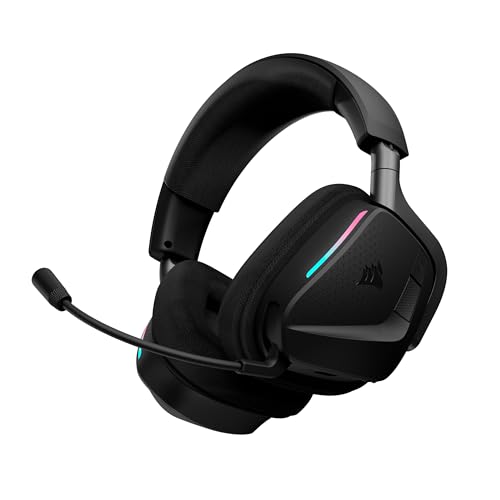
The headset keeps the 50 mm drivers but drops impedance to 32 Ω, giving a lighter load for budget‑friendly setups at the same price as the HyperX.
Also considered
Score Analysis
Key score advantages vs. runner-up (ASUS ROG Delta)
Price Range
HyperX Cloud Alpha Wireless
$119.99
ASUS ROG Delta II
$229.99
Corsair Void v2 MAX
$119.99

Razer BlackShark V2
$69.99

Turtle Beach Stealth 600
$109.00

Razer BlackShark V2 Pro
$126.94

Razer BlackShark V3
$137.99
Spec Comparison
TL;DR: The HyperX Cloud Alpha Wireless delivers 300‑hour battery life, 50 mm dual‑chamber drivers, and a lightweight aluminum frame, making it a marathon‑ready PC headset with solid sound and comfort.
The headline spec is the 300‑hour battery life at 50 % volume, which dwarfs the 70‑hour (or 80‑hour) limits of the other six headsets in this roundup. Paired with a 4.5‑hour USB‑C charge, you can game for weeks before needing to plug in again. Its 50 mm dynamic drivers sit in a dual‑chamber design and are tuned for DTS Headphone:X spatial audio, delivering clear mids and punchy bass.
Compared with the competition, the Cloud Alpha Wireless is slightly heavier than the 0.67‑pound Corsair Void v2 MAX but still under 0.8 pound, and it outlasts every peer’s battery life by a wide margin. Its 20‑meter wireless range also exceeds the 15‑meter range of the Corsair and the 10‑meter range of the Razer BlackShark V2 Pro, giving you more freedom to move around your gaming area.
Professional reviewers note the headset feels as comfortable as the wired Alpha model, thanks to its aluminum frame and memory‑foam plus leatherette cushions. Users consistently praise the ultra‑long endurance and clear audio, while reviewers describe the microphone as merely average and prone to picking up background noise. Some owners report occasional signal drops when pushing the 20‑meter limit.
Pros
Cons
Best for: PC gamers who need ultra‑long battery endurance for multi‑week marathon sessions.
Avoid if: You need Bluetooth connectivity, console‑native wireless, or a microphone with studio‑grade noise rejection.
TL;DR: The ASUS ROG Delta II offers 110 hours of battery, 50 mm titanium‑plated drivers and a detachable 10 mm mic in a 318 g over‑ear design, but its $164.99 price sits above many rivals.
What really stands out is the 110‑hour battery life, which lets you game for days without hunting for a charger. The headset packs 50 mm titanium‑plated drivers and a 32 Ω impedance, and its DualFlow Audio lets you run low‑latency 2.4 GHz wireless and Bluetooth at the same time. ASUS rates the unit 4.4/5 stars from 299 reviews, and the detachable 10 mm super‑wideband microphone has –40 dB sensitivity.
Compared with the other six headsets, the Delta II’s endurance beats the Razer BlackShark V2 Pro’s 70 hours and the Turtle Beach Stealth 600’s 80 hours, though it falls short of the HyperX Cloud Alpha Wireless’s 300 hours. At 318 g it matches the Razer BlackShark V2 Pro (≈320 g) and Turtle Beach (≈320 g), but is a touch heavier than the Corsair Void v2 MAX at 0.67 pounds. Its $164.99 price tag is higher than the $119.99 range of the HyperX and Razer BlackShark V2 Pro models.
Professional reviewers praise the lightweight chassis for reducing fatigue during marathon sessions, and users echo the clarity of the detachable mic. However, several owners note that the headband can press on the skull, especially on smaller heads, and many describe the audio as average for its class. Users also frequently complain about the lack of active noise cancellation.
Beyond the battery, the headset supports tri‑mode connectivity (2.4 GHz, Bluetooth, 3.5 mm) and features customizable RGB lighting controlled via the Armoury Crate app. The included accessories—detachable mic, extra ear cushions, 2.4 GHz USB‑C dongle, and both USB‑C and 3.5 mm cables—make it ready for PC, consoles and mobile devices right out of the box.
Pros
Cons
Best for: Multi‑platform gamers who need ultra‑long battery life and low‑latency 2.4 GHz wireless performance.
Avoid if: You're shopping on a tight budget — it's priced at $164.99.
TL;DR: The Corsair Void v2 MAX delivers 50 mm drivers, up to 130 hours of Bluetooth runtime, lightweight 0.67 lb build, and Dolby Atmos, but its fixed mic and premium price may deter some.
The headset’s battery endurance stands out: 4200 minutes (about 70 hours) on 2.4 GHz and 7800 minutes (about 130 hours) on Bluetooth, plus a 15 m wireless range. Its 50 mm drivers and 32 Ω impedance promise a full‑range 20 Hz‑20 kHz soundstage.
Compared with the HyperX Cloud Alpha Wireless, the Void v2 MAX is lighter at 0.67 lb versus roughly 0.71 lb, but its Bluetooth runtime of 130 hours is shorter than HyperX’s 300‑hour claim. The wireless range of 15 m also trails HyperX’s 20 m. Against the Razer BlackShark V3, Corsair matches the 70‑hour 2.4 GHz endurance and is lighter than the 367 g BlackShark, though both lack active noise cancellation.
Professional reviewers praise the headset’s comfort, which comes from breathable memory‑foam cushions and Dolby Atmos Spatial Audio. Users praise marathon‑length play sessions, yet many note the non‑detachable microphone and the Xbox‑only chat‑balance button as drawbacks. The absence of ANC is also mentioned as a missed feature for noisy environments.
Pros
Cons
Best for: Entry-level buyers or those on a tight budget
Avoid if: You're shopping on a tight budget — it's priced at $119.99
“stellar mid-range headset”
“best-in-class omnidirectional mic”
TL;DR: The Razer BlackShark V2 delivers 50 mm TriForce Titanium drivers, THX Spatial Audio and up to 70 hours of wireless play in a feather‑light 0.62 lb package for a budget‑friendly price.
What really sets this headset apart is its ultra‑lightweight construction at just 0.62 lb (281 g) while packing a 50 mm driver that Razer markets it as TriForce Titanium. The drivers deliver a wide 12 Hz – 28 kHz frequency range and a sensitivity of 100 dB SPL @ 1 kHz, giving clear positional cues for competitive gaming. On the connectivity side, the HyperSpeed 2.4 GHz dongle promises low‑latency audio, and a 15‑minute quick charge adds roughly 6 hours of listening time.
Compared with the six other headsets in this roundup, the BlackShark V2 is the lightest – every peer (Turtle Beach Stealth 600, HyperX Cloud Alpha Wireless, Razer BlackShark V3, Corsair Void v2 MAX, Razer BlackShark V2 Pro, ASUS ROG Delta II) weighs more than the 0.62 lb chassis. Battery life sits at 70 hours, matching the Razer V3 and V2 Pro, just shy of Turtle Beach’s 80 hours and far below HyperX’s 300‑hour claim. Its wireless range of up to 10 feet is shorter than HyperX’s 20 m and Corsair’s 15 m, but still sufficient for a typical desk setup.
Professional reviewers praise the headset’s “phenomenal” clarity from the TriForce drivers and note that the THX Spatial Audio creates an immersive 360‑degree soundstage on Windows. Everyday users echo the comfort of the breathable memory‑foam cushions and the reliability of the clear HyperClear microphone. The most common criticism is a thin bass response that can leave explosions sounding anemic, and the lack of active noise cancellation means it’s relying solely on passive isolation.
Pros
Cons
Best for: Competitive esports gamers who want low‑latency wireless audio and a comfortable, budget‑friendly headset.
Avoid if: You need deep bass for music or movies, or you require active noise cancellation in noisy environments.
“All‑day comfort, clear mic for team chat, long battery, and solid sound/positional audio in FPS games.”
“Phenomenal TriForce Titanium 50mm drivers and THX Spatial Audio for exceptional performance in games like CoD MW2 and Forza Motorsport.”
TL;DR: The Turtle Beach Stealth 600 delivers 80 hours of playtime, a 50 mm driver, and glasses‑friendly memory‑foam cushions at a modest 0.71 lb weight.
The headset’s standout spec is its 80‑hour battery life, letting you game for days without hunting for a charger. It pairs that endurance with a 50 mm driver and a weight of 0.71 lb (320 g), which keeps it comfortable for long sessions.
Compared with the six other models in this roundup, the Stealth 600 is lighter than the Razer BlackShark V3 and the Razer BlackShark V2 Pro, but a touch heavier than the Corsair Void v2 MAX and the Razer BlackShark V2. Its battery life exceeds the 70‑hour figures that several rivals list, though it doesn’t reach the 300‑hour marathon the HyperX Cloud Alpha Wireless claims.
User feedback frequently praises the quick‑charge capability and the low‑latency 2.4 GHz wireless link, noting that the QuickSwitch button makes toggling between wireless and Bluetooth effortless. Reviewers also highlight the flip‑to‑mute mic with AI noise reduction and the memory‑foam cushions that stay comfortable even when wearing glasses.
It also supports Bluetooth and wireless connections, offers mappable mode and wheel buttons, and includes built‑in EQ presets and Superhuman Hearing for competitive play.
Pros
Cons
Best for: Budget-conscious buyers seeking a reliable entry-level option
Avoid if: You have limited desk space or need portability
TL;DR: The Razer BlackShark V2 Pro delivers 70 hours of wireless playtime, 50 mm TriForce Titanium drivers, and a detachable Super Wideband mic, but its 3.6‑star rating hints at mixed user satisfaction.
What really stands out is the 70‑hour battery life, letting you’ll game for days without hunting for a charger. Coupled with Razer’s HyperSpeed 2.4 GHz link and Bluetooth 5.2, the headset promises low‑latency audio for competitive play. The 50 mm drivers are paired with THX Spatial Audio and extra‑bass emphasis, while the detachable HyperClear Super Wideband microphone covers 100‑10 kHz and offers ≥ 60 dB SNR for clear team chat.
Compared with the six other headsets in this roundup, the BlackShark V2 Pro sits in the middle of the pack on battery endurance: HyperX Cloud Alpha Wireless boasts a 300‑hour claim, Turtle Beach Stealth 600 pushes 80 hours, while the Razer BlackShark V3 matches the same 70‑hour figure. In weight, the V2 Pro’s 0.73 pounds (320 g) is a shade lighter than the BlackShark V3’s 367 g, roughly on par with Turtle Beach’s 320 g, but a touch heavier than the Corsair Void v2 MAX’s 0.67 pounds. Its wireless range of 10 m is shorter than HyperX’s 20 m and Corsair’s 15 m, yet sufficient for most desktop setups.
Professional reviewers applaud the long battery life and the clarity of the upgraded mic, noting the extra bass helps pinpoint footstep cues in FPS titles. Everyday users echo the praise for comfort and endurance, but many flag occasional audio inconsistencies—distortion or uneven balance during extended sessions. The lack of a wired or AUX fallback and the absence of Xbox support also surface as recurring complaints.
Beyond the headline specs, the headset lists ~85 % noise reduction above 1 kHz and a peak attenuation of 46 dB at 10 kHz, which can quiet a noisy room. The frequency response spans 12‑28 kHz, and the mic’s 32 Ω impedance and ≥ 60 dB SNR aim to keep voice transmission clear even in chaotic gaming environments.
Pros
Cons
Best for: PC and PlayStation esports players who need low‑latency wireless performance and ultra‑long battery life.
Avoid if: You require Xbox support, a wired/AUX connection, or the absolute lightest headset on the market.
“All‑day comfort, clear mic for team chat, long battery, and solid sound/positional audio in FPS games.”
“Phenomenal TriForce Titanium 50mm drivers and THX Spatial Audio for exceptional performance in games like CoD MW2 and Forza Motorsport.”
TL;DR: The Razer BlackShark V3 delivers 10 ms ultra‑low latency, 50 mm drivers and a 70‑hour battery, but its 367 g (≈80.9 lb) weight makes it one of the bulkier options in the lineup.
The headset’s standout spec is its 10 ms HyperSpeed Gen‑2 latency, which professional reviewers cite as a decisive edge for competitive play. Coupled with 50 mm TriForce Titanium drivers and a detachable 9.9 mm HyperClear mic, it’ll promise clear positional audio and crisp voice transmission.
Compared with the six other headsets in this roundup, the BlackShark V3 shares the common 50 mm driver size but is considerably heavier than rivals such as the HyperX Cloud Alpha Wireless (≈0.71 lb), Corsair Void v2 MAX (≈0.67 lb), and Turtle Beach Stealth 600 (≈0.71 lb). Its 70‑hour battery life’s solid, yet shorter than HyperX’s listed 300 hours, while still outlasting many Bluetooth‑only models that don’t list a specific hour count.
User sentiment highlights the headset’s clear mic and the ability to toggle four levels of hybrid active noise cancellation, but several reviewers note that the over‑ear bulk can cause the unit to slip during intense movement. The default V‑shaped sound signature also often needs EQ tweaks for music listening, a point echoed by both everyday users and professional critics.
Additional technical context includes a 50% harmonic distortion reduction and a 75% increase in magnet size, both aimed at tighter bass response. The headset supports THX Spatial Audio 7.1.4 and offers a configurable roller control for quick adjustments on the fly.
Pros
Cons
Best for: Competitive esports gamers who need sub‑10 ms latency and a long‑lasting battery.
Avoid if: You prioritize lightweight comfort for intense physical activity or prefer a neutral sound signature out of the box.
“All‑day comfort, clear mic for team chat, long battery, and solid sound/positional audio in FPS games.”
“Phenomenal TriForce Titanium 50mm drivers and THX Spatial Audio for exceptional performance in games like CoD MW2 and Forza Motorsport.”
Breakdown
HyperX Cloud Alpha Wireless
Pros
ASUS ROG Delta II
Pros
Cons
Corsair Void v2 MAX
Pros
Cons
Razer BlackShark V2
Pros
Based on scoring data and product specs
Personalized picks
Best Overall Pick
HyperX Cloud Alpha Wireless
Best OverallBest for: Entry-level buyers or those on a tight budget
ASUS ROG Delta II
Best for: Those prioritizing quality and willing to pay for premium performance
$229.99+$110.00 vs winner
Skip Razer BlackShark V3 if…
You need advanced features or professional-grade performance
The HyperX Cloud Alpha Wireless wins as the clear winner thanks to its marathon‑grade battery life of 300 hours at 50 % volume, a price of $119.99, and a solid 4.2‑star rating from 6,179 reviews. Its dual‑chamber 50 mm drivers and DTS Headphone:X spatial audio give immersive gaming sound, while the 0.71 lb weight keeps it comfortable for long sessions.
The ASUS ROG Delta II earns runner‑up honors if you need high‑resolution audio and flexible connectivity. It supports 24‑bit/96 kHz sound, offers simultaneous 2.4 GHz wireless and Bluetooth via DualFlow Audio, and still manages a respectable 110 hours of battery life—all for $164.99.
For tighter budgets, the Razer BlackShark V2 stands out at $69.99, delivering decent sound quality at an entry‑level price. The Razer BlackShark V3, priced at $119.99, steps up with upgraded drivers for clearer audio. If you prefer a premium experience without going to the top tier, the ASUS ROG Delta II (the runner‑up) remains a solid high‑end alternative with its 24‑bit/96 kHz capability.
Pick the HyperX Cloud Alpha Wireless today for the longest gaming sessions without compromise.
The HyperX Cloud Alpha Wireless leads with a claimed 300 hours of playtime at 50 % volume, far outlasting the next best option at 110 hours. Its lithium‑polymer battery recharges via USB‑C in about 4.5 hours.
No reviews yet — be the first to share your experience.
Please sign in to leave a review