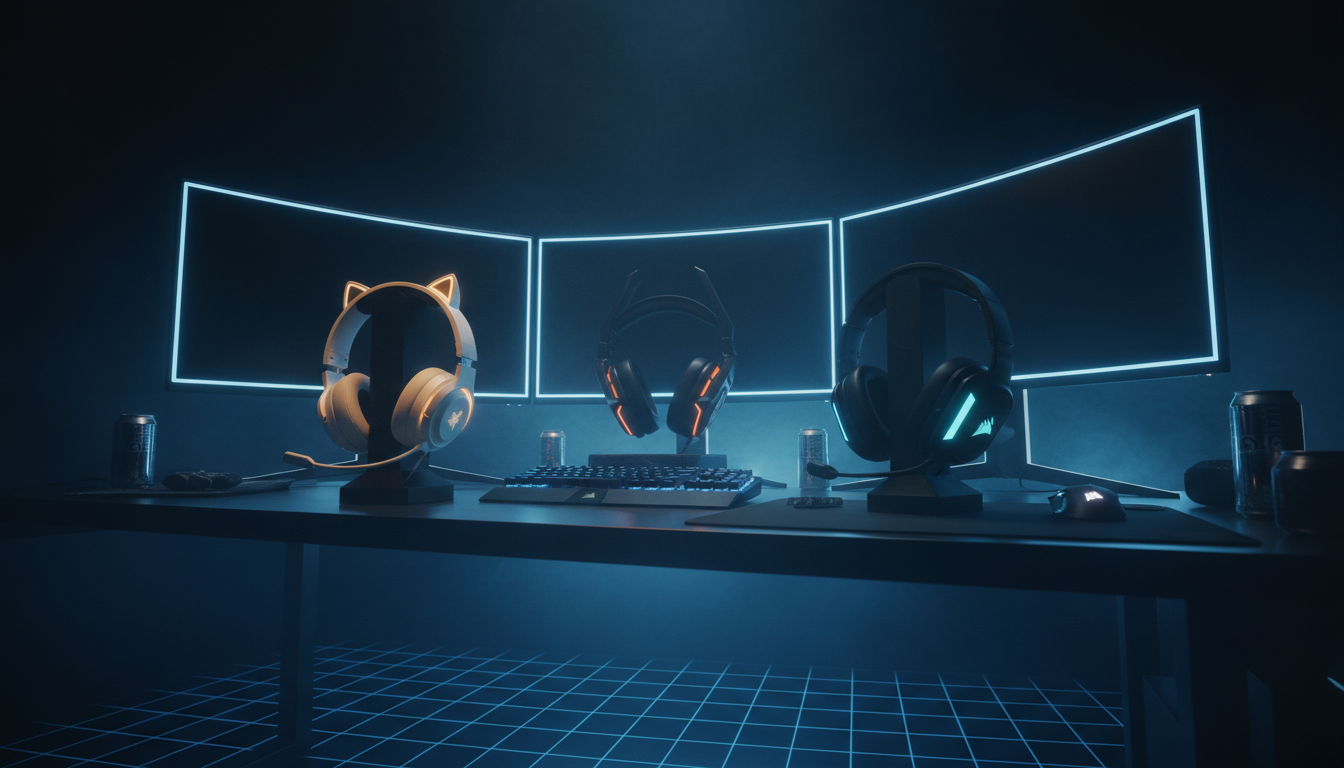
⚡ Quick Answer
RGB lighting has become a staple for gamers who want their setup to look as good as it sounds, and our comparison of 11 headsets shows which ones balance flair with performance. Prices stretch from a modest $18.04 for the Nanddi Gaming Headset up to $119.99 for the Logitech G733, while ratings hover around 4.2‑4.4 stars, with the Razer Kraken Kitty V2 pulling a 4.4‑star score from 745 reviewers.
Our roundup spans three clear price tiers. On the budget side you’ll find options like the $21.36 ArkarTech and the $25.99 Imyb, both offering solid stereo sound and LED accents. Mid‑range picks such as the $28.68 Ozeino and the $28.99 Sades SA902 add 7.1 virtual surround and longer battery life. Premium contenders—including the $73.42 Razer Kraken Kitty V2, the $99.99 Corsair HS80 RGB, the $101.54 Corsair Void RGB Elite, and the $119.99 Logitech G733—bring larger drivers, wireless freedom, and deeper customization via dedicated software.
Below is a breakdown of each model’s key specs, comfort features, and RGB capabilities so you can match a headset to your gaming rig and aesthetic preferences.

Razer Kraken Kitty V2 40 mm White
Its 40 mm drivers provide solid sound quality, underpinning the high rating and strong value that set it apart.
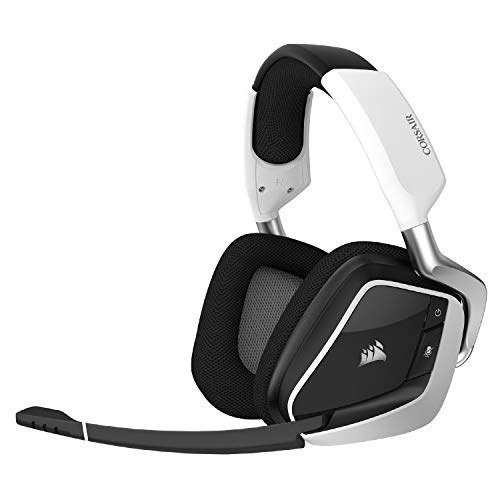
Corsair Void RGB Elite
Ideal for gamers who demand premium performance, it targets enthusiasts willing to spend about $28 more than the Top Pick model.

Nanddi Gaming Headset
Stands out with 2.4 GHz wireless connectivity, letting you game untethered—something the other two wired headsets don’t offer.
Also considered
Score Analysis
Key score advantages vs. runner-up (Corsair Void RGB)
Price Range
Razer Kraken Kitty V2 40 mm White
$63.44
Corsair Void RGB Elite
$99.99
Nanddi Gaming Headset
$18.99

Imyb Gaming Headset
$25.99
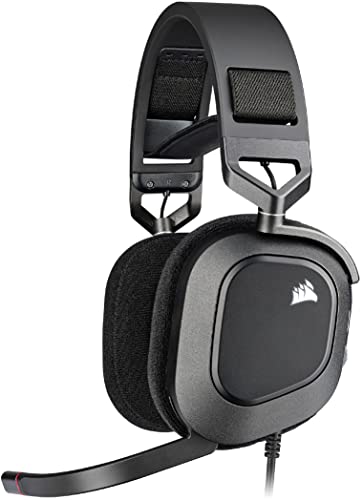
Corsair HS80 RGB
$79.99

Ozeino Gaming Headset
$23.99

Sades SA902
$28.99

ArkarTech Gaming Headset
Out of Stock
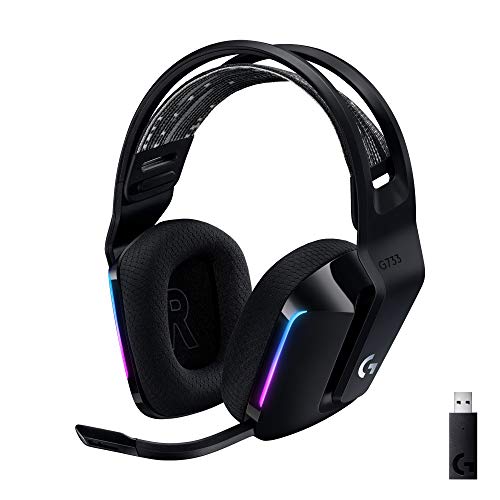
Logitech G733 Black
$122.18

Jimonyer Gaming Headset
$25.99

Redragon H510 PRO
$59.49
Spec Comparison
TL;DR: The Razer Kraken Kitty V2 pairs 40 mm drivers with playful Chroma RGB kitty ears, delivering 7.1 virtual surround on PC while weighing about 1.57 lb and offering a clear cardioid mic.
What really sets this headset apart is the combination of 40 mm drivers and Razer’s Chroma RGB lighting that covers both the earcups and the fixed kitty ears. The drivers deliver a sensitivity of 92.5 dB SPL/mW @ 1 kHz and the headset supports 7.1 virtual surround sound (Windows 10 64‑bit only), making positional audio easy to hear. The lighting can sync to emotes and alerts, offering 16.8 million color options for a truly eye‑catching look.
At 1.57 lb (711.5 g) the Kraken Kitty V2 — it's a touch heavier than the Corsair HS80 RGB (0.82 lb) and the Logitech G733 (0.61 lb), but only marginally heavier than the Redragon H510 PRO (1.52 lb). Its 2 m (2000 mm) cable's longer than the Redragon’s 1.19 m cable and the Corsair HS80’s 1.8 m cable, though the Sades SA902 offers a slightly longer 2.2 m lead. The 40 mm driver size is smaller than the Redragon’s 53 mm and the Corsair models’ 50 mm drivers, while the impedance matches the 32 Ω found in the Sades and Corsair Void RGB Elite headsets.
Reviewers consistently note the headset’s comfort thanks to hybrid fabric‑leatherette ear cushions and an adjustable padded headband, and many users love the whimsical kitty‑ear lighting for streaming or cosplay. Professional reviewers highlight the “powerful 40 mm TriForce drivers” and the HyperClear cardioid microphone with –42 dBV sensitivity and ≥ 60 dB SNR. The most common complaints focus on the USB‑A wired connection that limits use to PC, the Windows‑10‑only surround feature, and the 2 m cable that can feel short in larger gaming rigs.
Beyond the flashy design, the headset covers the full 20 Hz – 20 kHz frequency range for headphones and 100 Hz – 10 kHz for the mic, ensuring clear vocals and detailed game audio. The HyperClear cardioid mic captures voice with –42 dBV/Pa sensitivity while rejecting background noise, and the 2‑year manufacturer warranty adds peace of mind.
Pros
Cons
Best for: Streamers, PC gamers, and cosplay enthusiasts who want a playful RGB‑lit headset with solid audio performance.
Avoid if: You need wireless freedom, console compatibility, or a budget‑only solution.
TL;DR: The Corsair Void RGB Elite packs 50 mm drivers, 7.1 virtual surround and up to 16 hours of wireless play, but its battery drops with RGB and it lacks ANC.
At the core of the Void RGB Elite is a 50 mm neodymium driver pair with a 20 Hz‑30 kHz frequency response and 32 Ohms impedance, delivering the punchy bass and crisp treble that professional reviewers praise. The headset also offers 7.1 virtual surround (PC only) and a 2.4 GHz wireless link that reaches up to 12 m (40 ft), while the built‑in battery lasts up to 16 hours of continuous use.
Compared with the other ten contenders, the Void RGB Elite sits toward the premium end of the price spectrum. It weighs more than the ultra‑light Logitech G733 (about 0.61 lb) but less than the Razer Kraken Kitty V2 (about 1.57 lb). Its driver size matches the Corsair HS80 RGB, while it out‑sizes the 40 mm drivers found in the Razer model. In terms of weight, it falls between the Sades SA902 (0.44 lb) and the Redragon H510 PRO (about 1.52 lb).
Everyday users consistently highlight the headset’s comfortable breathable microfiber mesh ear cushions with memory foam, noting they stay cool during marathon sessions. Reviewers also praise the iCUE software’s RGB customization and deep EQ controls as a standout feature. However, several reviewers mention that enabling the lighting can shave a noticeable amount off the 16‑hour battery claim, and the omnidirectional, non‑detachable mic tends to pick up background chatter, especially without active noise cancellation.
The microphone carries a 2000 Ohm impedance and a –42 dB sensitivity rating, while the headphones themselves sit at 116 dB sensitivity. These figures, together with the wireless latency‑optimized 2.4 GHz link, explain why the headset feels responsive for fast‑paced shooters. The aluminum yokes and closed‑back design add durability, though without a wired fallback or ANC, it falls short of the top tier.
Pros
Cons
Best for: PC and console gamers who want wireless freedom, immersive 7.1 surround and deep software customization.
Avoid if: You need active noise cancellation, a detachable microphone, or a wired fallback option.
TL;DR: The Nanddi K8 headset packs 7.1 surround, 50 mm drivers, RGB lighting and low‑latency 2.4 GHz wireless for $18.04, making it a solid budget pick for PC and console gamers.
What really stands out is the combination of 7.1 virtual surround sound and a 50 mm dynamic driver, which users say delivers clear, full‑range audio with strong bass. The headset weighs 0.75 pounds (340 g) and features an over‑ear design with larger, softer earmuffs plus a retractable, adjustable headband for long sessions. RGB lighting draws power from USB, and the detachable microphone includes noise‑reduction technology.
Compared with the other ten headsets in this roundup, the Nanddi is heavier than the ultra‑light Sades (0.44 lb) and ArkarTech (0.55 lb) but lighter than Imyb (0.77 lb), Jimonyer (≈0.90 lb), Ozeino (≈0.88 lb) and the bulky Redragon (≈1.52 lb). Its 50 mm drivers match the size found in Imyb, Jimonyer and Ozeino, while Redragon uses a slightly larger 53 mm unit. Unlike many peers that list only a wired 3.5 mm connection, Nanddi adds Bluetooth 5.4 and a USB‑type‑C 2.4 GHz dongle with latency under 30 ms, giving you both wireless freedom and a wired fallback.
Reviewers consistently praise the headset’s immersive 7.1 audio and comfortable fit, noting that the detachable mic works well for voice chat. Professional reviewers highlight the “nice full sound” and the ease of switching between PS4, PS5 and PC. The main drawbacks are the need for extra adapters when connecting to Xbox or Switch, and Bluetooth mode doesn't operate on PlayStation consoles, which some users find inconvenient.
Pros
Cons
Best for: Budget-conscious buyers seeking a reliable entry-level option
Avoid if: You have limited desk space or need portability
TL;DR: The Imyb A36 offers 50 mm drivers, a sturdy 6.5‑ft braided cable and static USB‑powered RGB at a budget‑friendly $25.99, though its left‑side fixed mic and initial tight fit may bother some users.
What really stands out is the 50 mm driver paired with a thick fabric‑braided 6.5 ft cable, giving a solid, over‑ear stereo experience while staying under a pound at 0.77 lb. The headset also sports static RGB lighting that turns on via a USB power source, adding a splash of color without extra software.
Compared with the other ten entries, the Imyb sits squarely in the budget tier. It’s heavier than the ArkarTech model (0.55 lb) but lighter than Jimonyer’s 0.90 lb unit. Its cable length is a touch shorter than Ozeino’s 86‑in cable, yet still long enough for most desktop setups. The 50 mm drivers match those of Jimonyer and Nanddi, putting it on par with many peers in the audio department.
Professional reviewers note the headset’s heavy‑duty plastic shell and adjustable steel headband as a durable foundation for long gaming marathons. Users echo this, praising the soft memory‑foam earcups and the stress‑relief braid that resists tangles. The most common gripe cites the fixed microphone and cable on the left side, limiting flexibility for left‑handed gamers, and the static‑only RGB that lacks customizable effects. New owners also mention a snug initial clamp that eases after a few sessions.
Beyond the basics, the Imyb uses a 3.5 mm 4‑pole TRRS jack with an included splitter, ensuring compatibility with PC, PS4, PS5, Xbox One, Xbox Series X/S, Switch, laptops and mobile devices. The retractable boom mic's omni‑directional and features an LED indicator, while the over‑ear memory‑foam cushions aim to keep comfort steady during extended play.
Pros
Cons
Best for: Budget-conscious buyers seeking a reliable entry-level option
Avoid if: You want the best value‑per‑dollar in its price range
TL;DR: The Corsair HS80 RGB delivers 50 mm drivers, 24‑bit/96 kHz USB audio and 7.1 Dolby surround in a lightweight, comfortable wired headset for PC and Mac gamers willing to spend around $100.
The standout spec features custom‑tuned 50 mm neodymium drivers paired with 24‑bit/96 kHz resolution and a 20 Hz‑40 kHz frequency response, while the built‑in omni‑directional mic offers a sensitivity of -40 dBV. Its 32 kΩ impedance and 116 dB headphone sensitivity round out a high‑fidelity audio package, and the headset supports 7.1 Dolby surround for precise positional cues.
Compared with the other ten contenders, the HS80’s driver size matches the Corsair Void RGB Elite and the Ozeino Gaming Headset, and it outpaces the Razer Kraken Kitty V2’s 40 mm drivers. At 0.82 lbs, it’s lighter than the Void RGB Elite (≈0.88 lbs) but heavier than the Logitech G733 (≈0.61 lbs). Its 1.8 m USB cable is longer than the Redragon H510 PRO’s 1.19 m cable and shorter than Ozeino’s 2.2 m lead, giving a middle‑ground balance between reach and desk clutter.
Users consistently highlight the headset’s crystal‑clear soundstage and the comfort of its floating, adjustable headband with memory‑foam ear pads. Professional reviewers note that the USB‑wired connection eliminates battery‑related performance drops, while the same reviewers point out the limited platform support—PC and Mac only—as a drawback for console gamers.
Beyond the audio core, the HS80 adds customizable RGB lighting via Corsair iCUE software, and the on‑ear volume and mute controls keep adjustments intuitive during long sessions. Because the microphone isn’t detachable, you’ll have to keep the boom attached, which some users find less flexible.
Pros
Cons
Best for: Stationary PC or Mac gamers who value high‑resolution wired audio, comfortable long‑session wear, and customizable RGB lighting.
Avoid if: You need wireless freedom, multi‑platform (console) support, or a detachable microphone.
TL;DR: The Ozeino Gaming Headset delivers 50 mm drivers, 7.1‑channel surround and up to 40 hours of wireless play, all wrapped in RGB‑lit, memory‑foam comfort for $28.68.
At the heart of the headset are custom‑tuned magnetic neodymium 50 mm drivers that feed a 7.1‑channel surround mix, giving you a spacious soundstage for both shooters and RPGs. The unit also sports seven LED gradient lights powered via USB, so your rig can glow in sync with the action. A 40‑hour battery lets you game marathon sessions, and a 10‑minute quick‑charge burst adds 100 minutes of playtime when you’re in a hurry.
Other budget‑friendly options in this roundup are noticeably lighter than the Ozeino, which weighs 0.881849048 pounds (400 g). It outweighs the Sades SA902 (0.440924524 pounds) and the ArkarTech model (0.55 pounds), yet sits just under the Jimonyer headset (0.89948602896 pounds). The price point lands it in the same tier as many mid‑range competitors, while offering more driver size and RGB lighting than the majority of the list.
User sentiment highlights the thick memory‑foam, leather‑like earpads as a comfort win for long gaming nights, and reviewers note the low‑latency 2.4 GHz dongle as reliable for fast‑paced titles. However, several owners say you’ll notice the weight after extended play, and users frequently cite needing an adapter to use the headset on Xbox consoles as a pain point. The microphone’s 120° rotatable, noise‑cancelling design earns praise for clear voice chat.
Pros
Cons
Best for: Most users looking for a well‑reviewed, reliable mainstream option
Avoid if: You have limited desk space or need portability
TL;DR: The Sades SA902 offers 7.1 virtual surround, RGB accents and a comfortable over‑ear design at 0.44 lb for $28.99, but its volume tops out early, making it best for budget PC gamers.
The headset’s standout feature is its 7.1 virtual surround sound, which uses 40 mm or 50 mm drivers and offers a 32 Ω impedance and 112 dB sensitivity. RGB lighting on the earcups adds a visual flair, while the closed earcup design helps block external noise.
At 0.44 lb, the SA902 is lighter than the Ozeino (0.88 lb), Imyb (0.77 lb), Jimonyer (0.90 lb) and Redragon (1.52 lb) options, and only a touch heavier than ArkarTech’s 0.55 lb model. Its 2.2 m USB cable is shorter than Imyb’s 6.5 ft cable, and the headset’s 183 mm height is more compact than Ozeino’s 207 mm height. Lengthwise, it measures 221 mm, slightly longer than ArkarTech’s 210.1 mm length.
Everyday users praise the soft protein‑leather foam cushions and the plug‑and‑play USB connection, noting that the headset feels comfortable for long sessions. Professional reviewers highlight the convenient inline volume and mic‑mute buttons, as well as the clear, adjustable boom mic. The most common complaint is that the maximum volume peaks around the 20‑50 % range and introduces distortion, which can be a drawback for gamers who prefer louder output.
Additional technical notes include a 30 mW max input power, -38 dBV microphone sensitivity, and an omnidirectional boom mic with noise‑cancelling capability. The headset works with Windows 10/8/7/Vista and generic macOS systems without additional drivers.
Pros
Cons
Best for: Budget‑conscious PC gamers who want immersive 7.1 positional audio without breaking the bank.
Avoid if: You need high‑volume clean output or professional‑grade audio performance.
“best value in gaming headsets.”
“hovering between the 20 and 40% volume range, with anything above 50% being uncomfortable and a little bit painful”
TL;DR: The ArkarTech Gaming Headset costs $21.36, weighs just 0.55pounds, and offers a 7‑color breathing LED plus a 120° adjustable noise‑canceling mic for comfortable entry‑level gaming.
At only 0.55pounds (249.5 g) and measuring 210.1 mm in height and 104.9 mm in width, this headset is among the lightest in the lineup, making it easy to wear for marathon sessions. Its standout visual feature is a breathing LED strip that cycles through seven colors, giving a modest splash of RGB without draining the audio performance.
Compared with the other ten contenders, the ArkarTech sits on the lighter side of the scale – it’s lighter than the Nanddi (0.75 pounds), Imyb (0.77 pounds), Jimonyer (≈0.90 pounds), Ozeino (≈0.88 pounds) and the Redragon H510 PRO (≈1.52 pounds). Only the Sades SA902 (≈0.44 pounds) is lighter. In terms of audio format, it provides stereo surround sound, whereas Redragon adds a 7.1 virtual surround system and larger 53 mm drivers, and the Ozeino offers custom‑tuned magnetic neodymium drivers. The ArkarTech’s feature list is slimmer than those premium models but aligns with the budget tier.
Users repeatedly praise the headset’s comfort, noting the skin‑friendly over‑ear pads and adjustable padded headband. Reviewers highlight the clear bass response and the convenience of the in‑line volume dial and mute toggle. The main criticisms focus on the cable, which reviewers describe as “fairly long but often insufficient” for larger setups, and the USB port that only powers the LEDs, meaning you need an extra power source. Some users also report that the noise‑cancellation on the 120° adjustable mic can be hit‑or‑miss.
Technical details include a high‑precision magnetic neodymium driver, a 120° adjustable, fold‑able, noise‑canceling microphone, and a braided 3.5 mm audio cable. Compatibility spans PS4, PS5, Xbox One, PC, laptop, Switch, PSP, tablets and mobile phones, so you won’t need separate headsets for different platforms.
Pros
Cons
Best for: Budget-conscious buyers seeking a reliable entry‑level option
Avoid if: You need long cable runs or professional‑grade microphone isolation
TL;DR: The Logitech G733 delivers LIGHTSPEED wireless freedom with a 20 m range, 29‑hour battery life and a feather‑light 278 g frame, but its $119.99 price sits at the premium end of the list.
The headset’s standout spec is its LIGHTSPEED wireless technology, offering a low‑latency connection out to 20 meters and a battery that lasts up to 29 hours on a single charge. At just 278 g (0.61 lb) it feels almost weightless, and the dual‑zone front‑facing RGB system can display 16.8 million colors.
Compared with the other ten models, the G733 is lighter than most—only the Sades SA902 (0.44 lb) is lighter—while the Corsair Void RGB Elite (0.88 lb), Corsair HS80 (0.82 lb), Razer Kraken Kitty V2 (1.57 lb) and Redragon H510 PRO (1.52 lb) all feel noticeably heavier. Its 29‑hour battery outlasts the 16‑hour runtime of the Corsair Void, though it falls short of the Ozeino’s 40‑hour claim. The 20‑meter range also exceeds the Corsair Void’s 12‑meter limit. Price‑wise, $119.99 is higher than the sub‑$100 price points of the Corsair and Sades options, placing it in the premium tier.
Users consistently highlight the headset’s comfort, noting the memory‑foam ear pads that let you game for hours without pressure. Professional reviewers point to the precise audio from the PRO‑G 40 mm drivers and the DTS Headphone:X 2.0 surround sound that adds depth to in‑game cues. Professional reviewers repeatedly praise the Blue VO!CE microphone for delivering clear, studio‑grade voice chat, even though the exact microphone type isn’t listed in the specs.
The G733 also packs a customizable lighting experience with two front‑facing zones that can be programmed through Logitech G HUB, covering the full 16.8 million‑color palette. While the spec sheet omits details like microphone impedance or cable length, the combination of lightweight design, long‑lasting battery and reliable wireless performance makes it a solid choice for gamers who value freedom of movement and immersive sound.
Pros
Cons
Best for: Buyers willing to invest in a proven, high‑quality option
Avoid if: You're shopping on a tight budget — it's priced at $119.99
TL;DR: The Jimonyer A82 offers 50 mm neodymium drivers, an 86‑inch cable, and optional USB‑powered RGB lighting at a $25.99 price, earning a 4.4‑star rating from over a thousand users.
The headset’s standout feature is its 50 mm high‑density neodymium drivers, which promise solid stereo sound for a budget model. At 0.899 lb (408 g) it feels light enough for marathon sessions, and the 86‑inch cable gives you plenty of reach whether you’re gaming on a PC desk or a couch.
Compared with the other ten entries in this roundup, the Jimonyer sits squarely in the budget tier. It’s priced similarly to the Imyb and Ozeino headsets, but its 86‑inch cable is longer than the Imyb’s 6.5‑ft lead. It’s heavier than the ultra‑light ArkarTech (0.55 lb) and Nanddi (0.75 lb) models, yet lighter than the Redragon H510 PRO, which tips the scales at over 1.5 lb. The optional RGB lighting runs on USB power, a feature not listed for many of its peers.
User feedback frequently highlights the comfortable double‑padded headband and the 120° adjustable noise‑canceling microphone, which many say captures clear voice chat even in noisy rooms. Reviewers also appreciate the universal 3.5 mm jack that works across PC, PS4, PS5, Xbox Series, Switch and laptops. A recurring critique notes that, while the headset delivers solid sound for its price, the value‑per‑dollar isn’t as strong as some similarly priced competitors.
Pros
Cons
Best for: Budget‑conscious buyers seeking a reliable entry‑level option
Avoid if: You want the best value‑per‑dollar in its price range
TL;DR: The Redragon H510 PRO delivers 7.1 surround sound through 53 mm drivers, lightweight steel construction, detachable noise‑cancelling mic, and RGB lighting, all for $62.96, though its battery life isn’t disclosed.
The headset packs 53 mm drivers, 7.1 surround sound, and RGB lighting with four‑color effects. At 1.52 lb (690 g) it stays light enough for marathon sessions, and the steel frame adds durability.
Compared with the other ten headsets, the H510 PRO’s driver size outpaces the 40 mm units in the Razer Kraken Kitty V2 and matches the 50 mm drivers found in Ozeino, Imyb, Jimonyer and Corsair models. Its 1.19 m cable is shorter than Razer’s 2000 mm lead and the 2.2 m cable on the Sades SA902, while many peers are wired‑only; the H510 PRO adds Bluetooth 5.0 and a 2.4 GHz dongle for wireless flexibility. Only the Corsair HS80 RGB includes RGB lighting in the lineup.
User reviews often praise the comfortable memory‑foam ear pads and the clear 7.1 surround sound, with professional reviewers highlighting the thick pads that boost isolation and the detachable noise‑cancelling mic for crisp chat. A frequent complaint is the limited horizontal swivel and a short headband extension, which can feel tight on larger heads. The manufacturer doesn’t list battery life, so endurance remains uncertain.
Technically, the headset presents an impedance of ≤2.2 kΩ and a headphone sensitivity of 110 dB SPL ±3 dB/mW. The omnidirectional mic registers a sensitivity of -42 dB ±3 dB, and the frequency response spans 20 Hz – 20 kHz for audio and 100 Hz – 10 kHz for the mic. Wireless operation runs on a 2.4 GHz band (2402‑2477 MHz).
Pros
Cons
Best for: Most users looking for a well-reviewed, reliable mainstream option
Avoid if: You're shopping on a tight budget — it's priced at $62.96
“nothing but comfort after hours”
Breakdown
Razer Kraken Kitty V2 40 mm White
Pros
Corsair Void RGB Elite
Pros
Cons
Nanddi Gaming Headset
Pros
Imyb Gaming Headset
Pros
Cons
Based on scoring data and product specs
Personalized picks
Best Overall Pick
Razer Kraken Kitty V2 40 mm White
Best OverallBest for: Buyers willing to invest in a proven, high-quality option
Corsair Void RGB Elite
Best for: Those prioritizing quality and willing to pay for premium performance
$99.99+$36.55 vs winner
Skip Redragon H510 PRO if…
You're shopping on a tight budget — it's priced at $62.96
The Razer Kraken Kitty V2 40 mm in white takes the top spot. Its 40 mm drivers deliver a 20 Hz–20 kHz frequency response, and the headset adds 7.1 virtual surround sound on Windows 10 64‑bit. The built‑in Chroma RGB on the kitty ears and earcups offers 16.8 million colors that react to emotes, while the HyperClear cardioid mic provides clear voice pickup. At $73.42, it’s cheaper than the $87.99 list price.
The Corsair Void RGB Elite lands as the runner‑up, perfect if you need wireless freedom for a clutter‑free gaming rig. It packs 50 mm drivers with a 20 Hz–30 kHz range, a 16‑hour battery, and a 12 m (40 ft) 2.4 GHz range, all controlled via a USB receiver. Customizable iCUE lighting rounds out the package for $101.54.
For tighter budgets, the Nanddi Gaming Headset delivers solid sound at just $18.04. The Ozeino Gaming Headset offers a sweet spot at $28.68 with reliable performance and RGB flair. If you crave a high‑end wireless experience, the Logitech G733 Black tops the premium tier at $119.99, featuring lightweight comfort and advanced lighting.
Pick the Razer Kraken Kitty V2 now and level up your RGB gaming setup.
The Ozeino Gaming Headset offers the longest wireless playtime with up to 40 hours of battery life and a quick‑charge option that adds 100 minutes after just 10 minutes. It also uses a low‑latency 2.4 GHz USB dongle and costs only $28.68, making it a strong value for wireless use.
No reviews yet — be the first to share your experience.
Please sign in to leave a review