⚡ Quick Answer
Hot‑swappable switches let you change a keyboard’s feel without soldering, and the nine keyboards we compared cover every budget, mid‑range and premium slot. The lineup stretches from the $32.99 Redragon K585 DITI up to the $239.95 GravaStar Mercury V75 Pro, giving you clear price tiers while keeping the core feature of swap‑able switches intact.
Even the most affordable option, the Redragon K552P at $37.99, scores a solid 4.5 / 5 from more than 54 000 reviewers and offers a 50 gf actuation force in a compact tenkeyless design. Mid‑range contenders like the RK Royal Kludge M65 ($59.89, 4.6 / 5) bring 6000 mAh batteries and tri‑mode connectivity, while the Nuphy Halo65 HE ($129.99, 4.6 / 5) adds an aluminum frame and 8000 Hz polling. Premium picks such as the HyperX Alloy Rise ($178.95, 4.4 / 5) and GravaStar Mercury K1 Pro ($199.95, 4.8 / 5) push the envelope with gasket‑mounted chassis, 1000 Hz polling and up to 8000 mAh of battery life.
Below you’ll find a deeper dive into each model’s strengths, specs and ideal use cases, so you can match the right hot‑swappable keyboard to your gaming setup.

Redragon K552P
Its 50 gf actuation force delivers responsive typing at a budget‑friendly $37.99 price.

RK Royal Kludge M65
Ideal for gamers who want longer wireless sessions, the M65’s 6000 mAh battery offers up to 240 hours, though it sits about $22 above the Redragon.

GravaStar Mercury K1 Pro
Stands out with an 8000 mAh battery delivering up to 470 hours of use, targeting enthusiasts willing to invest in premium endurance.
Also considered
Score Analysis
Key score advantages vs. runner-up (RK Royal Kludge)
Price Range
Redragon K552P
$40.99
RK Royal Kludge M65
$59.99
GravaStar Mercury K1 Pro
$199.95
Redragon K585 DITI
$32.99

GravaStar Mercury V75 Pro
$239.95

Nuphy Halo65 HE
Out of Stock

HyperX Alloy Rise
$99.99
Akko Dracula Castle 5075B Plus 75%
$55.99

Akko Mountain Seclusion MU01
$103.99
Spec Comparison
TL;DR: The Redragon K552P offers a compact tenkeyless design, 100% NKRO, 1000 Hz polling and vibrant RGB for just $37.99, making it a solid budget gaming keyboard despite its clicky switches.
The K552P packs a 1000 Hz polling rate (1 ms response) and 50 gf actuation force with a 2.0 mm key travel, delivering crisp, fast inputs on its Outemu Blue clicky switches. Its 87‑key tenkeyless layout includes full 100% anti‑ghosting NKRO and 12 dedicated multimedia keys, while the double‑shot PBT keycaps shine through 18 RGB lighting modes.
At roughly 1.98 lb, the keyboard is heavier than the 1.3 lb Redragon K585 DITI but lighter than the 2.82 lb HyperX Alloy Rise and the 2.60 lb GravaStar Mercury models. Its 354 mm length makes it longer than the 11.0‑in K585 DITI and a touch longer than the 335 mm Akko Dracula Castle, yet it remains more compact than many full‑size competitors. Unlike the Nuphy Halo65 and HyperX Alloy Rise, the K552P doesn't support hot‑swappable switches, which limits later customization.
Reviewers consistently praise the satisfying click of the Blue switches and the vivid RGB with 18 modes rivals pricier keyboards. Users love the solid metal‑ABS frame and splash‑proof design for durability, but the clicky noise can be disruptive in quiet rooms, and Mac support offers only basic functionality. Professional reviewers also highlight the keyboard’s excellent performance‑to‑price ratio and reliable full NKRO during intense gaming sessions.
Pros
Cons
Best for: Budget‑conscious buyers seeking a reliable entry‑level option
Avoid if: You need silent operation, full Mac compatibility, or hot‑swappable switches
“budget-friendly powerhouse”
“crisp, accurate keystrokes”
TL;DR: The RK Royal Kludge M65 packs a 6000 mAh battery, tri‑mode wireless, and hot‑swappable 66‑key layout into a 0.8 kg, gasket‑mounted chassis that users praise for its compact feel and solid build.
The standout spec is the 6000 mAh battery that promises up to 240 hours of use with RGB off, paired with three connectivity options—2.4 GHz wireless, Bluetooth 5.0, and USB‑C wired—plus dedicated physical buttons for instant mode switching. Its 5‑layer gasket‑mounted chassis and CNC‑machined aluminum volume knob give the keyboard a premium vibe at a modest $59.89 price point.
Compared with the other eight keyboards, the M65 weighs less than the Akko Dracula Castle (880 g) and the Redragon K552P (900 g), yet it’s still heavier than the ultra‑light Redragon K585 (1.3 lb). Its 6000 mAh battery holds twice the capacity of the Akko model’s 3000 mAh, though it’s smaller than the 8000 mAh cell in the GravaStar Mercury K1 Pro. Unlike the wired‑only Nuphy Halo65 and HyperX Alloy Rise, the M65 provides true wireless flexibility, and its 66‑key 60 % layout takes up less space than the 75 % Akko or the 42‑key Redragon K585.
Reviewers consistently highlight the long battery endurance and the tactile aluminum volume knob as real‑world wins. Everyday users love the PBT double‑shot keycaps and the ability to swap 3‑pin or 5‑pin switches without soldering. Professional reviewers note the retro turntable aesthetic and the convenience of side‑mounted dongle storage. The main trade‑offs include an occasional 10–17 day shipping window from China and QMK/VIA compatibility that isn’t guaranteed on every M65 variant, which can concern power‑users.
Pros
Cons
Best for: Most users looking for a well-reviewed, reliable mainstream option
Avoid if: You have limited desk space or need portability
“best budget mechanical keyboard”
“the volume knob's premium feel”
TL;DR: The GravaStar Mercury K1 Pro packs an 8000 mAh battery, 45 gf linear switches and a striking aluminum frame into a 75% layout, but its 1000 Hz polling may feel slow for top‑tier esports.
The standout feature is its massive 8000 mAh rechargeable battery, which the manufacturer claims can last up to 470 hours depending on RGB usage. Combined with tri‑mode connectivity (wired USB‑C, Bluetooth and a 2.4 GHz receiver) you can game wirelessly for days without hunting for a charger. Its hot‑swappable GravaStar × Kailh Speedy Mint linear switches register at 45 gf actuation with a 1.2 mm pre‑travel, delivering a light, snappy feel.
Compared with the eight other keyboards in this roundup, the K1 Pro sits near the top of the weight range at 2.60 lb. It’s heavier than the Nuphy Halo65 HE (1.74 lb) and the Redragon K585 DITI (1.3 lb), but lighter than the HyperX Alloy Rise (2.82 lb). Its 1000 Hz polling rate is lower than the 8000 Hz reported for the Nuphy Halo65 HE and the GravaStar Mercury V75 Pro, which may matter to competitive players. Like the HyperX Alloy Rise, V75 Pro and Nuphy Halo65 HE, it offers hot‑swappable switches, but unlike the Akko Mountain Seclusion MU01 and Akko Dracula Castle 5075B Plus, it adds a three‑way rotary knob for volume control.
Professional reviewers praised the sci‑fi aluminum skeleton and the dual independent RGB systems, noting the “insanely good‑looking” design and “cushioned gasket feel.” Everyday users echo the love for the battery endurance and the versatile connectivity, yet several mention the chassis feels a bit fragile and the lack of a native ISO layout limits regional users. Reviewers also flagged the 1000 Hz polling as a drawback for high‑level esports where sub‑1 ms latency is prized.
Pros
Cons
Best for: Buyers willing to invest in a proven, high‑quality option.
Avoid if: You need sub‑1 ms latency for esports, require a native ISO layout, or are on a tight budget.
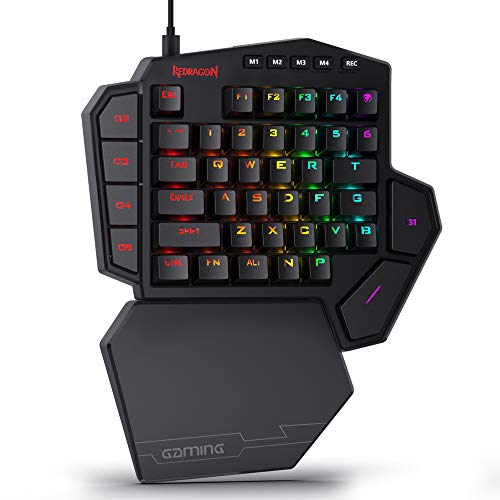
TL;DR: The Redragon K585 DITI packs a hot‑swappable socket, detachable wrist rest and seven macro keys into a 1.3 lb, 9.0 in × 11.0 in × 2.0 in compact wired keypad, making it a solid budget pick for right‑handed gamers.
The standout feature is its upgraded hot‑swap socket, letting you change Outemu Blue, Brown or Red switches without soldering. At just 1.3 lb, with a 9.0 in height and 11.0 in length, the K585 is one of the most portable keyboards in this nine‑product lineup. Its detachable magnetic wrist rest adds ergonomic comfort without adding bulk.
Compared with its peers, the K585 is lighter than the HyperX Alloy Rise (≈2.82 lb) and GravaStar Mercury K1 Pro (≈2.60 lb), and far cheaper than the premium models that sit above $120. It’s also more compact than the Nuphy Halo65 (length listed as 317 mm) and the Akko Mountain Seclusion MU01 (12.87 in length). While the RK Royal Kludge M65 and Akko Dracula Castle offer wireless options, the K585 sticks to a wired USB 2.0 Type‑C connection, which keeps the price low but limits placement flexibility.
Gamers consistently praise the keypad’s portability and the usefulness of its seven programmable macro keys. Professional reviewers highlight the tactile feel of the Outemu switches and the full NKRO rollover as essential for fast‑paced games. The main criticisms focus on the lack of wireless connectivity, the fixed 9.0 in height (no adjustment), and limited macOS software support, which can be a deal‑breaker for Mac users.
Pros
Cons
Best for: Right‑handed gamers who need a compact left‑side keypad on a budget.
Avoid if: You require wireless freedom, height‑adjustable ergonomics, or full macOS compatibility.
TL;DR: The GravaStar Mercury V75 Pro delivers ultra‑low 0.125 ms latency, 8,000 Hz polling, and magnetic Hall‑Effect switches in a solid 75% aluminum frame, but it's $239.95 price tags it as a premium option.
What really sets this keyboard apart is its 0.125 ms input latency paired with an 8,000 Hz polling rate, giving you reaction times that competitive players crave. The Hall‑Effect magnetic switches offer a 0.005 mm precision rating, eliminating the wear you see on traditional mechanical contacts. With an actuation force of just 36 g and an adjustable depth range from 0.1 mm to 3.5 mm, you can fine‑tune each key for the fastest possible trigger.
At 2.6 lbs, the V75 Pro sits heavier than the 1.74‑lb Nuphy Halo65 HE but lighter than the 2.82‑lb HyperX Alloy Rise, striking a middle ground for desk stability. Its 8,000 Hz polling outpaces most peers—HyperX and the Mercury K1 Pro both run at 1,000 Hz—while matching the Halo65’s top‑end rate. The hot‑swappable design works with TTC and Gateron switches, a feature shared by the HyperX and Nuphy models, giving you upgrade flexibility without soldering.
Reviewers consistently praise the magnetic switches for their precision and the rapid‑trigger mode that lets you shave milliseconds off each keystroke. Tom’s Guide highlighted the solid aluminum construction and the low 36 g actuation force as a sweet spot for both typing and fast‑paced gaming. On the flip side, YouTube reviewers noted that the gasket‑mounting system can feel less “springy” than traditional mounts, and the aggressive neon‑styled case may not suit every aesthetic preference.
Beyond the core performance, the keyboard includes five layers of acoustic foam to dampen vibrations, dual‑zone RGB lighting with 16 dynamic modes, and a web‑based configuration app for quick tweaks to rapid‑trigger and other settings. The 2.27 in height and 7.39 in width keep the footprint compact for a 75% layout while the double‑shot PBT keycaps add durability for long sessions.
Pros
Cons
Best for: Competitive gamers and precision typists who need ultra‑low latency, adjustable rapid‑trigger settings, and magnetic switch reliability.
Avoid if: You prefer a lightweight keyboard, traditional mechanical switch feel, or a more subdued visual design.
TL;DR: The Nuphy Halo65 HE delivers a premium aluminum‑framed 65% layout with hot‑swappable magnetic Hall‑Effect switches, 8000 Hz polling and RGB lighting for $129.99.
The standout spec is the 8000 Hz polling rate, which sits at the top end of the lineup and pairs with a maximum adjustable accuracy of 0.02 mm. Its magnetic Jade Pro switches register actuation at just 0.1 mm, and the dual‑action per key lets you assign two movements based on pressure.
At 1.74 lb (788.5 g) the Halo65 HE is lighter than the HyperX Alloy Rise (2.82 lb) and the GravaStar Mercury K1 Pro (2.60 lb), yet comparable to the RK Royal Kludge M65 (1.7 lb). It shares hot‑swappable capability with the HyperX Alloy Rise, while its aluminum frame feels more rigid than the solid walnut case of the Akko Mountain Seclusion. The 8,000 Hz polling also matches the GravaStar Mercury V75 Pro, which is heavier at 2.6 lb.
Professional reviewers praise the ultra‑low latency feel and the “thocky” acoustic profile that comes from the magnetic Hall‑Effect switches. Users consistently mention the satisfying click, the solid build, and the convenience of swapping switches without soldering. The only recurring complaint is the lack of an ISO layout and the wired‑only USB‑C connection.
Pros
Cons
Best for: Competitive gamers and esports enthusiasts who want ultra‑low latency, magnetic Hall‑Effect switches, and a sturdy aluminum build.
Avoid if: You're shopping on a tight budget — it's priced at $129.99
“Sound 'eargasm' with perfect 'THOCK'”
TL;DR: The HyperX Alloy Rise is a full‑size, wired mechanical keyboard with hot‑swappable, factory‑lubed linear switches, 8000 Hz polling, and RGB lighting, but it’s on the heavier side and lacks wireless options.
The standout feature is its hot‑swappable HyperX Linear switches, which come pre‑lubed and the manufacturer rates them for 80 million keystrokes. The gasket‑mounted chassis keeps the 2.82 lb board solid while the 1.9 in height and 17.9 in length give it a substantial presence. An 8000 Hz polling rate ensures ultra‑fast signal transmission, and an ambient light sensor automatically dims the RGB backlighting.
Compared with the eight other keyboards in this roundup, the Alloy Rise is heavier than the Nuphy Halo65 (1.74 lb) and the Redragon K552P (1.98 lb), but lighter than none of the listed peers. Its wired‑only connection means it lacks the wireless flexibility that the Akko Mountain Seclusion or the RK Royal Kludge M65 provide. On the speed front, its 8000 Hz polling matches the Nuphy Halo65 and the GravaStar Mercury V75 Pro, and it outpaces the 1000 Hz rate of the GravaStar Mercury K1 Pro.
User feedback highlights the convenience of tool‑free switch swaps and the crisp feel of the linear switches, while reviewers note the keyboard’s large footprint and the absence of Bluetooth or wireless modes as common complaints. The dedicated volume wheel and media keys add practical on‑the‑fly control, and the factory lubrication reduces the need for aftermarket mods.
Pros
Cons
Best for: Competitive gamers and esports enthusiasts who prioritize ultra‑fast polling, hot‑swap flexibility, and a premium full‑size layout.
Avoid if: You have limited desk space, need wireless or Bluetooth connectivity, or are looking for a lower‑priced entry‑level keyboard.
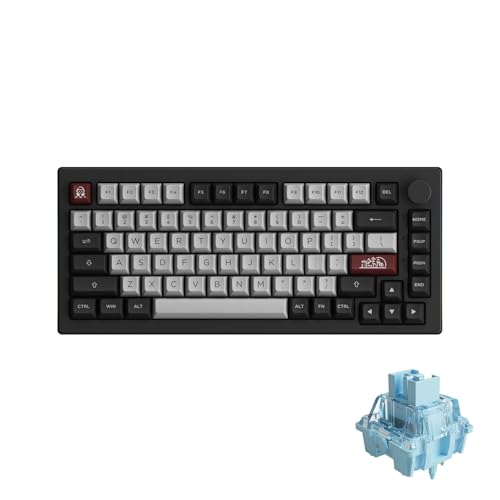
TL;DR: At $55.99, the Akko Dracula Castle 5075B Plus packs a 75% gasket‑mount layout, 3000 mAh battery, 1000 Hz wired polling and hot‑swap sockets, delivering solid RGB flair for budget gamers.
The standout feature is its tri‑mode connectivity: a USB‑C wired link, Bluetooth 5.0, and a 2.4 GHz wireless receiver, all running at a 1000 Hz polling rate when wired or on 2.4 GHz, while Bluetooth tops out at 125 Hz. The board measures 335 mm × 146 mm × 42 mm and weighs 880 g, and it's equipped with a 3000 mAh battery that keeps it portable for on‑the‑go sessions.
Compared with the eight other keyboards in this roundup, the Akko is lighter than the RK Royal Kludge M65 (1.7 lb) and the Redragon K585 DITI (1.3 lb), yet a touch heavier than the Nuphy Halo65 HE (788.5 g). Its 3000 mAh battery is smaller than the 6000 mAh pack in the RK Royal Kludge M65, the 4000 mAh unit in the Akko Mountain Seclusion, and the 8000 mAh cell in the GravaStar Mercury K1 Pro. While its 1000 Hz wired polling matches the GravaStar K1 Pro, it falls short of the 8000 Hz rates advertised by the Nuphy Halo65 HE and the GravaStar Mercury V75 Pro. On the connectivity front, it offers the same three‑mode flexibility as the RK Royal Kludge M65 and the Akko Mountain Seclusion, whereas many peers such as the Redragon K552P, Redragon K585 DITI, and Nuphy Halo65 HE are wired‑only.
Reviewers frequently praise the Dracula Castle’s striking aesthetic, the double‑shot PBT keycaps, and the programmable side RGB strip that syncs with per‑key lighting. The built‑in rotary knob for volume and brightness also gets positive mentions for quick adjustments. However, the community notes the modest 4.4‑star rating from 179 reviews and points out that the Bluetooth polling limit can feel sluggish in fast‑paced games. Professional reviewers highlight the gasket‑mount design with a polycarbonate plate and silicone foam, calling it a premium touch for a budget‑priced board.
Pros
Cons
Best for: Entry-level buyers or those on a tight budget
Avoid if: You need powerful performance or professional‑grade features
TL;DR: The Akko MU01 Mountain Seclusion blends a solid walnut wood case with 4000 mAh wireless power and hot‑swappable switches, delivering a premium look and solid performance at $129.99.
The standout feature is its CNC‑machined solid walnut wood case, which gives the keyboard a natural acoustic resonance and a high‑end aesthetic. At 1.83 in tall, 12.87 in long and 4.93 in wide, it fits comfortably on a compact desk, while the 4000 mAh battery lets you stay wireless for extended sessions.
The MU01 prices similarly to the Nuphy Halo65, but its battery capacity sits between the 3000 mAh of the Akko Dracula Castle 5075B Plus and the 6000 mAh found in the RK Royal Kludge M65. Its 12.87 in length matches the Nuphy’s listed 317.0 mm, and it offers more media hotkeys than many peers, giving you quick access to volume and calculator functions.
User feedback consistently praises the walnut case as “functional art” and highlights the reliable multi‑device Bluetooth 5.0 switching. Professional reviewers note the gasket‑mount FR4 flex plate and five‑layer sound‑dampening as contributors to a deep, natural typing tone. On the downside, reviewers mention that the keyboard feels relatively heavy for a compact board and that the per‑key RGB lighting can clash with the wood finish. Some also point out that the Bluetooth polling rate limits performance for competitive gamers.
Technical details add to its appeal: the MU01 offers hot‑swappable switches, supports per‑key RGB via the Akko Cloud Driver, and runs on a solid‑state 4000 mAh battery. Its 68‑key 65% layout keeps the footprint small, while the PBT dye‑sub keycaps with MOA profile provide a satisfying feel. The inclusion of 12 pre‑defined media hotkeys and tri‑mode connectivity (USB‑C wired, 2.4 GHz wireless, and Bluetooth 5.0) rounds out a well‑equipped package.
Pros
Cons
Best for: Aesthetic‑focused enthusiasts, multi‑device professionals, and gamers who need low‑latency wired/2.4 GHz performance.
Avoid if: You prioritize ultra‑portability, extensive case modding, or top‑tier competitive performance.
“"three‑mode wireless board"”
“"functional art" with "high‑fi layers" and "beautifully tuned sound"”
Breakdown
Redragon K552P
Pros
Cons
RK Royal Kludge M65
Pros
GravaStar Mercury K1 Pro
Pros
Redragon K585 DITI
Pros
Cons
Based on scoring data and product specs
Personalized picks
Best Overall Pick
Redragon K552P
Best OverallBest for: Budget-conscious buyers seeking a reliable entry-level option
RK Royal Kludge M65
Best for: Most users looking for a well-reviewed, reliable mainstream option
$59.99+$19.00 vs winner
Skip Akko Mountain Seclusion MU01 if…
You need advanced features or professional-grade performance
The Redragon K552P earns the top spot with a sturdy metal‑ABS frame, full 100 % anti‑ghosting across its 87‑key tenkeyless layout, and a vibrant RGB system offering 18 modes and five brightness levels. It’s also got a 4.5‑star rating from 54,646 reviews while staying under $38, making it a compelling blend of durability, performance and price.
Meanwhile, the RK Royal Kludge M65 is the runner‑up and shines when you need wireless versatility plus switch customisation. Its Bluetooth 5.0 and 2.4 GHz radio deliver up to 240 hours of battery life (6000 mAh) with the RGB lighting off, and the hot‑swappable 3‑pin/5‑pin sockets let you swap Cream, Beige or Chartreuse switches without soldering.
Pick the Redragon K552P today for the most reliable gaming experience without breaking the bank.
The RK Royal Kludge M65 offers both 2.4 GHz wireless and Bluetooth 5.0, plus a 6000 mAh battery that the manufacturer claims can last about 240 hours with RGB off. Its 60% layout and detachable volume knob make it a compact, travel‑friendly choice compared to wired‑only options.
No reviews yet — be the first to share your experience.
Please sign in to leave a review