
Finding a gaming mouse that pairs sky‑high DPI with a healthy stash of programmable buttons can feel like hunting for a unicorn, especially when you have to juggle wired, wireless and Bluetooth options. In this roundup we’ve sifted through 11 contenders, from the $16.99 Redragon M612‑RGB that still manages a solid 4.6/5 rating, up to the premium Razer DeathAdder V2 X which has a 4.7/5 score from over 18,000 reviewers.
We’ve split the field into three price tiers so you can zero in on what matters most. The budget lane (Redragon M612‑RGB, Lenovo M210 RGB, Redragon M908, Redragon M690 PRO) delivers decent DPI ranges and at least six programmable buttons without breaking the bank. Mid‑range picks like the Redragon M801 and Logitech G305 Lightspeed bring wireless freedom and up to 12,000 DPI while staying under $30. Premium choices—including the Redragon M612 PRO at $36.99, Corsair M55, Razer Basilisk V3 and DeathAdder V2 X—offer the highest button counts, top‑tier sensors and extra features for serious gamers.
Read on to see which mouse claims the crown for each play style and why the numbers matter for your next gaming setup.

Redragon M612 PRO
Its 1000 mAh battery delivers 200 hours of use with RGB off, giving you long sessions without recharging.

Redragon M612-RGB
Ideal for budget‑conscious gamers who need extra controls, it offers 11 buttons—including 2 side macros—at $16.99, roughly $20 less than the Best Overall model.

Logitech G305 Lightspeed
Stands out with up to 9‑month battery life in endurance mode, letting you game for months on a single charge—something the other two wired models don’t promise.
Also considered
Score Analysis
Key score advantages vs. runner-up (Redragon M612-RGB)
Price Range
Redragon M612 PRO
$36.99
Redragon M612-RGB
$16.99
Logitech G305 Lightspeed
$26.99

Lenovo M210 RGB
$15.99

Redragon M801
$25.49

Redragon M908
$24.29

Redragon M690 PRO
$24.99

Razer DeathAdder V2 X
$42.99

Corsair M55
$29.99
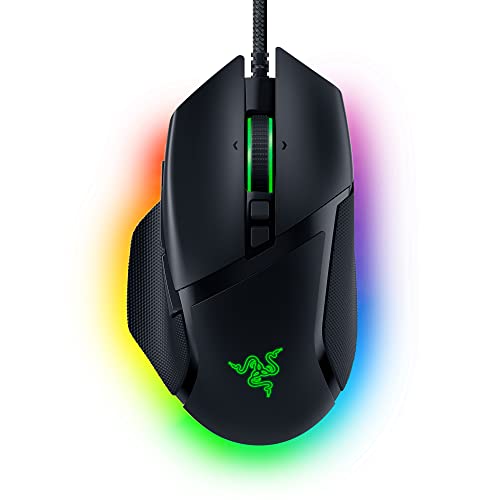
Razer Basilisk V3
$36.95

Razer Viper V3 Pro
$119.99
Spec Comparison
TL;DR: The Redragon M612 PRO packs tri‑mode wired/2.4 GHz/Bluetooth connectivity, up to 12,400 DPI, and a 200‑hour battery life, delivering high‑end features at a $36.99 price point.
What really sets the M612 PRO apart are its three connectivity options—USB‑C wired, a 2.4 GHz dongle, and Bluetooth 5.0—plus a maximum DPI of 12,400 in wired mode. The mouse offers a 200‑hour battery life when the RGB lighting is off, and nine fully programmable buttons, including a rapid‑fire side button that many users cite as a major advantage in fast‑paced shooters.
At 0.881849048 pounds, the M612 PRO is noticeably heavier than the Razer Basilisk V3 (0.2225 lb), Razer DeathAdder V2 X (0.23 lb), Corsair M55 (0.132 lb), Logitech G305 (0.21 lb), Redragon M801 (0.342 lb) and Redragon M908 (0.386 lb). Its 1.8 m braided USB‑C cable matches the Corsair M55’s length but is slightly shorter than the Redragon M801’s 1.83 m. Battery endurance of 200 hours without RGB outlasts most peers, though the Logitech G305 can stretch to 250 hours in performance mode. With nine programmable buttons, it offers more customization than the six‑button Corsair M55 and Logitech G305, matching the Redragon M801.
Reviewers love the mouse’s versatility: the tri‑mode setup is praised as rare at this price tier, and the Pixart PAW3104 wireless sensor receives compliments for low latency. However, many describe the Redragon software as unintuitive, and some owners report shell cracking after a few months. Linux users also note the lack of an official driver, limiting cross‑platform appeal. The mouse’s 7 RGB backlight modes and solid 125–1000 Hz polling rate round out a feature set that matches its $36.99 price.
Pros
Cons
Best for: Buyers willing to invest in a proven, high‑quality option
Avoid if: You're on a tight budget or only need basic functionality
“Amazing battery life”
“Great for the price”
TL;DR: The Redragon M612‑RGB delivers an 8000 DPI optical sensor, 11 fully programmable buttons, and 3‑zone RGB lighting for just $16.99, making it a solid budget pick for gamers who need customization.
The standout spec is its 8000 DPI Pixart optical sensor paired with a 1000 Hz polling rate and 1 ms response time, and it packs into a 125.9 g (0.27778245012 pounds) chassis. You also get 11 fully programmable buttons—including a dedicated rapid‑fire button and two side macro keys—plus five dynamic backlight modes across three RGB zones.
Compared with the other ten mice in this roundup, the M612 sits in the middle of the weight range: it’s heavier than the 0.18‑pound Lenovo M210 RGB and the 0.21‑pound Logitech G305 Lightspeed, but lighter than the 0.3858089585‑pound Redragon M908, the 0.330693393‑pound Redragon M690 PRO, and the 0.3417165061‑pound Redragon M801. It also out‑buttons most rivals—most only offer six to nine programmable keys—while matching the Lenovo’s 8000 DPI ceiling.
User sentiment highlights a comfortable grip and the precision of the sensor, with many reviewers praising the extensive button customization for competitive play. Professional reviewers note the excellent value given the high‑end specs, but they also point out that the accompanying software feels unintuitive. A recurring complaint is occasional chassis cracking after months of use, and the lack of a wireless option limits flexibility for those who prefer a cable‑free setup.
Pros
Cons
Best for: Budget-conscious buyers seeking a reliable entry-level option
Avoid if: You have limited desk space or need portability
“Amazing battery life”
“Great for the price”
TL;DR: The Logitech G305 Lightspeed delivers a HERO 12K sensor with up to 12,000 DPI, 1,000 Hz polling and up to 250 hours of wireless play on a feather‑light 0.21 lb chassis for under $27.
The standout spec is the HERO 12K optical sensor paired with a DPI range of 200‑12,000 and a 1,000 Hz polling rate, which gives you the same precision and responsiveness competitive gamers expect from wired gear. Its wireless endurance lasts up to 250 hours of continuous gameplay in Performance mode and up to 9 months in Endurance mode.
Compared with the other ten mice in this roundup, the G305 is lighter than the Redragon M801 (0.34 lb), Redragon M908 (0.39 lb) and Redragon M690 PRO (0.33 lb), but a bit heavier than the Corsair M55 (0.13 lb) and Lenovo M210 RGB (0.18 lb). Battery life also outpaces the Redragon M801’s 70 hours (RGB off) and the M690’s 87 hours in Eco‑Mode, giving you far more playtime between AA‑battery swaps. On the downside, it only provides six programmable buttons versus nine on the M801 and eleven on the Redragon M612‑RGB, so power users who rely on many macros may find it limited.
Reviewers consistently praise the lag‑free LIGHTSPEED connection and the marathon‑long battery life, and they call it a “premium wireless experience at a budget price.” Professional reviewers highlight the sensor’s efficiency and the mouse’s 0.21 lb weight as key strengths. The most common complaints focus on the compact, symmetrical shape that can feel cramped for large‑handed gamers, the lack of RGB lighting, and the absence of an on‑mouse battery indicator.
The mouse also ships with PTFE (Teflon) skates for smooth gliding, a symmetrical low‑profile design that works for both left‑ and right‑handed users, and onboard memory that stores up to five DPI settings and button configurations without needing the USB receiver plugged in.
Pros
Cons
Best for: Budget‑conscious gamers, students, and travelers who want reliable, high‑DPI performance without a cable.
Avoid if: You have large hands, need extensive macro buttons, or prioritize RGB lighting.
“Perfect for small to medium hands”
“No input lag”
TL;DR: At $19.99, the Lenovo M210 RGB delivers an 8000 DPI Pixart PAW3333 sensor, 7 programmable buttons, and a lightweight 0.18‑lb design, earning a solid 4.5‑star rating from over 31 k reviewers.
The standout feature is the Pixart PAW3333 optical sensor, which tops out at 8000 DPI and works with five selectable levels (800, 1600, 3200, 8000). Combined with a 1000 Hz polling rate, 35 G acceleration and 300 IPS tracking, the mouse promises snappy response for fast‑paced games.
At 0.18 lb (81.6 g) the M210 is lighter than most wired competitors such as the Redragon M612‑RGB (≈0.28 lb) and the Redragon M908 (≈0.39 lb), though a touch heavier than the ultra‑light Corsair M55 (≈0.13 lb). It offers seven programmable buttons, which is fewer than the 11 on the Redragon M612‑RGB but more than the six on both the Logitech G305 and the Corsair M55. The 1.8 m braided cable matches the length of several rivals, while the ambidextrous shape and PTFE feet suit palm, claw or fingertip grips.
Reviewers consistently praise the mouse’s light feel, responsive clicks and the durability of its braided cable. Reviewers highlight the high‑end sensor and 1000 Hz polling as professional‑grade strengths for the price. On the downside, users note that the RGB lighting limits you to seven preset modes with no customization, the side buttons can feel stiff, and the mouse lacks software or onboard memory for saving button profiles.
Pros
Cons
Best for: Budget-conscious buyers seeking a reliable entry-level option
Avoid if: You have limited desk space or need portability
“Great feel for the price”
“Lights look amazing with 3 zones”
TL;DR: The Redragon M801 offers 16000 DPI, nine programmable buttons, and up to 70 hours of battery life for $25.49, making it a solid mid‑range gaming mouse with RGB flair.
The mouse tops out at 16000 DPI and lets you assign commands to nine programmable buttons, while five onboard memory profiles store your favorite setups. Its 0.3417165061‑pound weight feels solid, and the 2‑year warranty adds peace of mind. When you turn off the RGB, the battery can last 70 hours, dropping to 35 hours with the lighting on.
Compared with other entries in this roundup, the M801 is heavier than the Logitech G305 Lightspeed, Corsair M55, Lenovo M210 RGB, and Redragon M612‑RGB, but lighter than the Redragon M908. Its 1.83 m braided‑fiber cable matches the length of most wired peers, and it offers more programmable buttons than the Redragon M690 PRO (eight) and the Logitech and Corsair models (six each), though the M612‑RGB provides eleven.
Users consistently praise the comfortable shape, vibrant RGB, and durable Omron switches that are rated for 20 million clicks. Professional reviewers note the precise Avago sensor and 1000 Hz polling rate as strong points. On the downside, reviewers describe the bundled software as clunky and note its limited Mac support, and a few owners have reported occasional DPI step jumps.
Pros
Cons
Best for: Budget‑conscious MMO and RPG gamers, casual to mid‑tier competitive players, and content creators who want high DPI and RGB without breaking the bank.
Avoid if: You need an ultra‑lightweight mouse for esports, rely heavily on macOS software support, or prioritize ultra‑portable, low‑weight designs.
“Users frequently commend the comfort during extended use, especially for large hands”
TL;DR: The Redragon M908 Impact packs 18 programmable buttons, a 12,400 DPI Pixart sensor and an adjustable 8‑weight system into a wired mouse that costs about $25 and targets MMO‑heavy gamers.
The standout spec is the DPI range of 100–12,400, paired with a ±100 DPI increment and a 30 G acceleration rating. You can fine‑tune sensitivity on the fly, and the optical Pixart PMW3327 sensor delivers up to 200 IPS tracking speed. The mouse also includes eight 2.4 g removable weights, letting you dial the total mass from the base 177 g up to a maximum of 196.2 g.
When you line it up against the other ten entries, the M908 is noticeably heavier than the Logitech G305 Lightspeed (0.21 lb), Lenovo M210 RGB (0.18 lb) and the Corsair M55 (0.13 lb). It also carries more buttons – 18 total versus the 8‑11 found on its wired peers such as the Redragon M690 PRO, M801 and M612‑RGB. Pricing sits in the same budget tier, so you’re paying roughly the same amount for a far richer button layout.
Community feedback praises the massive button array and the vibrant 16.8 million‑color RGB lighting, calling it “great value compared to pricier competitors.” Professional reviewers note the sensor’s reliability and the on‑board memory for five profiles, but they also flag the software as prone to macro‑save glitches and color mismatches. Users with smaller hands often mention the aggressive right‑handed shape feels bulky, and the weight can feel “clunky” during long sessions.
Under the hood, the mouse runs on a USB 2.0 full‑speed interface with a 1.8 m braided‑fiber cable and gold‑plated connector for durability. Its Omron mechanical switches are rated for 20 million clicks, and you can switch polling rates from 125 Hz up to 1000 Hz to match your gaming style. The onboard memory holds five independent profiles, so you can keep your keybinds even on a different PC.
Pros
Cons
Best for: MMO and RPG gamers with medium to large hands who want a budget‑friendly mouse loaded with programmable buttons.
Avoid if: You have small hands, need a lightweight FPS mouse, or require rock‑solid software stability.
TL;DR: The Redragon M690 PRO packs an 8000 DPI PAW3104 sensor, 1000 Hz polling and a 87‑hour eco‑mode battery into a wireless‑ready mouse with eight programmable buttons and customizable RGB.
Its standout endurance is an 87‑hour battery life in eco‑mode, which outlasts the 70‑hour runtime listed for the Redragon M801. Coupled with a 2.4 GHz nano receiver that reaches up to 10 meters, the mouse stays responsive whether you’re on a couch or a desk. Its 8 programmable buttons plus a dedicated rapid‑fire button give you plenty of on‑the‑fly control for FPS or MOBA titles.
At 0.330693393 pounds (about 150 g), the M690 PRO sits heavier than ultra‑light options like the Logitech G305 and Lenovo M210, but it’s lighter than the Redragon M908 and M801, which tip the scales above 0.38 pounds. The weight trade‑off brings a solid, well‑built feel that many reviewers praise for comfort during long sessions.
Users highlight the long battery life, sturdy construction, and the handy rapid‑fire button, while the software interface draws criticism for being clunky and side‑button macros sometimes failing on macOS. Professional reviewers echo the positive notes on the 1000 Hz polling rate and the accuracy of the PAW3104 sensor, confirming the mouse delivers low‑lag input and precise tracking up to 8000 DPI.
Pros
Cons
Best for: Budget‑conscious buyers seeking a reliable entry‑level option
Avoid if: You need an ultra‑lightweight mouse or rely on side‑button macros on macOS
“smooth and responsive experience”
“pro‑grade features at a budget price”
TL;DR: The Razer DeathAdder V2 X costs $42.99, carries a 4.7‑star rating from over 18,000 reviewers, and reviewers praise its comfort and battery life despite lacking RGB lighting.
The Razer DeathAdder V2 X is Razer’s ergonomic right‑handed wireless mouse, priced at $42.99. Among the eleven mice in this roundup it holds one of the higher ratings, with a 4.7‑out of‑5 score based on 18,169 reviews. Its price positions it in the mid‑range of the group, offering a well‑known brand without the premium cost of top‑tier models.
Reviewers consistently highlight the mouse’s comfortable shape, noting it feels natural for palm and claw grips during long sessions. Reviewers repeatedly describe the battery life as “exceptional,” keeping the mouse running for many days without a recharge. Users also appreciate the durable click feel and the smooth glide from the PTFE feet. The main complaints focus on the absence of RGB lighting, a weight that feels heavier compared with ultra‑light esports mice, and a battery compartment that can shift balance when using smaller cells. Small edge buttons are mentioned as easy to hit unintentionally.
In context, the DeathAdder V2 X offers a reliable, comfortable experience at a reasonable price point, making it a solid choice for gamers who value ergonomics and long‑lasting power over flashy lighting or the lightest possible weight. Its strong rating suggests broad satisfaction despite the noted drawbacks.
Pros
Cons
Best for: Buyers willing to invest in a proven, high‑quality option
“Perfect shape for palm grip—no hand fatigue even after hours.”
“Battery lasts forever, especially in Bluetooth mode.”
TL;DR: The Corsair M55 packs a 60 g ultra‑light frame, a 16,000 DPI PixArt sensor and six programmable buttons into a wired, ambidextrous mouse for fast‑paced competitive play.
The standout spec is its feather‑light 60 g (0.1322773572 lb) weight combined with a 200–16,000 DPI optical sensor and a 1,000 Hz polling rate, delivering 1 ms response time for rapid flicks.
At 0.1322773572 lb, the M55 weighs noticeably less than the Logitech G305 (0.21 lb) and far less than Redragon’s M801 (0.3417165061 lb), M908 (0.3858089585 lb), M690 PRO (0.330693393 lb) and M612 PRO (0.881849048 lb). It matches the G305 and Redragon M801 with six programmable buttons, but offers fewer than the M690 PRO’s eight and the M612 PRO’s nine. The M55 keeps a fixed, non‑detachable 1.8‑meter braided cable, which is on par with Redragon M908’s braided‑fiber cable and Redragon M612 PRO’s braided USB‑C cable, yet unlike the wireless G305.
User feedback repeatedly praises the mouse’s lightweight feel and precise tracking, describing it as an extension of the hand for FPS and battle‑royale titles. Professional reviewers highlight the durable mechanical switches, which the manufacturer rates for 60 million clicks, and the PixArt PAW3333 sensor. Common complaints focus on the fixed cable, lack of onboard profile storage, and limited two‑zone RGB compared with higher‑end models.
Additional technical details include ambidextrous ergonomics supporting fingertip, claw and palm grips, PTFE mouse feet for smooth glide, and Corsair iCUE software for lighting and button customization. The 35 g acceleration and 300 IPS tracking speed complement the high DPI range, while a two‑year manufacturer warranty adds confidence.
Pros
Cons
Best for: FPS, battle‑royale and other fast‑paced competitive gamers who prioritize ultra‑lightweight performance.
Avoid if: You need a detachable or wireless mouse, extensive RGB customization, or onboard profile storage.
“Perfect for claw and fingertip grip users.”
“Feels like an extension of my hand during FPS matches.”
TL;DR: At $37.99 the Razer Basilisk V3 earns a 4.6‑star rating from over 9,600 reviewers, praised for its comfort and lighting but noted for a floaty scroll wheel and occasional button issues.
The Razer Basilisk V3 is Razer’s wired offering in this high‑DPI, programmable‑button roundup, priced at $37.99 and carrying a 4.6‑star rating based on 9,612 reviews. Among the eleven mice considered, it lands toward the lower end of the ranking despite its strong brand reputation.
Buyers consistently highlight the mouse’s ergonomic shape and textured finish, saying it feels comfortable during long sessions. Users frequently compliment the extensive RGB lighting. On the downside, users frequently mention a scroll wheel that feels “floaty” and can roll back, a DPI clutch that sits too far forward for smaller hands, and occasional premature button failures. Users often describe the accompanying software as bloated and complex.
Given its price and solid rating, the Basilisk V3 positions itself as a budget‑friendly option for right‑handed gamers who value comfort and visual flair, though it may fall short for those who need rock‑solid build quality or a tighter scroll experience.
Pros
Cons
Best for: Buyers willing to invest in a proven, high-quality option
TL;DR: At $129.89, the Razer Viper V3 Pro earns a 4.6‑star rating, with users praising its feather‑light feel and ultra‑fast wireless response while noting its premium cost and limited battery life at max performance.
Razer’s Viper V3 Pro sits at the top end of the price range in this eleven‑product roundup, priced at $129.89 and carrying a 4.6‑star rating from 1,906 reviews. The brand’s reputation for esports‑focused peripherals adds weight to its standing among the competitors.
Users love how almost weightless the mouse feels, saying it glides effortlessly and that the lightning‑quick wireless response gives a clear edge in fast shooters. They also appreciate the reliable connection and crisp clicks that stay consistent over time. Common complaints focus on the steep price, the short battery endurance when the mouse runs at its fastest setting, the awkward bottom‑mounted DPI switch, and the minimalist look that lacks RGB lighting.
Given its high price and strong rating, the Viper V3 Pro targets competitive gamers who prioritize speed and precision above all else, while casual players may find more budget‑friendly options that still score well in this list.
Pros
Cons
Best for: Buyers willing to invest in a proven, high‑quality option
“It disappears in your hand—perfect for long sessions.”
“Tracking is flawless, even on my glass desk.”
Breakdown
Redragon M612 PRO
Pros
Redragon M612-RGB
Pros
Logitech G305 Lightspeed
Pros
Lenovo M210 RGB
Pros
Based on scoring data and product specs
Personalized picks
Best Overall Pick
Redragon M612 PRO
Best OverallBest for: Buyers willing to invest in a proven, high-quality option
Redragon M612-RGB
Best for: Budget-conscious buyers seeking a reliable entry-level option
$16.99-$20.00 vs winner
Skip Razer Viper V3 Pro if…
You're on a tight budget or only need basic functionality
Redragon’s M612 PRO takes the top spot thanks to its high‑end specs and solid user feedback. It offers up to 12,400 DPI on the wired mode, nine fully programmable buttons plus two side macro keys, and a 200‑hour battery life when the RGB lighting is off. The mouse also carries a 4.6‑star rating from 9,580 reviewers and a one‑year warranty, which together signal strong reliability.
The runner‑up, the Redragon M612‑RGB, shines when you need a fully wired, ultra‑responsive mouse without breaking the bank. You can program all 11 buttons, it runs at a 1,000 Hz polling rate, and it features five dynamic RGB zones—all for just $16.99. Its 4.6‑star rating from 10,643 reviews shows it’s a popular choice for budget‑conscious gamers who still want customization.
For those looking beyond the top two, the best budget option remains the M612‑RGB for its price‑to‑feature ratio; the mid‑range pick is Logitech’s G305 Lightspeed, offering reliable wireless performance at $26.99; and Razer’s Viper V3 Pro represents the premium tier, delivering top‑tier specs for $129.89.
Pick the Redragon M612 PRO now and enjoy high DPI precision and nine programmable buttons plus two side macro keys right out of the box.
The Logitech G305 Lightspeed lists up to 9 months of endurance‑mode battery life and 250 hours in performance mode, far exceeding the Redragon M612 PRO’s 200 hours (RGB off) or 25 hours (RGB on). For ultra‑long sessions without recharging, the G305 is the clear leader.
Please sign in to leave a review
No reviews yet. Be the first to review!
