⚡ Quick Answer
Finding the right over‑ear headset can be a juggling act between comfort, sound quality, and price. The roundup includes 9 models, ranging from $19.99 for the HyperX Cloud Stinger 2 up to $119.99 for the HyperX Cloud Alpha Wireless. The selection splits into three tiers: budget options like the $29.99 Turtle Beach Recon 70, mid‑range picks such as the $36.99 Logitech G432, and premium choices where the OneOdio A70 offers a manufacturer‑claimed 72‑hour Bluetooth battery life. Ratings span 4.2 to 4.5 stars, with the Recon 70 leading at 4.5/5 from 1,683 reviews.
If you game on a tight budget and just need a reliable plug‑and‑play wired headset, the budget tier gives you lightweight options under 300 g and solid 40 mm drivers. For a stationary setup where positional audio matters, the mid‑range choices like the Razer BlackShark V2 X offer 7.1 surround sound and a detachable cardioid mic. When wireless freedom and marathon sessions are priorities, the premium picks deliver long runtimes – the OneOdio A70 can stay connected for 72 hours, while the Turtle Beach Stealth 600 pushes 80 hours of play. The following sections break down each model’s strengths so you can match a headset to your gaming style.

OneOdio A70
Its 40 mm drivers provide rich audio while keeping the price at $42.74, delivering strong value for a proven, high‑quality headset.

Turtle Beach Recon 70
Ideal for budget‑conscious gamers who want reliable entry‑level sound; at $29.99 it’s about $12.75 cheaper than the OneOdio A70.

HyperX Cloud Stinger 2 50mm Black
Features 50 mm drivers and 30 Ω impedance, offering a fuller sound profile at $19.99, the lowest price among the three.
Also considered
Score Analysis
Key score advantages vs. runner-up (Turtle Beach Recon)
Price Range
OneOdio A70
$44.99
Turtle Beach Recon 70
$39.99
HyperX Cloud Stinger 2 50mm Black
$39.99

Razer BlackShark V2 X
$32.99
Logitech G432 Black
$49.67

HyperX Cloud Alpha Wireless
$119.99

SADES MPOWER
$39.99

Turtle Beach Stealth 600
$109.00

JBL Quantum 100
$29.95
Spec Comparison
TL;DR: The OneOdio A70 offers 40 mm drivers, 72‑hour Bluetooth battery life, and a lightweight 0.56 lb design, delivering comfortable, long‑lasting gaming sessions at a budget‑friendly price.
The standout spec is its 72 hours of Bluetooth playback on a single 650 mAh charge, paired with a Bluetooth 5.2 radio and a wireless range of at least 10 m. At just 0.56 lb (245 g) the headset feels barely there, while the 40 mm drivers deliver the typical 20 Hz–20 kHz frequency range you expect from a gaming headset.
Compared with the eight other headsets in this roundup, the A70’s driver size is smaller than most – six of the competitors list 50 mm drivers, while only the JBL Quantum 100 and Turtle Beach Recon 70 share the 40 mm dimension. In terms of weight, the A70 is lighter than the SADES MPOWER (≈1.10 lb), Logitech G432 (1.2 lb), Turtle Beach Recon 70 (0.84 lb) and several 0.63‑0.71 lb models, yet a touch heavier than the ultra‑light JBL Quantum 100 (≈0.49 lb). Its dual‑mode capability (wireless and detachable 3.5 mm/6.35 mm cable) also gives it an edge over the fully wired peers.
Users consistently praise the marathon‑length battery and the headset’s comfort for marathon gaming or DJ sessions. Professional reviewers note the easy‑to‑drive 32 Ω impedance and 110 dB sensitivity, meaning you won’t need a separate amp. The trade‑off is a bass‑forward sound signature that can mask mids and a high‑frequency edge that some find tiring. Reviewers describe the plastic‑plus‑faux‑leather construction as “cheap‑feel,” with occasional creaks during extended wear.
Pros
Cons
Best for: Bass‑enthusiasts, casual gamers, gym‑goers, entry‑level DJs, and anyone who values marathon‑length wireless play.
Avoid if: You need critical‑level sound accuracy, robust noise isolation for commuting, or a premium‑grade build material.
“wireless bass monster”
“REALLY Bad”
TL;DR: The Turtle Beach Recon 70 offers a 40 mm driver, 0.84‑pound lightweight build and a flip‑to‑mute mic for $29.99, making it a solid entry‑level wired headset for casual gamers.
At the core of the Recon 70 is a 40 mm Neodymium driver paired with a 0.84‑pound (381 g) frame, keeping the headset light enough for marathon sessions. The included 1.2 m wired 3.5 mm cable delivers a plug‑and‑play experience, and the high‑sensitivity flip‑to‑mute boom mic stays fixed, letting you mute quickly.
Compared with its peers, the Recon 70 shares the same 40 mm driver size as the JBL Quantum 100 but is heavier than that model’s 0.49‑pound unit. It is lighter than the Logitech G432’s 1.2‑pound build and considerably lighter than the SADES MPOWER’s 1.10‑pound chassis. Its driver is smaller than the 50 mm units found in the Logitech G432, Razer BlackShark V2 X, and HyperX Cloud Stinger 2, which may affect low‑frequency punch.
Users consistently praise the clear microphone and the comfort of the synthetic‑leather headband with textile ear cushions, noting that the headset feels “barely there” during long play. Professional reviewers echo the mic’s clarity and the accurate mids and highs, but both groups flag the subdued bass and the lack of true surround or wireless freedom as drawbacks. The headset’s frequency response of 20 Hz – 20 kHz and over‑ear closed design aim for balanced stereo sound, though the basic audio profile limits immersive impact in explosion‑heavy titles.
Pros
Cons
Best for: Budget‑conscious buyers seeking a reliable entry‑level option
Avoid if: You want the best value‑per‑dollar in its price range
TL;DR: The HyperX Cloud Stinger 2 packs 50 mm drivers, DTS Headphone:X and a swivel‑to‑mute mic into a 0.63‑lb, wired headset that feels light enough for marathon sessions without breaking the bank.
What really stands out is the 50 mm neodymium driver paired with a wide 10 Hz–28 kHz frequency response, delivering the “hefty audio punch” reviewers often mention. The headset also includes a 2‑year activation code for DTS Headphone:X spatial audio, giving you immersive 3‑D sound without extra hardware.
Compared with the other eight contenders, the Stinger 2 is lighter than the Turtle Beach Recon 70 (0.84 lb) and far lighter than the Logitech G432 (1.2 lb). Its 2 m cable matches the Logitech G432’s length while exceeding the shorter 1.2 m cables of the Recon 70 and JBL Quantum 100. The 30 Ω impedance is lower than the Logitech G432’s 39 Ω and the HyperX Alpha Wireless’s 62 Ω, making it easier to drive from most consoles and PCs. Driver size lines up with the 50 mm units in the Logitech G432 and Razer BlackShark V2 X, and it out‑sizes the 40 mm drivers used in the Recon 70 and JBL Quantum 100.
Everyday users consistently praise the headset’s feather‑light feel—under 300 g (0.63 lb)—and the clear, noise‑cancelling microphone that swivels to mute. Professional reviewers highlight the comfortable memory‑foam ear cushions wrapped in leatherette and the built‑in volume knob for quick adjustments. The main trade‑offs are the wired 3.5 mm connection, which limits freedom of movement, and the closed‑back design that can trap heat during long play sessions.
Additional technical context includes a 90° swivel on the ear cups for flat storage, a bi‑directional noise‑cancelling microphone with –40.5 dBV sensitivity, and a sensitivity rating of 97.5 dB SPL/mW at 1 kHz. The headset works with PC, PlayStation, Xbox Series X|S/One, PS5/PS4, Nintendo Switch and mobile devices via a 3.5 mm 4‑pole plug.
Pros
Cons
Best for: Budget-conscious buyers seeking a reliable entry‑level option
Avoid if: You have limited desk space or need portability
TL;DR: The Razer BlackShark V2 X packs 50 mm drivers, a detachable HyperClear cardioid mic and a feather‑light 0.000625 pounds frame for solid esports sound at a $39.98 price.
Razer’s standout spec is its 50 mm driver paired with a 0.000625 pounds (0.28 g) chassis, making the headset feel almost weightless on your head. The design includes breathable fabric plus plush leatherette ear cushions and a thicker memory‑foam headband, which professional reviewers praise for comfort during long sessions.
When you line it up against the eight other headsets in this roundup, the BlackShark V2 X is noticeably lighter than the JBL Quantum 100 at 0.485 pounds, the OneOdio A70 at 0.56 pounds, and the Turtle Beach Stealth 600 at 0.705 pounds. It also shares the 50 mm driver size with the Logitech G432 and HyperX Cloud Stinger 2, while beating the 40 mm drivers found in the OneOdio A70, JBL Quantum 100 and Turtle Beach Recon 70.
Users repeatedly note the headset’s comfortable fit and clear audio cues, thanks to the Razer TriForce driver tuning. However, the same crowd points out the bulkier frame and the lack of active noise cancellation, which makes the BlackShark V2 X less suited for commuting or travel. The wired 3.5 mm analog connection also limits use to devices with a headphone jack.
Beyond the drivers, the BlackShark V2 X offers a detachable cardioid HyperClear microphone with passive noise cancellation, 7.1 virtual surround sound and a lightweight 0.000625 pounds frame that keeps fatigue low. The combination of these features earned it a 4.4/5 star rating from 26,723 reviewers.
Pros
Cons
Best for: Competitive esports players seeking professional‑grade audio clarity and a noise‑cancelling microphone.
Avoid if: You've got limited desk space or need portability, or you prefer active noise cancellation for travel.
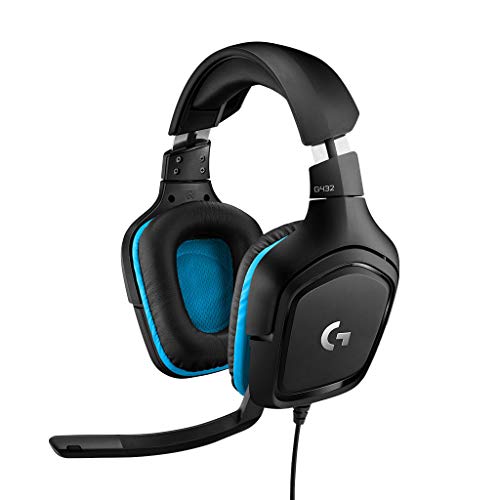
TL;DR: The Logitech G432 delivers 50 mm drivers with DTS virtual 7.1 surround and a 2 m cable for $36.99, but its 1.2‑pound weight and Windows‑only software may limit comfort and flexibility.
At the heart of the G432 is a 50 mm driver paired with Logitech’s DTS Headphone:X 2.0 virtual 7.1 surround, giving positional audio that many gamers appreciate. The headset also sports a 2 m cable with both 3.5 mm analog and USB‑DAC connectors, so you can plug into PC, console or mobile devices without needing a dongle.
Compared with the eight other headsets in this roundup, the G432 is on the heavier side at 1.2 pounds (544 g), while the Razer BlackShark V2 X and Turtle Beach Recon 70 sit well below a pound. Its 2 m cable exceeds the 1.2 m cables of the SADES MPOWER, JBL Quantum 100 and Turtle Beach Recon 70, giving you a bit more slack for desktop setups. Driver size matches the Razer BlackShark V2 X and several others, but its impedance of 39 Ω (passive) and sensitivity of 107 dB exceed the 98 dB rating of the SADES MPOWER, indicating a louder output straight from the source.
Reviewers consistently note the PU‑leather ear cushions feel firm at first but soften after a few sessions, while the headband padding can wear down and start to pinch during marathon play. The 6 mm boom mic with a flip‑to‑mute switch earns praise for clear voice pickup, though users mention it struggles in noisy rooms. Professional reviewers also point out that Logitech G Hub on Windows provides the DTS surround and EQ settings, limiting full feature access on consoles.
Pros
Cons
Best for: Value-conscious buyers seeking quality at $36.99
Avoid if: You need wireless freedom, active noise cancellation, or full feature support on consoles and mobile devices
TL;DR: The HyperX Cloud Alpha Wireless delivers a massive 300‑hour battery life, 50 mm dual‑chamber drivers, and a lightweight 322 g build, but its PC‑only dongle and premium price may limit some gamers.
The headline feature advertises a 300‑hour battery life when played at 50 % volume, paired with a quick 4.5‑hour USB‑C charge. Its 50 mm dual‑chamber drivers sit behind an aluminum frame that weighs just 322 g, making long sessions feel almost weightless. Audio specs include a 62 Ω impedance, 103 dB SPL/mW sensitivity, and ≤ 2 % total harmonic distortion, all processed at 24‑bit/48 kHz.
Compared with the other eight headsets in this roundup, the Alpha Wireless outpaces the Turtle Beach Stealth 600’s 80‑hour battery and the OneOdio A70’s 72‑hour runtime. Its 20‑meter wireless range also exceeds the OneOdio’s “≥10 m” claim. In weight, it sits alongside the Stealth 600’s 320 g design, while it’s heavier than the OneOdio (245 g) and the JBL Quantum 100 (≈220 g). Driver size matches most peers—Turtle Beach Stealth 600, SADES MPOWER, Razer BlackShark V2 X, Logitech G432, and the HyperX Cloud Stinger 2 all list 50 mm drivers—so the Alpha doesn’t lose out there. The detachable, bi‑directional noise‑cancelling mic steps up from the non‑detachable boom on the Turtle Beach Recon 70.
Users repeatedly praise the headset’s ultra‑long battery life and the comfort of its memory‑foam‑plus‑leatherette cushions, echoing HotHardware’s note on “comfort comparable to the wired Alpha model.” Professional reviewers also highlight the clear soundstage that the dual‑chamber drivers and DTS Headphone:X spatial audio deliver. However, RTINGS.com points out that the wireless connection is PC‑only, requiring a dongle and lacking Bluetooth, and that the microphone captures background noise more than some competitors.
Pros
Cons
Best for: PC gamers who need ultra‑long battery endurance and premium sound quality.
Avoid if: You rely on Bluetooth, need console‑native wireless, or prioritize the lowest possible price.
TL;DR: The SADES MPOWER offers 50 mm drivers, a stainless‑steel headband and a retractable mic at a $39.99 price, but its wired design and modest cable length may limit mobility.
The headset’s standout feature is its 50 mm driver paired with a 98 dB SPL sensitivity, which professional reviewers say delivers clear detail and lets gamers hear subtle in‑game cues. The adjustable stainless‑steel headband and soft memory‑leather ear cushions add durability and comfort for marathon sessions.
At 1.10010668738 pounds, the MPOWER weighs noticeably more than the Razer BlackShark V2 X, which lists at just 0.28 g, yet it shares the same 50 mm driver size as the Logitech G432 and HyperX Cloud Stinger 2. Its 1.2 m main cable is shorter than the Logitech’s 2 m cord, but the included 2 m extension brings total reach to over 3 m, a length that rivals the HyperX Cloud Stinger 2’s 2 m cable while surpassing the JBL Quantum 100’s 1.2 m lead.
Users frequently highlight the comfort of the memory‑foam ear pads and the plug‑and‑play simplicity of the universal 3.5 mm jack, which works across PS4/5, Xbox, Switch, PC and mobile devices. Most reviewers note the downside is the wired‑only setup, which restricts movement compared with wireless alternatives, and some find the combined cable length still short for larger desks.
Technical details reinforce its solid mid‑range positioning: an impedance of 32 Ω at 1 kHz makes it easy to drive from most consoles and PCs, while the microphone’s –47 dB SPL sensitivity and omnidirectional pattern capture clear voice without active noise cancellation. Passive isolation from the over‑ear design helps block ambient noise during gameplay.
Pros
Cons
Best for: Most users seeking a balanced, mainstream option
Avoid if: You need wireless freedom, active noise cancellation, or the longest possible cable for a big gaming station
“very comfortable”
“superior audio from 50 mm drivers”
TL;DR: The Turtle Beach Stealth 600 offers 80 hours of wireless playtime, 50 mm Nanoclear drivers and a comfortable glasses‑friendly design for $109, but its plasticky build feels bulkier than lighter rivals.
What really stands out is the 80‑hour battery life, letting you game for days without hunting for a charger, and the 50 mm Nanoclear™ drivers that aim for clear, balanced sound. At 0.71 pounds (320 g) the headset feels solid but still light enough for long sessions.
Compared with the eight other headsets in this roundup, the Stealth 600 is a bit heavier than the OneOdio A70 (0.56 pounds) yet slightly lighter than the HyperX Cloud Alpha Wireless (0.71 pounds). Its driver size matches the HyperX Cloud Alpha Wireless, SADES MPOWER, Razer BlackShark V2 X and Logitech G432, giving it a similar acoustic platform to those premium‑tier models. Battery‑wise, 80 hours beats most budget options—only the HyperX Cloud Alpha Wireless lists a longer 300‑hour runtime.
Users consistently praise the breathable athletic‑weave ear cushions and the AI‑enhanced flip‑to‑mute microphone for clear voice chat, especially when wearing glasses. Professional reviewers note the headset’s low‑latency 2.4 GHz wireless link and the Swarm II app’s 10‑band EQ, though they also point out the plastic chassis feels bulkier than metal‑frame competitors and that sound‑customization options limit you to basic presets.
Pros
Cons
Best for: Buyers willing to invest in a proven, high‑quality option
Avoid if: You're shopping on a tight budget — it's priced at $109.00
TL;DR: The JBL Quantum 100 delivers 40 mm drivers, a detachable directional mic, and lightweight comfort for $33.27, making it a solid entry‑level wired headset for casual gamers.
The headset’s standout spec pairs 40 mm dynamic drivers with JBL’s QuantumSOUND signature, covering a 20 Hz‑20 kHz frequency range. At just 0.49 lb (220 g), it feels light on the head, and the detachable boom mic offers directional pickup with a –42 dBV sensitivity, which reviewers say keeps voice chat clear.
Compared with the other eight options, the Quantum 100 is lighter than the Turtle Beach Recon 70 (0.84 lb) and the Logitech G432 (1.2 lb), while matching the Recon 70’s 40 mm driver size. It uses a 1.2 m cable, the same length as the Recon 70 and SAD SPOWER, but shorter than the Logitech G432’s 2 m cord. Most rivals sport 50 mm drivers, so the Quantum 100’s drivers are on the smaller side, though its 32 Ω impedance is comparable to the HyperX Cloud Stinger 2 (30 Ω) and lower than the HyperX Cloud Alpha Wireless (62 Ω).
User feedback highlights the headset’s comfort thanks to memory‑foam ear cushions and the intuitive volume wheel. Professional reviewers praise the clear mic and the built‑in Windows Sonic spatial sound for directional cues. The downside that surfaces repeatedly is the modest bass response and the absence of any companion app for EQ tweaks, leaving audiophiles wanting more control. Its plastic construction also feels less premium than higher‑priced competitors.
Technical details round out the picture: the headset runs on a 32 Ω impedance and can handle up to 20 mW of input power, while delivering a 96 dB SPL sensitivity. The microphone’s directional pattern helps cut down background noise, and the 1.2 m cable keeps the setup tidy for PC, consoles, and mobile devices.
Pros
Cons
Best for: Entry-level buyers or those on a tight budget
Avoid if: You need wireless freedom, deep bass, or advanced EQ customization—Audiophiles and competitive esports players may find it lacking.
Breakdown
OneOdio A70
Pros
Turtle Beach Recon 70
Pros
Cons
HyperX Cloud Stinger 2 50mm Black
Pros
Razer BlackShark V2 X
Pros
Based on scoring data and product specs
Personalized picks
Best Overall Pick
OneOdio A70
Best ValueBest for: Buyers willing to invest in a proven, high-quality option
Turtle Beach Recon 70
Best for: Budget-conscious buyers seeking a reliable entry-level option
$39.99-$5.00 vs winner
Skip JBL Quantum 100 if…
Reliability and user satisfaction are your top concerns
The OneOdio A70 takes the top spot thanks to its 72‑hour wireless battery, 40 mm drivers, and a solid 4.4‑star rating from 17,669 reviewers—all for $42.74. At just 0.56 pounds (245 g) it stays light enough for marathon sessions, and the dual‑mode design lets you flip between Bluetooth 5.2 and a detachable 1.5‑3 m cable. With a wireless range of at least 10 m, audio sharing and a foldable frame, it covers both convenience and comfort.
The Turtle Beach Recon 70 lands as runner‑up, ideal if you need a no‑frills wired headset that works across Xbox, PlayStation, Switch and PC. Its 40 mm drivers, 1.2 m cable and flip‑to‑mute boom mic come at $29.99 and a 4.5‑star rating from 1,683 users. Weighing 0.84 pounds (381 g) with textile ear cushions, it feels light on the head, and its passive power design means no charging worries.
If you’re pinching pennies, the HyperX Cloud Stinger 2 delivers basic comfort for $19.99, making it the go‑to budget pick. For a solid mid‑range option, the Razer BlackShark V2 X offers a balanced price of $39.98 and a feature set that satisfies most gamers. And if you want premium freedom, the HyperX Cloud Alpha Wireless provides wireless convenience and an extended battery life at $119.99.
Pick the OneOdio A70 today and get the most value for your gaming sessions.
The OneOdio A70 costs $42.74 and adds Bluetooth 5.2, a 72‑hour battery, and a detachable 3.5 mm/6.35 mm cable, giving it a clear value edge. The Recon 70 is $29.99 and is wired‑only, so you save money but lose the wireless convenience and long‑lasting battery.
No reviews yet — be the first to share your experience.
Please sign in to leave a review